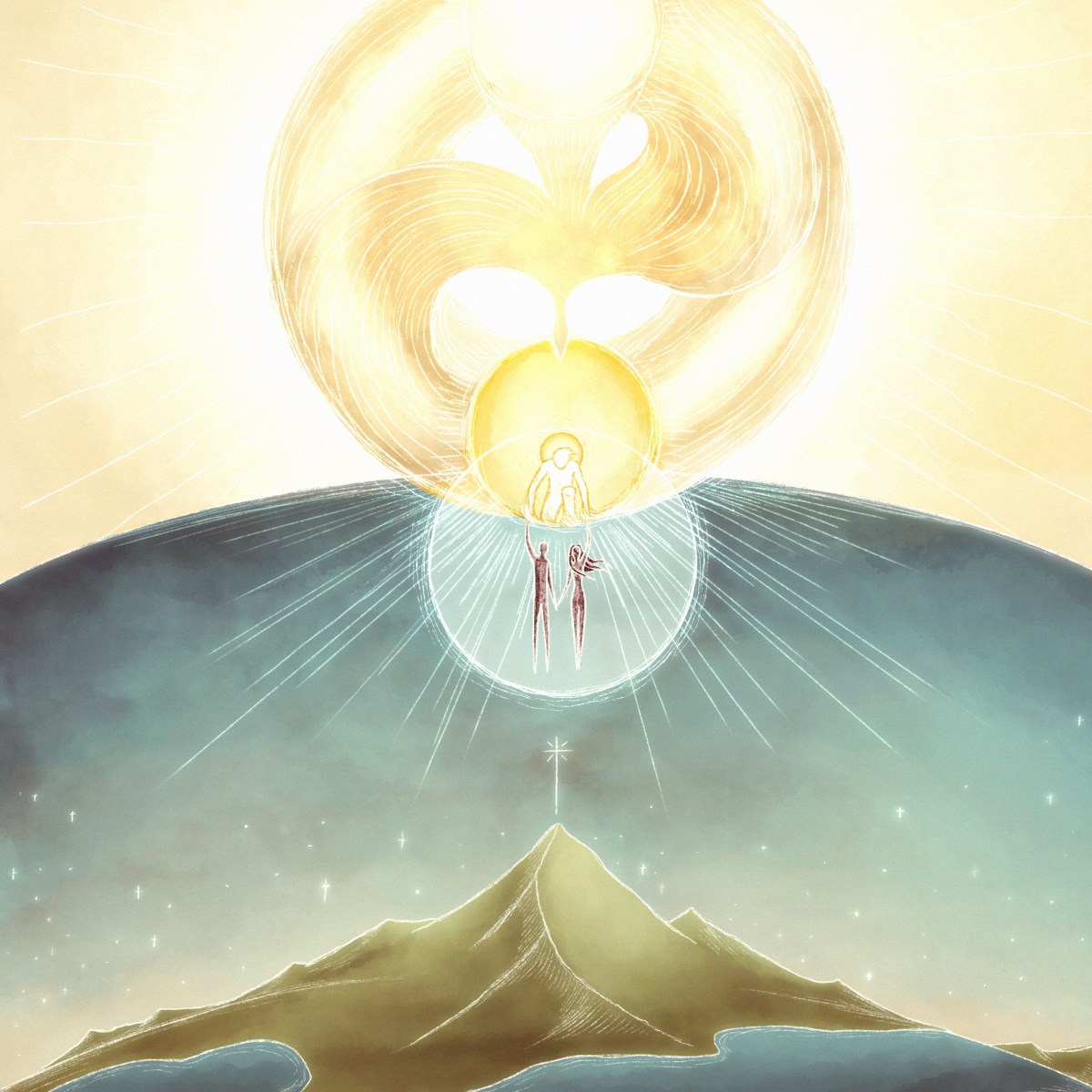
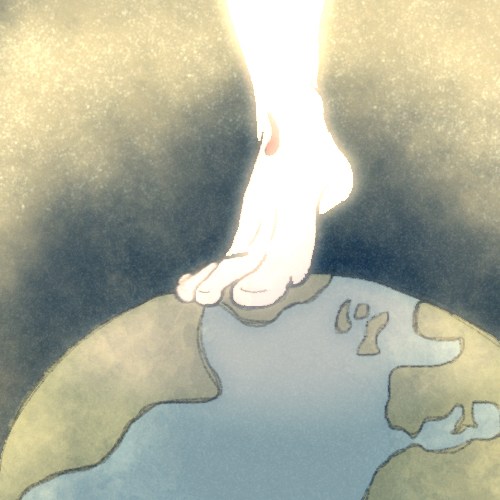
The Word, the Light, & the Darkness – Sermon on John 1:1-5 for Midweek Advent 1

John 1:1-5

1 In the beginning was the Word, and the Word was with God, and the Word was God. 2 He was in the beginning with God. 3 All things were made through him, and without him was not any thing made that was made. 4 In him was life, and the life was the light of men. 5 The light shines in the darkness, and the darkness has not overcome it.

In the name of Jesus. Amen.

Texts like this are one of many reasons why I’ll never attempt to create a chronological Bible reading plan. I’m familiar with several of those plans, but none of the ones I’ve seen have these verses from the opening of John’s Gospel anywhere near Genesis 1. And they should be. Parts of these verses are chronologically before the beginning. But I don’t know how exactly how a person could decide where to put them. You have Gen. 1:1, “In the beginning, God created the heavens and the earth,” and Jn. 1:1-2, “In the beginning was the Word, and the Word was with God, and the Word was God. He was in the beginning with God.” Which of those should come first? How do you order those? Would you put them parallel to each other? I don’t know. There are valid arguments to go either way.

Then, what do you do with v. 3-5? I suppose you could put v. 3-4 after the, “and there was evening and there was morning, the sixth day” (Gen. 1:31). But then, what do you do with v. 5, “The light shines in the darkness”? You might consider putting that back on the first day of creation when God creates light and separates light from dark. But ‘the Light’ there doesn’t refer to light as we know it. There, ‘Light’ refers to Jesus Himself, and He existed even before God said, “Let there be light” (Gen. 1:3). On top of that, “The light shines in the darkness,” is present tense and is always true. Jesus constantly, continually, always shines into and pierces the darkness, and He will never be overcome. So, maybe you’d need to put v. 5 running down the margin of every single page from Genesis to Revelation.

John 1:5 is so comforting. It’s a verse that I would recommend that you tuck in your back pocket so you can contemplate and meditate on it whenever you get the sense that the darkness of this world is gaining the upper hand. It isn’t. Not now. Not ever. The darkness will never win. It can’t. Use Jn. 1:5 to constantly remind yourself, “Jesus is my Life and Light. No darkness will ever overcome Him, so no darkness will overcome me. The darkness simply isn’t strong enough.” Isn’t that a wonderful, comforting thought?

The reason no darkness can overcome Jesus is that He is eternal. There was never a time when He was not. In fact, time itself exists through and because of Him. He created time and everything else that has been made. Scripture clearly teaches that Jesus’ birth in Bethlehem was not His beginning. He always is. Notice it’s not, “He always was” but is (Jn. 8:58Ex. 3:14).

Look again at our Old Testament reading (Pr. 8:22-31). Jesus, the Word and Wisdom God, is there before the beginning of the earth (Pr. 8:22-23). He was there before the depths were carved. He was there before the mountains were stretched into the sky. He was there before the stars were placed into their orbits and before the foundations of the earth were laid (Pr. 8:24-29). Jesus was right there beside God the Father like a master craftsman (Pr. 8:30). Jesus Himself was the Word that God that the Father spoke and which gave shape and order and beauty to all of creation. And notice the joyful exchange between God the Father and God the Son at the end of that text. God the Son says, “I was daily [the Father’s] delight,” and, “[I was] always rejoicing before [the Father]” (Pr. 8:30).

Jesus delighted in all of God’s creation. But He especially found delight in the crown of God’s creation – the children of man (Pr. 8:31). Just stop and think of that. Do you ever think of yourself as Jesus’ delight and source of joy? You should! Imagine Jesus watching over God the Father’s shoulder as Adam is being formed from the dust of the ground. He stares in amazed joy as God shapes him and uses Adam’s rib to make Eve. And even now, Jesus delights as God knits together every subsequent human who has ever been born – including you (Ps. 139:13-15).

Jesus, the eternal Son of God and God’s life-giving Word, delights in you to the extent that He can’t stand the thought of you being severed from Him. Whenever we sin, we start walking away from God’s Light and into darkness. That is why the Word became flesh and dwelt among us (Jn. 1:14). (We’ll cover that verse in a couple weeks. And I hope I’m not preaching myself into a corner here.) God became flesh for you.

Jesus’ delight in you is so great that even though He was God, He became one of you. He took on your flesh. Now, because of the incarnation, part of God’s nature is that He has a human body. Even though Jesus is true God, He doesn’t refuse to endure the same things that you experience as a human. Jesus got hungry and thirsty. He became tired and weary. Jesus prayed to His Father when He was in danger. 

As God, Jesus is always feeding everyone everywhere in the world. But as a human Infant, Jesus nursed from Mary’s breast and was fed from Joseph’s hand. As God, Jesus never needs to sleep. But as a Man, He sleeps on a pillow in the stern of a boat during a storm (Mk. 4:38). As God, Jesus is the commanding General of all the angel armies. But as a Man, Jesus was strengthened by an angel (Lk. 22:43-44). As God, Jesus put into place the entire starry height of planets, stars, and galaxies. But as a Man, Jesus’ Body is nailed to a block of wood in the shape of a cross. As God, Jesus gives life to all. But as a Man, Jesus’ side was pierced by a spear. Jesus is the One who raises the dead, but He was laid in a tomb for you.

Dear saints, the eternal Word of God – begotten of the Father before all worlds, God of God, Light of Light, very God of very God – came down from heaven and was made Man. He did all of this for you. He did this to give you Life and Light. He did this because you are His delight. He will not let the darkness overcome you. And He will bring you to Himself in His eternal city where there will be no more night or darkness. He is and will always be your Light, and through faith you will reign with Him forever and ever (Rev. 21:22-22:5). Amen.

The peace of God, which surpasses all understanding, will guard your hearts and minds in Christ Jesus (Php. 4:7). Amen.

Far More – Sermon on John 20:19-31 for the Second Sunday of Easter

John 20:19-31

19 On the evening of that day, the first day of the week, the doors being locked where the disciples were for fear of the Jews, Jesus came and stood among them and said to them, “Peace be with you.” 20 When he had said this, he showed them his hands and his side. Then the disciples were glad when they saw the Lord. 21 Jesus said to them again, “Peace be with you. As the Father has sent me, even so I am sending you.” 22 And when he had said this, he breathed on them and said to them, “Receive the Holy Spirit. 23 If you forgive the sins of any, they are forgiven them; if you withhold forgiveness from any, it is withheld.”

24 Now Thomas, one of the twelve, called the Twin, was not with them when Jesus came. 25 So the other disciples told him, “We have seen the Lord.” But he said to them, “Unless I see in his hands the mark of the nails, and place my finger into the mark of the nails, and place my hand into his side, I will never believe.” 

26 Eight days later, his disciples were inside again, and Thomas was with them. Although the doors were locked, Jesus came and stood among them and said, “Peace be with you.” 27 Then he said to Thomas, “Put your finger here, and see my hands; and put out your hand, and place it in my side. Do not disbelieve, but believe.” 28 Thomas answered him, “My Lord and my God!” 29 Jesus said to him, “Have you believed because you have seen me? Blessed are those who have not seen and yet have believed.”

30 Now Jesus did many other signs in the presence of the disciples, which are not written in this book; 31 but these are written so that you may believe that Jesus is the Christ, the Son of God, and that by believing you may have life in his name.

Alleluia! Christ is risen! 
He is risen indeed! Alleluia!

In the name of Jesus. Amen.

Imagine you were building a house. You wouldn’t start by arranging the furniture or painting interior walls because there aren’t any rooms or walls to paint. You’d begin with the foundation – a foundation that is solid and will stand firm in the midst of wind, rain, snow, and all the other things our northern climate could throw at it because the prettiest walls and nicest furniture won’t save a house from collapsing.

Our faith has a foundation that can withstand all the things that the devil, the world, and our own sinful flesh can and will throw at it. John wrote to give that foundation. He clearly states that he doesn’t record all the signs Jesus did – there were far more. In fact, John says that even if he tried to write everything Jesus did, the whole world wouldn’t be able to contain the books that would be written (Jn. 21:25). But the signs John does record provide a solid foundation for eternal life (Jn. 20:30-31). John says that he chose his signs to reveal Jesus’ identity as the Christ and Son of God. But each of those signs are rightly read and understood only when we consider the ultimate sign – the eighth sign – which is Jesus’ crucifixion and resurrection.

As I was considering what to preach from this text, I thought it would be fun to preach on the last two verses because preaching on them meant skimming through and summarizing the entire Gospel of John with all the signs that it contains. So, here we go.

The first sign John records is Jesus turning water into wine at the wedding in Cana (Jn. 2:1-12), which reveals that Jesus has authority over creation. Jesus uses His authority to provide not just what is good, but what is extravagant and delightful. The sign invites us to see that, In an empty world, Jesus fills our lives with His abundant joy.

The second sign John recorded was Jesus healing the royal official’s son (Jn. 4:46-54). Jesus simply speaks a word while He’s about sixteen miles away from where that boy lay dying, and the child was healed in the same moment. This sign shows Jesus’ boundless authority over both distance and death.

The third sign is when Jesus heals a crippled man who lay by a pool in Jerusalem (Jn. 5:1-14). Because Jesus does this sign on the Sabbath, it reveals that Jesus is the One who brings true rest by making the broken whole. That sign shows that in a world paralyzed by sin and pain, Jesus restores.

We heard the fourth sign a few weeks ago – the feeding of the 5,000 men, plus women and children with five loaves and two fish (Jn. 6:1-13). That sign recalled how God had fed His people in the wilderness with manna, but Jesus says He has come to do far more. The sign shows that He is the very Bread of Life from heaven (Jn. 6:35) who nourishes us for eternity.

The fifth sign immediately follows that when Jesus walks on water (Jn. 6:16-24). As the disciples battle a storm, Jesus walks to them on the sea, and when He gets into the boat, they immediately arrive at their destination. This sign also reveals Jesus’ dominion and authority over creation. But here, Jesus also invokes the divine name – Yahweh, “I am” – on Himself (Jn. 6:20). This sign shows that Jesus is the God who safely brings the troubled to their desired haven (Ps. 107:28-30).

The sixth sign is when Jesus heals a man who had been blind from birth (Jn. 9). This sign confirms Jesus’ claim that He is the Light of the World (John 9:5). Jesus has come to give us more than simple sight. In a dark world, Jesus opens our eyes to the light of His truth.

The seventh sign is Jesus raising Lazarus from the dead (Jn. 11:1-45). Lazarus had been dead four days, but Jesus simply calls him out the grave. This sign reveals that Jesus is the Resurrection and the Life (Jn. 11:25). This sign shows that Jesus is the Author of Life (Act. 3:15).

These seven signs show Jesus is the gracious Creator, the mighty Healer, the generous Provider, and the Lord over death. John chose these seven signs, and again, he admits that he could have written far more. Those seven signs point to the fact that Jesus was sent by God. And yet, do they really prove that Jesus is God’s Son? Other prophets who had been sent by God had done similar signs. Moses had turned water into blood (Ex. 7:14-25). Elijah and Elisha had healed and raised people from the dead (1 Kgs. 17:17-242 Kgs. 4:18-37). Elisha also miraculously fed a crowd with a tiny amount of food and had some left over (2 Kgs. 4:42-44).

However, Jesus is more than a prophet. He’s the Christ and Son of God who brings life to all who believe in Him. When John wrote this Gospel, he wasn’t out to prove that Jesus was a powerful individual. John wants far more than that. He wants you to believe that Jesus is the Christ, the Son of God, and Savior so that you would have life in His name (Jn. 20:31).

That’s why John doesn’t say what all the signs are pointing to until after Jesus’ death and resurrection. Those seven signs point to the most important, eighth sign – Jesus’ dying and rising. On the cross, Jesus’ glory shines brightest (Jn. 12:23-24). He takes your sin and your shame. And the empty tomb is what seals the deal. Christ died and raised Himself to life (Jn. 10:17-18) so you can know that all sickness, sin, death, and fear; all pain, sorrow, and sadness; all trouble, toil, and tribulation will be done away with forever. That’s the solid foundation.

Mary Magdalene sees the risen Jesus and worships (Jn. 20:11-18). The fearful disciples see and rejoice (Jn. 20:19-20). Unbelieving Thomas has his disbelief melt into the declaration, “My Lord and my God!” (Jn. 20:28). Christ’s resurrection proves more than every other sign because it shows that Jesus is where you find far more than temporary blessings. Jesus is where God gives you grace upon grace (Jn. 1:16) and manifests God’s saving love for you (Jn. 1:18).

The signs John writes down to strengthen and encourage your faith weren’t tricks. They aren’t fables or nice stories. They’re evidence. Faith in Christ isn’t a blind leap. John’s signs are rooted in history, witnessed by real people. Their initial doubts actually bolster our faith. Most of the eyewitnesses of Jesus chose to die rather than denying Him and the things He did because Jesus proved that He is the Son of God.

Believe, and have life in Jesus’ name (Jn. 20:31). Jesus has defeated sin, death, and the devil. He is the sure, sturdy foundation on which you can build your entire life. Jesus is the Christ. In a crumbling world, you have a Savior who has come to restore all things and make them new (Rev. 21:5).

You can build your entire life on the foundation of Christ. The cross and resurrection are the sure cornerstone. A life built on that is no flimsy shed. It’s a fortress. Trust Jesus because, in Him and in Him alone, you have life – eternal, abundant life in His almighty name. Amen.

Alleluia! Christ is risen! 
He is risen indeed! Alleluia!

The peace of God, which surpasses all understanding, will guard your hearts and minds in Christ Jesus. Amen.

Come Near – Sermon on Exodus 34:29-35 for the Transfiguration of Our Lord

Today’s sermon is short because we spent time considering our liturgy during our service. If you are interested in learning more about that, please see the video of that service.

Exodus 34:29–35

29 When Moses came down from Mount Sinai, with the two tablets of the testimony in his hand as he came down from the mountain, Moses did not know that the skin of his face shone because he had been talking with God. 30 Aaron and all the people of Israel saw Moses, and behold, the skin of his face shone, and they were afraid to come near him. 31 But Moses called to them, and Aaron and all the leaders of the congregation returned to him, and Moses talked with them. 32Afterward all the people of Israel came near, and he commanded them all that the Lord had spoken with him in Mount Sinai. 33 And when Moses had finished speaking with them, he put a veil over his face. 

34 Whenever Moses went in before the Lord to speak with him, he would remove the veil, until he came out. And when he came out and told the people of Israel what he was commanded, 35 the people of Israel would see the face of Moses, that the skin of Moses’ face was shining. And Moses would put the veil over his face again, until he went in to speak with him.

In the name of Jesus. Amen.

Moses was eighty years old when he led God’s people out of Egypt, through the Red Sea, and to Mt. Sinai (Act. 7:23, 30). When they all arrived at Mt. Sinai, Moses became a mountaineer of sorts. He kept going up and down – at least six, if not eight, total times. Before God gave the Ten Commandments Moses had already gone up and down the mountain three times (Ex. 19:3-7; 19:8-14; 19:20-25). He would ascend to hear God speak and descend to tell the people what God had said. Then in Ex. 20, all the people heard God speak the words of the Ten Commandments, but the people said that hearing God’s voice was too traumatic and fearful for them. They begged Moses to not let God speak to them anymore (Ex. 20:18-20).

God agreed to the arrangement that they came up with. Moses would be the mediator between God and His people (Dt. 5:23-33). So, Moses kept going up and down the mountain. After God gave the Ten Commandments, Moses went up again to hear the instructions of how to construct the Tabernacle so God could come near and dwell among His people (Ex. 24:9-32:15). While Moses was up there, the people decided they wanted a tame god, a god they could control. So they made the golden calf to worship (Ex. 32:1-10). So, God sent Moses back down. He saw the people worshipping the golden calf and threw the tablets of the Ten Commandments breaking them because they had broken God’s covenant. Then Moses went back up the mountain again.

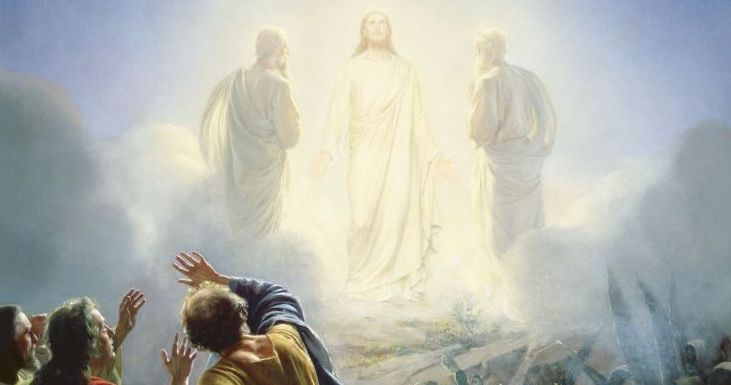
Our text begins as Moses is descending Sinai one final time. This last journey up the mountain was probably the most grueling for Moses. The verse right before our reading says that Moses was on the peak forty days and nights eating no food and drinking no water (Ex. 34:28). Of course, that isn’t humanly possible, but God made it happen. The fact that Moses is even alive after all of that is a miracle. But not only was Moses alive, he wasn’t disheveled or haggard. Instead, Moses’ face shined because he had been talking with God. His face reflected God’s glory, and the people were afraid again.

Now, the cause of their fear wasn’t God’s voice. Instead, it was the fact that the skin of Moses’ face was shining. The people didn’t want to come near Moses. So, Moses would hide his face behind a veil when he finished speaking God’s Word to them.

All of this is to say that the people were afraid when God came near. They were afraid when God spoke to them directly, and they were afraid when Moses was their intermediary. The people didn’t want God to come near to them.

In Jer. 23:29, God describes His Word saying, “Is not My Word like fire, declares the Lord, and a hammer that breaks the rock in pieces?” But in Is. 55:10, God also says that His Word is like the rain and snow that creates life by giving seed to the sower and bread to the eater. We might wonder, “Well, which is it, God? Does Your Word burn and break, or does it give life?” Well, dear saints, God’s Word does both. In Is. 55:11, God says that His Word will always accomplishes what God desires.

Dear saints, you cannot hear God’s Word and remain unchanged. Either you will be softened toward it, or you will be hardened against it. And that is one of the beautiful things about the liturgy we use here because, through that liturgy, God comes near so He can speak to you and create faith.

You hear God’s Law where He says that your sins have harmed you and alienated you from Him. Because of our sins, we should all be afraid like the people who didn’t want God to come too close. So our liturgy is also filled with the Gospel.

You hear how God comes near, not to destroy you but to forgive you and give you eternal life. You hear how Christ has come near by taking on your flesh and becoming one of you. Our Lord came near to remove the veil between us and God so we could stand in His holy, glorious, gracious, merciful presence. The entire service is designed to lead us out of our sinful desires and draw us to God’s side. Through our liturgy, God comes near to us so we can come near to Him.

Even though we have all sinned against God, He doesn’t want to be distant. Dear saints, God wants to bless you. He wants you to behold His face as it shines upon you in grace. He wants to lift up His countenance upon you and give you His peace (Num. 6:24-26).

That peace with God is yours through the death and resurrection of your Lord and Savior, Jesus Christ. In Christ, God has come near to you to dwell among you. In Jesus, you see God’s glory, full of grace and truth. And from His glory you receive grace upon grace (Jn. 1:14, 16). Amen.

The peace of God, which surpasses all understanding, will guard your hearts and minds in Christ Jesus. Amen.

Depend – Sermon on Matthew 22:34-46 for the Eighteenth Sunday after Trinity

Matthew 22:34–46

34 But when the Pharisees heard that he had silenced the Sadducees, they gathered together. 35 And one of them, a lawyer, asked him a question to test him. 36 “Teacher, which is the great commandment in the Law?” 37 And he said to him, “You shall love the Lord your God with all your heart and with all your soul and with all your mind. 38 This is the great and first commandment. 39 And a second is like it: You shall love your neighbor as yourself. 40 On these two commandments depend all the Law and the Prophets.”

41 Now while the Pharisees were gathered together, Jesus asked them a question, 42 saying, “What do you think about the Christ? Whose son is he?” They said to him, “The son of David.” 43 He said to them, “How is it then that David, in the Spirit, calls him Lord, saying,

44 “‘The Lord said to my Lord, 
“Sit at my right hand, 
until I put your enemies under your feet” ’?

45 If then David calls him Lord, how is he his son?” 46 And no one was able to answer him a word, nor from that day did anyone dare to ask him any more questions.

In the name of Jesus. Amen.

This Gospel reading takes place on Holy Tuesday. In other words, it is just a few days before Jesus will be crucified, and what we heard is Jesus’ last public teaching until He preaches the seven last words from the cross. The Pharisees and Sadducees are asking our Lord three questions to try to entangle Him in His words (Mt. 22:15). They want Jesus to say something they can use against Him and kill Him. The first two questions they asked were about paying taxes and the resurrection. But Jesus answers both questions so skillfully that they can’t find a way to accuse Him.

Our text begins with their third and final trick question that comes from a sleezy lawyer. “Teacher, what is the great commandment in the Law?” It seems as though the intent of this question is to get Jesus to put one of the Commandments above the others, and when He does that, they will say that He teaches that the other nine aren’t as important. But they end up looking like fools. It was Jesus’ finger that carved those words into the stone tablets and His voice that spoke them on Mt. Sinai. Jesus is the Author of the Commandments, and they are all important.

So, Jesus answers the question, “The great Commandment is this: love God with everything you’ve got and love your neighbor as yourself. On these two commandments depend all the Law and the Prophets.” In other words, Jesus is saying, “All the Commandments matter. All of them are the greatest. They all demand that you love God and love your neighbor. All the Commandments depend on these two.” Jesus is clear here, and Scripture is clear elsewhere that what the Commandments require of us is to love. Love is the fulfilling of the Law (Ro. 13:10b). In every situation, you are to love God and love your neighbor. And it is important to spend some time on this because there is a lot of unnecessary confusion about what love looks like. A pastor friend of mine (Pr. Bryan Wolfmueller) put together a list that helps to define and shape what love looks like. And this list is biblical and, I think, very helpful.

First, love is shaped by the Ten Commandments. Love does not mean that there are no other Commandments. No, the Commandments define what love is. Love depends on the Commandments. If you are fornicating and committing adultery, you cannot presume to say that it’s ok because, “We love each other.” Adultery is always unloving.

Second, love is shaped by our vocation or our station in life. Everyone has several vocations, so I’ll use myself as an example here. Some of my vocations are husband, father, pastor, a child of my parents, a friend, etc. In each of those vocations, I am called to love. But what that love looks like depends on those different vocations. For example, part of my love as a father includes providing for my family. So, I earn a living so my wife can go and buy socks for our kids. As a pastor, my love looks different. It looks like faithfully preaching and teaching God’s Word to you, the flock that God has entrusted into my care. My vocation as a pastor does not require me to buy socks for all of you. Pastors are not called to provide socks for their congregations. But that, then, leads us to the third thing that shapes our love.

Our love is also shaped by the needs of our neighbor. If one of you, who aren’t part of my family, needs socks and can’t get them for yourself, my love for you would be to give you socks. Even if the only reason I know you and your need socks is that I’m your pastor, I’m not giving you socks because I’m your pastor. I’m giving you socks because I am your brother in Christ. And if I needed socks, I would want one of you to give me socks if you have the means and resources to provide them. In that instance, I’m loving you as I would love myself. (I think this is the most I’ve ever used the word ‘socks’ in a sermon, but I’m done now.)

That leads us to the fourth thing that shapes our love which is the gifts God has given us. God gives us stuff, skills, and talents so we can use them to love and serve our neighbor. If God has made you successful and given you a lot of money, use those resources to love your neighbor. If God has given you the talent of being good at cooking, you love your neighbor by cooking. If God has given you good mind for math, you can love your neighbor as an engineer or an accountant. The beautiful thing about this one is that the gifts God gives you can help you love your neighbor across different vocations. A person who is good at math can be a good accountant. He can earn a good living and provide for his family and, at the same time, love and serve his clients who need someone to keep their books.

Just briefly here, our neighbor’s need might mean that we have to love our neighbor in a way that we aren’t gifted. Imagine a meteor hit the church during this service. We don’t have an ER doctor here, but we do have an optometrist, a medical student, nurses, and EMTs who are gifted in knowing how the body works and how to heal. They should be the ones who go to the people who are most injured and help them. And if more people are injured, those of us who aren’t gifted in that way are called to do the best we can even though that kind of love is usually reserved for doctors and nurses. Our neighbor’s need trumps how we are gifted. Especially in an emergency, we love and serve others based on their needs rather than our love depending on our gifts. And when the ambulances get here, we who don’t know as much about first aid should step aside and let the professionals use their gifts to serve the people in need.

So, the first four things that shape our love are: 1) the Ten Commandments; 2) our vocation; 3) our neighbor’s need; and 4) our gifts. All of that is fairly obvious and reasonable. But there is another thing that shapes our love, and this last one is one that our culture fights against (for several reasons). But this one is also important to consider. The fifth thing that shapes our love is our neighbor’s sin, and this is where things can get tricky and difficult. But this is also where Jesus’ summary of the Ten Commandments – love God with everything and love your neighbor as yourself – is helpful. And God gives you wisdom to help navigate this.

Imagine you know someone who is addicted to fentanyl, your calling is still crystal clear: you are called to love that person. But now what is that love going to look like? Is it loving to just step aside and let them keep killing themselves by using that fentanyl? No, it isn’t. Their sin against themselves might even mean that you need to break one of the Commandments in order to love them. You might need to steal their fentanyl even though stealing is sin and a violation against the 7th Commandment.

Now, please recognize that the Ten Commandments are still the primary thing that shapes and defines our love. But because of your neighbor’s sin, you break the 7th Commandment about stealing in order for you to keep the 5th Commandment which calls you to do your neighbor no bodily harm, but help and defend him in every need. This is why knowing the Commandments is so important. And, again, your vocation still plays into this too. You aren’t called to travel to San Francisco, Seattle, or Portland and steal fentanyl from all the addicts in those places.

Our neighbor’s sin can hinder the ways we love them. Parents, when your children are breaking the 4thCommandment and not obeying you, your love for them looks like disciplining them; it isn’t what you want to do, but you are called to do it (Pro. 22:15; 23:13; Heb. 12:11). If you have abusive parents, you are still called to keep the 4th Commandment and honor them, but their sin could mean you have to disobey them if they demand you do something contrary to God’s Word. If your cousin, Stacy, is getting married, your love normally looks like going to her wedding and celebrating with her. But if she is breaking the 6th Commandment by trying to be married to another woman, your love for her means not going to the wedding because that would embolden her in her sin against the 6th Commandment. Yes, this is hard and difficult. Yes, this is uncomfortable. Yes, it is even confusing. You are always called to love, but sin can put constraints on love.

And that brings us to the second part of our text which is the question Jesus asks the people who are trying to trip Him up. Jesus turns the discussion to the identity of the Messiah. The Savior is David’s Ancestor and also David’s Lord. The way this is possible is that Jesus is the fully Divine, eternal Son of God and fully human. Christ is God and Man.

Your Savior’s love for you was fully shaped by the Ten Commandments, which Jesus kept perfectly. His vocation was to be the Messiah and shed His blood and bear the punishment for the sins of all humanity because that was our need. He was gifted with everything necessary to be the Savior. And He navigated our sin in such a way that He perfectly loved God by loving us and bearing our sin to the cross. Now, He is risen and lives and reigns on the throne of all creation for eternity. 

Your eternal life totally depends upon what Jesus, the Son of God and Son of David, has done. God be praised that He has done all things well (Mk. 7:37). Amen.

The peace of God, which surpasses all understanding, will guard your hearts and minds in Christ Jesus. Amen.

Origins – Sermon on Genesis 2:7-17 for the Seventh Sunday after Trinity

Genesis 2:7-17

7 [T]hen the Lord God formed the man of dust from the ground and breathed into his nostrils the breath of life, and the man became a living creature. 8 And the Lord God planted a garden in Eden, in the east, and there he put the man whom he had formed. 9 And out of the ground the Lord God made to spring up every tree that is pleasant to the sight and good for food. The tree of life was in the midst of the garden, and the tree of the knowledge of good and evil. 

10 A river flowed out of Eden to water the garden, and there it divided and became four rivers. 11 The name of the first is the Pishon. It is the one that flowed around the whole land of Havilah, where there is gold. 12 And the gold of that land is good; bdellium and onyx stone are there. 13 The name of the second river is the Gihon. It is the one that flowed around the whole land of Cush. 14 And the name of the third river is the Tigris, which flows east of Assyria. And the fourth river is the Euphrates. 

15 The Lord God took the man and put him in the garden of Eden to work it and keep it. 16 And the Lord God commanded the man, saying, “You may surely eat of every tree of the garden, 17 but of the tree of the knowledge of good and evil you shall not eat, for in the day that you eat of it you shall surely die.”

In the name of Jesus. Amen.

It should come as no surprise, but this text is fundamental and foundational to understanding who we are as God’s creatures. But to really get to the roots of who we are, we first have to understand who God is as our Creator, and this text gives us one piece of that understanding. The other piece came just before our text.

The Bible gives us two very different accounts of creation. In Genesis 1:1-2:3, God creates the sun, moon, stars, land, sky, plants, fish, birds, mankind, and all things by simply speaking. Whatever He commands comes into being. The whole account is filled with the repeated words, “And God said…. And it was so.” Then, God rests. Throughout those six days of creating and the seventh day of rest, He is simply called “God” (Heb.‘Elohim’). In that first account account of creation, we see a God who is transcendent – He is not subject to the limitations we are used to.

But then in our text here, the second account of creation, we see something remarkably different. The difference can be seen just a few verses before our text began in how Moses refers to God. No longer is He simply ‘God’ – He is the Lord God. In Hebrew, it is Yahweh God. In other words, this transcendent, powerful God has a name, and He is close and personal – especially with the head of His creation, Adam.

Yahweh puts His hands into the earth, molds the clay to form the man, and breathes life into Adam’s nostrils (Gen. 2:7). Then that immanent, personal God plants a garden for Adam (Gen. 2:8-9). After our text, Yahweh remains close to Adam by causing him to sleep and performing a surgery on him in order to create the woman. And Yahweh brings the woman to Adam as his suitable helper and joins them together in marriage so they would become one flesh by having children (Mt. 19:6; Mk. 10:9).

From these two accounts of creation, we have an important insight into God. He is mighty, powerful, and uninhibited. But He is also intimately close and involved with mankind.

Finally, after God finishes creation, He rests on the seventh day. Now, God doesn’t rest on the seventh day because He is tired. He created by merely speaking, and God speaks a lot more through the rest of Scripture but doesn’t grow tired or need a nap (Ps. 121:3-4). Instead, those two creation accounts help us understand something about that day of rest. God rests because He has set up all of creation to be His Temple where He will rest in the order and peace that He has established.

When I was younger, I imagined God created everything while He sat far away in heaven, speaking things into existence, but staying aloof somewhere way up there in heaven. But that scenario isn’t compatible with the rest of Scripture.

God’s desire is to dwell with people, the crown of His creation. The final picture Scripture gives of the eternal bliss of believers is God making His dwelling with you (Rev. 21:3). This desire of God to dwell among His creation becomes especially clear after the Fall. When God delivers His people from slavery in Egypt, He instructs them to build the Tabernacle so He can dwell in their midst (Ex. 25:8). In that Tabernacle, and later in the Temple, God says that He will walk among them (Lev. 26:12; 2 Sam. 7:6-7) just as we see He does in Gen. 3:8. To do that, God’s instructions on how to build the Temple in Jerusalem include many of the same materials, like gold and onyx stones, and the same ‘floorplans’ we read about here in the Garden of Eden.[1]

Now, that brings us to the nature of mankind. God puts Adam in the midst of that newly created Temple of Eden and gives Adam two responsibilities. Our translation says that Adam is there “to work it and keep it.” The two Hebrew words there can refer to a lot of activities, but when Scripture uses these two terms together, they most often refer to the duties and responsibilities of the priests in the sanctuary of the Tabernacle and Temple (Num. 3:7-8, 8:26, 18:5-6). In other words, this text is telling us that mankind was created to be the priest and guardian of sacred space. We were not created just to be gardeners.

On top of being priests, God set up mankind to be kings and queens over creation. God said, “Be fruitful and multiply and fill the earth and subdue it, and have dominion over the fish of the sea and over the birds of the heavens and over every living thing that moves on the earth” (Gen. 1:26-28). So, from our very origin, we were created to be priests and the royal rulers over creation with God reigning in our midst.

Of course, sadly, we did not remain in that original state. Adam and his wife failed in their priestly duties. They did not guard the Temple of Eden as they should have. Instead, they let the foul serpent defile it, and they lost their priestly roles. Instead, God sent a cherubim to take over the responsibility of guarding the way to the Tree of Life (Gen. 3:24 [see also Ezk. 28:14-16]). They also gave up their royal status over creation. Instead of having dominion over everything that creeps on the earth, they listened to what should have been under their rule; they listened to the serpent’s lies. By eating the fruit of the Tree of the Knowledge of Good and Evil, they rejected God and His ordering of the world.

But, dear saints, God has provided a way back to the Tree of Life (Rev. 22:2, 14), a way back to being what we were created to be, a way back to our origin. Jesus, the new Adam (1 Cor. 15:21-22, 45, 47), has come and crushed the serpent’s head. By His death and resurrection, Jesus has now redeemed you and made you what you were created to be. Through faith in Christ, you are a chosen race, a royal priesthood, a holy nation, a people for His Own possession (1 Pet. 2:9). This very Jesus dwells among you even now (Mt. 18:20). And, as Christ’s people, you are called to be His priests and kings and queens, guarding the sacred spaces of this congregation and your family.

So repent. Repent of the times you have chosen to neglect and abdicate your position as God’s priests and royalty. Repent of the times you have listened to the serpent’s lies and not expelled him from the good gardens where God has placed you and given you priestly and royal authority. Repent because the only fruit you have gotten from those sins is death (Ro. 6:21).

And know, as our Epistle reading (Ro. 6:19-23) promises, that you have been set free from sin and are now the servants of God who gives you fruit that leads to sanctification and life (Ro. 6:22). And know that Christ has equipped you with everything you need to be His priests and royalty. You have the full armor of God (Eph. 6:10-18) to defend against the attacks of the devil, the world, and your own sinful flesh. And you have God’s promise that He will never leave you or forsake you. In a world that is still soiled and stained with sin, Christ has brought you back into His kingdom, and He will lead you to eternal paradise with Him. Amen.The peace of God, which surpasses all understanding, will guard your hearts and minds in Christ Jesus. Amen.


[1] Gold and onyx (Gen. 2:11-12) are used to decorate the sanctuaries and priestly garments (Ex. 25:7, 11, 17, 31). The Tabernacle/Temple lampstand probably symbolizes the tree of life (Gen. 2:9; Ex. 25:31-35). Even the river flowing from Eden (Gen. 2:10) resembles Ezekiel’s Temple vision (Ezk. 47:1-12). 

In This Way, God Loved the World – Sermon on John 3:1-17 for Holy Trinity Sunday

John 3:1–17

1 Now there was a man of the Pharisees named Nicodemus, a ruler of the Jews. 2 This man came to Jesus by night and said to him, “Rabbi, we know that you are a teacher come from God, for no one can do these signs that you do unless God is with him.” 3 Jesus answered him, “Truly, truly, I say to you, unless one is born again he cannot see the kingdom of God.” 4 Nicodemus said to him, “How can a man be born when he is old? Can he enter a second time into his mother’s womb and be born?” 5 Jesus answered, “Truly, truly, I say to you, unless one is born of water and the Spirit, he cannot enter the kingdom of God. 6 That which is born of the flesh is flesh, and that which is born of the Spirit is spirit. 7 Do not marvel that I said to you, ‘You must be born again.’ 8 The wind blows where it wishes, and you hear its sound, but you do not know where it comes from or where it goes. So it is with everyone who is born of the Spirit.”

9 Nicodemus said to him, “How can these things be?” 10 Jesus answered him, “Are you the teacher of Israel and yet you do not understand these things? 11 Truly, truly, I say to you, we speak of what we know, and bear witness to what we have seen, but you do not receive our testimony. 12 If I have told you earthly things and you do not believe, how can you believe if I tell you heavenly things? 13 No one has ascended into heaven except he who descended from heaven, the Son of Man. 14 And as Moses lifted up the serpent in the wilderness, so must the Son of Man be lifted up, 15 that whoever believes in him may have eternal life.

16 “For God so loved the world, that he gave his only Son, that whoever believes in him should not perish but have eternal life. 17 For God did not send his Son into the world to condemn the world, but in order that the world might be saved through him.

In the name of Jesus. Amen.

Sometimes, broad, general statements are more comforting than pointed, specific statements. I heard a church historian tell the story about Martin Luther being asked if he wished that John 3:16 read, “For God so loved Martin Luther, that He gave His only Son…” And Luther said, “No! I’d be searching my entire life for another guy named ‘Martin Luther.’”

Does God love you? How do you know? “For God so loved the world,” and you are part of the world, “that He gave His only-begotten Son that you who believe in Him will never perish but have everlasting life.” Yes. God loves you. He loves you. Yesterday, God loved you. Three months ago, God loved you. Five years ago, God loved you. While you were a sinner, God loved you (Ro. 5:8). Before you were born, God loved you. Two thousand years ago as Jesus carried His cross out of the gates of Jerusalem, God loved you. Before the foundation of the world, God loved you. Christian, according to Revelation 13:8, God wrote your name in the Book of Life even before He said, “Let there be light” (Gen. 1:3).

John 3:16 is probably the most familiar verse of Scripture in our day and is the “ABC’s and 1, 2, 3’s” of the faith. Today, we’re going to graduate “Christianity 101” and consider John 3:16 as “Christianity 201.” We’re going to dissect two words of the verse – the words ‘for’ and ‘so’ – because those words help us understand the context and meaning of the verse.

We’re going to spend most of our time on the word ‘for,’ so bear with me. Because the verse starts with the word ‘for,’ we have to consider the context. That word ‘for’ ties John 3:16 to what comes before it, which is Jesus recalling how Moses lifted up the serpent in the wilderness (Num. 21:4-9), which was our Old Testament reading three weeks ago.

There, God’s people had been sentenced to forty years of wandering in the wilderness (Num. 14:28-35). During that time of exodus, the people become impatient and said the only reason Moses lead them out of slavery in Egypt was so they would die in the wilderness (Num. 21:5). They complained about the food God was miraculously and faithfully raining down upon them each day. So, God sends fiery serpents to bite the people, and many of them die. Finally, they ask Moses to pray that God would take away the serpents. God answers their prayer, but not by taking the serpents away. Instead, God gives them the cure for the venom. God instructs Moses to make a bronze serpent, set it on a pole, and tell the people to look at if they are bitten and they would be cured of the venom and live.

This God-given cure seems odd, but consider it for a minute. The dead, bronze serpent lifted up on the pole is the God-given sign that God is destroying their enemy and killing it. By looking at the serpent, they believe that God is defeating their enemy and that He is in control. That faith is what saves them. Now here in John 3, Jesus says that just as the serpent was lifted up in the wilderness, so must He be lifted up. In other words, the people were saved in the wilderness by looking at an image of their defeated enemy.

Now, this is a little more challenging to grasp, but it’ll be worth it. When Jesus is on the cross, He quotes Psalm 22:1, “My God, My God, why have You forsaken Me?” (Mt. 27:46; Mk. 15:34). Psalm 22 is one of the most vivid descriptions of the crucifixion – almost more vivid than what the Gospels record for us. The Psalm says, “all who see me mock me… they wag their heads” (Ps. 22:7) which we see happening in Mt. 27:39 and Mk. 15:29. The Psalm says, “They divide my garments among them, and for my clothing they cast lots,” (Ps. 22:18; Jn. 19:24). The Psalm says, “They have pierced my hands and feet,” (Ps. 22:16). I could go on, but you should just read Ps. 22 with the crucifixion in mind today.

The verse from Ps. 22 we need to focus on today is Ps. 22:6 which says, “I am a worm and not a man.” When Jesus quotes Psalm 22 from the cross, He is stating He is a worm and not a man. Now, stick with me here. Satan’s lies in the Garden deceived the woman; she ate (Gen. 3:13; 1 Tim. 2:4), and Adam also ate. Our first parents sinned, and their sin brought the poison of death and corruption to all mankind. So, on the one hand, Jesus crucifixion places the sins of the world on Jesus, the new Adam, and punishes those sins there.

But, ultimately, the source and origin of that sin is the devil. The serpent’s deceiving poison brought sin and death into the world. That is why God promises to crush the serpent’s head (Gen. 3:15). This is why John 3:16 is tied to Moses lifting up the serpent in the wilderness. When we look to Jesus’ crucifixion, God wants us to see that Christ is defeating sin at it’s source which is the serpent. Most cultures and languages, including our own, make a connection between worms, serpents/snakes, and dragons. Here in John 3, Jesus says that He is the serpent who is hung on the cross for the salvation of the world. In other words, Jesus utterly defeats sin at its source.

When you look upon Jesus who is crucified for you, you believe that Jesus has taken the punishment for all sin and all evil. God made Jesus, who knew no sin, to be sin so that in Jesus you might become the righteousness of God (2 Cor. 5:21).

That brings us to the other word, ’so.’ The word there in Greek isn’t a magnifier or amplifier. It does not mean, “God loved the world so much.” The Greek word there means, “in this way.” God loved the world in this way, that He gave His only-begotten Son to utterly defeat sin and the origin of sin on the cross. Now, you who believe in Him will not ever perish, but have everlasting life. This is the way God loved the world.

God is love (1 Jn. 4:8, 16), but that can only be true because of the Trinity. For there to be love, there must be something to love. If God were one, He could not have love as part of His essence. Love would not be essential to His existence. A god who is only one could think highly of himself, but that isn’t love. Only with the Trinity it is possible for God to be love. There is an eternal love of the Father for the Son and Spirit, a love of the Son for the Spirit and Father, and a love of the Spirit for the Father and Son. This perfect relationship of love has eternally existed in the one God who is Father, Son, and Holy Spirit.

In God Himself, there has always been an object of love. No other religion can say that love is essential to who God is because no other religion confesses the Trinity. Ever since the creation, that perfect, eternal love that has always existed between Father, Son, and Holy Spirit now flows from God to us, His creatures. And we know that because God gave His Son to save and forgive us on the cross.

The Father and the Son and the Holy Spirit is God. The Son has done for us what we could not do for God. Jesus has come and was perfectly obedient to all of God’s commands. Because He is God, Jesus can render His perfect obedience back to God on our behalf. And the Holy Spirit creates faith in that work of Jesus.

Dear saints, all of this is to say that because God is Triune, He can perfectly love and save you by grace. Because God is Father, Son, and Holy Spirit, you are not simply His slaves or pets. No. You are the object of His love. God the Father has created you out of pure love. God the Son has redeemed you out of pure love. And God the Holy Spirit has sanctified you out of pure love. You are saved and redeemed to be God’s children.

Jesus, the eternal Son of God, has come into the world not to condemn you, but in order that you might be saved through Him. Blessed be the holy Trinity. Amen.

The peace of God, which surpasses all understanding, will guard your hearts and minds in Christ Jesus. Amen.

Good & Perfect Gifts – Sermon on James 1:12-21 for the 5th Sunday of Easter

Listen here.

James 1:12–21

12 Blessed is the man who remains steadfast under trial, for when he has stood the test he will receive the crown of life, which God has promised to those who love him. 13 Let no one say when he is tempted, “I am being tempted by God,” for God cannot be tempted with evil, and he himself tempts no one. 14 But each person is tempted when he is lured and enticed by his own desire. 15 Then desire when it has conceived gives birth to sin, and sin when it is fully grown brings forth death. 16 Do not be deceived, my beloved brothers. 17Every good gift and every perfect gift is from above, coming down from the Father of lights, with whom there is no variation or shadow due to change. 18 Of his own will he brought us forth by the word of truth, that we should be a kind of firstfruits of his creatures.

19 Know this, my beloved brothers: let every person be quick to hear, slow to speak, slow to anger; 20for the anger of man does not produce the righteousness of God. 21 Therefore put away all filthiness and rampant wickedness and receive with meekness the implanted word, which is able to save your souls.

Alleluia! Christ is risen!
He is risen indeed! Alleluia!

In the name of Jesus. Amen.

As Christians, we know the Source of all good things. “Every good and every perfect gift is from above, coming down from the Father of lights.” So, for example, when you have a perfectly cooked steak (which, by the way, means rare – not well-done not medium, rare), you know that it has come from God. When you are protected from the cold or snow or heat or rain in your house; when you are surrounded by your loving family; when you are awed at the sight of a majestic mountain, a serene sunset, a perfect prairie; when your body works as it is supposed to; you know all of that comes to you as a good gift from God. And because you know it comes from God, you don’t have to ask, “Is this good?”

You don’t have any problem recognizing those good things as coming from God. But you do have the opposite problem.

We sinners are all deceived when we see something that God has not given but think it is good and God is holding out on us. Whenever we do that, we sin.

A lot of people say, “Love is good and can’t be bad.” But if you love someone who is not your spouse and think that is ok to indulge that love, you are wrong. You are deceiving yourself. It is forbidden. It is sin. It is going to hurt you and others.

Same thing goes for the truth. If you realize that the truth is going to harm you or your reputation, you try to be God. You use your words to try to create a different reality or a different truth – in other words, you lie. Again, you have been deceived by your own false desires. You have sinned. You are fostering and nurturing sin which grows up into death. Repent.

Those false desires are like an infomercial or used car salesman. Sin likes to promise of pleasure and ease and peace, but it never delivers.

Dear saints, put those false desires away. Instead of dwelling on and being enticed by those false desires (show James 1:19-21), be slow to speak, slow to anger. Your false desires only bring about anger and sin and death. And most importantly, be quick to hear. Be quick to hear especially the Word of God because it is that very Word of God that the Holy Spirit uses to bring you forth, to give you the new birth which is a perfect gift from above.

God does not play in the false promises that sin and false desire does. Sin is always ready to make a deal with us, and we love making deals because we can negotiate the terms. We want to calculate the cost of the time, effort, and resources we put in and evaluate the payout. Since we like to bargain and deal, sin has us square in its crosshairs.

But God doesn’t operate that way. God does not make dazzling, enticing, or fake promises. God isn’t a swindler, and He doesn’t make trades. God is a giver. With a giver, you can receive or reject, but you can’t make a deal (Nagel). The giving-God doesn’t play around with negotiations, and we cannot make a deal with Him no matter how hard we try because we have nothing to offer that isn’t His already. Instead, God gives us every good and every perfect gift.

We have all sorts of good gifts here in this life. That steak, the beauty of creation, the relationships that God has given us in this life are all good gifts that we have not earned or deserved. Even your life is a good gift from God. Life is always a gift. No one can give themselves physical life. God used your mother to give you life, and for that we are grateful today. Again, all of these are good gifts, and they are good (but not perfect) gifts because they do not and cannot last.

But the giver-God who is pleased to give you good gifts is also pleased to give you perfect gifts which will never fade and will last for all eternity.

Through Christ’s death and resurrection, God gives you eternal life as His children. He brings you forth by His Word of truth. For most of you, God gave you eternal life when He connected His Words and promises to the waters of your Baptism.

When you heard the Absolution earlier, God actually did what His Word said. The same thing is true when you receive Holy Communion. God gives and delivers exactly and precisely what He says – forgiveness, life, and salvation.

When you hear the Benediction in a few minutes, you will actually receive God’s blessing which is why I encourage you to open your hands to receive the Benediction. It helps to remind you that God is actually doing, delivering, and giving to you exactly what those words say (Num. 6:27).

With all the good gifts and all the perfect gifts we receive from God, we can begin to get uneasy. We think it’s too much. We think we are going to be punished by God if we abuse or misuse these good and perfect gifts. But God doesn’t tire of giving. He just gives more. He would have us open our hands wider to keep receiving good and perfect gifts from Him. And if you are worried that His gifts will get too big and overwhelm you, there is a simple solution: Join God in His giving game.

Because God continues to pour out His gifts and blessings us, we know that we are free to bless others and join God in giving His gifts away.

The giver-God pours out His good and perfect gifts on you because He has made you His child. With each gift, He nudges you to open your hands wider to both to receive and to give.

With hands held wide open to receive and give His gifts, we move forward from being the firstfruits toward the joy of the final harvest.

Alleluia! Christ is risen!
He is risen indeed! Alleluia!

Amen.[1]

The peace of God, which surpasses all understanding, will guard your hearts and minds in Christ Jesus. Amen.

[1] I am thankful for a sermon by Dr. Normal Nagel for the outline and theme of this sermon.

From Commandment to Creed – Sermon on Matthew 22:34-46 for the Eighteenth Sunday after Trinity

Listen here.

Matthew 22:34-46

34 But when the Pharisees heard that he had silenced the Sadducees, they gathered together. 35 And one of them, a lawyer, asked him a question to test him. 36 “Teacher, which is the great commandment in the Law?” 37 And he said to him, “You shall love the Lord your God with all your heart and with all your soul and with all your mind. 38 This is the great and first commandment. 39 And a second is like it: You shall love your neighbor as yourself. 40 On these two commandments depend all the Law and the Prophets.”

41 Now while the Pharisees were gathered together, Jesus asked them a question, 42 saying,“What do you think about the Christ? Whose son is he?”They said to him, “The son of David.” 43 He said to them, “How is it then that David, in the Spirit, calls him Lord, saying,

Psalm 110_1 Footstool44 “The Lord said to my Lord,
‘Sit at my right hand,
until I put your enemies under your feet’?

45 “If then David calls him Lord, how is he his son?” 46 And no one was able to answer him a word, nor from that day did anyone dare to ask him any more questions.

In the name Jesus. Amen.

This Gospel text drops us right into the middle of a conversation that Jesus had in the Temple on the Tuesday of Holy Week with the very people who want to destroy Him. The Pharisees and Sadducees are all trying to trap Jesus and entangle Him in His words. Their purpose is to make either the crowds or the authorities (they don’t care which) turn against Him so they can kill Him and be rid of Him and His preaching.

The first two questions they put to Jesus are about paying taxes and about the resurrection. Both of these questions are designed to take one part of God’s Word and make it contradict another part. And both questions appear to have no good answer. The leaders think that no matter how Jesus answers their question, they will have Him. But they are wrong. Jesus answers both questions leaving them dumbfounded.

Our text begins with the third question. One of the Pharisees, a lawyer, asked Jesus a question, again to test and to trap Jesus in His words.“Teacher, which is the great commandment in the Law?” The purpose of this question is to figure out which Commandment Jesus thinks is most important so that they can find a commandment set against it.

But again, this is absolutely foolish because Jesus knows there is no contradiction in the Law. He is the one who wrote the Law.

Jesus answers, “You shall love the Lord your God with all your heart and with all your soul and with all your mind. This is the great and first commandment.And the second is like it: you shall love your neighbor as yourself. On these two commandments depend all the Law and prophets.”

Now, it is interesting in Mark’s account of this same event, the same questioning, that Jesus says there’s no other commandment (singular) greater than these (plural). Perfect love of God and perfect love of your neighbor go together. It is one commandment. The two are inseparably tied together. Love for God is demonstrated by love for the neighbor.

1 John 4_20-21 Love God and Neighbor


1 John 4:20 
says, “If anyone says, ‘I love God,’ and hates his brother, he is a liar; for he who does not love his brother whom he has seen cannot love God whom he has not seen.”And Jesus says in Matthew 25(:40) that the acts of love that you do toward your neighbor you do toward God. “As you did to the least of these, you did also to Me.”In other words, when you love your neighbor, you are loving God.

So, think about that for a moment. When you are helping, supporting, encouraging your spouse, you are serving both God and your spouse. You are loving both God and neighbor. When you feed your kids, when you obey your parents, when you do your homework, you are serving your neighbor and thereby serving God. Telling the truth, living a caste life, returning a lost wallet or purse instead of stealing, being content with what you have instead of coveting – all of these actions are service to God and your neighbor. Whoever is your neighbor, whoever God puts in your life at any given moment, that is the one whom God wants you to love. And when you love that neighbor, whoever it may be, you are loving God.

While that is so very beautiful, if we stop to think about it, this command to love God and neighbor demands everything of us. And we realize how fallen and sinful we are. This command shows us our desperate need for God to come and rescue us.

With His answer, with His preaching of the Law to love both God and neighbor, Jesus cuts down these people who are trying to trap Him, and He cuts you and I down as well because our sin is exposed. We do not love enough. We never have, and we never will.

But notice Jesus doesn’t take the conversation in that direction. He doesn’t ask them, “How are you doing with loving God and your neighbor?” Jesus doesn’t continue to have a conversation about the Law.

Instead, Jesus moves away from questions about the Law to the Creed. The Law is good and important. It shows us the nature and will of God, but the Law always shows us our sin. The Law tells us what we must do, but it always tells us what we have failed to do.

But the Creed shows us how God is toward us. The Creed isn’t about what we must do, it is the Gospel. It is what God has done for us. In the Creed, we confess that God is the Father who created us sent His Son who redeemed us and gives us the Holy Spirit who sanctifies us and makes us holy.

So, Jesus moves away from the Law to the Creed. He asks them, “The Messiah, whose son is he?”And they were right when they say, “David’s son.”God had promised to send David a son who would sit on David’s throne forever (1 Sam. 7). But David also wrote in Psalm 110:1, which is the verse that Jesus quotes, that this Son is also David’s Lord. So, Jesus’ question is, “How can the Messiah, David’s son, also be David’s Lord?”because a father would never call his descendent, “Lord.”

Now stay with me here: The reason Jesus asks this is that He is teaching the Pharisees, the crowds, and you that the Messiah is both God and man.

Because the Messiah is both God and man, He has kept the Law for you. Jesus perfectly loved God and your neighbor for you. And through faith, Jesus declares that what He has done perfectly, you have done as well (2 Cor. 5:21).

The Law says, “Honor thy father and mother. Love them as yourself.” And you are left saying, “God, I haven’t done that. I need Your help.” If it weren’t for the Creed, if the Messiah weren’t man, God would have to say, “Well, I’m God. I don’t have a father or mother, so I can’t help you. You have to do that yourself.” But God did become a man. Jesus had a mom and a dad. He did love and honor them perfectly. So, He can and does help you. And you can apply this to each and every one of the Commandments.

But most importantly, when you hear the law and know that you have sinned, you know that you deserve death. You deserve the eternal wrath and judgment of God. So, you pray, “God I’m lost. I deserve only death, could You die for me?” Because God has taken up your nature, God says, “Sure. I already have.”

Communion Cross with JesusStop playing games with the Law, there is no contradiction in it. Instead, believe. Believe that Christ has come for you. He has given His life for you. God has purchased you with His own blood (Act. 20:28). He has removed the curse of the Law from you because He has perfectly kept the Law for you. And He gives you His perfection, His righteousness, His holiness.

And, now, He invites you to have your faith strengthened. He invites you to receive His perfect Body and His holy Blood in Bread and Wine. He invites you to come and taste that He is good. Amen.

The peace of God, which surpasses all understanding, will guard your hearts and minds in Christ Jesus. Amen.