Waiting & Receiving – Sermon on Isaiah 40:25-31 for the Fourth Sunday of Easter

Isaiah 40:25-31

25 To whom then will you compare me, 
that I should be like him? says the Holy One. 
26 Lift up your eyes on high and see: 
who created these? 
He who brings out their host by number, 
calling them all by name; 
by the greatness of his might 
and because he is strong in power, 
not one is missing. 

27 Why do you say, O Jacob, 
and speak, O Israel, 
“My way is hidden from the Lord, 
and my right is disregarded by my God”? 
28 Have you not known? Have you not heard? 
The Lord is the everlasting God, 
the Creator of the ends of the earth. 
He does not faint or grow weary; 
his understanding is unsearchable. 
29 He gives power to the faint, 
and to him who has no might he increases strength. 
30 Even youths shall faint and be weary, 
and young men shall fall exhausted; 
31 but they who wait for the Lord shall renew their strength; 
they shall mount up with wings like eagles; 
they shall run and not be weary; 
they shall walk and not faint.

Alleluia! Christ is risen! 
He is risen indeed! Alleluia!

In the name of Jesus. Amen.

One of the greatest spiritual dangers that we all face is that, as we go through difficulties in life, we forget very obvious things – especially the fact that God loves us and is in control of all things. But it’s not as though you’ve actually forgotten it. It’s just that you don’t believe it. You don’t live your life in what you know to be true.

Smack in the middle of this text, God asks a question, and it sounds like He asks it out of frustration. “Why do you say, ‘My way is hidden from the Lord, and my right is disregarded by my God.’?” God doesn’t even wait for an answer. Instead, He addresses His question with a question. “Have you not known? Have you not heard? The Lord is the everlasting God, the Creator of the ends of the earth. He does not faint or grow weary; His understanding is unsearchable.”

Your God doesn’t wear out like you and I do. It’s not as though He needs to go sit in His lazy chair and kick His feet up to take a nap. He never encounters a situation where He isn’t quite sure what to do. We have known and we have heard that God is everlasting, that He is the Creator of the ends of the earth who does not grow faint or weary. We know that God has infinite understanding, that He gives power to the faint and strength to the weak. Our problem is that we don’t live like that is true. We encounter difficulties and live as though God does none of those things.

Dear saints, your God created every single star in the universe. Scientists guess that there are somewhere between 100-400 billion stars in our Milky Way galaxy. They don’t know the exact number, but that’s the estimate. Think about this – even if we took the small end of that estimate – if it only took God one second to name each star, 100 billion seconds is equivalent to 3,171 years, 66 days, 17 hours, and 46 minutes. And that’s just our galaxy.

Scientists estimate that there are between one to two trillion galaxies. Honestly, it wouldn’t surprise me that as we learn how to look farther we found out that the universe is even bigger than that. And it was nothing for God to create all those things. God created all of those things simply by speaking, “Let there be lights in heavens,” (Gen. 1:14) and there they were. Every one of them with a name and carefully placed in its position by your mighty God.

Now, contrast that with how God created you. When God created Adam, He didn’t simply speak. He got down into the mud and dirt and dust. He molded, formed, and shaped you from that dust and breathed into your nostrils the breath of life (Gen. 2:7). He intricately knitted you together in your mother’s womb (Ps. 139:1315).

Beyond that, God saved you by taking on your flesh and blood. He entered into His creation and subjected Himself to the weariness and fatigue that you endure (Jn. 4:6). Christ knew suffering and pain (Is. 53:3). Jesus did all of this to step between you and the wrath of God that you and I deserve because of our sin. He came to die and rise again in order to win you as His own.

In other words, God is much more invested in you than all the rest of creation. He’s more interested in what goes on in your life and what happens with you than with all the stars and galaxies that He calls by name. Again, we know this, but by the way we often live, it sure doesn’t look like it. Instead of waiting upon the Lord and soaring like eagles, we flap around like chickens.

I’m no expert on chickens, but the few times I’ve seen them “in flight” it’s pretty unimpressive. When they do get airborne, it’s usually because they’ve jumped as high as they can. They beat their wings – feathers flying all around. And the best they can do is just to fall less quickly. That’s the picture of us when we aren’t waiting upon the Lord. The best we can do in our own strength is fall a bit slower.

Eagles are completely different. This past Tuesday, Sarah and I just got to watch three eagles soaring in the distance. I don’t know what they were looking at, but for, maybe, five minutes they kept circling round and round. They would swoop down periodically, but then they would ascend on the invisible updrafts. The whole time we watched those eagles, none of them flapped their wings even once. They were just lifted by those updrafts. Those huge birds didn’t need to extend any effort to fly.

Dear saints, that is the picture of those who wait upon the Lord. This waiting on the Lord isn’t simply marking off time and watching the minutes and seconds tick by. This waiting is living in a confident expectation of God’s action on our behalf. This waiting is simply resting in God’s mercy which lifts us up to heaven. Romans 4:5 puts it this way, “To the one who does not work but believes in Him who justifies the ungodly, his faith is counted as righteousness.”

I’ll confess my own weakness in this. I’m not good at waiting. I don’t like doing it. I don’t have the patience I should have. Waiting is difficult, and I suspect this is true for all of us. We wrongly live as though everything around us is dependent upon our work, our effort, our wisdom. We think we have to get everything figured out on our own. It’s exhausting. Waiting might feel like we’re descending or, even, free-falling. But this waiting is waiting in faith where we receive from God, and He lifts us up.

I want to change gears for a minute to talk about this upcoming sabbatical. Dear saints, my prayer for this sabbatical is that all of us would come to a better understanding that this is God’s congregation and that He is more interested in His Word being proclaimed here than we are. I’ll confess that I start to slide into the sinful attitude that certain things are dependent on me and what I do. If that were actually the case, you, dear saints, are in deep trouble.

So, during this sabbatical, I’m going to do my best to rest. In 1 Co. 3:5-7, Paul tells the congregation in Corinth that he and other pastors are nothing. He says, “I planted, Apollos watered, but God gave the growth. So neither he who plants nor he who waters is anything, but only God who gives the growth.” This sabbatical will help all of us remember that.

God loves His church. He loves this congregation. He is more ready to give than we are to receive. So, thank you for the gift of this sabbatical so I can stop, wait, and receive from God for an extended time. I trust that God will use this time to renew and refresh me in ways that will benefit me and in ways that will benefit you.

May God remind all of us that when we are weary and exhausted that He is our strength. He is the One who lifts us up by His mercy and grace. His incomparable love carries us along. He protects and keeps us. He grows His church. He forgives our sins. He makes a place for us in eternal life through His inexhaustible love and work for us in Christ Jesus. May we all wait and receive from Him. Amen.

Alleluia! Christ is risen! 
He is risen indeed! Alleluia!

The peace of God, which surpasses all understanding, will guard your hearts and minds in Christ Jesus. Amen.

Sabbath Rest – Sermon on Genesis 1:1-2:3 and Luke 23:50-24:7 for the Vigil of Easter

Genesis 1:1-2:3 & Luke 23:50-24:7

Alleluia! Christ is risen!
He is risen indeed! Alleluia!

In the name of Jesus. Amen.

As we read through Genesis 1, there was a line that kept repeating. “And there was evening and morning the first day.” “And there was evening and morning the second day.” “And there was evening and morning the third, fourth, fifth, and sixth day.” But then, when we get to the account of the seventh day and expect to hear, “And there was evening and morning the seventh day,” we get nothing but crickets. Moses didn’t write that. But in and through that Holy Spirit inspired silence, there is an indication that the Sabbath day is incomplete. Yes, it was blessed with rest and holiness, but that day was still waiting for its completion and fulfillment.

That fulfillment came today, for us Westerners, or in the Jewish mind yesterday, Holy Saturday. The way days were reckoned in Jesus’ day, the new day began when the first two stars appeared in the sky. That’s why we start celebrating the Resurrection tonight, well before midnight. It’s why we celebrate Christ’s birth on the eve of His birth.

Jesus was crucified on Friday. In our Gospel lesson (Lk. 23:50-24:7), we heard how Joseph of Arimathea asked Pilate for the body of Jesus. Joseph took Jesus down from the cross and wrapped Him in a linen shroud and laid him in a new tomb. But because the Sabbath about to begin, Joseph, Nicodemus (Jn. 19:39), and the women weren’t able to finish the burial of Jesus. The sun was setting, and they didn’t have time to get the job done. The last verse of Luke 23 says, “On the Sabbath they rested according to the commandment.”

So, Joseph rested. The women rested. And, most importantly, Jesus rested, fulfilling the seventh day of creation.

Scripture says that after God finished creating everything on Friday, the sixth day, “God saw everything that He had made, and behold, it was very good” (Gen. 1:31). Then, God rested the following day, the seventh day, and made it holy.

On the Friday we call ‘good,’ the day of the re-creation and redemption of all things, Jesus saw everything He had done – His miracles, His teaching, His faithfulness to God and neighbor, how He perfectly obeyed God, how He had borne our griefs and carried our sorrows, and how He purchased and won us back – and behold, it was very good. That is why He could cry out, “It is finished,” before He breathed His last (Jn. 19:30).

Dear saints, Jesus, your slain Creator and Redeemer, endured the cross and labored in love for your peace and so you could have eternal rest. After completing His work, He entered His Sabbath rest as He lay there in the tomb.

Jesus’ task was done. Your sins were atoned for. He had finished His work that He had done, so He rested from all His work that He had done in creation. And now, Jesus has burst from the tomb, spitting in the face of death. The devil’s head has been crushed. Jesus has rested in the grave, and the Sabbath has been fulfilled so you can also enter into that perfect rest (Heb. 4:10).

And this has eternal significance for you. When you bury your loved ones, and when you yourself are buried, they and you follow Jesus into that rest. This is why Christian burial places are called ‘cemeteries.’ The word ‘cemetery’ comes from a Greek word koimeteria which means ‘sleeping place.’ We bury our brothers and sisters in Christ knowing that God isn’t done with them. We put them where they can rest and await the wake-up call that will be the trumpet blast on the Last Day when Jesus returns to raise them.

Dear saints, Christ has completely stripped death and the grave of its victory and sting (1 Cor. 15:55-56). Jesus lives, and so do you. And you have entered into His rest.

Alleluia! Christ is risen!
He is risen indeed! Alleluia!

Amen.

The peace of God, which surpasses all understanding, will guard your hearts and minds in Christ Jesus. Amen.

The Lamb – Sermon on John 1:19-29 for the Fourth Sunday of Advent

John 1:19-29

19 And this is the testimony of John, when the Jews sent priests and Levites from Jerusalem to ask him, “Who are you?” 20 He confessed, and did not deny, but confessed, “I am not the Christ.” 21 And they asked him, “What then? Are you Elijah?” He said, “I am not.” “Are you the Prophet?” And he answered, “No.” 22 So they said to him, “Who are you? We need to give an answer to those who sent us. What do you say about yourself?” 23 He said, 

“I am the voice of one crying out in the wilderness, 
‘Make straight the way of the Lord,’ 

as the prophet Isaiah said.” 

24 (Now they had been sent from the Pharisees.) 25 They asked him, “Then why are you baptizing, if you are neither the Christ, nor Elijah, nor the Prophet?” 26 John answered them, “I baptize with water, but among you stands one you do not know, 27 even he who comes after me, the strap of whose sandal I am not worthy to untie.” 28 These things took place in Bethany across the Jordan, where John was baptizing.

29 The next day he saw Jesus coming toward him, and said, “Behold, the Lamb of God, who takes away the sin of the world!”

In the name of Jesus. Amen.

Nativity sets always include Joseph, Mary, and, of course, baby Jesus in the manger. Most will have figures that depict the shepherds and wise men (even though the wise men almost certainly did not arrive the night of Jesus’ birth). A lot of nativity sets will also incorporate animals. There might be a donkey because of the idea that Mary rode on a donkey. It very well might be that she did ride on a donkey from Nazareth to Bethlehem, but that is not recorded for us in Scripture. Nativity sets might include camels that the wise men supposedly rode, but again, even if they were there that night, Scripture doesn’t tell us if they rode on camels. But if there is one animal in a nativity set, it is probably a lamb. Of all the animals that should be part of our imagery of Christ’s birth, a lamb is at the top of the list.

Now, Jesus’ birth took place in Bethlehem which is located about five miles south of the Temple where God commanded that sacrifices be made. And the requirements for the sacrificial system at the Temple would have been immense. Each day, two lambs would be sacrificed – one in the morning and one in the evening. On top of that there were the sin offerings, peace offerings, and freewill offerings that individuals and families would bring at various times all would have required animals for sacrifice. And even beyond that, there were the animals needed for the extra sacrifices on festival days. So, all around Jerusalem, there would have been a large industry of raising animals that would be sacrificed at the Temple.

It is not a stretch to think that at least some if not most of the lambs the shepherds were tending the night of Jesus’ birth were destined to be sacrificed. It’s even possible that some of the animals who fed from the manger where Jesus was laid would also end up on the altar at the Temple. But there, in the center of it all, is Jesus – God in the flesh, the One who was born to be the one-time, forever sacrifice for your sins.

“Behold the Lamb of God who takes away the sin of the world.”

In this Gospel reading, the priests and Levites were sent to ask John the Baptizer, “Who are you?” John had been attracting massive crowds who were going out to hear his preaching and to be baptized. So, the big shot Pharisees back in Jerusalem wanted to know why John was doing what he was doing out there in the wilderness beyond the Jordan.

“Who are you, John?”

John confessed, “I am not the Christ. I am not Elijah. I am not the Prophet. I am the voice of one crying out in the wilderness, ‘Make straight the way of the Lord.’” Everything John does and says in this text points people away from himself and to Jesus, to the Savior, to the Lamb of God who takes away the sin of the world.

Dear saints, as we approach the birth of our Lord, there are all sorts of things that would grab our attention. Parties, pageants, and programs. Decorating, shopping, and wrapping. Cleaning, baking, and cooking. In the midst of the hustle and busyness of this season, don’t let your attention be grabbed only by the peripherals. Don’t be like the Pharisees, priests, and Levites who are only interested the stuff that is flashy and popular. One thing and one thing only is important this Christmas season: May you behold the Lamb of God who takes away the sin of the world.

He comes to you to take away your sin, to restore you into a right relationship with God, and to give you eternal life. Jesus comes to take away the sin of the world. That means your sin – every last bit of it – is taken away by Jesus.

This Christmas, may you be surrounded by God’s blessings – family, friends, food, gifts, and celebration. But in the midst of all of that, remember that you are secure for all eternity because of what Christ has done. He is your Savior, your Lamb of God who takes away the sin of the world. Amen.

The peace of God, which surpasses all understanding, will guard your hearts and minds in Christ Jesus. Amen.

Very Good – Sermon on Genesis 1:1-2:3 for the Twenty-first Sunday after Trinity

Genesis 1:1-2:3

1 In the beginning, God created the heavens and the earth. 2 The earth was without form and void, and darkness was over the face of the deep. And the Spirit of God was hovering over the face of the waters. 

3 And God said, “Let there be light,” and there was light. 4 And God saw that the light was good. And God separated the light from the darkness. 5 God called the light Day, and the darkness he called Night. And there was evening and there was morning, the first day. 

6 And God said, “Let there be an expanse in the midst of the waters, and let it separate the waters from the waters.” 7 And God made the expanse and separated the waters that were under the expanse from the waters that were above the expanse. And it was so. 8 And God called the expanse Heaven. And there was evening and there was morning, the second day. 

9 And God said, “Let the waters under the heavens be gathered together into one place, and let the dry land appear.” And it was so. 10 God called the dry land Earth, and the waters that were gathered together he called Seas. And God saw that it was good.

11 And God said, “Let the earth sprout vegetation, plants yielding seed, and fruit trees bearing fruit in which is their seed, each according to its kind, on the earth.” And it was so. 12 The earth brought forth vegetation, plants yielding seed according to their own kinds, and trees bearing fruit in which is their seed, each according to its kind. And God saw that it was good. 13 And there was evening and there was morning, the third day. 

14 And God said, “Let there be lights in the expanse of the heavens to separate the day from the night. And let them be for signs and for seasons, and for days and years, 15 and let them be lights in the expanse of the heavens to give light upon the earth.” And it was so. 16 And God made the two great lights—the greater light to rule the day and the lesser light to rule the night—and the stars. 17 And God set them in the expanse of the heavens to give light on the earth, 18 to rule over the day and over the night, and to separate the light from the darkness. And God saw that it was good. 19 And there was evening and there was morning, the fourth day. 

20 And God said, “Let the waters swarm with swarms of living creatures, and let birds fly above the earth across the expanse of the heavens.” 21 So God created the great sea creatures and every living creature that moves, with which the waters swarm, according to their kinds, and every winged bird according to its kind. And God saw that it was good. 22 And God blessed them, saying, “Be fruitful and multiply and fill the waters in the seas, and let birds multiply on the earth.” 23 And there was evening and there was morning, the fifth day. 

24 And God said, “Let the earth bring forth living creatures according to their kinds—livestock and creeping things and beasts of the earth according to their kinds.” And it was so. 25 And God made the beasts of the earth according to their kinds and the livestock according to their kinds, and everything that creeps on the ground according to its kind. And God saw that it was good. 

26 Then God said, “Let us make man in our image, after our likeness. And let them have dominion over the fish of the sea and over the birds of the heavens and over the livestock and over all the earth and over every creeping thing that creeps on the earth.” 

27 So God created man in his own image, 
in the image of God he created him; 
male and female he created them. 

28 And God blessed them. And God said to them, “Be fruitful and multiply and fill the earth and subdue it, and have dominion over the fish of the sea and over the birds of the heavens and over every living thing that moves on the earth.” 29 And God said, “Behold, I have given you every plant yielding seed that is on the face of all the earth, and every tree with seed in its fruit. You shall have them for food. 30 And to every beast of the earth and to every bird of the heavens and to everything that creeps on the earth, everything that has the breath of life, I have given every green plant for food.” And it was so. 31 And God saw everything that he had made, and behold, it was very good. And there was evening and there was morning, the sixth day. 

1 Thus the heavens and the earth were finished, and all the host of them. 2 And on the seventh day God finished his work that he had done, and he rested on the seventh day from all his work that he had done. 3 So God blessed the seventh day and made it holy, because on it God rested from all his work that he had done in creation.

In the name of Jesus. Amen.

An overture is a medley that opens an opera, suite, or play, and it introduces the different songs you will hear through the whole work. Movies used to do this often. Most of you are probably familiar with The Sound of Music. The movie begins with scenes of the mountains and fields surrounding Salzburg, Austria, and after Julie Andrews frolics through the grass singing “The Hills Are Alive,” the overture begins. The overture continues several more measures of “The Hills Are Alive,” but then transitions into “Do-Re-Mi,” followed by, “A Few of My Favorite Things,” which morphs into “Something Good,” and closes with a brief hint to “Climb Every Mountain.” There aren’t any lyrics in the overture, so you don’t know that part of the song, but you get to hear the melody so it sticks in your mind and you are able to recognize it when the actual song enters the movie. Not every song gets into the overture, but it gives you an idea of the significant events that are coming up in the film.

Well, the text we just heard is the overture of all of Scripture. So much of what the Bible teaches is introduced in these verses, but too often we miss them because we’re so familiar with the account of creation. So, we’re going to do our best to open our ears to hear the themes that are introduced in this text. We will catch some of the melodies presented to us, so that when the rest of Scripture gives us the lyrics, we can recognize the music behind the song. Just so you know, because there is so much packed into these verses, we aren’t going to be able to hit everything. Sorry.

Right off the bat, we are introduced to one of the great, mysterious theological truths of Scripture – we serve a triune God. In Hebrew, the third and fourth words are ‘God’ and ‘created.’ The interesting thing is that the word for ‘God’ is Elohim, which is a plural word, but the verb for ‘created’ is singular. This would sound really weird to a Hebrew-speaker reading it. Imagine if you read, “The painters (pl.) cleans (sg.) their brushes.” It’s a little jarring.

On top of that, in v. 2-3, you are introduced to each of the three Persons of the Trinity (especially if you know the rest of your Bible). You see the Spirit of God hovering over the waters. (The Holy Spirit’s connection to water is a whole theme of Scripture by itself, but we’re not going to dive into that today.) The Holy Spirit is over the water. God the Father speaks. And the Word that is spoken is Jesus who was in the beginning with God through whom all things were made (Jn. 1:3).

We see a return to this theme of the Trinity in v. 26 where God says, “Let us make man in our (pl.) image (sg.) after our (pl.) likeness (sg.).” Then, v. 27 says with poetic beauty, “So God (pl.) created (sg.) man (sg.) in His (sg.) own image, in the image of God (pl.) He created (sg.) him (sg.); male and female He created (sg.) them (pl.).” Just briefly, as a sidenote, part of us being created in the image of God is that we share with God a plurality. Our one God has a plurality of three, one mankind has a plurality of two. This is why I would encourage you to not use someone’s “preferred pronouns” – especially if those pronouns are the plural, they/them. That is a demonic attempt to twist and mangle God’s creation and to make an individual more than he or she actually is. Moving on.

The second part of the overture I’ll point out today is that God is a God of order (1 Cor. 14:33). And we see this in the details of what is created each day. In v. 2, we are told that the earth is without form and void. In days 1-3, God creates defined spaces that give form and order, and in days 4-6, God fills those spaces. You can think of it as God creating a shelf on days 1-3 and God filling those shelves days 4-6. Day one, God creates light and time; then on day four, God fills it with sun, moon, and stars. Day two, God creates the atmosphere and waters; then on day five, God fills those spaces with birds and fish. Day three, God creates land and plants; then on day six, God fills the space with animals and mankind. 

This is so beautiful. God doesn’t just build the house of creation. He also fills and decorates it. Because God creates with this order, we can say that wherever and whenever we see disorder, there are evil forces working against God. Satan brought that disordering when he tempted Adam to fall into sin, and we see that continued work of the devil and demons wherever there are attempts to bring anarchy, chaos, and confusion. After the Fall in Gen. 3, the rest of the Bible is about God bringing order back into a sin-sick, chaotic creation.

The third movement of this overture we will highlight is the movement from darkness to light. Verse 2tells us that before God spoke over the formlessness and void, there was darkness over the face of the deep. Before God creates, there is darkness, but then God speaks, “Let there be light,” and there was light. And notice how each of the first six days end with the refrain, “and there was evening and there was morning the ___ day.” So, each day of the creation account begins with darkness and moves toward light.

In our culture today, we mark the beginning of a day at midnight, and this is totally fine. We’re just using the way the Roman empire counted time. The Hebrew culture considers the start of the next day to be right around sunset, which would be about 6 PM because they are closer to the equator than we are. So, they have kept that theme of a day moving from darkness to light. And in the Church, we do this as well. Christmas begins in the “eve.” When it is dark, we celebrate the birth of Christ, and the day moves toward the light.

The interesting thing is that when we get to the seventh day, the pattern “there was evening and morning” that we have heard six times, is broken. There is only mention of the fact that there is a seventh day. So, this entire account moves from chaos and darkness to order and eternal, never-ending light. The book of Revelation shows the conclusion and culmination of this beautiful movement from darkness to light. Rev. 21:23-25 tells us that the eternal city of God will have no sun or moon for the glory of God gives it light and there will be no night there.

Since we’re talking about this seventh day with no darkness, we’ll move to the next beautiful piece of this overture – the eternal day of rest. The seventh day is totally unique in three ways. First, God doesn’t speak a single word on the seventh day. God is silent because the heavens and the earth were finished, completed. God has said all that needed to be said, and His creative Word continues to work to this day as it echoes through His creation. All of creation continues to run and exist because of the Word of God.

The second way the seventh day is unique is that it is blessed. On day five, God blessed the sea creatures and birds to be fruitful and multiply, filling the waters and the air. On day six, God blesses mankind to be fruitful and multiply filling, subduing, and having dominion over the earth. it. (Many people today are calling for population control. They say there are too many people on the planet. Dear saints, this is a demonic thought. God created the world to be filled with people, and He blesses us for the purpose of filling the world.) But then, God finishes creation by blessing a day. It is God’s intention to use the blessed seventh day to bless His people – both physically with rest from work, and spiritually with His holiness being conveyed from God to people.

The third way the seventh day is unique is that it doesn’t have an end in the text. The text makes the seventh day eternal and open. Even though we have fallen into sin, God has given us access to the seventh day of eternal rest until Jesus comes again in glory on the Last Day. Hebrews 3-4 encourages us to listen to God’s Word and enter God’s rest. Hebrews 4:9–10 says, “So then, there remains a Sabbath rest for the people of God, for whoever has entered God’s rest has also rested from his works as God did from His.”

Dear saints, there are so many wonderful themes here in the account of creation, but the one that tops them all is the power of the Word of God. Through His Word, God created all things in six days, and since sin entered the world, God has used His Word to bring the sin-induced chaotic creation back into order and rest. So, God sent His Son, Jesus, the Word made flesh, into the world. Colossians 1:19-20 says, “In [Christ Jesus] all the fullness of God was pleased to dwell, and through Him to reconcile to Himself all things, whether on earth or in heaven, making peace by the blood of His cross.”

The God who says, “Let there be ____,” and that which does not exist obeys, He now says to you, “Your sins are removed from you as far as the east is from the west” (Ps. 103:12), and they are. He says to you, “I am the resurrection and the life. Whoever lives and believes in Me shall never die” (Jn. 11:25-26), and it is true. He says to you, “Come to Me, all you who labor and are heavy laden, and I will rest you” (Mt. 11:28), and you find peace.

Dear saints, this is very good indeed. God has created, redeemed, and sanctified you. Trust in what Christ has done, and you will find your eternal rest with God and will all His saints. Amen.

The peace of God, which surpasses all understanding, will guard your hearts and minds in Christ Jesus. Amen.

Made to Lie Down – Sermon on Ezekiel 34:11-16 for the Third Sunday of Easter

Listen here.

Ezekiel 34:11-16

11 For thus says the Lord God: “Behold, I, I myself will search for my sheep and will seek them out. 12As a shepherd seeks out his flock when he is among his sheep that have been scattered, so will I seek out my sheep, and I will rescue them from all places where they have been scattered on a day of clouds and thick darkness. 13 And I will bring them out from the peoples and gather them from the countries, and will bring them into their own land. And I will feed them on the mountains of Israel, by the ravines, and in all the inhabited places of the country. 14 I will feed them with good pasture, and on the mountain heights of Israel shall be their grazing land. There they shall lie down in good grazing land, and on rich pasture they shall feed on the mountains of Israel. 15 I myself will be the shepherd of my sheep, and I myself will make them lie down, declares the Lord God. 16 I will seek the lost, and I will bring back the strayed, and I will bind up the injured, and I will strengthen the weak, and the fat and the strong I will destroy. I will feed them in justice.”

In the name of Jesus. Amen.

Alleluia! Christ is risen!

He is risen indeed! Alleluia!

Today, we could add:

Alleluia! Christ is our Shepherd!

He is our Shepherd indeed! Alleluia!

Repeatedly, Scripture gives us the picture of God being our Shepherd and us being His sheep. It came up in all three readings today – epistle (1 Pet. 2:21-25), Gospel (Jn. 10:11-16), and this Old Testament lesson, but it comes up all over the place. I’ve seen it suggested that this shepherd-sheep metaphor is the most common way Scripture describes our relationship to God. I couldn’t verify that, but it certainly is common throughout both the Old and New Testaments. Now, sheep are probably the most desperate, vulnerable, weak, prone to wander, and defenseless creatures in all of creation. So, this imagery isn’t meant to be flattering, but that’s ok. We’re Christians and don’t need to be flattered. It isn’t meant be a complement, but it is meant to be comforting. 

My fellow sheep, we have all lived down to the reputation of sheep. And, God be praised, Jesus has no expectation of us beyond being His sheep. He has no expectation that you figure out how to provide for yourself, to take care of yourself, or even to defend yourself. Sheep don’t run fast or kick hard. Sheep don’t have sharp teeth to bite back or a stinky musk to spray at their attackers. Nothing. Sheep have one defense, and that is their shepherd. God does not expect us to be anything more than a sheep, and, God be praised, He desires nothing more than to be our Shepherd.

Deep down, we all know that we are helpless and unable to do anything for ourselves, and that is probably why the sheep-shepherd imagery is so often used for comfort in times of trouble. It’s probably why Psalm 23 is so often used at funerals. Sometimes, when families are picking out texts for a funeral, they’ll ask me, “Would Psalm 23 be a good text to use? It seems so common at funerals.” Yes, of course it is a good text. Some things, no matter how often you hear them, don’t get old. Hearing your spouse or children say, “I love you,” doesn’t get old. Neither should the comforting picture of God, and specifically Jesus, being our shepherd because the Good Shepherd lays down His life for the sheep.

We love to hear the many ways that Psalm 23 describes how God provides for us as our Shepherd. He provides so that we have no want, leads us beside still waters, restores our souls, leads us in paths of righteousness for His name’s sake, and defends us from all evil even as we walk through the valley of the shadow of death. And you probably noticed that I skipped over one phrase in there. But you are smart people, and if you noticed the title of the sermon at the bottom of your Scripture insert, you realize that phrase is what I am going to focus on today. Psalm 23:2 says, “He makes me lie down in green pastures.” And, just so you know, that phrase, “makes me lie down,” wasn’t a fluke we heard it again in this text from Ezekiel where God says, “I Myself will be the Shepherd of my sheep, and I Myself will make them lie down.”

Sure, we understand that we are sheep. We need to be protected from dangerous wolves, lions, and bears. But does God really need to make us lie down? Aren’t we capable of doing that? Can’t we just let gravity take over and lie down? Why does God need to make us lie down?

Apparently, to lie down and rest, is even beyond the capability of a sheep of God to do. Sometimes it might be because we are bored being a sheep. Sometimes it is because we are foolishly curious. Sometimes it is because we get afraid and run from the danger, but in running from that danger, we leave the protection of our Shepherd.

In fact, our inability to lie down might be the greatest danger that we face. Peter says in our epistle lesson, “You were straying like sheep, but have now returned to the Shepherd and Overseer of your souls.” Here, Peter depicts our main problem is us going astray and leaving our Shepherd. God making us lie down is the solution. Our biggest danger is walking away from the flock and from the care of our Shepherd. So, Christ, our Good Shepherd, makes us lie down. And this is remarkable when you think about it.

The world tells us to fear all sorts of things. When you watch the news, it’s all about fear. One of the heads of a major news network this past week was caught saying that his network intentionally put the most dire, bleak news in front of their viewers in an effort to get higher ratings. He actually used the phrase, “If it bleeds it leads.” In other words, the more violent, fearful a news story is, it’s more likely to be put in front of you. The guy even talked about how he caught himself hoping that the COVID death toll ticker they kept on the screen for their viewers, he hoped that it would go higher so the station would get better ratings. Thankfully, he admitted feeling bad about it. Pray for him. Hopefully, the Holy Spirit will continue to use his conscience to bring him to repentance and faith in Christ.

But this is what the world does; the world preaches fear. Fear the virus. Fear global warming; oh, wait, it’s ‘climate change’ now, right? Fear terrorists. Fear Iran, China, North Korea, Russia. Fear riots. Fear the other political party. Fear fascists. Fear anti-fascists. Fear gun violence. Fear the government taking away your Second Amendment rights. Fear immigrants. Fear the national debt and deficit spending. Fear. Fear. Fear. They all do it – CNN, Fox, it doesn’t matter. Because the world does not have the protection Jesus, the Good Shepherd, they mock and ridicule Christians if they don’t join them in their fear.

My dear, fellow sheep, yes, we need to be vigilant and aware of what is going on around us. All of those things are predators like wolves, bears, and lions that threaten the flock, but those are not things to be afraid of. Not when we have Jesus as our Good Shepherd. Instead, those are the things we should bring to our God in prayer.

And I do want to be clear; this isn’t at all to say that you should do nothing when it comes to any of those things. Do what you can. Work, write, vote, engage, and be the change that this world needs. But as you do all of that, remember none of those things are worthy of your fear – not if your Good Shepherd is risen from the dead and is watching over you. And He is.

Instead, dear sheep, recognize that leaving the promises of the Gospel is the greatest danger we face. It is when we leave the Gospel promises and the care of our Good Shepherd that we fall into sin and are incredibly vulnerable to becoming lunch to all sorts of things in this broken, fallen world. If a sheep was smart, the thing that sheep would do is stay close to its shepherd. But since we aren’t that bright, our Shepherd makes us lie down. 

And when we have been scattered, when we have wandered into the valleys and caves of the wolves, when the days of clouds and thick darkness leave us cowering in fear, God searches for us sheep and seeks us out. He brings us into His church and feeds us with the good pasture of His Word. Because that is what God does. He seeks the lost. He brings back the strayed. He binds up the injured. He strengthens the weak.

This is exactly what Christ has done. Jesus has sought you out. He Himself bore your sins in His body on the tree, that you might die to sin and live to righteousness. By His wounds you have been healed. Your Good Shepherd laid down His life for you. He laid in the tomb, and now He is risen and lives forever to be your Good Shepherd.

Come now to His altar where He prepares a table for you even as you continue to live in a fallen world. Today, He brings you close to Himself. He makes you lie down so He can feed you, defend you, protect you, heal you, and deliver you. He has won the victory. So, come. Be made to lie down.

Alleluia! Christ is risen!
He is risen indeed! Alleluia!

Amen.

The peace of God, which surpasses all understanding, will guard your hearts and minds in Christ Jesus. Amen.

A Seat at the Table – Sermon on Luke 14:1-11 for the Seventeenth Sunday after Trinity

Listen here.

Luke 14:1-11

1 One Sabbath, when [Jesus] went to dine at the house of a ruler of the Pharisees, they were watching him carefully.

2 And behold, there was a man before him who had dropsy. 3 And Jesus responded to the lawyers and Pharisees, saying, “Is it lawful to heal on the Sabbath, or not?” 4 But they remained silent. Then he took him and healed him and sent him away. 5 And he said to them, “Which of you, having a son or an ox that has fallen into a well on a Sabbath day, will not immediately pull him out?” 6 And they could not reply to these things.

7 Now he told a parable to those who were invited, when he noticed how they chose the places of honor, saying to them, 8 “When you are invited by someone to a wedding feast, do not sit down in a place of honor, lest someone more distinguished than you be invited by him, 9 and he who invited you both will come and say to you, ‘Give your place to this person,’ and then you will begin with shame to take the lowest place. 10But when you are invited, go and sit in the lowest place, so that when your host comes he may say to you, ‘Friend, move up higher.’ Then you will be honored in the presence of all who sit at table with you. 11 For everyone who exalts himself will be humbled, and he who humbles himself will be exalted.”

In the name of Jesus. Amen.

All of the Ten Commandments should do two things. First, the Commandments should expose how sinful we are and cause us to repent. Second, the Commandments should make us realize that God is good and that He is concerned for us and cares about all aspects of our lives. For example, the 5th Commandment about murder should expose our anger and hatred toward others, but it should also show you that God values your life and wants to protect it. The 7th Commandment about stealing should expose our greed and idolatry of money and stuff, but it should also show you that God wants you to have and enjoy the things He has given you. The 8th Commandment about bearing false witness should convict us of how we use our tongues to lie, gossip, and speak negatively of others, but it should also show you that God loves truth and wants to protect you from false accusations, gossip, etc. This is true of all Ten Commandments, but because this Gospel lesson focuses our attention on what Jesus does at this Sabbath feast, we are going to focus on the 3rdCommandment.

Hopefully, you have the 3rd Commandment (and all the Commandments) memorized: “Remember the Sabbath Day, to keep it holy.” While that one sentence captures the essence of the Command, there is more to it when it is given by God on Mt. Sinai. Here’s the full thing (Ex. 20:8-11):

“Remember the Sabbath day, to keep it holy. Six days you shall labor, and do all your work, but the seventh day is a Sabbath to the Lord your God. On it you shall not do any work, you, or your son, or your daughter, your male servant, or your female servant, or your livestock, or the sojourner who is within your gates. For in six days the Lord made heaven and earth, the sea, and all that is in them, and rested on the seventh day. Therefore the Lord blessed the Sabbath day and made it holy.” 

The 3rd Commandment shows God’s concern and care for us. In this Command, God guarantees a day of rest every week. And we didn’t even have to unionize to get it! As far as I know, there is no other religion where people are commanded to rest and receive. Foreigners, servants, and even animals get a day off. This rest not only makes people more productive, but it also honors and protects them. God created the universe in six days and rested on the seventh. And because we are created in God’s image, we should follow His example and have the same privilege of rest.

God’s intent with this day of rest was that we should not only rest our bodies and minds, but more importantly God wants us to use the Sabbath to find rest for our souls. The day of rest is kept holy when we concern ourselves with holy things – especially hearing God’s Word preached and explained to us (Mt. 11:28-30Act. 13:274415:21). God knows that we need to work to provide food for our bodies, so He gives us six days to do that. And God knows that we need to be fed spiritually, so He set aside the Sabbath for that as well. According to Jesus, “The Sabbath was made for man, not man for the Sabbath” (Mk. 2:27).

Truly keeping the Sabbath by resting from our regular work to hear God’s Word is a witness to God’s grace. The gift of rest that God gives in the Command reminds us that salvation is never earned or achieved by our efforts. Eternal life is always freely given and received as a gift from God. If salvation is not received as pure gift, it will always be beyond our reach and we will never have it. Now, with all of that in mind, we turn to the text.

The good and merciful Command about the Sabbath was being abused by the Pharisees. Instead of rejoicing in the rest God was giving them in the Command, these legalists took the Commandment and used it as a club to beat others over the head. A legalist is not someone who takes the Law extra seriously in order to keep it, nor is a legalist someone who avoids temptation and sin because they love God’s Law. Instead, a legalist is someone who uses the Law of God to serve himself and make others feel inferior (Rev. David Petersen).

These Pharisees were feasting on the Sabbath but ignoring the man sick with dropsy. Basically, dropsy means this man had some condition that made fluid build up making him bloated and swollen. The man would have looked gross, and his condition might have led people to believe that he was a glutton who was getting what he deserved. It is even possible that the Pharisees had invited this man to the feast in order to test Jesus and see what He would do because they were “watching [Jesus] carefully” (Lk. 14:1).

So, notice that they aren’t resting on the Sabbath at all. They are working, and their task is to catch and trap Jesus. They are taking the Sabbath feast, which was meant to be a time for everyone to bask in God’s forgiveness and mercy, and turning it into a private party where they would ridicule our Lord and pat themselves on the back for keeping God’s Law all while not lifting a finger to help this poor man. Some rest that is!

But while they are working to test Jesus, He turns the tables and puts them under the microscope by asking, “Is it lawful to heal on the Sabbath or not?” Of course, it is obviously in accordance with the Law to heal and do good to others on the Sabbath. God had even addressed this in the books of Moses (Dt. 22:1-4). In Ex. 23:4-5, God says, “If you meet your enemy’s ox or his donkey going astray, you shall bring it back to him. If you see the donkey of one who hates you lying down under its burden, you shall refrain from leaving him with it; you shall rescue it with him.” And God never says, “Go ahead and forget about it if it’s the Sabbath.” 

They knew the answer, but the Pharisees refuse to respond to Jesus’ question. So, Jesus does what He always does and heals the guy. After sending him away, Jesus asks the Pharisees, “Would you leave your son or even an ox that fell into a well on the Sabbath and not pull him out?” And still they refuse to answer. Their pride and hypocrisy is exposed, but Jesus isn’t done going after them yet. Jesus continues to run after them to give them rest. Christ wants these hard-working Pharisees to put down their labors and burdens and enter His rest. So, Jesus tells them this parable, which isn’t like most of Jesus’ parables. Instead, this particular parable is more akin to the wisdom we heard in our Old Testament Lesson (Prov. 25:6-14).

Now, we could take this parable as an etiquette lesson: Sit low and get honor by being paraded through the party to a higher seat. But that flies in the face of what Jesus is actually doing. Jesus wants to show them true humility. Pretending to be humble in order to get the praise of others is not true humility.

Notice what Jesus says is the lesson of the parable, “Everyone who exalts himself will be humbled, and he who humbles himself will be exalted.” In the parable, Jesus doesn’t give you something to do by saying, “Be humble.” Yes, pride is your problem, but you can’t overcome your pride by being humble. Even thinking that you can fix your pride is, by definition, prideful. The anecdote for your pride is not you being humble – it is grace. Grace is humbling because it is never merited or earned. Grace is pure mercy, pure love, pure gift.

The parable is really all about Jesus. It tells of Christ’s path from glory down to earth and the grave and back again (Php. 2:5-11). Jesus removed Himself from the place of honor at His Father’s right hand in order to make room for you. Jesus was humiliated. He took the form of a servant. God was found in human form. Then, when we sinners saw God in the flesh, we pinned Him to the cross. But after all this, God does the strangest thing.

He sees that Jesus’ seat is open and that you are sitting down low in the muck and mire of your sin. He invites you to move up. You are invited to sit at the table He prepares for you. He anoints your head with oil and makes sure your cup overflows (Ps. 23:5) and is never set down empty. Then, on the third day, from the lowest place, Jesus is raised up. At His name, every knee shall bow and every tongue confess that He is King of kings and Lord of lords. All of this has been done for you so that you can be honored by Jesus’ humility.

Dear sinners, we have fallen into the well of our sin, so Christ has come down into the well of sin for us. He dies in the lowest place of that well. And He invites you to step on His back, so you can get out and move to a seat of honor at His table. 

Remember how each of the first six days of creation in Genesis end by saying, “There was evening and morning”? The seventh day, the Sabbath, the day of rest doesn’t mention that. The picture is of an eternal rest with God that doesn’t end. Well, today is our Sabbath, our day of rest. God now invites you to His feast, and there is a place of honor for you here at His Table. Leave your work, your striving, your pride, and your sin. Come, there is a seat for you here at God’s table. Come and receive what you have not earned or deserved. Your God has good things for you here. Amen.

The peace of God, which surpasses all understanding, will guard your hearts and minds in Christ Jesus. Amen.

Holy Rest – Sermon on Hebrews 4:9-13 for Sexagesima

Listen here.

Hebrews 4:9-13

9 So then, there remains a Sabbath rest for the people of God, 10 for whoever has entered God’s rest has also rested from his works as God did from his. 11 Let us therefore strive to enter that rest, so that no one may fall by the same sort of disobedience. 12 For the word of God is living and active, sharper than any two-edged sword, piercing to the division of soul and of spirit, of joints and of marrow, and discerning the thoughts and intentions of the heart. 13 And no creature is hidden from his sight, but all are naked and exposed to the eyes of him to whom we must give account.

In the name of the Father and of the Son and of the Holy Spirit. Amen.

This text has two things that, at first glance, don’t seem to go together – striving and rest. Striving is effort. Hebrews 4_13 - God's RestStriving means that you work hard because you aren’t sure if you are going to make it. That’s why you strive. And rest? Well, rest is rest. It’s the opposite of striving. Typically, striving and rest only go together when the later follows the former. People strive so they can go home and rest for the evening or the weekend, or they work for decades so that eventually they can retire and rest. But that is only how things are in this fallen world.

Christians rest from their works just as God did from His. Genesis 1-2 records how God created all things. Each day of creation follows a pattern. God spoke and created light, and there was evening and morning day one. God spoke and created the sky, and there was evening and morning day two. God spoke and created land, seas, and plants, and there was evening and morning day three. God spoke and created the sun, moon, and stars, and there was evening and morning day four. God spoke and created birds and fish, and there was evening and morning day five. God spoke and created animals and people, and there was evening and morning day six. The pattern breaks there. But Scripture does tell us about the seventh day.

Genesis 2:1-3 says, “Thus the heavens and the earth were finished, and all the host of them. And on the seventh day God finished His work that He had done, and He rested on the seventh day from all His work that He had done. So God blessed the seventh day and made it holy, because on it God rested from all His work that He had done in creation.” Notice that two things are missing. First, God doesn’t speak. God is silent on the seventh day because He is done creating. And second, there is no mention of evening and morning. In the text, the seventh day, the holy day of rest, doesn’t end.

God rested from His work. God didn’t rest because He was tired. He rested because everything was completed. The beautiful thing that happens here in Hebrews is the declaration that you, Christian, enter into the same eternal, holy Sabbath rest that God had on that seventh day (Heb. 4:10). But what works do you rest from?

There are two options. Some might suggest that it is the work you have to do while living in a fallen world. But that rest only comes after you die, and you only have to go back to Heb. 4:3 to see that the Scriptures say believers have already now entered into God’s rest. So, it can’t be the rest that comes only after death. Instead believer, you rest from the work of self-justification and self-salvation (Ro. 3:20 and Eph 2:9).

Hebrews 4_12 - Word of God Sharp SwordChristian, you have entered into the rest of God. You find your rest as you simply allow God’s Word to do its work in your heart as it pierces to the division of soul and spirit and discerns the thoughts and intentions of your heart. That Word of God convicts you of your sin revealing that your thoughts, words, and deeds are sinful in God’s sight. And that same Word invites you to faith in Christ who says, “Come to Me, all who labor and are heavy laden, and I will give you rest,” or better translated, “I will rest you” Mt. 11:28).

Now, none of this is to say that Christian life is easy. No, the Christian life is hard work and full of danger. We all need to realize that we could stumble and fall away from the faith. In fact, that is what the first eight verses of Hebrews 4 warn us about. God’s people, the Israelites, did not enter the rest of the Promised Land because they did not believe God. They fell away. They were the soil on the path, the rocky soil, and the thorny soil (Lk. 8:4-15). They failed to enter into God’s rest. Scripture is very clear about the dangers of falling away.

We need to hold fast, keep our eyes on Jesus, and not stray away. That is striving. But that striving is only possible because of the rest that has already been won for us. It is a rest that has already been given by God. So, the Christian life can be a restful striving.

Your rest has already been won by Jesus. Jesus came into the world to do the work that you and I could not do. He came to battle against sin, death, and the devil. Jesus’ faithful striving led Him to the cross where He endured the wrath of God because of our sin. Jesus faithfully walked all the way to the cross for you. Jesus Rested on the SabbathAnd on a Friday, the sixth day from the cross, Jesus cried out as He died, “It is finished” (Jn. 19:30). His striving for your salvation was done. Jesus was laid to rest in a tomb on the Sabbath, the seventh day because all His work to redeem you was complete. And Christ rises on the first day of the week, the first day of the new creation.
Now, Jesus is ascended to His and your heavenly Father. So when you strive, you do it with Jesus on your side. Jesus knows your weaknesses and fears. And because of His work, He pours out His forgiveness every moment of every day. The rest He won and purchased for you is guaranteed, perfect, and stored up for you ready to be revealed at the Last Day (1 Pet. 1:5). You can rest because of Jesus.

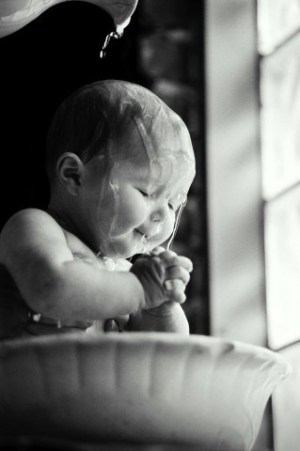
Bella, today you are Baptized. Today, you have been joined to Jesus your Savior (Ro. 6:3-11) and have been clothed with Christ (Gal. 3:27). That means, dear Bella, that today you have entered into your rest with God. Jesus has done absolutely, positively everything that needed to be done for your salvation. You are wholly and completely given over into holy rest.

Baptism 2Bella, and all you saints, because you and I are always tempted to think there is something left for us to do to be saved, God desires that you continue to be pointed to the holy, eternal rest that Christ has given you. Here, assembled in God’s presence with your brothers and sisters in Christ, God reminds you of the holy rest you have now. There is nothing left for you to do. Every time you come here, you receive that rest by listening to God’s life-giving Word and letting that Word do God’s work in you.

That is why we use our liturgy. It is one of the best ways to deliver the holy rest that comes only through God’s Word. We enter God’s presence by hearing His Word and singing His praise. We confess our sins and receive His forgiveness. We hear His Word and confess our faith that is taught in that Word. We receive instruction from that Word and pray to Him as His beloved children. We are fed Christ’s body and blood for the forgiveness of our sins. And we receive His blessing and benediction as we depart so we can carry that blessing with us through the week.

Bella, and all you saints, keep listening to the Word faithfully and diligently as it is preached and enacted in the service because your present access to God’s eternal, holy rest depends upon that Word. And that Word will never fail you. Amen.

The peace of God, which surpasses all understanding, will guard your hearts and minds in Christ Jesus. Amen.