At the Gate – Sermon on Luke 7:11-17 for the Sixteenth Sunday after Trinity

Luke 7:11-17

11 Soon afterward he went to a town called Nain, and his disciples and a great crowd went with him. 12 As he drew near to the gate of the town, behold, a man who had died was being carried out, the only son of his mother, and she was a widow, and a considerable crowd from the town was with her. 13 And when the Lord saw her, he had compassion on her and said to her, “Do not weep.” 14 Then he came up and touched the bier, and the bearers stood still. And he said, “Young man, I say to you, arise.” 15 And the dead man sat up and began to speak, and Jesus gave him to his mother. 16 Fear seized them all, and they glorified God, saying, “A great prophet has arisen among us!” and “God has visited his people!” 17 And this report about him spread through the whole of Judea and all the surrounding country.

In the name of Jesus. Amen.

One of the great mysteries of Scripture is that Jesus is fully God and fully Man. Saying that isn’t hard; you’ve probably grown up saying it. But believing that Jesus is both 100% God and Man is hard to believe – especially when it comes to Jesus’ life here on earth. As the Son of God, Jesus is eternal, all-powerful, and all-knowing, but as a Man, Jesus didn’t always fully use His divine rights and attributes. As God, Jesus all-powerful, but as a man, He still had to eat (Lk. 4:2), His body got tired and needed sit after a long walk (Jn. 4:6), and He had to sleep (Lk. 8:23). Because Jesus is God, He is all-knowing. He had known from all eternity that He would meet this funeral procession at the gate of Nain. But as a man, it wasn’t as though Jesus woke up that morning thinking, “Oh, today’s the day I’ll raise that boy in Nain.”

The way Luke records this event, he makes it clear that Jesus didn’t intentionally go to Nain for the purpose of raising this boy from the dead. Instead, Luke gives us the impression that Christ just happened to be going by the city at the precise moment this boy, widow, and funeral procession was exiting the city gate. This resurrection is very different from what we see in John 11, when Jesus raises Lazarus.

In John 11, Christ does use His divine omniscience. Jesus is a long way from where Lazarus lived when He gets a message that Lazarus is sick, but He doesn’t move an inch. He stays put. He says that Lazarus’ sickness would not end in death and that it was for the glory of God (Jn. 11:4). Then, Jesus waits two more days before He finally decides to go to Lazarus’ house because He knows that Lazarus has died, but our Lord says that He is going to wake Lazarus from the sleep of death (Jn. 11:1411). By those statements before Lazarus’ resurrection, we know that Jesus did plan on going to Lazarus’ grave for the purpose of raising him even though no one told Jesus that Lazarus had died.

But this resurrection miracle is different. No one had summoned Jesus to come and help like they would for some of the other miracles (Lk. 7:1-108:40-56). His presence wasn’t requested at the gate of Nain. He just happens to be at the gate at that very moment. But even though Jesus intended to pass by the city, His compassion for the mother means that He has to stop and raise her son.

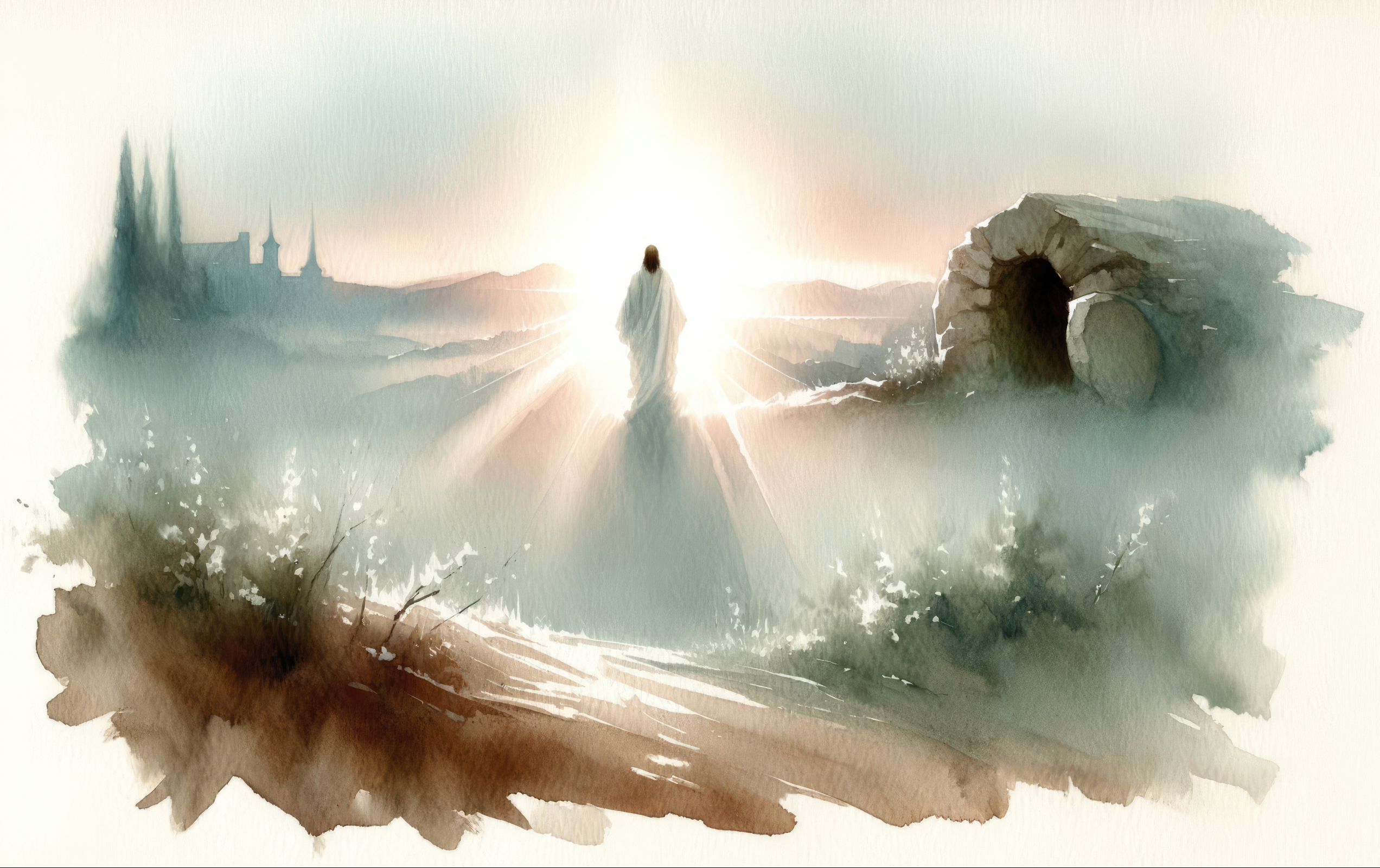
Dear saints, your Savior is no priest or Levite who passes by and leaves someone for dead in the ditch (Lk. 10:30-32). No. Your Savior is the Good Samaritan. He sees the widow and her dead son coming out of the gate, and He has compassion. He interrupts that march toward the grave. He pours on the medicine of His Word by telling that mother to stop weeping, and He raises her son. In that moment, the gate of Nain was more than just a way to enter or exit the city. It was much more significant than that. The gate was the threshold between life and death, and it was the place where the citizens of Nain encountered and recognized the God who had come in the flesh to visit His people (Lk. 7:16).

Throughout the Bible, gates were always incredibly important places. Generally, when we think about a gate, we only think about its purpose. A gate exists to be either a barrier to block entrance or a doorway to grant it. Gates separate insiders from outsiders, allies from enemies, friend and family from foe. That’s probably all we imagine when we think about gates. But in the ancient world, gates were much more significant than that. In the Bible, gates were important places for commerce, politics, and justice.

The city gate was where citizens would typically meet (Pr. 1:21). The gate is where business deals and transactions were made (Ru. 4:11). Leaders would have people assemble at the gate so they could make important announcements (2 Ch. 32:6Neh. 8:13), which is why prophets and priests would proclaim God’s Word at the gates (Is. 29:21Am. 5:10Jer. 17:19-20). Instead of courthouses like we have today, trials took place at the city gate (2 Sam. 15:2). The gate was where you would learn about everything that was going on in the city (Gen. 19:1Ps. 69:12Est. 2:21).

So, in this reading, it’s likely that almost the entire town of Nain was there, at the gate. The gate would have already been busy and crowded just because of the normal, day-to-day things that took place at the gate. And it would have been even busier than normal because this boy’s funeral. The mother and the mourners were carrying her son through the gate to lay him to rest outside of the city, away from the living. So, again, that gate was the threshold between life and death. But there, at the gate stood the Author of Life (Act. 3:15), and Jesus does not let death cast this boy outside.

Now, before I go on here, I need to say that this miracle is an actual, historical event that really happened. Because it happened, it reveals that Jesus is the long-promised prophet (Dt. 18:15) and that God has visited His people (Lk. 7:16). But even more than that, the Holy Spirit inspired Luke to record this event for your comfort because this resurrection miracle is a glimpse into your story.

When God created all things, He gave Adam and Eve a home in the Garden of Eden. But when they chose to sin and rebel against God by eating the forbidden fruit, they were cast out of Eden. Now, Eden is never described as having a gate, but it is described as having borders made by four rivers. And when Adam and Eve are expelled from Eden, God, in His mercy, sent a cherub with a flaming sword to protect the way to the Tree of Life to prevent mankind from living forever because we would have lived forever in sin (Gen. 3:23-24). So, even though Eden is never mentioned as having a gate, the idea of a gate is certainly there. It is right to say that the cherub shut the gate to Eden and to an eternal life in sin and death.

God did not want the path to life to be forever blocked by a gate, but He had to do something before the gate could be reopened. God had to send Jesus to pay the penalty for your sin, my sin, and the sin of all mankind (1 Jn. 2:2). By Jesus’ death and resurrection, the gates to Eden, to paradise, and to eternal life free from sin are now open for you.

And even better, now that Christ is raised and ascended, He always and fully uses His divine attributes. He sees your sorrow and has compassion on you. He sees you when you are lost and outside of the gates. He runs to embrace you and bring you unto Himself as His child (Lk. 15:20-24). Christ uses all of His divine power to bring you back to Himself through the gates that He has opened for you.

One of the most beautiful scenes in all Scripture is the new heavens and earth in Rev. 21. The New Jerusalem is described as having twelve gates, three gates on each side of the city, and all twelve gates are made out of a single pearl (Rev. 21:12-1321). And the most wonderful thing about those gates is that they stand wide open – never to be shut (Rev. 21:25). They can remain open without any danger because when Christ returns, all your enemies are utterly defeated and cast out forever.

In that blessed, eternal city, every tear is wiped away. Mourning is turned into dancing (Ps. 30:11Jn. 16:20). There will be no more pain because this fallen world will have passed away (Rev. 21:4). In that city, all the children of God dwell together because they are raised, never to die again (Ro. 6:7-11).

So, you who are dead in sin, know that God is able to do far, far, far more abundantly than all you ask or think (Eph. 3:20). Hear your Savior’s call. Rise from your deadness. Christ, who is the Resurrection and the Life, has given you to the rest creation to be a blessing.

Dear saints, you have been raised to new life. So, enter His gates with thanksgiving and His courts with praise. To Christ Jesus be glory in the Church throughout all generations, forever and ever (Eph. 3:21). Amen.

The peace of God, which surpasses all understanding, will guard your hearts and minds in Christ Jesus (Php. 4:7). Amen.
Far More – Sermon on John 20:19-31 for the Second Sunday of Easter

John 20:19-31

19 On the evening of that day, the first day of the week, the doors being locked where the disciples were for fear of the Jews, Jesus came and stood among them and said to them, “Peace be with you.” 20 When he had said this, he showed them his hands and his side. Then the disciples were glad when they saw the Lord. 21 Jesus said to them again, “Peace be with you. As the Father has sent me, even so I am sending you.” 22 And when he had said this, he breathed on them and said to them, “Receive the Holy Spirit. 23 If you forgive the sins of any, they are forgiven them; if you withhold forgiveness from any, it is withheld.”

24 Now Thomas, one of the twelve, called the Twin, was not with them when Jesus came. 25 So the other disciples told him, “We have seen the Lord.” But he said to them, “Unless I see in his hands the mark of the nails, and place my finger into the mark of the nails, and place my hand into his side, I will never believe.” 

26 Eight days later, his disciples were inside again, and Thomas was with them. Although the doors were locked, Jesus came and stood among them and said, “Peace be with you.” 27 Then he said to Thomas, “Put your finger here, and see my hands; and put out your hand, and place it in my side. Do not disbelieve, but believe.” 28 Thomas answered him, “My Lord and my God!” 29 Jesus said to him, “Have you believed because you have seen me? Blessed are those who have not seen and yet have believed.”

30 Now Jesus did many other signs in the presence of the disciples, which are not written in this book; 31 but these are written so that you may believe that Jesus is the Christ, the Son of God, and that by believing you may have life in his name.

Alleluia! Christ is risen! 
He is risen indeed! Alleluia!

In the name of Jesus. Amen.

Imagine you were building a house. You wouldn’t start by arranging the furniture or painting interior walls because there aren’t any rooms or walls to paint. You’d begin with the foundation – a foundation that is solid and will stand firm in the midst of wind, rain, snow, and all the other things our northern climate could throw at it because the prettiest walls and nicest furniture won’t save a house from collapsing.

Our faith has a foundation that can withstand all the things that the devil, the world, and our own sinful flesh can and will throw at it. John wrote to give that foundation. He clearly states that he doesn’t record all the signs Jesus did – there were far more. In fact, John says that even if he tried to write everything Jesus did, the whole world wouldn’t be able to contain the books that would be written (Jn. 21:25). But the signs John does record provide a solid foundation for eternal life (Jn. 20:30-31). John says that he chose his signs to reveal Jesus’ identity as the Christ and Son of God. But each of those signs are rightly read and understood only when we consider the ultimate sign – the eighth sign – which is Jesus’ crucifixion and resurrection.

As I was considering what to preach from this text, I thought it would be fun to preach on the last two verses because preaching on them meant skimming through and summarizing the entire Gospel of John with all the signs that it contains. So, here we go.

The first sign John records is Jesus turning water into wine at the wedding in Cana (Jn. 2:1-12), which reveals that Jesus has authority over creation. Jesus uses His authority to provide not just what is good, but what is extravagant and delightful. The sign invites us to see that, In an empty world, Jesus fills our lives with His abundant joy.

The second sign John recorded was Jesus healing the royal official’s son (Jn. 4:46-54). Jesus simply speaks a word while He’s about sixteen miles away from where that boy lay dying, and the child was healed in the same moment. This sign shows Jesus’ boundless authority over both distance and death.

The third sign is when Jesus heals a crippled man who lay by a pool in Jerusalem (Jn. 5:1-14). Because Jesus does this sign on the Sabbath, it reveals that Jesus is the One who brings true rest by making the broken whole. That sign shows that in a world paralyzed by sin and pain, Jesus restores.

We heard the fourth sign a few weeks ago – the feeding of the 5,000 men, plus women and children with five loaves and two fish (Jn. 6:1-13). That sign recalled how God had fed His people in the wilderness with manna, but Jesus says He has come to do far more. The sign shows that He is the very Bread of Life from heaven (Jn. 6:35) who nourishes us for eternity.

The fifth sign immediately follows that when Jesus walks on water (Jn. 6:16-24). As the disciples battle a storm, Jesus walks to them on the sea, and when He gets into the boat, they immediately arrive at their destination. This sign also reveals Jesus’ dominion and authority over creation. But here, Jesus also invokes the divine name – Yahweh, “I am” – on Himself (Jn. 6:20). This sign shows that Jesus is the God who safely brings the troubled to their desired haven (Ps. 107:28-30).

The sixth sign is when Jesus heals a man who had been blind from birth (Jn. 9). This sign confirms Jesus’ claim that He is the Light of the World (John 9:5). Jesus has come to give us more than simple sight. In a dark world, Jesus opens our eyes to the light of His truth.

The seventh sign is Jesus raising Lazarus from the dead (Jn. 11:1-45). Lazarus had been dead four days, but Jesus simply calls him out the grave. This sign reveals that Jesus is the Resurrection and the Life (Jn. 11:25). This sign shows that Jesus is the Author of Life (Act. 3:15).

These seven signs show Jesus is the gracious Creator, the mighty Healer, the generous Provider, and the Lord over death. John chose these seven signs, and again, he admits that he could have written far more. Those seven signs point to the fact that Jesus was sent by God. And yet, do they really prove that Jesus is God’s Son? Other prophets who had been sent by God had done similar signs. Moses had turned water into blood (Ex. 7:14-25). Elijah and Elisha had healed and raised people from the dead (1 Kgs. 17:17-242 Kgs. 4:18-37). Elisha also miraculously fed a crowd with a tiny amount of food and had some left over (2 Kgs. 4:42-44).

However, Jesus is more than a prophet. He’s the Christ and Son of God who brings life to all who believe in Him. When John wrote this Gospel, he wasn’t out to prove that Jesus was a powerful individual. John wants far more than that. He wants you to believe that Jesus is the Christ, the Son of God, and Savior so that you would have life in His name (Jn. 20:31).

That’s why John doesn’t say what all the signs are pointing to until after Jesus’ death and resurrection. Those seven signs point to the most important, eighth sign – Jesus’ dying and rising. On the cross, Jesus’ glory shines brightest (Jn. 12:23-24). He takes your sin and your shame. And the empty tomb is what seals the deal. Christ died and raised Himself to life (Jn. 10:17-18) so you can know that all sickness, sin, death, and fear; all pain, sorrow, and sadness; all trouble, toil, and tribulation will be done away with forever. That’s the solid foundation.

Mary Magdalene sees the risen Jesus and worships (Jn. 20:11-18). The fearful disciples see and rejoice (Jn. 20:19-20). Unbelieving Thomas has his disbelief melt into the declaration, “My Lord and my God!” (Jn. 20:28). Christ’s resurrection proves more than every other sign because it shows that Jesus is where you find far more than temporary blessings. Jesus is where God gives you grace upon grace (Jn. 1:16) and manifests God’s saving love for you (Jn. 1:18).

The signs John writes down to strengthen and encourage your faith weren’t tricks. They aren’t fables or nice stories. They’re evidence. Faith in Christ isn’t a blind leap. John’s signs are rooted in history, witnessed by real people. Their initial doubts actually bolster our faith. Most of the eyewitnesses of Jesus chose to die rather than denying Him and the things He did because Jesus proved that He is the Son of God.

Believe, and have life in Jesus’ name (Jn. 20:31). Jesus has defeated sin, death, and the devil. He is the sure, sturdy foundation on which you can build your entire life. Jesus is the Christ. In a crumbling world, you have a Savior who has come to restore all things and make them new (Rev. 21:5).

You can build your entire life on the foundation of Christ. The cross and resurrection are the sure cornerstone. A life built on that is no flimsy shed. It’s a fortress. Trust Jesus because, in Him and in Him alone, you have life – eternal, abundant life in His almighty name. Amen.

Alleluia! Christ is risen! 
He is risen indeed! Alleluia!

The peace of God, which surpasses all understanding, will guard your hearts and minds in Christ Jesus. Amen.

Living Redeemer – Sermon on Job 19:23-27 & Mark 16:1-8 for the Resurrection of Our Lord

Job 19:23-27 & Mark 16:1-8 

Alleluia! Christ is risen! He is risen indeed! Alleluia!

In the name of Jesus. Amen.

Imagine someone plopped a thousand piece puzzle in front of you – not the box with the picture of the final product, just the thousand pieces. Those pieces sit in front of you, and the person says, “Put it together.” Sure, it would be daunting at first, but you’d start using your brain and logic. Maybe, you’d start searching for the corner and edge pieces. Once they’re sorted out, you start to fit all the boarder together. Then, you’d start looking at the colors. You continue to sort the pieces out, match the ones with the same color, find the right fits. You’d start to see that this matches with this and that matches with that. You’d see how this one piece has blue on one side and green on the other side and, yup, it fits with that one.

So long as you kept at it, there’s nothing that would stop you from eventually solving that puzzle. Sure, it might take really long time, but you’d figure it out. All puzzles are solvable when you have enough determination, information, and time.

Too often, we approach life as though it’s all a big puzzle to be solved, and we don’t have a picture of the final product. But we still think that if we can just figure out this then that will fall in place. We imagine that finishing this thing will make that portion easier. We try arranging the pieces of finances and family, school and career, the busy schedule and the need to rest. Sometimes, it feels like you make progress; sometimes, you’re completely stuck and confounded. A new problem pops up over here, and the pieces doesn’t seem to fit in quite the right way. 

That’s the wrong approach to life. Life is not a puzzle for you to figure out and solve with enough logic and time and effort. Instead, your life is a mystery. Mysteries are different from puzzles. Mysteries are things that you can’t figure out. It doesn’t matter how much information you have, how many details you know, or how much you piece together. Mysteries can’t be solved with logic. We can’t use our reason to get everything to fit nice and neat into a complete picture. With mysteries, you might get periodic glimpses of potential solutions, but final solution always seems to be just beyond your grasp.

When Job was suffering all the horrible things that did, he approached his life as a puzzle. He thought that if he could just get enough information that everything would make sense and fit together. But the information Job needed wasn’t available to him. It was hidden in what was taking place in the heavenly council (Job 1:6-122:1-6Jer. 23:18-22).

When we read the book of Job, we get information that wasn’t available to Job. We have the 30,000 ft. overview of what is happening. We get to know what’s going on behind the curtain. We have a window into all the things that God is doing. The whole time of his suffering, we know why Job had all these crosses placed on him. But Job – he never knows. He never gets told. He just trudges through his pain and suffering. He is simply experiencing a life that is filled with trouble, and all Job can do is slog through it.

Even though we might not suffer the same things Job suffers or to the same degree or for the same reasons that Job suffers, we are like Job. We can only live our lives one moment at a time. You can only go through the experiences of this life by living in them. And you don’t always get to know why certain things happen. You don’t get to know why the one you love died. Why you lost our job. Why your kids are misbehaving. Why your parents are so unreasonable and unbending. You don’t get to know why everything happens. And the book of Job is a great reminder that God doesn’t owe us an answer to the why. God isn’t obligated to show us the picture on the box of a puzzle. He doesn’t need to precisely because He hasn’t given you the responsibility of piecing all the parts of your life neatly together. That’s nor your job. It’s not what God has called you to do.

Instead, God has given you something far, far better. God has given you the assurance that He’s given you a Redeemer, and not just any redeemer. God has given you a living Redeemer who can place all the jagged corners and complex pieces of your broken life into one big, grand masterpiece.

Dear saints, God has given you His promise that, at the last, you will stand upon the earth with your Living Redeemer, Jesus Christ, in the new heavens and earth. You will stand resurrected in the kingdom of God when all sorrow and sighing have been put away for eternity.

That’s God’s promise, and His promise is worth believing. Job had that faith as he was going through all the things that he suffered. God gave Job the faith to know and believe that his Redeemer lives.

Those verses you heard from Job’s lips today (Job 19:23-27) have become so connected to Jesus’ resurrection – probably because of the hymn. And, yes, we’ll sing it near the end of the service. But the fact that these words are so connected to Easter makes it easy to forget that Job spoke those words thousands of years before the eternal Son of God took on flesh.

Even then, Job knew that he had a Redeemer, and that faith was what carried Job through his horrible suffering. But what Job believed back then is even more true now than when Job confessed it.

You have a Redeemer who not only lives, but who died and now lives again and forevermore. You have a Redeemer who marched straight, right into the jaws of death and the grave. And He has come out on the other side alive. Your Living Redeemer is the same Redeemer that Job confessed. That Redeemer was living when Job confessed and trusted and He lives even more assuredly now.

So, when life seems like a puzzle, when it seems like you have to figure all sorts of things out and piece it all together in just the right way, forget about it. Instead, listen to what the angel says to the women on the morning of the resurrection. “Do not be alarmed. You seek Jesus of Nazareth, who was crucified. He has risen” (Mk. 16:6). In other words, “Your Redeemer lives. He is not here. And your Living Redeemer is going before you” (Mk. 16:7). This is still true.

Your Living Redeemer has gone before you to death and the grave. He has also gone before you to the resurrection and life eternal. And your Living Redeemer continues to go before you each and every day of your life.

So, no matter what you go through, no matter what puzzling trials, tribulations, and sufferings you face, Jesus has already gone before you through all of them. Your living Redeemer is the first fruits of the resurrection (1 Co. 15:20). He stepped before you and did what was needed. He bore all of your sins upon His cross. He went to His grave to sanctify your grave. He walked out of that grave alive. And you will too.

Jesus has won and purchased your forgiveness. All your sins – all of your envy, malice, and laziness; all of your unwillingness to help others, all of your attempts to dodge responsibilities, and all of your attempts to make excuses for your failures and the pain you have caused others – all of it is forgiven. All of it can be blotted out.

None of that sin can stand next to your Living Redeemer, but you can. You can stand with Him because all of that sin has been dealt with and laid aside by His perfect forgiveness.

Faith in Jesus, your Living Redeemer doesn’t just give you the picture on the lid of a thousand piece puzzle so you can put it all together yourself. Instead, it makes you see further, beyond the puzzle.

The confusing, dark, and evil complexities of this life, they’re all fading away, because the light is coming. The sun of a new, eternal day is rising. Your Redeemer lives. And at the last, so will you. Amen.

Alleluia! Christ is risen! He is risen indeed! Alleluia!

The peace of God, which surpasses all understanding, will guard your hearts and minds in Christ Jesus. Amen.

No Nonsense – Sermon on Luke 24:1-11 for the Vigil of Easter

The bulletin for tonight’s service can be found here.

Luke 24:1-11

1 But on the first day of the week, at early dawn, they went to the tomb, taking the spices they had prepared. 2 And they found the stone rolled away from the tomb, 3 but when they went in they did not find the body of the Lord Jesus. 4 While they were perplexed about this, behold, two men stood by them in dazzling apparel. 5 And as they were frightened and bowed their faces to the ground, the men said to them, “Why do you seek the living among the dead? 6 He is not here, but has risen. Remember how he told you, while he was still in Galilee, 7 that the Son of Man must be delivered into the hands of sinful men and be crucified and on the third day rise.” 8 And they remembered his words, 9 and returning from the tomb they told all these things to the eleven and to all the rest. 10 Now it was Mary Magdalene and Joanna and Mary the mother of James and the other women with them who told these things to the apostles, 11 but these words seemed to them an idle tale, and they did not believe them.

Alleluia! Christ is risen! 
He is risen indeed! Alleluia!

In the name of Jesus. Amen.

With all the reverence and respect that I can give to them, the angels that appear the morning of the resurrection are a bit sassy. These women had left early, even before the sun had started to peek over the horizon. So, they probably hadn’t gotten themselves ready like they would on any other morning. They just tossed on some clothes and grabbed the bundles of spices as they went out the door to walk through that dewy, morning air. They went intending to finish the job of burying Jesus. But when they arrived at the tomb, they find it. The stone – rolled away. The body of Jesus – gone. So, they stand there totally disheveled and utterly perplexed.

These two angels that stand in front of them look completely different. The angels are clothed in dazzling apparel. They look at these tired women with their bundles, and it’s almost like the angels are thinking, “Oh, for cute. These women with their bundles of spices. What do they think they are going to do here?”

And one of those angels asks his sassy question, “Why do you seek the Living One among the dead? He’s not here. He is risen. Remember what He told you while He was still with you in Galilee? The Son of Man had to be delivered into the hands of sinful men, crucified, and on the third day rise. By the way, ladies, that’s today.” It’s like that angel is saying, “This shouldn’t be too difficult for you. He told you all about this.”

And it’s at that point that these women – Mary and Mary and Mary and Mary (there were lots of Marys) and Joanna and Salome – they remember that Jesus had said that He would rise. Only then did they remember those words of Jesus.

So, they ran back to tell these things to the eleven apostles and all the others who were gathered together. Luke doesn’t record the conversation between the women and the rest, but he makes it very clear (it doesn’t come out in our translation) that there was an ongoing conversation. “As they were speaking about these things to the apostles” (Lk. 24:10). 

Luke only leaves us to imagine what this conversation would have sounded like. But the women probably told them all about the angels and their dazzling apparel and about the other sassy angel who had come down to sit on the stone and dance on the grave of death (Mt. 28:2-3). They would have told them how the angel reminded them what Jesus had said about that dying and rising stuff.

But the words of these disheveled, frantic, crazy women sounded delirious. The apostles figured it was nothing more than an idle tale and a bunch of nonsense. What they had seen on Good Friday was too devastating. They figured the women hadn’t gotten enough sleep and should have set their alarm clocks for a little later.

And that reaction to the women’s report is a huge comfort to us today. They should have believed the whole time, even as Christ hung on the cross. But the fact they initially thought it was all nonsense bolsters our faith.

Because as that day rolled on, Jesus would appear to two of them on the road to Emmaus (Lk. 24:13-32). Jesus would appear to Peter (Lk. 24:34). That evening, Jesus would appear to all of them as they sat locked in the upper room (Jn. 20:19-22). Jesus would eat in front of them and show them His pierced hands and side (Lk. 24:38-43).

The women weren’t spewing a bunch of nonsense. It wasn’t an idle tale. As that day wore on, their disbelief melted away into belief. And that belief would strengthen into boldness. And that boldness would mature into courage.

What first had sounded like an idle tale and a bunch of nonsense to the apostles slowly became an undeniable certainty. Jesus died but lives. And now, because He lives, death would have no hold on them because it had no hold on Jesus. Death was no longer their enemy, because their Savior, their Lord, their Jesus, had defeated death.

As the years passed, almost all of those – who, initially, thought that the Resurrection was just a bunch of nonsense, just an idle tale of tired and confused women – they would, one by one, refuse to deny the fact that Jesus had risen. They would not deny that the One who had died is now living. They would rather give up their own lives because it wasn’t nonsense. Jesus is the Living One who gives everlasting life to all who believe in Him.

Dear saints, the day is coming when all the perplexities of this world and of your life will not be perplexing anymore. In that day, this fact will remain certain, firm, and sure – Jesus is risen. It is no nonsense. Amen.

Alleluia! Christ is risen! 
He is risen indeed! Alleluia!

The peace of God, which surpasses all understanding, will guard your hearts and minds in Christ Jesus. Amen.

Determined – Sermon on Job 14:1-6 for the Twenty-fifth Sunday after Trinity

Job 14:1–6

1 “Man who is born of a woman 
is few of days and full of trouble. 
2 He comes out like a flower and withers; 
he flees like a shadow and continues not. 
3 And do you open your eyes on such a one 
and bring me into judgment with you? 
4 Who can bring a clean thing out of an unclean? 
There is not one. 
5 Since his days are determined, 
and the number of his months is with you, 
and you have appointed his limits that he cannot pass, 
6 look away from him and leave him alone, 
that he may enjoy, like a hired hand, his day.

In the name of Jesus. Amen.

Seasons change. This year, we’re having a particularly long Fall. We’ve been hitting 50°F regularly. The forecast says we’ve got a couple more days of that, but it’s definitely Fall. The sun is lower in the sky, and it’s getting dark earlier and earlier each day. Your grass might still have some green in it, but the brown is steadily progressing. Most of the leaves have fallen off of the trees, and you’re probably ahead of me in getting them off the lawn.

We’re used to these seasonal changes in this part of the world. During the months that end with ‘-ber,’ we start smelling autumn in the air. And I know some of you are already eagerly waiting for March and April when you get those first, faint scents of Spring. This portion of Job is like those brief whiffs of new life. But, because of his suffering, Job is deep in the declining days of autumn, and yet he is determined to smell the sweetness of Spring again.

To get the context of where we are in Job 14, remember: Three times in the first two chapters, Job is described as a man who is blameless, upright, one who fears God, and turns away from evil (Job 1:1, 8; 2:3). In other words, Job is a Christian. But God allows Satan to cause him all sorts of suffering, both in material and physical ways. Job’s suffering puts him in this autumn season of death.

As he suffers, Job’s three friends come to talk with him. Well, we call them “friends,” but that’s using that word extremely liberally because, honestly, they’re really, really bad friends. Each of them thinks he’s wise enough to know why Job is suffering and tries to explain it. The problem is that their ideas of why Job is suffering only make Job’s suffering worse. In fact, the conversation Job’s friends have with him is, basically, a third round of suffering inflicted on Job.

The first friend, Eliphaz, basically tells Job, “You’re suffering because you are being punished for some sin. But you should be thankful because this suffering is going to make you a better person” (Job 4-5). The second one, Bildad, basically says, “You’re getting what you deserve. Just repent, and your pain will go away” (Job 8). The third, Zophar, basically says, “Actually, Job, you deserve a lot worse. Make yourself worthy to stand before God and then your life will get better” (Job 11). It’s almost like each one of those friends is actively trying to be worse than the previous at explaining why Job is suffering.

Job had responded to each of those friends’ claims, but our text today is the second part of Job’s reply to the three of them collectively. The summary of what Job says in Job 13 is, “This suffering isn’t because God is punishing me for some particular sin. You guys can say whatever you want, but I have no problem insisting that I am righteous before God.” And remember, Job is right when he says that. Job hadn’t heard it, but God Himself declared Job to be blameless and upright. And even though Job is in the autumn of suffering, he stands righteous before God through faith (Hab. 2:4; Gen. 15:6).

Now, here in Job 14, Job longs for Spring and the season of new life. But he speaks about it in ways where we only get the faintest whiff of it. He’s still deep in the autumn of his suffering. That’s why Job talks about the few, troubled days of all mankind (Job 14:1). Job rightly says that all of us are like a flower that sprouts up but then withers (Job 14:2).

Look again at in v. 5. Job says, “[Man’s] days are determined, and the number of his months is with You, [God]. You have appointed his limits that he cannot pass.” Yes, Job is in a very dark place. He’s enduring a suffering that is hard for us to fathom. He’s lost his all of his income, and his children have died. But Job still recognizes that God is the One in control of all his days. Job knows that God determines both the beginning and end of a person. Because of sin, all of us are mortals. We all die, and each person has a God-determined number of days (Ps. 39:4, 139:16).

But then, in the verses that follow immediately after our text (Job 14:7-9), Job says that he longs for Fall to be over and Spring to come again. He says that there is still hope for a tree that is cut down because it can sprout again. Job acknowledges that roots grow old in the earth and the stump dies in the soil, but it will still put out branches at the first scent of water.

In other words, Job believes that, in spite of his current condition, God hasn’t and won’t abandon him – even after Job has breathed his last. Job believes in the Resurrection. In spite of his suffering, Job knows that he will rise again, and his own eyes will see his Redeemer standing victorious on the earth. That will become crystal clear in what Job says in ch. 19:25-27. But here in ch. 14, Job is still mostly in his “Fall funk.”

Now, I want to dig into v. 6 here a little bit. Listen to it again, “look away from him and leave him alone, that he may enjoy, like a hired hand, his day.” When I was initially reading this text to prepare for this sermon, that verse reminded me of other verses of Scripture like Ecc. 2:24 which says, “There is nothing better for a person than that he should eat and drink and find enjoyment in his toil.” The way I understood it was that Job was asking God to look away from him and leave him alone so he could just enjoy the rest of his days. But after doing more study on the text, I realized that’s not what is going on here. Not at all!

If you look in your pew Bible, you’ll see that the ESV (which is what is printed for you) has a footnote that says the way we should probably read that first line of v. 6 is, “Look away from him that he may cease.” In other words, Job isn’t asking God to leave him alone. Instead, Job is saying that, as soon as God looks away from us, we die. Now, it might not seem like it at first, but there are actually two bits of comfort there.

The first comfort is that Job recognizes God is not ignoring him or looking the other direction. Even though Job is suffering, God is looking at him and is aware of his situation. Since God knows Job’s suffering, He also knows your suffering. God sees. God is alert to all the causes of your pain. That’s precisely why He sent Jesus to rescue and deliver you.

The second comfort is a little harder to recognize – like the first scent of Spring. What Job is saying here is basically, “Look away from me so I can come to the end of my days and die because I know there is a resurrection where there will be no more suffering.” Now, Job isn’t suicidal here. Instead, Job recognizes that his life is like the changing of seasons. He’s in the Fall of suffering and decay. The cold, dead of winter will come when God decides it will come. But after winter comes the new life of Spring and resurrection. That’s what Job is longing for.

In context, that first line of v. 6 is Job saying, “God, I know that I’m not going to live forever. I know that this suffering is temporary. Eventually, I will die, but You will raise me again. Even now in this suffering, my life is in Your hands. But I also know that my eternal future is in Your hands. And my preference right now is to move on and get to the resurrection stuff.”

That understanding gives us a better picture of what the second line of v. 6 says where Job talks about a hired hand enjoying his day. During the sweat and toil of work, a hired hand looks to the end of the day when he will rest and receive his wages. That’s what Job longs for. Through faith, Job knows that God will reward him when his life has ended, and he will have eternal rest.

So, dear saints, let’s apply all of this to you. You aren’t suffering like Job is here, and may God grant that none of you ever do. But everyone suffers to one degree or another in this broken world. Like Job, you can confidently place yourself in God’s hands. Yes, you are a sinner, but God can bring a clean thing out of an unclean thing (Job 14:4). Your God brings life out of death. God cleanses, restores, and forgives. No matter what you suffer in this life, God still and always loves you because of what Christ has done on the cross for you.

We suffer many things in this broken, sinful world. Whatever we suffer points to the fact that this world is ending. Throughout the Gospels, Jesus will mention several signs of the end of the world, and they are all some form of suffering. But Jesus wants you to take courage. Every war and rumor of war; every earthquake and hurricane; every corrupt government and politician; every sickness, disease, death, and threat – all of them are only signs that this world is broken and will not last. But know that even in the midst of all those signs, God hasn’t forgotten you.

Jesus lives, and He is returning for you. You belong to Him. Through Jesus, God has delivered you and declared that you are His people. Christ is determined to rescue you. He brings life out of death, and He will lead you in green pastures and beside still waters (Ps. 23:2).

Jesus is your God and Savior, and He is absolutely determined to bring you safely through the autumn of this broken world into the eternal Spring of the New Creation. Amen.

The peace of God, which surpasses all understanding, will guard your hearts and minds in Christ Jesus. Amen.

Spirit-Guided – Sermon on John 16:5-15 for the Fifth Sunday of Easter

John 16:5–15

5 “But now I am going to him who sent me, and none of you asks me, ‘Where are you going?’ 6 But because I have said these things to you, sorrow has filled your heart. 7 Nevertheless, I tell you the truth: it is to your advantage that I go away, for if I do not go away, the Helper will not come to you. But if I go, I will send him to you. 8 And when he comes, he will convict the world concerning sin and righteousness and judgment: 9 concerning sin, because they do not believe in me; 10concerning righteousness, because I go to the Father, and you will see me no longer; 11 concerning judgment, because the ruler of this world is judged.

12 “I still have many things to say to you, but you cannot bear them now. 13 When the Spirit of truth comes, he will guide you into all the truth, for he will not speak on his own authority, but whatever he hears he will speak, and he will declare to you the things that are to come. 14 He will glorify me, for he will take what is mine and declare it to you. 15 All that the Father has is mine; therefore I said that he will take what is mine and declare it to you.”

Alleluia! Christ is risen!
He is risen indeed! Alleluia!

In the name of Jesus. Amen.

Our expectations rarely match reality. Often times, it’s not even close. When I was 15 years old, I was eagerly anticipating being in a sailboat race across Lake Superior in July. Thanks to Gordon Lightfoot, I knew that “gales of November” don’t come that early. My expectations for that race were largely shaped by movies of majestic boats efficiently gliding across rolling waves driven by strong winds. But I also worried that there would be 10-15 ft. swells that would toss our 25 ft. boat around like a leaf making me seasick and struggling to stay on the boat. The reality ended up being two and a half days of cold, drizzling rain, and barely a whisper of wind, and the only thing that made me sick was the inescapable fumes of fiberglass varnish which sent me and the other crewmembers to the side of the boat more than once.

We plan and prepare for things to be a certain way, but then the moment or event comes and is completely different than what we imagined. Sometimes, the reality is better; sometimes, it’s worse; and sometimes, it it’s just different. As a kid, you probably expected that being an adult would come with the independence and freedom to do whatever you wanted whenever you wanted. Then, reality came. Now, you realize being an adult can mean the autonomy to do what you want, but most often it means carrying out the responsibilities God has given you. Even if adulthood isn’t the total freedom and independence you thought it might be, it’s still very fulfilling.

In this Gospel reading, we don’t know exactly what the disciples expected as Jesus talks about His departure and going away to the Father. We just know their reaction – they are sorrowful (Jn. 16:6, 20, 22). They don’t know what to expect. That’s why Jesus comforts them and us by teaching about the Holy Spirit.

The first thing we need to get straight is that, when Jesus says that He has to go to Him who sent Him and that it is to their advantage that He goes away, He doesn’t mean that He is going to be completely absent. Jesus had already promised His abiding presence. He guarantees, “Where two or three are gathered in My name, there am I among them,” (Mt. 18:20), and before He ascends into heaven He says, “Behold, I am with you always, to the end of the age” (Mt. 28:20). Yes, Jesus has gone to the Father who sent Him, but He is also truly, physically present with us – especially in Holy Communion. When Jesus says that He is departing, He is saying that He must go to the cross, pay for our sins, and ascend into to heaven where He continually presents His work on your behalf to God the Father (Heb. 9:24; Ro. 8:34).

That’s the reason Jesus is departing. It isn’t that He’s leaving and is gone. No. His departure is the fact that He goes to work your salvation, and to continually present His work to God the Father. Christian, your life is hidden with Christ where He is seated (Col. 3:1-4). That’s why the Holy Spirit comes. The Holy Spirit is constantly present with you to be your Helper, Advocate, and Comforter constantly pointing you to all the things Christ has done for you. The Holy Spirit comes to point you to all the benefits that Jesus’ death, resurrection, and ascension give you. The Holy Spirit comforts you with the gifts of Jesus.

That is why we need Jesus’ teaching here about what the Holy Spirit does. So many Christians have wrong expectations about the Holy Spirit. Throw out all of those expectations and listen to what Jesus teaches about the Holy Spirit’s work. The Holy Spirit works to convict us concerning sin and righteousness and judgment. And don’t get put off by that word ‘convict.’ Most of the time we use the word ‘convict’ today, it means to find guilty. And when Jesus talks about the Holy Spirit convicting concerning sin and judgment, we tend expect this will be a bad thing. But being convicted isn’t always a bad thing.

We will talk about a person having deep convictions, meaning they are sure and certain about what they believe. They are convinced of the truth of something. That’s how we should understand this as Christians. Jesus goes on to summarize the Holy Spirit’s work as guiding us into all the truth. The Holy Spirit is guiding us to be convinced of certain things concerning sin, righteousness, and judgment. When Jesus tells us why the Holy Spirit convicts or convinces of each of these things, each of the why’s isn’t what we naturally expect. Let’s take each of these in order.

First, when Jesus says that the Holy Spirit will convict the world concerning sin, we would expect Him to say the Holy Spirit does that because you people are so bad and evil. But that’s not what Jesus says. The Holy Spirit convicts the world concerning sin because they do not believe in Jesus. I’m guessing Paul had these very words of Jesus in mind when he wrote in Ro. 14:23 that says, “whatever does not proceed from faith is sin.” In other words, you can do the best, most merciful work, but apart from faith in Jesus, it is of no benefit; in fact, Scripture says the mercy of the wicked is cruel (Pr. 12:10). Confessing your sins is an article of faith. It is the Holy Spirit who has taught us to confess that we are by nature sinful and unclean in thought, word, and deed. And the Holy Spirit guides us to continue our confession by saying that we flee for refuge to God’s mercy freely given through Christ.

Second, when Jesus says that the Holy Spirit will convict the world concerning righteousness, we would expect Him to say, “Because they don’t have any righteousness and need to do better.” But that’s not what Jesus says. The Holy Spirit convicts concerning righteousness because Jesus goes to the Father. When you consider this in the context of the rest of Scripture, this is stunning. The Man Jesus has opened the path to heaven so you can follow Him and be brought there too by the working of the Holy Spirit.

Imagine being in a line waiting to stand before God’s judgment. How would you feel as you wait in that line? Probably pretty nervous – especially because that judgment will determine where you will spend eternity. But now imagine that you’re standing in that line and Jesus is standing right next to you waiting for His turn to be judged. Do you think He would be nervous? No, Jesus isn’t going to be worried at all! He’s confident and knows He is perfect and hasn’t committed any sins. Well Christian, you need to know, you need to be convinced, that through faith you occupy Jesus’ place in that line. His righteousness is yours. God made Jesus, who knew no sin, to be sin, so that in Him you would become the righteousness of God (2 Cor. 5:21). To believe that takes the working of the Holy Spirit.

Third and finally, the Holy Spirit convicts concerning judgment. We would expect this is needed because judgment is coming. Again, that’s not what Jesus says. The Holy Spirit convinces you that the ruler of this world, Satan, is judged. Think of that! Satan, which means accuser, is the one who is judged. The one who tries to accuse you before God has absolutely zero credibility in God’s courtroom. The devil isn’t losing; he has lost. Satan is utterly defeated and conquered. Yes, this takes faith. But the Holy Spirit will continue to point you past what you may see in this world back to these words of Jesus which clearly state that the devil is judged.

Sable, that brings me to you. Sable, today you are Baptized. God has placed His name upon you, claimed you as His own, and has given you Jesus’ righteousness. And from this day forward, the Holy Spirit will continue to guide you into these truths and convictions, convincing you of your sin so you will believe in Jesus. Convincing you of the righteousness you have been given. And convincing you of the judgment of the devil.

Sable, and all of you here, it’s hard to know what to expect for your future. But know this: the Holy Spirit will continually guide you into all the truth, convicting and convincing you that Jesus’ work for your salvation is perfect, complete, and finished. Amen.

Alleluia! Christ is risen!
He is risen indeed! Alleluia!

The peace of God, which surpasses all understanding, will guard your hearts and minds in Christ Jesus. Amen.

Now & Not Yet – Sermon on 1 John 3:1-3 for the Fourth Sunday of Easter and Confirmation Sunday

1 John 3:1–3

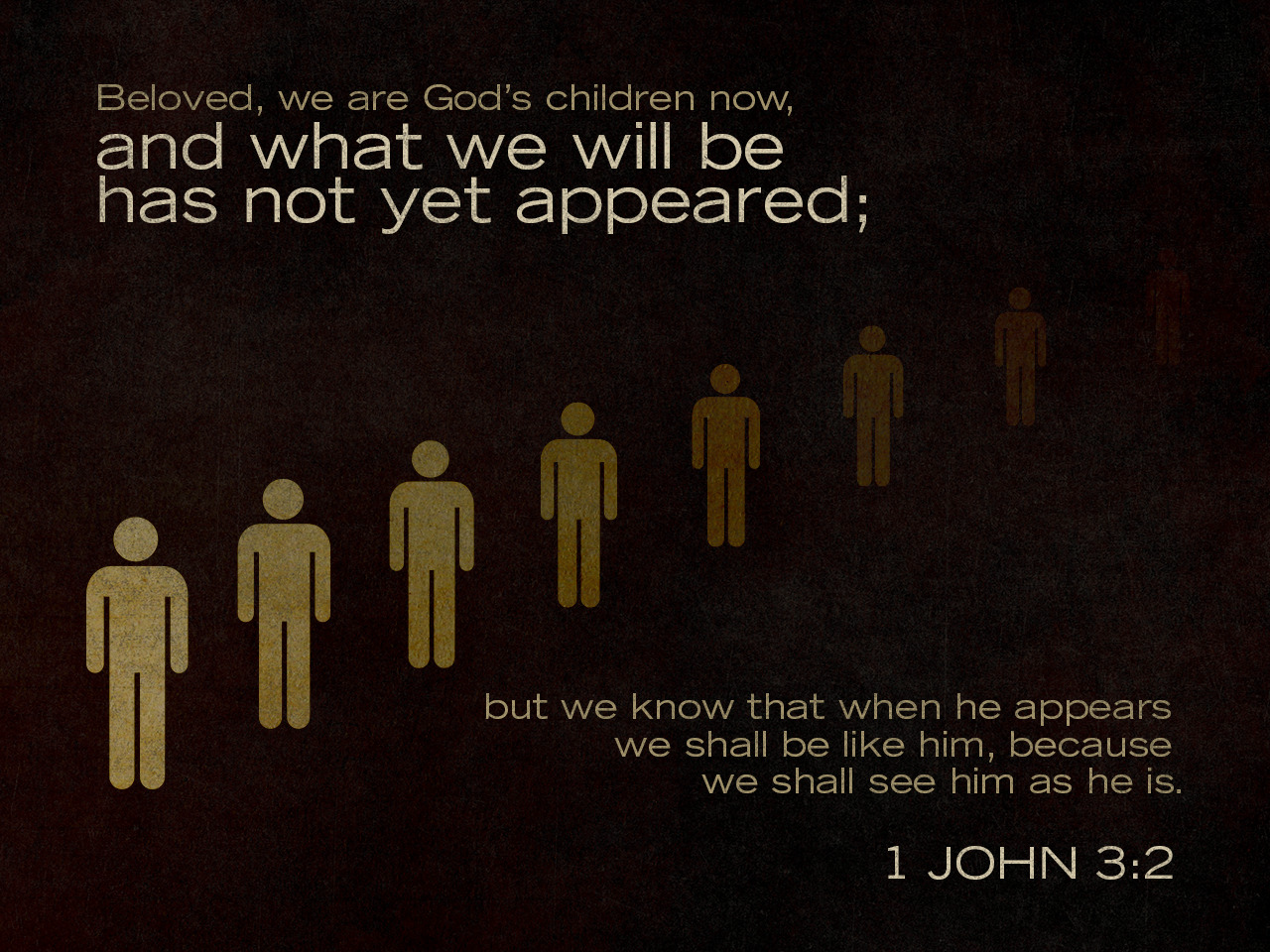
1 See what kind of love the Father has given to us, that we should be called children of God; and so we are. The reason why the world does not know us is that it did not know him. 2 Beloved, we are God’s children now, and what we will be has not yet appeared; but we know that when he appears we shall be like him, because we shall see him as he is. 3 And everyone who thus hopes in him purifies himself as he is pure.

Alleluia! Christ is risen!
He is risen indeed! Alleluia!

In the name of Jesus. Amen.

We live in a noisy world. On any given day, all sorts of things are constantly trying to grab your attention. We get dings and vibrations and taps that let us know who sent a message, what news story is breaking, or who liked that thing you posted. If you have to spend even ten minutes in a waiting room or a restaurant, you’ll find televisions turned to a game or news channel with the constant crawl of information that isn’t important enough, at least at that moment, to be on the main part of the screen. You’re watching the news about what’s going on in the Middle East and get the latest OJ Simpson’s death. Or you’re watching the NBA playoffs and learn about some guy’s hot take on what the Vikings are going to do in the first round of the NFL draft. And on and on it goes.

Now, this isn’t a sermon about how pointless and exhausting this barrage of information is. It’s just an acknowledgement of the conditions in which we live. Our attention is being constantly pulled in a myriad of directions, and all sorts of things shout at you, “Pay attention to me!” Well, this epistle reading (1 Jn. 3:1-3) is calling for your attention. In fact, it’s commanding you to pay attention. So, for the next few minutes, don’t be distracted, don’t be pulled, don’t be thinking about what’s going to happen this afternoon or this week or next summer. Right now, God, through His holy Word, calls you to focus and see. See this.

See the kind of love the Father has given to us. It is the kind of love that calls you, believer, a child of God. It is a love that calls all y’all, Christians, children of God. That is who you are – a child of God. Look around at the believers surrounding you here today, people whom you love and who love you, see that they through faith are also children of God.

See the kind of love that turns sinners and enemies of God into children. See the kind of love that isn’t earned or deserved. See God’s love for you that is demonstrated in that while we were still sinners, Christ died for us (Ro. 5:8). This is the purest kind of love. It’s God’s love that is not based on the lovableness of the individual. It’s a love that is freely given because, in spite of our unloveliness, God determined to seek your highest good and make you His child.

God’s own child, that is what you are, believer. That is what God has called you, and what God says creates reality. Everything in this world – including your own thoughts, opinions, and experiences – will try to convince you otherwise. It will attempt to get you to believe this isn’t true. Don’t listen to any of that. See. Behold. God’s love has made you His child.

Christian, God’s love has given you a new birth. In his Gospel, John says this explicitly. To all who did receive Jesus, those who believe in His name, He gives the right to become children of God (Jn. 1:12), and this right came when you were born again of water and the Spirit (Jn. 3:3, 5-6).

You confirmands, you have this new birth as a child of God. Logan, you received this new birth when you were Baptized on July 3rd, 2011 at Bigwoods Lutheran Church in Bigwoods, MN. Brayden, you were born again as God connected His Word to water on November 16th, 2013 at St. Henry’s in Perham, MN. Maddie, same place, but for you on April 16th, 2011 that was when and where you were born as a child of God. Brady, July 7th, 2013 right there at that font, you became a child of God. And Asher, same font, on November 25th2012, God declared that you are His child. The rest of you here, I’m sorry, but I don’t have your exact information in front of me.

This command to see this kind of love is in the present tense. That means it is a command that you always and continually see this kind of love. That love is to color everything else in your life. Keep holding on to that love because it is the most precious thing you could ever have. That love makes you God’s children now. Right now. What will we children of God be when we grow up? We don’t know, not yet.

John admits that even he doesn’t know exactly what glorious things are in store for us children of God. Think of that. John had seen some glorious things. He saw Jesus’ miracles and transfiguration. John saw the empty tomb. It was so glorious that he kept bragging about the fact that he outran Peter and was the first disciple to see it (Jn. 20:2-5, 8). The evening of Jesus’ resurrection, John had seen Jesus’ resurrected hands, feet, and side (Jn. 20:19-20; Lk. 24:36-43). As best as we can tell, John wrote this epistle after he had seen the vision of recorded in Revelation. That means John had seen Jesus clothed in a robe with a golden sash. He saw Christ’s eyes like a glorious flame of fire. John saw Jesus’ face shining like the sun in full strength (Rev. 1:13-16). And still John says here, “I don’t know what we children of God will grow up to be. I haven’t seen it yet because it hasn’t appeared” (1 Jn. 3:2). “But,” John says, “But we know that when Jesus appears we will be like Him, because we shall see Him as He is.” 

You confirmands and everyone here today, it can be dangerous to look to the past. And it can be troubling to think about the future. If you do look to the past, look at it through the lens of being God’s beloved child. When you consider your present, keep this command and see the constant love God has for you. When you look to the future, have in mind that you, through faith, are a child of God. And keep longing and hoping for that moment when Christ, your Savior, returns knowing that then you will be like Jesus.

That faith, that hope is what makes you pure – pure as Jesus is pure. God wants to orient you to the present reality that you are His child. Because of His love, you have a seat at His table where He gives you His Body to eat and His Blood to drink for the forgiveness of all your sin. You have a seat at His table. Child of God, as you wander through this world, know that you belong among God’s family. Welcome home, children of God. Amen.

Alleluia! Christ is risen!
He is risen indeed! Alleluia!

The peace of God, which surpasses all understanding, will guard your hearts and minds in Christ Jesus. Amen.

God of the Living – Sermon for the Vigil of Easter

Click here for the bulletin with the readings for tonight’s service.

Alleluia! Christ is risen!
He is risen indeed! Alleluia!

In the name of Jesus. Amen.

Now and always, our God is the God of the living (Lk. 20:38).

From the very beginning of Scripture (Gen. 1:1-2:3), God creates and gives life to everything that and lives and breathes. God forms Adam from the dust of the ground with His own hand and breathes into his nostrils the breath of life (Gen. 2:7) because He is the God of the living.

In the time of the Flood (Gen. 7:1-5, 11-18; 8:6-18; 9:8-13) when every intention of the thoughts of mankind’s heart was choosing death, God brings destruction to those who rejected Him as the God of life. But He would not make a complete end. He instructed Noah to build an ark to save Noah, his family, and the animals. God did this to preserve the life He had created because He is the God of the living.

When God heard the groaning of His people who were slaves in Egypt, He remembered His covenant with them. God saw their affliction, and God knew (Ex. 2:23-25). God did all those signs and wonders to bring His people out of that land of slavery and death. He opened a way through the waters of the Red Sea so His people could escape Pharaoh’s deadly soldiers, pass through the watery tomb on dry ground, and arrive safely on the other shore (Ex. 14:10-15:1). He did this because He is the God of the living.

When they were scattered and exiled, God promised to bring His people to their own land. He promised to sprinkle clean water on them to wash them from all their uncleanness. He would remove the sinful, dead hearts of stone and give them living hearts of flesh (Ezk. 36:24-28) because He is the God of the living.

When His people were dried up bones (Ezk. 37:1-14), God gave His prophet Ezekiel a promise to proclaim: “I will open your graves and raise you from your graves. I will bring you into the land, and you shall know that I am the Lord. I will put My Spirit within you, and you shall live.” God made that promise because He is the God of the living.

When Job was suffering, he knew that his Redeemer lives (Job 19:20-27). And Job had no doubt that his Redeemer would stand victorious on the earth. Job rightly confessed even after his body died and his flesh was destroyed that his own eyes would see God because Job knew that God is the God of the living.

Faced with a blazing execution, Shadrach, Meshach, and Abednego refused to worship the pagan image that Nebuchadnezzar had set up (Dan. 3:1-30). They knew that God was able to deliver them from the burning fiery furnace and out of the king’s hand. But even if God didn’t deliver them they would not worship that dead, golden image. Even though they were bound and thrown into that inferno, they were not burned or singed because the God of the living walked with them both through and out of that fire.

The God of the living brings life to every corner of creation where we bring sin and, with our sin, death. The God of the living took on flesh and blood to take your place on Golgotha, the Place of the Skull (Mt. 27:33). Out of love for you who choose death, He willingly went to death to utterly defeat it. And when God dies, He doesn’t stay dead. He is the God of the living.

Jesus, your Savior, has and will come into your grave and bring you out. By His death, He has swallowed up death. “O death, where is your victory? O death, where is your sting?” Death’s only answer is, “I lost them. The God of the living has taken them away.”

Dear saints, because of the crucified, dead, buried, resurrected, ascended, and living Jesus, you now look for the resurrection of the dead and for the life of the world to come. Amen.

Alleluia! Christ is risen!
He is risen indeed! Alleluia!

The peace of God, which surpasses all understanding, will guard your hearts and minds in Christ Jesus. Amen.

Purified & Redeemed – Sermon on Hebrews 9:11-15 for the Fifth Sunday of Lent

Hebrews 9:11–15

11 But when Christ appeared as a high priest of the good things that have come, then through the greater and more perfect tent (not made with hands, that is, not of this creation) 12 he entered once for all into the holy places, not by means of the blood of goats and calves but by means of his own blood, thus securing an eternal redemption. 13 For if the blood of goats and bulls, and the sprinkling of defiled persons with the ashes of a heifer, sanctify for the purification of the flesh, 14how much more will the blood of Christ, who through the eternal Spirit offered himself without blemish to God, purify our conscience from dead works to serve the living God. 

15 Therefore he is the mediator of a new covenant, so that those who are called may receive the promised eternal inheritance, since a death has occurred that redeems them from the transgressions committed under the first covenant.

Citizenship – Sermon on Philippians 3:17-21 for the Twenty-third Sunday after Trinity

Philippians 3:17–21

17 Brothers, join in imitating me, and keep your eyes on those who walk according to the example you have in us. 18For many, of whom I have often told you and now tell you even with tears, walk as enemies of the cross of Christ. 19Their end is destruction, their god is their belly, and they glory in their shame, with minds set on earthly things. 20 But our citizenship is in heaven, and from it we await a Savior, the Lord Jesus Christ, 21 who will transform our lowly body to be like his glorious body, by the power that enables him even to subject all things to himself.

In the name of Jesus. Amen.

Imagine that you get a phone call telling you that your great-uncle Bob has died. Bob was incredibly wealthy, he didn’t have any kids, so he named you as the sole heir of his massive estate because you played catch with him at a family reunion years ago. Congratulations. Now, Bob’s mansion with all of his groundskeepers, a personal chef, butlers, and maids is all yours. You’ve never been to that mansion, but you are given a couple aerial pictures of the massive estate and a partial list of everything you’re going to get. That list is incomplete only because there was too much include everything.

Your great-uncle Bob would travel to that estate by helicopter, but Bob’s helicopter was left at the mansion. So, the only way you can get there is by hiking a path. That path is straight and clearly marked, but you can only enter that path at the beginning. No map of this path exists, and you can’t use a GPS to help you. You know where to start, you know what the path looks like, but you don’t know how long the path is. The hike could take you a few minutes, or it could take you weeks. You just don’t know. So, while you journey on this path, you keep taking out the pictures of the mansion and the partial list of everything you will get to enjoy. Those pictures and list of things motivate you to keep you putting one foot in front of another when the path gets tough.

Tuck that analogy in the back of your mind as we consider this text. What Paul is doing in these verses is encouraging you to keep looking at, to keep longing for, and to keep expecting the joys of what lies ahead (see Php. 3:12-16). Paul wants you to do that so you don’t stray off the path that leads you to your eternal inheritance with Christ, your Savior.

Paul starts this text by saying that we should imitate him and other Christians like him. When we celebrated All Saints’ Day last week, I mentioned how Scripture wants us to remember the saints who have gone before us so we can be encouraged by their life and walk of faith. This is one of those places. And Paul isn’t just being boastful here; don’t get that impression. The Holy Spirit inspired Paul to write this, so that means God Himself wants us to imitate Paul (and other Christians) and walk according to his example. But also know, that doesn’t mean you here today are supposed to take Paul’s biography and make it the story of your life. God isn’t calling you to be a persecutor of the church, go around arresting Christians, be blinded on the road to Damascus, get Baptized, and become a missionary who gets beaten and arrested almost everywhere he goes. Instead, go back to what Paul has said in the verses leading up to this text. 

If you look back in Philippians 3, you’ll see exactly how Paul wants you to imitate him. I’ll just list a few of them here:

Paul says that he counts everything as loss for the sake of knowing Christ as his Lord (Php. 3:7-8). Paul recognizes he doesn’t have a righteousness that comes from himself; instead, his righteousness is given and imputed to him only through faith in Christ (Php. 3:9). Paul shares in Christ’s sufferings (Php. 3:10). He recognizes that he hasn’t been resurrected yet, so he presses on in life because Christ has claimed him (Php. 3:12-13a). Paul forgets what lies behind and strains forward to what lies ahead (Php. 3:13b-14). And Paul says that he holds on to what he already has been given by God (Php. 3:16). Those are the ways God wants you to imitate Paul. Walk according to that example.

Now contrast Paul’s walk with those that he, with tears in his eyes, calls “enemies of the cross of Christ” and how they walk. Those enemies of Jesus walk in the way of destruction because the only god they serve is their belly, they glory in their shame, and their minds are set on earthly things. All three of those things are closely related to each other because, when people think this world is their home, they set their mind only on things of this world. They end up serving the god of their sinful, carnal desires. And they wrongly find “glory in their shame.”

There are myriads of examples of finding glory in shame today. Unbelievers celebrate their sins. Heathens ‘shout their abortions’ and label brutal, horrific murder as ‘choice.’ It’s no coincidence they have ‘Pride Month.’ Pagans steal, loot, and riot, and they call it ‘mostly peaceful protesting.’ I could go on and on. All of those sins of murder, fornication, and robbery should bring them shame, but they rebrand those things to try to make them sound glorious.

Now, don’t dislocate your shoulder because you want to pat yourself on the back. While unbelievers find glory in things that should cause them shame, you and I do the same thing in the opposite direction. We are ashamed of things that actually bring us glory. In Psalm 4, which is my favorite Psalm and one that I recommend you read when/if you are having trouble falling asleep, David asks pagans (Ps. 4:2), “O men, how long shall my honor be turned into shame?” Too often we are persuaded by popular opinion and are embarrassed by the most glorious things about us. The devil likes to try to turn things on their heads. He wants to pagans to boast in what is sinful and shameful as though it is glorious, and he wants believers to think that the most glorious things are shameful.

Scripture repeatedly says, “Let the one who boasts boast in the Lord,” (1 Cor. 1:31; 2 Cor. 10:17; Jer. 9:23-24). How often are you talking to someone who would be blessed by hearing you quote a Bible passage or offer some comfort from God’s Word but you are afraid to do it? I know it happens to me, and it’s my job. We all fall into the temptation to be ashamed of the very things that bring us glory and should be most proud of. You are a child of God, but do you boast about that?

If you’re at a fancy party surrounded by important, powerful people, do you say, “I don’t mean to brag, but I’m saved by grace through faith (Eph. 2:8-9). God has written my name in the Book of Life (Php. 4:3; Rev. 3:5). Each week, I go to this place, and God Himself sends someone to tell me that I’m entirely forgiven of all my sins’ (Jn. 20:23). I’m Baptized. Yeah, in the name of the Father, Son, and Holy Spirit (Mt. 28:19). I am a regular a guest at feast of the Creator of the universe, and He gives me life and salvation through His Body and Blood (Mt. 26:26-28)”? Probably not.

Yes, it’s sinful and dreadful when unbelievers try to turn their sin into glory, but it’s equally wretched when we fall into the temptation to turn our glory into shame. Repent.

This is why the Holy Spirit inspired Paul to write this text and remind us that our citizenship is in heaven (Php. 3:20). Notice that. It doesn’t say, “your citizenship will be in heaven,” it is. Now. That’s something to hold on to when the path of your Christian walk gets long and hard.

Dear saints, you are, right now, citizens of the kingdom of God. Your driver’s license might have ‘Minnesota’ printed on it. You might pay income taxes to the state of North Dakota. (Living in a border town makes this part of the sermon a little more difficult.) Your passport might be issued by the United States of America. But, Christian, you are not home here. You have a better home. So, back to the great-uncle Bob analogy, stay on the path. You don’t know how long this path is going to be, but you do know what lies at the end of it. When you are tempted to quit hiking, pull out the pictures and lists of what Scripture promises are yours when you arrive at your inheritance, and keep putting one foot in front of the other. When you are enticed to stray from the path, remember the glory that is yours because you are, right now, a citizen of the kingdom of heaven.

And whenever you find things in this world that bring you joy and pleasure, know that they will fade, because heaven and earth will pass away (Mt. 24:35). The best things here on earth, yes, they are good gifts from God, but those things are only echoes and incomplete copies of the joys and pleasures that await you when you arrive home when Christ returns. Come quickly, Lord Jesus. In the name of the Father and of the Son and of the Holy Spirit. Amen.

The peace of God, which surpasses all understanding, will guard your hearts and minds in Christ Jesus. Amen.