Waiting & Receiving – Sermon on Isaiah 40:25-31 for the Fourth Sunday of Easter

Isaiah 40:25-31

25 To whom then will you compare me, 
that I should be like him? says the Holy One. 
26 Lift up your eyes on high and see: 
who created these? 
He who brings out their host by number, 
calling them all by name; 
by the greatness of his might 
and because he is strong in power, 
not one is missing. 

27 Why do you say, O Jacob, 
and speak, O Israel, 
“My way is hidden from the Lord, 
and my right is disregarded by my God”? 
28 Have you not known? Have you not heard? 
The Lord is the everlasting God, 
the Creator of the ends of the earth. 
He does not faint or grow weary; 
his understanding is unsearchable. 
29 He gives power to the faint, 
and to him who has no might he increases strength. 
30 Even youths shall faint and be weary, 
and young men shall fall exhausted; 
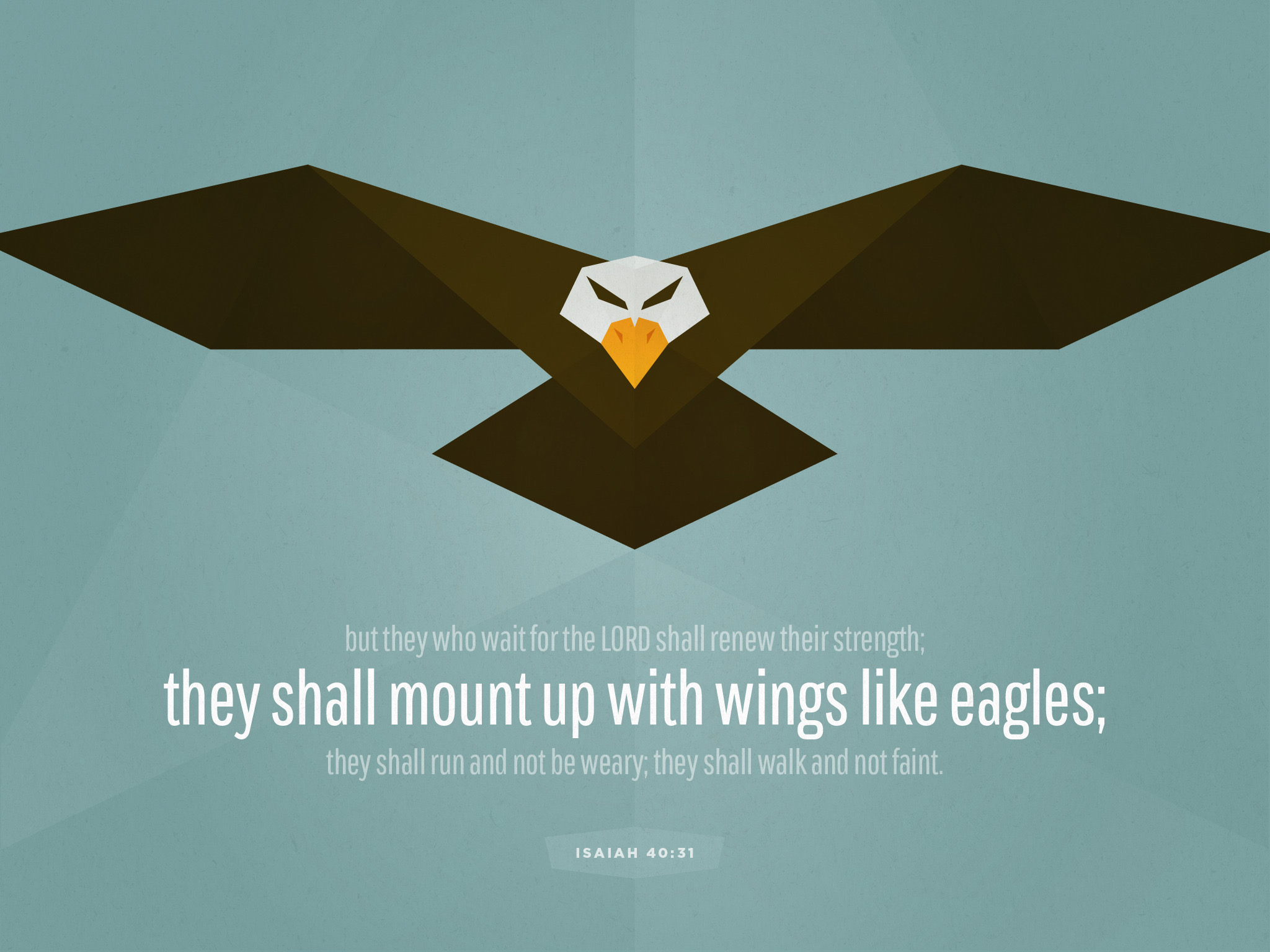
31 but they who wait for the Lord shall renew their strength; 
they shall mount up with wings like eagles; 
they shall run and not be weary; 
they shall walk and not faint.

Alleluia! Christ is risen! 
He is risen indeed! Alleluia!

In the name of Jesus. Amen.

One of the greatest spiritual dangers that we all face is that, as we go through difficulties in life, we forget very obvious things – especially the fact that God loves us and is in control of all things. But it’s not as though you’ve actually forgotten it. It’s just that you don’t believe it. You don’t live your life in what you know to be true.

Smack in the middle of this text, God asks a question, and it sounds like He asks it out of frustration. “Why do you say, ‘My way is hidden from the Lord, and my right is disregarded by my God.’?” God doesn’t even wait for an answer. Instead, He addresses His question with a question. “Have you not known? Have you not heard? The Lord is the everlasting God, the Creator of the ends of the earth. He does not faint or grow weary; His understanding is unsearchable.”

Your God doesn’t wear out like you and I do. It’s not as though He needs to go sit in His lazy chair and kick His feet up to take a nap. He never encounters a situation where He isn’t quite sure what to do. We have known and we have heard that God is everlasting, that He is the Creator of the ends of the earth who does not grow faint or weary. We know that God has infinite understanding, that He gives power to the faint and strength to the weak. Our problem is that we don’t live like that is true. We encounter difficulties and live as though God does none of those things.

Dear saints, your God created every single star in the universe. Scientists guess that there are somewhere between 100-400 billion stars in our Milky Way galaxy. They don’t know the exact number, but that’s the estimate. Think about this – even if we took the small end of that estimate – if it only took God one second to name each star, 100 billion seconds is equivalent to 3,171 years, 66 days, 17 hours, and 46 minutes. And that’s just our galaxy.

Scientists estimate that there are between one to two trillion galaxies. Honestly, it wouldn’t surprise me that as we learn how to look farther we found out that the universe is even bigger than that. And it was nothing for God to create all those things. God created all of those things simply by speaking, “Let there be lights in heavens,” (Gen. 1:14) and there they were. Every one of them with a name and carefully placed in its position by your mighty God.

Now, contrast that with how God created you. When God created Adam, He didn’t simply speak. He got down into the mud and dirt and dust. He molded, formed, and shaped you from that dust and breathed into your nostrils the breath of life (Gen. 2:7). He intricately knitted you together in your mother’s womb (Ps. 139:1315).

Beyond that, God saved you by taking on your flesh and blood. He entered into His creation and subjected Himself to the weariness and fatigue that you endure (Jn. 4:6). Christ knew suffering and pain (Is. 53:3). Jesus did all of this to step between you and the wrath of God that you and I deserve because of our sin. He came to die and rise again in order to win you as His own.

In other words, God is much more invested in you than all the rest of creation. He’s more interested in what goes on in your life and what happens with you than with all the stars and galaxies that He calls by name. Again, we know this, but by the way we often live, it sure doesn’t look like it. Instead of waiting upon the Lord and soaring like eagles, we flap around like chickens.

I’m no expert on chickens, but the few times I’ve seen them “in flight” it’s pretty unimpressive. When they do get airborne, it’s usually because they’ve jumped as high as they can. They beat their wings – feathers flying all around. And the best they can do is just to fall less quickly. That’s the picture of us when we aren’t waiting upon the Lord. The best we can do in our own strength is fall a bit slower.

Eagles are completely different. This past Tuesday, Sarah and I just got to watch three eagles soaring in the distance. I don’t know what they were looking at, but for, maybe, five minutes they kept circling round and round. They would swoop down periodically, but then they would ascend on the invisible updrafts. The whole time we watched those eagles, none of them flapped their wings even once. They were just lifted by those updrafts. Those huge birds didn’t need to extend any effort to fly.

Dear saints, that is the picture of those who wait upon the Lord. This waiting on the Lord isn’t simply marking off time and watching the minutes and seconds tick by. This waiting is living in a confident expectation of God’s action on our behalf. This waiting is simply resting in God’s mercy which lifts us up to heaven. Romans 4:5 puts it this way, “To the one who does not work but believes in Him who justifies the ungodly, his faith is counted as righteousness.”

I’ll confess my own weakness in this. I’m not good at waiting. I don’t like doing it. I don’t have the patience I should have. Waiting is difficult, and I suspect this is true for all of us. We wrongly live as though everything around us is dependent upon our work, our effort, our wisdom. We think we have to get everything figured out on our own. It’s exhausting. Waiting might feel like we’re descending or, even, free-falling. But this waiting is waiting in faith where we receive from God, and He lifts us up.

I want to change gears for a minute to talk about this upcoming sabbatical. Dear saints, my prayer for this sabbatical is that all of us would come to a better understanding that this is God’s congregation and that He is more interested in His Word being proclaimed here than we are. I’ll confess that I start to slide into the sinful attitude that certain things are dependent on me and what I do. If that were actually the case, you, dear saints, are in deep trouble.

So, during this sabbatical, I’m going to do my best to rest. In 1 Co. 3:5-7, Paul tells the congregation in Corinth that he and other pastors are nothing. He says, “I planted, Apollos watered, but God gave the growth. So neither he who plants nor he who waters is anything, but only God who gives the growth.” This sabbatical will help all of us remember that.

God loves His church. He loves this congregation. He is more ready to give than we are to receive. So, thank you for the gift of this sabbatical so I can stop, wait, and receive from God for an extended time. I trust that God will use this time to renew and refresh me in ways that will benefit me and in ways that will benefit you.

May God remind all of us that when we are weary and exhausted that He is our strength. He is the One who lifts us up by His mercy and grace. His incomparable love carries us along. He protects and keeps us. He grows His church. He forgives our sins. He makes a place for us in eternal life through His inexhaustible love and work for us in Christ Jesus. May we all wait and receive from Him. Amen.

Alleluia! Christ is risen! 
He is risen indeed! Alleluia!

The peace of God, which surpasses all understanding, will guard your hearts and minds in Christ Jesus. Amen.

The Price – Sermon on Matthew 27:62-28:15 for the Vigil of Easter

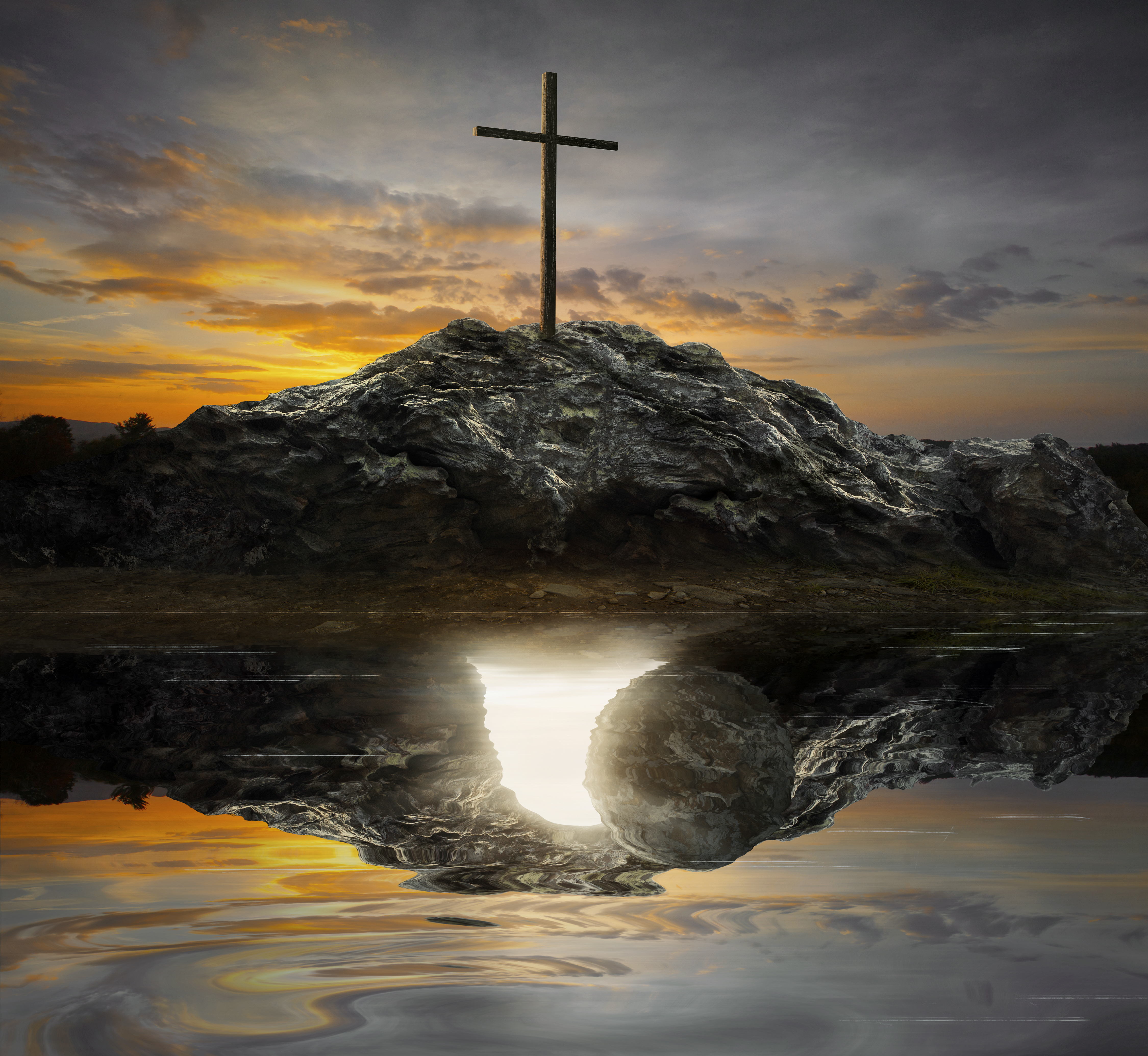
A single cross with the reflection of an empty tomb.

Matthew 27:62-28:15

62 The next day, that is, after the day of Preparation, the chief priests and the Pharisees gathered before Pilate 63 and said, “Sir, we remember how that impostor said, while he was still alive, ‘After three days I will rise.’ 64 Therefore order the tomb to be made secure until the third day, lest his disciples go and steal him away and tell the people, ‘He has risen from the dead,’ and the last fraud will be worse than the first.” 65 Pilate said to them, “You have a guard of soldiers. Go, make it as secure as you can.” 66 So they went and made the tomb secure by sealing the stone and setting a guard. 

1 Now after the Sabbath, toward the dawn of the first day of the week, Mary Magdalene and the other Mary went to see the tomb. 2 And behold, there was a great earthquake, for an angel of the Lord descended from heaven and came and rolled back the stone and sat on it. 3 His appearance was like lightning, and his clothing white as snow. 4 And for fear of him the guards trembled and became like dead men. 5 But the angel said to the women, “Do not be afraid, for I know that you seek Jesus who was crucified. 6 He is not here, for he has risen, as he said. Come, see the place where he lay. 7 Then go quickly and tell his disciples that he has risen from the dead, and behold, he is going before you to Galilee; there you will see him. See, I have told you.” 8 So they departed quickly from the tomb with fear and great joy, and ran to tell his disciples. 9 And behold, Jesus met them and said, “Greetings!” And they came up and took hold of his feet and worshiped him. 10 Then Jesus said to them, “Do not be afraid; go and tell my brothers to go to Galilee, and there they will see me.”

11 While they were going, behold, some of the guard went into the city and told the chief priests all that had taken place. 12 And when they had assembled with the elders and taken counsel, they gave a sufficient sum of money to the soldiers 13 and said, “Tell people, ‘His disciples came by night and stole him away while we were asleep.’ 14 And if this comes to the governor’s ears, we will satisfy him and keep you out of trouble.” 15 So they took the money and did as they were directed. And this story has been spread among the Jews to this day.

Alleluia! Christ is risen!
He is risen indeed! Alleluia!

In the name of Jesus. Amen.

When Jesus died on Friday, things happened quickly and somewhat haphazardly because the Sabbath was about to begin at dusk. Joseph of Arimathea asked for the body of Jesus and laid it in his own new tomb (Mt. 27:57-61). Jesus had His Sabbath rest in that tomb from all the work that He had done (Gen. 2:2), but the chief priests and Pharisees don’t rest because they can’t rest. Instead, they work. They work like busy, busy bees. Even though it is the Sabbath day (and a high Sabbath because of the Passover), they go to Pilate and ask that a guard be set because they remember that Jesus had said He would rise after three days (Mt. 27:63-64). In a sad twist of irony, the enemies of Christ take His prediction of the resurrection more seriously than Jesus’ own disciples do.

Pilate seems to be a little annoyed by the request. He figures Jesus is dead and is no longer a threat, but here are these chief priests completely obsessed with a guy who has been crucified and is dead. So, Pilate says, “You have a guard of soldiers.” The Greek here is a little ambiguous. Pilate’s words there could be either a statement – which is how it is in our translation – or a command, “Here, have/take a guard of soldiers. Go, make it as secure as you can.”

I bring this up because it would make a difference as to which soldiers are stationed to guard the tomb. If it is a command, “Have a guard of soldiers,” it would be Roman soldiers. But if it is a statement, “You have a guard of soldiers,” then it would be soldiers from the Jewish Temple guard. I used to think that they were Roman soldiers (probably because of all the artwork I’ve seen depicts them as Roman soldiers). It could very well be that they were Roman soldiers, but I think there are enough clues to see that it is a real possibility that these guards are part of the Jewish Temple guard, and that is the assumption I’ll be using through the rest of the sermon tonight.

Toward the dawn of the first day of the week, the women go “to see the tomb” (Mt. 28:1), but they are invited by the angel to see that the place where Jesus lay and rested was now empty because Jesus has risen (Mt. 28:6). The angel sends them to tell the disciples the good news, but on the way, Jesus meets them. If you want to hear more about that exchange (which is so rich and beautiful), you’ll have to come back tomorrow morning.

While the women restart their journey to tell the disciples, the guard that had been stationed at the tomb go not to Pilate but to the chief priests and report everything that had taken place (Mt. 28:11). And the chief priests don’t accuse the soldiers of being crazy or drunk. Imagine someone came to your front door and said, “I was in the cemetery, and a guy came out of his grave,” your first reaction would not be, “Here’s some money, don’t tell anybody.” But that is what the chief priests do. They pay the guards to lie about what had happened, and it took a significant payment. Our text says, “a sufficient sum of money,” or, literally, “silver” (Mt. 28:12). That “hush silver” was the price of the soldiers’ lie. The chief priests instruct the soldiers to say, “Jesus’ disciples came while we were asleep and stole the body.”

This is why I think these soldiers were part of the Temple guard. Roman soldiers knew that falling asleep while on duty was a death sentence. Roman soldiers were well-trained and well-armed, so even lying about a bunch of fishermen being able to steal what they were guarding would be humiliating. And excuses from the chief priests would not satisfy Pilate to keep them out of trouble (Mt. 28:14), no matter how elaborate those excuses were. But the soldiers take the silver, and the “stolen body theory” spread to deny the fact of Jesus’ resurrection.

Now, all of that was to set this up: Everyone has a price. Judas’ price to betray Jesus was thirty pieces of silver (Mt. 26:15). The soldiers’ price to lie and defame their own honor was a large sum of silver (Mt. 28:12, 15). Now, ask yourself, “What is my price?” 

I don’t think anyone here would betray Jesus, like Judas did, for any amount of money. And I would guess that all of us would say that we are willing to die rather than deny Christ, but so did Peter (Mt. 26:35). We might not think that we have a price. And yet, we are all bought with a lower price for lower things.

Every time we sin, we are easily bought. We sin and despise God’s Word by skipping church and neglecting to gather with our brothers and sisters in Christ because we don’t want to pay the price of getting extra sleep on Saturday night, missing our kids’ tournament, or researching to find a church while we are on vacation. We sin and lie because we aren’t willing to pay the price of our reputation when the truth will cost us. Whenever we fall into sin, we sell our souls for the deadly wages that sin pays us (Ro. 6:23). Dear saints, repent.

Repent and know that the price of your sins has been paid by Jesus. Everyone has a price, even God. The story of Abraham and Isaac (Gen. 22:1-18) showed what kind of price, what kind of sacrifice, was needed. There, Abraham places his son on the altar, and even though God stopped the sacrifice of Isaac, it gives us an idea of the price and what kind of sacrifice needed to take place for our redemption.

God the Father took His Son, His only Son, Jesus whom He loved and sacrificed Him on Calvary. God didn’t just forgive your sin willy-nilly. No. He sent Jesus to pay the price for every sin you have committed. Your God and Lord has paid the debt you owed to Him. And because the price has been paid, you are now Jesus’ brothers and children of God.

And the resurrection proves that God has accepted the payment. Because of Jesus’ death and resurrection, you have been brought out of slavery. You have been delivered through the sea of your Baptism and through the flood of God’s wrath against your sin. You have been saved from the fiery furnace and brought to dawn of the New Creation and into the life everlasting.

And now that the, you are invited to your seat at the Lord’s table where Jesus gives you His Body and His Blood. God invites you, “Come, everyone who thirsts, come to the waters; and he who has no money, come, buy and eat! Come, buy wine and milk without money and without price” (Is. 55:1). And you have this invitation because Jesus, your crucified and risen Savior, has fully paid the price for you.

Alleluia! Christ is risen!
He is risen indeed! Alleluia!

Amen.The peace of God, which surpasses all understanding, will guard your hearts and minds in Christ Jesus. Amen.

Sabbath Rest – Sermon on Genesis 1:1-2:3 and Luke 23:50-24:7 for the Vigil of Easter

Genesis 1:1-2:3 & Luke 23:50-24:7

Alleluia! Christ is risen!
He is risen indeed! Alleluia!

In the name of Jesus. Amen.

As we read through Genesis 1, there was a line that kept repeating. “And there was evening and morning the first day.” “And there was evening and morning the second day.” “And there was evening and morning the third, fourth, fifth, and sixth day.” But then, when we get to the account of the seventh day and expect to hear, “And there was evening and morning the seventh day,” we get nothing but crickets. Moses didn’t write that. But in and through that Holy Spirit inspired silence, there is an indication that the Sabbath day is incomplete. Yes, it was blessed with rest and holiness, but that day was still waiting for its completion and fulfillment.

That fulfillment came today, for us Westerners, or in the Jewish mind yesterday, Holy Saturday. The way days were reckoned in Jesus’ day, the new day began when the first two stars appeared in the sky. That’s why we start celebrating the Resurrection tonight, well before midnight. It’s why we celebrate Christ’s birth on the eve of His birth.

Jesus was crucified on Friday. In our Gospel lesson (Lk. 23:50-24:7), we heard how Joseph of Arimathea asked Pilate for the body of Jesus. Joseph took Jesus down from the cross and wrapped Him in a linen shroud and laid him in a new tomb. But because the Sabbath about to begin, Joseph, Nicodemus (Jn. 19:39), and the women weren’t able to finish the burial of Jesus. The sun was setting, and they didn’t have time to get the job done. The last verse of Luke 23 says, “On the Sabbath they rested according to the commandment.”

So, Joseph rested. The women rested. And, most importantly, Jesus rested, fulfilling the seventh day of creation.

Scripture says that after God finished creating everything on Friday, the sixth day, “God saw everything that He had made, and behold, it was very good” (Gen. 1:31). Then, God rested the following day, the seventh day, and made it holy.

On the Friday we call ‘good,’ the day of the re-creation and redemption of all things, Jesus saw everything He had done – His miracles, His teaching, His faithfulness to God and neighbor, how He perfectly obeyed God, how He had borne our griefs and carried our sorrows, and how He purchased and won us back – and behold, it was very good. That is why He could cry out, “It is finished,” before He breathed His last (Jn. 19:30).

Dear saints, Jesus, your slain Creator and Redeemer, endured the cross and labored in love for your peace and so you could have eternal rest. After completing His work, He entered His Sabbath rest as He lay there in the tomb.

Jesus’ task was done. Your sins were atoned for. He had finished His work that He had done, so He rested from all His work that He had done in creation. And now, Jesus has burst from the tomb, spitting in the face of death. The devil’s head has been crushed. Jesus has rested in the grave, and the Sabbath has been fulfilled so you can also enter into that perfect rest (Heb. 4:10).

And this has eternal significance for you. When you bury your loved ones, and when you yourself are buried, they and you follow Jesus into that rest. This is why Christian burial places are called ‘cemeteries.’ The word ‘cemetery’ comes from a Greek word koimeteria which means ‘sleeping place.’ We bury our brothers and sisters in Christ knowing that God isn’t done with them. We put them where they can rest and await the wake-up call that will be the trumpet blast on the Last Day when Jesus returns to raise them.

Dear saints, Christ has completely stripped death and the grave of its victory and sting (1 Cor. 15:55-56). Jesus lives, and so do you. And you have entered into His rest.

Alleluia! Christ is risen!
He is risen indeed! Alleluia!

Amen.

The peace of God, which surpasses all understanding, will guard your hearts and minds in Christ Jesus. Amen.

Very Good – Sermon on Genesis 1:1-2:3 for the Twenty-first Sunday after Trinity

Genesis 1:1-2:3

1 In the beginning, God created the heavens and the earth. 2 The earth was without form and void, and darkness was over the face of the deep. And the Spirit of God was hovering over the face of the waters. 

3 And God said, “Let there be light,” and there was light. 4 And God saw that the light was good. And God separated the light from the darkness. 5 God called the light Day, and the darkness he called Night. And there was evening and there was morning, the first day. 

6 And God said, “Let there be an expanse in the midst of the waters, and let it separate the waters from the waters.” 7 And God made the expanse and separated the waters that were under the expanse from the waters that were above the expanse. And it was so. 8 And God called the expanse Heaven. And there was evening and there was morning, the second day. 

9 And God said, “Let the waters under the heavens be gathered together into one place, and let the dry land appear.” And it was so. 10 God called the dry land Earth, and the waters that were gathered together he called Seas. And God saw that it was good.

11 And God said, “Let the earth sprout vegetation, plants yielding seed, and fruit trees bearing fruit in which is their seed, each according to its kind, on the earth.” And it was so. 12 The earth brought forth vegetation, plants yielding seed according to their own kinds, and trees bearing fruit in which is their seed, each according to its kind. And God saw that it was good. 13 And there was evening and there was morning, the third day. 

14 And God said, “Let there be lights in the expanse of the heavens to separate the day from the night. And let them be for signs and for seasons, and for days and years, 15 and let them be lights in the expanse of the heavens to give light upon the earth.” And it was so. 16 And God made the two great lights—the greater light to rule the day and the lesser light to rule the night—and the stars. 17 And God set them in the expanse of the heavens to give light on the earth, 18 to rule over the day and over the night, and to separate the light from the darkness. And God saw that it was good. 19 And there was evening and there was morning, the fourth day. 

20 And God said, “Let the waters swarm with swarms of living creatures, and let birds fly above the earth across the expanse of the heavens.” 21 So God created the great sea creatures and every living creature that moves, with which the waters swarm, according to their kinds, and every winged bird according to its kind. And God saw that it was good. 22 And God blessed them, saying, “Be fruitful and multiply and fill the waters in the seas, and let birds multiply on the earth.” 23 And there was evening and there was morning, the fifth day. 

24 And God said, “Let the earth bring forth living creatures according to their kinds—livestock and creeping things and beasts of the earth according to their kinds.” And it was so. 25 And God made the beasts of the earth according to their kinds and the livestock according to their kinds, and everything that creeps on the ground according to its kind. And God saw that it was good. 

26 Then God said, “Let us make man in our image, after our likeness. And let them have dominion over the fish of the sea and over the birds of the heavens and over the livestock and over all the earth and over every creeping thing that creeps on the earth.” 

27 So God created man in his own image, 
in the image of God he created him; 
male and female he created them. 

28 And God blessed them. And God said to them, “Be fruitful and multiply and fill the earth and subdue it, and have dominion over the fish of the sea and over the birds of the heavens and over every living thing that moves on the earth.” 29 And God said, “Behold, I have given you every plant yielding seed that is on the face of all the earth, and every tree with seed in its fruit. You shall have them for food. 30 And to every beast of the earth and to every bird of the heavens and to everything that creeps on the earth, everything that has the breath of life, I have given every green plant for food.” And it was so. 31 And God saw everything that he had made, and behold, it was very good. And there was evening and there was morning, the sixth day. 

1 Thus the heavens and the earth were finished, and all the host of them. 2 And on the seventh day God finished his work that he had done, and he rested on the seventh day from all his work that he had done. 3 So God blessed the seventh day and made it holy, because on it God rested from all his work that he had done in creation.

In the name of Jesus. Amen.

An overture is a medley that opens an opera, suite, or play, and it introduces the different songs you will hear through the whole work. Movies used to do this often. Most of you are probably familiar with The Sound of Music. The movie begins with scenes of the mountains and fields surrounding Salzburg, Austria, and after Julie Andrews frolics through the grass singing “The Hills Are Alive,” the overture begins. The overture continues several more measures of “The Hills Are Alive,” but then transitions into “Do-Re-Mi,” followed by, “A Few of My Favorite Things,” which morphs into “Something Good,” and closes with a brief hint to “Climb Every Mountain.” There aren’t any lyrics in the overture, so you don’t know that part of the song, but you get to hear the melody so it sticks in your mind and you are able to recognize it when the actual song enters the movie. Not every song gets into the overture, but it gives you an idea of the significant events that are coming up in the film.

Well, the text we just heard is the overture of all of Scripture. So much of what the Bible teaches is introduced in these verses, but too often we miss them because we’re so familiar with the account of creation. So, we’re going to do our best to open our ears to hear the themes that are introduced in this text. We will catch some of the melodies presented to us, so that when the rest of Scripture gives us the lyrics, we can recognize the music behind the song. Just so you know, because there is so much packed into these verses, we aren’t going to be able to hit everything. Sorry.

Right off the bat, we are introduced to one of the great, mysterious theological truths of Scripture – we serve a triune God. In Hebrew, the third and fourth words are ‘God’ and ‘created.’ The interesting thing is that the word for ‘God’ is Elohim, which is a plural word, but the verb for ‘created’ is singular. This would sound really weird to a Hebrew-speaker reading it. Imagine if you read, “The painters (pl.) cleans (sg.) their brushes.” It’s a little jarring.

On top of that, in v. 2-3, you are introduced to each of the three Persons of the Trinity (especially if you know the rest of your Bible). You see the Spirit of God hovering over the waters. (The Holy Spirit’s connection to water is a whole theme of Scripture by itself, but we’re not going to dive into that today.) The Holy Spirit is over the water. God the Father speaks. And the Word that is spoken is Jesus who was in the beginning with God through whom all things were made (Jn. 1:3).

We see a return to this theme of the Trinity in v. 26 where God says, “Let us make man in our (pl.) image (sg.) after our (pl.) likeness (sg.).” Then, v. 27 says with poetic beauty, “So God (pl.) created (sg.) man (sg.) in His (sg.) own image, in the image of God (pl.) He created (sg.) him (sg.); male and female He created (sg.) them (pl.).” Just briefly, as a sidenote, part of us being created in the image of God is that we share with God a plurality. Our one God has a plurality of three, one mankind has a plurality of two. This is why I would encourage you to not use someone’s “preferred pronouns” – especially if those pronouns are the plural, they/them. That is a demonic attempt to twist and mangle God’s creation and to make an individual more than he or she actually is. Moving on.

The second part of the overture I’ll point out today is that God is a God of order (1 Cor. 14:33). And we see this in the details of what is created each day. In v. 2, we are told that the earth is without form and void. In days 1-3, God creates defined spaces that give form and order, and in days 4-6, God fills those spaces. You can think of it as God creating a shelf on days 1-3 and God filling those shelves days 4-6. Day one, God creates light and time; then on day four, God fills it with sun, moon, and stars. Day two, God creates the atmosphere and waters; then on day five, God fills those spaces with birds and fish. Day three, God creates land and plants; then on day six, God fills the space with animals and mankind. 

This is so beautiful. God doesn’t just build the house of creation. He also fills and decorates it. Because God creates with this order, we can say that wherever and whenever we see disorder, there are evil forces working against God. Satan brought that disordering when he tempted Adam to fall into sin, and we see that continued work of the devil and demons wherever there are attempts to bring anarchy, chaos, and confusion. After the Fall in Gen. 3, the rest of the Bible is about God bringing order back into a sin-sick, chaotic creation.

The third movement of this overture we will highlight is the movement from darkness to light. Verse 2tells us that before God spoke over the formlessness and void, there was darkness over the face of the deep. Before God creates, there is darkness, but then God speaks, “Let there be light,” and there was light. And notice how each of the first six days end with the refrain, “and there was evening and there was morning the ___ day.” So, each day of the creation account begins with darkness and moves toward light.

In our culture today, we mark the beginning of a day at midnight, and this is totally fine. We’re just using the way the Roman empire counted time. The Hebrew culture considers the start of the next day to be right around sunset, which would be about 6 PM because they are closer to the equator than we are. So, they have kept that theme of a day moving from darkness to light. And in the Church, we do this as well. Christmas begins in the “eve.” When it is dark, we celebrate the birth of Christ, and the day moves toward the light.

The interesting thing is that when we get to the seventh day, the pattern “there was evening and morning” that we have heard six times, is broken. There is only mention of the fact that there is a seventh day. So, this entire account moves from chaos and darkness to order and eternal, never-ending light. The book of Revelation shows the conclusion and culmination of this beautiful movement from darkness to light. Rev. 21:23-25 tells us that the eternal city of God will have no sun or moon for the glory of God gives it light and there will be no night there.

Since we’re talking about this seventh day with no darkness, we’ll move to the next beautiful piece of this overture – the eternal day of rest. The seventh day is totally unique in three ways. First, God doesn’t speak a single word on the seventh day. God is silent because the heavens and the earth were finished, completed. God has said all that needed to be said, and His creative Word continues to work to this day as it echoes through His creation. All of creation continues to run and exist because of the Word of God.

The second way the seventh day is unique is that it is blessed. On day five, God blessed the sea creatures and birds to be fruitful and multiply, filling the waters and the air. On day six, God blesses mankind to be fruitful and multiply filling, subduing, and having dominion over the earth. it. (Many people today are calling for population control. They say there are too many people on the planet. Dear saints, this is a demonic thought. God created the world to be filled with people, and He blesses us for the purpose of filling the world.) But then, God finishes creation by blessing a day. It is God’s intention to use the blessed seventh day to bless His people – both physically with rest from work, and spiritually with His holiness being conveyed from God to people.

The third way the seventh day is unique is that it doesn’t have an end in the text. The text makes the seventh day eternal and open. Even though we have fallen into sin, God has given us access to the seventh day of eternal rest until Jesus comes again in glory on the Last Day. Hebrews 3-4 encourages us to listen to God’s Word and enter God’s rest. Hebrews 4:9–10 says, “So then, there remains a Sabbath rest for the people of God, for whoever has entered God’s rest has also rested from his works as God did from His.”

Dear saints, there are so many wonderful themes here in the account of creation, but the one that tops them all is the power of the Word of God. Through His Word, God created all things in six days, and since sin entered the world, God has used His Word to bring the sin-induced chaotic creation back into order and rest. So, God sent His Son, Jesus, the Word made flesh, into the world. Colossians 1:19-20 says, “In [Christ Jesus] all the fullness of God was pleased to dwell, and through Him to reconcile to Himself all things, whether on earth or in heaven, making peace by the blood of His cross.”

The God who says, “Let there be ____,” and that which does not exist obeys, He now says to you, “Your sins are removed from you as far as the east is from the west” (Ps. 103:12), and they are. He says to you, “I am the resurrection and the life. Whoever lives and believes in Me shall never die” (Jn. 11:25-26), and it is true. He says to you, “Come to Me, all you who labor and are heavy laden, and I will rest you” (Mt. 11:28), and you find peace.

Dear saints, this is very good indeed. God has created, redeemed, and sanctified you. Trust in what Christ has done, and you will find your eternal rest with God and will all His saints. Amen.

The peace of God, which surpasses all understanding, will guard your hearts and minds in Christ Jesus. Amen.

Humbled – Sermon on Luke 14:1-11 for the Seventeenth Sunday after Trinity

Luke 14:1-11

1 One Sabbath, when [Jesus] went to dine at the house of a ruler of the Pharisees, they were watching him carefully. 

2 And behold, there was a man before him who had dropsy. 3 And Jesus responded to the lawyers and Pharisees, saying, “Is it lawful to heal on the Sabbath, or not?” 4 But they remained silent. Then he took him and healed him and sent him away. 5 And he said to them, “Which of you, having a son or an ox that has fallen into a well on a Sabbath day, will not immediately pull him out?” 6 And they could not reply to these things. 

7 Now he told a parable to those who were invited, when he noticed how they chose the places of honor, saying to them, 8 “When you are invited by someone to a wedding feast, do not sit down in a place of honor, lest someone more distinguished than you be invited by him, 9 and he who invited you both will come and say to you, ‘Give your place to this person,’ and then you will begin with shame to take the lowest place. 10 But when you are invited, go and sit in the lowest place, so that when your host comes he may say to you, ‘Friend, move up higher.’ Then you will be honored in the presence of all who sit at table with you. 11 For everyone who exalts himself will be humbled, and he who humbles himself will be exalted.”

In the name of Jesus. Amen.

Jesus eats with all sorts of people. He eats at His friends’ house with Mary, Martha, and Lazarus (Lk. 10:38-42). He eats at His disciples’ houses. He eats in Peter’s house and Peter’s mother-in-law serves Him (Lk. 4:38-39). Jesus calls Matthew the tax collector to be His disciple and eats with him and other sinners. And you remember that the reason Jesus tells the parable of the Lost Sheep, Lost Coin, and Prodigal Son is the Pharisees accusing Jesus of welcoming and eating with sinners (Lk. 15:1-2).

We aren’t surprised that Jesus would eat with His friends and disciples. We do that too. And as Christians, we are comfortable with the fact that Jesus eats with sinners. But we might find it surprising that Jesus would even eat with Pharisees. The Pharisees were our Lord’s enemies. From the beginning of His ministry, the Pharisees were butting heads with Jesus (Lk. 5:21Jn. 5:18).

Think of the person in your class or at work that you most regularly butt heads with – no matter what you just can’t seem to get along. He takes everything you say and turns it into an accusation against you, so you’re always on your toes, always analyzing everything word out of your mouth. Being around a guy like that is exhausting. Now, if that person invited you over for dinner, you’re going to decline. (Unless they tell you that they are going to be serving dry-aged Wagyu steaks. Then, you probably go, you just don’t stay for dessert.) But as difficult as the person you are imagining is, he probably isn’t trying to find some way to get you the death sentence. That’s exactly what the Pharisees wanted for Jesus, but our Lord still repeatedly ate with the Pharisees.

Once, Jesus went to Simon the Pharisee’s house where He was anointed by the sinful woman who washed Jesus’ feet with her tears (Lk. 7:36-50). Another time, Jesus was invited to eat at a Pharisee’s house and didn’t wash His hands the way the Sabbath traditions requires (Lk. 11:37-54). When Luke finishes recording that meal, he notes that the scribes and Pharisees were lying in wait for Him, to catch Him in something He might say.

Now here, in our text, an important Pharisee has invited Jesus to his house for a Sabbath dinner. And, what d’ya know? Jesus goes. 

Now, we have to imagine this scene of everyone arriving for the fancy dinner. Luke here gives us enough details to sketch this out, but they are interspersed in the account. So, let’s bring them together into one picture. Jesus arrives at this ruling Pharisee’s swanky house. As the guests arrive, they might give a nod or a handshake to their friends, but each of them is more interested in positioning themselves to get the best seats. They are cutting in front of each other to get as close as possible to the head of the table. I don’t know how a Pharisee would save a seat – maybe he’d drink half of whatever was in the cup or lick the silverware. Who knows? But they are all claiming their spots and making sure their position is secure and no one else takes it from them. Then, their gaze turns towards Jesus.

When Jesus arrived, He wasn’t concerned with sitting in the high, prominent spots. So, we can assume that there was only one spot left at the table – the lowest. Jesus finds His place, and the eyes of all the Pharisees are on Him. If you were there and watching Jesus approach His seat, you wouldn’t notice the fine dining couch or the fancy china. The only thing that would catch your attention was this man.

Luke, the doctor, tells us that the man before Jesus has ‘dropsy.’ The term does appears in medical literature about 300 years before Jesus by a guy named Hippocrates (from whom, we get the Hippocratic oath). The word is actually two words mushed together – “water” and “appearance.” In other words, the guy was swollen, grossly bloated. It is not stretching the text at all to assume the Pharisees brought this man in so they could accuse Jesus of breaking the 3rd Commandment, “Remember the Sabbath day to keep it holy.”

Now, the Pharisees had lengthy discussions on what was and what wasn’t permitted on the Sabbath. They wrote all sorts of rules that defined what you could and couldn’t do on the day of rest. It went so far as to define where you could spit. Every other day of the week, you could spit wherever you wanted, but on the day of rest, you could only spit on rocks because spitting on soil might be watering a plant and considered work. Also in their discussions, they considered how much help you could give to a person who was sick or injured. For example, if someone had a cut you could apply a bandage to keep the wound from getting worse, but you couldn’t apply the bandage in a way that would help the person get better because that would be considered work.

These Pharisees are all closely watching as Jesus sees this man, ballooned up with disease. But Jesus turns the tables. Notice, they don’t ask Jesus a question, but He responds to the situation asking, “Is it lawful to heal on the Sabbath or not?” The Pharisees don’t say a word. Jesus heals the man. His swelling is gone. His features return to normal, and Jesus sends him away. Then, Jesus exposes the Pharisees’ hypocrisy. “Which of you, having a son or an ox that has fallen into a well on a Sabbath day, will not immediately pull him out?”After this question, the Pharisees aren’t just silent. They aren’t able to answer. With two pointed questions, Jesus humbles the Pharisees into deafening silence.

Then, our Lord throws the knock-out punch. They had been watching Jesus carefully as He approached the table, but He had been watching them too. They had been scrambling, shoving, jolting, and jockeying for the best places. It’s interesting: for all the discussion and debate the Pharisees had on what was and wasn’t considered work on the Sabbath, they didn’t debate about contending for prominent positions in their regulations. And Jesus echoes what we had in the first two verses of our Old Testament lesson (Pro. 25:6-14). Basically, if you put yourself forward as being important, you’re likely going to be humbled, and it’s going to be a public spectacle. Instead, be humble, and wait for your host to exalt you.

Now, of course, this is some solid, practical advice. Any motivational speaker could take what Jesus says here and teach a helpful lesson: Don’t strut around blowing smoke about how important you are. Instead, go about your business quietly, and your recognition will come in due time. But this isn’t a self-help seminar, and I’m not a motivational speaker.

Instead, notice what happened at this meal. Jesus, who was by far the most important person there, ended up in the lowest seat. And even though no one changed positions, Christ elevated His place back the peanut gallery to be the prominent place, and those who were at the head of the table end up in the bleachers.

Dear saints, as our Epistle lesson (Eph 4:1-6) said, “Walk in a manner worthy of your calling.” Humble. Gentle. Patient. Bearing with one another in love. Paul will say a similar thing in Php. 2:5-11, “Have this mind among yourselves, which is yours in Christ Jesus, who, though he was in the form of God, did not count equality with God a thing to be grasped, but emptied himself, by taking the form of a servant, being born in the likeness of men. And being found in human form, he humbled himself by becoming obedient to the point of death, even death on a cross.” But Jesus didn’t remain humbled and lowly in death. The text goes on, “Therefore God has highly exalted him and bestowed on him the name that is above every name, so that at the name of Jesus every knee should bow, in heaven and on earth and under the earth, and every tongue confess that Jesus Christ is Lord, to the glory of God the Father.”

Dear saints, this humbled mind is yours. You, Christian, are saved by God’s grace. Live that out. You were sinful and low, but Christ has invited you, by the cleansing of His blood, to sit at His table. He has given you the seat of honor next to Him. Through His death and resurrection, you have been raised with Him. Your life is even now hidden with Christ in God. And the day is coming when Christ who is your life appears, you also will appear with Him in glory (Col. 3:1-4). Christ will call to you, “Friend, move up higher.” And you, and all believers, will be honored in the presence of all creation. Amen.

The peace of God, which surpasses all understanding, will guard your hearts and minds in Christ Jesus. Amen.

A Seat at the Table – Sermon on Luke 14:1-11 for the Seventeenth Sunday after Trinity

Listen here.

Luke 14:1-11

1 One Sabbath, when [Jesus] went to dine at the house of a ruler of the Pharisees, they were watching him carefully.

2 And behold, there was a man before him who had dropsy. 3 And Jesus responded to the lawyers and Pharisees, saying, “Is it lawful to heal on the Sabbath, or not?” 4 But they remained silent. Then he took him and healed him and sent him away. 5 And he said to them, “Which of you, having a son or an ox that has fallen into a well on a Sabbath day, will not immediately pull him out?” 6 And they could not reply to these things.

7 Now he told a parable to those who were invited, when he noticed how they chose the places of honor, saying to them, 8 “When you are invited by someone to a wedding feast, do not sit down in a place of honor, lest someone more distinguished than you be invited by him, 9 and he who invited you both will come and say to you, ‘Give your place to this person,’ and then you will begin with shame to take the lowest place. 10But when you are invited, go and sit in the lowest place, so that when your host comes he may say to you, ‘Friend, move up higher.’ Then you will be honored in the presence of all who sit at table with you. 11 For everyone who exalts himself will be humbled, and he who humbles himself will be exalted.”

In the name of Jesus. Amen.

All of the Ten Commandments should do two things. First, the Commandments should expose how sinful we are and cause us to repent. Second, the Commandments should make us realize that God is good and that He is concerned for us and cares about all aspects of our lives. For example, the 5th Commandment about murder should expose our anger and hatred toward others, but it should also show you that God values your life and wants to protect it. The 7th Commandment about stealing should expose our greed and idolatry of money and stuff, but it should also show you that God wants you to have and enjoy the things He has given you. The 8th Commandment about bearing false witness should convict us of how we use our tongues to lie, gossip, and speak negatively of others, but it should also show you that God loves truth and wants to protect you from false accusations, gossip, etc. This is true of all Ten Commandments, but because this Gospel lesson focuses our attention on what Jesus does at this Sabbath feast, we are going to focus on the 3rdCommandment.

Hopefully, you have the 3rd Commandment (and all the Commandments) memorized: “Remember the Sabbath Day, to keep it holy.” While that one sentence captures the essence of the Command, there is more to it when it is given by God on Mt. Sinai. Here’s the full thing (Ex. 20:8-11):

“Remember the Sabbath day, to keep it holy. Six days you shall labor, and do all your work, but the seventh day is a Sabbath to the Lord your God. On it you shall not do any work, you, or your son, or your daughter, your male servant, or your female servant, or your livestock, or the sojourner who is within your gates. For in six days the Lord made heaven and earth, the sea, and all that is in them, and rested on the seventh day. Therefore the Lord blessed the Sabbath day and made it holy.” 

The 3rd Commandment shows God’s concern and care for us. In this Command, God guarantees a day of rest every week. And we didn’t even have to unionize to get it! As far as I know, there is no other religion where people are commanded to rest and receive. Foreigners, servants, and even animals get a day off. This rest not only makes people more productive, but it also honors and protects them. God created the universe in six days and rested on the seventh. And because we are created in God’s image, we should follow His example and have the same privilege of rest.

God’s intent with this day of rest was that we should not only rest our bodies and minds, but more importantly God wants us to use the Sabbath to find rest for our souls. The day of rest is kept holy when we concern ourselves with holy things – especially hearing God’s Word preached and explained to us (Mt. 11:28-30Act. 13:274415:21). God knows that we need to work to provide food for our bodies, so He gives us six days to do that. And God knows that we need to be fed spiritually, so He set aside the Sabbath for that as well. According to Jesus, “The Sabbath was made for man, not man for the Sabbath” (Mk. 2:27).

Truly keeping the Sabbath by resting from our regular work to hear God’s Word is a witness to God’s grace. The gift of rest that God gives in the Command reminds us that salvation is never earned or achieved by our efforts. Eternal life is always freely given and received as a gift from God. If salvation is not received as pure gift, it will always be beyond our reach and we will never have it. Now, with all of that in mind, we turn to the text.

The good and merciful Command about the Sabbath was being abused by the Pharisees. Instead of rejoicing in the rest God was giving them in the Command, these legalists took the Commandment and used it as a club to beat others over the head. A legalist is not someone who takes the Law extra seriously in order to keep it, nor is a legalist someone who avoids temptation and sin because they love God’s Law. Instead, a legalist is someone who uses the Law of God to serve himself and make others feel inferior (Rev. David Petersen).

These Pharisees were feasting on the Sabbath but ignoring the man sick with dropsy. Basically, dropsy means this man had some condition that made fluid build up making him bloated and swollen. The man would have looked gross, and his condition might have led people to believe that he was a glutton who was getting what he deserved. It is even possible that the Pharisees had invited this man to the feast in order to test Jesus and see what He would do because they were “watching [Jesus] carefully” (Lk. 14:1).

So, notice that they aren’t resting on the Sabbath at all. They are working, and their task is to catch and trap Jesus. They are taking the Sabbath feast, which was meant to be a time for everyone to bask in God’s forgiveness and mercy, and turning it into a private party where they would ridicule our Lord and pat themselves on the back for keeping God’s Law all while not lifting a finger to help this poor man. Some rest that is!

But while they are working to test Jesus, He turns the tables and puts them under the microscope by asking, “Is it lawful to heal on the Sabbath or not?” Of course, it is obviously in accordance with the Law to heal and do good to others on the Sabbath. God had even addressed this in the books of Moses (Dt. 22:1-4). In Ex. 23:4-5, God says, “If you meet your enemy’s ox or his donkey going astray, you shall bring it back to him. If you see the donkey of one who hates you lying down under its burden, you shall refrain from leaving him with it; you shall rescue it with him.” And God never says, “Go ahead and forget about it if it’s the Sabbath.” 

They knew the answer, but the Pharisees refuse to respond to Jesus’ question. So, Jesus does what He always does and heals the guy. After sending him away, Jesus asks the Pharisees, “Would you leave your son or even an ox that fell into a well on the Sabbath and not pull him out?” And still they refuse to answer. Their pride and hypocrisy is exposed, but Jesus isn’t done going after them yet. Jesus continues to run after them to give them rest. Christ wants these hard-working Pharisees to put down their labors and burdens and enter His rest. So, Jesus tells them this parable, which isn’t like most of Jesus’ parables. Instead, this particular parable is more akin to the wisdom we heard in our Old Testament Lesson (Prov. 25:6-14).

Now, we could take this parable as an etiquette lesson: Sit low and get honor by being paraded through the party to a higher seat. But that flies in the face of what Jesus is actually doing. Jesus wants to show them true humility. Pretending to be humble in order to get the praise of others is not true humility.

Notice what Jesus says is the lesson of the parable, “Everyone who exalts himself will be humbled, and he who humbles himself will be exalted.” In the parable, Jesus doesn’t give you something to do by saying, “Be humble.” Yes, pride is your problem, but you can’t overcome your pride by being humble. Even thinking that you can fix your pride is, by definition, prideful. The anecdote for your pride is not you being humble – it is grace. Grace is humbling because it is never merited or earned. Grace is pure mercy, pure love, pure gift.

The parable is really all about Jesus. It tells of Christ’s path from glory down to earth and the grave and back again (Php. 2:5-11). Jesus removed Himself from the place of honor at His Father’s right hand in order to make room for you. Jesus was humiliated. He took the form of a servant. God was found in human form. Then, when we sinners saw God in the flesh, we pinned Him to the cross. But after all this, God does the strangest thing.

He sees that Jesus’ seat is open and that you are sitting down low in the muck and mire of your sin. He invites you to move up. You are invited to sit at the table He prepares for you. He anoints your head with oil and makes sure your cup overflows (Ps. 23:5) and is never set down empty. Then, on the third day, from the lowest place, Jesus is raised up. At His name, every knee shall bow and every tongue confess that He is King of kings and Lord of lords. All of this has been done for you so that you can be honored by Jesus’ humility.

Dear sinners, we have fallen into the well of our sin, so Christ has come down into the well of sin for us. He dies in the lowest place of that well. And He invites you to step on His back, so you can get out and move to a seat of honor at His table. 

Remember how each of the first six days of creation in Genesis end by saying, “There was evening and morning”? The seventh day, the Sabbath, the day of rest doesn’t mention that. The picture is of an eternal rest with God that doesn’t end. Well, today is our Sabbath, our day of rest. God now invites you to His feast, and there is a place of honor for you here at His Table. Leave your work, your striving, your pride, and your sin. Come, there is a seat for you here at God’s table. Come and receive what you have not earned or deserved. Your God has good things for you here. Amen.

The peace of God, which surpasses all understanding, will guard your hearts and minds in Christ Jesus. Amen.