Attentive Ears – Sermon on Matthew 18:21-35 for the Twenty-Second Sunday after Trinity

Listen here.

Matthew 18:21-35

21 Then Peter came up and said to him, “Lord, how often will my brother sin against me, and I forgive him? As many as seven times?” 22 Jesus said to him, “I do not say to you seven times, but seventy-seven times.

23 “Therefore the kingdom of heaven may be compared to a king who wished to settle accounts with his servants. 24 When he began to settle, one was brought to him who owed him ten thousand talents. 25 And since he could not pay, his master ordered him to be sold, with his wife and children and all that he had, and payment to be made. 26 So the servant fell on his knees, imploring him, ‘Have patience with me, and I will pay you everything.’ 27 And out of pity for him, the master of that servant released him and forgave him the debt. H-76 Trinity 22 (Mt 18.21-35)28 But when that same servant went out, he found one of his fellow servants who owed him a hundred denarii, and seizing him, he began to choke him, saying, ‘Pay what you owe.’ 29 So his fellow servant fell down and pleaded with him, ‘Have patience with me, and I will pay you.’ 30 He refused and went and put him in prison until he should pay the debt. 31 When his fellow servants saw what had taken place, they were greatly distressed, and they went and reported to their master all that had taken place. 32 Then his master summoned him and said to him, ‘You wicked servant! I forgave you all that debt because you pleaded with me. 33 And should not you have had mercy on your fellow servant, as I had mercy on you?’ 34 And in anger his master delivered him to the jailers, until he should pay all his debt. 35 So also my heavenly Father will do to every one of you, if you do not forgive your brother from your heart.”

In the name of Jesus. Amen.

Today, our Lord Jesus wants us to consider forgiveness – both the forgiveness we receive and the forgiveness we extend. Slow down and consider the first four verses of the parable (v. 23-26).

A king wishes to settle accounts with his servants. In other words, the king wants his books to be clean, so all the servants who owe him money are brought in. Picture them standing in a line to appear before the king one-by-one. In this line is a particular servant. Let’s give him a name, shall we? We’ll call him Owen (pun intended). Owen knows why he is there. He patiently awaits his turn and slowly moves forward as the other servants have their audience with the king. Finally, it’s Owen’s turn. The bookkeeper asks for his name, turns a few pages, and announces, “Your highness, this is Owen who owes you ten thousand talents.”

Now this is an absurd amount of debt. One talent is equivalent to twenty-years’ pay. Owen owes two-hundred-thousand years’ wages. “Your highness, this is Owen who owes you ten thousand talents.” All eyes turn to him, but Owen doesn’t fall to his knees to beg or plead yet. The picture Jesus gives in the parable is that Owen simply says, “Yeah, I don’t have it.” The parable simply states, “he could not pay.” No kidding! He couldn’t pay? Of course he couldn’t pay!

So, the king orders that Owen be sold. He will no longer be the king’s problem. Sell off Owen, his wife, his children, and everything that Owen has will belong to the king. Then, and only then, does Owen fall to his knees and beg.

Why wasn’t Owen begging from the moment he was brought into the room? Did he think that the king didn’t mind about all that debt? Was Owen unaware of how much he owed the king? If this parable were about money, there is no question that Owen would have at least had an idea about the enormity of his debt. But remember, dear saints, this parable is about forgiveness. In the end, this debt of Owen isn’t about money; it is about sin.

Stop and consider this. When we remember the fact that the debt in this parable is sin, we can see how this kind of debt is possible, and we start to get a bit of a handle on our own sinful condition and indebtedness before God. So, buckle up and consider this for a moment:

Children are a gift from God, but we daily take them for granted, ignore them, and snap at them out of irritation. God does not want it to be that way.

Ponder how you spend your time at work. When you aren’t concentrated on your tasks, you aren’t just robbing your boss or the company. Your coworkers know that you are a Christian, and they see how you dishonor God’s name by loafing.

Think about the number of times you have come into this sanctuary and dropped a $20 bill into the offering plate.  God knows your income. He knows your priorities and how you have spent what He has given you on vehicles, clothes, cell phones, and travel to kids’ sporting tournaments.

Kids, listen up. Think about how you act at school. Do you give your best effort on your assignments? Do you say hurtful things to your classmates? Do you not help and befriend the kids who are being bullied? Do you try to get attention by using language or jokes that you wouldn’t dare use in front of your parents? Think about how rudely and disrespectfully you talk to your parents or your attitude toward them when they ask you to do something. Think about how you don’t recognize or acknowledge how much they have done and sacrificed for you.

Everyone, think about the times you have told your friends about the mistakes of others. Or, maybe you have been hurt by someone, and you think it will make you feel better to tell other people about it. You see something on Facebook or Twitter, and your response there will do nothing more than stir up strife. But you do it anyway.

Remember the times you were on vacation and you thought it wouldn’t hurt to skip church that Sunday morning. It did hurt. It hurt God. He wanted you to hear again how He loves you and sent Jesus to pay the price for your soul. When you aren’t in church, you lose something, your children lose something, and God loses something.

Jesus takes and becomes sinThink about the other night. You were watching that show. Men, that woman wasn’t your wife; she was sitting next to you. But God knew your lusts. Women, that handsome, considerate, compassionate character wasn’t your husband. You know what? That’s lust too.

Or think about the time you had sex outside of marriage. Nothing came of it – no pregnancy, no infections or diseases – you weren’t “caught.” But you did get caught. God knew about it. And it hurt the other person.

Think about all the times God has given you a golden opportunity to invite someone to church and receive the forgiveness of sins in the Absolution and Lord’s Supper. They are hurting and lonely because of their sins, and we have the fellowship and community here to heal them. But you were too embarrassed to bring them with you.

Think about that little comment that embarrassed your spouse or your friend. Or think about that time you got something new for your house, but you didn’t thank God for it. Think of how you lost your temper watching the game or the news. Your kids saw that, but even if they didn’t, God did.

Think too, about how each of these sins harms your neighbor. Your neighbor, hurt by that sin, goes and harms someone else. While you aren’t directly responsible for their actions, you end up being an accomplice to their sin.

We could go on and on all day like this. And, maybe, you think this is all nit-picking. The point of all this is to recognize that it isn’t just those particular sins that bother your conscience that rack up a debt of sin. All these little things count toward your debt. It all accumulates. Your sin grows and multiplies and expands. Yet, we go on day after day blissfully unaware of the debt we have racked up.

Remember David? After his sin with Bathsheba – Uriah is dead, his child doesn’t survive, his kingdom is torn to pieces, and there is all sorts of carnage left in the wake of that sin – David rightly confesses to God in Ps. 51:4, “Against You, You only, have I sinned, and done what is evil in Your sight.” Repent. Repent, and see the mercy of God.

Back to the parable. Maybe Owen was so casual about his audit because he figured the king didn’t mind the debt. Or that there aren’t jailors or punishment or a day of reckoning or that his family isn’t harmed by his debt. He only begs after the sentence is read. Owen’s debt has cost him and those closest to him. Only when he sees that does Owen plead with the king.

But, to see the greatness of God’s mercy, notice what Owen begs for. He doesn’t beg for mercy. He begs for time. “Have patience with me, and I will pay you everything.” But the king, God, out of pity doesn’t give Owen what he asks for. No, the king is more merciful than that. He releases Owen and forgives him the debt.

The first verses of Scripture in our service today from Ps. 130[:3-4, 1-2, 7-8] are so beautiful. Hear them again, “If you, O Lord, should mark iniquities, O Lord, who could stand? But with you there is forgiveness, that you may be feared. O Lord, hear my voice! Isaiah 53_6 - Sin BearerLet your ears be attentive to the voice of my pleas for mercy! [W]ith the Lord there is steadfast love, and with him is plentiful redemption. And he will redeem Israel from all his iniquities.”

Dear saints, God’s ears are more attentive in mercy to forgive your sins than your tongue is willing to confess. Because of Christ and what He has done for you on the cross, God erases your entire debt, completely and absolutely. Today, come to this altar and receive Christ’s forgiveness in this Sacrament. Then, go from here as God’s children ready to forgive the inexcusable in others because He has forgiven the inexcusable in you. Amen.

The peace of God, which surpasses all understanding, will guard your hearts and minds in Christ Jesus. Amen.

Easter in October – Sermon on Luke 7:11-17 for the Sixteenth Sunday after Trinity

Listen here.

Luke 7:11-17

11 Soon afterward he went to a town called Nain, and his disciples and a great crowd went with him. 12 As he drew near to the gate of the town, behold, a man who had died was being carried out, the only son of his mother, and she was a widow, and a considerable crowd from the town was with her. 13 And when the Lord saw her, he had compassion on her and said to her, “Do not weep.” 14 Then he came up and touched the bier, and the bearers stood still. And he said, “Young man, I say to you, arise.” 15 And the dead man sat up and began to speak, and Jesus gave him to his mother. 16 Fear seized them all, and they glorified God, saying, “A great prophet has arisen among us!” and “God has visited his people!” 17 And this report about him spread through the whole of Judea and all the surrounding country.

Alleluia! Christ is risen!
He is risen indeed. Alleluia!

In the name of Jesus. Amen.

The Resurrection of the Widow's Son at NainIf Menards can have Christmas decorations out already and if the Hallmark Channel can do nonstop Christmas movies in July, then the Church can certainly have Easter in October. In fact, we have to celebrate Easter because this text screams Easter – loud and clear. But always before Easter, there is Good Friday. Before resurrection, there must be death. Good Friday sadness is a prerequisite to Easter joy. We have to see that first.

Yes, Easter joy is the climax of this text, but Good Friday sadness gets more words. Yes, the young son of this woman is raised, but Luke spends much more time telling us about the sad estate of his mother. She was a widow, but now she is really alone. This son of hers that has died is her only-begotten (μονογενής same word used in Jn. 3:16) son. A great crowd follows her sharing in her grief. Jesus sees her and speaks to her first. This woman is drowning in Good Friday grief. But Jesus He won’t allow it.

Jesus isn’t very good at funerals. He always ruins them. Remember when Jairus’ little girl died (Mt. 9:18-26; Mk. 5:22-43; Lk. 8:41-56), Jesus sees all the mourners weeping and wailing and tells them, “Go away, for the girl is not dead but sleeping,” and everyone laughs at Him. But then Jesus goes into the house, takes the girl by the hand, and says, “Little girl, get up” (Mk. 541:). And she does. Or, remember when Lazarus died. Jesus came when Lazarus’ corpse would have been ripe and stinky. Then, Christ tells them to roll the stone away from the entrance of the tomb and says, “Lazarus, come out” (Jn. 11:43). And out He comes. Finally, remember Jesus’ own funeral. Our Lord didn’t behave properly then either. Jesus leaves before His funeral is finished. He didn’t stick around in the grave long enough to have a proper burial.

Well, here in this text, Jesus ruins another funeral. Jesus is leading a great crowd. And as they reach the city of Nain, they meet another crowd who were going out of the city to bury the boy. These two throngs of people meet at the gate. Imagine this. One crowd is leaving the city and following death, and another crowd is entering the city lead by the Life of the world (Jn. 11:25, 14:6). And these two crowds get mixed up together in this bottle neck.

Proper etiquette and manners would dictate that Jesus and His crowd would step aside and allow the funeral procession to pass by. But, remember, Jesus is no good at funerals. Instead, Jesus marches right up to the front of the funeral procession. He does this, Luke tells us, because when He saw the mother He had compassion on her. Literally, Jesus’ guts were being wrenched and all twisted up inside.

He walks up to the woman and says, “Do not weep.” This sounds absolutely callous. Weeping is the right thing for this woman to be doing – her son has died. When you are saddened by the death of someone and find yourself weeping, you are doing what is right. Your actions line up with how God feels about death. Jesus, who never sinned, Himself cried when He was at the tomb of Lazarus (Jn. 11:35). Now, the text doesn’t tell us this, but I wouldn’t be surprised if Jesus had tears in His eyes as He approached the widow. Remember His guts are wrenched. But He tells her to stop crying because He is about to intervene. Jesus could have reversed the order. He could have raised the young man first, then told the mother to stop crying. But He doesn’t. He tells her to stop crying because it isn’t going to be necessary in a moment. This command to stop crying is a call for her to trust in Him.

H-70 Trinity 16 (Lu 7.11-17)Then, Jesus walks past the pallbearers, straight up to the bier, touches it, and says, “Young man, I say to you, arise,” as though He was waking up a sleepy teenager late on a Saturday morning. The boy gets up and begins to speak. I wonder what he said.
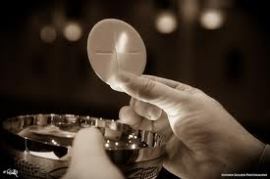
Jesus gives the boy back to his mother and everyone glorifies God saying, “A great prophet has arisen among us!” And, “God has visited His people!” They were right. God had visited His people. God had taken on flesh to deliver His people from death and sin, the sting of death (1 Cor. 15:54-56).

Dear saints, today is October 6th, but today we celebrate Easter; we celebrate the resurrection. Yes, we await the resurrection on the final day when Christ returns and raises up the dead and grants eternal life to all who believe in Him. But the resurrection has already begun. Jesus, your Savior died, but He lives. He is the first fruits of those who have fallen asleep (1 Cor. 15:20). Whenever Jesus contends with death, death looses.

And that is what you need because this morning, you were part of a funeral procession. Because you are a sinner, the stink of death hangs around you. Young and old – man, woman, and child – we all dragged some dead thing here with us today.

Is it your relationship with your spouse that is slowly dying? Is it the skeleton of disobedience to parents? What dead thing have you brought with you?

Is it the rotting remains of your finances that cause you to worry and doubt, or simply discontentment with what God has given you? Is it the cadaver of lust that flames within you? Is it the carcass of pride that is so inwardly focused that you do not notice the needs of others? What dead thing have you brought here with you?

Maybe it isn’t even your fault. Maybe it is just the fear of what might happen in the future. Maybe it is anger for how you have been wronged in the past. Maybe your dead thing is your own sick, crumbling body. What dead thing have you brought here with you?

Body of Christ CommunionJesus marches toward your funeral procession, and He does not stop or yield. Jesus does not give way or defer to death. Instead, Jesus defeats death with His death and resurrection, each and every time He meets it. Jesus meets you here today as you plod along in your personal funeral procession and gives you life. Jesus meets you at this altar to give you His living Body and His life-giving Blood.

Alleluia! Christ is risen!
He is risen indeed. Alleluia!

Amen.

The peace of God, which surpasses all understanding, will guard your hearts and minds in Christ Jesus. Amen.

On the Road Again – Sermon on Luke 17:11-19 for the Fourteenth Sunday after Trinity

Listen here.

Luke 17:11-19

11 On the way to Jerusalem he was passing along between Samaria and Galilee. 12 And as he entered a village, he was met by ten lepers, who stood at a distance 13 and lifted up their voices, saying, “Jesus, Master, have mercy on us.” 14 When he saw them he said to H-68 Trinity 14 (Lu 17.11-19)them, “Go and show yourselves to the priests.”And as they went they were cleansed. 15 Then one of them, when he saw that he was healed, turned back, praising God with a loud voice; 16 and he fell on his face at Jesus’ feet, giving him thanks. Now he was a Samaritan. 17 Then Jesus answered, “Were not ten cleansed? Where are the nine? 18 Was no one found to return and give praise to God except this foreigner?” 19 And he said to him, “Rise and go your way; your faith has made you well.”

In the name of Jesus. Amen.

This text is so full of movement, it’s like a carousel. Jesus is traveling on His way to Jerusalem between Samaria and Galilee. Jesus tells the ten lepers to hit the road and travel to the priests and the Temple. The Samaritan leper turns back interrupting his trip to the priest to make his way back to Jesus. And Jesus tells the thankful Samaritan to go his way in health and salvation (more on that later). This is a moving text in more than one way.

Now, the first verse of our text is what the commentators will call a “travel notice.” We tend to skip over these travel notices when we read because we aren’t that familiar with the geography of Israel in Jesus’ day, but they are important. However, describing where places are on a map doesn’t work well in a sermon. The important thing is this: Back at the end of Luke 9, Jesus foretells His death and resurrection (9:44-45) then Luke gives us an important turning point in his Gospel. Luke says, “When the days drew near for Him to be taken up, [Jesus] set His face to go to Jerusalem” (9:51). In other words, this miracle takes place while Jesus is on His way to the cross.

The interesting thing is that Jesus isn’t taking the direct route. Instead, Luke mentions is that Jesus is traveling between the regions of Samaria and Galilee which mainly east-west instead of from Galilee in the north directly south toward Jerusalem. Instead, He is taking His time to preach, heal, and minister to the needs of as many people as possible with His mercy and grace.

As Jesus enters a village, He is met by ten lepers. Now, leprosy still exists today, though it is commonly called ‘Hansen’s disease.’ There are actually cases of it in the US today, but it is treatable by modern medicine and not easily transferred anymore. But in Jesus day, leprosy was a terrible problem. The disease makes your skin rot away while you are still alive. Leprosy would make the nerve endings of the effected areas grow numb. A leper could have oozing blisters all over their feet, cut their arm, or burn their hand and they wouldn’t even now it. This is why, so often throughout the history of the church, sin is described as leprosy. Our sin makes us so sick, we don’t even realize how wounded we are.

Now, in Jesus’ day, leprosy was highly contagious. So, lepers had to live apart from everyone else. If you had leprosy and somebody got near you, you would have to yell out, “Unclean! Unclean!” so they wouldn’t get near you. Because of this, lepers would form their own communities to help take care of each other, and that is what we see in this text. These ten lepers have formed a little community and, because of their common disease, it was a very inclusive community. Most of these lepers are Jews, but at least one of them is a Samaritan. Normally, the Jews and Samaritans didn’t deal with each other at all (Jn. 4:9). For a Jew to eat with a Samaritan made the Jew unclean. But these ten lepers formed a little community of the desperate.

They cry out to Jesus, but instead of yelling, “Unclean! Unclean!” they cry out, “Jesus, Master, have mercy on us.” They pray the Kyrie just like do each week. But Jesus’ response to their cry for mercy isn’t to wave His hand over their bodies and speak them clean. He doesn’t make mud with His spit and put it on their diseased skin to heal them. Jesus simply tells them to go show themselves to the priest.

Now, as lepers, this is something they would have done when they first contracted their leprosy. Through Moses (Lev. 13:2ff), God commanded that people who had a problem with their skin to go to the priest. The priest would examine the effected area, and, if it was indeed leprosy, the priest would declare them to be unclean. Then, if the area would clear up, the person was to go back for a second appointment with the priest and be declared clean (Lev. 14:1-32) so they could go back and live with their family and return to work. But here, Jesus simply tells them to go show themselves to the priest.

Think of that for a minute. Before anything has changed, while their skin is still rotting, Jesus tells them to go to the priest. Now, they wouldn’t be let into the streets of Jerusalem let alone be allowed into the Temple. But in this command of Jesus, there is an implicit promise. And by leaving Jesus, they act in faith.

There is a little lesson here for us about prayer. Probably most of our lives as Christians, we are waiting for an answer to a prayer. How often do we pray for something and are left to wait? But, Christian, take heart, God will answer. As these lepers journey to the Temple, they are cleansed.

Now, presumably, the nine lepers do continue to Jerusalem. They make their way through the streets to the Temple. They find the priest and are declared to be cleansed of their disease and allowed back into their families and community once gain. But only one of them actually obeys Jesus.

ten-lepersThis Samaritan who returns to the true Temple and true High Priest. He returns to Jesus to give thanks. Did you catch what Jesus said there, “Was no one found to return and give praise to God except this foreigner?” In other words, the nine went onto the Temple and God’s house, but God wasn’t there. He was walking in the flesh between Samaria and Galilee where the Samaritan falls at His human feet giving Him thanks. Some people will read the Gospels and say that Jesus never claimed to be God. Well, sorry, they are wrong. He does right here.


And this Samaritan receives from God, from Jesus, not just a declaration of cleanliness from his flesh-eating disease, but from his leprosy of sin. Jesus’ final recorded words to this man are, “Rise and go your way, your faith has saved (σῴζω) you,” (not just ‘made you well’), “your faith has saved you.”

The Samaritan is more than just a cleansed man, he is now our Christian brother. In fact, he shows the fruits of the Spirit that we heard about in our Epistle lesson (Gal. 5:16-24). He has love for God, joy in his healing, and peace that only comes through faith in Christ. He exhibited patience as he walked away from Jesus with the promise of healing. We can imagine his kindness toward the other nine who might have thought he was silly to go back to Jesus instead of going to the Temple in Jerusalem. His goodness is visible. Jesus encourages his faith. His has gentleness and self-control can be seen in his thankfulness to God; let me quickly explain that.

The word that gets translated ‘gentleness’ is a noun and has the idea of being humble or meek. Jesus uses the same word as an adjective in the Beatitudes, “Blessed are the meek, for they shall inherit the earth” (Mt. 5:5). The Samaritan humbles himself in meekness before Jesus falling at His feet. And instead of running off to his restored life, the man exercises self-control to turn back and first give thanks to God, to Jesus.

As we, like this Samaritan, rise from here and go on our way, let us turn back to give thanks to Jesus. Thankfulness requires a turning back. If we are thinking of what is going to happen next, we can’t give thanks. If we are always thinking about the future, we cannot give thanks because there is nothing there to give thanks for – at least not yet. We don’t know what is going to happen tomorrow. Jesus could return before we get to our cars to leave. As long as we’re thinking about tomorrow, we can’t give thanks.Blessings from the Cross

Instead, turn back. Turn back to what Jesus has done for you. Most importantly, He has died and risen for you. Because of His blood shed for you, He has declared you free and forgiven of all your sins here and now. Dear saints, rise and go your way. Get on the road again in thankfulness for what Christ has done, your faith has saved you. Amen.

The peace of God, which surpasses all understanding, will guard your hearts and minds in Christ Jesus. Amen.

Eden in Desolation – Sermon on Mark 8:1-9 for the Seventh Sunday after Trinity

Listen here.

Mark 8:1-9

In those days, when again a great crowd had gathered, and they had nothing to eat, he called his disciples to him and said to them, “I have compassion on the crowd, because they have been with me now three days and have nothing to eat. And if I send them away hungry to their homes, they will faint on the way. And some of them have come from far away.” And his disciples answered him, “How can one feed these people with bread here in this desolate place?” And he asked them, “How many loaves do you have?”They said, “Seven.” And he directed the crowd to sit down on the ground. And he took the seven loaves, and having given thanks, he broke them and gave them to his disciples to set before the people; and they set them before the crowd. And they had a few small fish. And having blessed them, he said that these also should be set before them. And they ate and were satisfied. And they took up the broken pieces left over, seven baskets full. And there were about four thousand people. And he sent them away.

In the name of Jesus. Amen.

This morning, we heard how God worked so that Adam and Eve could enjoy paradise in bliss and peace (OT Lesson Gen. 2:7-17).

First, God formed the man. God breathed into man’s nostrils to make Adam a living creature. God planted a garden in Eden. God made every tree that is splendid to look at and good for food to spring up from the ground. God surrounded that garden with vibrant rivers and lands filled with gold and precious stones.Bliss of Eden

God put Adam in the garden and gave him a job – which, yes, is a good thing. Just consider how little Adam had on his work resume at the time. God gave Adam the gift of hunger so that he would have the joy and delight of eating and tasting the fruits of his labor. And God taught Adam what to eat and what not to eat.

Now, this is a bit of an aside, but it is very important. Many people have wondered why God would put the tree of the knowledge of good and evil which produced the forbidden fruit in the bliss of Eden at all. Some will say that God put it there to test Adam and Eve to see if they would be good. But if that is the case, it means that God could not make man “good” unless He gave man the choice to do evil. That would be strange for a God who truly is good and all-powerful Himself.

Scripture gives us a better understanding for the existence of the forbidden tree. Habakkuk 2:4 says, “The righteous shall live by faith.” This is true now, but it was also true before the Fall.

Think of it this way: Everything Adam and Eve knew, they knew because they saw and experienced it. But the one thing they didn’t know was evil. God put the tree of the knowledge of good and evil in the Garden because evil did exist. So Adam and Eve would have faith, God was giving a promise to believe when He commanded Adam to not eat of the tree of knowledge of good and evil. Think of it this way, when God gives that command He is saying, “Hey, Adam, there is evil and it is bad. If you find out what evil is, it won’t be good for you. Trust Me on this.”

In the end, Adam and Eve didn’t trust God. Obviously, we do not live in Eden anymore; instead, we live in desolation. desolationOur English word ‘desolation’ contains the word ‘solo,’ and that gives a sense of what ‘desolation’ means. Adam and Eve went solo. Rather than trusting God, they went solo and trusted the devil’s lie bringing sin, death, condemnation, and desolation into the world.

We might think Adam and Eve were fools to give up the paradise God created for them. But we are apples that didn’t fall far from Adam’s tree. We too choose evil instead of faith, chaos instead of perfection, and desolation instead of bliss. We live in a place of our own making. A place we contrived from our rebellious hearts. A desert rather than a garden. Instead of life, there is death. Instead of abundance, there is lack. Instead of walking with God, we are surrounded by demons.

God warns us about the penalty of doing evil, but we go solo and crave what isn’t ours. God tells us that we must tell the truth and defend the reputation of others, but we go solo by spreading gossip and slander. Because of sin – and our sin alone – we dwell in a desolate place. Repent.

But even though we turned our back on God, He did not turn His back on us. God doesn’t despise us, He doesn’t come to punish us, and He doesn’t regret the fact that He made us. Instead, God comes to have compassion on us and graciously feed us. On the third day of this excursion, Jesus says, “I have compassion on the crowd.”That word ‘compassion’ in Greek means that His intestines are tied up. A loosey-goosy translation of Jesus’ words here would be, “My gut is wrenched for these people who don’t have anything to eat.”

Jesus Feeds the 5000Look at what Jesus, God in the flesh does – notice the verbs. He calls the disciples. Jesus directs the crowd to sit down. He takes the bread. Christ gives thanks for the bread. He breaks the bread. He gives the bread to the disciples to set before the people. Jesus blesses the fish. He gives the fish to the disciples to set before the people. And Jesus watches them all eat until every last one of them is satisfied. Jesus continues to do this for us today.
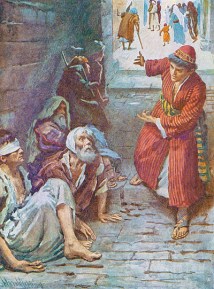
Some of you are fully aware of the desolation you live in right now. Maybe it’s your health or a broken relationship that has left you lonely. Maybe it’s a money or job problem. Whatever it is, it doesn’t matter. Desolation stares you in the face, and you are worried. Know that Jesus is still with you to serve you with everything you need in every moment.

Do you think that when Jesus led that crowd out into the wilderness for three days, do you think that Jesus forgot they would need food? Do you think Jesus was preaching, and suddenly the light bulb turned on in the middle of His sermon and He said, “Oh, nuts. These people are going to need to eat. Oops!”? No, absolutely not! Jesus didn’t forget that they would need food.

Instead, Jesus brought them to a place of momentary need. He led them into the wilderness where they would need a miracle to provide for them. Jesus led them there for some good. We shouldn’t speculate why Jesus did this because the text doesn’t tell us exactly why Jesus did it. But Jesus deliberately brought them there where they would need Him to fully provide for them.

So, listen to this very carefully. Whether things are going well and you don’t notice anything lacking in your life or whether things are bleak and dire, by God’s grace you have everything from God that is best for you right now. Do you believe that?

Scripture says, “Give thanks in all circumstances” (1 Thess. 5:18). Give thanks for everything you have from God at all times – whether those times are good or bad. Here’s why, listen to this from Romans 8:31-32, “If God is for us, who can be against us?” And we can know that God is for us because of what Scripture says next: “He who did not spare His own Son but gave Him up for us all, how will He not also with Him graciously give us all things?” In other words, if God gives His only-begotten Son to die on the cross while you are His enemy and a sinner, He won’t hold back anything good from you now that you are adopted into His family through Jesus’ death and resurrection.

God will give us all things in the future, yes. But He also gives us all good things now. Like He did in Eden and like He did in the wilderness, Jesus even now serves us sinful, fallen people who have chosen to live in a desolate place.Communion Cross with Jesus

Jesus is here with His compassion in the midst of your desolation to bring Eden to you. He has come to be your servant by feeding you the Bread of Life from this altar. In this meal, your Savior dispenses forgiveness, life, and salvation to you. Even though we are a small crowd, Jesus has come to deliver big compassion. So, come and receive. Amen.

The peace of God, which surpasses all understanding, will guard your hearts and minds in Christ Jesus. Amen.

Ready – Sermon on Luke 14:15-24 for the Second Sunday after Trinity

Listen here.

Luke 14:15-23

15 When one of those who reclined at table with him heard these things, he said to him, “Blessed is everyone who will eat bread in the kingdom of God!”

16 But he said to him, “A man once gave a great banquet and invited many. 17 And at the time for the banquet he sent his servant to say to those who had been invited, ‘Come, for everything is now ready.’ 18 But they all alike began to make excuses. The first said to him, ‘I have bought a field, and I must go out and see it. Please have me excused.’ 19 And another said, ‘I have bought five yoke of oxen, and I go to examine them. Please have me excused.’ 20 And another said, ‘I have married a wife, and therefore I cannot come.’ 21 So the servant came and reported these things to his master. Invite as many as you find to the wedding feastThen the master of the house became angry and said to his servant, ‘Go out quickly to the streets and lanes of the city, and bring in the poor and crippled and blind and lame.’ 22 And the servant said, ‘Sir, what you commanded has been done, and still there is room.’ 23 And the master said to the servant, ‘Go out to the highways and hedges and compel people to come in, that my house may be filled. 24 For I tell you, none of those men who were invited shall taste my banquet.’”

In the name of Jesus. Amen.

Our God is a God of order (1 Cor. 14:33; Heb 13:20). Because God is eternal, all-powerful, and all-knowing, God is never surprised, never caught off guard. He is always prepared, always ready. This is very basic stuff, but it is good to dwell on it for a bit.

When God created the universe, He didn’t create cows until everything was ready for cows. God waited until the sixth day so cows would have grass, land, atmosphere, and light. God didn’t create fish or birds until He had created the sky and sea for them to dwell in. And God didn’t create Adam and Eve until very last so that they could be brought into a perfectly prepared world and perfectly prepared Garden. God made everything ready for them.

We can go further. When God sent the Flood in Noah’s days, God patiently waited for Noah to build the ark so that it would be ready to save his family and the animals. When God sent Jacob’s family into Egypt, God made everything ready by first sending Joseph down to Egypt so he could rise to power and provide food and a good, safe place for God’s chosen people. And God doesn’t bring His people out of Egypt until the Promised Land is already flowing with milk and honey.

When God drove the inhabitants of Canaan out so His people could dwell there, He doesn’t do it all at once. God said that He would drive the idol-worshipping pagans out little by little so the wild beasts wouldn’t become too many (Ex. 23:29-30Dt. 7:22-23). On top of that, God also said that would first make the people afraid of the Israelites (Ex. 23:27-28). And when His people got to Jericho, that is exactly what Rahab said had happened (Josh. 2:9-11). God is never in emergency mode. He always makes everything ready.

But even above and beyond all of that, God makes sure that everything is prepared and ready when it comes to the salvation of sinners. Galatians 4:4-5 says, “But when the fullness of time had come, God sent forth his Son, born of woman, born under the law, to redeem those who were under the law, so that we might receive adoption as sons.” God is always ready.

In this parable, Jesus tells us about God’s plan of salvation. The man giving the banquet in this parable had sent out invitations. You can think of this as a “save the date,” even though no exact date was given. The people are simply invited by the host, “I’m going to have a feast, and you are invited.” And the people respond, “Sounds great. We’ll be sure to come when you call us.” That is understood in v. 16.

This initial invitation is God’s repeated promise to send the Messiah, His Son, our Savior, Jesus Christ. God repeatedly invited people to come to Him through Christ, but He didn’t announce exactly when Jesus would arrive.

Heavenly Banquet TableSo, the man has sent out this invitation without saying exactly when the banquet would begin. Then in v. 17, the preparations are finished – the food is cooked, the table is set, the decorations are hung, the wine is poured, everything is ready. The man sends his servant to tell all those who were invited, “Come, for everything is now ready.” But they all make excuses, and their excuses are lame and stupid.

No one buys a field without looking at it first to see if it is worth the asking price. No one buys a yoke of oxen without checking if they are old, decrepit, and sickly. And you just got married? Well, bring your wife, you simpleton! Your host won’t mind. Besides, this banquet will be a more exquisite honeymoon than you could afford or imagine.

Now, we need to pause here because a question lies before us: What things keep you from the long-prepared banquet? What do you value more than the kingdom of God? What are your excuses? It doesn’t matter what excuses you have; they are just as lame and stupid as the ones offered in the parable.

Is your schedule so full that you can’t eek out time to pray and study God’s Word for yourself or as a family? God sees that as a rejection of Him. Do you not come to church everySunday because it is your only time to sleep in or because that is when the tournament is scheduled? God sees that as a rejection of Him. Do you withhold your tithe because you don’t know how you would be able to make ends meet even though you can always justify all other kinds of frivolous spending? God sees that as a rejection of Him.

Hear what the master of the feast says, “None of those who were invited shall taste my banquet.”

Repent. Your excuses are all statements that you are perfectly happy and fine as you are and that don’t need a banquet. Confess your excuses for despising the things of God as what they really are – a rejection of the God who personally loves you.

Confess yourself to be poor and unable to pay the debt you owe to God. Confess yourself to be lame and cripple and unable to walk in the way that God’s Law demands. Confess yourself to be blind and unable to grasp the depth of your sin and the heights of God’s mercy toward you.

When beggars – the poor, lame, cripple, and blind – get invited to come to a ready feast, they come. God loves you and has made everything ready for you. God’s feast is ready, and His feast is not sometime in the future. His feast is now.

Jesus tells this parable while He is at a feast. Jesus had just told His host, “When you give a dinner or a banquet, do not invite [people who can] invite you in return and you be repaid. But when you give a feast, invite the poor, the crippled, the lame, the blind, and you will be blessed, because they cannot repay you. For you will be repaid at the resurrection of the just” (Lk. 14:12-14).

Immediately after Jesus says that, another guest responded to Jesus, “Blessed are those who will eat bread in the kingdom of God.” Then, Jesus tells this parable in response to that statement. Now, if you take that statement, “Blessed are those who will eat bread in the kingdom of God,” out of its context, that blessing, that benediction, that beatitude is one-hundred percent true. But in context, that statement is damnably ludicrous.

Whoever it was who said it was, at that exact moment, eating and drinking with Jesus, God in the flesh. The blessing he spoke of was not something in the distant future that would happen eventually. It was already present with him, and he completely missed it.

Because Jesus was there, the kingdom of God was there. The feast was ready, and that man made an excuse to not enjoy what had been made ready for him.

Last week, we heard the parable of Lazarus who desired to eat from the rich man’s table. But God blessed Lazarus in his poverty, hunger, illness, and loneliness. Lazarus’ dissatisfaction with the world made him dependent upon God and ready to receive the joys and comforts of heaven for eternity. This week, we hear a parable of people who have no desire for food. They have been invited to a banquet that is ready, but they are full of excuses.I said it before, but I’ll say it again: When beggars – the poor, lame, cripple, and blind – get invited to come to a ready feast, they come.

We started with the premise that God is always ready. Ready to have mercy, ready to save those who are lost, and ready to usher them into His feast. The only thing that will keep you out of His banquet is your stubborn unwillingness to recognize your need and His gracious invitation.

Sinner, your sin has made you unworthy to come to God’s feast. And God could have made a lot of excuses for leaving you out of His heavenly banquet, but He didn’t. It is His good pleasure to give the kingdom to those who are unworthy.

Cross and CommunionChristian, God has ushered you into His paradise. You receive the benefit of the sacrifice of Christ’s death. You are promised the resurrection. And, now, in this feast you are about to receive, God nourishes you and declares you to be the object of His love and His perfect bride.
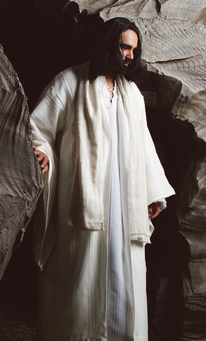
Your God says to you, His beloved, “Come for everything is now ready.” Amen.

The peace of God, which surpasses all understanding, will guard your hearts and minds in Christ Jesus. Amen.

Where Is Your Sting? – Sermon on 1 Corinthians 15:51-57 for the Resurrection of Our Lord

Listen here.

1 Corinthians 15:51-57

51 Behold! I tell you a mystery. We shall not all sleep, but we shall all be changed, 52 in a moment, in the twinkling of an eye, at the last trumpet. For the trumpet will sound, and the dead will be raised imperishable, and we shall be changed. 53 For this perishable body must put on the imperishable, and this mortal body must put on immortality. 54 When the perishable puts on the imperishable, and the mortal puts on immortality, then shall come to pass the saying that is written:

“Death is swallowed up in victory.”
55 “O death, where is your victory?
O death, where is your sting?”

56 The sting of death is sin, and the power of sin is the law. 57 But thanks be to God, who gives us the victory through our Lord Jesus Christ.

Alleluia! Christ is risen!
He is risen indeed! Alleluia!

In the name of Jesus. Amen.

“O death, where is your victory? O death, where is your sting?” Too often we think of death in wrong ways. We think that death is a state or a category or a condition. But v. 55 of that Epistle Lesson says that death is an enemy, a person who can be talked to and, most importantly, an enemy who can be questioned.

Imagine encountering death. When you or someone you love dies and you cross paths with death, you need to only ask death one simple question: “O death, where is your sting?”

Death might try to answer you with a pale, menacing, frightening voice, “My sting is your sin. I sting because you sin. If you didn’t have sin, I would have no sting. But I sting everyone because all have sinned. I am the wages and payment of sin (Ro. 6:23). And I will sting you because your sin is my sting.”

But you can simply respond, “I know all of that, death. I know that my sin has put me under your thumb. I know that the Bible says, ‘The wages of sin is death.’ So, what you say is true. But, death, I didn’t ask you, ‘What is your sting?’ I asked you, ‘Where is your sting?’ So, death, where is it, where is your sting?”

And death might smile and respond, “You simple Christian, have you forgotten how powerful my sting is? It is more powerful than the most poisonous snake or spider or jellyfish. My sting is the most powerful sting imaginable. My sting burns forever because the power of my sting is fueled by the Law. Yes, God’s eternal Law that abides forever, and you have broken that Law over and over.”

But you can look back at death and say, “I know my sin is no small sting. I know my sin is against the God who created me and loves me. I know the penalty of my sin is everlasting death, and I feel it in my conscience. I also know that the Law is not ever going to go away. I know that God’s Commandments are eternal. In fact, the Law was what made me scared of you. Because of the good and righteous Law, I know what you can do to me. I know that your sting is my sin, and I know that the power behind that sting is the Law. But, death, you still have not answered my question. Where is your sting?”

At this point, death is uncomfortable and a little fidgety, but he musters as much gusto as possible and says, “Well, you are face-to-face with me, aren’t you?”

“Yes, I am, but the sting of death is not death. The sting of death is sin. So, I ask you again, ‘Death, where is your sting?’”

Finally, death hangs his head. “I have used it, and I have lost it. But I’ll get it back again.”

Jesus Coming out of the TombAnd you can smile in his face, “Yes, death, you used your sting, didn’t you? You should have used your sting on me. The sting would have stuck on me. But you didn’t. Instead, death, you used your sting on my Savior, my God, and my Lord. You used your sting on Jesus, didn’t you? You had Jesus pinned tightly on the cross, and you stuck Him with your stinger and buried it into Him. Death, you were a fool that day. You stung God Himself. You stung Jesus who is the Resurrection and the Life (Jn. 11:25). But when you went to the tomb to find your stinger and get it back, Jesus wasn’t there. And guess what, death, Christ has taken my sin as He hung on the cross. And, death, you will not ever get your sting back. Never. That empty tomb means that your sting is lost forever. Death, I don’t fear you any longer.”

And having no other answer, death now turns around and walks away from you.

Dear saints, this is why we celebrate every Easter and every Sunday. Every Sunday, we celebrate what Christ has done in absorbing the sting of death so that death no longer has his sting.

And the day is coming when Christ will return. On that day, the trumpet will sound, and the dead will be raised imperishable. The day is coming when your perishable body will put on the imperishable and your mortal body will put on immortality.

Yes, death can and does buzz around now for a while. But death is like a bee that has used its stinger and soon dies.

Dear saints, “Death is swallowed up in victory.” Yes, the sting of death is sin, and the power of sin is the Law. But thanks be to God, who gives us the victory through our Lord Jesus Christ. So now, Christian, you need have no fear of death. Jesus has conquered the bitter tyrant of death. And He has connected you to that victory. You do not need to fear and watch out for death hiding behind a corner to pounce on you. Instead, Christian, you continue to look for the resurrection of the dead, and the life of the world to come.

Because Christ is risen, death is overthrown. Christ is risen and life reigns. Christ is risen, and dear saint, you are safely anchored in Christ who has given you the victory, now and forever.

Alleluia! Christ is risen!
He is risen indeed! Alleluia!

Amen.

The peace of God, which surpasses all understanding, will guard your hearts and minds in Christ Jesus. Amen.

Jesus Hid – Sermon on John 8:42-59 for the Fifth Sunday of Lent

Listen here.

John 8:42-59

42 Jesus said to them, “If God were your Father, you would love me, for I came from God and I am here. I came not of my own accord, but he sent me. 43 Why do you not understand what I say? It is because you cannot bear to hear my word. 44 You are of your father the devil, and your will is to do your father’s desires. He was a murderer from the beginning, and does not stand in the truth, because there is no truth in him. When he lies, he speaks out of his own character, for he is a liar and the father of lies. 45 But because I tell the truth, you do not believe me. 46 Which one of you convicts me of sin? If I tell the truth, why do you not believe me? 47 Whoever is of God hears the words of God. The reason why you do not hear them is that you are not of God.”

48 The Jews answered him, “Are we not right in saying that you are a Samaritan and have a demon?” 49 Jesus answered, “I do not have a demon, but I honor my Father, and you dishonor me. 50 Yet I do not seek my own glory; there is One who seeks it, and he is the judge. 51 Truly, truly, I say to you, if anyone keeps my word, he will never see death.” 52 The Jews said to him, “Now we know that you have a demon! Abraham died, as did the prophets, yet you say, ‘If anyone keeps my word, he will never taste death.’ 53 Are you greater than our father Abraham, who died? And the prophets died! Who do you make yourself out to be?” 54 Jesus answered, “If I glorify myself, my glory is nothing. It is my Father who glorifies me, of whom you say, ‘He is our God.’ 55 But you have not known him. I know him. If I were to say that I do not know him, I would be a liar like you, but I do know him and I keep his word. 56 Your father Abraham rejoiced that he would see my day. He saw it and was glad.” 57 So the Jews said to him, “You are not yet fifty years old, and have you seen Abraham?” 58 Jesus said to them, “Truly, truly, I say to you, before Abraham was, I am.” 59 So they picked up stones to throw at him, but Jesus hid himself and went out of the temple.

In the name of the Father and of the Son and of the Holy Spirit. Amen.

If you want to play a game you are sure to win, play hide and seek with a small child. When it comes to hiding, kids are silly. “Why is that door half closed?” “There can’t be anything attached to that leg sticking out from behind the couch.” “I wonder what could be under that bulging, wriggling blanket?” Kid hides with eyes closedOr my favorite, the boy standing in the middle of the room with his eyes closed tight. (To my great shame, I learned closing your eyes doesn’t make you invisible when I was in fourth grade.) Silly kids.

But adults are even more silly when it comes to hiding. The first game of hide and seek was when Adam hid from God because he was afraid. His hiding spot? A few leaves and a couple of trees. Did he really think he could hide from the Creator? I guess he did. Silly Adam. And then there was Israel’s first king (1 Sam. 10:20-24). Saul was a whole head taller than anyone else in Israel. But when God chose him as king, Saul went and hid behind some luggage. Silly Saul.

And, let’s consider the hiding you do. Do you really think you can keep hiding your crummy work and half-hearted efforts from your boss? For how long? Silly thief. Do you think you can keep making up stories? Silly liar. When you say, “Maybe I shouldn’t tell you this, but you should be aware that so-and-so is…,” we know you’re a loudmouth. Silly gossiper. Do your eyes keep wandering for more glances at that woman? Silly adulterer. Your anger is plain as the nose on your face. Silly murderer (Mt. 5:22). And even if you can hide your transgression from others, you can’t hide it from God. Silly sinner.

Repent. You’re guilty. You’re guilty, and you can’t hide it. Or do you really think you can stand before God’s wrath against your sin and say, “Well, nobody’s perfect”? Silly, silly sinner.

Repent. You don’t have to hide. Jesus has freed you to speak the truth and confess your sins. Christ has provided all the cover you will ever need – no luggage, no fig leaves, no closed eyes. He has provided His holy Body and Blood. Don’t hide your sins. Hand them over to Jesus. Let Him have them and receive what He wants to hand over to you – His righteousness, innocence, and blessedness. You can hand your sins over to Jesus because, today, Jesus hid for you.

Jesus threatened by stonesJesus stood in the middle of people who have been looking for a reason to kill Him for almost His entire ministry (Mk. 3:6). Today, Christ declares Himself to be no less than Almighty God. When He declares Himself to be the great I Am, Jesus announces that He is the One who is Lord over all things, and the One who always was, always is, and always will be, the One who spoke to Moses from the burning bush, the One who led their ancestors through the Red Sea on dry ground, the One whom Isaiah saw in the Temple.
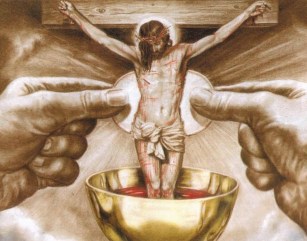
They didn’t like that, so they picked up stones to throw at Him and kill Him. Silly sinners, thinking they could kill God. But Jesus hid. Jesus didn’t hide because He was scared of death. He didn’t hide because didn’t trust His heavenly Father’s protection. Jesus hides because He is fully in control. Jesus hides so that He could die at the right time and in the right way. Judged and condemned twice, once by the religious leaders and a second time by Pilate. Jesus sentenced and condemned to death bearing all your sins in His body (1 Pet. 2:24).

Jesus hides here because His hour had not yet come. Christ had more to accomplish for you. He still had to raise Lazarus from the dead. He still had to institute His holy Supper. He still had to be betrayed by a kiss, arrested, and denied by Peter. Jesus had to hide here because His death won’t be by stones. It can’t be by stones; it must be on a tree for all to see. Today, Jesus hides Himself in the thicket so that He will be there at the right time to die in the place of another (Gen. 22:13) – to die in your place.

There on the cross, He must die for you. And then, He must be hidden again. Hidden at dusk on Friday night and all of Holy Saturday in that tomb sealed with a stone. Hidden with Him is the wrath of God, the Law, and Hell. Cross and CommunionAll of that is hidden so that you do not have to face it. It is hidden so that you do not need to hide.

And now, Jesus hides Himself again but this time in Bread and Wine. Soon, He will come in glory when every knee will bow and every tongue confess that He is the crucified Lord who is risen and reigns. And know that you are joined to Him. You have died with Him and your life is now hidden with Christ in God. When Christ who is your life appears, you also will appear with Him in glory (Col. 3:3-4). Amen.[1]

The peace of God, which surpasses all understanding, will guard your hearts and minds in Christ Jesus. Amen.

[1]This sermon was adapted from a sermon by Rev. Ralph Tausz on the same text (http://www.apostlesmelrosepark.org/index.php?page=Sermons&sid=235).

Caught – Sermon on Genesis 3:1-21 for the First Sunday in Lent

Listen here.

Genesis 3:1-21

Now the serpent was more crafty than any other beast of the field that the Lord God had made.

He said to the woman, “Did God actually say, ‘You shall not eat of any tree in the garden’?” And the woman said to the serpent, “We may eat of the fruit of the trees in the garden, but God said, ‘You shall not eat of the fruit of the tree that is in the midst of the garden, neither shall you touch it, lest you die.’” But the serpent said to the woman, “You will not surely die. For God knows that when you eat of it your eyes will be opened, and you will be like God, knowing good and evil.” So when the woman saw that the tree was good for food, and that it was a delight to the eyes, and that the tree was to be desired to make one wise, she took of its fruit and ate, and she also gave some to her husband who was with her, and he ate. Then the eyes of both were opened, and they knew that they were naked. And they sewed fig leaves together and made themselves loincloths.
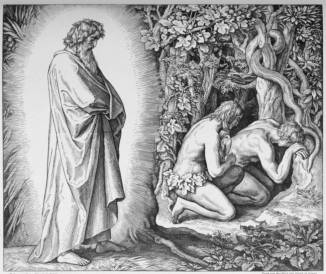
And they heard the sound of the Lord God walking in the garden in the cool of the day, and the man and his wife hid themselves from the presence of the LordGod among the trees of the garden. But the Lord God called to the man and said to him, “Where are you?” 10 And he said, “I heard the sound of you in the garden, and I was afraid, because I was naked, and I hid myself.” 11 He said, “Who told you that you were naked? Have you eaten of the tree of which I commanded you not to eat?” 12 The man said, “The woman whom you gave to be with me, she gave me fruit of the tree, and I ate.” 13 Then the Lord God said to the woman, “What is this that you have done?” The woman said, “The serpent deceived me, and I ate.”
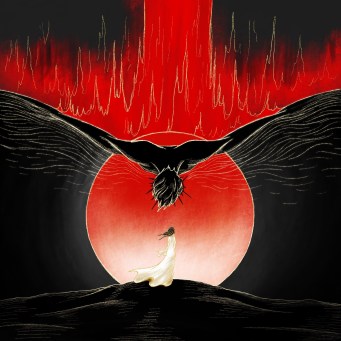
14 The Lord God said to the serpent,

“Because you have done this, Updated Crushing the Serpent's Head Cross
cursed are you above all livestock
and above all beasts of the field;

on your belly you shall go,
and dust you shall eat
all the days of your life.

15 I will put enmity between you and the woman,
and between your offspring and her offspring;

he shall bruise your head,
and you shall bruise his heel.”

16 To the woman he said,

“I will surely multiply your pain in childbearing;
in pain you shall bring forth children.

Your desire shall be contrary to your husband,
but he shall rule over you.”

17 And to Adam he said,

“Because you have listened to the voice of your wife
and have eaten of the tree

of which I commanded you,
‘You shall not eat of it,’

cursed is the ground because of you;
in pain you shall eat of it all the days of your life;

18 thorns and thistles it shall bring forth for you;
and you shall eat the plants of the field.

19 By the sweat of your face
you shall eat bread,

till you return to the ground,
for out of it you were taken;

for you are dust,
and to dust you shall return.”

20 The man called his wife’s name Eve, because she was the mother of all living. 21 And the Lord God made for Adam and for his wife garments of skins and clothed them.

In the name of the Father and of the Son and of the Holy Spirit. Amen.

And, in this way, sin entered the world. Now, instead of running from the devil, Adam and Eve run from God. To really get at this text we need to see how faith is attacked, lost, and restored.

Scripture is clear, “the righteous shall live by faith” (Hab. 2:4), and, “whatever is not of faith is sin” (Ro. 14:23). Adam and the woman had faith in God before the Fall. The faith that they had was created by the promise of God. This is may be a little bit difficult for us to grasp, but, when God created the tree of the knowledge of good and evil and commanded Adam and the woman to not eat of it, He was giving them a promise to believe. God didn’t put the tree of the knowledge of good and evil in the garden so Adam and the woman could choose God or reject God. God put that tree in the garden as a promise. Basically, that tree was God acknowledging that there was evil, and by commanding them to not eat of it was God saying, “There is evil, but I don’t want you to experience or even know what evil is. If you know evil, it’s not going to go well for you. In fact, you are going to die.”

Temptation in the Garden of EdenBut Satan comes along and puts a question into the mind of the woman. “Did God actually say?” This is the one attack of the devil. He always is trying to get us to doubt the Word and promise of God. “Did God actually say, you should not eat of any tree in the garden?” And notice that the woman adds to God’s promise. She says, “We may eat of the fruit of the trees in the garden, but God said, ‘You shall not eat of the fruit of the tree that is in the middle of the garden, neither shall you touch it, less you die.’” God had never said anything about not touching the tree of the knowledge of good and evil (at least, it isn’t recorded for us). Satan is attacking God’s Word, but Adam and the woman have not fallen yet. The serpent sees his opening and tells an outright lie, “You will not surely die! For God knows that when you eat of it your eyes will be opened, and you will be like God, knowing good and evil.”

Now, remember that God had created Adam and the woman in His image – they were already like God, and God declared that they were good. But Satan put before the woman the possibility of becoming more like God and better than they had already been created. It was an outright lie. So, when the woman sees that the tree is good for food, a delight to the eyes, and to be desired to make one wise, she is seeing something that is not true. The devil’s lie has already taken root. In this way Adam and the woman’s faith is attacked.

Now, that faith is lost. The woman looked at the tree and saw that it was to be desired to make one wise. That phrase, right there, is so important as you go about your daily life. To tempt us into sin, the devil gets us to think that God is somehow holding out on us, that He hasn’t given or won’t give us everything we need to live and be happy. It’s a downright, blatant, brazen, barefaced lie. The devil wants us to ignore God’s Word and think that God is holding out on us and limiting our fun by giving us commands. Whenever we fall into sin, it is because we don’t trust that God is good and will give us all good things at the right time. Don’t listen to the devil’s lies.

Unfortunately, the woman does. She takes the fruit, eats it, gives some to her husband who is with her, and he eats. The eyes of both are opened. They had become something more. Now, they knew evil, but it was not better. What had been good, their nakedness, was no longer good. They sew fig leaves together to make themselves loincloths. Their faith is lost.

But now, we will see how beautifully God restores faith. Adam and the woman hear the sound of God walking in the garden, but they hide. They figured that God was coming in order to punish them. But the God who had created the heavens and the earth, the God who had created all the birds of the air, all the fish of the sea, and all the animals of the land didn’t need to come and find them in order to punish them. If God was going to punish them, there is no need to drag this whole thing out. God is not showing up in this text now to punish Adam and the woman. He’s coming to restore what was lost. He is coming to restore faith.

Adam and Eve hide from God.jpgBut even as God does this, we will see the horrific consequences that sin and evil has brought into God’s good creation. God calls to Adam, “Where are you?” God still wants to have fellowship with Adam and the woman even though they have sinned, broken His commandment, and lost their faith. But rather than confessing and repenting of his sin, Adam dodges the opportunity saying, “I hid from You because I was naked and afraid.” So, God gives Adam a second chance to repent, “Who told you that you were naked? Have you eaten of the tree of which I commanded you not to eat?”

But sin has so marred Adam that he dodges this second opportunity. He blames the woman, but ultimately, notice that he blames God, “The woman, whom You gave to be with me, she gave me fruit of the tree, and I ate.“ God gives the woman a chance to repent and asks her, “What is this you have done?“ But the woman doesn’t do much better than Adam, she says “The serpent deceived me and I ate.”

The terrible, horrific consequences of sin are already evident. Adam and the woman pass blame, they don’t protect or care for each other, the whole thing is an absolute mess. They are caught and they don’t return to God in faith asking for His mercy.

Adam and the woman will hear God tell them about the mess they have brought to creation – pain in childbirth, pain in eating, and death. But first things first. God’s first response isn’t to lay into Adam and the woman. The first thing God does is deal with Satan. God doesn’t have a conversation with the devil like He did with Adam and the woman. There, in the Garden, God told Satan that He was coming for him. God would send the Seed of the woman to crush the serpent’s head. And Adam and the woman believe this because, notice, at the end of this text, she is no longer called ‘woman.’ Adam 1 Corinthians 13 7 - Love Bears All Thingsgives her the name Eve. She wasn’t called this at any point before in Scripture. Adam gives her the name ‘Eve’ which means ‘life-giver.’ Here’s how we know faith is restored. Eve was already going to be the mother of everyone who would be born. But Adam, the father of faith, changes her name to Eve because she is the mother of all who would believe in the promised Seed who would crush the serpent’s head.

God promised that He would free Adam, the woman, you, and me from the clutches of sin and death. And, today, we have seen Jesus doing this very thing. Opposed to Adam and the woman, who had no lack – they weren’t hungry – Jesus defeats the devil’s temptations in the wilderness when He was starving after fasting for forty days. Jesus will leave the wilderness and cast out the demons. He will heal, restore, forgive, and resurrect those who sit under the curse. But most importantly, He will suffer God’s wrath against all sin – your sin, my sin, the sin of the whole world – on the cross. He does this because though you are caught in sin, your God is merciful and gracious. He wants you to be caught in His loving arms for all eternity, safe and secure from all evil.

Repent. Believe. Live. Amen.

The peace of God, which surpasses all understanding, will guard your hearts and minds in Christ Jesus. Amen.

Even Now – Sermon for Ash Wednesday

Listen here.

The texts for this evening were Joel 2:12-19 and Matthew 6:16-21.

In the name of the Father and of the Son and of the Holy Spirit. Amen.

In our Old Testament lesson, God called to His people (v. 12-13), “Yet even now, return to me with all your heart with fasting, with weeping, and with mourning and rend your hearts and not your garments. Return to the Lord your God for He is gracious and merciful, slow to anger, and abounding in steadfast love; and He relents over disaster.”

Let’s break this down. “Yet even now.” Those are such beautiful words of Gospel. “Even now.” After everything you have done and left undone. After failing again and again into the same sin over and over. After refusing again and again to do the good God put you there to do for your neighbor. After you have broken trust, broken relationships, broken the hearts of those you should mend, even now, return to the one, true, holy, God.

But repeatedly in Scripture, God’s holy presence is the last place that sinners want to be. Adam and Eve hid from God’s holy presence after they had sinned and realized their nakedness. Standing in God’s holy presence, Isaiah said, “Woe to me, for I am undone.” Jonah fled from God’s holy presence when God called him to preach to Nineveh. Peter asked the holy Son of God to depart from him because he was a sinful man.

Holiness and sin cannot coexist. Just as light destroys the darkness, the brightness of holiness destroys the darkness of sin. But if we think that our sin has forever separated us from God, we are defying the very words of God in this text, “Yet even now, return to Me,” says your Holy God. This returning is repentance.

Return and repent with fasting, weeping, and mourning. Return and repent because the Lord your God is gracious and merciful, slow to anger and abounding in steadfast love.

Repentance has us saying, “Amen,” to God twice. “Amen” simply means yes, truly, absolutely, correct, right. We say “Amen” when God’s Law tells us that we are guilty of sin, when the Scriptures tell us that we deserve God’s wrath and punishment for our sins now, in this moment, and for all eternity. But repentance doesn’t stop there either.

Repentance says, “Amen,” when God speaks His Gospel over us, when God says that we are forgiven for Christ’s sake. That the suffering and death of Jesus has removed our sins as far as the east is from the west.

The first “Amen” is not easy to say. We don’t like to admit our failures and sins. We don’t like to admit that the wages our sin has earned is the bitterness, sickness, and hardships we face in this life. Instead, we blame others for the burdens we bear.

But the second “Amen” isn’t really any easier than the first. The devil and the world scream at us that the sacrifice of Jesus isn’t really enough. Our own flesh even says, “Well, it can’t be so easy as simply believing in Jesus.” But dear saints, that is when we need to say, “Shut up,” to the devil, the world, and our own flesh.

Just as God means it when He speaks the Law to say that your sins harm you and your neighbor, and more importantly that your sins separate you from Him, God also means it when He says that for the sake of Jesus He has forgiven you and blotted out your sins.

Through this Lenten season, we are going to be considering the Ten Commandments, and this will give us ample reasons to weep, lament, mourn, and rend our hearts because of our sin. However, we will also see the great gifts God is giving to us in each Commandment as well. But most importantly, we will see how Jesus has delivered us and calls us, “Even now, return to Me. Return to Me for I am gracious and merciful, slow to anger, and abounding in steadfast love.”

Your God has no pleasure in the destruction of the wicked. Instead He would have you repent. Say, “Amen,” to His Law and to His Gospel. Amen.

The peace of God, which surpasses all understanding, will guard your hearts and minds in Christ Jesus. Amen.

The Lamp & the Darkness – Sermon on 2 Peter 1:16-21 for the Sunday of the Transfiguration of Our Lord

Listen here.

2 Peter 1:16-21

transfiguration-icon16 For we did not follow cleverly devised myths when we made known to you the power and coming of our Lord Jesus Christ, but we were eyewitnesses of his majesty. 17 For when he received honor and glory from God the Father, and the voice was borne to him by the Majestic Glory, “This is my beloved Son, with whom I am well pleased,” 18 we ourselves heard this very voice borne from heaven, for we were with him on the holy mountain. 19 And we have the prophetic word more fully confirmed, to which you will do well to pay attention as to a lamp shining in a dark place, until the day dawns and the morning star rises in your hearts, 20 knowing this first of all, that no prophecy of Scripture comes from someone’s own interpretation. 21 For no prophecy was ever produced by the will of man, but men spoke from God as they were carried along by the Holy Spirit.

In the name of the Father and of the Son and of the Holy Spirit. Amen.

Peter, James, and John saw Jesus do many amazing things. Just think back on the sermons from the last few weeks. They were there when Jesus (according to John), “manifested His glory” by turning water into wine (Jn. 2:11). They saw Jesus touch a leper, and, instead of the disease spreading from the man and infecting Jesus, the cleanness of Jesus spreads to the man and his leprosy was gone (Mt. 8:1-4). They heard Jesus speak a word to heal a centurion’s paralyzed servant (Mt. 8:5-13). They were in a boat that was being swamped by the winds and the waves, and Jesus tells that storm to knock it off resulting in a great calm (Mt. 8:23-27). Peter, James, and John would see Jesus feed the masses, give sight to the blind, and raise the dead.

But, when Peter looks back on everything that Jesus did, and when Peter wants to let people know the truth of the Christian faith, Peter points the people to whom he wrote this letter to the Transfiguration. There on the holy mountain, Peter says he saw the power, the coming, and the majesty of Jesus with his own eyes. The Transfiguration is the greatest manifestation of the deity of Jesus. It is where Jesus’ divine nature, which He always had, shines through His human nature showing that He is God of God, Light of Light, very God of very God.

The truth that God Himself came down to die and rise again to save all mankind from sin is not some cleverly devised myth. It is rooted in historical fact. Peter was there. He saw with his own eyes. Peter’s own ears heard God the Father preach a very important but very brief sermon, “This is my beloved Son, with whom I am well pleased. Listen to Him” (Mt. 17:5).

So, we could summarize v. 16-18 here as Peter saying, “Listen up. Our preaching of God coming down to rescue us from sin and death is not some myth or fairy tale. We preach Jesus as the Savior of the world because we saw His glory and power and majesty. We preach Jesus because we heard the very voice of God from heaven when we were with Jesus on the holy mountain of Transfiguration.”

And the rest of this text, which is where we are going to focus most of our attention, is the meaning, the take-away, of why the Transfiguration is still important for us today. And the reason might surprise you.

Normally, we think of the Transfiguration as mainly showing us the glory of who Jesus is. The Transfiguration certainly does do that. But listen to Peter’s conclusion: Verse 19, “And we have the prophetic word more fully confirmed, to which you will do well to pay attention to as to a lamp shining in a dark place, until the day dawns and the morning star rises in your hearts.”

The Transfiguration of Jesus does show the glory of Jesus, but even more so, according to this text, the Transfiguration shows us the glory of the Bible. Peter says here that it is better for you to have the Scriptures than for you to have been there with Jesus, Peter, James, John, Moses, and Elijah. It is better for you because the Scriptures, every last verse, show you of God’s great love for you. The shining face and dazzling clothes of Jesus point us to the shining and dazzling lamp of the Scriptures that shine in a dark place.

So where is this dark place? We might think that the lamp of the Scriptures shines in the darkness of this world. The Bible certainly does talk about the world being full of darkness and sin. In the first chapter of the Gospel of John, John writes that in Jesus was life, and “the life was the light of men. The light shines in the darkness, and the darkness has not overcome it” (Jn. 1:4-5). That passage of Scripture says that the light of Jesus defeats the darkness of this world. Or consider Psalm 119:105, “Your Word is a lamp to my feet and a light to my path.” There, the Scriptures give a picture of the light of God’s Word giving us direction in this dark world so that we don’t stumble or go the wrong way.

But Peter seems to be saying something different here. He says to pay careful attention to the Scriptures as “a lamp shining in a dark place until the day dawns and the morning star rises” – now catch this – “the morning star rises in your hearts.”

Dark HeartYou see, it’s not just the world and things outside of you that are a dark place. Your heart also has a darkness that needs the light of God’s Word. Peter doesn’t use the normal word for ‘dark’ here. In fact, the word that gets translated here as ‘dark’ is the only time in all the Scriptures where this word gets used. When I looked Greek the word up, the first definition is ‘squalid’ which is a word I don’t think I’ve ever used in normal conversation. So, I looked up ‘squalid’ and it means this, ‘foul and repulsive from a lack of care; neglected and filthy.’

Here is the picture: Sinner, your heart and my heart is a filthy, murky, dark place. Peter says that we do well to pay attention to the Word of God shining in the filthy, dirty, neglected, dark place of our hearts.

Many celebrities and influential people have been saying for a long time, “Follow your heart.” It sounds nice. It sounds good. But it is totally unscriptural. Jeremiah 17:9 says, “The heart is deceitful above all things, and desperately sick.” Or maybe you have seen the little cartoon, it floats around social media from time to time. The picture is of a small child standing before Jesus and offering Jesus a red heart that looks like a nice valentine saying, “It’s all I have.” And Jesus is reaching out to take it replying, “It’s all I ever wanted.” That isn’t the picture that the Scriptures give us. It would be better if that heart were the color of dung. And Jesus says, “I’ll take that filthy, desperately sick thing from you and give you a new heart” (Ez. 36:26).

But back to Peter’s picture of the Scriptures shining like a lamp in the squalid (there, now I’ve used it), dank, neglected, filthy darkness of our hearts. We need the clear lamp of the Bible to shine through the dark places of our heart.

We walk around in a dark, dirty, and ugly house. We have all sorts of temptations within ourselves to sin. Whether it is more money, a better relationship, an image of something pleasant to look at, a bigger house, or accolades from others, we are tempted to think that those things will bring us happiness. And we are willing to do whatever it takes, whatever sin is necessary, to grab on to those things. But, when we pay attention, the lamp of the Scriptures shines in the darkness of our heart, we see – we clearly see – that those things are filthy. We see that those things are not worth comparing to the greatness of the treasures of God’s promises.

So, pay attention here because I’m going to read a long passage of the Scriptures to shine some of their light in your heart. It comes just a few verses before our text today. 2 Peter 1:3–11 (turn there if it will help you follow along) “[Christ’s] divine power has granted to us all things that pertain to life and godliness, through the knowledge of him who called us to his own glory and excellence, by which he has granted to us His precious and very great promises, so that through them you may become partakers of the divine nature, having escaped from the corruption that is in the world because of sinful desire. For this very reason, make every effort to supplement your faith with virtue, and virtue with knowledge, and knowledge with self-control, and self-control with steadfastness, and steadfastness with godliness, and godliness with brotherly affection, and brotherly affection with love. For if these qualities are yours and are increasing, they keep you from being ineffective or unfruitful in the knowledge of our Lord Jesus Christ. For whoever lacks these qualities is so Light shining in darknessnearsighted that he is blind, having forgotten that he was cleansed from his former sins. Therefore, brothers, be all the more diligent to confirm your calling and election, for if you practice these qualities you will never fall. For in this way there will be richly provided for you an entrance into the eternal kingdom of our Lord and Savior Jesus Christ.”

This is what the Scriptures do for you, believer. They shine in your heart to give you faith, virtue, knowledge, self-control, steadfastness, godliness, brotherly affection, and love.

Dear saints, don’t be blinded by neglecting your Bible. You have been cleansed from your former sins. Grow and abound in the godly qualities that are yours through your God and Redeemer, Jesus Christ. Amen.

The peace of God, which surpasses all understanding, will guard your hearts and minds in Christ Jesus. Amen.