Comfort to the Heart – Sermon on Isaiah 40:1-8 for the Third Sunday of Advent

Isaiah 40:1-8

In the name of Jesus. Amen.

In your lowest moments – and even before those lowest moments arrive – God is there tenderly speaking, “Comfort, comfort,” to you, His people. He speaks that comfort to remove the burden of the debt of sin, and this changes everything for us sinners.

Just before our text, in Isaiah 39, Hezekiah, the king of Judah, welcomes an envoy of ambassadors from the king of Babylon. That empire was growing in strength and power, and Hezekiah wanted to have Babylon as an ally in case the Assyrian Empire attacked Judah. While those ambassadors were there, Hezekiah does what kings often do. He shows off. He gives the ambassadors a tour of his palace and shows them all of his treasure. He flaunted his silver, gold, and spices. Hezekiah displayed all the weapons of his armory – his entire treasury. He left nothing hidden. Basically, Hezekiah was boasting about himself and the greatness of his kingdom, but he doesn’t boast about his Lord and God who had given it all to him.

After the Babylonian delegation leaves, the prophet Isaiah visits the palace to confront Hezekiah about all this. Isaiah rebukes him for being so foolish and prophesies that the Babylonians will come again in a hundred years to strip the palace and the Temple of everything. All the gold and wealth and treasure and weaponry of Hezekiah’s kingdom – it will all be taken by the Babylonians because Hezekiah’s pride did nothing more than make himself a target by showing off. Isaiah says that Hezekiah’s descendants would pay the price of his foolish actions.

And Hezekiah’s response is, frankly, disgusting. Basically, he says, “Let me get this straight, Isaiah. You’re saying that I get to keep the treasure? Babylon isn’t going to come and ransack and pillage as long as I’m alive?” And Isaiah says, “Yeah, but listen. It’s going to happen to your descendants.” But Hezekiah doesn’t care. Instead, he says, “Cool. Everything will be safe and secure in my days.” That, of course, is the wrong response.

Hezekiah should have fallen to his knees and begged for God to forgive him or, at least, ask that the payment of his foolishness not fall upon his children and grandchildren. Instead, Hezekiah callously says, “This is great. I don’t have to deal with it.”

Just over 100 years later, the price of Hezekiah’s foolishness and pride was paid. Babylon came. They destroyed the Temple. Men, women, and children were slaughtered in the streets. The nation was torn apart. People were ripped from their country, their lands, and their homes. And they were taken into exile in Babylon (2 Kgs. 25:1-212 Ch. 36:17-21Jer. 52:1-30).

Imagine enduring all of that. Imagine being part of that generation who paid the debt of Hezekiah’s pride. They watched as all these things happened, and because they were familiar with the book of Isaiah, they knew that they were paying Hezekiah’s debt because he was totally fine with passing that debt of his sin off to a future generation.

If you were part of that generation who endured that destruction, how would you handle and process that? How could you be anything but bitter and resentful that your forefather had been totally willing to pass the punishment of his sin off to you? How would you cope? Where would you find comfort?

Well, you would find it here in these verses that come immediately after Isaiah recorded Hezekiah’s foolish and callous actions. And dear saints, these verses aren’t only for the people who were carried into exile in Babylon. They are also for you today. Now. “Comfort, comfort My people, says your God. Speak tenderly to Jerusalem.” And that phrase, ‘speak tenderly,’ is a lot stronger in Hebrew. It’s an idiom that is literally translated, “speak to the heart.” God isn’t just speaking cliché platitudes from a far, distant place. No. Your God leans in close to speak comforting words directly into the heart of you, His people.

These words of comfort here in Isaiah 40 are for you because you are God’s people through faith in Christ. And these words cut through the noise and chaos of sin and suffering to touch you where your ache is sharpest and deepest. In the midst of the pain that has come to you because of sin – both your sin and the sins of others – God speaks tenderly, He speaks directly to your heart, “Be comforted. Be comforted. [Your] warfare and hardship is ended; [your] iniquity is pardoned.”

This whole text is beautiful, and dozens sermons could be preached on each line of the text. We could focus on the lines concerning John the Baptizer who would proceed Jesus and make a straight, level highway in the wilderness for the coming of the God who brings this comfort. We could ponder the arrival of God’s glory that will be seen by all flesh for eternity.

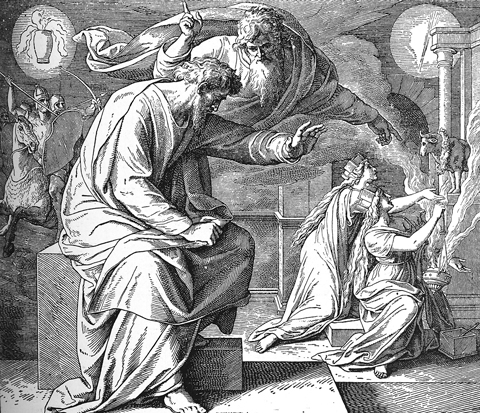
Earlier this week, I considered focusing this sermon on the lines about all flesh being like grass. Remember how Adam and Eve – who, after the Fall, became like the grass that withers and fades – they tried to cover themselves with foliage when they heard the sound of God walking in the Garden of Eden (Gen. 3:7-8). But God had come to give them the comfort that He would send the Seed of the woman to crush the serpent’s head (Gen. 3:15). And that Word of promise endures forever. Maybe, I’ll preach that sermon sometime in the future. Anyway, there’s an eternity of sermons that could be preached from these nine verses.

But the thing I want to focus on today is that phrase from the last line of v. 2 about receiving, “from the Lord’s hand double for all [your] sins.” And I want to focus on it because, even though it sounds like Law, it is sweet, sweet Gospel spoken from God’s mouth directly into your heart. But we need to do a little groundwork first.

In Is. 40:2, Isaiah uses two of the three most common Hebrew words for breaking God’s Law – ‘iniquity’ and ‘sin.’ The third word that Isaiah doesn’t use here is ‘transgression.’ And each of these words give a slightly different picture of what sin is.

The Hebrew word that regularly gets translated ‘transgression’ means to cross a boundary. In each Commandment, God sets a line and crossing over that line is a ‘transgression’ or a ‘trespass.’ The Hebrew word that most often gets translated as ‘sin’ means to miss the mark. God has a standard for us, but we keep missing it. Think of an archer who never hits the target, let alone the bullseye. Finally, the Hebrew word that gets translated ‘iniquity’ refers to the guilt and shame caused by sin. Think of the weight and indebtedness you feel when you’ve wronged someone – that’s the iniquity. All three words deal with the same thing (our sin), but each one focuses on a different aspect of that sin.

Well, here God says that your iniquity, that debt and weight of sin, is pardoned and that you have received from His hand double for all your sins. Again, this should be comforting. God isn’t saying that He’s giving you double punishment for your sin. No!

Instead, God has taken that debt of sin. He pays for it. Imagine your sin as a pile debt on your account. Because of Jesus, the billions of debt that you owe because of your sin is all paid off. But God doesn’t stop and just get you to an even balance. In place of that massive debt, God credits your account with the righteous deeds and the perfect obedience of Jesus.

You can imagine a chalkboard where all your sins are written down. Through faith, Jesus comes and wipes every last speck of that chalk and dust off. But He doesn’t stop once your slate is wiped clean. He writes over that chalkboard all of the holy, righteous, and perfect works that He has done (see Mt. 25:31-40).

God knows the full debt of your sin down to the last penny. And when Jesus pours out His forgiveness, mercy, and salvation on you, it is in double measure of your debt.

In Jer. 31:34, God says that He forgives your iniquity and remembers your sin no more. Dear saints, be comforted. God doesn’t remember the kind or type of sins you have committed. He doesn’t remember the specific ways you have transgressed against Him and against your neighbor. The only thing that He remembers about your sin is the amount of debt you owe. And the only reason God remembers that is so He can give you a double portion of His grace and mercy (Jn. 1:16).

That is the comfort He gives to you. That is the comfort He speaks to directly into your heart today and every day. Your Redeemer will continue to speak that comfort to you, and His Word of grace, mercy, and comfort endures forever. Amen.

The peace of God, which surpasses all understanding, will guard your hearts and minds in Christ Jesus (Php. 4:7). Amen.

At Your Strongest – Sermon on Ephesians 6:10-20 for the Twenty-first Sunday after Trinity

Ephesians 6:10-20

10 Finally, be strong in the Lord and in the strength of his might. 11 Put on the whole armor of God, that you may be able to stand against the schemes of the devil. 12 For we do not wrestle against flesh and blood, but against the rulers, against the authorities, against the cosmic powers over this present darkness, against the spiritual forces of evil in the heavenly places. 13 Therefore take up the whole armor of God, that you may be able to withstand in the evil day, and having done all, to stand firm. 14 Stand therefore, having fastened on the belt of truth, and having put on the breastplate of righteousness, 15 and, as shoes for your feet, having put on the readiness given by the gospel of peace. 16 In all circumstances take up the shield of faith, with which you can extinguish all the flaming darts of the evil one; 17 and take the helmet of salvation, and the sword of the Spirit, which is the word of God, 18 praying at all times in the Spirit, with all prayer and supplication. To that end, keep alert with all perseverance, making supplication for all the saints, 19 and also for me, that words may be given to me in opening my mouth boldly to proclaim the mystery of the gospel, 20 for which I am an ambassador in chains, that I may declare it boldly, as I ought to speak.

In the name of Jesus. Amen.

I love this text. I’ve always loved this text, but younger me really loved this text – however, for the wrong reasons. All this talk about strength, might, armor, wrestling, and facing powerful, cosmic enemies – it gets a guy’s juices flowing. It brings out the fighter and warrior in a man. Sorry if that doesn’t resonate as much with you ladies and mothers here. Maybe, you gals will need to calm down and restrain your husbands and sons and brothers after the service, so they don’t march off to conquer Manitoba or something.

The passage tells us about a war that surrounds us every moment of every day. And it’s good that it does because we would be completely unaware of this war unless Scripture told us about it. Being oblivious to a war that surrounds you is not good. The reason we would be ignorant of this war is that it isn’t a war that we can see. As we confessed in the creed earlier, we “believe in God the Father Almighty, maker of heaven and earth, and [maker] of all things visible and invisible.”

Today, we heard how in six days God created everything we can see (Gen. 1:1-2:3), but God also created things we cannot see (Col. 1:16). And, dear saints, the enemy in the war that surrounds you is in that invisible part of God’s creation. In fact, none of your enemies exist in the visible part of creation. You do not – I repeat you do not – wrestle against flesh and blood. Instead, you wrestle against the rulers, the authorities, the cosmic powers over this present darkness, and the spiritual forces of evil in the heavenly places (Eph. 6:12). And some of you men out there are thinking, “Cool, an invisible enemy! That’ll make our victory even more impressive!”

Calm down, guys. And take heart, ladies. Because, while this text is about fighting in an invisible war against an unseeable enemy, the battle plan is straightforward and simple.

Before we can even dive into that battle plan, we have to understand where this invisible war is taking place. To be ready for battle, you have to know the battlefield. And one of the ways our enemy has made us unprepared for battle is taking this text out of its context. You might be very familiar with this text, but do you know what comes immediately before it? Maybe. But, I’ll admit, that even as your pastor and as someone who gets paid to study and teach the Scriptures, I find it easy to forget the context.

The context starts back in Eph. 5:22. Paul has been laying out the callings and duties for Christians in their vocations. Christian wives are to submit to their husbands. Christian husbands are to love their wives as Christ loved the Church. Christian children are to obey their parents. Christian parents are do bring up their children in the discipline and instruction of the Lord. And so on. It’s in that context that this passage about spiritual warfare falls.

In other words, you, Christian, need recognize that the battle described here is occurring in your everyday callings, vocations, and relationships. It’s there that you need God’s strength. It’s there that you need God’s armor because that’s where the devil and demons are attacking. They are attacking both you and those around you. Your daily life is the battlefield.

You husbands, wives, parents, and grandparents. The war is happening as you earn a living, as you keep the house, as you shuttle kids around. You kids, as you go to school, as you do your homework and chores, as you interact with your friends, the battle is taking place there.

There are two points I want to make sure you take away from this sermon, and this is the first. So, listen up: There is a spiritual war raging all around you every moment of every day, and you need to be strong and aware all the time. And that leads to right into the second point: You are at your strongest and are completely prepared for this war when you stand in the Lord’s strength and in the armor that He provides.

Right off the bat (Eph. 6:10), you are told, “be strong in the Lord.” Almost all of the popular versions of the Bible will read that way, and I understand why it’s translated that way. It’s a fine translation. But the verb there “be strong” is passive. When it’s only translated, “be strong,” you might start wondering how you go about becoming or making yourself strong.

I wish our translations read, “be strengthened in the Lord, in His mighty strength.” The text is clear. God is the One who makes you strong (Php. 4:13). Earlier in Eph. 3:16-17, Paul says that, according to the riches of His glory, God Himself grants you to be strengthened with power through the Holy Spirit so that Christ dwells in your heart through faith.

Not only does God make you strong, He also clothes you in His armor. You have the belt of truth, the breastplate of righteousness, the boots of the Gospel, the shield of faith, the helmet of salvation, and the sword of the Spirit which is the Word of God. All of that, God’s strength and God’s armor, it all comes from God’s Word. God’s Word is truth (Jn. 17:17). Christ’s righteousness is given through the Word (2 Tim. 3:16-17). The Gospel is only revealed in the Bible. Faith is given through God’s Word (Ro. 10:17). The Scriptures are what make you wise to salvation (2 Tim. 3:15Jam. 1:21).

Strengthened by God and armed with and by His Word, you are prepared for this war. But you still might wonder, “Am I properly trained for the war? What are my duties?” Well, you aren’t told to march off to war. You also aren’t told to retreat. Instead, four times in this text, you are told what your assignment is in the battle. You are to stand (Eph. 6:1113-14). The picture Paul is giving is that you are a particular kind of soldier – a sentry, who stands guard over the kingdom.

The picture of this passage is this: Christian, you are God’s soldier. As God’s soldier, your responsibilities are simple. You are a sentry who guards the holy ground of God’s kingdom. And God has placed you in a particular place – where no one else is stationed. You are there to watch and to pray. In other words, when the enemy attacks, you are not supposed to go off and fight alone. No. Instead, you stay in your post. You stand in God’s strength and in the protection of His armor. And you pray. With that prayer, you call in the reinforcements of the Lord’s army.

When you see the war raging around your spouse, your children, your parents, or any neighbor – stand your ground, man your post, and pray. You, dear saints, stand in the Lord’s strength and protection. And when the battle gets in close, take up the sword of the Spirit, the Word of God. Wield that sword against the devil, and he will flee.

Psalm 35 opens with a beautiful prayer for you to use in the battle. “Contend, O Lord, with those who contend with me; fight against those who fight against me! O Lord, take hold of shield and buckler and rise for my help! Draw the spear and javelin against my pursuers! Say to my soul, ‘I am your salvation!’” Christ Himself is the One leads the charge against your enemies, and He turns over His shoulder to remind you that He is your salvation. Amen.

The peace of God, which surpasses all understanding, will guard your hearts and minds in Christ Jesus (Php. 4:7). Amen.

Return – Sermon on Isaiah 55:6-13 for Sexagesima Sunday

Isaiah 55:6-13

6 “Seek the Lord while he may be found; 
call upon him while he is near; 
7 let the wicked forsake his way, 
and the unrighteous man his thoughts; 
let him return to the Lord, that he may have compassion on him, 
and to our God, for he will abundantly pardon. 
8 For my thoughts are not your thoughts,
neither are your ways my ways, declares the Lord. 
9 For as the heavens are higher than the earth, 
so are my ways higher than your ways 
and my thoughts than your thoughts. 

10 “For as the rain and the snow come down from heaven 
and do not return there but water the earth, 
making it bring forth and sprout, 
giving seed to the sower and bread to the eater, 
11 so shall my word be that goes out from my mouth; 
it shall not return to me empty, 
but it shall accomplish that which I purpose, 
and shall succeed in the thing for which I sent it. 

12 “For you shall go out in joy 
and be led forth in peace; 
the mountains and the hills before you
shall break forth into singing, 
and all the trees of the field shall clap their hands. 
13 Instead of the thorn shall come up the cypress; 
instead of the brier shall come up the myrtle; and it shall make a name for the Lord, 
an everlasting sign that shall not be cut off.”

In the name of Jesus. Amen.

A lot of decisions you make in life are based on the recommendation(s) of others. But you rank and evaluate those recommendations based on several factors. For example, if you need to replace the windows on your house, you’ll probably ask someone who just remodeled, “What kind of windows did you get? What brand? Who installed them? Were they punctual?” Depending on their experience, you might get the same brand and kind of windows but have another contractor install them. Or, if you find out that person has only had those windows for a few months, you might try to find someone who got new windows in the past two years because they know how those windows work in the hot and cold. Just one positive or negative recommendation might be all you need to make your decision.

But even when you can’t ask someone you know personally, you might look for recommendations. You shop online, and you’ll read through the reviews of complete strangers. If you see a couple hundred variations of, “Five stars! Works exactly as described. Would definitely buy again.” You’re more likely to buy that product rather than another one that only has a dozen reviews.

Sometimes, you don’t seek recommendations, but they’re offered to you anyway. You meet a friend for coffee, and she tells you that you “have to” try this drink or see this movie or meet Sally because she’s just so great. You might really like that friend. But, depending on how much you trust her taste in those things, you might follow her recommendations or not.

Here, Isaiah is giving you an unsolicited recommendation. “Seek the Lord while He may be found; call upon Him while He is near.” And it’s a recommendation you can trust because it’s backed by Isaiah’s own personal experience. Of all the prophets the Holy Spirit could have inspired to give this recommendation, of course it comes from Isaiah.

When Isaiah was called to be a prophet (Is. 6:1-7), God was very findable and extremely near. Isaiah was in the Temple, the place where God had promised to dwell among His people. But by God’s design, the Temple had all sorts of separation. There was smoke and walls and curtains to maintain a safe distance between the holy God and sinners.

As Isaiah was in the Temple that day, all of the protection of the smoke of the incense, the walls, and the curtain was stripped away. Isaiah doesn’t just see the ark of the covenant, which represented the throne of God; instead, he sees the actual throne where God sits. Isaiah sees the angels flying and hears them singing, “Holy, Holy, Holy is the Lord of armies.” Again, God was very findable and near. But in that moment, Isaiah would not have recommended that you seek God or call upon Him. Instead, Isaiah wished he wasn’t there. He called down a curse upon himself: “Woe is me! For I am lost; for I am a man of unclean lips, and I dwell in the midst of a people of unclean lips” (Is. 6:5).

Now, think about that for a minute. When Isaiah woke up that morning, he had unclean lips. He had those unclean lips as he walked to the Temple. Isaiah lived among people of unclean lips long before he saw God on the throne. So, what was it that made Isaiah despair? What caused his conscience to go into overdrive? It was God’s nearness. It was the fact that the holy God had found him, and that terrified Isaiah.

I heard a distinction from another pastor, and I think it’s helpful: There is a difference between a troubled conscience and a terrified conscience. A troubled conscience is aware of sin. A troubled conscience will say things like, “I’ve made some mistakes, but nobody’s perfect. At least I’m better than that guy.” When you have a troubled conscience, you know that there’s something wrong with you and something wrong with the world.

A terrified conscience recognizes more. A terrified conscience recognizes that God is mad because I’ve sinned and that He has promised to punish sin. Think back to the Garden of Eden. Adam and Eve had a troubled conscience when they sewed fig leaves together to cover their shame. But then, when God showed up, they had a terrified conscience and tried to hide behind some bushes or trees.

Neither a troubled conscience nor a terrified conscience is going to seek God when He can be found or call upon Him when He is near. If your conscience is merely troubled, you won’t think that you need Him. You’ll wrongly think, “I’ll just make up for my mistakes.” And if your conscience is terrified, you’re going be as silent as possible when God gets close because you don’t want to draw attention to yourself. 

Before I go on, I need to make something crystal clear: God doesn’t want you to remain in the state of having either a troubled or terrified conscience. God wants to forgive you and give you a pure, clean conscience (Heb. 10:21-22). But because you and I are sinners, we are going to have a conscience that is either troubled or terrified. And frankly, it’s much, much better to have a terrified conscience. If your conscience is merely troubled, or if you think you will fix your conscience by trying to do better, I have no good news for you. None whatsoever. All I can say to you is that you will always be troubled until you stand before God’s judgment throne. Then you will be terrified, but it will be too late. God will condemn you, and you will spend an eternity in hell and terror. Repent now. Return to God now, now while He is near and may be found.

But if the Holy Spirit has worked a terrified conscience in you, then I do have good news. To you who know you can’t fix your own guilt and shame, to you who know that you cannot hide from the Holy, Almighty, and Just God – know that God is near to you now. And this is a good thing.

When Isaiah’s conscience was terrified to the point that he thought he was finished, God sent one of those angels to touch Isaiah’s lips with a burning coal. That act took away Isaiah’s guilt and atoned for his sin (Is. 6:7). That compassion and abundant pardon from God brought Isaiah even closer to God. But now he had a new, cleansed, and purified conscience.

Because of that merciful, gracious, forgiving, atoning act of God, Isaiah makes this recommendation from his own experience. “Seek the Lord while He may be found; call upon Him while He is near.”

When v. 7 of this text says, “let the wicked forsake his way, and the unrighteous man his thoughts,” that wickedness and unrighteousness includes all the sinful things you do with our lips, hands, feet, and mind. Sure. But take particular notice of the last half of v. 7, “let him return to the Lord, that He may have compassion on him.” In other words, the wickedness and unrighteousness you are to forsake is failing to seek the Lord while He may be found and your unwillingness to call upon Him when He is near.

Instead, dear saints, return. Return to your God because He will abundantly pardon. Catch that – abundantly pardon. Your God pardons because His thoughts and ways are not like your thoughts and ways; God’s are infinitely higher. That doesn’t only mean God’s IQ is way up here and ours is way down here. While that’s true, that isn’t the context of Is. 55:8-9. Instead, God’s ways are the high, heavenly ways of compassion and abundant pardon, while our ways, frankly, aren’t. That’s even more reason for you to listen to Isaiah recommendation and return to God.

When God’s Word of abundant pardon goes out, that Word does not return empty. It accomplishes exactly what God sends it to do. In other words, when God says, “I forgive you,” what God actually means is, “I forgive you.” That very word of your high, compassionate, pardoning God removes your sin from you as far as the east is from the west (Ps. 103:12). Because of that you will go forth in joy and be lead in God’s peace. The mountains and hills and trees and all creation will rejoice with you.

Dear saints, return to God. Return to Him for His mercy, for His grace, and for His abundant pardon. He is near. Seek Him now. Return to Him now. Amen.

The peace of God, which surpasses all understanding, will guard your hearts and minds in Christ Jesus. Amen.

Come Near – Sermon on Exodus 34:29-35 for the Transfiguration of Our Lord

Today’s sermon is short because we spent time considering our liturgy during our service. If you are interested in learning more about that, please see the video of that service.

Exodus 34:29–35

29 When Moses came down from Mount Sinai, with the two tablets of the testimony in his hand as he came down from the mountain, Moses did not know that the skin of his face shone because he had been talking with God. 30 Aaron and all the people of Israel saw Moses, and behold, the skin of his face shone, and they were afraid to come near him. 31 But Moses called to them, and Aaron and all the leaders of the congregation returned to him, and Moses talked with them. 32Afterward all the people of Israel came near, and he commanded them all that the Lord had spoken with him in Mount Sinai. 33 And when Moses had finished speaking with them, he put a veil over his face. 

34 Whenever Moses went in before the Lord to speak with him, he would remove the veil, until he came out. And when he came out and told the people of Israel what he was commanded, 35 the people of Israel would see the face of Moses, that the skin of Moses’ face was shining. And Moses would put the veil over his face again, until he went in to speak with him.

In the name of Jesus. Amen.

Moses was eighty years old when he led God’s people out of Egypt, through the Red Sea, and to Mt. Sinai (Act. 7:23, 30). When they all arrived at Mt. Sinai, Moses became a mountaineer of sorts. He kept going up and down – at least six, if not eight, total times. Before God gave the Ten Commandments Moses had already gone up and down the mountain three times (Ex. 19:3-7; 19:8-14; 19:20-25). He would ascend to hear God speak and descend to tell the people what God had said. Then in Ex. 20, all the people heard God speak the words of the Ten Commandments, but the people said that hearing God’s voice was too traumatic and fearful for them. They begged Moses to not let God speak to them anymore (Ex. 20:18-20).

God agreed to the arrangement that they came up with. Moses would be the mediator between God and His people (Dt. 5:23-33). So, Moses kept going up and down the mountain. After God gave the Ten Commandments, Moses went up again to hear the instructions of how to construct the Tabernacle so God could come near and dwell among His people (Ex. 24:9-32:15). While Moses was up there, the people decided they wanted a tame god, a god they could control. So they made the golden calf to worship (Ex. 32:1-10). So, God sent Moses back down. He saw the people worshipping the golden calf and threw the tablets of the Ten Commandments breaking them because they had broken God’s covenant. Then Moses went back up the mountain again.

Our text begins as Moses is descending Sinai one final time. This last journey up the mountain was probably the most grueling for Moses. The verse right before our reading says that Moses was on the peak forty days and nights eating no food and drinking no water (Ex. 34:28). Of course, that isn’t humanly possible, but God made it happen. The fact that Moses is even alive after all of that is a miracle. But not only was Moses alive, he wasn’t disheveled or haggard. Instead, Moses’ face shined because he had been talking with God. His face reflected God’s glory, and the people were afraid again.

Now, the cause of their fear wasn’t God’s voice. Instead, it was the fact that the skin of Moses’ face was shining. The people didn’t want to come near Moses. So, Moses would hide his face behind a veil when he finished speaking God’s Word to them.

All of this is to say that the people were afraid when God came near. They were afraid when God spoke to them directly, and they were afraid when Moses was their intermediary. The people didn’t want God to come near to them.

In Jer. 23:29, God describes His Word saying, “Is not My Word like fire, declares the Lord, and a hammer that breaks the rock in pieces?” But in Is. 55:10, God also says that His Word is like the rain and snow that creates life by giving seed to the sower and bread to the eater. We might wonder, “Well, which is it, God? Does Your Word burn and break, or does it give life?” Well, dear saints, God’s Word does both. In Is. 55:11, God says that His Word will always accomplishes what God desires.

Dear saints, you cannot hear God’s Word and remain unchanged. Either you will be softened toward it, or you will be hardened against it. And that is one of the beautiful things about the liturgy we use here because, through that liturgy, God comes near so He can speak to you and create faith.

You hear God’s Law where He says that your sins have harmed you and alienated you from Him. Because of our sins, we should all be afraid like the people who didn’t want God to come too close. So our liturgy is also filled with the Gospel.

You hear how God comes near, not to destroy you but to forgive you and give you eternal life. You hear how Christ has come near by taking on your flesh and becoming one of you. Our Lord came near to remove the veil between us and God so we could stand in His holy, glorious, gracious, merciful presence. The entire service is designed to lead us out of our sinful desires and draw us to God’s side. Through our liturgy, God comes near to us so we can come near to Him.

Even though we have all sinned against God, He doesn’t want to be distant. Dear saints, God wants to bless you. He wants you to behold His face as it shines upon you in grace. He wants to lift up His countenance upon you and give you His peace (Num. 6:24-26).

That peace with God is yours through the death and resurrection of your Lord and Savior, Jesus Christ. In Christ, God has come near to you to dwell among you. In Jesus, you see God’s glory, full of grace and truth. And from His glory you receive grace upon grace (Jn. 1:14, 16). Amen.

The peace of God, which surpasses all understanding, will guard your hearts and minds in Christ Jesus. Amen.

Keep Keeping – Sermon on Luke 11:14-28 for the Third Sunday of Lent

Luke 11:14–28

14 Now he was casting out a demon that was mute. When the demon had gone out, the mute man spoke, and the people marveled. 15 But some of them said, “He casts out demons by Beelzebul, the prince of demons,” 16 while others, to test him, kept seeking from him a sign from heaven. 17 But he, knowing their thoughts, said to them, “Every kingdom divided against itself is laid waste, and a divided household falls. 18 And if Satan also is divided against himself, how will his kingdom stand? For you say that I cast out demons by Beelzebul. 19 And if I cast out demons by Beelzebul, by whom do your sons cast them out? Therefore they will be your judges. 20 But if it is by the finger of God that I cast out demons, then the kingdom of God has come upon you. 21 When a strong man, fully armed, guards his own palace, his goods are safe; 22 but when one stronger than he attacks him and overcomes him, he takes away his armor in which he trusted and divides his spoil. 23 Whoever is not with me is against me, and whoever does not gather with me scatters.

24 “When the unclean spirit has gone out of a person, it passes through waterless places seeking rest, and finding none it says, ‘I will return to my house from which I came.’ 25 And when it comes, it finds the house swept and put in order. 26Then it goes and brings seven other spirits more evil than itself, and they enter and dwell there. And the last state of that person is worse than the first.”

27 As he said these things, a woman in the crowd raised her voice and said to him, “Blessed is the womb that bore you, and the breasts at which you nursed!” 28 But he said, “Blessed rather are those who hear the word of God and keep it!”

In the name of Jesus. Amen.

“Blessed are those who hear the Word of God and keep it.” That is why the demons try to make our Lord mute after He opened the lips of this mute man.

Demons are persistent. They don’t just give up and throw in the towel. Jesus casts out a demon that stopped a man’s lips from declaring God’s praise. But as soon as Jesus loosened that man’s tongue, the demons regrouped because people started wondering if Jesus was the promised Messiah and Son of David (Mt. 12:23), the One whose kingdom and throne would be established forever (2 Sam. 7:12-13; Is. 11:1-10). The demons don’t want people believing that, so they quickly marshaled together. They influenced some of the unbelievers who surrounded Jesus to accuse Jesus of casting out demons only by the power of the prince of demons.

This gives us some insight into the tactics and strategy that demons still use today. Notice, they do notattack the reality of the miracle. They do not try to minimize what happened and say that Jesus is tricking everyone. “Well, Jesus planted that mute guy. They were working together. That guy could actually speak, and Jesus just used him to make it look like He had power over demons.” That’s not what they do. Instead, Satan and the demons flip things upside down by calling evil good and good evil (Is. 5:20). Here they take a good thing, casting out a demon, and call it “evil.”

We see this same demonic relabeling of evil and good all around us today. Today, people will say that if a woman can’t murder her baby in the womb, then that woman, somehow, isn’t equal to a man. That’s demonic. Today, people will say that the rioting and stealing that goes on at various times and places in our country is a good thing because those people are oppressed. That’s demonic too. People will say that having pornographic literature in school libraries for young children is necessary so other children with mental disorders don’t kill themselves. Again, totally, completely demonic. I’m not saying that people who are arguing for those things are demons, but they are being influenced by and are tools of the demons.

The cosmic powers over this present darkness (Eph. 6:12) continue to use these tactics to silence you, Christian. The spiritual forces of evil want to mute you and your tongue so they can be at peace and go about their malicious activities. That’s what they did with the crowds here in this text, and they continue to do that in our culture today.

Again, the accusation that Jesus only has power over demons is because He is in league with the devil is completely irrational, and Jesus highlights that absurdity. But the thing to notice here is that the demons’ goal with this accusation is still the same. They want to silence, they want to mute, they want to make Jesus shut His mouth and stop talking. Jesus has set this man’s lips free, so they can’t silence the man anymore. They acquire a new target and try to silence Jesus. But they couldn’t silence Him either. So, now, they try to silence you, Christian.

Today, demons still want to silence you – especially when it comes to making distinctions between what is right and wrong, what is good and evil, what is righteous and what is sinful.

Dear saints, God’s Word has always made distinctions. In creation, God’s Word made distinctions when He separated light from darkness (Gen. 1:4), when He separated the land from the sea (Gen. 1:9-10), when He made different plants and animals each according to its kind (Gen. 1:11, 21, 24-25), and when He set mankind over it all (Gen. 1:26-27). But remember that in those separations and distinctions that God was putting creation into order. Satan and the demons work to bring disorder and chaos to the places where God has created order. There is no peace when God’s Word is silenced. That is why God was at work through Jesus, the Word who became flesh, to put things back into order and in their proper place.

This fallen world resists the order that God’s Word brings because it is influenced by demons. One of the goals of the evil one is to silence, but God is the God who speaks. Because God speaks, His people also speak. God wants you to speak and confess boldly. And what should you speak and confess?

First, God wants us to speak to Him that we are poor sinners who are by nature, sinful and unclean in thought, word, and deed. God wants us to confess that we need saving. He wants us to confess that Jesus came to bring the redemption we needed through His death and resurrection. As we speak and confess that, God listens and forgives.

Then, God sends us out as those who confess His saving name to others. God wants others to know what you know, to believe what you believe, and to receive what you have received so more lives would be set right and put back into order again. God calls you to speak. 

So, how will you respond when the forces of evil throw their accusations at you? Will you remain faithful? Will you be willing, like Elijah was, to be called the troubler of his nation (1 Kgs. 18:17)? Will you confess Jesus before others as Jesus confesses you before His Father in heaven (Mt. 10:32)? I pray that is the case for all of us because there is no peace apart from the peace that God’s Word brings.

Jesus says, “Blessed are those who hear the Word of God and keep it.” Both of those are present tense. It could be translated, “Blessed are those who are continually hearing the Word of God and are continually keeping it.” Blessed are you who hold on to the Word of God and treasure it above all other things in this life. God’s Word not only puts everything into order, it gives life here and now (Jn. 5:24; 1 Tim. 6:12), and it also gives life in the world to come. 

Dear saints, hear God’s Word and keep it. Hold on to it. Continually hear and keep keeping it. Because Jesus promises that when you stand trial before anyone – even authorities, kings, and rulers in this world – you do not need to be anxious of what you are to say because the Holy Spirit will teach you in that very hour what you are to say (Lk. 12:11-12).

So, remember that this doesn’t depend on you. It depends on God and His Word. Jesus has set you apart and made you a member of His kingdom. He has made you holy and placed you in His holy family. And He invites you now to find nourishment for your journey through this world because the tasks are beyond your own strength to handle (1 Kgs. 19:7). So, God feeds you now with supernatural food. He gives you His own Body and Blood given and shed for the forgiveness of all your sins. Here, you have what you need to keep keeping God’s Word. And here you receive all the blessings that come with it. Amen.

The peace of God, which surpasses all understanding, will guard your hearts and minds in Christ Jesus. Amen.

The Word of Yahweh – Sermon on Jeremiah 1:4-19 and Revelation 19:6-16 for Midweek Advent 3

Jeremiah 1:4-19 & Revelation 19:6-16

In the name of Jesus. Amen.

Through this Advent sermon series, we have seen Jesus, the eternal Son of God, in the Old Testament before He became Yahweh incarnate. The first week, we saw how Jesus appeared to Moses in the burning bush as the Angel/Messenger of Yahweh calling Moses to deliver His people out of slavery in Egypt. Last week, we heard how Yahweh defines His name, “I am,” to Moses through the book of Exodus. Tonight, we are fast-forwarding just over 800 years (806 to be exact) to the call of Jeremiah where we see how Jesus, the Word of Yahweh, is active in and through His people.

In that Old Testament reading tonight (Jer. 1:4-19), Jeremiah recounts God calling him to be a prophet. Jeremiah tells us, “The Word of Yahweh came to me” (Jer. 1:4). Now, right off the bat, we don’t want to get the wrong impression about this encounter. When Jeremiah says, “the Word of Yahweh came to me,” it isn’t just some voice in Jeremiah’s head or even something Jeremiah merely hears with his ears. No. Look at v. 9. The Word of Yahweh that comes to Jeremiah has a hand that reaches out and touches Jeremiah’s mouth.

Lord willing (Jam. 4:15), we will gather again this Sunday night and hear from Jn. 1:14 that the Word became flesh and dwelt among us. In other words, the God who created all things took upon Himself a body. Now, because of Christmas, being human is part of God’s identity. But here, long before Jesus was born, this Word of Yahweh comes to Jeremiah, stretches out His hand, and touches Jeremiah’s mouth because had a plan for Jeremiah. A plan which had been in place for a long, long time.

The Word of Yahweh didn’t wait for the right person to come along, get all the right education, and amass five years of experience before calling him. Nope! Even before Jeremiah was born or formed in the womb, Yahweh had appointed Jeremiah to be a prophet to the nations (Jer. 1:5). But Jeremiah isn’t too keen on the idea because he’s only a youth (probably under 20 years old), so Yahweh gives Jeremiah this wonderful calling and promise, “Wherever I send you, go. Whatever I command you, speak. You don’t need to be afraid. I’ll be with you.” And that with divine hand, the Word of Yahweh reaches out and places His words in Jeremiah’s mouth. And those words set Jeremiah over nations and kingdoms to pluck up, break down, destroy, and overthrow. And those words also enable Jeremiah to build and plant. In other words, God is going to use Jeremiah to speak His words of Law and Gospel.

Jeremiah served in the twilight of his nation, Judah. Jeremiah’s culture, like our culture today, had drifted far from God’s Commandments. That is why four stated purposes of his preaching are related to judgment – to pluck up, to tear down, to destroy, and to overthrow.

But Jeremiah will also build and plant by preaching beautiful Gospel. He would preach about healing and restoration (Jer. 3:22, 30:17). Jeremiah would preach that even though the people would go into exile, a remnant would return (Jer. 23:3, 50:20). He announced that Yahweh would raise up for David the righteous Branch and make His people righteous (Jer. 23:5-6). Through Jeremiah, God foretold the New Covenant Jesus would institute in Holy Communion where Yahweh would forgive iniquity and remember sin no more (Jer. 31:31-34).

In our text, the Word of Yahweh comes to Jeremiah two more times with these visions of an almond branch and boiling pot. For the sake of brevity, I’m not going to go into too much detail about the significance of why God shows those two particular things to Jeremiah. But we should notice the comfort those visions bring. In the vision of the almond branch, the Word of Yahweh promises that He is watching over His Word to perform it. Through the Word of Yahweh, God announces what is going to do (Am. 3:7), and He follows through. God says what He does, and He does what He says.

And with the vision of the boiling pot, the Word of Yahweh declares that His judgment is about to boil over against the sin of His people. That’s why Jeremiah is to dress himself for work and not hold back the preaching of the Law (Jer. 1:16-17). Even though Jeremiah’s audience isn’t going to like what God says through him, the Word of Yahweh promises that He will make Jeremiah a fortified city, an iron pillar, and bronze walls (Jer. 1:18). And even though everyone fights against Jeremiah, God promises to be with him to deliver him (Jer. 1:19). And if God promises to do that for Jeremiah, He can also do it for and to you.

But, we need to change gears here because you and I are not Jeremiah. And yet Jesus, the Word of Yahweh, has called us to proclaim His Word to the people He puts in our lives. The world needs to hear what God has to say. In Mt. 10:27, Christ says, “What I tell you in the dark, say in the light, and what you hear whispered, proclaim on the housetops.” That, at times is a daunting call. But dear saints, we cannot shrink back from saying what God has clearly said in His Word. The world has turned upside down because we who bear Christ’s name have been either afraid or ashamed to simply say what the Bible says. Repent.

In Mk. 8:38, Jesus warns, “Whoever is ashamed of Me and My words in this adulterous and sinful generation, of him will the Son of Man be ashamed when He comes in the glory of His Father.” The opinions of evil, sinful men do not change the truth of what God says. Don’t ever be ashamed or afraid of confessing what God has said in His Word. You, like Jeremiah, can speak the Word of Yahweh before kings and not be put to shame (Ps. 119:46). God is with you and will strengthen you like forged metal upon which the forces of this world will break. Jesus promises that when you are dragged before the authorities of this world to bear witness, you don’t need to be anxious or worried about what to say because the Holy Spirit will give you the very words that need to be spoken, and God will speak through you (Mt. 10:18-20). So speak.

I want to close these Advent sermons with the picture we were given in our Epistle reading (Rev. 19:6-16). There, John sees Jesus, the Word of Yahweh, riding on a white horse. His eyes are like a flame of fire, and He wears many crowns on His head. The armies of heaven follow Him, and from His mouth comes a sharp sword which will strike down the nations that He will rule over with a rod of iron.

That picture is how your Savior is today. Jesus has all authority in heaven and on earth (Mt. 28:18). Throughout human history, earthly rulers have and will continue to be in rebellion against Christ, and their treachery has brought harm to creation. But, ultimately, those authorities have no power. Jesus, the Word of Yahweh, has more power than all the forces of the world and all their machines of war combined. This Jesus has come once, and He is coming again.

But there is more to that picture. The first half of that reading shows you – the Church and Bride of Christ. You, believer, are part of that great multitude singing the praises of Christ. Because Jesus came in your flesh, suffered, bled, died, and rose again for you, God has granted you to be clothed in fine, bright, and pure clothes. You stand, clothed in the good works and righteous deeds that God has prepared beforehand for you to walk in (Eph 2:10).

Christ – the Lamb and Bridegroom, the Word of Yahweh – has come. This fact brings terror to the faithless, but that isn’t you. You are His beloved. And He is coming to bring you to to Himself and to eternal life, joy, and peace. Hallelujah! Come, Lord Jesus. Amen.

The peace of God, which surpasses all understanding, will guard your hearts and minds in Christ Jesus. Amen.

Fear Not, Confess – Sermon on Matthew 10:26-33 for the Presentation of the Augsburg Confession

Matthew 10:26–33

26 “So have no fear of them, for nothing is covered that will not be revealed, or hidden that will not be known. 27 What I tell you in the dark, say in the light, and what you hear whispered, proclaim on the housetops. 28 And do not fear those who kill the body but cannot kill the soul. Rather fear him who can destroy both soul and body in hell. 29 Are not two sparrows sold for a penny? And not one of them will fall to the ground apart from your Father. 30 But even the hairs of your head are all numbered. 31 Fear not, therefore; you are of more value than many sparrows. 

32 “So everyone who acknowledges me before men, I also will acknowledge before my Father who is in heaven, 33 but whoever denies me before men, I also will deny before my Father who is in heaven.”

In the name of Jesus. Amen.

If we’re honest, we all have to admit that there are times we have been afraid to speak the truth. What Jesus tells us in His Word, we are often afraid to bring into the light. We hear things in Church that we don’t whisper outside these walls, and we don’t dare shout from the housetops.

Jesus clearly says that nothing is covered or hidden that will not be revealed and known. But speaking the truth can still be hard. We don’t want to say something that will cause us to be criticized, ridiculed, and rejected. We don’t want to deal with the discomfort of knowing we have offended someone. We don’t want to be misrepresented as being hateful people. But every reason for not speaking has a common root – fear. But all those fears in the wrong things. We are fearing those who can kill the body but not the soul. Repent. Repent and stop fearing mere men, but fear God who can destroy both the soul and body in hell.

As I mentioned earlier, today is the 493rd anniversary of the presentation of the Augsburg Confession which lays out a summary of what we believe, teach, and confess here at Christ the King. I want to give a very brief bit of history about that presentation before I apply the rest of this Gospel reading to you. I’m sorry if you don’t like history, but it will be helpful for you to hear it so you can boldly live out your faith in today’s culture.

In 1529, the army of Muslim Ottoman Empire was marching its way from Istanbul, Turkey into Europe and through the Holy Roman Empire. But the unusually rainy weather that year caused the Muslim invaders to stall out just south of Germany before they returned home. Emperor Charles V knew the armies would probably return, and he wanted unity in his empire so they could all fight against the Muslim armies together. This meant that Charles had to deal with the religious problem between the German territories who had been awakened by Luther’s proclamation of the Gospel on the one side and the Roman Church on the other side.

Charles called the Lutheran princes and officials from the Roman Church to meet in the city of Augsburg. When the Lutheran princes arrived, they were met with an order from Charles to participate in a festival called Corpus Christi. That festival of the church of Rome is where a priest or bishop would consecrate the elements of the Lord’s Supper, but then, rather than consuming it, the Bread would be placed in a golden box and paraded through the town so people could see the elements. The Roman church taught that simply seeing the Bread was a way for the people to commune. The whole thing flies in the face of what Jesus says about the Lord’s Supper. He says, “Take, eat,” not, “Take, walk behind, and look.”

The Lutherans were appalled at the situation. One of the Lutheran rulers stood before Charles and replied to this demand, “Before I would deny my Lord and Savior in this way, I would gladly kneel before you and have my head chopped off.” In other words, “No.” Charles could barely speak German, so he responded, “Nicht kopf ab. Nicht kopf ab.” Which is, “Not head off. Not head off.”

A few days later, at 3:00 PM on June 25th of 1530, Charles, the Roman officials, and the Lutheran princes gathered to hear the doctrinal statement of the Lutherans which is the Augsburg Confession. In that document, the Lutherans wanted to show that they were not heretics but were faithfully preaching the doctrines of Scripture and traced their doctrine and practice back to the early years of the church. Crowds came to hear the confession; in fact, so many people gathered they couldn’t all fit in the castle. The windows were opened, and the document was read in its entirety. The voice reading it was so clear and articulate that it is recorded that thousands outside the castle were able to hear. And all the Lutherans stood as it was read.

By holding to that confession, the Lutheran princes were all risking their lands and lives, but they held firm to those Scriptural doctrines anyway. They spoke of God’s testimonies before kings and were not put to shame (Ps. 119:46). And they didn’t know how Charles, the head of the government, would respond. It was possible that they would all be executed, and their lands and people would be attacked by Charles’ armies. It was possible that Charles would agree with them. They didn’t know. They didn’t have control. All they could do was speak God’s testimonies and leave everything in His hands.

Ok. History lesson over.

Today, we don’t have control over the government. We don’t have control over the culture or the media. We don’t have control of the perception others have of us. So many things are outside our control, but that’s ok. It’s ok. Our confidence in confessing God’s testimonies is never based on having control or tax benefits or a favorable political or social environment. 

We can always speak God’s testimonies and not be put to shame. Yes, we might be mocked and ridiculed and labeled as ‘old-fashioned.’ Yes, we might be kicked to the side of the culture. Yes, we might even be persecuted by the government, society, and media. But that doesn’t matter because none of them have control over reality. They’ve never had that control, and they never will because their word didn’t create the heavens and the earth. Their word didn’t establish what is right and what is wrong. Their word doesn’t determine the truth. But God’s Word did and still does.

By God’s Word the heavens and the earth were made. By God’s Word, Christ was sent to be the Savior of sinners. By God’s Word, you have been called, gathered, enlightened, and sanctified as the Church. By God’s Word, you are kept and sustained in the one true faith.

That is why we can confess God’s Word without fear. The worst anyone can do to us is merely kill our bodies; they cannot touch our souls (Mt. 10:28). The God who created the sparrows by His Word knows when one of them falls to the ground. And that same God is your heavenly Father who has numbered every hair on your head. That same God is the One who came to earth, took on flesh, shed His blood, and died for you. That same God is the One who inscribed your name in the Book of Life before the foundation of the world (Rev. 17:8).

Now, we might wish that God would send revival to our land. We might wish that God would send reformation to unite the scattered and divided Christians here on earth. We might wish that God would raise up another Luther or, like He did in our Old Testament reading (Neh. 8:1-2, 5-6, 9-12), another ruler like Nehemiah or another priest like Ezra who can restore the Word of God to our land and to the people around us. But God in His wisdom, which is greater than yours, hasn’t given one – at least, not yet. But God has raised up you. God has placed you in your family; in this congregation; in your workplace; in this city, state, and country to confess His testimonies, and you will not be put to shame.

So, dear saints, acknowledge Christ before men, and He also will acknowledge you before God the Father (Mt. 10:32).

And if you still fear to speak His testimonies and acknowledge Christ, if you aren’t sure how to speak the truth in love (Eph. 4:15), here are some suggestions for overcoming that fear:

Start by being here at church for the services and Bible studies. Learn from God’s Word because that will help you grow in your faith. And, as you grow, you will be more equipped to confess.

Then, talk with your family after church. Talk about the hymns and the Scripture readings. Talk about what you leaned in Sunday school and the sermon. Discuss with your spouse, kids, and parents what God taught you and how He encouraged and blessed you through His Word. All of that is zero risk because you won’t be persecuted for doing that. It won’t put you or them in danger. Also, it is good practice for confessing the faith and speaking the truth of God’s testimonies to others.

If you’re already doing that, expand further out. Confess to friends and relatives that you are close to – people who are a little further out but you have a good, solid relationship with. If you mess up and say something that offends them, you have a better chance of getting another opportunity to confess better or more clearly. That is also low risk.

As you become more comfortable doing that, keep going. You will be better equipped to confess to people you are less familiar with and even to strangers. The more you confess, the better you get at it. And along the way, you will be building up and encouraging those around you to confess as well.

Dear saints, fear not. Confess God’s testimonies.

When time is no more and you stand before God, you will only have Him to answer to. Everything else will pass away. As many days as God gives to you, confess Him knowing that only God and His Word will stand. The world may try to shame us, but they don’t have any power. The power of men comes and goes. All flesh is like grass and eventually passes away, but the Word of the Lord endures forever (Is. 40:6, 8; 1 Pet. 1:24-25).

Dear Christian, Jesus is risen. We are going to win. Amen.

The peace of God, which surpasses all understanding, will guard your hearts and minds in Christ Jesus. Amen.

Your Good Things – Sermon on Luke 16:19-31 for the First Sunday after Trinity

Luke 16:19–31

19 “There was a rich man who was clothed in purple and fine linen and who feasted sumptuously every day. 20 And at his gate was laid a poor man named Lazarus, covered with sores, 21 who desired to be fed with what fell from the rich man’s table. Moreover, even the dogs came and licked his sores. 22 The poor man died and was carried by the angels to Abraham’s side. The rich man also died and was buried, 23 and in Hades, being in torment, he lifted up his eyes and saw Abraham far off and Lazarus at his side. 24 And he called out, ‘Father Abraham, have mercy on me, and send Lazarus to dip the end of his finger in water and cool my tongue, for I am in anguish in this flame.’ 25 But Abraham said, ‘Child, remember that you in your lifetime received your good things, and Lazarus in like manner bad things; but now he is comforted here, and you are in anguish. 26 And besides all this, between us and you a great chasm has been fixed, in order that those who would pass from here to you may not be able, and none may cross from there to us.’ 27 And he said, ‘Then I beg you, father, to send him to my father’s house— 28 for I have five brothers—so that he may warn them, lest they also come into this place of torment.’ 29 But Abraham said, ‘They have Moses and the Prophets; let them hear them.’ 30 And he said, ‘No, father Abraham, but if someone goes to them from the dead, they will repent.’ 31 He said to him, ‘If they do not hear Moses and the Prophets, neither will they be convinced if someone should rise from the dead.’ ”

In the name of Jesus. Amen.

If you had to choose, which character in this parable would you rather be? The rich man is clothed like royalty and has daily feasts. Sounds like a pretty good life. Lazarus has nothing. He apparently can’t walk; he has to be laid at the rich man’s gate. He’s poor and diseased. He’s so hungry he wants to the garbage that falls from the rich man’s table. And he can’t even fend off the dogs who come and lick his sores. But then, both of them die, and everything changes. Lazarus is escorted by the holy angels to paradise and bliss. The rich man dies, is buried, and goes to hell and eternal torment. So, which character would you rather be?

Most of you are probably thinking Lazarus. No one would choose to be the rich man. But a few of you smarties out there would say, “I’ll be Abraham. He was rich during his earthly life, and he went to heaven.” Very clever of you.

Today, we are going to focus on v. 25 of the parable where Abraham says to the rich man, “Child, remember that you in your lifetime received your good things, and Lazarus in like manner bad things, but now he is comforted here, and you are in anguish.”

That response is a little surprising to the eternal torment of the rich man. We expect that Abraham would tell the rich man, “You didn’t believe in Jesus,” or, “You didn’t love the Bible,” or even, “You received good things.” But Abraham doesn’t say any of that; instead, he says, “You received your good things.” It’s almost a little sarcastic as though Abraham is saying that the rich man received things that he thought were good – the clothes, the feasts, the expensive house, etc. All of those are good things and are gifts from God’s hand, but those aren’t God’s best things.

The rich man didn’t receive God’s steadfast love and salvation (Ps. 13:5-6); he didn’t receive God’s mercy and forgiveness. The rich man didn’t care about those things during his life, and he didn’t even care about them while suffering in hell. In hell, the rich man only desired relief from his suffering, and, when he couldn’t get that, he wanted his brothers to avoid the suffering. The rich man’s problem is that during his life and even in hell he rejected the means to avoid that suffering which is God’s mercy, steadfast love, and salvation which is delivered through the Bible – through the word of Moses, the prophets, and the apostles.

The devil wants to twist this parable so we think that we have to choose between two different existences. On the one hand, we could love God and go to heaven, or, on the other hand, we could love money and stuff and go to hell. So, we suppose, “I guess I’ll pick God” and go grumbling through this life. But the idea that you can only have either riches and hell or poverty and heaven is a false dichotomy.

God is the One who gave you the desire for nice things. The Scriptures even teach that God promises to fulfill the longings you have. Psalm 37:4 says, “Delight yourself in the Lord, and He will give you the desires of your heart.”

So, Christian, do you care about living in a fancy house? Yes, you do. Don’t lie. Remember Jesus promised, “In My Father’s house are many mansions, and I’m going to prepare a place for you” (Jn. 14:2). When you go to heaven and Jesus shows you the mansion He prepared for you, are you going to tell Him, “Meh. I don’t really care about that”? No!

Christian, do you care about good food and feasting? Yes, you do. How many times does the Bible talk about eternal life as a lavish feast (Is. 25:6; Mt. 22:1-10; Rev. 19:9)? God promises that feast because He knows that it is appealing to you. It’s something you want from His hand.

Christian, do you care about nice clothes? Yes, you do. The Bible promises that you will have extravagant, dazzling robes that are washed white in the blood of the lamb (Eph. 5:26-27; Rev. 7:13-14).

Christian, do you care about living a pain-free life? If you don’t now, just wait a few years and you will. You care about a life without pain, and God has promised that one day your body will be raised incorruptible, glorified, imperishable (1 Cor. 15:42-44) and you will have no more pain (Rev. 21:4).

Being a Christian doesn’t mean you have to give up your desire for nice things. You don’t have to have some Buddhist or monastic attitude toward the blessings that God gives you. Instead, you can and should give thanks and praise to God who gives every blessing. The Bible talks about the mansions, feasting, spectacular clothing, and escape from pain and suffering because God knows that it is a draw for you – it’s something you desire. You long for those things, and that isn’t a problem – not by itself anyway.

What is a problem is trying to get those things apart from God’s giving of those things. When you’re narrowly focused on living a comfortable earthly life, it becomes easy to forget about eternity. When you are focused on temporal mercies, you quickly forget about eternal mercies. Do you want your enjoyment of all those nice things now for the fleeting moments of this life? Or would you rather have them just a little bit later and retain them forever?

I know this sounds like some of the prosperity preaching you might hear on TV. To be clear, the health and wealth preachers are heretics, and I’m not becoming one of them. Those preachers are wrong – not because they promise health and wealth – but because of when they promise it. They promise it now when God makes no such promise in the Scriptures, but God does promise you will have it for eternity. 

The point of the parable is that the rich man loved those blessings more than he loved God and His Word. The rich man found his joy in the God’s gifts more than in the God who gives those gifts. The parable wants us to consider this question: What are my good things? Are your good things the temporal, fleeting pleasures of this life? Or are your good things the steadfast love, mercy, and salvation of God?

No one here is as destitute as Lazarus, and no one here is as wealthy as the rich man. You are all somewhere in between. The point of the parable is not for you to make yourself poor like Lazarus was, and the point is certainly not to make yourself like the rich man. The point of the parable is to get you to take your eyes off of the earthly things you either have or don’t have and focus on the eternal things that God gives you in His mercy which cannot be taken away. Remember, where your treasure is, there your heart will be also (Mt. 6:21).

Our call to worship helps us have the right focus. Psalm 13:5-6 says, “I have trusted in Your steadfast love; my heart shall rejoice in Your salvation. I will sing to the Lord, because He has dealt bountifully with me.” Christian, you have God’s steadfast love; you have His salvation. God be praised! That is more than enough. God has dealt bountifully with you because of what Jesus has done. Through Christ’s death and resurrection, you have an eternal inheritance that surpasses anything that the richest person could even dream of having.

Recognizing that you have the riches of Christ’s death and resurrection is the main point of the parable. And the parable has something to say about the riches you have in this life.

All of us are richer than we know. Even the poorest in our country would be the envy of most kings throughout history. Again, you aren’t the wealthy like the rich man, but you aren’t destitute like Lazarus. You’re somewhere between.

Don’t think to yourself, “If I were a little wealthier and closer to the rich man, I would be more generous with my things.” Don’t let the perfect be the enemy of the good. Jesus praised the two small copper coins that the widow gave, and not the fat checks of the rest (Lk. 21:1-4). Even though that widow’s gift was nothing in earthly comparison to the large sums put in by others, it was much more in Jesus’ eyes than all the other offerings combined. And remember, Lazarus didn’t want the rich man’s house, fancy clothes, or lavish feast. Lazarus only wanted what fell from the rich man’s table.

So, no; you probably can’t set up a trust fund that would cover the annual expenses of our congregation. Fine. But you can give your tithe. You probably can’t give a donation to pay for a new addition of a fellowship hall. Fine. But you can come and vacuum the sanctuary and scrub the toilets.

Dear saints, share your crumbs. They are more valuable than you know, and God will bless you as you give them away.

Hebrews 10:34 says, “You [Christians] joyfully accepted the plundering of your property, since you knew that you yourselves had a better possession and an abiding one.” In other words, whatever blessings you might lose in this life, they pale in comparison to the eternal blessings and treasures God has in store for you. So, if you lose something here, don’t worry about it. Your eternal inheritance cannot be taken from you.

Dear saints, seek first the kingdom of God and His righteousness – which God freely gives through His Word – and every other blessing will be added unto you (Mt. 6:33). Amen.

The peace of God, which surpasses all understanding, will guard your hearts and minds in Christ Jesus. Amen.

A Home – Sermon on John 14:23-31 for the Day of Pentecost

John 14:23–31

23 Jesus answered him, “If anyone loves me, he will keep my word, and my Father will love him, and we will come to him and make our home with him. 24 Whoever does not love me does not keep my words. And the word that you hear is not mine but the Father’s who sent me.

25 “These things I have spoken to you while I am still with you. 26 But the Helper, the Holy Spirit, whom the Father will send in my name, he will teach you all things and bring to your remembrance all that I have said to you. 

27 “Peace I leave with you; my peace I give to you. Not as the world gives do I give to you. Let not your hearts be troubled, neither let them be afraid. 28 You heard me say to you, ‘I am going away, and I will come to you.’ If you loved me, you would have rejoiced, because I am going to the Father, for the Father is greater than I. 29 And now I have told you before it takes place, so that when it does take place you may believe. 30 I will no longer talk much with you, for the ruler of this world is coming. He has no claim on me, 31 but I do as the Father has commanded me, so that the world may know that I love the Father. Rise, let us go from here.”

In the name of Jesus. Amen.

Different holidays are celebrated in different ways. We just celebrated Mothers’ Day a few weeks ago. Flowers, chocolates, and gifts were given. Phone calls were made. And, probably, a few household chores like washing the dishes, vacuuming, and cooking were delegated to the non-mothers out there. All those are good ways to celebrate moms which is the purpose of Mothers’ Day. I doubt many people set off fireworks while singing “Joy to the World” for Mothers’ Day. Who knows? Maybe there are a few pyromaniac moms whose favorite song is “Joy to the World.” But, in my experience, moms typically police fireworks and the last thing on their minds between explosions are the words to the third verse of “Joy to the World.”

Tomorrow is Memorial Day, and it is good to remember those who have given their lives for our country by attending Memorial Day services, placing flowers on graves, and giving thanks for the sacrifice many have made so we can enjoy the freedoms God has given us in this country (Jn. 15:13). Even the barbecues and gatherings with friends are a fitting way to spend Memorial Day. Enjoy all those things as you give thanks to God for those who gave their lives for our country. But Memorial Day is tomorrow. Today is the Day of Pentecost. What is a fitting way to celebrate and remember Pentecost?

Honestly, it’s precisely what you are doing now. Here you are – God’s people in God’s house – gathered to hear the Gospel and the mighty works of God in your native tongue. You are following precisely in the footsteps of the apostles and first Christians by doing exactly what they were doing when God poured out the Holy Spirit on the whole world.

In our reading from Acts (Act. 2:1-21, 36), we find the first Christians all gathered together in one place on a Sunday. Just like you have gathered together with your brothers and sisters in Christ on a Sunday. As those first 120 Christians (Act. 1:15) were gathered, the Holy Spirit came upon them. Right now, the Holy Spirit is coming upon you as you hear God’s Word, are reminded of all the things Jesus has said (Jn. 14:26), and are pointed to Jesus, your Savior (Jn. 15:26). Those first Christians, who received the Holy Spirit, went out and proclaimed the Gospel in the languages of the people who were in Jerusalem. Today, you will be sent out of this place to proclaim the excellencies of Jesus who has called you out of darkness and into His marvelous light (1 Pet. 2:9).

You’ve heard me say that every Sunday is a celebration of the Resurrection even though the dazzling angel isn’t sitting on the stone, and every Sunday is a celebration of Christmas even though Jesus is no longer laid in the manger while the angels sing to shepherds. Every Sunday is a celebration of Easter and Christmas, but we should probably add: every Sunday is a celebration of Pentecost. Even though we don’t have the sound of a mighty, rushing wind and the tongues of fire, all the essentials of Pentecost are present here each and every Sunday. In other words, the Holy Spirit is here pointing us to Jesus and equipping us for a life of faith because our service is filled with God’s Word.

Dear saints, the Holy Spirit is given and poured out upon you in the normal, familiar things of our service. Sure, it’s great when we have those ‘mountaintop’ experiences where we feel very close to God. We thank and praise Him for those moments, but not every day is meant to be lived in a spiritual high. Your Spirit-filled lives are spent in the normal, mundane trenches of work and home. You come here to be fed by God’s Word and strengthened in your faith in Jesus. In that, the Holy Spirit equips you for another week of faithfully carrying out your God-given callings and vocations which is where serve your neighbor.

To prove that the Holy Spirit is at work in all these things, just consider what Jesus tells us in this Gospel reading (Jn. 14:23-31). Jesus says that the Holy Spirit will teach us all things and bring to remembrance all that He has said (Jn. 14:26). Now, Jesus first said this to the apostles who were later inspired by the Holy Spirit to write the Bible. That verse, John 14:26, is how we can know without any doubt whatsoever that when we read and hear the words of Jesus recorded for us in the Scriptures, we are reading and hearing the very words of God (see also Jn. 16:13-14). As the Holy Spirit declares to you everything that Jesus has said, He makes you holy so that you are a comfortable dwelling place for God. You, dear saints, are God’s home.

In the first verse of our Gospel reading here (Jn. 14:23) Jesus says, “if anyone loves Me, he will keep My Word, and My Father will love him, and We will come to him and make Our home with him.” You know that you are commanded to love Jesus with all our heart, soul, mind, and strength (Mt. 22:37-38). Your problem is that this love is often difficult perceive. Is your love for God some emotion or feeling inside of you? Does it feel like you love God right now? How do you know if you love Him enough? What instrument should you use to measure your love for God? Well, Jesus tells you exactly how to measure your love for Him. Christ says, “If anyone loves Me, he will keep (or “guard”) My Word.”

You might not feel tremendous love for God, you might feel as though God is far away and distant, but you will still come to church to hear His Word. You will spend time meditating on His Word and contemplating what He has said. When you hear God’s Word faithfully preached, when you read and study your Bible, you are keeping and guarding Jesus’ Word. It doesn’t mean you do it perfectly. Our hearts are still full of sin. But you are here today, so you are keeping Jesus’ Word. The very fact you are present here, according to Jesus, is evidence that you love Jesus because you are keeping His Word.

Jesus says that when you keep His Word, the Father loves you. Then – this is so remarkable – the Father and Jesus will come and make their home with you. That is a good translation. We will often make a distinction between a ‘house’ and a ‘home.’ Greek does as well. A house is a building where people live. There are many houses in Grand Cities community, but only one is your home where you feel perfectly comfortable.

Dear saints, God makes His home in you. You aren’t just a house for God. You are His home.

When I was in Bible College, our choir would go on tour, and we would sometimes stay at other people’s houses. One night in California, I stayed in the house of a couple who were both eye doctors, and it was probably the nicest house I’ve ever stayed in. Everything was clean, fancy, and expensive. When I arrived there, the hosts said, “Make yourself at home.” I didn’t feel at home. I felt out of place because I was a poor college student. Another time, I stayed at a house of a rancher. When I arrived there, that couple also said, “Make yourself at home.” Part of me still wonders if my hosts said that to excuse the mess that their house was. Dirty furniture; a wet, musty towel in the corner of the bedroom; grimy dishes in the kitchen. Even though my dorm room was at least as messy as that house, I didn’t feel at home there either. There are all sorts of reasons we don’t feel ‘at home’ in other people’s houses. That is why it is so remarkable that Jesus says the almighty, all-powerful, holy God makes His home in you.

Jesus says that the Holy Spirit ignites in you a love for Him as you keep and guard Christ’s Word. And it is through that very same Word that the Holy Spirit makes you holy – He sanctifies you. Through faith, you are so holy and sanctified that the God who is holy, holy, holy (Is. 6:3) takes up residence within you, and He feels right at home.

It doesn’t matter if you think your life and heart are too messy for the King of kings and Lord of lords. He is perfectly comfortable dwelling in you because He has washed you, cleansed you, forgiven you, and filled you with the righteousness of Jesus, your Savior. Happy Pentecost. Amen.

The peace of God, which surpasses all understanding, will guard your hearts and minds in Christ Jesus. Amen.

Who, Then, Receives This Sacrament Worthily? – Sermon for Midweek Lent 5

IV. Who, Then, Receives This Sacrament Worthily?

Fasting and bodily preparation are indeed a good outward discipline, but that person is truly worthy and well prepared who believes these words: “Given and shed for you for the forgiveness of sins.” But anyone who does not believe these words or who doubts them is unworthy and unprepared, for the words “for you” require truly believing hearts.

Luther’s Small Catechism

In the name of Jesus. Amen.

It’s a gift. The Lord’s Supper is a gift. The Body of Christ broken for you is a gift. The Blood of Christ shed for the forgiveness of your sins is a gift. Everything about the Lord’s Supper is a gift. When we consider our worthiness or unworthiness of receiving the Holy Communion, we must start with the understanding that it is a gift.

Jesus doesn’t give us Himself in the Sacrament because we have earned or deserved Him. Birthday and Christmas presents aren’t earned. If something is earned, it is no longer a gift. When you give a gift, you give out of love. Jesus is not Santa Claus who makes his list and checks it twice to see who has been naughty or nice and give based on that. And remember what the gift gives – the forgiveness of sins. If you imagine, somehow, that you don’t have any sins that need forgiving, then you don’t need or have any desire for the gift. Only the sick need a doctor, and only sinners need the Sacrament.

In our epistle reading tonight (1 Cor. 11:27-34), Paul does give a warning about Holy Communion. You can receive the gift Jesus gives in an unworthy manner, and there are serious consequences of receiving the Lord’s Supper in an unworthy manner. But before we get to that, let’s first consider what it is to be worthy of receiving the Sacrament. The two ‘qualifications’ – or, maybe better, ‘qualities’ or ‘attributes’ – of being a worthy recipient of the Lord’s Supper are found in v. 28-29 and v. 31.

To be worthy of Communion, a person is to ‘examine’ and ‘judge’ himself ‘truly’ (1 Cor. 11:28, 31). Here’s what that means: When you consider who you are in light of God’s Commandments, you find nothing but sin and failure. You find that you have not done what God demands and that you have done what God forbids. When you examine your thoughts, words, and deeds, you see clearly that you are not worthy to be in God’s presence let alone have a seat at His Table. God be praised that the recognition of your sin and unworthiness is precisely what makes you worthy to receive what Jesus gives in Holy Communion because what He gives is His very Body and Blood for the forgiveness of sins.

The other ‘quality’ of receiving the Lord’s Supper worthily comes in 1 Cor. 11:29 and is to “discern the Body.” In other words, it is to recognize that Jesus is truly present in His Supper as He gives you the New Covenant of His Blood in the elements of Communion.

When you know and recognize those two things, God invites you and desires that you, “eat of the Bread and Drink of the Cup” (1 Cor. 11:28).

If someone does not recognize that they are a sinner who needs forgiveness or does not believe that Jesus gives His Body and Blood in the Sacrament, that person eats and drinks the Sacrament in an unworthy manner, and that does have consequences.

The first consequence Scripture mentions is to be guilty concerning the Body and Blood of the Lord. In other words, an unworthy reception of the Lord’s Supper puts that person alongside the soldiers, Pilate, Judas, and the Jewish leaders as being guilty of Jesus’ wounds and crucifixion.

A person can be guilty of the Body and Blood of Jesus in various ways. Judas was guilty because he betrayed Jesus (Mt. 27:3-4). The priests and Pharisees were guilty because they falsely accused Jesus (Mt. 26:59). The soldiers were guilty because they beat, whipped, and spat upon Jesus (Mt. 27:27-31). Pilate was guilty because he condemned Jesus (Mt. 27:24-26). All of them were individually guilty of the bodily harm done to Jesus in different ways, but the guilt remains the same. Here, Paul says that to receive Communion in an unworthy manner is just as great a crime as those who carried out the betrayal, beating, and crucifixion of our Lord (1 Cor. 11:27).

The consequence of this guilt concerning Christ’s Body and Blood brings God’s judgment. Paul says that the reason some of the Corinthian Christians are weak, sick, and have died is that they were receiving Communion in an unworthy manner. Paul isn’t speaking figuratively here; this is serious stuff.

Now, I want to be clear, the judgment Paul talks about here does not mean that the Christians who receive the Lord’s Supper in an unworthy manner are condemned. The text is clear. The judgment from the Lord that they receive is used by God to discipline them so that they are not condemned with the world (1 Cor. 11:29, 32). But that discipline and judgment is real, and because that discipline is real, this should guide what we do.

As your pastor who loves and cares for you and your well-being as well as the well-being of other Christians, I need to say this: When you are traveling or visiting a church with family or friends, there are times and instances where you should not take Communion. If you are at a church that says the Lord’s Supper is only symbolic, or, if you are at a Roman Catholic church that teaches that receiving the Lord’s Supper is earning some sort of spiritual merit, do not commune there. I say that because, by receiving the Sacrament there, you are encouraging your Christian brothers and sisters in their wrong belief and unworthy reception of the Lord’s Supper. And by not taking Communion there, God may open a door for you to teach them about the great blessing that Jesus gives in His Supper. Pray that that would be the case.

Yes, Scripture gives us warnings about receiving the Sacrament in an unworthy manner, but it is done in a way to encourage us to receive it regularly and rightly. Listen carefully to what comes after the warning of receiving in an unworthy manner and being guilty concerning the Body and Blood of our Lord, “Let a person examine himself, then, and so eat of the Bread and drink of the Cup” (1 Cor. 11:28). In the Large Catechism, Luther picks up on this and rightly says this is warning, but it is an encouragement to receive the gift of the Lord’s Supper which Jesus gives to us as often as we eat and drink.

Luther says, “If… you are heavy-laden and feel your weakness, then go joyfully to this Sacrament and receive refreshment, comfort, and strength.” But what if you don’t feel your weakness? Luther suggests that you put your hand to your chest and to check if you still have flesh and blood because Ro. 7:18 says, “I know that nothing good dwells in me, that is, in my flesh.” Then, look around and see if you are still in the world. If you are in the world, believe what the Bible teaches about it – that it is full of danger and difficulties (Jn. 15:18-21, 16:33). Finally, remember that the devil is prowling around like a roaring lion seeking to devour us (1 Pet. 5:8) and has all sorts of flaming darts pointed at us (Eph. 6:16). Your sinfulness, the danger of living in a sinful world, and the promise of Jesus are all constant reminders of how greatly you need the gift Jesus gives in the Sacrament.

I want to close this series on the Lord’s Supper with one final thought about receiving God’s gifts. When it comes to earthly things, desire and satisfaction are opposites. If you are hungry, it is because you don’t have food. Once you have eat and are full, you no longer desire food.

Spiritual things work differently, and I think we have all seen or experienced this. When you have God’s Word, you want more of it, and, sadly, the opposite is also true. The less you have God’s Word, the less you desire it. When it comes to the gifts Gospel, the more we receive them, the more we long for them. When we taste and see that the Lord is good (Ps. 34:8), our hunger for His goodness and mercy grows.

May our love and desire for God’s Word continue to grow as we receive more and more of the free gift of His grace and mercy which He freely gives through His Word and Sacraments. Amen.The peace of God, which surpasses all understanding, will guard your hearts and minds in Christ Jesus. Amen.