1 Corinthians 13:1-13
1 If I speak in the tongues of men and of angels, but have not love, I am a noisy gong or a clanging cymbal. 2 And if I have prophetic powers, and understand all mysteries and all knowledge, and if I have all faith, so as to remove mountains, but have not love, I am nothing. 3 If I give away all I have, and if I deliver up my body to be burned, but have not love, I gain nothing.
4 Love is patient and kind; love does not envy or boast; it is not arrogant 5 or rude. It does not insist on its own way; it is not irritable or resentful; 6 it does not rejoice at wrongdoing, but rejoices with the truth. 7 Love bears all things, believes all things, hopes all things, endures all things.
8 Love never ends. As for prophecies, they will pass away; as for tongues, they will cease; as for knowledge, it will pass away. 9 For we know in part and we prophesy in part, 10 but when the perfect comes, the partial will pass away. 11 When I was a child, I spoke like a child, I thought like a child, I reasoned like a child. When I became a man, I gave up childish ways. 12 For now we see in a mirror dimly, but then face to face. Now I know in part; then I shall know fully, even as I have been fully known. 13 So now faith, hope, and love abide, these three; but the greatest of these is love.
In the name of the Father and of the Son and of the Holy Spirit. Amen.
If you’re like me, you’re looking for ways to do things more efficiently and make life easier. You’re searching for ways to lessen your burdens. A better system for your workflow. A quicker route from here to there. Ways to make dinner faster. Every mom I know is ready to get out from the burden of folding laundry. Well, a machine called the FoldiMate is for you; it doesn’t come out until late this year, and it’ll cost you about $1,000. We’re always looking for ways to make life easier, be more productive, and most of all to lessen our burdens. While a lot of good has come from technology and machines and processes that lessen our burdens, there are some things that we just have to deal with because some burdens cannot be lessened.
This chapter of Scripture tells us about one area of our lives that will always be hard – loving others. Love isn’t easy. Love is, in fact, work. Love is patient. Love is kind. Love does not envy or boast. Love is not arrogant or rude. Love does not insist on its own way. Love is not irritable or resentful. Love does not rejoice at wrongdoing but rejoices with the truth. Love never ends. These clear words of Scripture obliterate much of what our society calls ‘love’ today.
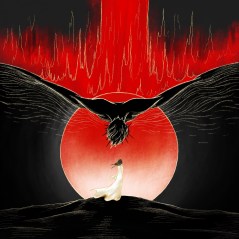 But today, I want to focus on one phrase from this text about love; it is the first phrase from v. 7, “Love bears all things.” Remember, that the second great commandment is to “love your neighbor as yourself” (Mt. 22:39). Paul writes in Gal. 6:2, “Bear one another’s burdens, and so fulfill the law of Christ.” One aspect of love is to bear another’s burdens. And there is no way to make bearing others’ burdens less burdensome.
I remember when I was in seminary things were pretty hectic during my second year. I had four hours of class every morning, and to keep our finances in order, I worked each afternoon. Sarah and I had been married for about a year and a half, so I was still adjusting to being a husband who wanted to provide for his wife (even though she was the main bread-winner). I would come home tired, have dinner, study my Greek and Hebrew, and write papers. Sarah was pregnant with Elijah, and I knew that, after he was born, I would have to cut back on my hours at work in order to take care of him and keep up with my studies. But I didn’t know how we would make everything work. The stress of it all was weighing down on me. So, one day, I went to one of my professors and I spent the better part of an hour unloading all my worries on him. And do you know what he did? He listened.
He didn’t say much. When he did speak, it was to let me know that he was hearing what I said as I continued to spew about my situation. When I was done, he didn’t give me extra time to turn in homework for his classes. He didn’t tell me about how he went through a similar time in his life. And he didn’t give me advice about how to manage my time better. He didn’t really do anything but hear me out.
So, when I left his office, nothing had changed. In fact, things should have probably been worse because I had taken a precious hour that I could have used for studying. But I left his office feeling better. You know why? Because, in a real sense, he was now carrying some of my burden. He loved me and allowed me to transfer my stress to him.
Maybe, you have had a similar experience – either unloading your own or listening to someone else’s burdens. Maybe you have come away from a conversation with someone who is facing all sorts of difficulties in their life, you come away from that conversation and you feel tired – not physically, but emotionally or spiritually. You feel tired because you are sharing that person’s burdens. This is an act of love that has cost you something, but it has truly helped the other person.
 Which brings me back to where we started about looking for ways to make life easier. Too often, we try to make our own lives easier by avoiding the Scriptural command to bear one another’s burdens. But this is unloving, and it is, in fact, sinful. I can think of three tricks we commonly use to avoid bearing the burdens of others, but I am sure there are more (if you know more, let me know after the service).
The first trick is to simply avoid being around people. We don’t let people have access to us. And I’m not only talking about avoiding certain people who seem to always be unloading on us. We often go farther and avoid meaningful interactions with others as much as possible. We have schedules that are so full that we are running from one thing to the next. Even though you may be around people every waking moment, there is not really time or occasion for others to have a real conversation with you. So, the first trick is avoidance.
The second trick is, when other people start to tell us their troubles, we may listen for a bit, but then we start telling them our troubles. We interrupt and tell them how bad things are for us. It can almost become a contest about who has the most stress. And this trick is simply building a wall between us and their problems. I’ll talk about myself and my problems so I don’t have to deal with you and your problems. So, the second trick is putting a barrier between us and others’ burdens.
The third trick is the most dangerous because we think it is pious or virtuous. We give advice. We listen for a bit, and then we say, “Have you considered doing this?” Or even worse, we tell them what to think. “You should look at this as an opportunity for God to teach you something.” That may be right and correct and our advice might be really good – which is why we think it is so pious. But don’t miss the point, it deflects their burden from us back on to them. It can leave the person more deflated and more burdened, and we leave the conversation thinking we’ve done something good and loving. But we aren’t bearing their burden. And remember, if they wanted your advice… they would’ve asked for it.
Avoidance, barriers, and advice – all tricks we use to avoid bearing another’s burdens.
 We heard about love in action in our Gospel lesson (Lk. 18:31-43). Jesus encountered blind Bartimeaus (Mk. 10:46). Bartimaeus cries out to Jesus, “Have mercy on me!” Jesus pauses on His important trek up to Jerusalem, where He is going to save the whole world. He stops to listen to Bartimeaus asking him, “What do you want me to do for you?”Bartimeaus says that he wants to receive his sight. And Jesus doesn’t start talking about Himself and the problems He is about to face even though Jesus’ burden is going to be much more than blindness. And Jesus doesn’t give advice – and if anyone is in a position to give advice it’s Jesus. Jesus simply says, “Receive your sight, your faith has made you well.”By doing this, please note, Jesus recognizes that Bartimaeus’ blindness is bad.
Now, at this point, insert whatever problem you have, or the problems of people who are unloading their burdens on you – high blood pressure, diabetes, cancer, fatigue, depression, being bullied – these things are not natural and are a product of the devil. Unlike Jesus, we can’t simply say the word and make things better. But we can, like Jesus recognize and acknowledge the brokenness in people’s lives and say, “I’m sorry. I’m sorry you’re going through this.” Another way to show love to those who share their burdens with us is to simply listen. Listen, and ask, “How can I pray for you?” Then, pray for them then and there. Pray for them and say, “May Jesus bless you.”

Jesus not only healed Bartimaeus’ blindness, Jesus bears his burden completely. Jesus was on His way to Jerusalem where He would bear all mankind’s burdens, all your sins and iniquities. He would suffer all the consequences of sin in this world as He hung in darkness on the cross. And He carried all those burdens, every last one, to the grave. But He wouldn’t stay there. Because of that, because we await the Resurrection, we know that whatever we suffer in this world is temporary. So whatever burdens you bear – whether they are yours or others’ – they will disappear when our Lord returns.
You see, the love of Jesus has already and continues to bear all things – all your sins, all your iniquities, all your transgressions, all your griefs, all your cares, all your sorrows. And this becomes our focus for the next six weeks. Amen.
The peace of God, which surpasses all understanding, will guard your hearts and minds in Christ Jesus. Amen.
 They see a bear eyeing them and licking its chops. Sven looks over at Ole who is bent over tying his shoelaces. Sven says, “Ole, do you really think you can outrun a bear?” Ole pulls the laces tight, stands up, sniffles and says, “I don’t have to outrun the bear. I only have to outrun you.” Salvation is not like that. You aren’t saved because you are better than most people. You are saved by grace alone through faith alone by Christ alone.
 16 For we did not follow cleverly devised myths when we made known to you the power and coming of our Lord Jesus Christ, but we were eyewitnesses of his majesty. 17 For when he received honor and glory from God the Father, and the voice was borne to him by the Majestic Glory, “This is my beloved Son, with whom I am well pleased,” 18 we ourselves heard this very voice borne from heaven, for we were with him on the holy mountain. 19 And we have the prophetic word more fully confirmed, to which you will do well to pay attention as to a lamp shining in a dark place, until the day dawns and the morning star rises in your hearts, 20 knowing this first of all, that no prophecy of Scripture comes from someone’s own interpretation. 21 For no prophecy was ever produced by the will of man, but men spoke from God as they were carried along by the Holy Spirit.
 You see, it’s not just the world and things outside of you that are a dark place. Your heart also has a darkness that needs the light of God’s Word. Peter doesn’t use the normal word for ‘dark’ here. In fact, the word that gets translated here as ‘dark’ is the only time in all the Scriptures where this word gets used. When I looked Greek the word up, the first definition is ‘squalid’ which is a word I don’t think I’ve ever used in normal conversation. So, I looked up ‘squalid’ and it means this, ‘foul and repulsive from a lack of care; neglected and filthy.’
 nearsighted that he is blind, having forgotten that he was cleansed from his former sins. Therefore, brothers, be all the more diligent to confirm your calling and election, for if you practice these qualities you will never fall. For in this way there will be richly provided for you an entrance into the eternal kingdom of our Lord and Savior Jesus Christ.”
 Imagine Matthew in this storm. Remember, Matthew – unlike Andrew and Peter and James and John – Matthew wasn’t a fisherman. He was a tax collector when Jesus called him to be a disciple (Mk. 2:14). Typically, he had hands stained from handling coins all day not clammy, saltwater-drenched hands. Matthew was used to sitting in a tax booth not on the rail of a boat bailing water so that it doesn’t sink. Matthew had seen Jesus rebuke demons, rebuke sickness, and rebuke the Pharisees and religious elite. But now, in the middle of a storm that threatened Matthew’s life, the Man who had called him saying, “Follow Me,”lay peacefully sleeping and undisturbed in the back of the boat on a cushion (Mk. 4:38).
 f that storm, in the middle of the wind and the saves and terror, Jesus asked the disciples, “Why are you afraid, O you of little faith?” This question from our Lord’s lips confronts us today. What are you afraid of? The devil may be behind the things you fear. Satan may want you to enter “emergency mode,” “crisis mode,” “God doesn’t care and is sleeping mode.” The devil wants nothing more than to rob you of the peace and security that comes from being a child of God. So repent. The devil is very cunning and dangerous, but he is also totally and completely predictable.
 If you want to know what God thinks about you, you need look no further than the cross. While you were still weak, at the right time, Christ died for you (Ro. 5:6,8). If you are going through a storm of sickness, a storm of family strife, or whatever it might be, look at it through the lens of Christ crucified and risen for you. And know that God is in control and He will never leave you nor forsake you.
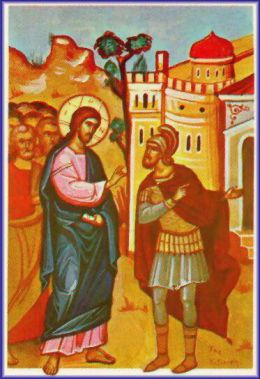 5 When he had entered Capernaum, a centurion came forward to him, appealing to him, 6 “Lord, my servant is lying paralyzed at home, suffering terribly.” 7 And he said to him, “I will come and heal him.” 8 But the centurion replied, “Lord, I am not worthy to have you come under my roof, but only say the word, and my servant will be healed. 9 For I too am a man under authority, with soldiers under me. And I say to one, ‘Go,’ and he goes, and to another, ‘Come,’ and he comes, and to my servant, ‘Do this,’ and he does it.” 10 When Jesus heard this, he marveled and said to those who followed him, “Truly, I tell you, with no one in Israel have I found such faith. 11 I tell you, many will come from east and west and recline at table with Abraham, Isaac, and Jacob in the kingdom of heaven,12 while the sons of the kingdom will be thrown into the outer darkness. In that place there will be weeping and gnashing of teeth.” 13 And to the centurion Jesus said, “Go; let it be done for you as you have believed.”And the servant was healed at that very moment.
 Hell is the place where people are given over to their anger. It is full of people whose pride has lead them to think that God owes them something because they are so good and righteous or because they belonged to the right club or had the right lineage. But they are wrong and so they are in torment stewing in their anger against God and there is no relief or release. All of that is the gnashing of teeth. So, when Jesus speaks of what hell will be, He gives a picture of darkness, sorrow, and anger.
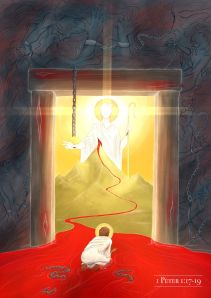 He couldn’t do it because he didn’t have the strength or authority. The centurion’s truest strength was his submission and faith that Christ’s authority far surpassed his own. So, the centurion in faith and hope asks Jesus to merely speak the word, and his servant is healed at that very moment.
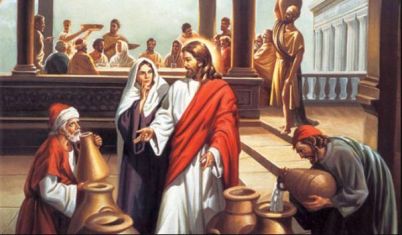 6 Now there were six stone water jars there for the Jewish rites of purification, each holding twenty or thirty gallons. 7 Jesus said to the servants, “Fill the jars with water.”And they filled them up to the brim. 8 And he said to them, “Now draw some out and take it to the master of the feast.”So they took it. 9 When the master of the feast tasted the water now become wine, and did not know where it came from (though the servants who had drawn the water knew), the master of the feast called the bridegroom 10 and said to him, “Everyone serves the good wine first, and when people have become drunk, then the poor wine. But you have kept the good wine until now.” 11 This, the first of his signs, Jesus did at Cana in Galilee, and manifested his glory. And his disciples believed in him.
 Jesus tells the servants to fill the jars with water, and they fill them up to the brim. And, at Jesus’ command, they take some of it to the master of the feast. The master tastes it, and it isn’t water anymore. It is wine. The master didn’t know. The guests didn’t know. Only Jesus, Mary, the servants, and the disciples know that this had been water miraculously turned into wine.
 But, dear saint, that is precisely the point. God is willing to give His gifts and mercy anyway. This isn’t a license to go on and sin because God will forgive you anyway. In fact, you are to abhor what is evil and hold to fast to what is good. Love one another. Outdo one another in showing honor (Ro. 12:9-11). And do all of that as you remember that God gives better than you deserve or appreciate.
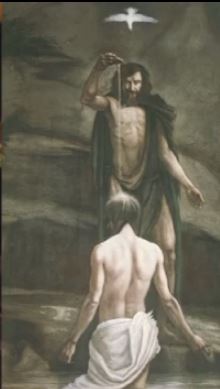 13Then Jesus came from Galilee to the Jordan to John, to be baptized by him. 14John would have prevented him, saying, “I need to be baptized by you, and do you come to me?” 15But Jesus answered him, “Let it be so now, for thus it is fitting for us to fulfill all righteousness.”Then he consented. 16And when Jesus was baptized, immediately he went up from the water, and behold, the heavens were opened to him, and he saw the Spirit of God descending like a dove and coming to rest on him; 17and behold, a voice from heaven said, “This is my beloved Son, with whom I am well pleased.”
 To that very place and in that very context comes Jesus Christ, our Lord. And what is He coming to do? He’s coming to be baptized!
 Christ’s glory, His exultation is to call you and chose you who are not wise according to worldly standards, not powerful, not of noble birth. Instead, He is exalted to choose us who are foolish, weak, and despised in the world (1 Cor. 1:26-31).
 3 When Herod the king heard this, he was troubled, and all Jerusalem with him; 4 and assembling all the chief priests and scribes of the people, he inquired of them where the Christ was to be born. 5 They told him, “In Bethlehem of Judea, for so it is written by the prophet:
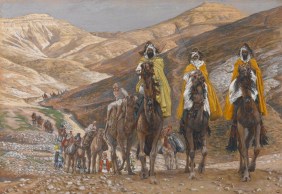 Ouija boards, etc. – all things that the Scriptures consistently forbid because they are all demonic, satanic practices. So, again v. 1, “Now after Jesus was born in Bethlehem of Judea in the days of Herod the king, check this out, magi from the east came to Jerusalem.” It’s absolutely shocking. These are the first Gentile (non-Jewish) people in all the Gospels to seek Jesus, the Son of God.
 The magi take leave of Herod. The star appears again to lead them (Had it disappeared for a time?). They see it and “rejoice with exceedingly great joy.” And they find what they’ve been looking for, what they have been traveling for months to find. There, in a house, is the infant Jesus Christ, God in the flesh. And they worship the Child who will grow up and die on the cross for them. But then, notice, they have to be warned in a dream to not return to Herod. And they return to their country by another way.
 And always remember, that God doesn’t give up on you either. Through the same Scriptures, God has led you here to Himself. He hasn’t used a something as uncertain as star or a dream. He has led you with something more certain (2 Pet. 1:19) – His Word. He has led here to receive His mercy, grace, and forgiveness. He leads you now to His altar to receive His very Body and Blood given and shed for the forgiveness of your sins. Leave your sins behind. Come, taste, and see that your God is merciful and gracious, full of steadfast love and righteousness. Amen.
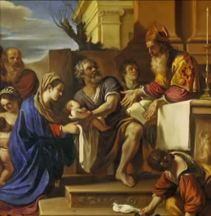 And he came in the Spirit into the temple, and when the parents brought in the child Jesus, to do for him according to the custom of the Law, 28 he took him up in his arms and blessed God and said,
 This forty-day-old Jesus is going to bring a division between believers and unbelievers. Simeon, inspired by the Holy Spirit, says this division comes because what a person does with Jesus will reveal the thoughts of their heart. The division falls in one of two ways: many will oppose and reject Jesus to their fall, to their ruin, and to their damnation, and many will trust in Him to their resurrection and eternal life.
 There can be, and often is, a conflict between how God sees you in your reborn spirit and how you see yourself in your soul – your thoughts, and emotions. You have probably experienced this. Part of you, your spirit, wants to live a certain way. You want to keep God’s commands, you want to live a God-pleasing life, you want to love your neighbor, etc. But part of you, your soul, doesn’t. Your soul would rather make sure you are comfortable and doesn’t really care about what God has commanded or what would benefit others. Paul talks about this conflict in Ro. 7(:7-25)where he wants to do good, but instead he keeps doing the sinful thing that he hates.
 The artist Michelangelo (not the Ninja Turtle) used to say that when he looked at a hunk of marble, he didn’t see big rock. Instead, he saw the sculpture that he was going to free from the rest of the rock that he would eventually chip away. He would say that he wasn’t creating a sculpture, he was just getting rid of all the rock that wasn’t part of the sculpture. That is somewhat the idea in the verse from Hebrews about the Word of God doing the work of dividing soul and spirit.
 Pastorsamwise
You must be logged in to post a comment.