Holy Deliverance – Sermon on Luke 18:31-43 for Quinquagesima

Listen here.

Luke 18:31-43

31 And taking the twelve, he said to them, “See, we are going up to Jerusalem, and everything that is written about the Son of Man by the prophets will be accomplished. 32 For he will be delivered over to the Gentiles and will be mocked and shamefully treated and spit upon. 33 And after flogging him, they will kill him, and on the third day he will rise.” 34 But they understood none of these things. This saying was hidden from them, and they did not grasp what was said.

Jesus Heals Bartimeaus35 As he drew near to Jericho, a blind man was sitting by the roadside begging. 36 And hearing a crowd going by, he inquired what this meant. 37 They told him, “Jesus of Nazareth is passing by.” 38 And he cried out, “Jesus, Son of David, have mercy on me!” 39 And those who were in front rebuked him, telling him to be silent. But he cried out all the more, “Son of David, have mercy on me!” 40 And Jesus stopped and commanded him to be brought to him. And when he came near, he asked him, 41 “What do you want me to do for you?” He said, “Lord, let me recover my sight.” 42 And Jesus said to him, “Recover your sight; your faith has made you well.” 43 And immediately he recovered his sight and followed him, glorifying God. And all the people, when they saw it, gave praise to God.

In the name of Jesus. Amen.

Christ is on His way to Jerusalem. He plainly says that He is going there to fulfill everything that was written about Him in the Scriptures. He is going there to be delivered to the Gentiles, mocked, shamefully treated, spit upon, flogged, and killed. But on the third day He will rise. Jesus says this plainly and clearly. But notice how carefully Luke records the reaction of the disciples. They understood none of these things. The saying was hidden from them. And they did not grasp what was said. That’s the long, emphatic way to say, “They didn’t get it.” The text then notes that Jesus’ journey to Jerusalem takes Him through Jericho where a crowd was waiting to meet Him.

Now, Christ’s name in Greek is Ἰησοῦς and it gets brought into English as ‘Jesus.’ But if you said Jesus’ name in Hebrew it would be יְהוֹשׁוּעַ, and when that gets brought into English it is ‘Joshua.’ If I asked you what city most goes with the name Joshua, I would bet you would say Jericho. It was Joshua who “fit [sic.] the battle of Jericho.” When Joshua went to Jericho, it was to destroy and kill. Joshua and the Battle of JerichoJoshua lead God’s people marching around those thick, fortified walls for six days, and on the seventh day, the people shouted and “the walls came a-tumbilin’ down.” Afterward, they burned the fallen rubble and reduced the city to ashes.

But Joshua wasn’t done yet. He stood over the smoke and ruins of that city and pronounced a curse, “Cursed before the Lord be the man who rises up and rebuilds this city, Jericho. At the cost of his firstborn shall he lay its foundation and at the cost of his youngest son shall he set up its gates” (Josh. 6:26). Those ruins were to be a perpetual sign of God’s displeasure with the wicked inhabitants of that city. But about 500 years later, a man named Hiel, began to rebuild Jericho. And you don’t have to guess what happened. The foundation of the city was laid, and his firstborn died. And when the gates were raised, his youngest son died (1 Kgs. 16:34). It should serve as a warning to us not to mess around with what is cursed by God.

We need to remember that, as blessed as our country is, we live in a modern-day Jericho. Most people do not believe in God. Today, sins that would have caused our parents to blush with shame are celebrated. People worship their bank accounts, their careers, and their livelihood. In our land, nearly one million babies are sacrificed in abortions every year. But, while that should cause us to weep and mourn, how many more are sacrificed spiritually?

Kids are programmed by parents to aim for success in this life by getting good grades, playing hard in sports, and finding a good job. None of those things are evil by themselves. But how often are those things promoted to the neglect of teaching those children the fear and love of God? What good is any of that if those same children end up in hell? Yes, parents, give your children those good things, but make sure are secondary to faith in Jesus, the true, merciful God. No, you may not be trying to rebuild Jericho, but too often Christian parents are raising their children on cursed foundations that are protected only by cursed gates.

Repent. Repent, and know that if you are feeling the curse of your sins that the New Joshua draws near to Jericho.

The first Joshua came to curse and destroy the sinful city of Jericho, but Jesus, the new Joshua, comes to bless. Joshua came to hurt, but Jesus comes to heal. Joshua came to march around Jericho, but Jesus came to walk straight through it. Jesus came to rescue from the ruins and curse of sin and bring His holy deliverance into His heavenly kingdom. That holy deliverance will come as His own body is wrecked and the curse of our sin is laid upon Him.

So, the Lamb of God travels through Jericho. It would make sense if Jesus went through the city quickly passing by beggars on the street. Jesus is marching to do something bigger than to simply help a miserable beggar. And that is exactly what seems to be in the minds of some who are walking with Jesus. They tell one of those beggars to sit down and leave Jesus alone. But even though His eyes focused on the cross, Jesus doesn’t pass by this blind man. Jesus stands still, and He stands still to deliver holy mercy.

It is as though Jesus can’t help Himself. He never ignores cries for mercy because He is mercy embodied. Jesus stands still and tells them to bring the blind beggar to Him. And notice how Jesus treats the blind man with dignity and respect. Jesus knows he can’t see, but He goes to the blind man’s level and gives him something for his ears. He asks, “What do you want Me to do for you?” The blind man answers, “Lord, let me recover my sight.” And Jesus delivers him from his blindness.

This morning, Jesus passes through your Jericho. Christ has heard your cries for mercy too. In fact, this same scene played out today just as it does every Sunday you gather here. We beggars come into the presence of Jesus, and we cry for mercy. Jesus doesn’t turn away. Instead, He hears you. He stops and stands still. You confessed your sins, you cried out for mercy, and Christ answered you by absolving you.

Notice what Jesus does not say to the blind man. Jesus does not say, “I have made you well and restored your sight.” Instead, Jesus says, “Your faith has made you well,” or better, “Your faith has (lit.) saved you.” Yes, it was Jesus who saved him, but Jesus points the man to his God-given faith.

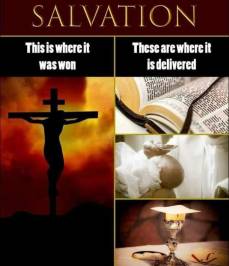
Remember, dear saints, that your salvation was won and purchased by Jesus on the cross some two-thousand years ago, but your salvation is not distributed there. Thank the good Lord that it isn’t distributed there because you and I weren’t there. Even if we were to go to Jerusalem today, we couldn’t be at the foot of the cross because there isn’t anything there anymore. Salvation Won and DeliveredOn the cross, Jesus did everything for your salvation. On the cross, Jesus won the victory over sin, death, and the devil. But God delivers what Jesus did on the cross to you here and now. God delivers the mercy, grace, life, and salvation of Jesus through the preaching of His Word (Ro. 10:17), through your Baptism (Ro. 6:3-11), and through the Lord’s Supper (Lk. 22:14-20). God brings His holy deliverance to you through all those things, and as you receive those gifts of God through faith, you are saved.
Finally, notice the blind man’s response. He follows Jesus. The blind man leaves his Jericho home and follows Jesus to Jerusalem. As we begin Lent this Wednesday, let us do the same as we follow Jesus by listening to His Word. Let us abandon our cursed state and follow Jesus to Jerusalem this Lent. He leads, and we follow with grateful hearts. Let Jesus lead you to Jerusalem, to the cross, and to the empty tomb on Easter. Amen.

The peace of God, which surpasses all understanding, will guard your hearts and minds in Christ Jesus. Amen.

Holy Rest – Sermon on Hebrews 4:9-13 for Sexagesima

Listen here.

Hebrews 4:9-13

9 So then, there remains a Sabbath rest for the people of God, 10 for whoever has entered God’s rest has also rested from his works as God did from his. 11 Let us therefore strive to enter that rest, so that no one may fall by the same sort of disobedience. 12 For the word of God is living and active, sharper than any two-edged sword, piercing to the division of soul and of spirit, of joints and of marrow, and discerning the thoughts and intentions of the heart. 13 And no creature is hidden from his sight, but all are naked and exposed to the eyes of him to whom we must give account.

In the name of the Father and of the Son and of the Holy Spirit. Amen.

This text has two things that, at first glance, don’t seem to go together – striving and rest. Striving is effort. Hebrews 4_13 - God's RestStriving means that you work hard because you aren’t sure if you are going to make it. That’s why you strive. And rest? Well, rest is rest. It’s the opposite of striving. Typically, striving and rest only go together when the later follows the former. People strive so they can go home and rest for the evening or the weekend, or they work for decades so that eventually they can retire and rest. But that is only how things are in this fallen world.

Christians rest from their works just as God did from His. Genesis 1-2 records how God created all things. Each day of creation follows a pattern. God spoke and created light, and there was evening and morning day one. God spoke and created the sky, and there was evening and morning day two. God spoke and created land, seas, and plants, and there was evening and morning day three. God spoke and created the sun, moon, and stars, and there was evening and morning day four. God spoke and created birds and fish, and there was evening and morning day five. God spoke and created animals and people, and there was evening and morning day six. The pattern breaks there. But Scripture does tell us about the seventh day.

Genesis 2:1-3 says, “Thus the heavens and the earth were finished, and all the host of them. And on the seventh day God finished His work that He had done, and He rested on the seventh day from all His work that He had done. So God blessed the seventh day and made it holy, because on it God rested from all His work that He had done in creation.” Notice that two things are missing. First, God doesn’t speak. God is silent on the seventh day because He is done creating. And second, there is no mention of evening and morning. In the text, the seventh day, the holy day of rest, doesn’t end.

God rested from His work. God didn’t rest because He was tired. He rested because everything was completed. The beautiful thing that happens here in Hebrews is the declaration that you, Christian, enter into the same eternal, holy Sabbath rest that God had on that seventh day (Heb. 4:10). But what works do you rest from?

There are two options. Some might suggest that it is the work you have to do while living in a fallen world. But that rest only comes after you die, and you only have to go back to Heb. 4:3 to see that the Scriptures say believers have already now entered into God’s rest. So, it can’t be the rest that comes only after death. Instead believer, you rest from the work of self-justification and self-salvation (Ro. 3:20 and Eph 2:9).

Hebrews 4_12 - Word of God Sharp SwordChristian, you have entered into the rest of God. You find your rest as you simply allow God’s Word to do its work in your heart as it pierces to the division of soul and spirit and discerns the thoughts and intentions of your heart. That Word of God convicts you of your sin revealing that your thoughts, words, and deeds are sinful in God’s sight. And that same Word invites you to faith in Christ who says, “Come to Me, all who labor and are heavy laden, and I will give you rest,” or better translated, “I will rest you” Mt. 11:28).

Now, none of this is to say that Christian life is easy. No, the Christian life is hard work and full of danger. We all need to realize that we could stumble and fall away from the faith. In fact, that is what the first eight verses of Hebrews 4 warn us about. God’s people, the Israelites, did not enter the rest of the Promised Land because they did not believe God. They fell away. They were the soil on the path, the rocky soil, and the thorny soil (Lk. 8:4-15). They failed to enter into God’s rest. Scripture is very clear about the dangers of falling away.

We need to hold fast, keep our eyes on Jesus, and not stray away. That is striving. But that striving is only possible because of the rest that has already been won for us. It is a rest that has already been given by God. So, the Christian life can be a restful striving.

Your rest has already been won by Jesus. Jesus came into the world to do the work that you and I could not do. He came to battle against sin, death, and the devil. Jesus’ faithful striving led Him to the cross where He endured the wrath of God because of our sin. Jesus faithfully walked all the way to the cross for you. Jesus Rested on the SabbathAnd on a Friday, the sixth day from the cross, Jesus cried out as He died, “It is finished” (Jn. 19:30). His striving for your salvation was done. Jesus was laid to rest in a tomb on the Sabbath, the seventh day because all His work to redeem you was complete. And Christ rises on the first day of the week, the first day of the new creation.
Now, Jesus is ascended to His and your heavenly Father. So when you strive, you do it with Jesus on your side. Jesus knows your weaknesses and fears. And because of His work, He pours out His forgiveness every moment of every day. The rest He won and purchased for you is guaranteed, perfect, and stored up for you ready to be revealed at the Last Day (1 Pet. 1:5). You can rest because of Jesus.

Bella, today you are Baptized. Today, you have been joined to Jesus your Savior (Ro. 6:3-11) and have been clothed with Christ (Gal. 3:27). That means, dear Bella, that today you have entered into your rest with God. Jesus has done absolutely, positively everything that needed to be done for your salvation. You are wholly and completely given over into holy rest.

Baptism 2Bella, and all you saints, because you and I are always tempted to think there is something left for us to do to be saved, God desires that you continue to be pointed to the holy, eternal rest that Christ has given you. Here, assembled in God’s presence with your brothers and sisters in Christ, God reminds you of the holy rest you have now. There is nothing left for you to do. Every time you come here, you receive that rest by listening to God’s life-giving Word and letting that Word do God’s work in you.

That is why we use our liturgy. It is one of the best ways to deliver the holy rest that comes only through God’s Word. We enter God’s presence by hearing His Word and singing His praise. We confess our sins and receive His forgiveness. We hear His Word and confess our faith that is taught in that Word. We receive instruction from that Word and pray to Him as His beloved children. We are fed Christ’s body and blood for the forgiveness of our sins. And we receive His blessing and benediction as we depart so we can carry that blessing with us through the week.

Bella, and all you saints, keep listening to the Word faithfully and diligently as it is preached and enacted in the service because your present access to God’s eternal, holy rest depends upon that Word. And that Word will never fail you. Amen.

The peace of God, which surpasses all understanding, will guard your hearts and minds in Christ Jesus. Amen.

Holy Work – Sermon on Matthew 20:1-16 for Septuagesima

Listen here.

Matthew 20:1-16

1 “For the kingdom of heaven is like a master of a house who went out early in the morning to hire laborers for his vineyard. 2 After agreeing with the laborers for a denarius a day, he sent them into his vineyard. 3 And going out about the third hour he saw others standing idle in the marketplace, 4 and to them he said, ‘You go into the vineyard too, and whatever is right I will give you.’ 5 So they went. Going out again about the sixth hour and the ninth hour, he did the same. 6 And about the eleventh hour he went out and found others standing. And he said to them, ‘Why do you stand here idle all day?’ 7 They said to him, ‘Because no one has hired us.’ He said to them, ‘You go into the vineyard too.’ 8 And when evening came, the owner of the vineyard said to his foreman, ‘Call the laborers and pay them their wages, beginning with the last, up to the first.’ 9 And when those hired about the eleventh hour came, each of them received a denarius. 10 Now when those hired first came, they thought they would receive more, but each of them also received a denarius. 11And on receiving it they grumbled at the master of the house, 12 saying, ‘These last worked only one hour, and you have made them equal to us who have borne the burden of the day and the scorching heat.’ 13 But he replied to one of them, ‘Friend, I am doing you no wrong. Did you not agree with me for a denarius? 14 Take what belongs to you and go. I choose to give to this last worker as I give to you. 15 Am I not allowed to do what I choose with what belongs to me? Or do you begrudge my generosity?’ 16 So the last will be first, and the first last.”Laborers in the Vineyard getting paid

In the name of Jesus. Amen.

To get at the main point of this parable, I’m going to borrow an analogy. Imagine two waitresses working at a small cafe by themselves. Suddenly, a man brings in eighty of his family members to celebrate an occasion, and those two waitresses have to serve this massive, unexpected crowd. One of the waitresses works hard the whole time. She does her best to get all the drinks and orders. She puts in the effort to make sure all the plates are served to the correct spots. She attempts to keep the glasses full of refills. She promptly comes to wipe up a spill. And even though she is flustered, she does all of this with a friendly smile on her face.

The other waitress is angry about the whole ordeal. She’s mad that such a large party didn’t call ahead to let them know they were coming so the restaurant could be properly staffed. She grumbles when extra napkins are requested. She intentionally lets some of the food sit for several minutes after it was prepared so that it isn’t hot when it is delivered to the table. And she interacts with the party as little as possible and pretends not to hear certain requests. This second waitress actually made the evening more difficult for the first, so difficult, in fact, that it would have been easier for the first waitress to do the whole thing herself.

When the party is ready to leave, the man who brought everyone in walks up to both waitresses and hands each of them a handsome 30% tip. Which of the two is going to complain? Right. The first. She would have preferred for the man to give her a 15 or even 10% tip so long as the second waitress got stiffed. She would rather get less if it meant that all her effort was recognized and appreciated.

Jesus Laid in the Tomb 1Dear saints, welcome to the kingdom of heaven. In the kingdom of heaven, you are never rewarded based on your works or efforts because, if you received what you deserved, you would be sent straight to hell. In the kingdom of heaven, there are no formulas or set, hourly wages. You are given to based solely on the merits of Christ’s work for you. He is the only one who can say that He bore the burden of the day and the scorching heat. His atonement, His mercy, His grace is what you get, nothing less. Because of God’s unmerited, unearned, undeserved, unconditional love freely given to you for the sake of Christ, you are an heir of the kingdom of heaven. God be praised!

That’s the main point of the parable. The sermon could end here, but it won’t. There are other points in the parable. Yes, they are minor points, but I have four that I know will be helpful and comforting to you today. So, I’d like to draw them out a little bit. And these points all come from a small phrase in the parable from v. 6that never jumped out at me before. Notice in that verse that when the master goes out at the eleventh hour, just before the sun begins to set and working day is ending, the master finds more people standing there in the marketplace waiting to be hired and asks them, “Why do you stand here idle all day?” Did you catch it?

“All day.” It means the guys hired at the very end of the day had been there all along. I can’t tell you how many times I’ve studied, taught, and preached on this parable, but I kept missing that phrase. I had figured these guys were lazy. I thought maybe they slept in, maybe they were trying to avoid working during the hot part of the day. But that’s not the case! They were there early in the morning, at dawn, when the master first went out to hire workers. And they were there at the third and the sixth and the ninth hour when he came. Most people would have given up and gone home around the sixth hour (which is noon). But no. When the master asks why they have been standing there idle all day, they say, “Because no one has hired us.”

Here’s the first point we can draw from that: no one who got paid their denarius at the end of the day decided on their own to go work for the master. Every one of them was called and sent only by the initiative of the vineyard owner. No one volunteered themselves for labor when he came, and no one went to knock at his door to ask, “Would you hire me to work in your vineyard?” Nope. good-friday-jesus-comes-to-rescueEach of them was called, and each of them was called at the precise time the owner called them. He went and retrieved them.

So, if you are a worker in the Lord’s vineyard, if you have been called into the service of the kingdom of heaven, i.e. if you are a Christian, you were called by God. Period. He came. He gave you work to do. You didn’t seek to work for Him. God called you into His service when it pleased Him. Some, God brings in early and has them work the whole day, but for some reason – a reason known only to God – He brings others in a later, at the third, sixth, ninth, and eleventh hour. If it had pleased the master to hire all of them at dawn, he could have.

Which brings us to second point. if you think that you are one of the early hires, if you have been a Christian your whole life and faithfully carried out your vocations, if you have been tempted at times to grumble for all your hard work or tempted to pat yourself on the back for what you have accomplished, be careful. Remember that it was not you who offered up yourself to work. You were called by the grace of God. “By grace you have been saved through faith. And this is not your own doing; it is the gift of God, not a result of works, so that no one may boast. You are his workmanship, created in Christ Jesus for good works, which God prepared beforehand, that you should walk in them” (Eph. 2:8-10).

Know this. God is pleased with your work. He designed all those works for you, and He laid them all out before you to serve those who needed God’s work offered through your hands. You will be rewarded, and you will be rewarded far better than you deserve.

The third point: Maybe you think that you are one of those who were called to work late. Maybe you are saddened by how much time you wasted pursuing a life of pleasure for yourself. If you think, “How much more good could have I done if I hadn’t been so foolish? If I had been studying Scripture earlier, I could have been of better service.” Dear saint, don’t get discouraged. easte-jesus-brings-us-out-of-deathGod had a reason for bringing you in when He did. Trust His timing. He brought you into His vineyard exactly when He wanted you.

The fourth point is also along those lines, and I know it will be comforting to many of you, so listen up! If you have been praying for someone who is not in God’s vineyard, or if you have been aching for someone who was once in the vineyard but left – maybe it is a friend or relative. If it seems like your prayers and efforts have been wasted, take courage. Don’t stop praying for them. Yes, God calls some early, but some aren’t called into the vineyard until later. Some are called so late that they only arrive in time to get paid which means they do no more than receive their gracious reward. Be comforted. God has His own timing. Keep praying.

One more thing. I know the most common way the different hours that the workers get hired is understood to be a time in each individual’s life. When it is interpreted this way, the workers hired first represent people who have been Christians their entire lives. They were given faith in baptism and continued in that faith until they died. Those who were hired at the third, sixth, and ninth hour are commonly viewed as those who came to faith later in life – as youth, adults, and seniors. And those hired at the eleventh hour are the deathbed converts. That seems to be a legitimate way to understand that detail of the parable, in fact, that is how this sermon has interpreted that detail up to now.

However, remember this parable is about the kingdom of heaven. 1 John 2:18, written almost two-thousand years ago, says that it is the last hour. In the book of Revelation, we get repeated pictures of the saints who have died and entered into glory, and they are still working by praying for us (Rev. 6:9-11). Also, consider Hebrews 11 that uses the faith and deeds of the Old Testament saints to encourage us. Then, Hebrews 12[:1-2] gives us a picture of the great cloud of saints surrounding us and cheering us on to keep walking in faith. And Revelation 14:13 says that those who die in Christ are blessed because they now rest from their labors, but – and this is the point – their deeds follow them.

Considering all of that, none of us can claim to be those who worked through the heat of the day. Rejoice that God is merciful and has and will continue to give to you far better than you deserve. But also, be encouraged because this means that your labor in Christ is never wasted and is valuable work that lives on after you are gone. Think of the labor done by the authors of Scripture – Moses, David, Isaiah, Matthew, John, and Paul– their labor continues to reap results for the kingdom of God today.

Great Multitude with white robes washed in the blood of the lambAnd it isn’t just their work. Your work, done as a Christian, is holy work. Fathers and mothers, the work you do day in and day out will reap results in the lives in your children, grandchildren, and great-great-great-great grandchildren if Christ tarries. But it will also reap results in the lives of others whom you will never meet because you have shined the light of Christ to those you have met, and they will shine that light elsewhere. You Sunday school teachers, you who are praying for and encouraging our youth, you trustees who are caring for our facility, and everyone who is here encouraging another person is offering holy work that will be used by God until Christ returns. Everyone has a story of being impacted by someone else long after that person has entered into glory. So, take heart, and keep working. The labor that God has called you to is fruitful, holy work. It is holy work that God will multiply and expand. For that, God be praised. Amen.

The peace of God, which surpasses all understanding, will guard your hearts and minds in Christ Jesus. Amen.

Resurrection Mode – Sermon on Matthew 17:1-9 for the Transfiguration of Our Lord

Listen here.

Matthew 17:1-9

1 And after six days Jesus took with him Peter and James, and John his brother, and led them up a high mountain by themselves. 2 And he was transfigured before them, and his face shone like the sun, and his clothes became white as light. 3 And behold, there appeared to them Moses and Elijah, talking with him. 4 And Peter said to Jesus, “Lord, it is good that we are here. If you wish, I will make three tents here, one for you and one for Moses and one for Elijah.” 5 He was still speaking when, behold, a bright cloud overshadowed them, and a voice from the cloud said, “This is my beloved Son, with whom I am well pleased; listen to him.”

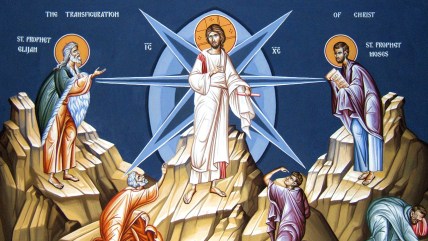
6 When the disciples heard this, they fell on their faces and were terrified. 7 But Jesus came and touched them, saying, “Rise, and have no fear.” 8 And when they lifted up their eyes, they saw no one but Jesus only. 9 And as they were coming down the mountain, Jesus commanded them, “Tell no one the vision, until the Son of Man is raised from the dead.”transfiguration-icon

In the name of Jesus. Amen.

Chapter and verse breaks are helpful for us to find the same passage of Scripture, but they can also get in the way of important context. Our text, which begins a new chapter of Matthew, starts with the phrase “And after six days….” So, before we get to the Transfiguration, we need to see what was happening that week prior to Jesus getting shiny up on the mountain.

Matthew’ context for the Transfiguration starts back in Matthew 16[:13ff]. Jesus asks the disciples, “Who do people say that the Son of Man is?” The disciples report that some say that the Son of Man is John the Baptist, Elijah, Jeremiah, or one of the prophets. But then Jesus turns the question to them, “But who do you say that I am?” and Peter has his great confession, “You are the Christ, the Son of the living God.” Jesus had been proving that all along with His miracles and teaching. So, Jesus praises and blesses Peter even while He states that Peter didn’t come up with this confession on his own. Instead, God the Father had revealed this to Peter.

Then, Matthew tells us from that time Jesus began to show His disciples that He must go to Jerusalem and suffer many things, be killed, and on the third day be raised (Mt. 16:21). Transfiguration & Christ ForsakenAnd from this point, things get a little crazy and awkward. It is almost as though Peter didn’t hear Jesus say that He would rise from the dead because Peter rebukes Jesus – the very one he just confessed is the Son of the living God. Peter says, “Far be it from You, Lord! This shall never happen to You.” It would be easy to sling mud at Peter here for telling God that what He says is going to happen won’t ever happen. But you do it all the time – more on that in a bit.

Now, when Peter confessed that Jesus is the Messiah, it meant something for him. What exactly Peter had in mind that Jesus would do as the Messiah is a bit hard to pin down. But basically, Peter figured that Jesus, the Messiah, had come to fix problems. Exactly what those problems were we can’t say with certainty. But whatever Peter had in mind, one thing is sure, it would be difficult for Jesus the Messiah and Great Problem Solver to fix those problems if He was dead.

So, Peter rebukes Jesus, and Jesus rebukes Peter. “Get behind Me, Satan! You are a hindrance to Me. For you are not setting your mind on the things of God, but on the things of man” (Mt. 16:23). And this is the sharpest rebuke Jesus ever gave an individual.

You know how it can be after you have an argument with someone. You try to avoid the other person for fear that a fight will break out at any moment. When you have to talk with them, you feel uncomfortable during every conversation. You carefully word everything in order to avoid the issue flaring up again. Imagine how Peter must have felt during those six days between this rebuke and the Transfiguration.

Now, let’s ascend the mountain. Jesus invites Peter, James, and John to come up the mountain with Him. Maybe this summons made Peter figure the whole issue was over and done with. Anyway, while they are there, Jesus is transfigured. Christ’s face shines like the sun. His clothes become white as light. Moses and Elijah appear and talk with Jesus. Luke tells us that conversation centered around Jesus’ exodus (usually translated as “departure” but the word is ἔξοδος) which Jesus was about to accomplish at Jerusalem (Lk. 9:30). In other words, they were discussing the very thing that Peter said should never happen just a week ago.

To summarize: Six days prior, Jesus told the disciples about His suffering, death, and resurrection. And Peter didn’t like it then, and Peter doesn’t like it now even in the presence of shiny Jesus. Instead, Peter likes being there on the mountain basking in Jesus’ unveiled glory. But even more than that, Peter doesn’t want Jesus to walk down that mountain, down to Jerusalem, down to be arrested, down to be tried, down to suffer, and down to die on a cross – which would appear to be a complete waste. So, Peter pips up and says, “Lord, it is good that we are here.” And the word that receives the most emphasis in Peter’s statement is ‘here.’ It is nice to be there on the mountain away from where Jesus says He will die, so Peter says, “Let’s stay here. I can build some tents so we can stay here!”

In a few weeks, we are going to hear the account of Jesus’ temptation. After Jesus resists the devil’s temptations in the wilderness, Luke tells us that the devil left Jesus to tempt Him at a more opportune time (Lk. 4:13). This, right here, is a more opportune time. In other words, this statement by Peter is a real temptation for Jesus to stay there with Peter, James, John, Moses, and Elijah on that mountain of glory.

But while Peter was still speaking, a bright cloud overshadowed them, and God the Father speaks the same words He spoke over Jesus at His Baptism, “This is my beloved Son, with whom I am well pleased.” But then the Father has one more thing to say – a command to give – “Listen to Him.” That’s not just friendly advice. The previous week, Peter had been rebuked by Jesus Himself for saying that Jesus shouldn’t die, “Get behind me Satan.” Now, Peter is rebuked again by God the Father for telling Jesus to stay away from Jerusalem and death. God says, “Listen to Him!” And the disciples hear this and are terrified.

Now, which of us does not have the same kind of weakness that Peter had? How often do you think you know better than God? You sin, but instead of confessing it for the rebellion that it is, you try to self-justify your actions. You judge God for being hard-nosed because of the things He has declared are evil. You think you know better than God how to raise your children, run your bank account, drive your car, and what to look at on the internet. Every time you complain, covet, and get angry, you are bucking God’s commands and setting yourself above God. It’s all idolatry, and we are all guilty. Stay in your lane. You don’t know better than God. You don’t get to tell God how things should be. Stay in your lane, and repent.

The voice of the Father from heaven says, “Listen to Him,” and crushes Peter’s conscience along with yours and mine.

Transfiguration - Rise and Have No FearBut here is where all of this is leading: Jesus comes to Peter, James, and John cowering in their sins and touches them. And notice what He says. He doesn’t continue to rebuke Peter. Jesus doesn’t say, “See I told you so.” Instead, Jesus says, “Rise,” the same word Jesus used when He spoke about His resurrection.“Rise, and have no fear.” Of all the things our Lord could have said, He says, “Rise, and have no fear.” Jesus is resurrecting Peter from his sin.

And Jesus stays in resurrection mode. As they are coming down the mountain, Jesus says, “Don’t tell anyone about what you saw until I rise from the dead.” There, Jesus speaks about His death. But it almost seems as though this is the first time the disciples realize Jesus says that as the Messiah that He will die and rise again. Christ will rise again.

Despite your objections; despite your idolatrous thinking that you know better than God; despite your continual, obstinate, insubordination against God; Jesus knows what you need. You need His suffering, the shedding of His blood, His death, and His resurrection. You need exactly what Jesus is here to provide for you right now. Here is His body, given for you. Here is His blood, shed for the forgiveness of all your sins. Here, Jesus gives you Himself to be your Savior. Amen.

The peace of God, which surpasses all understanding, will guard your hearts and minds in Christ Jesus. Amen.

Marvel – Sermon on Matthew 8:1-13 for the Third Sunday after Epiphany

Listen here.

Matthew 8:1-13

1 When [Jesus] came down from the mountain, great crowds followed him. 2 And behold, a leper came to him and knelt before him, saying, “Lord, if you will, you can make me clean.” 3 And Jesus stretched out his hand and touched him, saying, “I will; be clean.” And immediately his leprosy was cleansed. 4 And Jesus said to him, “See that you say nothing to anyone, but go, show yourself to the priest and offer the gift that Moses commanded, for a proof to them.”

centurion with a sick servant5 When he had entered Capernaum, a centurion came forward to him, appealing to him, 6 “Lord, my servant is lying paralyzed at home, suffering terribly.” 7 And he said to him, “I will come and heal him.” 8 But the centurion replied, “Lord, I am not worthy to have you come under my roof, but only say the word, and my servant will be healed. 9 For I too am a man under authority, with soldiers under me. And I say to one, ‘Go,’ and he goes, and to another, ‘Come,’ and he comes, and to my servant, ‘Do this,’ and he does it.” 10 When Jesus heard this, he marveled and said to those who followed him, “Truly, I tell you, with no one in Israel have I found such faith. 11 I tell you, many will come from east and west and recline at table with Abraham, Isaac, and Jacob in the kingdom of heaven, 12 while the sons of the kingdom will be thrown into the outer darkness. In that place there will be weeping and gnashing of teeth.” 13 And to the centurion Jesus said, “Go; let it be done for you as you have believed.” And the servant was healed at that very moment.
In the name of Jesus. Amen.

Today we have two very different people approaching Jesus. The first is a leper (people with leprosy are called ‘lepers’ not ‘leopards’ as some seem to think – kids and adults alike). This leper has absolutely nothing. Leprosy was a terrible skin infection that would eat away at a person’s flesh and destroy the nerves. One of the worst things about leprosy was that you could cut or burn or injure yourself and not even know it.

Leprosy did damage to a person’s body, but even worse, it damaged society. Lepers would live separately from everyone else to avoid infecting others. Even while leprosy ate away at a person’s flesh, it also ripped apart relationships – husbands and wives, parents and children. And if a leper did encounter someone who was uninfected, they would have to cry out, “Unclean! Unclean!” to avoid spreading the disease. If you heard a leper warning you of his presence, you would get out of the way to avoid becoming leprous yourself.

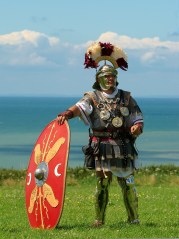
Contrast all of that with the second person who approaches Jesus, the centurion. Roman Centurion Armor and Shield“Centurion” was his title and meant he was a commander over one-hundred soldiers. Centurions wore impressive armor including a helmet with all the feathers sticking out of the top, a shiny breastplate, a metal skirt, and a huge shield. Like a leper, a centurion’s command was also obeyed, but not to avoid becoming one of them. A centurion could say, “Go,” and the soldier would go. “Destroy,” and they would destroy. “Kill,” and they would kill.
Roman centurions were also very religious. The Romans believed in many pagan gods, but their chief god was Jupiter, the god of the sky. They believed that Jupiter threw lightning bolts when he was angry. Romans, like many other pagan religions, believed that if you wanted something from your god, you had to offer a gift or bribe to get that god on your side like Naaman did with his silver, gold, and cloths in our Old Testament text (2 Kgs. 5:1-15). But here in this text, the centurion approaches Jesus in Capernaum with completely empty hands. His beloved servant is paralyzed and dying at home, and he can’t do anything about it. He recognizes that he has no strength, no authority, no power over the condition of his servant.

Don’t miss the significance of this. A man with his power, influence, and strength could easily replace a measly servant. All he had to do was say the word, and the soldiers under his command would find another person with better skills or more strength to be his slave. For this centurion to go to Jesus would have been a despicable display of weakness not only in the eyes of his peers but also for the soldiers under his command. More on this later. And now he approaches Jesus with no gifts, no bribes, no promises. This centurion comes with nothing but a plea, “My servant is lying at home and dying. Don’t come to my house because I am not worthy to have You under my roof. Just say the word, and he will be healed.”

Jesus marvels. And if Jesus marveled at this man’s faith, so should we. Here is “a man of strength coming in weakness, a man of wealth coming in poverty, a Gentile coming in faith” (Rev. David Petersen). With no attempt to bribe, he simply trusts in the mercy of Jesus, God in the flesh, the One with real authority and power, full of mercy and compassion.

It is no marvel that Jesus found no such faith in Israel. But instead of casting stones at them, we should ask ourselves: would Jesus find such faith among us? How often are our prayers attached to promises of living a better life, being more obedient or more faithful? How often do we try to bargain with God in order to gain His favor? Repent.

Even if from this moment on, you promised to be perfectly obedient (which is impossible), without God’s mercy you and I are still unworthy for the Lord to come under our roof. The only thing we are worthy of is to be cast into the outer darkness of hell for all eternity.

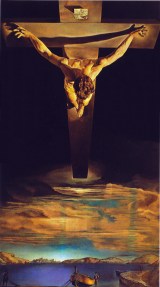
Christ of St John on the Cross Salvador DaliRepent, but do not despair. Jesus, God in the flesh, comes down from the mountain in order to save us. He is a God of mercy and grace. He comes to make the unworthy worthy and the unholy sacred. Jesus willingly approaches the untouchable leper to touch and heal. And Christ has compassion upon a centurion who appeared to have everything, but in reality, had nothing.

May we also have such faith as we approach our compassionate God who willingly and marvelously went to the cross to bear our sins. Christ was cast out of society with nothing but a cross and a crown of thorns. Though Jesus is the Lord of hosts, He did not call the angels to deliver Him as He was pinned to the cross. Instead, in love He shed His holy and precious blood to heal our souls. He bears all our sin in His body on the cross and proves that He is stronger than the devil. He shuts Satan’s mouth and triumphs over sin, death, and hell by His resurrection. He says, “Go,” to your sins and they go. He says, “Come to Me, all who labor and are heavy laden,” and you come and find rest for your soul (Mt. 11:28).

Remember, for this centurion to come to Jesus was an act of humility. He could have simply found another servant, but the centurion humbles himself to seek Jesus’ help because of his love for his servant. The centurion becomes a picture of what it means to be a Christian. His faith in Christ is manifested in love for his neighbor in a marvelous way.

The centurion is a Christ figure for his servant. Though he had power and authority, the centurion humbles himself to serve his servant. And, Christian, so do we. Through faith, we have everything since we are children of the Most High God. Yet, through love, we use our access to God in order to serve our neighbor by interceding on their behalf. Through faith, we receive treasures from above, from God. Through love we release those treasures below to our neighbors (Luther).

May our faith in Christ manifest itself in love for our neighbor so that the earth may know the mercies of our Lord and Savior, Jesus Christ. Amen.

The peace of God, which surpasses all understanding, will guard your hearts and minds in Christ Jesus. Amen.

Genuine – Sermon on Romans 12:6-16 for the Second Sunday after Epiphany

Listen here.

Romans 12:6-16

6 Having gifts that differ according to the grace given to us, let us use them: if prophecy, in proportion to our faith; 7 if service, in our serving; the one who teaches, in his teaching; 8 the one who exhorts, in his exhortation; the one who contributes, in generosity; the one who leads, with zeal; the one who does acts of mercy, with cheerfulness.Romans 12_2 - Christian Calling

9 Let love be genuine. Abhor what is evil; hold fast to what is good. 10 Love one another with brotherly affection. Outdo one another in showing honor. 11 Do not be slothful in zeal, be fervent in spirit, serve the Lord. 12 Rejoice in hope, be patient in tribulation, be constant in prayer. 13 Contribute to the needs of the saints and seek to show hospitality. 14 Bless those who persecute you; bless and do not curse them. 15 Rejoice with those who rejoice, weep with those who weep. 16 Live in harmony with one another. Do not be haughty, but associate with the lowly. Never be wise in your own sight.

In the name of Jesus. Amen.

How do you know if someone is really a Christian? I mean reeeeally a Christian. Well, according to the ESV’s heading on this text (which the translation we are using), this is it. The ESV adds its own title to v. 9 and following “Marks of the True Christian.”

In fact, do this: Take out one of the pew Bibles and turn to Romans 12. The ESV has this text falling under two headings. The first comes before v. 3 and is “Gifts of Grace” which is used for v. 3-8. I think that is an accurate heading for those verses. But then you get to v. 9 and all the way to the end of the chapter, all of that falls under the heading “Marks of the True Christian.” Those headings are not part of the Scriptures. The translators and editors of the various translations added them. Sometimes, they are fine introductions to what is going to come. But I would encourage you to ignore them more often than not because they influence the way you read the text.

From the heading there before v. 9 and the way the ESV reads here, I counted twenty-two commands/imperatives that follow in the translation. Twenty-two things that Christians are commanded to do if they, at least according to that heading, are true Christians. With that understanding, it would be easy for a sermon on this text to turn into a stern lecture on what you should be doing; how you are not doing it; and how you would be blessed if you actually got around to doing it. But here’s the problem.

First, there is no Gospel in the translation of those verses. And, second, if true Christians have genuine love; abhor evil; hold fast to the good; love with brotherly affection; outdo one another in showing honor; are never slothful in zeal; fervent in spirit; serve the Lord; rejoice in hope, etc. If these are the marks of the true Christian and you take an honest assessment of yourself, how are you doing so far?

Speaking for myself, I would have to conclude that I’m not a true Christian because I’m missing a lot of those marks most of the time. And, when I don’t have those marks but still confess that I am a Christian, I need to find some comfort for myself. So, the easiest thing for me to do is to start comparing myself to others. I look at myself, and then I look at you and you and you. Then, I figure, “Well, at least I’m better than that person at obeying these ‘Christian’ laws.”

You have maybe heard the joke about when Sven and Ole were out walking in the forest and see a bear. Ole bends down and starts tightening his shoelaces, and Sven says, “Ole, you don’t think you can outrun a bear, do you?” And Ole responds, “I don’t have to run faster than the bear, Sven. Angry BearI just have to run faster than you.” Well, guess what. When the bear of God’s Law is finished eating the guy who is slower to obey than you, it picks up your scent and resumes its pursuit of you because its appetite is never satisfied by eating up sinners.
Lord, have mercy. If our response to our failures and shortcomings is to compare ourselves to others, we are not doing what this text wants to inspire in us. We are not showing brotherly affection. We are not associating with the lowly. Instead, we are being haughty and wise in our own sight. Lord, have mercy. Comparing ourselves to others is not what the Holy Spirit intended when He inspired these words of Scripture. Only Jesus can satisfy the Law’s appetite. And, God be praised, by His death and resurrection He has done exactly that.

In reality, there are only four commands in this text. Three of them are in v. 14: Bless those who persecute you, bless and do not curse them. And one at the very end in v. 16: Never be wise in your own sight.

In reality, to be a Christian is not to keep twenty-some commands. Instead, Paul here is holding up a picture of what genuine love looks like (similar to how he does in 1 Cor. 13). Listen to this translation of v. 9-12. “Love is genuine/without hypocrisy, abhorring the evil and clinging to the good. [Genuine love] is showing brotherly affection for one another, in honor leading the way for one another, in zeal not [being] lazy, in the Spirit fervent, serving the Lord, rejoicing in hope, enduring persecution, holding fast to prayer.”

These verses are, in fact, perfectly describing Christ. Remember, that God is love (1 Jn. 4:8, 16), and that means that Jesus is love embodied. And, yes, as Christians – which means ‘little Christs’ – we should be like Christ. But because we are sinners, we fail to live up to God’s Law. God’s Law always accuses us.

Sacred LogoThere’s a better way to understand these verses, and to get at that understanding, I’m going to connect this text to our theme for the year – “Sacred.” In Lev. 19:2, God speaks to His people, Israel, and says, “You shall be holy, for I the Lord your God am holy.” And Peter repeats those words for us Christians in 1 Pet. 1:16. In English, this sounds like a command because of the word ‘shall.’ But in both Hebrew and Greek it isn’t a command/imperative. A better translation for both is, “You will be holy.”

When the original people (both Old and New Testament) heard that, they would hear three things at the same time. First, it is an unfinished action – something like, “You will become holy.” Second, and closely related, it can be a future promise, “You will be holy.” And third, it is a soft command/imperative, “You are called to be holy.”

Yes, God wants our behavior to be consistent with His holiness. God is your heavenly Father, and He wants you to be chips off the old block. But it is also a process that God has begun in your Baptism, and He will be faithful to bring it to completion (Php. 1:6). God will continue to make and shape you after the image of Christ.

Dear saints, the genuine love that is pictured here is what God has called you to be. When you don’t measure up to your sacred calling as Christians, when you don’t have the marks of a true Christian, run in faith to Christ. Romans 8:3-4 says, “For God has done what the law, weakened by the flesh, could not do. By sending his own Son in the Romans 8_1-4 - Walk according to the Spirit Law weakened by the fleshlikeness of sinful flesh and for sin, he condemned sin in the flesh, in order that the righteous requirement of the law might be fulfilled in us, who walk not according to the flesh but according to the Spirit.”
In the arms of Jesus’ love and mercy, you will find forgiveness for your failure and love despite your lack. Receive what God gives to you. He gives you Jesus. Because He has died and risen again, Jesus delivers the very mercy and forgiveness that you need.

“Are you really a Christian?” Well, do you trust in Christ for the forgiveness of your sins? That is the mark you need. Yes, you fail in your calling. But faith in Christ, and faith alone by grace alone, makes you a genuine child of God. Amen.

The peace of God, which surpasses all understanding, will guard your hearts and minds in Christ Jesus. Amen.

I Need to Be Baptized by You – Sermon on Matthew 3:13-17 for the Baptism of Our Lord

Listen here.

Matthew 3:13-17

13 Then Jesus came from Galilee to the Jordan to John, to be baptized by him. 14 John would have prevented him, saying, “I need to be baptized by you, and do you come to me?” 15 But Jesus answered him, “Let it be so now, for thus it is fitting for us to fulfill all righteousness.” Then he consented. 16 And when Jesus was baptized, immediately he went up from the water, and behold, the heavens were opened to him, and he saw the Spirit of God descending like a dove and coming to rest on him; 17 and behold, a voice from heaven said, “This is my beloved Son, with whom I am well pleased.”

In the name of the Father and of the Son and of the Holy Spirit. Amen.

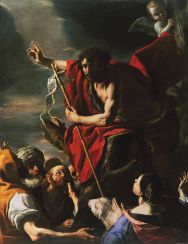
John the Baptizer tried to prevent Jesus from being baptized, but it wasn’t the first time that John had the inclination to not baptize. A few verses before our text (Mt. 3:5-10), Matthew tells us that all Judea and all the region around the Jordan were being baptized by John. But, when many of the Pharisees and Sadducees were coming to John to be baptized, John sees them and says, John the Baptizer“You brood of vipers! Who warned you to flee from the wrath to come? Bear fruit in keeping with repentance.” The text doesn’t explicitly say it, but it appears as though John refused to baptize at least some of the Pharisees and Sadducees. But why? Why do they get a tongue-lashing and no baptism?
To get to an answer, we need to have a little background. First of all, we have to understand a little more about what baptism is because baptism isn’t something John invented on his own. The most basic meaning of the Greek word βαπτίζω (which gets translated ‘baptize’) is to wash something either by immersing it in or sprinkling it with water.[1] In the Old Testament, God had given lots of instructions to people who had become unclean to go and ceremonially wash themselves before going to the priest to be declared clean (like when a person had contact with a corpse Lev. 11:25, had a skin disease Lev. 13:6, the person who led the scapegoat into the wilderness Lev. 16:26, etc.). After becoming unclean by contact with what was unclean, that person was to wash and be declared clean, and this is the background of the baptisms going on in John’s day. They were further washings that weren’t commanded or forbidden in Scripture. Things that are neither commanded or forbidden in Scripture can be either good or bad. Scripture doesn’t command us to celebrate Christmas, but it is good and even necessary to do so. But we can make celebrating Christmas such a big deal that it becomes the only day that people come to church, which is bad.

We don’t have a lot of information about the history, but we do know that people who wanted to become part of the Jewish people would be baptized (though, these mainly appear after Christ’s ascension into heaven). But there are records outside of Scripture where baptisms did happen and were somewhat common during the time of the Old Testament and between the Testaments. However, these baptisms were all self-washings. They were a way of physically confessing your sins, turning over a new leaf, recommitting yourself to God, and making a better life for yourself. In other words, those baptisms were something people did forGod.

Now, we can’t say for sure, because Scripture doesn’t explicitly say it, but this is possibly why some of the Pharisees and Sadducees were coming to John to be baptized by him. Their thinking possibly went like this, “It is good to commit your life to God, and maybe people who are more sinful than I am will follow my example and commit their lives to God.” But here’s the problem with this attitude of the Pharisees and Sadducees, if that is correct, they weren’t coming in repentance to receive the forgiveness of their sins. And Scripture does say that John was baptizing unto repentance for the forgiveness of sins (Mk. 1:4).[2]

John was baptizing unto repentance for the forgiveness of sins, but the Pharisees in particular didn’t see themselves as having sins to confess. Remember Jesus’ parable about the Pharisee who thanked God that he was not like that rotten sinful tax collector (Lk. 18:11).

So, it is possible that these Pharisees and Sadducees who are denied baptism by John are not coming to be baptized because they have sins that need to be washed away. They are stuck in a way of thinking that they could do enough things for God that God would be pleased with how holy they were. They thought getting baptized was something more they could do to earn favor with God, so John refuses to baptize them because they aren’t repentant. The sad thing is that many Christians today have this type of view of Christian Baptism. They view Baptism as something they do for God once they have come to faith. But this is not the picture of Baptism that Jesus and the rest of the New Testament gives. Not at all!

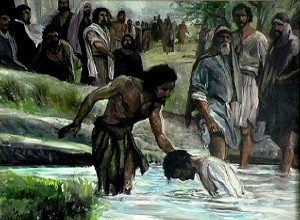
Jesus' BaptismNow we come to our text. John is baptizing all these people. A thief comes confessing his stealing, an adulterer confesses his adultery, a liar confesses her sin, and John absolves and baptizes them. But then to the front of the line comes Jesus, and John knows Him (Lk. 1:39-45). They’re related to each other. John knows what the angel Gabriel told Mary, that this Jesus would be Son of the Most High, that He would reign over the house of God, and that His kingdom would have no end (Lk. 1:26-38). John knows the angel Gabriel told Joseph that Jesus would be the One to save His people from their sins (Mt. 1:18-25). John knows that Jesus is the sinless God in the flesh. And here He is coming to be baptized unto repentance for the forgiveness of sins? This shouldn’t be!

John recognizes that he is the sinner who needs to confess his sins and be baptized by Jesus. “I need to be baptized by You, and do You come to me?”

But Jesus reassures John, “Let it be so now, for thus it is fitting for us to fulfill all righteousness.” So, John consents and baptizes Jesus. The heavens are opened. The Holy Spirit descends like a dove and rests on Christ. And God the Father says from heaven, “This is my beloved Son, with whom I am well pleased.” Such a beautiful picture of each Person of the Holy Trinity there at our Lord’s Baptism.

What happens when Jesus is Baptized is both the opposite and the same thing that happens to you in your Baptism. In your Baptism, God washed away your sins (Tit. 3:5-6). But when Jesus was Baptized, the opposite happened. Picture it this way. Those sinners who had been baptized by John in the Jordan came to have their sins washed away. But when Jesus enters those sin-filled waters, He absorbs all those sins into Himself so that He can take them to the cross and die for them.

We say this because it is only after Jesus’ Baptism that John says Jesus is the Lamb of God who takes away the sin of the world. John can say that because of what he saw in Jesus’ Baptism. There, Jesus had all the sins of all people of all time piled upon Him. in Isaiah 53, God says that Jesus would be numbered with the transgressors (Is. 53:12) and that God would lay on Jesus the iniquity of us all (Is. 53:4-6). That happened at Jesus’ Baptism.

You know how you feel when you are caught doing something wrong. You have a physical reaction – maybe you feel a rush of heat and guilt, and you feel the weight of it. Imagine having every sin of every person of all time piled upon you. How crushing would that be for Jesus? But having the weight and burden of the sin of the world put upon Him, Jesus hears the comforting voice of His Father, “You are My Son, with You I am well pleased. You are doing what I have sent You to do.” So, Jesus’ Baptism works the opposite direction of yours. Your Baptism washes away your sins, and Jesus’ Baptism is where Jesus is loaded up with your sins.

Matthew 3_17 - Baptism of Jesus Holy Spirit DoveBut also, the same thing that happens to Jesus in his Baptism happens to you in yours. In your Baptism, you are given the gift of the Holy Spirit and are made God’s beloved child. In your Baptism, God intimately joins you to Jesus, and to His death and resurrection (Ro. 6:3-6).

John’s question in our text, “I have need to be baptized by You, and do You come to me?” can be turned into a confession of faith. “Jesus, I need to be Baptized by You, and You have come and Baptized me.” Jesus does come to Baptize you and make you His disciple (Mt. 28:18-20). God has Baptized you through the hands of whatever pastor did the Baptism. It wasn’t the pastor doing it alone; God was Baptizing you. The pastor was simply God’s instrument to put the water upon you.

I have one final encouragement for you, and it is going to seem to come out of left field but bear with me. In Genesis 15[:1-6], God appears to old Abraham who has no children. God tells Abraham to try counting the stars and says, “So shall your offspring be.” God made a promise to Abraham and connected it to something physical that Abraham could see. And Scripture says, “Abraham believed the Lord, and He counted it to him as righteousness.”

Now, imagine every night of Abraham’s life after this. I wonder how often he would go out at night with that promise of God echoing in his ears and start counting. Imagine him trying for a while but then having to give up counting because he’d lose track. And yet, Abraham continued to believe God’s promise.

Dear saints, God has given you something even more precious in your Baptism. God connected His promise of mercy, forgiveness, and life to something physical, to water – something that you interact with daily. Baptism 2In your Baptism, God has given you the new birth of water and the Spirit (Jn. 3:5). In your Baptism, God has promised to wash away your sins (Act. 2:38-39), save you (1 Pet. 3:21), make you His child (Mt. 3:17), connect you to Jesus’ death and resurrection (Ro. 6:3-6), clothe you with Christ (Gal. 3:27), and fill you with the Holy Spirit (Tit. 3:5). So now, whenever wash your hands or take a shower, you can remember that God Himself has washed you clean and made you holy and sacred. Whenever you take a drink, you can remember that, in your Baptism, Jesus has given you to drink of the living water that wells up to eternal life (Jn. 4:10, 14).
You have need to be Baptized by God, and God has done this. Believe these promises of God. Trust them. Don’t leave them. And if you do walk away from the blessings and promises that God has given to you in your Baptism, remember that God hasn’t changed His mind. Those promises are there for you to return to because God is always faithful. He who began a good work in you in your Baptism will be faithful to bring it to completion in the day of Christ (Php. 1:6). Amen.

The peace of God, which surpasses all understanding, will guard your hearts and minds in Christ Jesus. Amen.

[1] In Mark 7:4, Mark mentions that the Pharisees had rituals for baptizing (most translations will simply say ‘washing’) they would baptize cups, pots, copper vessels, and dining couches. Unless you want to ruin it, you don’t immerse a dining couch. So, to say that Scriptures always mean immersing when they speaks about baptism is simply wrong.

[2] Scripture does make a distinction between John’s baptism and Jesus instituting Christian Baptism (especially in Mt. 3:11-12 and Act. 19:1-7). And we could spend a whole bunch of time considering the differences but let me just say this. According the Scripture, John’s baptism is a precursor to Christian Baptism. John would have repentant sinners come to him, confess their sins, and be baptized by him. And it was those very sins that Jesus would die for. So, God was granting forgiveness through John’s baptism.

Saving the Savior – Sermon on Matthew 2:13-23 for the Second Sunday of Christmas

Listen here.

Matthew 2:13-23

13 Now when they had departed, behold, an angel of the Lord appeared to Joseph in a dream and said, “Rise, take the child and his mother, and flee to Egypt, and remain there until I tell you, for Herod is about to search for the child, to destroy him.” 14 And he rose and took the child and his mother by night and departed to Egypt 15 and remained there until the death of Herod. This was to fulfill what the Lord had spoken by the prophet, “Out of Egypt I called my son.”

The Slaughter of the Innocents of Bethlehem Matthew 2 1616 Then Herod, when he saw that he had been tricked by the wise men, became furious, and he sent and killed all the male children in Bethlehem and in all that region who were two years old or under, according to the time that he had ascertained from the wise men. 17 Then was fulfilled what was spoken by the prophet Jeremiah:

18 “A voice was heard in Ramah,
weeping and loud lamentation,
Rachel weeping for her children;
she refused to be comforted, because they are no more.”

19 But when Herod died, behold, an angel of the Lord appeared in a dream to Joseph in Egypt, 20saying, “Rise, take the child and his mother and go to the land of Israel, for those who sought the child’s life are dead.” 21 And he rose and took the child and his mother and went to the land of Israel. 22 But when he heard that Archelaus was reigning over Judea in place of his father Herod, he was afraid to go there, and being warned in a dream he withdrew to the district of Galilee. 23 And he went and lived in a city called Nazareth, so that what was spoken by the prophets might be fulfilled, that he would be called a Nazarene.

In the name of Jesus. Amen.

Merry Christmas and happy New Year! Today is the twelfth and last day of the Christmas season. Maybe you began celebrating Christmas when the Hallmark Channel began their “Countdown to Christmas” way back on October 26th. And, no, I’m not going to mock their movies today. Finally, after ten years of being your pastor, I’ve learned to not do that anymore – at least not in a sermon.

Maybe you have taken down your tree and lights and have stored all the decorations in your garage and shed. Remember for Christians, every Sunday is Christmas and Easter – even if your house or this sanctuary isn’t decorated accordingly. So, before we take everything down today after the service, God would remind us of why Jesus came. And this reminder comes in a sobering way with a sad text. The reminder is this: Jesus entered this world to bring life and salvation to people who are obsessed with death.

The birth of Jesus wasn’t the soft, cleaned up picture that we so often have in our minds. Joseph and Mary didn’t lay baby Jesus in a warm, comfortable, well-kept barn. It was a normal barn – cold, dirty, and stinky. They weren’t surrounded by well-groomed animals. Instead, the Scriptures make sure we know that things were much humbler and more dangerous for the holy family. After the birth of Jesus announced by gruff shepherds, the families of Bethlehem wondered at the news (Lk. 2:18) but soon returned to their normal lives. Then at the beginning of Matthew 2, King Herod heard from the magi about the birth of the One who had been born King of the Jews. And Herod did not think this was good news at all.

A little background on King Herod. This Herod was known as Herod the Great, probably because of the many building projects he completed. Herod wasn’t an Israelite; he was an Edomite, a descendent of Esau. But Caesar had given him the title king of the Jews. Herod was utterly and completely wicked and would do whatever he thought necessary to protect his power. He had nine or ten wives, most of whom were murdered because he suspected of them plotting against him. Herod was so bad that Caesar Augustus, who was his friend, said that it was better to be Herod’s pig than Herod’s son.

Five days before Herod’s death, he murdered his oldest son to keep him from gaining his throne. As Herod lay on his death bed, he called all his advisors and all the influential men of Jerusalem and Judea to gather together and had them locked in the Hippodrome which was a horse racing track. Herod ordered his armies to surround the stadium and kill everyone inside after he died so that the city cry when he died – even if they weren’t crying for him. Apparently, the order wasn’t carried out.

So, when the magi come to Jerusalem asking, “Where is he who is born King of the Jews?” you can imagine how troubled Herod was. King of the Jews is his job, his title, his office. herod and the magiThe guy who didn’t even want his own children to be king after him hears that someone else has been born to be King of the Jews. Well, Herod isn’t going to let that stand. And when Herod is troubled about this, the rest of Jerusalem is also quaking as they wonder what will happen next.

So, Herod learns from the chief priests and scribes that the Christ was to be born in Bethlehem, he sends the magi to find the Child and let him know where the infant Jesus is. But God tells the magi to not return to Herod, and they depart to their own country. And God sends an angel to warn Joseph to take the infant Jesus to Egypt, the land of slavery and infanticide (Ex. 1:8-21), to save the life of the Savior. As the soldiers marched south from Herod’s castle toward Bethlehem to carry out their murderous orders, the holy family fled ahead of them to Egypt.

Again, the first Christmas was not a tranquil, picturesque scene. Lord, have mercy.

The slaughter of all those boys two years old and younger in Bethlehem is one of the saddest, most horrific things recorded in all of the Scriptures. And yet, it is not so different in our time and culture today.

In 2018, the number of abortions performed in the US passed 60 million since the Roe v. Wade decision. Worldwide, the numbers are much more devastating. In our country, the killing of these pre-born children isn’t to protect a title of a king. Instead, these children are killed for the sake of convenience and independence. And it is all done in the name of choice. Politicians used to defend abortion saying that it should be safe, legal, and rare, but many of them are pushing to expand access to abortion and even suggesting that babies who survive attempts at abortion can be left to die on a table. And now, the leading provider of abortion in our country encourages women to shout their abortions and celebrate them.

Dear saints, there is a modern-day holocaust going on in our country, and it should daily drive us to our knees in prayer. Thomas Jefferson, the third president of our country, a man who published his own version of the Gospels that removed all of Jesus’ miracles, all the claims of His divinity, and even the Resurrection, Jefferson said, “A single human being is of infinite worth.” Even this secular principle is right and is enough to peacefully (and notice I said peacefully) oppose abortion with every ounce of our strength. But the coming of the Son of God in the flesh has raised the sacredness of all human life to an even higher dimension (Dr. Rev. David Scaer). In Jesus is life which gives light to everyone (Jn. 1:4, 9).

BaptismIn the incarnation, the eternal Son of God shares in the life of every man, woman, and child – born and unborn. We human beings are all taken out of the flesh of Adam which means that we are all part of one another. But even more importantly, by His conception, the eternal Son of God has permeated all of humanity. This is why the devil loves abortion. Satan loves abortion because every unborn child reminds him of the fact that the Son of God came in the flesh, took up residence in His mother’s womb, and defeated him. The fact that your Savior was once a pre-born child is primary the reason Christians oppose abortion.

Because we are descended from Adam, we all stand before God under the just verdict of guilty and deserving of hell (Ps. 51:5). But again, more importantly, because Jesus has taken on our flesh, we can stand in faith before God with Jesus, the second Adam, to hear a verdict of innocent, holy, and righteous because this Jesus has taken your place. On the cross, He become your sin (2 Cor. 6:21) so that He is the Lamb of God who takes away your sin (Jn. 1:29) and buries it into the emptiness of His tomb.

The young boys of Bethlehem died that night so Jesus could escape death as an infant but not escape death forever. Jesus grew up and died for them and for you upon the cross. Jesus died for them and for the evil Herod’s, Hitler’s, Stalin’s, bin Laden’s, and Soleimani’s of the world. Christ paid for the sins of every abortionist, every woman who has had an abortion, and every man who has pressured a woman to get an abortion. Your Savior died for those sins just as much as He died for yours.

Today, you have heard how your Savior was saved from death so that, at the right time Christ could die for you (Ro. 5:6). So, yes – rejoice because of Christmas while you remember why Jesus came. He came to bring salvation and life to a world obsessed with death. He came to make you – yes you, sinner – His own. Amen.

The peace of God, which surpasses all understanding, will guard your hearts and minds in Christ Jesus. Amen.

Holy Peace Dwelling with Us – Sermon on Luke 2:1-20 for Christmas Eve 2019

Listen here.

Grace, mercy, and peace be to you from God our Father and from our Lord and Savior, Jesus Christ. Amen.

Dear saints, merry Christmas!Incarnation Icon Tonight, and all the days of your life, you can celebrate the fact that Jesus is born. God has taken on your flesh to save you. He has come in your likeness, born of a woman, in order to deliver you from your sin.
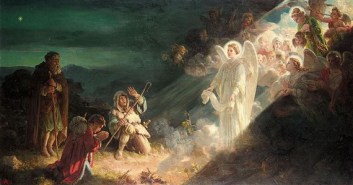
This Gospel text is one of the most familiar passages for Christians. As it was read, you could probably finish most of the phrases from memory, and that is good. But that familiarity can bring with it a loss of the wonder, awe, peace, power, and glory that this text has for us.

Whenever we read the Scriptures, we should be looking for the unexpected. But our familiarity with the text means that almost nothing is unexpected, at least not anymore. We’re so familiar with it that we aren’t surprised even though there are surprises at every turn. It’s surprising that God uses something as normal as a census and taxes to bring Joseph and Mary to Bethlehem to fulfill His promise that the Messiah would be born in the city of David (Mic. 5:2). It is surprising, and saddening, that none of Joseph’s relatives had a place for him and his laboring wife to stay which meant they ended up delivering their Son in a barn. Though those things are familiar to us, they are still shocking, unexpected, and are worthy to have us to pause and consider them more closely. However, tonight we are going to focus on what happens outside of Bethlehem in the fields so that we get a fuller picture of what happened in Bethlehem.

Glory appears to the ShepherdsLuke tells us that those shepherds, who were minding their own business, suddenly found themselves surrounded by the shining, dazzling glory of the Lord. The surprising, unexpected thing is not the existence of God’s glory. God’s glory shining is something that happens throughout the Scriptures.

The glory of God led Israel out of Egypt, but God’s glory was veiled and hidden in a pillar of cloud by day and a pillar of fire by night (Ex. 13:21-22). That same glory, veiled in a cloud, descended on Mt. Sinai when God spoke to the people to give them the Ten Commandments (Ex. 19:9, 16-17). Even though God’s glory was hidden behind the cloud, the people were so afraid of God’s glory that they asked Moses to tell God to not speak directly to them anymore (Dt. 18:15-19). God’s voice along with His glory, even when it was concealed by the cloud, was too much for them to behold.

But God’s glory continued to be with His people. When they built the Tabernacle, that same cloud entered the Tabernacle. And it was this glory of God that led the people through the wilderness during the Exodus. Whenever the cloud would stop, the people would set up their camp and stay there until the cloud was taken up and led them further (Num. 9:17-22).

Every time the people set up their camp, the cloud would enter into the most holy place in the Tabernacle. And God gave strict instructions to Aaron, the high priest, that he wasn’t to enter the holy of holies any time he wanted or else he would die (Lev. 16:2). And even when Aaron, and the high priests after him, were allowed to enter the holy of holies on the Day of Atonement, those high priests were told to burn incense and make a cloud of smoke to serve as an additional barrier between them and the holy presence of God (Lev. 16:12-13).

Glory in Solomon's TempleThis went on for centuries until the King Solomon finished construction of the Temple. When the Ark of the Covenant was brought into the Temple, the cloud descended into the most Holy Place, and the priests had to leave because God’s glory filled the Temple (1 Kgs. 8:10-11; 2 Chron. 5:13-14). God no longer dwelt in the tent of the Tabernacle; now, He dwelled in the house of the Temple which was where heaven and earth intersected. And still, year after year, the high priest would enter the most holy place be the representative of the people and meet with God behind the smoke made by the incense and the cloud that subdued God’s glory (Ex. 25:21-22).

But year after year, God’s people kept serving other pagan gods which defiled them and God’s Temple. And though God repeatedly warned them about their sin, they refused to trust in God alone. So, God sent His people into exile in Babylon. And it was in Babylon that Ezekiel had a vision of the Temple. In that vision, Ezekiel saw the glory of God in that cloud leave the Temple (Ezek. 10:1-19). And shortly after this, Jerusalem was destroyed along with the Temple.

God did bring His people back to their land. They rebuilt Jerusalem and the Temple, but when the second Temple was completed, God’s people had a problem. The cloud of God’s glory didn’t return to dwell there (Ezra 3:10-15; 6:16-18). God did not enter that second, rebuilt Temple. For several hundred years, it went on like this. God’s people had the Temple, but God’s glory wasn’t seen. So, the people didn’t know if God was there for them as He had been with them in the past. Because God’s glory had not entered the Temple, there was confusion and doubt. The people wondered, “Has God forsaken us forever?” And this was a legitimate question.

But now here in Luke 2, outside of the Temple, away from Jerusalem, out in a field, the glory of the Lord reappears. But notice, there is no cloud to veil God’s glory. Why was there no cloud? Well, the cloud was no longer necessary.

The cloud had been there to hide the full glory of God so the people wouldn’t be destroyed by God’s holy presence. Now in the birth of Jesus, the full glory of God is still hidden, but not in a cloud. Now, the glory of God is hidden in the infant Jesus lying in a manger.

Dear saints, tonight we celebrate the fact that God has hidden Himself in your flesh. This is the miracle of Christmas. God hides Himself in your humanity so that He can be with you, dwell with you, and reveal Himself to you. God veils His glory in the body of Jesus so that He can appear as your Savior. God hides Himself so that He can reveal Himself as your Redeemer.

We are sinners. To be found by God in His glory and majesty would be our eternal destruction. But there in Bethlehem is God wrapped in swaddling clothes. Empty Manger With Cross ShadowHe is there so He can grow up and walk among us in the towns and streets of Galilee, Judea, and Jerusalem. He is there so He can be betrayed, arrested, beaten, tried, crucified, loaded up with your sin, die, and rise again.

This is how your God is for you. God does not approach you with His consuming holiness. He hides His holy glory, and He comes in peace so that He can clothe you in His holiness. And clothed in that holiness, you are now the temple of the Holy Spirit who dwells within you (1 Cor. 6:19). God continues to reveal His glory to all creation through you, Christian (Ro. 8:21). Because of what Christ has done for you by making you holy, heaven and earth continue to overlap as God’s glory shines through you (Mt. 5:14-16).

So tonight, we join our voices with the heavenly choir. “Glory to God in the highest, and on earth peace to you.” Behold Christ’s glory which is full of grace and truth. From this Jesus, you receive grace upon grace. For your God is pleased to well with you now and forever. Amen.

The peace of God, which surpasses all understanding, will guard your hearts and minds in Christ Jesus. Amen.

The Shortest, Most Beautiful Sermon – Sermon on John 1:19-29 for the Fourth Sunday of Advent

Listen here.

John 1:19-29

19 And this is the testimony of John, when the Jews sent priests and Levites from Jerusalem to ask him, “Who are you?” 20 He confessed, and did not deny, but confessed, “I am not the Christ.” 21 And they asked him, “What then? Are you Elijah?” He said, “I am not.” “Are you the Prophet?” And he answered, “No.” 22 So they said to him, “Who are you? We need to give an answer to those who sent us. What do you say about yourself?” 23 He said,

“I am the voice of one crying out in the wilderness,
‘Make straight the way of the Lord,’
as the prophet Isaiah said.”

24 (Now they had been sent from the Pharisees.) 25 They asked him, “Then why are you baptizing, if you are neither the Christ, nor Elijah, nor the Prophet?” 26 John answered them, “I baptize with water, but among you stands one you do not know, 27 even he who comes after me, the strap of whose sandal I am not worthy to untie.” 28 These things took place in Bethany across the Jordan, where John was baptizing.

Lamb of God who takes away the sins of the wolrd29 The next day he saw Jesus coming toward him, and said, “Behold, the Lamb of God, who takes away the sin of the world!”

In the name of Jesus. Amen.

A more beautiful sermon has never been preached than John’s short, little sermon there: “Behold, the Lamb of God, who takes away the sin of the world!” In this Gospel text, John does exactly what he was sent by God to do. He points everyone who was there listening to him and the rest of humanity, including us, to Jesus. In that thirteen-word, one sentence sermon, John takes all the theology of the Old Testament and all of the religious practices and ceremonies and worship God had given to His people and piles it all on Jesus. Christ fulfills it all (Jn. 5:39; Lk. 24:27; Ro. 15:8; 2 Cor. 1:20).

Consider the Day of Atonement. That day was the only day that someone could enter the most holy place in the Temple. Only the high priest could enter on that one day. On that day, the people took two rams and flipped a coin to determine which one would be sacrificed and which one would be the scapegoat.

The high priest would take the scapegoat and bring it into the midst of the people, place his hands on the head of the goat, and confess all the sins of all the people over the previous year (Lev. 16:21). All their idolatry, blaspheming, and Sabbath-breaking. All their rebelliousness. All their murderous and adulterous ways. All their theft, lying, and discontentment. All those sins would be placed on the head of the goat which would then be led into the wilderness and away from the people.

Hebrews 10(:3) says, “It impossible for the blood of bulls and goats to take away sins,” but those goats could and did preach about the One who would come and take away the sins of the people. Those goats pointed the people to the Messiah who would bear the sin of the world in His body (1 Pet. 2:24). That was the point of all the sacrifices in the Old Testament – to preach about Jesus who would remove sin. When you saw any of the sacrifices – a bull or sheep or ram or pigeon burning there on the altar – you knew that animal didn’t do anything, it hadn’t committed those sins. But it pleased God to take the sins of the people and have them relocated to that animal. And as you saw that animal being killed and burned, you realize, “That should be me, but God accepts the death of another, He accepts a substitute, for my sin.”

That is what John is doing when he points to Jesus and preaches, “Behold, the lamb of God, who takes away the sin of the world.” John is saying, “Here is the One who dies in your place. Here is Jesus, the One who has all of your sin upon Himself.”

John wasn’t just preaching about the fulfillment of the Day of Atonement and the sacrifices. He was also preaching about the fulfillment of the Passover (Ex. 12). Remember, the people were slaves in Egypt, and God sends plague after plague to get Pharaoh to let His people go, but Pharaoh refuses. So, in the final plague, Exodus 12_46 - Passover Blood marking the doorpostsGod sends the angel of death to go through the land of Egypt. But God’s people were to take a lamb. They were to slaughter that lamb and smear some of the lamb’s blood on the door of their house and eat the rest of the lamb roasted that night. And when the angel would see the blood on the door, he would pass by.
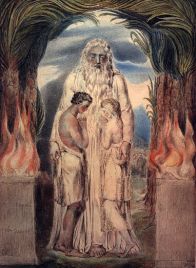
Again, when John points at Jesus, he is preaching, “Here is the one whose blood marks your door and guards you from the wrath of God.”

John is preaching about the fulfillment of Abraham’s sacrifice of Isaac. For years, God had promised Abraham that He would give Abraham a child in his old age and through that child God would bless all the nations of the world. Finally, Isaac was born, but God told Abraham to offer Isaac as a burnt offering (Gen. 22). God wasn’t testing Abraham’s obedience with this crazy command; He was testing Abraham’s faith. God had promised that through Isaac, He would raise up the Messiah. And Abraham believed God’s promise that he would have great-great-great-grandchildren through Isaac even if he sacrificed Isaac on top of the mountain. Hebrews 11(:17-20) says that Abraham figured that God would raise Isaac from the dead because God had to keep His promise. Abraham believed that Isaac, the child of promise, wouldn’t stay dead. Abraham believed that God would be faithful. But God provided another way of keeping the promise. The angel stopped Abraham’s hand from sacrificing Isaac. And there in the thorns was a ram caught by its horns, and it was sacrificed in Isaac’s place. After this, Abraham named that place “God provides” because God provided Himself as the sacrifice (Gen. 22:8).

And on that very mountain, the Temple would be built. On that mountain and in that Temple, God would continually accept the death of another in place of the children of promise. And now, John says, “Here is Jesus, the Lamb of God, the one who trades places with you, sinner.”

One more. Let’s go all the way back to the Garden of Eden (Gen. 3). Adam and Eve ate the forbidden fruit. They believed the devil’s lie instead of God’s Word. Their eyes are opened, and they realized they were naked. To try and cover their shame, they sewed fig leaves together. Those leafy clothes are like every other human religion; they don’t work. They don’t cover their sin and shame – especially when God shows up. Then, when God comes into the Garden, Adam and Eve try to hide from God. God gives them all sorts of chances to repent, but their sin has made them so afraid of punishment that they continually try to hide behind the leaves of their excuses. God warns them about the curses that have come because of their sin, but He also promises that He will send the Seed of the woman who will crush the serpent’s head.

God had said that on the day Adam and Eve ate that fruit they would surly die (Gen. 2:17), but they didn’t die that day. Instead, Adam and Eve watch God take an animal, who hadn’t done anything wrong, and kill it. This was the first time in all of creation that something died. Genesis 3-21 - God made clothes from skins.jpgGod hung that animal up and stripped the skin from its lifeless body as blood stained the ground. And God wraps that skin around the shameful, sinful bodies of Adam and Eve.

Scripture doesn’t record this, but it invites us to imagine Adam and Eve watching God do all of this. And you can imagine them in their shock and horror asking God, “Is this what it takes to cover our sin and shame?” And imagine God responding, “No. This is only preaching. There is a sacrifice to come.”

That sacrifice is Jesus, God’s own Son. Prior to Jesus, all of the Scriptures tell the story of Jesus coming to be that Lamb who takes away the sin of the world. And all of the Scriptures would have you believe that God lays on Jesus the sin and iniquity of you and me and of the whole world (Is. 53:6).

This short, beautiful sermon of John takes all of these pictures and points you to Jesus as the fulfillment – not the picture. He is the One who actually bears your sin in His body. This Jesus, who knew no sin, became your sin, so that in Jesus you might become the righteousness of God (2 Cor. 5:21).

Jesus is the Lamb of God who takes away the sin of the world. Did you catch that? The sin of the world. That means this Jesus takes away your sin. God’s anger falls on Jesus, not on you. When you see Jesus on the cross, you say, “That should be me. But Jesus, my Savior, has willingly taken my place under God’s wrath so that I can take my place with Him in eternal life.”

Dear saints, this Christmas remember that Jesus is born to be your Substitute and your Savior. He, and He alone, takes away your sin now and forever. Amen.[1]

The peace of God, which surpasses all understanding, will guard your hearts and minds in Christ Jesus. Amen.

[1] I am thankful for a sermon from Pr. Bryan Wolfmueller for much of the content of this sermon.