Spirit-Guided – Sermon on John 16:5-15 for the Fifth Sunday of Easter

John 16:5–15

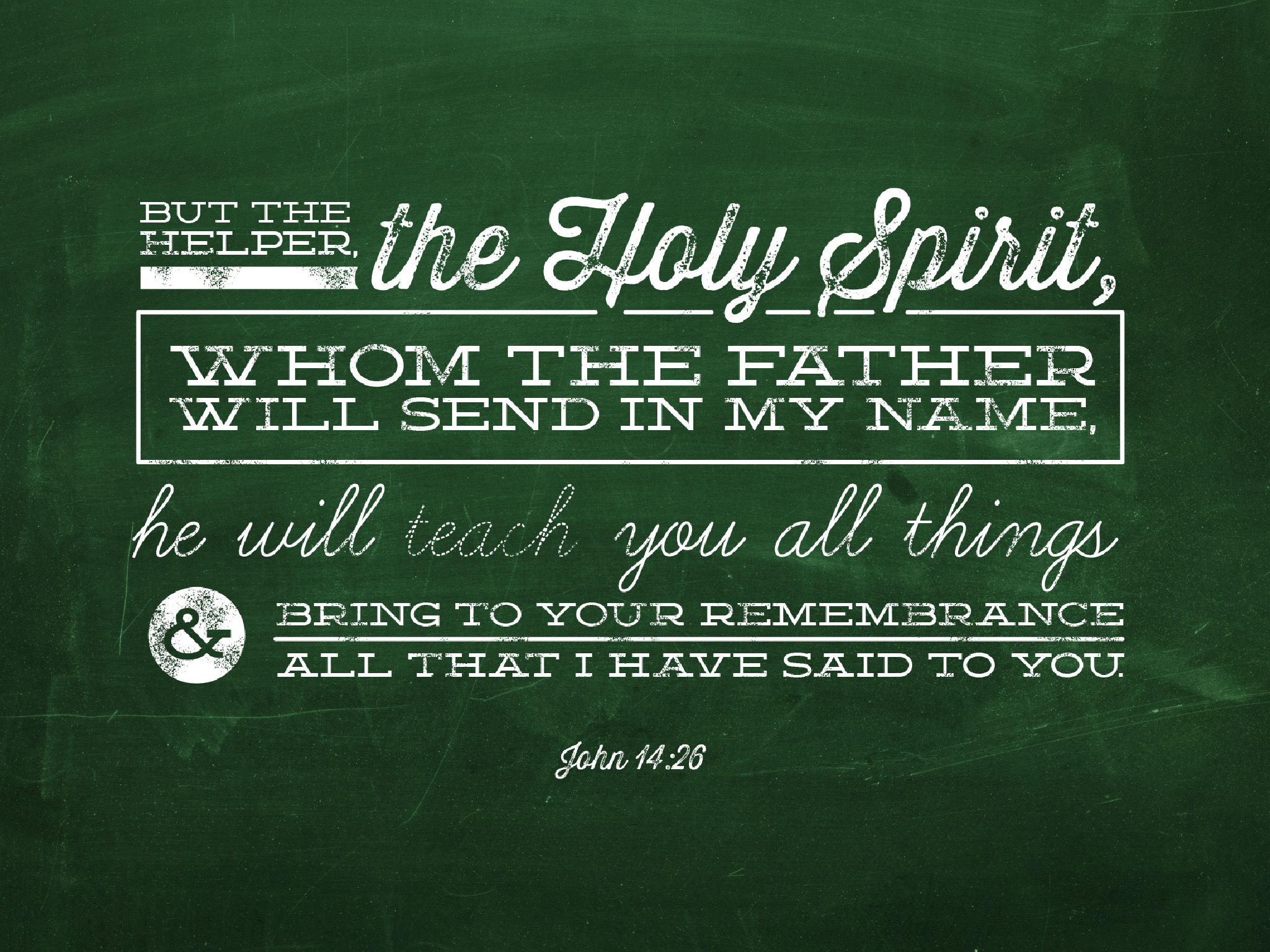
5 “But now I am going to him who sent me, and none of you asks me, ‘Where are you going?’ 6 But because I have said these things to you, sorrow has filled your heart. 7 Nevertheless, I tell you the truth: it is to your advantage that I go away, for if I do not go away, the Helper will not come to you. But if I go, I will send him to you. 8 And when he comes, he will convict the world concerning sin and righteousness and judgment: 9 concerning sin, because they do not believe in me; 10concerning righteousness, because I go to the Father, and you will see me no longer; 11 concerning judgment, because the ruler of this world is judged.

12 “I still have many things to say to you, but you cannot bear them now. 13 When the Spirit of truth comes, he will guide you into all the truth, for he will not speak on his own authority, but whatever he hears he will speak, and he will declare to you the things that are to come. 14 He will glorify me, for he will take what is mine and declare it to you. 15 All that the Father has is mine; therefore I said that he will take what is mine and declare it to you.”

Alleluia! Christ is risen!
He is risen indeed! Alleluia!

In the name of Jesus. Amen.

Our expectations rarely match reality. Often times, it’s not even close. When I was 15 years old, I was eagerly anticipating being in a sailboat race across Lake Superior in July. Thanks to Gordon Lightfoot, I knew that “gales of November” don’t come that early. My expectations for that race were largely shaped by movies of majestic boats efficiently gliding across rolling waves driven by strong winds. But I also worried that there would be 10-15 ft. swells that would toss our 25 ft. boat around like a leaf making me seasick and struggling to stay on the boat. The reality ended up being two and a half days of cold, drizzling rain, and barely a whisper of wind, and the only thing that made me sick was the inescapable fumes of fiberglass varnish which sent me and the other crewmembers to the side of the boat more than once.

We plan and prepare for things to be a certain way, but then the moment or event comes and is completely different than what we imagined. Sometimes, the reality is better; sometimes, it’s worse; and sometimes, it it’s just different. As a kid, you probably expected that being an adult would come with the independence and freedom to do whatever you wanted whenever you wanted. Then, reality came. Now, you realize being an adult can mean the autonomy to do what you want, but most often it means carrying out the responsibilities God has given you. Even if adulthood isn’t the total freedom and independence you thought it might be, it’s still very fulfilling.

In this Gospel reading, we don’t know exactly what the disciples expected as Jesus talks about His departure and going away to the Father. We just know their reaction – they are sorrowful (Jn. 16:6, 20, 22). They don’t know what to expect. That’s why Jesus comforts them and us by teaching about the Holy Spirit.

The first thing we need to get straight is that, when Jesus says that He has to go to Him who sent Him and that it is to their advantage that He goes away, He doesn’t mean that He is going to be completely absent. Jesus had already promised His abiding presence. He guarantees, “Where two or three are gathered in My name, there am I among them,” (Mt. 18:20), and before He ascends into heaven He says, “Behold, I am with you always, to the end of the age” (Mt. 28:20). Yes, Jesus has gone to the Father who sent Him, but He is also truly, physically present with us – especially in Holy Communion. When Jesus says that He is departing, He is saying that He must go to the cross, pay for our sins, and ascend into to heaven where He continually presents His work on your behalf to God the Father (Heb. 9:24; Ro. 8:34).

That’s the reason Jesus is departing. It isn’t that He’s leaving and is gone. No. His departure is the fact that He goes to work your salvation, and to continually present His work to God the Father. Christian, your life is hidden with Christ where He is seated (Col. 3:1-4). That’s why the Holy Spirit comes. The Holy Spirit is constantly present with you to be your Helper, Advocate, and Comforter constantly pointing you to all the things Christ has done for you. The Holy Spirit comes to point you to all the benefits that Jesus’ death, resurrection, and ascension give you. The Holy Spirit comforts you with the gifts of Jesus.

That is why we need Jesus’ teaching here about what the Holy Spirit does. So many Christians have wrong expectations about the Holy Spirit. Throw out all of those expectations and listen to what Jesus teaches about the Holy Spirit’s work. The Holy Spirit works to convict us concerning sin and righteousness and judgment. And don’t get put off by that word ‘convict.’ Most of the time we use the word ‘convict’ today, it means to find guilty. And when Jesus talks about the Holy Spirit convicting concerning sin and judgment, we tend expect this will be a bad thing. But being convicted isn’t always a bad thing.

We will talk about a person having deep convictions, meaning they are sure and certain about what they believe. They are convinced of the truth of something. That’s how we should understand this as Christians. Jesus goes on to summarize the Holy Spirit’s work as guiding us into all the truth. The Holy Spirit is guiding us to be convinced of certain things concerning sin, righteousness, and judgment. When Jesus tells us why the Holy Spirit convicts or convinces of each of these things, each of the why’s isn’t what we naturally expect. Let’s take each of these in order.

First, when Jesus says that the Holy Spirit will convict the world concerning sin, we would expect Him to say the Holy Spirit does that because you people are so bad and evil. But that’s not what Jesus says. The Holy Spirit convicts the world concerning sin because they do not believe in Jesus. I’m guessing Paul had these very words of Jesus in mind when he wrote in Ro. 14:23 that says, “whatever does not proceed from faith is sin.” In other words, you can do the best, most merciful work, but apart from faith in Jesus, it is of no benefit; in fact, Scripture says the mercy of the wicked is cruel (Pr. 12:10). Confessing your sins is an article of faith. It is the Holy Spirit who has taught us to confess that we are by nature sinful and unclean in thought, word, and deed. And the Holy Spirit guides us to continue our confession by saying that we flee for refuge to God’s mercy freely given through Christ.

Second, when Jesus says that the Holy Spirit will convict the world concerning righteousness, we would expect Him to say, “Because they don’t have any righteousness and need to do better.” But that’s not what Jesus says. The Holy Spirit convicts concerning righteousness because Jesus goes to the Father. When you consider this in the context of the rest of Scripture, this is stunning. The Man Jesus has opened the path to heaven so you can follow Him and be brought there too by the working of the Holy Spirit.

Imagine being in a line waiting to stand before God’s judgment. How would you feel as you wait in that line? Probably pretty nervous – especially because that judgment will determine where you will spend eternity. But now imagine that you’re standing in that line and Jesus is standing right next to you waiting for His turn to be judged. Do you think He would be nervous? No, Jesus isn’t going to be worried at all! He’s confident and knows He is perfect and hasn’t committed any sins. Well Christian, you need to know, you need to be convinced, that through faith you occupy Jesus’ place in that line. His righteousness is yours. God made Jesus, who knew no sin, to be sin, so that in Him you would become the righteousness of God (2 Cor. 5:21). To believe that takes the working of the Holy Spirit.

Third and finally, the Holy Spirit convicts concerning judgment. We would expect this is needed because judgment is coming. Again, that’s not what Jesus says. The Holy Spirit convinces you that the ruler of this world, Satan, is judged. Think of that! Satan, which means accuser, is the one who is judged. The one who tries to accuse you before God has absolutely zero credibility in God’s courtroom. The devil isn’t losing; he has lost. Satan is utterly defeated and conquered. Yes, this takes faith. But the Holy Spirit will continue to point you past what you may see in this world back to these words of Jesus which clearly state that the devil is judged.

Sable, that brings me to you. Sable, today you are Baptized. God has placed His name upon you, claimed you as His own, and has given you Jesus’ righteousness. And from this day forward, the Holy Spirit will continue to guide you into these truths and convictions, convincing you of your sin so you will believe in Jesus. Convincing you of the righteousness you have been given. And convincing you of the judgment of the devil.

Sable, and all of you here, it’s hard to know what to expect for your future. But know this: the Holy Spirit will continually guide you into all the truth, convicting and convincing you that Jesus’ work for your salvation is perfect, complete, and finished. Amen.

Alleluia! Christ is risen!
He is risen indeed! Alleluia!

The peace of God, which surpasses all understanding, will guard your hearts and minds in Christ Jesus. Amen.

Now & Not Yet – Sermon on 1 John 3:1-3 for the Fourth Sunday of Easter and Confirmation Sunday

1 John 3:1–3

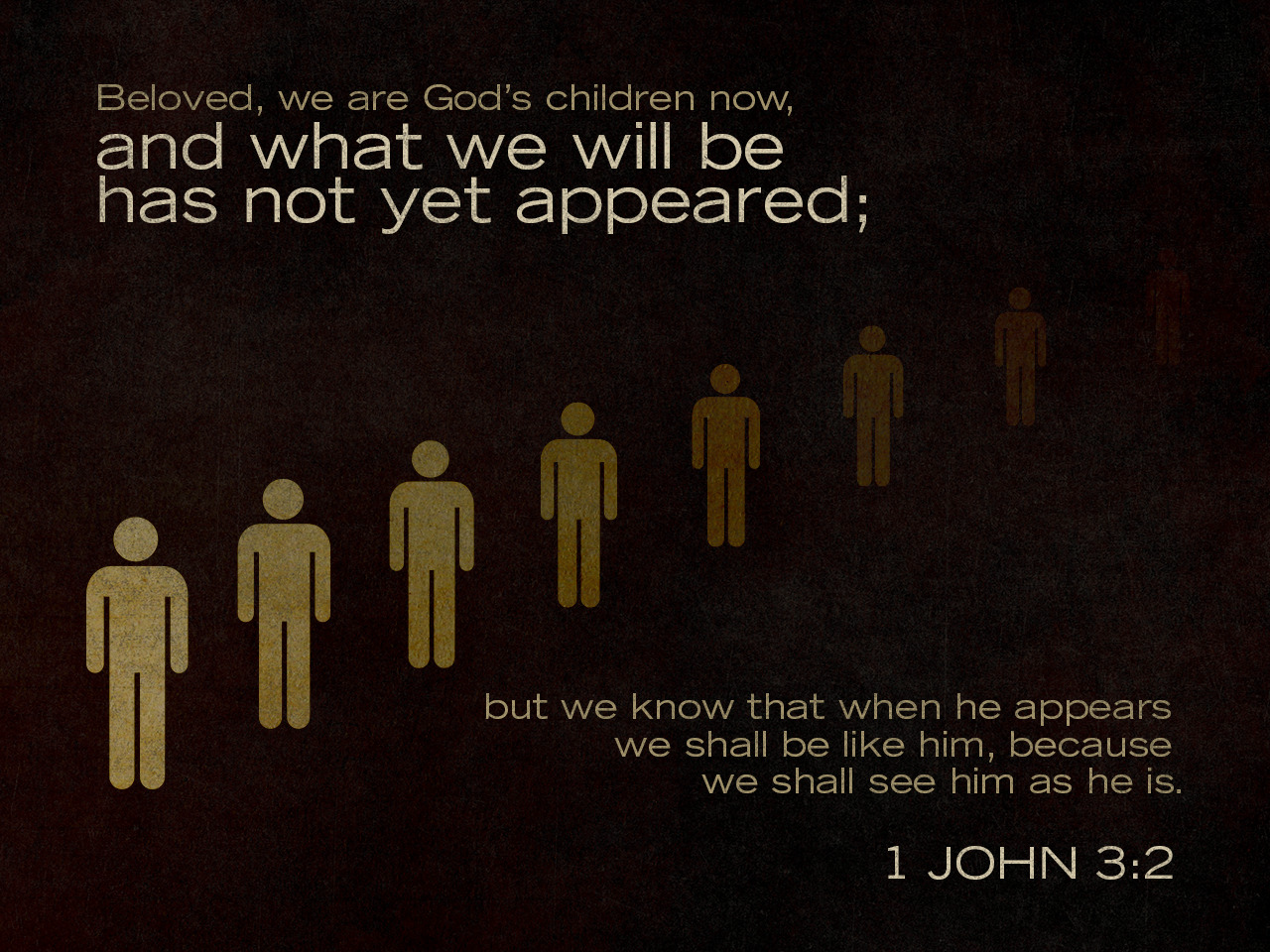
1 See what kind of love the Father has given to us, that we should be called children of God; and so we are. The reason why the world does not know us is that it did not know him. 2 Beloved, we are God’s children now, and what we will be has not yet appeared; but we know that when he appears we shall be like him, because we shall see him as he is. 3 And everyone who thus hopes in him purifies himself as he is pure.

Alleluia! Christ is risen!
He is risen indeed! Alleluia!

In the name of Jesus. Amen.

We live in a noisy world. On any given day, all sorts of things are constantly trying to grab your attention. We get dings and vibrations and taps that let us know who sent a message, what news story is breaking, or who liked that thing you posted. If you have to spend even ten minutes in a waiting room or a restaurant, you’ll find televisions turned to a game or news channel with the constant crawl of information that isn’t important enough, at least at that moment, to be on the main part of the screen. You’re watching the news about what’s going on in the Middle East and get the latest OJ Simpson’s death. Or you’re watching the NBA playoffs and learn about some guy’s hot take on what the Vikings are going to do in the first round of the NFL draft. And on and on it goes.

Now, this isn’t a sermon about how pointless and exhausting this barrage of information is. It’s just an acknowledgement of the conditions in which we live. Our attention is being constantly pulled in a myriad of directions, and all sorts of things shout at you, “Pay attention to me!” Well, this epistle reading (1 Jn. 3:1-3) is calling for your attention. In fact, it’s commanding you to pay attention. So, for the next few minutes, don’t be distracted, don’t be pulled, don’t be thinking about what’s going to happen this afternoon or this week or next summer. Right now, God, through His holy Word, calls you to focus and see. See this.

See the kind of love the Father has given to us. It is the kind of love that calls you, believer, a child of God. It is a love that calls all y’all, Christians, children of God. That is who you are – a child of God. Look around at the believers surrounding you here today, people whom you love and who love you, see that they through faith are also children of God.

See the kind of love that turns sinners and enemies of God into children. See the kind of love that isn’t earned or deserved. See God’s love for you that is demonstrated in that while we were still sinners, Christ died for us (Ro. 5:8). This is the purest kind of love. It’s God’s love that is not based on the lovableness of the individual. It’s a love that is freely given because, in spite of our unloveliness, God determined to seek your highest good and make you His child.

God’s own child, that is what you are, believer. That is what God has called you, and what God says creates reality. Everything in this world – including your own thoughts, opinions, and experiences – will try to convince you otherwise. It will attempt to get you to believe this isn’t true. Don’t listen to any of that. See. Behold. God’s love has made you His child.

Christian, God’s love has given you a new birth. In his Gospel, John says this explicitly. To all who did receive Jesus, those who believe in His name, He gives the right to become children of God (Jn. 1:12), and this right came when you were born again of water and the Spirit (Jn. 3:3, 5-6).

You confirmands, you have this new birth as a child of God. Logan, you received this new birth when you were Baptized on July 3rd, 2011 at Bigwoods Lutheran Church in Bigwoods, MN. Brayden, you were born again as God connected His Word to water on November 16th, 2013 at St. Henry’s in Perham, MN. Maddie, same place, but for you on April 16th, 2011 that was when and where you were born as a child of God. Brady, July 7th, 2013 right there at that font, you became a child of God. And Asher, same font, on November 25th2012, God declared that you are His child. The rest of you here, I’m sorry, but I don’t have your exact information in front of me.

This command to see this kind of love is in the present tense. That means it is a command that you always and continually see this kind of love. That love is to color everything else in your life. Keep holding on to that love because it is the most precious thing you could ever have. That love makes you God’s children now. Right now. What will we children of God be when we grow up? We don’t know, not yet.

John admits that even he doesn’t know exactly what glorious things are in store for us children of God. Think of that. John had seen some glorious things. He saw Jesus’ miracles and transfiguration. John saw the empty tomb. It was so glorious that he kept bragging about the fact that he outran Peter and was the first disciple to see it (Jn. 20:2-5, 8). The evening of Jesus’ resurrection, John had seen Jesus’ resurrected hands, feet, and side (Jn. 20:19-20; Lk. 24:36-43). As best as we can tell, John wrote this epistle after he had seen the vision of recorded in Revelation. That means John had seen Jesus clothed in a robe with a golden sash. He saw Christ’s eyes like a glorious flame of fire. John saw Jesus’ face shining like the sun in full strength (Rev. 1:13-16). And still John says here, “I don’t know what we children of God will grow up to be. I haven’t seen it yet because it hasn’t appeared” (1 Jn. 3:2). “But,” John says, “But we know that when Jesus appears we will be like Him, because we shall see Him as He is.” 

You confirmands and everyone here today, it can be dangerous to look to the past. And it can be troubling to think about the future. If you do look to the past, look at it through the lens of being God’s beloved child. When you consider your present, keep this command and see the constant love God has for you. When you look to the future, have in mind that you, through faith, are a child of God. And keep longing and hoping for that moment when Christ, your Savior, returns knowing that then you will be like Jesus.

That faith, that hope is what makes you pure – pure as Jesus is pure. God wants to orient you to the present reality that you are His child. Because of His love, you have a seat at His table where He gives you His Body to eat and His Blood to drink for the forgiveness of all your sin. You have a seat at His table. Child of God, as you wander through this world, know that you belong among God’s family. Welcome home, children of God. Amen.

Alleluia! Christ is risen!
He is risen indeed! Alleluia!

The peace of God, which surpasses all understanding, will guard your hearts and minds in Christ Jesus. Amen.

Unlocked – Sermon on John 20:19-31 for the Second Sunday of Easter

John 20:19–31

19 On the evening of that day, the first day of the week, the doors being locked where the disciples were for fear of the Jews, Jesus came and stood among them and said to them, “Peace be with you.” 20 When he had said this, he showed them his hands and his side. Then the disciples were glad when they saw the Lord. 21 Jesus said to them again, “Peace be with you. As the Father has sent me, even so I am sending you.” 22 And when he had said this, he breathed on them and said to them, “Receive the Holy Spirit. 23 If you forgive the sins of any, they are forgiven them; if you withhold forgiveness from any, it is withheld.”

24 Now Thomas, one of the twelve, called the Twin, was not with them when Jesus came. 25 So the other disciples told him, “We have seen the Lord.” But he said to them, “Unless I see in his hands the mark of the nails, and place my finger into the mark of the nails, and place my hand into his side, I will never believe.” 

26 Eight days later, his disciples were inside again, and Thomas was with them. Although the doors were locked, Jesus came and stood among them and said, “Peace be with you.” 27 Then he said to Thomas, “Put your finger here, and see my hands; and put out your hand, and place it in my side. Do not disbelieve, but believe.” 28 Thomas answered him, “My Lord and my God!” 29 Jesus said to him, “Have you believed because you have seen me? Blessed are those who have not seen and yet have believed.”

30 Now Jesus did many other signs in the presence of the disciples, which are not written in this book; 31 but these are written so that you may believe that Jesus is the Christ, the Son of God, and that by believing you may have life in his name.

Alleluia! Christ is risen!
He is risen indeed! Alleluia!

In the name of Jesus. Amen.

Normally, I try to have one main theme or point in my sermons. Today, I’m throwing that out the window, and you’re going to get three mini-sermons. Yes, each of them is mini.

Sermon #1 – Jesus unlocks the New Creation. When God the Father created the world, He formed man from the dust of the ground and breathed into his nostrils the breath of life, and man became a living creature (Gen. 2:7). Now in our Gospel text here, the resurrected Son of God stands among His disciples the very evening He rose, and He breathes on them saying, “Receive the Holy Spirit. If you forgive the sins of any, they are forgiven them; if you withhold forgiveness from any it is withheld” (Jn. 20:22-23).

The way the Holy Spirit inspired this to be written, we are supposed to see those two things – Jesus’ breathing on the disciples and also what He says about the Holy Spirit and forgiveness – as one action. In other words, Jesus’ statement is how Jesus breathes on the disciples. With the breathing of those words, Jesus is unlocking the new creation to you, believer. You who are in Christ through faith, you are a new creation; the old has passed away and the new has come (2 Cor. 5:17).

Sermon #2 – Locked doors don’t matter to Jesus. This text drops us into the room with the disciples Easter evening, so 1,991 years and seven days ago. It had been a chaotic day. Angels were appearing and talking to people. The resurrected Jesus has been popping up all over the place. Even with all of that going on throughout the day, the disciples and the women are gathered together in a house with the doors locked because they were afraid.

Luke in his Gospel also tells us about that evening (Lk. 24:36-49), and the way Luke records it, it seems like there is a disagreement between them all. It seems like some of them believe Jesus is raised, but some of them think something else is going on because Luke says that even when they see Jesus they think He is a ghost (Lk. 24:26-27). 

The way John words things here in v. 19, it makes it seem like Jesus invisibly goes through the locked door, but once He’s through He is suddenly visible. But listen to how Luke records it (Lk. 24:36): “As they were talking about these things, Jesus Himself stood among them, and said to them, ‘Peace to you!’” The way that is worded makes it seem like Jesus was right there the whole time, and He suddenly appears – He makes Himself visible – while they are all confused and trying to make sense of everything that had been going on that day.

Then, Jesus asks for some food, and He eats a piece of broiled fish because, of course, ghosts wouldn’t be able to eat food. Then Jesus shows them His hands, feet, and side (just like He does here). The disciples touch Jesus. Not only do they see Him, they also feel Him hug Him. Who knows? Maybe they even gave Him high fives and fist bumps.

Now, here’s the point of mini sermon #2: Just because you can’t see Jesus with your eyes, that does not mean that He isn’t here. Jesus promised, at least a few months before His crucifixion, “Where two or three are gathered in my name, there am I among them” (Mt. 18:20). Dear saints, Jesus is really, truly, actually here with us this morning. If He wanted to, He could appear and ask for something to eat. Anyone carrying a can of sardines? But even better, He is here and will give you His Body to eat and His Blood to drink. Jesus is here. So, believe.

Sermon #3 – Jesus has some unlocking for you to do. When Jesus gives the Holy Spirit, He gives Christians the authority to forgive and to bind sin (Jn. 20:22-23). Remember when the lame man was lowered through the roof to be before Jesus (Mt. 9:1-8; Mk. 2:1-12; Lk. 5:17-26); what did Jesus say to him? “Your sins are forgiven.” The Pharisees grumbled because they rightly said that only God can forgive sins. Then, Jesus proves He is God and has authority to forgive sins by healing the man. Well, the one who has the authority to forgive sins extends that authority to His Church the same day He rose from the dead.

I’ve used this analogy about absolution before, but it’s helpful and worth hearing it again. Imagine you are found guilty of a crime and locked in prison. As you sit in your cell, a judge looks over your case and rules that you are innocent. He sends an order to the guard of your prison to set you free. The guard comes to your cell with the keys, unlocks the door, walks you out of the prison, and releases you back into society. Now who set you free – the judge or the guard? Honestly, the answer is both. The judge uses his authority to free you, and the guard uses his hands and feet to free you. Both things work together – the judge’s authority and the guard’s releasing because of that authority. 

When we gather together as God’s people here in God’s house, it is right for us to confess our sins together. And it is right for the man you have called to be your pastor – which is me – to proclaim God’s absolution and forgiveness for those sins. In the church, the pastors are the guys with the keys (Mt. 16:18-19). And please know that I wouldn’t have the guts to declare that forgiveness if Scripture didn’t clearly say that is what I, as the pastor, am to do. That is why the absolution is “by Christ’s command and authority.”

And this authority isn’t only given to pastors to announce over congregations. Jesus gives all believers this authority. You can announce this forgiveness. If someone comes to you and tells you about their sin and guilt and shame, point them to Jesus. Tell them that Jesus is the Lamb of God who takes away the sins of the world. And tell them, “I forgive you of your sins because of what Jesus has done. And I do that because that’s what Jesus Himself would do.”

Dear saints, Jesus is way better at forgiving than you are at sinning. The absolution is a great gift that Jesus has given to the Church. That is the message Jesus has sent us into the world to announce (Jn. 20:21). That is the peace that Jesus gives when He says, “Peace to you.” It is the peace that declares those sins are gone. As far as the east is from the west, so far has Jesus removed our transgressions from us (Ps. 103:12).

Dear Ava, that brings me to you. Ava, today you are Baptized. Today, Jesus has joined you to Himself by placing His name upon you (Mt. 28:19) and clothed you with Himself (Gal. 3:27). In your Baptism, Jesus joined you to His death so that you have a Jesus-kind of death – in other words, a death that doesn’t last long and ends in resurrection (Ro. 6:3-11). Ava, you have been born of God; stay in the faith which overcomes the world (1 Jn. 5:4).

Our service today opened with 1 Pet. 2:2, “Like newborn infants long for the pure spiritual milk of the Word.” May all of us continually be fed and nourished by that Word that unlocks our sin and opens the way to eternal life. Amen.

Alleluia! Christ is risen!
He is risen indeed! Alleluia!

The peace of God, which surpasses all understanding, will guard your hearts and minds in Christ Jesus. Amen.

Change of Plans – Sermon on Mark 16:1-8 for the Resurrection of Our Lord

Mark 16:1–8

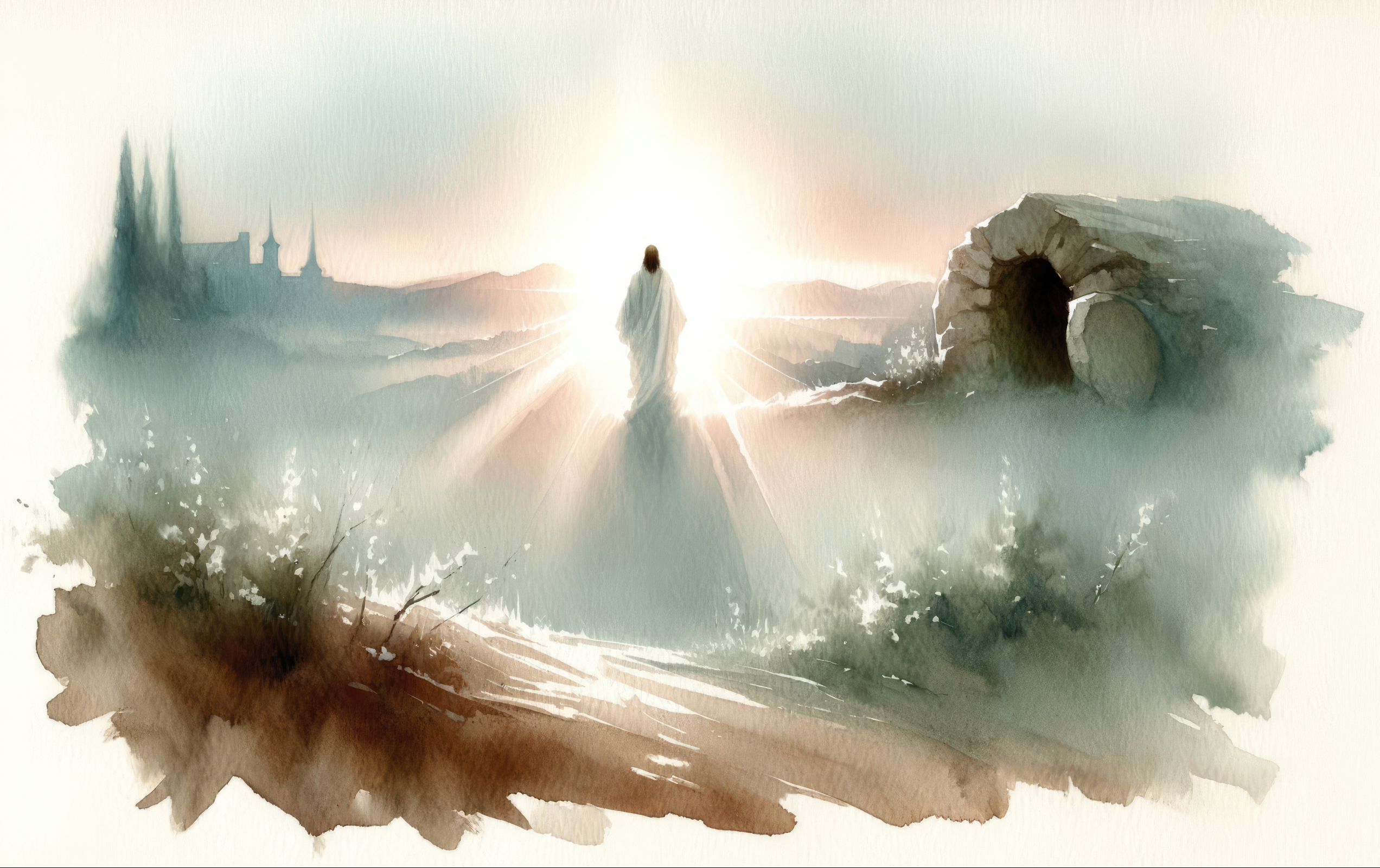
1 When the Sabbath was past, Mary Magdalene, Mary the mother of James, and Salome bought spices, so that they might go and anoint him. 2 And very early on the first day of the week, when the sun had risen, they went to the tomb. 3 And they were saying to one another, “Who will roll away the stone for us from the entrance of the tomb?” 4 And looking up, they saw that the stone had been rolled back—it was very large. 5 And entering the tomb, they saw a young man sitting on the right side, dressed in a white robe, and they were alarmed. 6 And he said to them, “Do not be alarmed. You seek Jesus of Nazareth, who was crucified. He has risen; he is not here. See the place where they laid him. 7 But go, tell his disciples and Peter that he is going before you to Galilee. There you will see him, just as he told you.” 8 And they went out and fled from the tomb, for trembling and astonishment had seized them, and they said nothing to anyone, for they were afraid.

Alleluia! Christ is risen!
He is risen indeed! Alleluia!

In the name of Jesus. Amen.

That day began like any other day in that garden. While the city slept, daylight began to peek over the horizon. Birds began to rustle in the bushes and branches. They didn’t have any songs yet, just little chirps here and there. A light breeze rustled through the trees, but otherwise everything was silent and still.

For the women, any other day like this would have seemed utterly and completely normal. But everything that had transpired on Friday made this morning bitterly different. They had woken up early, well before the sun had risen. They walked out of the city walls in complete silence, each of them carrying a bundle of spices. They were returning to the place they had seen Him laid, and every step was agonizing but not because the path was difficult to walk. That wasn’t the problem. This trek was painful because His tomb was in the shadow of where they had stood for three hours watching Him die (Jn. 19:41). And those memories were still bitterly fresh and raw. But they had to go. They had a job to finish.

Their intention was to give Him a proper burial. It was something they had done for countless others back home in Galilee. But as they approached the garden, their plans were interrupted. They started to worry because they remembered the large, heavy stone that stood between them and their task. They had completely forgotten to calculate it into their plans. “Oh no! What are we going to do about that stone?” “We could go back and get some of the disciples to move it for us.” “No, that won’t work. The guards aren’t going to let them anywhere near His body.” “Ok then. What do you suggest we do?” “I guess we keep going. We’re almost there anyway. Maybe the guards will move it for us. If they won’t, we’ll just figure something else out.”

But then, as they came into the clearing, Mary saw something. The stone had been rolled back. It was laying there, face down. Somehow, the grave looked different. On Friday, the mouth of that tomb looked like the fierce jaws of a predator ready to snap shut. Now, it looked as weak and harmless as a limp, drooling mouth of someone who had unintentionally fallen asleep in a chair.

Those women had planned to anoint the body of a dead Man, but their plans were irrelevant. There was no dead man there. Those women were worried about the heavy stone, but their anxiety was a moot point. It had already been tossed aside by the angel who now sat on it in mocking it (Mt. 28:2).

All the plans of the women, all their worry and anxiety, all their calculations of how this day would go – all of that was thrown out the window because this was no normal day. It was the first day, and not just the first day of the week. It was the first day of something much, much, much greater. It was the first day of the new creation. It was the first day of the Resurrection of the dead. Jesus is the firstfruits, and the full harvest will come soon (1 Co. 15:20, 23).

It wasn’t just the women who had their plans changed and their worries wiped away that day. The guards had planned to watch over Jesus’ dead body to prevent the disciples from stealing it, but hose plans didn’t matter. One, they didn’t matter because Jesus wasn’t, still isn’t, and never for the rest of eternity done with His body. And two, they didn’t matter because the disciples were afraid and locked in the house (Jn. 20:19, 26). I imagine those guards were worried about getting this assignment. “They want us to guard a dead body? This must be some sort of demotion.”

The religious leaders had plans to destroy Jesus (Mt. 27:20), but all they could do was kill Him. And when the Son of God dies, He doesn’t stay dead. Those religious leaders planned to annihilate the Son of David, their King, and have no king but Caesar (Jn. 19:14-21). But now, Jesus is risen and ascended into heaven, seated at God’s right hand on the throne of creation with all authority in heaven and on earth (Mt. 28:18, Col. 2:10). The devil planned to strike Jesus, but he only got Christ’s heal. And now, the devil’s head is crushed (Gen. 3:15).

Christ’s Resurrection requires – even demands – a change of plans. It doesn’t matter if the plans are to do good things like the women, and it doesn’t matter if the plans are for evil like the religious leaders, the rulers, the soldiers, and the devil. None of those plans end up mattering because Christ is risen.

Now, this doesn’t mean you shouldn’t ever make any plans. Don’t let that be your conclusion. Instead, what it means is this: only what God plans matters. God’s plan is what is going to happen. God’s plan is what you can count on. So Christian, whatever plans you make, make them with your mind set on Christ your crucified, risen, ruling, reigning King. Every plan you make, make it by first setting your mind on Christ who is seated at the right hand of God because when Christ who is your life appears, you also will appear with Him in glory (Col. 3:1-4).

This also means that, whatever worries and anxieties you have, now they matter a whole lot less. Christian, because of Christ’s Resurrection, you can now look at everything – all the sin, evil, sickness, injustice, opposition, wickedness, and death in this world – you look at all of that through a different lens, the lens of Christ’s Resurrection.

That lens makes everything clear. That puts everything into its proper perspective. That is how things actually are in reality. The Resurrection has forever changed creation. Your sins are died for and forgiven. And Jesus is out of the tomb proving that God accepted His sacrifice. Death and the grave are defeated. Satan is crushed. And because Christ is risen, so will you.

Today and every day, celebrate that this morning, and every other morning of your life, is no normal morning. Every morning is another morning in the Resurrection. Your Redeemer lives. At the end, He will stand triumphant upon the earth. You will see Him with your own eyes (Job 19:25-26). You can plan on it. Amen.

Alleluia! Christ is risen!
He is risen indeed! Alleluia!

The peace of God, which surpasses all understanding, will guard your hearts and minds in Christ Jesus. Amen.

God of the Living – Sermon for the Vigil of Easter

Click here for the bulletin with the readings for tonight’s service.

Alleluia! Christ is risen!
He is risen indeed! Alleluia!

In the name of Jesus. Amen.

Now and always, our God is the God of the living (Lk. 20:38).

From the very beginning of Scripture (Gen. 1:1-2:3), God creates and gives life to everything that and lives and breathes. God forms Adam from the dust of the ground with His own hand and breathes into his nostrils the breath of life (Gen. 2:7) because He is the God of the living.

In the time of the Flood (Gen. 7:1-5, 11-18; 8:6-18; 9:8-13) when every intention of the thoughts of mankind’s heart was choosing death, God brings destruction to those who rejected Him as the God of life. But He would not make a complete end. He instructed Noah to build an ark to save Noah, his family, and the animals. God did this to preserve the life He had created because He is the God of the living.

When God heard the groaning of His people who were slaves in Egypt, He remembered His covenant with them. God saw their affliction, and God knew (Ex. 2:23-25). God did all those signs and wonders to bring His people out of that land of slavery and death. He opened a way through the waters of the Red Sea so His people could escape Pharaoh’s deadly soldiers, pass through the watery tomb on dry ground, and arrive safely on the other shore (Ex. 14:10-15:1). He did this because He is the God of the living.

When they were scattered and exiled, God promised to bring His people to their own land. He promised to sprinkle clean water on them to wash them from all their uncleanness. He would remove the sinful, dead hearts of stone and give them living hearts of flesh (Ezk. 36:24-28) because He is the God of the living.

When His people were dried up bones (Ezk. 37:1-14), God gave His prophet Ezekiel a promise to proclaim: “I will open your graves and raise you from your graves. I will bring you into the land, and you shall know that I am the Lord. I will put My Spirit within you, and you shall live.” God made that promise because He is the God of the living.

When Job was suffering, he knew that his Redeemer lives (Job 19:20-27). And Job had no doubt that his Redeemer would stand victorious on the earth. Job rightly confessed even after his body died and his flesh was destroyed that his own eyes would see God because Job knew that God is the God of the living.

Faced with a blazing execution, Shadrach, Meshach, and Abednego refused to worship the pagan image that Nebuchadnezzar had set up (Dan. 3:1-30). They knew that God was able to deliver them from the burning fiery furnace and out of the king’s hand. But even if God didn’t deliver them they would not worship that dead, golden image. Even though they were bound and thrown into that inferno, they were not burned or singed because the God of the living walked with them both through and out of that fire.

The God of the living brings life to every corner of creation where we bring sin and, with our sin, death. The God of the living took on flesh and blood to take your place on Golgotha, the Place of the Skull (Mt. 27:33). Out of love for you who choose death, He willingly went to death to utterly defeat it. And when God dies, He doesn’t stay dead. He is the God of the living.

Jesus, your Savior, has and will come into your grave and bring you out. By His death, He has swallowed up death. “O death, where is your victory? O death, where is your sting?” Death’s only answer is, “I lost them. The God of the living has taken them away.”

Dear saints, because of the crucified, dead, buried, resurrected, ascended, and living Jesus, you now look for the resurrection of the dead and for the life of the world to come. Amen.

Alleluia! Christ is risen!
He is risen indeed! Alleluia!

The peace of God, which surpasses all understanding, will guard your hearts and minds in Christ Jesus. Amen.

Savior & Friend – Sermon on John 19:26-27 for Good Friday

John 19:26–27

26 When Jesus saw his mother and the disciple whom he loved standing nearby, he said to his mother, “Woman, behold, your son!” 27 Then he said to the disciple, “Behold, your mother!” And from that hour the disciple took her to his own home.

In the name of Jesus. Amen.

We might be a little hesitant to say it because it seems so blunt, but on this day – this Good Friday, 1,991 years ago – God died. Jesus, the almighty, eternal, only-begotten Son of God, died. And He died for you. The death that you and I deserve because of our sins is died by Jesus.

This, dear saints, is how God loves you. God Himself took on human flesh and blood so He could be beaten, mocked, scorned, crucified, and die for you and to win your salvation. And I wouldn’t be surprised if we spend all eternity contemplating and rejoicing in this fact. God died, and He died for you.

But we can’t forget that this is not only the death of our God and Savior. It is also the death of a Man, a Man who is also a Friend and a Son.

As Jesus was hanging on the cross, giving His life, and saving the world, our Lord’s mother, Mary, was standing there with some of the other women. All the disciples had fled (Mt 26:56), but apparently John couldn’t stay away. He was there to see the end (Jn. 19:35). You can imagine John inching his way out of the city, slowly stepping up the hill of Calvary, sneaking and threading his way through the crowds, closer and closer until he is there beneath the cross. And he stands next to Mary.

Then, Jesus looks down and sees His mother and the disciple whom He loves weeping. And Jesus says, “Woman, behold, your son,” and to John, “Behold, your mother.”

With these words, Jesus provides for His mother and for John. Christ gives His mother into the care and keeping of His beloved disciple. Throughout His entire life, Jesus perfectly kept the 4th Commandment to honor His father and mother. As a Child, Jesus was obedient to Joseph and Mary learning from them and submitting to them (Lk. 2:51). After the death of His earthly father, Jesus continued to take care of Mary, look after her, and provide for her.

And even as Jesus is dying, He is still blessing and serving His neighbor and mother. “Look Mary, here’s John. John, here’s Mary. Take care of each other. Love and bless each other. Don’t let each other go.”

By doing this even as He is dying, our Savior reminds us that we need one another. As He accomplishes the salvation of the world (1 Jn. 4:14), He also makes sure that His mom won’t be alone to fend for herself in the world.

As Jesus cared for Mary and John in this way, the God Man cares for you in every way.

Yes, Jesus goes to prepare a place for you in His Father’s house (Jn. 15:2), but He will also give you a bed and roof over your head so you can sleep tonight. Yes, Jesus promises to give you a seat at the eternal feast (Is. 25:6-9; Mt. 8:11), but He will also give you your daily bread today, tomorrow, and every day (Mt. 6:11, 31-32) until He welcomes you into His banquet hall.

Jesus is your Savior, and with this word, Jesus shows that He is also your Friend. Amen.[1]

The peace of God, which surpasses all understanding, will guard your hearts and minds in Christ Jesus. Amen.


[1] This sermon was adapted from a sermon by Pr. Bryan Wolfmueller.

Common Union – Sermon for Maundy Thursday

The Scripture readings for tonight’s service are
Exodus 24:3-11; 1 Corinthians 11:23-32; and John 13:1-15, 34-35.

In the name of Jesus. Amen.

On this night, 3,470 years ago, God appointed a feast. God told His people to slaughter a lamb, take its blood, put it on the doorposts of their houses, and live. But the lamb wasn’t only used for its blood. God’s also told them to roast the lamb’s body and eat it. Those Passover lambs doubly provided for God’s people. First, the lambs’ blood marked the doors of God’s people which protected, shielded, and delivered them from the sentence of death. And second, the lambs’ bodies provided the strength and nourishment the people needed for what would happen the next day (Ex. 12:1-14). The morning after that first Passover, God’s people gathered themselves and all that they had and left Egypt to begin their journey to the Promised Land.

On this night, 1,991 years ago, our Lord Jesus celebrated the final Passover feast with His disciples. After that meal was done, Jesus took bread, gave thanks, broke it, and gave it to His disciples saying, “Take, eat; this is My body, which is given for you. This do in remembrance of Me.” Then, He took the cup, blessed it, and gave it to the disciples saying, “Drink of it, all of you; this cup is the new covenant in My blood, which is shed for you for the forgiveness of sins. This do, as often as you drink it, in remembrance of Me.”

By doing this, Jesus put an end to the old covenant that His people had broken and established the New Covenant. In this New Covenant, He forgives your iniquity and remembers your sin no more. And this New Covenant does more than that. Because of this New Covenant, God promises to be your God and make you His people (Jer. 31:31-34; Heb. 8:8-13). Forgiveness and being God’s people. This New Covenant delivers forgiveness through the shedding of Jesus’ blood, but don’t forget that this meal also unites us together as God’s forgiven people.

In 1 Cor. 10:16-17, Scripture says that the Bread and Cup of the Lord’s Supper are, as the ESV translates it, a “participation” in the Body and Blood of Christ. Unfortunately, the way we use “participation” most often these days is simply showing up. In some competitions, simply showing up gets you a participation ribbon. Translating that word as “participation” might give the impression that Jesus does nothing more than show up in the Bread and Cup. I prefer the KJV which uses the word “communion.” The Bread and Cup of the Lord’s Supper is a “communion” in the Body and Blood of Christ. These elements unite us with the Body and Blood of Christ.

Because the Lord’s Supper is, according to Jesus, His true Body and Blood, it first unites us with Him. And second, since this Sacrament unites us with Jesus, it also unites us with one another. It makes us one body (1 Cor. 10:17).

We need this unity, this communion with one another. The first thing that God says about mankind is, “It is not good for the man to be alone” (Gen. 2:18). Man alone is not good. That doesn’t mean that man alone is bad; it’s just not good. To make mankind good, God creates a woman, a companion, a wife, a bride for Adam and this completes him. Then, not only is mankind good like the rest of creation; humanity is elevated above the rest of creation and is very good (Gen. 1:31). We were not created for ourselves to live in isolation. We are created for others.

In the Lord’s Supper, we become a united community, a holy and forgiven people who are bonded together with Jesus and with one another as the body of Christ. And as a body, we love and care for one another because we need each other (1 Cor. 12:12-27).

If one part of your body is hurt, the rest of your body compensates. If you cut one of your fingers, you use your other fingers to do what needs to be done while the injured finger heals. If you break an arm or leg, the other one picks up the slack. When Jesus gives us this new commandment to love one another, He is calling you to do the same thing for the other members, the other parts, of the body of Christ. And the love you have and demonstrate for your brothers and sisters in Christ is evidence to the world that you are truly Jesus’ disciples (Jn. 13:35).

On the same night, 1,991 years ago, when Jesus gave us Holy Communion, He also served His disciples by washing their feet. For several reasons, foot washing isn’t a Sacrament. One of the reasons is that Jesus says that washing was a lesson on how to love one another. He asks if they understand the lesson (Jn. 13:12) and says that what He did was an example of serving others (Jn. 13:14).

By that example, the Creator of all things makes the glory of His love shine by humbly serving His creatures. Jesus is the God of love, and He loves you by giving to you and serving you. This example of foot washing shows that we followers of Jesus are to give and to love and to serve each other as He does. Christ says, “A new commandment I give to you, that you love one another: just as I have loved you, you also are to love one another. By this all people will know that you are my disciples, if you have love for one another” (Jn. 13:34-35).

What does this love look like? Jesus will say a little later, “Greater love has no one than this, that someone lay down his life for his friends” (Jn. 15:13). Laying down your life for someone else can only happen once because you only have one life to lay down. The day may come when you need to lay down your life to save a friend’s life. But until then, lay down your life in the all the other little ways that you can. Lay down your pride and ambition and self-interest and ease and comfort to love and serve your neighbor. Lay down your lives to love and protect those for whom Christ has died because we are a holy communion, God’s blessed, forgiven community.

As you come tonight to receive this Sacrament, this Holy Communion, you receive Christ’s Blood that protects you from death. And you also receive the nourishment and strength that you need to love one another.

So, tonight, come to this altar, this table, at your Savior’s invitation. Come and behold God. Come and eat. Come and drink. Come and be united with Christ and united with one another. Then go. Show the world that you are truly Christ’s disciples by your love for one another as you journey to the Promised Land of His eternal kingdom. Amen.

The peace of God, which surpasses all understanding, will guard your hearts and minds in Christ Jesus. Amen.

Silently Accused – Sermon on Matthew 26:1-27:66 for Palm Sunday

Matthew 26:1-27:66

In the name of Jesus. Amen.

It doesn’t matter how familiar you are with a passage of Scripture, there’s always something more to see, to glean, to meditate on. That’s true for short, familiar passages, but it is certainly true for a long passage like this. While preparing this week, what struck me in a fresh way is what Matthew tells us in Mt. 27:20. The chief priests and elders persuaded the crowd to ask for Barabbas and destroy Jesus.

Of the four Gospels, Matthew is the sharpest on this. They don’t persuade the crowd to just kill, execute, or even crucify Jesus. They want Him destroyed. That’s their desire.

There is utter malice behind this. Jesus looks so weak. He had already been betrayed by Judas. The other eleven disciples fled when He was arrested. Peter denied even knowing Him. Jesus had been mocked, spit upon, beaten, bound, and whipped. And they still call for Jesus to be destroyed. The cruelty of wanting Jesus destroyed is absolutely astounding.

But through all of it, Jesus barely speaks. Jesus talks a lot at the beginning of this reading while He is with the disciples, but once He is arrested, He only speaks three more times before His death here in Matthew’s gospel. All these false accusations are thrown at Him, but He doesn’t respond to any of them. Jesus just stays passive and silent as He is accused. Again, He looks weak.

During His trial before Caiaphas, all sorts of false charges are brought against Jesus, but He simply stands there and receives them. He doesn’t say a word. He only talks when Caiaphas demands, “Tell us if you are the Christ, the Son of God” (Mt. 26:63). But then, Jesus says, “You have said so. But I tell you, from now on you will see the Son of Man seated at the right hand of Power coming on the clouds of heaven.”

It sure doesn’t look like Jesus is seated at the right hand of Power through the rest of His Passion. His silence looks like weakness, but that’s not how we should see it. It is powerful.

Jesus doesn’t speak again until Pilate asks Him, “Are you the King of the Jews?” There, Jesus says,“You have said so.” But again, as the chief priests and elders accuse Jesus before Pilate, Jesus is silent (Mt. 27:12). Even though Pilate asks Jesus to respond to all these accusations, Jesus still gives no answer, not even to a single charge. In His silence, Jesus looks weak and passive.

All of this reminds me of the scapegoat. Do you remember what God had commanded His people to do on the Day of Atonement (Lev. 16)? Each year, there were two goats. One was sacrificed and the blood of that goat allowed the high priest to enter the Holy of Holies. But the other goat, the scapegoat – it had a different purpose. The high priest laid both of his hands on the head of that goat and confessed all the iniquities, all the transgressions, and all the sins of the people. And God said that what happened there was that the high priest was placing all that sin on the goat’s head (Lev. 16:21).

And what do you suppose that goat did during that? It couldn’t object. The goat didn’t say, “Hey, what do you think you’re doing?” The goat remained passive and silent and simply received it. Once all those sins were placed on that goat’s head, it was led into the wilderness carrying all those sins away from the sinners (Lev. 16:22). The scapegoat and all those sins were destroyed, never to be seen again. Yes, the scapegoat was passive, but by it God powerfully removed those sins.

Pilate hears all these accusations and sees how Jesus is silent. He knows these religious leaders want Jesus destroyed for no good reason, but Pilate has an idea. Pilate has the notorious Barabbas in custody who had committed murder and started a riot and insurrection (Mk. 15:7; Lk. 23:18-19). Pilate puts Barabbas and Jesus forward as his nominees to potentially be released. It seems as though Pilate figured Barabbas was such a rotten individual and danger to society that the crowds would rather have Barabbas crucified for their own safety and protection. But the crowd calls out for Barabbas to be released and for Jesus to be crucified.

And that’s what Jesus wants too. So, Jesus stays silent, passive, and powerful.

It was God’s will that Jesus should be on the cross instead of Barabbas. By taking Barabbas’ place on that cross, Jesus also takes your place under God’s wrath against your sins.

God takes all this evil, malice, and injustice and uses it for your eternal good (Ro. 8:28). Jesus’ Passion isn’t a tragedy. It is God’s victory. In fact, this is the victory. Jesus’ silence in all of this isn’t weakness. It’s God’s power because this is God’s plan playing out. This is how God powerfully removes your sins from you as far as the east is from the west (Ps. 103:12). Jesus is crucified and heaven rejoices to see God’s great, powerful love for His creation. This is how God loves the world. This is how God loves you.

Jesus silently takes all those accusations, He is loaded up with all your sins, and He is led into the wilderness of death as He is crucified and destroyed. But death will no power over Him.

Dear saints, welcome to Holy Week. Easter is coming. Amen.

The peace of God, which surpasses all understanding, will guard your hearts and minds in Christ Jesus. Amen.

Purified & Redeemed – Sermon on Hebrews 9:11-15 for the Fifth Sunday of Lent

Hebrews 9:11–15

11 But when Christ appeared as a high priest of the good things that have come, then through the greater and more perfect tent (not made with hands, that is, not of this creation) 12 he entered once for all into the holy places, not by means of the blood of goats and calves but by means of his own blood, thus securing an eternal redemption. 13 For if the blood of goats and bulls, and the sprinkling of defiled persons with the ashes of a heifer, sanctify for the purification of the flesh, 14how much more will the blood of Christ, who through the eternal Spirit offered himself without blemish to God, purify our conscience from dead works to serve the living God. 

15 Therefore he is the mediator of a new covenant, so that those who are called may receive the promised eternal inheritance, since a death has occurred that redeems them from the transgressions committed under the first covenant.

Thanks & Blessing – Sermon on John 6:1-15 for the Fourth Sunday of Lent

John 6:1–15

1 After this Jesus went away to the other side of the Sea of Galilee, which is the Sea of Tiberias. 2 And a large crowd was following him, because they saw the signs that he was doing on the sick. 3 Jesus went up on the mountain, and there he sat down with his disciples. 4 Now the Passover, the feast of the Jews, was at hand. 5 Lifting up his eyes, then, and seeing that a large crowd was coming toward him, Jesus said to Philip, “Where are we to buy bread, so that these people may eat?” 6He said this to test him, for he himself knew what he would do. 7 Philip answered him, “Two hundred denarii worth of bread would not be enough for each of them to get a little.” 8 One of his disciples, Andrew, Simon Peter’s brother, said to him, 9 “There is a boy here who has five barley loaves and two fish, but what are they for so many?” 10 Jesus said, “Have the people sit down.” Now there was much grass in the place. So the men sat down, about five thousand in number. 11Jesus then took the loaves, and when he had given thanks, he distributed them to those who were seated. So also the fish, as much as they wanted. 12 And when they had eaten their fill, he told his disciples, “Gather up the leftover fragments, that nothing may be lost.” 13 So they gathered them up and filled twelve baskets with fragments from the five barley loaves left by those who had eaten. 14 When the people saw the sign that he had done, they said, “This is indeed the Prophet who is to come into the world!” 

15 Perceiving then that they were about to come and take him by force to make him king, Jesus withdrew again to the mountain by himself.

In the name of Jesus. Amen.

I have a fresh appreciation for this miracle. Last Friday, I was one of the volunteers at Sacred Heart’s Fish Fry. For about three hours, I stood along the buffet line making sure there was bread, coleslaw, tartar sauce, butter, sour cream, and lemons for people who then waited for fried fish and a baked potato. When something on the line got low, I was ready to swap out the tray or bowl and have a full one ready so the line would keep moving. I one of 64 people working that night, and in those three hours we served 1,316 people their supper.

Now, think about that. Sixty-four people, who have been organized to do particular tasks, fed just over 1,300 people in about three hours. Here, Jesus and his twelve disciples serve 5,000 men plus women and children (Mt. 14:21). In all likelihood, this was a crowd of twenty to thirty-thousand people who are fed by thirteen men doling out five barley loaves and two fish that was brought by a boy. Every person in that crowd ate as much as they wanted. And, when it was all over, the disciples gathered up twelve baskets full of leftovers.

This is easily the ‘biggest’ miracle of Jesus recorded for us in the Gospels, which might be the reason all four Gospels tell us about it. The only other miracle that even comes close would be Jesus turning water into wine at the wedding in Cana (Jn. 2:1-11). Sure, there are times when Jesus will heal many sick people who are brought to Him, but those were still one at a time miracles (Mt. 4:23-25; 8:16; Mk. 1:33-34; Lk. 4:40). This one miracle provided for tens of thousands of people all at once.

It’s no wonder, then, that the people reacted the way they did. Here is a Man who can feed people bread without needing soil or seed or rain or the right weather conditions or combines or grain elevators or flour mills or factories or bakers or truck drivers or grocers. Jesus can feed people fish without boats or bait or poles or nets or processing plants or even water. Jesus is not a politician who spouts empty promises but never delivers. He just delivers. This is the kind of guy who everyone wants to be king. So, they planned to take Jesus by force and chain Him to a throne because, sure, they were full now, but they’d be hungry again later.

Notice what everyone in this account is focused on. Phillip looks at their checkbook balance and says, “Two-hundred denarii? That’s not nearly enough.” Andrew looks at the boy’s snack and says, “This isn’t going to do it.” And the crowds – even after they are fed – they know they would be hungry again. The food Jesus provided that evening wasn’t going to be there for them tomorrow. So, they think, “If this Jesus guy can feed us like this in the wilderness, imagine what He can do if He’s the king with advisors and soldiers and tax revenue.”

We sinful creatures always seem to be fixated on our lack and desire to get more than what we have. But even when we get more, we aren’t satisfied. In his book Mere Christianity, C.S. Lewis says that the fact that we have desires means that satisfaction for those desires exists. Behind every desire – even sinful, evil desires – there is something good that is trying to be filled. The drug addict is trying to find the end of his pain or escape from sorrow. The sexually promiscuous are trying to find the good gift of companionship that God gives in marriage but fail to find it apart from marriage. Here, the crowds are doing the same thing. They want the gift of food but not in the way Jesus wants to give it.

You cannot force a gift to be given. Doing that is an attempt to twist gifts into wages, and that never works. All the things we long for and all desires we have are only filled by what God will give in the perfection of the New Creation. Because this world has fallen into sin, this world does not have the satisfaction of the desires we are seeking to fill. So, if you have unfulfilled desires, recognize you are made for another world. Stop looking to created things to fulfill your desires. Repent and instead, look to the Creator, and trust His promise to fulfill those desires. Then, be content with the good gifts God gives you in this life even as they seem to disappear.

In His infinite wisdom, God lets us see how things are used and depleted, but He doesn’t always let us always see how He supplies. None of the four Gospels tell us how the bread and fish are multiplied to feed this massive crowd. I doubt those loaves and fish grew into a massive pile that the disciples kept handing out – I think the Gospel writers would have included that. I like the suggestion that the disciples walk around with baskets of food, and each person reaches in to take some. While it appears to each individual that they are decreasing the amount of food in the basket, when the next person reaches in, there is still more. No matter how many people reach in and take, there is always more food in the basket.

Dear saints, your needs for food, house, clothing, money, health, etc. are things you can see and feel. But God doesn’t have to show you how He provides to meet those needs. He promises to meet them. So, trust His promises. You can see and feel hunger, but you can’t see the God who feeds you. You can see and feel sickness, but you can’t see the Great Physician who heals you. You can see and feel war and chaos, but you can’t see the Prince of Peace who has all authority in heaven and earth and governs all things from His throne at God’s right hand. But God supplies each of those things in ways you cannot see or understand. There are thousands of miracles that happen in your daily life. You’ve just gotten numb to seeing them because you experience them so often.

The fact that you work (in whatever job you have) and food gets to your pantry, cupboards, fridge, freezer, oven, and table is a miracle. When that food goes into your body and keeps you healthy, and when you do get sick but put nutrients, vitamins, or medicines into your body and recover, that is a miracle too. All those things – work, money, food, house, health – they are all good, miraculous gifts from God’s gracious hand. And what God gives He blesses. 

Here, we are told that Jesus gives thanks for the food before it is distributed to the crowd. In Confirmation class we recently went through the texts that recount Jesus giving the Lord’s Supper (Mt. 26:26-28; Mk. 14:22-24; Lk. 22:19-20; and 1 Cor. 11:23-25). In those texts, the Gospel writers use two phrases interchangeably. Jesus giving thanks for something is the same as Jesus blessing it. So, when you pause and take a moment to pray for your food, God is blessing that food to be a blessing for you. 1 Tim. 4:4-5 says that everything created by God is good, and nothing is to be rejected if it is received with thanksgiving because it is made holy by the Word of God and prayer. Receive with thanks the things that God gives and watch how it is blessed.

I’ll close with this: Jesus did not let the crowds take Him by force and make Him king that day, but He did allow them to take Him by force when a band of soldiers came and arrested Him. They forced Him to stand trial before Pilate and Herod. He wasn’t chained to a throne; instead, He was nailed to a cross where He shed His blood and gave His for you. Thanks be to God. Receive that gift with thanks and faith and watch how God blesses it. He blesses it and multiplies it to make you a blessing to others so that you can point them to Jesus, the One can and does fill their desires with the gift of Himself. Amen.

The peace of God, which surpasses all understanding, will guard your hearts and minds in Christ Jesus. Amen.