Enoughness – Sermon on 2 Corinthians 3:4-11 for the Twelfth Sunday after Trinity

2 Corinthians 3:4-11

4 Such is the confidence that we have through Christ toward God. 5 Not that we are sufficient in ourselves to claim anything as coming from us, but our sufficiency is from God, 6 who has made us sufficient to be ministers of a new covenant, not of the letter but of the Spirit. For the letter kills, but the Spirit gives life. 

7 Now if the ministry of death, carved in letters on stone, came with such glory that the Israelites could not gaze at Moses’ face because of its glory, which was being brought to an end, 8 will not the ministry of the Spirit have even more glory? 9 For if there was glory in the ministry of condemnation, the ministry of righteousness must far exceed it in glory. 10 Indeed, in this case, what once had glory has come to have no glory at all, because of the glory that surpasses it. 11 For if what was being brought to an end came with glory, much more will what is permanent have glory.

In the name of Jesus. Amen.

Imagine that you received an invitation to a banquet. You get yourself ready and put on your best suit or dress. You drive to the location and enter the building to find that this banquet is a lot fancier and way more formal than you realized. The crystal chandeliers and candles cast a golden light over an exquisitely decorated room. The tables are set with fine china and crystal flutes. You look at all the other guests and discover that they are wearing either designer tuxedos with cufflinks and cummerbunds or sparkling gowns and jewelry. There you are sticking out like a pigeon in a peacock parade.

You try to mingle with the glittering guests, but they mostly ignore you. The only acknowledgement you get are cold smiles and people saying, “Oh, I love your outfit,” as they turn away laughing and asking each other, “Who’s that guy?” You pull out the invitation, and, sure enough, it’s got your name and address. But you’ve had it. It must have been a mistake. So, you start looking for an exit, one that will allow you to avoid as many people as possible.

As you’re leaving, the host of the gala approaches and calls you out by name saying, “I’m so glad you’re here. I’ve got all sorts of people I want to introduce you to.” You try to explain that you should probably leave because you don’t fit in. You point out that you aren’t as polished as everyone else there and mention how the crowd has already rejected and made fun of you. But the host simply says, “You aren’t here to be fancy. You’re here because I invited you. My choice is enough to make you belong. Just stick with me.” The rest of the evening, he takes you around the room showing you off, bragging about you, and highlighting how important you are to him. He seats you next to himself at the head table. The rest of the evening, your confidence grows. Now, you are treated with respect and honor by everyone else – not because you’ve won them over. Your importance is rooted in the host’s attitude toward you, and his opinion carries a weight that no one can challenge. It is enough.

Dear saints, such is the confidence you have through Christ toward God.

In this text, Paul is defending his office of being an apostle. There were some false teachers in the congregation at Corinth who were saying that Paul didn’t have the authority to say anything in the church. They questioned the sufficiency of Paul’s preaching. They were saying that Paul’s preaching of God’s grace through Christ was not enough. That’s why he says that God had made him sufficient to be a minister of the ‘new covenant’ of the Gospel that points people to Jesus as the Messiah (2 Cor. 3:6). And that’s why Paul goes on in v. 7-11 of this text to compare his ministry of the Gospel to Moses’ ministry under the old covenant.

Now, this would be a really good text to preach at an ordination service as a man is called by God to be a pastor. All pastors, myself included, need to recognize that when they preach, they aren’t doing it by their own authority but by the authority that God has given (1 Pet. 4:11). When God puts a pastor into a congregation, he is there to deliver God’s gifts to God’s purchased and redeemed people.

Pastors are called to speak two different words to their congregations. First, pastors are to preach ‘the letter that kills’ also called here ‘the ministry of condemnation.’ In other words, pastors are to preach the Law. And second, pastors are to preach ‘the ministry of righteousness,’ the Gospel. God sends pastors to declare that people are sinners so they can be pointed to repentance and faith in Christ. That’s the main point of this passage. But what Paul says here can be applied to other callings and vocations as well.

Dear saints, you have been called out of the darkness of your sin into God’s kingdom. You are called to be God’s hands and feet to the people around you so you can render service to them. And you can have confidence as you serve and carry out those vocations. You are not sufficient on your own. God Himself has made you sufficient. In this text, the word translated ‘sufficient’ means enough.

There are all sorts of places we might look to build confidence and find our enoughness, but there is only one legitimate source of confidence. Any other source will lead to bad outcomes. The most common place we look is inside ourselves – our abilities, our eloquence, our strengths or skills. There are certainly productive, able people who are successful at many things. The problem is that when those moments of success come and we think it’s because we’re sufficient in ourselves, pride sneaks in. We start comparing ourselves to others and look down on them. We get puffed up, and when that happens, we’re setting ourselves up for a big fall. Even when you are successful and humble, the devil will attempt to draw your attention back to yourself and your humility, and again, pride sprouts up.

If you to think that you are strong and capable on our own, you will start to think that you can handle the challenges in life by yourself. When that happens, you’ll quickly find that your own strengths and abilities fade and fail. And when you fail, it’s easy to fall into despair.  The devil wants you to be constantly looking at yourself because there you’ll see that your strength and ability isn’t enough to do all that God has called you to do. Any setback or misstep can be used by the demons to paralyze you.

But when God is the source of your confidence, and He is, then, you lack in nothing. Look at the sheer holiness and privilege of your callings – spouses, parents, children, teachers, friends. When you first recognize the massive, holy responsibilities that God has given you, you realize that these things are beyond you. And you aren’t adequate to carry those vocations out. You can’t claim anything – any ability, any strength, any eloquence, any skill – as coming from you. But God Himself has given you everything. He has won and purchased you by giving His Son, Jesus to die on the cross as your Savior. Everything you are, everything you have, every calling and responsibility has been given to you as a gift. And what God has given you is enough.

As citizens of God’s kingdom, recognize that God has given you more than enough, more you can imagine. He has given His gifts in full measure, pressed those gifts down into you to make room for more and His gifts are always running over (Lk. 6:38).

The same Holy Spirit who blew through the upper room at Pentecost now fills you with everything you need to carry out the tasks entrusted to you. The Holy Spirit who abides in and with you is like that host at the gala. He accompanies you and makes you worthy to be in His kingdom. Anyone who questions that worthiness insults Him directly and isn’t worth listening to. God Himself has made you sufficient and enough. 

By His calling, His redeeming, His grace, His sanctifying, He has made you enough. And that is enough. Dear saints, your enoughness is from God, and from God alone. So, go; boldly carry out the tasks that He has given you. Amen.

The peace of God, which surpasses all understanding, will guard your hearts and minds in Christ Jesus (Php. 4:7). Amen.
Coming Soon – Sermon on John 1:19-29 for the Fourth Sunday of Advent

John 1:19–29

19 And this is the testimony of John, when the Jews sent priests and Levites from Jerusalem to ask him, “Who are you?” 20 He confessed, and did not deny, but confessed, “I am not the Christ.” 21 And they asked him, “What then? Are you Elijah?” He said, “I am not.” “Are you the Prophet?” And he answered, “No.” 22 So they said to him, “Who are you? We need to give an answer to those who sent us. What do you say about yourself?” 23 He said, “I am the voice of one crying out in the wilderness, ‘Make straight the way of the Lord,’ as the prophet Isaiah said.” 

24 (Now they had been sent from the Pharisees.) 25 They asked him, “Then why are you baptizing, if you are neither the Christ, nor Elijah, nor the Prophet?” 26 John answered them, “I baptize with water, but among you stands one you do not know, 27 even he who comes after me, the strap of whose sandal I am not worthy to untie.” 28 These things took place in Bethany across the Jordan, where John was baptizing. 

29 The next day he saw Jesus coming toward him, and said, “Behold, the Lamb of God, who takes away the sin of the world!

In the name of Jesus. Amen.

My college buddies and I try to get together every year. We typically meet at a lake cabin that belongs to the family of one of the guys in our group. Sometimes, we’ll joke that the only reason we invite him is that we meet at his cabin. (He’s actually a great guy.) The majority of our time is spent sitting around a campfire. Since there are at least three eagle scouts and one borderline pyromaniac in that group, building and maintaining the fire is no problem.

We sit around those huge, burning logs sharing stories late into the night, but over the years, I’ve ended up being one of the first to go to sleep. Because I’m one of the first to bed, I’m also one of the first up and get back to the firepit in the morning. When I look at the place that was a roaring fire when I went to bed, all I can see is a pile of ash. The flames are all gone. But when I get down close to that gray ash heap, I can fell there are still hot embers underneath. All it takes to get the fire going again is a paper plate, a few twigs, and a little blowing.

Throughout the Old Testament, God had made promise after promise that the Messiah and Savior would come. Like a huge bonfire, the prophetic promises burned bright and hot. But then, God stopped sending the prophets, and the flames died down. For some 400 years, there was no word from God. By all appearances, there was nothing more than an ash heap, but under those ashes were glowing embers ready to ignite anything placed on them.

Those hot coals were detected with the old priest, Zechariah. The people of Jerusalem had heard the story of how he had seen a vision while he was serving in the Temple, and after that vision he wasn’t able to speak for nine months. The strange thing is that vision and silence coincided with his old wife, Elizabeth, getting miraculously pregnant and having a son. Zechariah was only able to speak again after his son was named John, which was reportedly the name given to him in that vision (Lk. 1:2-25, 57-80). And this John grew up to be a peculiar fellow. He lived out in the desert eating grasshoppers and wild honey.

Then, the breeze started to blow on the embers. John was out in the wilderness preaching and baptizing. He would say things that others were too shy to speak. John was calling soldiers, tax collectors, and everyone to repent (Lk. 3:7-17). The religious leaders didn’t have a problem with that call to repentance. The curious thing about this call to repent was the reason John gave, “for the kingdom of God is near.” Where did John get that idea?

John’s preaching had gotten the embers glowing from beneath the ashes, and now huge crowds of people were migrating from Jerusalem, Judea, and all around the Jordan to hear this preaching and to be baptized by John (Mt. 3:5-6). Just like sticks thrown on hot embers, flames were starting to flicker once again. And that is what got the attention of the religious big wigs in Jerusalem. So, they sent a delegation to John to ask him, “Who are you?”

John confessed, “I am not the Christ. No, I’m not Elijah. No, I’m not the prophet. I am the voice of one crying out in the wilderness, ‘Make straight the way of the Lord,’ as the prophet Isaiah said.” And John goes on to say, “There is One standing among you that you don’t know, and I’m not worthy to stoop down and untie His sandals.” The flames were growing higher and hotter.

Now, Scripture doesn’t say this for sure, but I like the idea that Jesus was present in that crowd when John says, “among you stands One you do not know,” because it was the very next day that John points to Jesus and says, “Behold the Lamb of God who takes away the sin of the world.” With that preaching, the log was thrown on the flames and a new bonfire ignited.

That new fire of Jesus’ ministry brought miracles, healing, and powerful teaching. It burned brightly scattering and dispersing the darkness of demons. But after three years of Jesus’ ministry, something happened. It looked like the fire completely collapsed and the flames appeared to go out as Jesus died on the cross, but they ignited again in His glorious resurrection. By His death and resurrection, Jesus, the Lamb of God, has taken away the sin of the world. Everyone quickly check. Are you part of this world? Ok. Then Jesus has taken away your sin.

This same Jesus is now ascended into heaven where He sits at God’s right hand interceding for you and pleading your case before God the Father. There, Christ your Savior continually reminds God the Father that the wrath and punishment you deserve has been fully paid by His holy and precious blood. With His nail-scarred hands, Jesus now points to you who trust in Him and says, “That one’s sins are removed as far as the east is from the west” (Ps. 103:12).

Yes, you live some 2,000 years after Jesus died and rose again. Sure, it might look like the light of the fire of Jesus’ ministry has been reduced to nothing more than a pile of ashes. But it’s looked like that before. And our perception can be deceiving. The embers are still there and hot. Christ is not as far away as He may seems to be. He is here. Jesus stands among you. He has promised, “Where two or three are gathered in My name, there I am among them” (Mt. 18:20). He declares to you, believer, “I am with you always, to the end of the age” (Mt. 28:20). 

Jesus has come once – born in a barn in Bethlehem. He is coming again in glory and power. And He is come now. It doesn’t matter how gray the ashes appear to be in this sinful world. The embers are glowing hot and bright underneath, ready to ignite at any moment.

Lord willing (Jam. 4:15), we will gather here again tonight to celebrate and remember the birth of our Savior, the Lamb of God who takes away the sin of the world. Celebrating the birth of Jesus helps to prepare us for His second coming. Believer, He came meek and humble when He was born in Bethlehem to be the Savior. That is why the angels could sing, “Glory to God in the highest, and on earth peace among men with whom He is pleased” (Lk. 2:14). That faith prepares you to welcome Him when He comes again in glory on the Last Day.

For those who do not have faith, Jesus’ second coming will be terrifying. There will be no angel to tell you, “Fear not for I bring you tidings of great joy” (Lk. 2:10). Because, when He comes again, He will come to judge the earth (Ps. 96:13, 98:9). You who have faith, you already know the outcome of that judgment. Jesus Himself will be your defense lawyer (1 Jn. 2:1) and judge who will declare you not guilty.

For anyone here who does not have faith in Christ, I love you too much to not tell you that – if you persist in your unbelief and sin – the outcome of your judgment on that day is certain. Jesus will say to you, “Depart from Me, you cursed, into the eternal fire prepared for the devil and his angels” (Mt. 25:41). So, quit your stubborn, self-centered, self-righteous ways. Repent of your sin, and believe in Jesus. He loves you and wants you for his own.

And for you, dear saints, Jesus is here now, and He is with you always. The day of His return is coming soon. The embers are still hot and ready to ignite. Come, Lord Jesus. Amen.

The peace of God, which surpasses all understanding, will guard your hearts and minds in Christ Jesus. Amen.

Coming Joy – Sermon on Matthew 11:2-11 for the Third Sunday of Advent

Matthew 11:2–11

2 Now when John heard in prison about the deeds of the Christ, he sent word by his disciples 3 and said to him, “Are you the one who is to come, or shall we look for another?” 4 And Jesus answered them, “Go and tell John what you hear and see: 5 the blind receive their sight and the lame walk, lepers are cleansed and the deaf hear, and the dead are raised up, and the poor have good news preached to them. 6 And blessed is the one who is not offended by me.”

7 As they went away, Jesus began to speak to the crowds concerning John: “What did you go out into the wilderness to see? A reed shaken by the wind? 8 What then did you go out to see? A man dressed in soft clothing? Behold, those who wear soft clothing are in kings’ houses. 9 What then did you go out to see? A prophet? Yes, I tell you, and more than a prophet. 10 This is he of whom it is written,

“‘Behold, I send my messenger before your face, 
who will prepare your way before you.’

11 “Truly, I say to you, among those born of women there has arisen no one greater than John the Baptist. Yet the one who is least in the kingdom of heaven is greater than he.”

In the name of Jesus. Amen.

What do you do when it appears as though God isn’t interested in what’s happening in the world? What do you do when God doesn’t act the way you expect Him to or just doesn’t seem to care? Today’s Gospel text helps us in the midst of those kinds of questions.

John the Baptizer – that camel hair wearing, locust eating, outspoken prophet in the wilderness – is a combination of a biker gang member, wilderness survivalist, and street-corner preacher. Even before he was born, John was excited about Jesus, leaping in his mother’s womb (Lk. 1:39-44). From the time of his birth, John’s parents knew that he was the one who would prepare the way of the Messiah (Lk. 1:76), and that’s what he did. He pointed people to Jesus as the Lamb of God who takes away the sin of the world. He baptized hordes from Jerusalem, all Judea, and all the region around the Jordan (Mt. 3:5). John comforted with the Gospel, but he also boldly called people to repent for the kingdom of heaven is at hand (Mt. 3:5). He rightly called the religious leaders of his day a brood of vipers (Mt. 3:7). Like a good preacher of God’s Word, John rebuked political leaders like Herod who had married his brother’s wife (Lk. 3:19-20). And that is why John is in prison when we meet him here. For his whole life, John had been a faithful steward of the mysteries of God’s Word (1 Cor. 4:1-2).

In our Gospel reading (Mt. 11:2-22), John will soon be executed. He sits in a dank, dark prison cell. In that solitary, lonely dungeon, the devil does to John what he often does to those in isolation. He whispers lies and tries to cast doubt. John’s mind begins to wonder if his whole life’s work had been a sham. John knew the Scriptures taught that the Messiah would give sight to the blind, mobility to the lame, cleansing to the lepers, hearing to the deaf, and life to the dead, and Jesus certainly was doing that. But John also knew that the Messiah would bring prisoners out from the dungeon (Is. 42:7), that bonds would be loosed (Is. 52:2), that captives would be set free (Is. 49:9).

Because of the devil’s whispering and his current situation John starts to question: “Jesus, You’re checking all of the boxes except the one that matters most to me right now. What gives? Why am I here, stuck in this prison? Do You even know I’m in this situation?” No matter how many times God proves faithful in keeping His promises, it can feel as though God has abandoned you when some of His promises to you still lie in the future.

Instead of letting those questions fester and cause more and more doubt, John does exactly the right thing. He goes to God’s Word. John sends two of his disciples to ask Jesus, who is the Word made flesh (Jn. 1:14). “Are You the One who is to come, or should we look for another?” And Jesus, in typical Jesus fashion, doesn’t give a simple, “Yes,” or, “No.” Instead, Jesus responds: “Go and tell John what you hear and see: the blind receive their sight and the lame walk, lepers are cleansed and the deaf hear, and the dead are raised up, and the poor have good news preached to them. And blessed is the one who is not offended by Me.”

It’s easy for us to fall into the temptation of thinking that God isn’t active in creation when we experience trials and tribulations like John is. Even when God is making good on all of His other promises, if only one of our own boxes is still unchecked, we start to think that something is off. In those moments, it is easy to forget that God is active in and through our suffering. It’s easy to forget that even your suffering has a holy purpose (2 Cor. 1:8-9).

All the evil that the devil and the world tries to throw at you is turned into good by God. You are not at the whim of a god who may or may not care about you. You do not face a devil who is equal in power with God leaving your outcome in question. Joseph, who was sold into slavery by his brothers, told his brothers, “You meant evil against me, but God used it for good” (Gen. 50:19-20). Just as lifting weights is good exercise and builds up the muscles of your body, the suffering you endure in this world is good for your soul and faith, making it stronger.

The fact that Jesus suffered, died, and rose again is proof that God uses even the wickedness of this world and the suffering caused by evil men for your salvation. I’m not saying that it is an easy thing to believe. What I am saying is that Scripture is clear that suffering is not opposed to the Gospel. When God became a creature, He endured suffering so you can live with Him forever. Jesus saved you through His suffering, and He can and does use your suffering to bring about good because God is still active in His creation.

Jesus is the head of the Church, and you, believer, are His body (Eph. 1:22; Col. 1:18). Among other things, that means whatever you do in this world, Christ, the Head, is acting through you, His body. When you do what your boss tells you, you are God’s body being active in creation, and God blesses what you do. Kids, when you do your homework, you are God’s body being active in creation and preparing for the tasks God has for you in your future. As you are faithful in the things God puts in front of you to do, God is acting in you and through you to benefit your neighbor and creation. Be faithful in those things. Our Epistle lesson (1 Cor. 4:1-5) is an important reminder that the most important measure of what we do isn’t success or numbers that can be measured by others. We stewards shouldn’t care what others think. We shouldn’t even try to judge our own success. We are simply called to be faithful (1 Cor. 4:2-3).

But even as you are faithful, you will face suffering like John did. So, instead of falling into despair when you face suffering, God would have you rejoice in your suffering because suffering produces endurance, which produces character, which produces hope (Ro. 5:3-5). When you suffer, go back to God’s Word. Hear His promises. Hold on to those because God has not and will not fail in delivering you from suffering in this fallen and broken world.

Jesus is coming. He is not just coming sometime in the future. He is the constantly coming One. He has come once, He is coming still, and He will come again in the future. So, be bold and confident that the coming One is still active in His creation. Believer, you can have joy because Jesus has come and saved you.

Joy is not the same as happiness. Happiness and sadness cannot coexist, but joy and sadness can. Joy is not the absence of sadness. Instead, joy is confidence and contentment that God is in control and is taking care of things. Even when everything in this world seems dark and fading, God is in control. He has come. He is coming again. And He comes now to give you His Body and Blood which He gave and shed for the forgiveness of all your sins.

Christian, rejoice in the Lord always. Your Lord is coming. In fact, He is at hand now. Amen.

The peace of God, which surpasses all understanding, will guard your hearts and minds in Christ Jesus. Amen.

Confidence – Sermon on Esther 4:7-16 for the Seventeenth Sunday after Trinity

Esther 4:7–16

7 And Mordecai told him all that had happened to him, and the exact sum of money that Haman had promised to pay into the king’s treasuries for the destruction of the Jews. 8 Mordecai also gave him a copy of the written decree issued in Susa for their destruction, that he might show it to Esther and explain it to her and command her to go to the king to beg his favor and plead with him on behalf of her people. 9 And Hathach went and told Esther what Mordecai had said. 10 Then Esther spoke to Hathach and commanded him to go to Mordecai and say, 11 “All the king’s servants and the people of the king’s provinces know that if any man or woman goes to the king inside the inner court without being called, there is but one law—to be put to death, except the one to whom the king holds out the golden scepter so that he may live. But as for me, I have not been called to come in to the king these thirty days.” 

12 And they told Mordecai what Esther had said. 13 Then Mordecai told them to reply to Esther, “Do not think to yourself that in the king’s palace you will escape any more than all the other Jews. 14 For if you keep silent at this time, relief and deliverance will rise for the Jews from another place, but you and your father’s house will perish. And who knows whether you have not come to the kingdom for such a time as this?” 15 Then Esther told them to reply to Mordecai, 16 “Go, gather all the Jews to be found in Susa, and hold a fast on my behalf, and do not eat or drink for three days, night or day. I and my young women will also fast as you do. Then I will go to the king, though it is against the law, and if I perish, I perish.”

Esther 4:7-16

In the name of Jesus. Amen.

In our Gospel lesson (Lk. 14:1-11), Jesus warns about taking a place of honor at a banquet because someone more distinguished might come and you’ll get relegated and downgraded to the kids’ table. Well, Esther is facing a much more dire situation. Even though she is the queen, if she puts herself in front of the king without him extending his golden scepter, she could face immediate execution. But before we get too far ahead of ourselves, it is good to recap what has happened up to this point in the story of Esther.

A man named Mordecai grew up in Jerusalem, but when the Babylonian armies came and destroyed his city, he was taken into captivity and now lives in Susa (Est. 2:5-6). Mordecai had taken it upon himself to raise his cousin, Esther, who had been orphaned (Est. 2:7). We aren’t sure how her parents had died, but it is likely they died when Jerusalem fell. Mordecai was a Christian man. He had the Bible, read it, and trusted the promises God made in it. The main promise that Mordecai trusted and believed was that God would send a Messiah who would save His people from their sin by sacrificing Himself. 

Esther grew up to be very beautiful. She was chosen by King Ahasuerus (aka. King Xerxes) to be the queen in place of his former wife, Vashti who had disobeyed one of his commands. There’s a lot more to that story, but for our purposes today, it’s enough to know that Xerxes had no hesitation to toss aside even his own wife if she does something he doesn’t like (Est. 1).

Even though Esther had become the Queen, she wasn’t living in a ‘happily ever after’ situation. The reason for that brings us to the main villain in the story, who is a man named Haman. Haman was a prominent advisor and official – he was Xerxes’ right-hand man (Est. 3:1). Xerxes had commanded that all the servants at his gate must bow down to Haman when he walked by, but Mordecai, who was one of those servants, refused, and Haman didn’t like that one bit (Est. 3:2-5). So, Haman found out that Mordecai was a Jew, and he told Xerxes that all the Jews in the land despised Xerxes’ commands and laws. Haman offered a huge sum of money (Est. 3:9) to Xerxes if he would sign an order that every Jew living in the kingdom be killed on a certain day. Haman wanted to have Mordecai and all his people destroyed – a holocaust. And Xerxes agreed. He had the order sent throughout the kingdom, but when Xerxes signed the order, he didn’t know that Esther, his wife and Queen, was a Jew herself (Est. 2:20).

That brings us to our text. As soon as Mordecai learns about the plan, he sends a message to Queen Esther in the palace through this guy Hathach telling Esther, “You’ve got to do something about this.” And Esther responds to Mordecai, “Listen, if I go to the king without being called and summoned, I’m probably going to be killed. Xerxes hasn’t called me to come before him for a whole month.” In other words, “This is really risky. If I try your plan, Mordecai, I’ll be executed.”

Mordecai replies to Esther – and this is where I want to spend the rest of this sermon – saying, “Listen Esther, just because you live in the king’s palace don’t think that you are going to escape the fate of the rest of us Jews living out here.” Then in v. 14, Mordecai says, and this is so beautiful, “If you keep silent at this time, relief and deliverance will rise for the Jews from another place, but you and your father’s house will perish.”

Did you catch what Mordecai is saying there? Remember, Mordecai is a Christian. He has confidence and faith in God’s promise. He says, “If you don’t do this, we’re all going to die. But even if we die now, relief and deliverance will rise for us. I have no idea where it might come from, but God has promised. He will deliver. He will send the Messiah someway, somehow.” Mordecai knew his Bible. He knew God would send the Savior, the promised offspring of David and Abraham. Mordecai is completely certain that God will come through on that promise. His faith and confidence here is remarkable.

But note the change in Mordecai’s tone when he talks about the current situation with Esther. “Who knows whether or not you have been made the Queen for such a time as this.” I know that’s currently the famous line from Esther, but the whole thing is so important. Mordecai is not telling Esther, “Just go to Xerxes. God will keep you safe. Everything will be fine.” Mordecai doesn’t say that. He might wish he could say that, but he can’t say that because there is no promise in the Bible that Esther will be safe in this particular situation.

All Mordecai can say is, “Esther, know that God loves you. He is going to send the Savior. Yes, if you go and stand before the king, you might die. But I’m asking you to do it out of love for your people.” And this isn’t lost on Esther. She asks Mordecai to have everyone pray and fast for her. She will break the law; she’ll take the risk and go to the king. And she says, “If I perish, I perish.” In other words, even though she doesn’t know how all of this will all turn out, out of love for Mordecai and her people, she uses her sanctified reason and decides to take the risk and go to the king.

Dear saints, the Christian life is marked by two things – faith and love. Faith lays hold of God’s clear, certain promises and puts full and complete confidence in them, and God is pleased with that faith. Love ventures out into what is uncertain and, sometimes, risky to serve the neighbor, and God is pleased with that. God was pleased with Esther’s decision to take the risk, and God uses her action to deliver the Jews in a remarkable way. I’ll just encourage you to read the whole book of Esther to see how God uses Esther’s risk-taking to deliver her and her people.

Here’s the point: In this life, safety is an illusion, and it is an illusion that can become a horrible idol. Think of the Israelites in the wilderness. God had made clear promises to bring them into the land of Canaan, but when the twelve spies returned from checking out the land and ten of them told the people about the huge giants they would have to fight (Num. 13:25-14:4), what did the people do? Did they take the risk, or did they choose safety? They chose safety, and how did that go for them? Did they get safety? Sort of. Every day for the next forty years, God provided them with food, but they wandered. For forty years they walked around in the sand and dust while every one of the adults – except the two faithful spies, Joshua and Caleb, who had tried to remind the people of God’s promise – all the other adults died without a homeland. Forty years wasted with wandering and death.

Now, I say all of that stuff about safety being an idol, but this can be taken too far. For example, wear a seatbelt in a car. A seatbelt doesn’t guarantee your safety if you get in in an accident, but it is not a sin to wear a seatbelt. You aren’t worshiping that strap by wearing it, so it isn’t idolatry. And wearing a seat belt doesn’t keep or hinder you from loving your neighbor. In fact, God might use that seatbelt to help you love your neighbor in the future by protecting you so you can love your neighbor instead of being paralyzed. Basically, what I’m trying to get across with this sermon is that God wants you to quit being like the cowardly lion in the Wizard of Oz and, instead, have courage and confidence. The point of the sermon is not to turn you into the scarecrow with no brain.

Dear saints, there are times when God calls you to step out in love for your neighbor, but that love is going to require you to take a risk. It might mean risking your perception of financial stability or your reputation or your comfort. Again, use your God-given brain, but more importantly, have the confidence to love your neighbor in a way that seems risky because God loves you. And He loves it when you step out in faith to love and serve your neighbor.

And this same God and King of all creation now invites you to come and have a seat at His table. He invites you, not by extending a golden scepter, but something far more precious. He extends to you His very Body and Blood. He gives you this meal to forgive you of all your sins, and He will use this meal to strengthen your trust and confidence in Him as you go from here to love and serve your neighbor. Amen.[1]

The peace of God, which surpasses all understanding, will guard your hearts and minds in Christ Jesus. Amen.

Not used:

Remember Shadrach, Meshach, and Abednego (Dan. 3). They were in a situation where they had to make a choice between safety, which would come at the cost of bowing down to an idol. Or they could take a risk and not bow down but they will be thrown into the burning fiery furnace. They ended up placing their confidence in God saying to the king, “Our God whom we serve is able to deliver us from the burning fiery furnace.” Notice, they have confidence in God’s ability to deliver from that particular threat, and they continue with even more confidence, “He will deliver us out of your hand.”  But even if God doesn’t deliver them from the immediate threat of the furnace, they say, “We will not serve your gods or bow down to worship this idol you have set up” (Dan. 3:16-17).


[1] This sermon was adapted from a sermon by Pr. Jared Melius.

Fear Not, Confess – Sermon on Matthew 10:26-33 for the Presentation of the Augsburg Confession

Matthew 10:26–33

26 “So have no fear of them, for nothing is covered that will not be revealed, or hidden that will not be known. 27 What I tell you in the dark, say in the light, and what you hear whispered, proclaim on the housetops. 28 And do not fear those who kill the body but cannot kill the soul. Rather fear him who can destroy both soul and body in hell. 29 Are not two sparrows sold for a penny? And not one of them will fall to the ground apart from your Father. 30 But even the hairs of your head are all numbered. 31 Fear not, therefore; you are of more value than many sparrows. 

32 “So everyone who acknowledges me before men, I also will acknowledge before my Father who is in heaven, 33 but whoever denies me before men, I also will deny before my Father who is in heaven.”

In the name of Jesus. Amen.

If we’re honest, we all have to admit that there are times we have been afraid to speak the truth. What Jesus tells us in His Word, we are often afraid to bring into the light. We hear things in Church that we don’t whisper outside these walls, and we don’t dare shout from the housetops.

Jesus clearly says that nothing is covered or hidden that will not be revealed and known. But speaking the truth can still be hard. We don’t want to say something that will cause us to be criticized, ridiculed, and rejected. We don’t want to deal with the discomfort of knowing we have offended someone. We don’t want to be misrepresented as being hateful people. But every reason for not speaking has a common root – fear. But all those fears in the wrong things. We are fearing those who can kill the body but not the soul. Repent. Repent and stop fearing mere men, but fear God who can destroy both the soul and body in hell.

As I mentioned earlier, today is the 493rd anniversary of the presentation of the Augsburg Confession which lays out a summary of what we believe, teach, and confess here at Christ the King. I want to give a very brief bit of history about that presentation before I apply the rest of this Gospel reading to you. I’m sorry if you don’t like history, but it will be helpful for you to hear it so you can boldly live out your faith in today’s culture.

In 1529, the army of Muslim Ottoman Empire was marching its way from Istanbul, Turkey into Europe and through the Holy Roman Empire. But the unusually rainy weather that year caused the Muslim invaders to stall out just south of Germany before they returned home. Emperor Charles V knew the armies would probably return, and he wanted unity in his empire so they could all fight against the Muslim armies together. This meant that Charles had to deal with the religious problem between the German territories who had been awakened by Luther’s proclamation of the Gospel on the one side and the Roman Church on the other side.

Charles called the Lutheran princes and officials from the Roman Church to meet in the city of Augsburg. When the Lutheran princes arrived, they were met with an order from Charles to participate in a festival called Corpus Christi. That festival of the church of Rome is where a priest or bishop would consecrate the elements of the Lord’s Supper, but then, rather than consuming it, the Bread would be placed in a golden box and paraded through the town so people could see the elements. The Roman church taught that simply seeing the Bread was a way for the people to commune. The whole thing flies in the face of what Jesus says about the Lord’s Supper. He says, “Take, eat,” not, “Take, walk behind, and look.”

The Lutherans were appalled at the situation. One of the Lutheran rulers stood before Charles and replied to this demand, “Before I would deny my Lord and Savior in this way, I would gladly kneel before you and have my head chopped off.” In other words, “No.” Charles could barely speak German, so he responded, “Nicht kopf ab. Nicht kopf ab.” Which is, “Not head off. Not head off.”

A few days later, at 3:00 PM on June 25th of 1530, Charles, the Roman officials, and the Lutheran princes gathered to hear the doctrinal statement of the Lutherans which is the Augsburg Confession. In that document, the Lutherans wanted to show that they were not heretics but were faithfully preaching the doctrines of Scripture and traced their doctrine and practice back to the early years of the church. Crowds came to hear the confession; in fact, so many people gathered they couldn’t all fit in the castle. The windows were opened, and the document was read in its entirety. The voice reading it was so clear and articulate that it is recorded that thousands outside the castle were able to hear. And all the Lutherans stood as it was read.

By holding to that confession, the Lutheran princes were all risking their lands and lives, but they held firm to those Scriptural doctrines anyway. They spoke of God’s testimonies before kings and were not put to shame (Ps. 119:46). And they didn’t know how Charles, the head of the government, would respond. It was possible that they would all be executed, and their lands and people would be attacked by Charles’ armies. It was possible that Charles would agree with them. They didn’t know. They didn’t have control. All they could do was speak God’s testimonies and leave everything in His hands.

Ok. History lesson over.

Today, we don’t have control over the government. We don’t have control over the culture or the media. We don’t have control of the perception others have of us. So many things are outside our control, but that’s ok. It’s ok. Our confidence in confessing God’s testimonies is never based on having control or tax benefits or a favorable political or social environment. 

We can always speak God’s testimonies and not be put to shame. Yes, we might be mocked and ridiculed and labeled as ‘old-fashioned.’ Yes, we might be kicked to the side of the culture. Yes, we might even be persecuted by the government, society, and media. But that doesn’t matter because none of them have control over reality. They’ve never had that control, and they never will because their word didn’t create the heavens and the earth. Their word didn’t establish what is right and what is wrong. Their word doesn’t determine the truth. But God’s Word did and still does.

By God’s Word the heavens and the earth were made. By God’s Word, Christ was sent to be the Savior of sinners. By God’s Word, you have been called, gathered, enlightened, and sanctified as the Church. By God’s Word, you are kept and sustained in the one true faith.

That is why we can confess God’s Word without fear. The worst anyone can do to us is merely kill our bodies; they cannot touch our souls (Mt. 10:28). The God who created the sparrows by His Word knows when one of them falls to the ground. And that same God is your heavenly Father who has numbered every hair on your head. That same God is the One who came to earth, took on flesh, shed His blood, and died for you. That same God is the One who inscribed your name in the Book of Life before the foundation of the world (Rev. 17:8).

Now, we might wish that God would send revival to our land. We might wish that God would send reformation to unite the scattered and divided Christians here on earth. We might wish that God would raise up another Luther or, like He did in our Old Testament reading (Neh. 8:1-2, 5-6, 9-12), another ruler like Nehemiah or another priest like Ezra who can restore the Word of God to our land and to the people around us. But God in His wisdom, which is greater than yours, hasn’t given one – at least, not yet. But God has raised up you. God has placed you in your family; in this congregation; in your workplace; in this city, state, and country to confess His testimonies, and you will not be put to shame.

So, dear saints, acknowledge Christ before men, and He also will acknowledge you before God the Father (Mt. 10:32).

And if you still fear to speak His testimonies and acknowledge Christ, if you aren’t sure how to speak the truth in love (Eph. 4:15), here are some suggestions for overcoming that fear:

Start by being here at church for the services and Bible studies. Learn from God’s Word because that will help you grow in your faith. And, as you grow, you will be more equipped to confess.

Then, talk with your family after church. Talk about the hymns and the Scripture readings. Talk about what you leaned in Sunday school and the sermon. Discuss with your spouse, kids, and parents what God taught you and how He encouraged and blessed you through His Word. All of that is zero risk because you won’t be persecuted for doing that. It won’t put you or them in danger. Also, it is good practice for confessing the faith and speaking the truth of God’s testimonies to others.

If you’re already doing that, expand further out. Confess to friends and relatives that you are close to – people who are a little further out but you have a good, solid relationship with. If you mess up and say something that offends them, you have a better chance of getting another opportunity to confess better or more clearly. That is also low risk.

As you become more comfortable doing that, keep going. You will be better equipped to confess to people you are less familiar with and even to strangers. The more you confess, the better you get at it. And along the way, you will be building up and encouraging those around you to confess as well.

Dear saints, fear not. Confess God’s testimonies.

When time is no more and you stand before God, you will only have Him to answer to. Everything else will pass away. As many days as God gives to you, confess Him knowing that only God and His Word will stand. The world may try to shame us, but they don’t have any power. The power of men comes and goes. All flesh is like grass and eventually passes away, but the Word of the Lord endures forever (Is. 40:6, 8; 1 Pet. 1:24-25).

Dear Christian, Jesus is risen. We are going to win. Amen.

The peace of God, which surpasses all understanding, will guard your hearts and minds in Christ Jesus. Amen.

Confident Repentance – Sermon on Hebrews 4:14-16 for the First Sunday in Lent

Listen here.

Hebrews 4:14-16

14 Since then we have a great high priest who has passed through the heavens, Jesus, the Son of God, let us hold fast our confession. 15 For we do not have a high priest who is unable to sympathize with our weaknesses, but one who in every respect has been tempted as we are, yet without sin. 16 Let us then with confidence draw near to the throne of grace, that we may receive mercy and find grace to help in time of need.

In the name of Jesus. Amen.

All three of our Scripture lessons today (Gen. 3:1-21Mt. 4:1-11; and Heb. 4:14-16) deal with temptation. First, we heard how Adam and Eve were tempted in the Garden and leapt headfirst into sin. Second, we heard how Jesus Himself was tempted in the wilderness by the devil and didn’t jump into sin. And this epistle lesson brings it all together by telling you that your Savior knows your temptations, that He is sympathetic toward your weakness in the face of those temptations, and that He is always ready to welcome you to His throne of grace. Hopefully, v. 15 is a familiar verse to you already, but I want you to hear it again. Listen carefully. “We do not have a high priest who is unable to sympathize with our weaknesses, but one who in every respect has been tempted as we are, yet without sin.”

We might hear that and just fly over it without giving it much thought. I think it is easy to have a blasé attitude toward that verse and think, “Sure, Jesus was tempted in the wilderness, but look how easily He resisted those temptations. He just quoted some Bible verses, and voilà. No big deal. After all, He’s God, and God cannot sin. The temptations I face are much more difficult.” Dear saints, be careful with that kind of thinking. To think that Jesus wasn’t tempted like we are is to essentially deny His humanity.

Jesus was indeed tempted in every way – every way – that we are tempted. And, in fact, I think v. 15here teaches us very clearly that Jesus knows what it is to be tempted even better than you and I do. Try this picture:

Imagine there are two men who are standing over a pit of sin. This pit could be any sin. It could be lust and clicking on certain websites, it could be anger toward others, it could be gluttony, it could be gossip. And I would encourage you to imagine that this pit is whatever sin you recognize most often in your own life. So, these two men are standing over the pit of sin with a cord tied around their waist. At the bottom of that pit is the devil trying to tempt these men into sin.

Neither of the men simply jump into that pit and willingly sin. So, the devil adds some weight. Satan adds five pounds to the first man’s cord. The man notices a little tug, but he knows what is at the bottom of the pit, so he resists. The devil adds another ten pounds to the cord, and the man has to compensate a bit to keep his balance, but he still resists. So, the devil adds another twenty-five pounds. The cord is digging into the man’s waist. It’s painful and difficult. And the man thinks, “Well, this is just going to keep getting harder. The struggle isn’t going to stop.” So, he simply jumps into the pit and sins. And there, please notice that I said that he ‘jumps’ into the pit. He doesn’t simply fall into the pit. Scripture does talk about ‘falling’ into sin but you only fall into sin after you jump. The man willingly and deliberately jumps in because he figures the temptation is just going to continue to get worse. I’ll explain that bit about jumping more in a bit.

Now, the second man doesn’t jump into the pit right away either. The first five and the additional ten pounds are just as noticeable to him as it was to the first man, but he doesn’t jump. The next twenty-five pounds cut into his skin just as it did the other, but he keeps fighting. So, the devil keeps adding weight. Another fifty pounds. Then, another hundred pounds. The second man is pulling with all his might against the 190 lbs. of temptation weight. He’s clutching on to a tree with every ounce of strength to keep himself out of the pit. The devil decides that a little more weight will do the trick and throws it on the end of the cord… 

But the cord snaps. And the man is left there on the ground. He’s tired and sore and injured, but he isn’t in the pit. He remains on the firm, solid ground.

Now, which of those two men knows better what it is to be tempted? The second man. The man who resisted the temptation. He fought longer and harder, and by God’s grace, he prevailed.

With that picture in your mind, listen to what Heb. 2:17-18 says about Jesus, “[Christ] had to be made like His brothers,” that’s all of us (not just the men here), “He had to be made like His brothers in every respect in order to atone for the sins of the people.” Now, listen very carefully as the text continues, “Because [Jesus] Himself has suffered when tempted, He is able to help those who are being tempted.”

Dear saints, Jesus suffered when He was tempted. When our text here says that Jesus was “tempted in every respect as we are, yet without sin,” that isn’t just referring to the types of sin that Jesus was tempted with. He knows every weight of temptation that you have experienced. He knows what it is to have that cord pulling and tugging Him. Yet, He endured the weight and allure of sin. Every cord and rope and chain of temptation that the devil used to try and pull Jesus into the pit of sin broke. So, your Savior is able and knows how to help you when you are being tempted.

Now, that brings me back to what I said in the picture where the first man jumps into the pit of sin. This little analogy should shed new light on 1 Cor. 10:13, which says, “No temptation has come upon you that is not common to man. But God is faithful, and He will not let you be tempted beyond your ability.” Stop there for just a second. Jesus knows how much weight of temptation you can handle. The cords and ropes the devil would use to tempt you will all break, they will completely snap, at the exact weight that God determines. Satan can’t use ropes of temptation that are more than you can bear. The devil does not have that ability. Back to the text, “God will not let you be tempted beyond your ability, but with the temptation [God] will also provide the way of escape, that you may be able to endure it.”

Dear saints, that is why we have to say that when we are tempted and sin, we don’t just fall into the pit. No, we jump. You and I too easily jump into the various pits of sin. And it is only after we jump that we fall. When the weight gets heavy and the struggle long, we simply jump and find ourselves in those pits of despair. We need to fight temptations because those cords will break. Scripture promises. Later in Heb. 12[:4], we hear this, “In your struggle against sin,” and the word there in Greek for ‘struggle’ is ἀνταγωνίζομαι (antagonizomai) where we get our word ‘antagonist.’ It’s interesting to know that word ἀνταγωνίζομαι is used outside of Scripture to describe a boxing match and even mortal combat – fighting to the death. So let’s use that idea. “In your mortal combat against sin, you have not yet resisted to the point of shedding your blood.” Fighting temptation isn’t just a mortal combat for your physical life; it is an eternal combat for your soul. Yet, you and I too often do not put up much of a fight. We jump into all sorts of sins. Repent.

Maybe you noticed that I titled this sermon “Confident Repentance,” and here I’ve spent all this time talking about temptations and the need to resist them. We do need to resist temptation. We need to fight against our sinful flesh. Yet, we also recognize that we keep jumping headfirst into sins over and over again. And the thing that this text would teach us is that we do not need to hide that fact before God. So, here is why you can confidently repent: you have a merciful God who can personally sympathize with your weakness when it comes to temptation and sin.

One of the saddest things we saw in our Old Testament lesson is that Adam and Eve fled from the sound of their Creator after they sinned. Then, over and over God is simply trying to get them to repent which is nothing more than telling the truth about your sin. God asks, “Where are you?” God knew where they were, and He knew what they had done. He was just trying to get them to tell the truth about their sin. God asks Adam a second question, “Who told you that you were naked? Have you eaten of the tree I commanded you to not eat?” In other words, God again just wanted Adam to speak the truth about his sin. But Adam passes the buck. Eve gets asked, “What is this that you have done?” and she blames the serpent. Parents wouldn’t accept these excuses from their children because Adam and Eve are both trying to put the blame somewhere else. It isn’t what we might call ‘true repentance.’

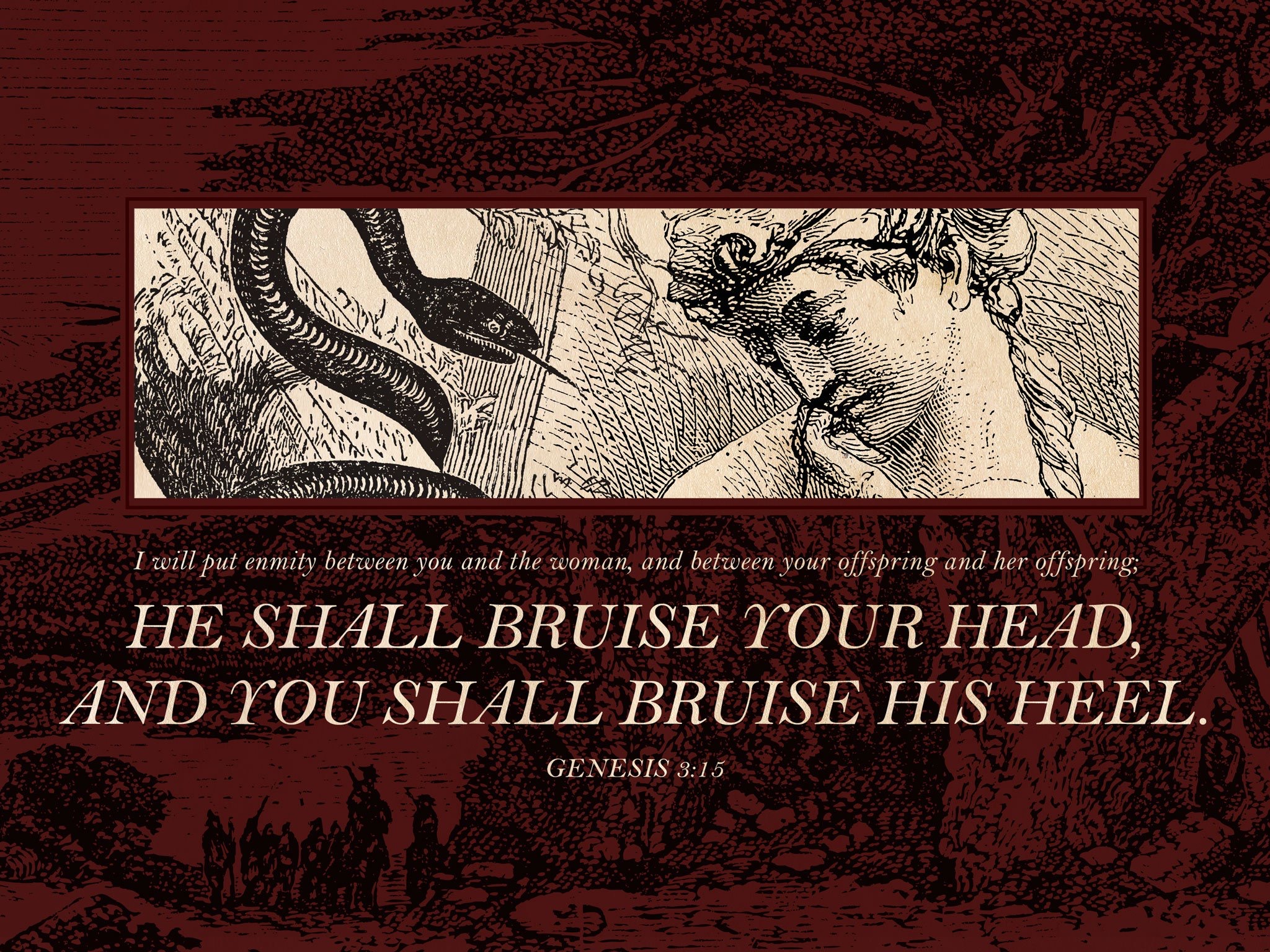
But also notice, there are little kernels of truth. Adam does say he ate – even though he blames his wife and, ultimately, God. Eve also admits she ate even though she blames the serpent. But God abundantly merciful and counts it as repentance. Notice the first thing God does. He punishes the devil and promises to send Jesus to crush his head.

God takes these sorry excuses and counts them as repentance, and this is way back in Genesis. So, how much more, now that Jesus has come and has been tempted in every way that you are, now that Scripture promises that because of Christ God is sympathetic to your temptations because He knows your struggles against them, how much more confidence can you have that when you repent and tell the truth about your sin you will also find mercy and forgiveness?

You can, with sure and certain confidence, approach God’s throne of grace and admit those times that the heavy weight of temptation got to you and you jumped into the pit of sin. You can confess the times where there was just a little weight – just measly fifteen or even ten pounds – and you jumped. You can even bring before God the times where there wasn’t any weight and you simply jumped into the pit.

Jesus knows your temptations, your weakness, and your failures. And He still goes to the cross for you. Jesus takes your sin upon Himself. Jesus has gone into every pit of sin into which you have jumped to rescue and redeem you. He suffered all the wrath you have earned by your sins. And now, He has ascended to the right hand of God the Father ready to hear your plea, “Have mercy on me.” And He does.

So, now, confidently repent. And hear His merciful invitation to take your seat at His table. Amen.

The peace of God, which surpasses all understanding, will guard your hearts and minds in Christ Jesus. Amen.