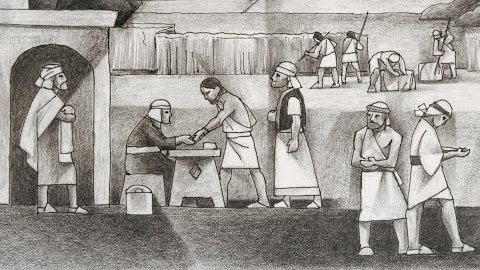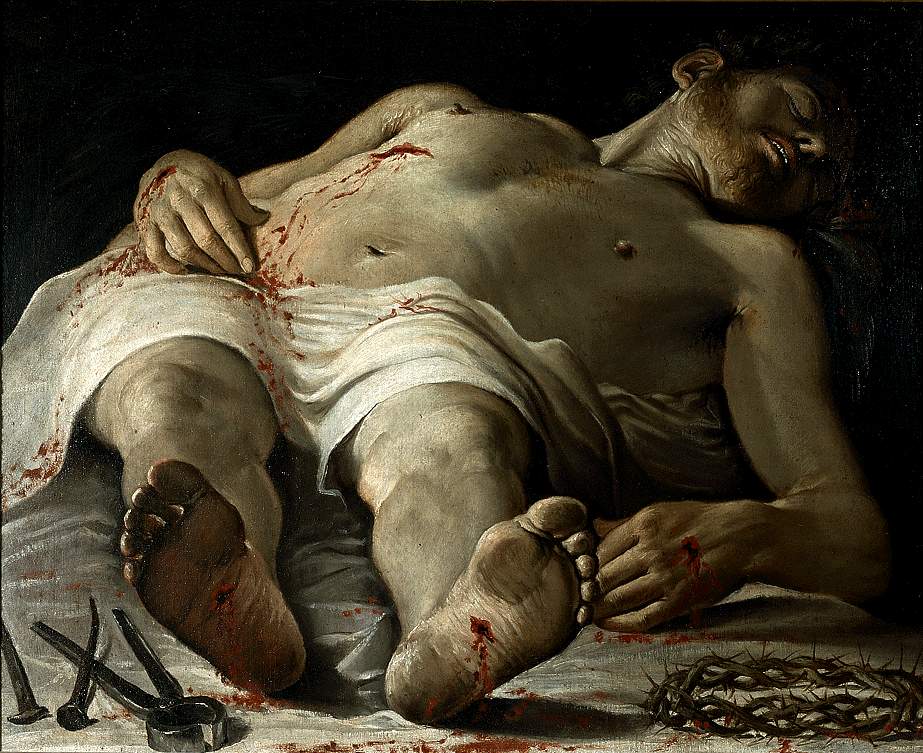
Live Man Walking – Sermon on Ephesians 2:1-10 for the Eleventh Sunday after Trinity

Ephesians 2:1-10

1 And you were dead in the trespasses and sins 2 in which you once walked, following the course of this world, following the prince of the power of the air, the spirit that is now at work in the sons of disobedience— 3 among whom we all once lived in the passions of our flesh, carrying out the desires of the body and the mind, and were by nature children of wrath, like the rest of mankind. 4 But God, being rich in mercy, because of the great love with which he loved us, 5 even when we were dead in our trespasses, made us alive together with Christ—by grace you have been saved— 6 and raised us up with him and seated us with him in the heavenly places in Christ Jesus, 7 so that in the coming ages he might show the immeasurable riches of his grace in kindness toward us in Christ Jesus. 8 For by grace you have been saved through faith. And this is not your own doing; it is the gift of God, 9 not a result of works, so that no one may boast. 10 For we are his workmanship, created in Christ Jesus for good works, which God prepared beforehand, that we should walk in them.

In the name of Jesus. Amen.

“Dead man walking!” That phrase originated just over 100 years ago. It was called out when a death-row inmate was being marched through the prison halls to the execution chamber. When that phrase was shouted, the inmate was, obviously, still alive, but he was as good as dead. The inevitable was soon to happen, and judgment would be carried out. Imagine how lonely that soon-to-be-executed inmate would feel hearing that phrase, “Dead man walking.” Yes, he is still breathing, still has a beating heart, still alive, and still a part of humanity. But his demise is mere moments away.

Here, in the first three verses of this text, Paul might as well be calling out, “Dead man walking!” about each of us as he describes our former life in sin. Because of our sin, every one of us was marching to our imminent demise. Hopeless, doomed, and lonely.

God created us in such a way that we are connected to each other. We have all blossomed from the root of Adam. Since the poison of sin ran through his veins, it has spread through the entire plant of humanity. And it isn’t just the fact that you and I inherited Adam’s sin and are charged with a crime that he committed. No. We all willingly march straight forward into the deadness and rebellion against God that we have inherited from Adam.

We do not become sinners by sinning. We sin because we are, by nature, sinful and unclean. We sin against God in our every thought, word, and deed. We were born revolting and fighting against every notion that we should submit ourselves to the will of God, against every idea that we should serve our neighbor. In other words, we fight against what God created us to be. That’s a losing proposition. And yes, our life in sin is that broad road that has been traveled by every member of the human race. But it is still a long, lonely road.

But – that word can be so beautiful – “but God, being rich in mercy, because of the great love with which he loved us, even when we were dead in our trespasses, made us alive” (Eph. 2:4-5). God saw our lonely, helpless, hopeless state, and, in His great love for us, He did something about it. God be praised!

The ESV does a very good job with its translation here through v. 5-6; I just want to highlight it a bit further. Notice all the withs in v. 5-6. God, because of the great love with which He loved you, has made you alive together with Christ, raised you with Christ, and seated you with Christ in the heavenly places. God saw your situation, and He has joined you to and with Jesus. Now, you are alive with, raised with, and seated with your Redeemer and Savior who is the Lord and King of all creation.

Your place in heaven is secure because what is true of Christ is now true of you who have become incorporated into and joined with Him. Dear saints, Jesus became what you are, so that He could make you what He Himself is (St. Irenaeus).

Because of Jesus, no longer are you a lost, lonely “dead man walking.” Now, you are a “live man walking.” All this is yours by God’s grace, through God-given faith. It isn’t because you have made the right sacrifices or have done enough good works. It isn’t because of your efforts, your desiring, your deserving, your trying, or even your deciding. Nope! It isn’t because of your actions or work at all.

It’s only because God has worked faith in you so that you now cry out, “God be merciful to me, the sinner” (Lk. 18:13). Through Jesus, God Himself has made you alive with Christ, raised you with Christ, and seated you with Christ. Normally, when Scripture talks about Christ being seated, it adds that He is seated at God’s right hand. Over and over again, it does this (Ps. 110:1Mt. 26:64Mk. 14:6316:19Act. 7:56Ro. 8:34Eph. 1:20Heb. 1:3).

That’s why, when we confess the creed (either Apostles’ or Nicene), we confess that Jesus is “seated at the right hand of God the Father [Almighty].” But notice here in v. 6 that when Paul announces that you are seated with Christ, he doesn’t add the phrase “at God’s right hand.” That is because God’s right hand isn’t so much a place or location. Instead, it is a position of authority and honor.

Christ has been raised from the dead and has ascended into heaven where He is seated at God’s right hand with all power and authority in heaven and on earth. You are seated with Christ in the heavenly places, and yet you remain here on earth – but still in a position of authority because you are seated with Christ. No, you aren’t all-powerful or everywhere-present like Jesus. But, you do have a share in His authority as you live here on earth. Christian, you have risen with and are seated with Christ not in such a way that you are removed from this world. Instead, you are exalted here – in this world, in this life – with the divine honor of being God’s child.

God intentionally leaves you here to exercise that authority in His creation through your good works. That’s why God has prepared those good works for you to walk in. And – this needs to be abundantly clear – the good works that God has prepared for you to walk in are not some secret thing that God hasn’t revealed to you. You don’t have to go around searching for these good works as though they are hidden. These good works are all around you. And you find them in the people that God puts right, smack dab in front of you.

You have been raised from your deadness in sin to be living men who walk in the love for both God and your neighbor that He created you to have. God has made you His ‘workmanship,’ His work of art, shining His light in a dark, evil, lonely world that is following the prince of the power of the air.

God has made you alive, raised, and seated you with Jesus so that in the coming ages He can show you the immeasurable riches of His grace in kindness toward you in Christ Jesus.

I just have to say here that a text as beautiful and full and rich as this one is barely needs anything added to it. You can just read it over and over and it is enough. But let me preach a little more and change gears here:

The shooting this past Wednesday at Annunciation Catholic School in Minneapolis that left two dead and 18 wounded is a sober reminder to us: this world is very, very evil. The devil, the prince of the power of the air, is constantly at work in the sons of disobedience (Eph. 2:2). Satan along with his demonic forces of evil constantly tempt everyone to live out the passions and desires of our flesh, and it often appears to us as though the devil’s reign of evil has no limits. But God doesn’t and won’t let the devil roam unchecked (Job 1:10122:6Mt. 12:29Col. 2:15).

Even though it seems as though we are entering into a new era of martyrdom in our country and that the persecution of Christianity is increasing and inevitable, God has not given Satan free reign. Jesus is still on the throne and the Head of all things (Eph. 1:22). Jesus is still in control – even in this dark age (Eph. 1:21). Whatever the future holds, God’s grace is, and will remain, constant.

God does not change. He knows what He is doing, and He uses martyrdoms, as painful as they are, for good (Ro. 8:28).

God has delivered those two saints, those two young martyrs, to Himself in mercy, and they are free. God has also made them an example to us that some things are more precious and valuable than living. May God, in His mercy, give us all a measure of their spirit.

We were dead, but now we are alive because of God’s grace given to us by faith. Jesus Himself is our risen and living Savior. Even if we die, we live because Jesus lives, and in Him we live too. Amen.

The peace of God, which surpasses all understanding, will guard your hearts and minds in Christ Jesus (Php. 4:7). Amen.

In Step with the Spirit – Sermon on Galatians 5:25-6:10 for the Fifteenth Sunday after Trinity

Galatians 5:25–6:10

25 If we live by the Spirit, let us also keep in step with the Spirit. 26 Let us not become conceited, provoking one another, envying one another. 

1 Brothers, if anyone is caught in any transgression, you who are spiritual should restore him in a spirit of gentleness. Keep watch on yourself, lest you too be tempted. 2 Bear one another’s burdens, and so fulfill the law of Christ. 3 For if anyone thinks he is something, when he is nothing, he deceives himself. 4 But let each one test his own work, and then his reason to boast will be in himself alone and not in his neighbor. 5 For each will have to bear his own load. 

6 Let the one who is taught the word share all good things with the one who teaches. 7 Do not be deceived: God is not mocked, for whatever one sows, that will he also reap. 8 For the one who sows to his own flesh will from the flesh reap corruption, but the one who sows to the Spirit will from the Spirit reap eternal life. 9 And let us not grow weary of doing good, for in due season we will reap, if we do not give up. 10 So then, as we have opportunity, let us do good to everyone, and especially to those who are of the household of faith.

In the name of Jesus. Amen.

Imagine that you are offered a choice between two pieces of property. You don’t get to build a house or start a business on this property; it’s just a piece of land for you to enjoy. The first plot is total mess. It’s filled with trash that’s gotten piled up along the rusty chain-link fence and around the scraggily, overgrown bushes. There are several rusty machines strewn haphazardly across the lot. Thistles, thorns, and nettles are all over the place. You can see huge anthills. There are wasp nests in the diseased and rotting trees which look like they’re about to fall down at any moment.

The second plot could be on the cover of a magazine. It has a new, perfectly stained wooden fence all around it. There are mature cedar and maple trees that give the property the perfect balance of sun and shade. The grass is green, thick, and meticulously maintained. It has a large garden with rich soil producing all kinds of vegetables. Colorful flowers are blossoming in all the right places. This second property is a little slice of Eden.

Now, which of the two lots would you choose to own? Which would you prefer to have at your disposal on a beautiful afternoon to sit and read a book while sipping your favorite beverage?

Maybe you wouldn’t want either. If you start to think about everything that is required to fix up the first or to maintain the second, both would require a lot of work. Maybe you’d just prefer to be neutral. In reality, there is no neutral. You cannot serve two masters (Mt. 6:24), but you will serve one.

Here, in Gal. 6:8, Paul says there are only two options for the kind of life you will have, Christian. “The one who sows to his own flesh will from the flesh reap corruption, but the one who sows to the Spirit will from the Spirit reap eternal life.” In other words, something is always being sown. It doesn’t matter if your life is currently dilapidated or flourishing – something is being sown and is contributing either to decay and disorder or to beauty and order. A harvest will come. Whatever is sown now will determine either the allure or the repulsiveness of what you harvest later.

So, what are you sowing now? Is it weeds or flowers? Thistles or produce? Chaos or beauty? Trash or nourishment? Disgust or delight? Whatever you sow, you will reap.

The good news is you are not alone in this sowing. You have help. Jesus says that He has come that you may have life and have it abundantly (Jn. 10:10). And Christ has given you the Holy Spirit, the Helper, who works the fruit of the Spirit within you. Jesus didn’t come to put you in neutral. Again, neutral isn’t possible. You aren’t given the Holy Spirit just so you grow. You are given the Holy Spirit so you can bear a bumper crop of the fruit of the Spirit – the fruit of love, joy, peace, patience, kindness, goodness, faithfulness, gentleness, and self-control (Gal. 5:22-23).

So, keep in step with the Spirit. Paul uses a military term there that refers to a line of soldiers marching in a row and following their commander. Paul lists several things that keep you in step with the Spirit: Restore those caught in transgression with gentleness. Keep watch on yourself. Bear the burdens of others. Share your blessings with the one who teaches God’s Word. Do not growing weary of doing good but persist. As you are given opportunity, strive to do good to everyone – especially to those who are of the household of faith (Gal. 6:1-10).

Yup, that is a lot of work. Keeping in step with the Spirit isn’t a cake-walk. But remember, you are always sowing something. Are you sowing to the flesh, which means you reap corruption? Or are you sowing to the Spirit, which will result in a harvest of limitless blessings now and eternal life in the age to come (Mk. 10:29-30)?

Now, I want to focus on one aspect of keeping in step with the Spirit because there are a couple phrases in this text that have always been a little confusing to me. In Gal. 6:2, Paul says, “Bear one another’s burdens,” but then just after in Gal. 6:5, he says, “Each will have to bear his own load.” It sounds like a contradiction.

When Paul says, “bear one another’s burdens,” he isn’t just saying that you need to just tolerate others. He’s calling you to do something that is inconvenient for you and requires a lot of effort. Bearing burdens was the task of a slave. You, believer, are to be a servant of others. Depending on the situation, that might mean bearing the financial burden of someone by giving them money or bringing them a meal while they are healing from a procedure. It might mean helping them do some work on their house. Bearing someone’s burden might simply mean listening to them as they talk about their worries and anxieties. Each situation will be different, but God has and will continue to give you the wisdom you need so you know how to go about bearing the burdens of others. So then, what do we do with Gal. 6:5, “Each will have to bear his own load”?

Paul uses two different words for ‘burden’ and ‘load.’ You can assist someone with their burden, but ultimately, they are responsible for their own load. Imagine you’re in a group hiking up a mountain. Everyone has their own pack filled with gear and supplies. But certain spots on that hike pose greater difficulty for some than others. A steep slope is easier for tall people like me, but the portions of the hike with low hanging branches are easier for short people like some of you. I’ll let you imagine other scenarios.

When others are injured or exhausted by their burden and come to places that are difficult for them, God calls you to help them get through that portion of the hike. And when you are struggling in other times and at other places, your brothers and sisters are there to assist you. Christians need each other. Yes, every Christian is ultimately responsible for his or her own load, but every Christian is also called to assist one another when the burden of that load is heavy.

Dear saints, you do this for others because you remember what Jesus has, continues, and will do for you forever. Jesus’ way with you could have been harsh. Because of your sin, because of the things you have done and left undone, Jesus could have given up on you. But He hasn’t and won’t. Jesus never wearied of doing good to and for you. He never asked, “Do I really have to heal another leper; expel another demon; forgive and save another from damnation?” He never did that. He never grew weary of you and your burdens. Not once. Not even possible. Instead, He has borne your burdens and carried your sorrows (Is. 53:4).

Christ’s way with you is always to give you His love, His peace. He always extends His patience, kindness, and gentleness. He loves to crown you with honor and glory you didn’t deserve. He loves to give you mercy and forgiveness you didn’t earn. He continually grants you peace that surpasses understanding.

So, keep in step with the Spirit because that keeps you in step with Jesus. He calls to you, “Come to Me, all who labor and are heavy laden, and I will give you rest. Take My yoke upon you, and learn from Me, for I am gentle and lowly in heart, and you will find rest for your souls. For My yoke is easy, and My burden is light”(Mt. 11:29-30).

Christ doesn’t ever promise that you will have an easy life, but He does promise to be with you through all the difficulties of this life and to bring you through (Jn. 16:33). He is with you, and He has blessed you with others to help and assist you.

Dear saints, as we sow to the Spirit, let us keep in step with the Spirit who will see us safely through. Yes, the march is hard, and the path is difficult. But keep in step with the Spirit because the harvest is coming. Amen.

The peace of God, which surpasses all understanding, will guard your hearts and minds in Christ Jesus. Amen.

The Ten Words – Sermon on Exodus 20:1-17 for the Sixth Sunday after Trinity

Exodus 20:1-17

1 And God spoke all these words, saying, 

2 “I am the Lord your God, who brought you out of the land of Egypt, out of the house of slavery. 

3 “You shall have no other gods before me. 4 You shall not make for yourself a carved image, or any likeness of anything that is in heaven above, or that is in the earth beneath, or that is in the water under the earth. 5 You shall not bow down to them or serve them, for I the Lord your God am a jealous God, visiting the iniquity of the fathers on the children to the third and the fourth generation of those who hate me, 6 but showing steadfast love to thousands of those who love me and keep my commandments. 

7 “You shall not take the name of the Lord your God in vain, for the Lord will not hold him guiltless who takes his name in vain. 

8 “Remember the Sabbath day, to keep it holy. 9 Six days you shall labor, and do all your work, 10 but the seventh day is a Sabbath to the Lord your God. On it you shall not do any work, you, or your son, or your daughter, your male servant, or your female servant, or your livestock, or the sojourner who is within your gates. 11 For in six days the Lord made heaven and earth, the sea, and all that is in them, and rested on the seventh day. Therefore the Lord blessed the Sabbath day and made it holy. 

12 “Honor your father and your mother, that your days may be long in the land that the Lord your God is giving you. 

13 “You shall not murder. 

14 “You shall not commit adultery. 

15 “You shall not steal. 

16 “You shall not bear false witness against your neighbor. 

17 “You shall not covet your neighbor’s house.“You shall not covet your neighbor’s wife, or his male servant, or his female servant, or his ox, or his donkey, or anything that is your neighbor’s.”

In the name of Jesus. Amen.

Dear saints, you are familiar with this text – or, at least, you should be. We know these verses as “the Ten Commandments” – even though Scripture itself never refers to them as the Ten Commandments. (More on that in just a bit.)

We have grown used to thinking that God only gave the Ten Commandments to show us our sin so that we repent and believe in Jesus for the forgiveness of our sin. Saying that isn’t wrong – not in the least! Scripture says that one of the reasons God gave us the Law is to tell us what we must and have failed to do (Ro. 7:7-12). That’s how Luther uses them in his Small Catechism, and in his hymn on the Ten Commandments that we just sang, he does the same thing, “You have this Law to see therein / that you have not been free from sin, / but also that you clearly see / how pure toward God your life should be.” But God gave the Ten Commandments to do more than simply show us our sin.

Scripture calls this text “the Ten Words” (Ex. 34:28; Dt. 4:13, 10:4). The Bible refers to them as “the Ten Words” because only one of them is actually an imperative (command) – “Honor your father and mother.” All the rest are indicative (statements). A perfectly legitimate – and, admittedly, shorthand – way to understand these verses would be, “You will have no other gods before Me…. You will not misuse My Name…. You will keep the Sabbath holy…. Honor your parents. You will not murder, commit adultery, steal, lie, covet.”

As God’s people heard these words at the base of Mt. Sinai, they would have understood three distinct things at the same time. First, they would have understood that this is what God demands they do, which is how we normally understand them. Second, they would have heard them as a description of who they are and how God sees them. Third, they would have heard these as God’s promise to work in them to make them all these things (Php. 1:6).

Think of it this way: A boy might be pestered and bullied by a girl at school so much that he finally retaliates and shoves her to the ground. (You boys, don’t do that because that’s wrong.) They boy’s parents get called to the principal’s office and learn about the altercation. When they get home, the parents send the boy to his room as punishment. Afterwards, the father goes into his son’s room for ‘the talk’ and says, “We do not shove, hit, or be mean to girls.”

Notice what that speech from the father does. First, by saying, “we,” the father is still showing his son that they are in a relationship. The son hasn’t been abandoned or disowned; they belong together and are identified together as a unit. Second, the father is also saying that as a unit, they act and behave a certain way – they don’t use physical force against girls. Also, the boy knows that his dad is forbidding him to use physical force against a girl. All three of those things get communicated at the same time. The Ten Words here work just like that.

Let’s stick with that analogy about the boy and the girl bully to get one more thing about the Ten Words across. As soon as the boy pushed the girl to the ground and saw that she was dirty, dusty, and hurt, the boy’s conscience kicked in because he knew what he had done was wrong even before he pushed her. That rule or command, “Don’t hurt girls,” was already known by the boy even if he had never been taught it. The girl’s pain simply awakened his conscience. The same thing is true for these Ten Words (Ro. 7:7-8).

Cain knew it was wrong to kill Abel (Gen. 4:1-9) even though God hadn’t given the commandment, “Thou shalt not murder,” yet. Joseph knew not lie with Potiphar’s wife (Gen. 39:7-9) even though God hadn’t given the command, “Thou shalt not commit adultery.” Esau accused Jacob of cheating him (Gen. 27:36), and Jacob accused his father-in-law, Laban, of cheating him (Gen. 31:7) even though God hadn’t given the commandment, “Thou shalt not steal.” Abraham knew it was wrong to lie about Sarah being his sister (Gen. 12:11-20, 20:1-14) even though God hadn’t given the commandment, “Thou shalt not bear false witness.”

Everyone knows to not break the commandments because God has written them into the fabric of creation and on the heart of every person (Ro. 2:15). Everyone, even atheists (Ro. 1:21-25), know that we should love God with all our heart, soul, mind, and strength (Mt. 22:37). Everyone knows that we should love our neighbor as ourselves (Mt. 22:39).

God didn’t give the Ten Words so that we would know right from wrong. People knew (and still know) right from wrong already. Some think God gave the Ten Words to limit our freedom. Not at all. They are given in the context of God having set His people free, bringing them out of Egypt and slavery (Ex. 20:2). Instead, the Ten Words show God’s people what it looks like to be the free people He has created us to be. In the world that God has made, we aren’t free to do or be anything we please. We are free when we become what we are. A caterpillar is free to become a butterfly not a walrus. The Ten Words guide us to grow up to be what we are, and what we are is the very children of God (1 Jn. 3:2; Gal. 4:1-7).

Now, in an effort to assist with that growth, here’s some advice from Luther. Take each of the Ten Words with you into prayer and ask yourself these four questions: 1. What does this teach me? 2. What does this give me? 3. What does this show me to confess? And 4. What does this teach me to pray for?

For the first, “You shall have no other gods before Me,” you could pray something like this: “Father, thank you that You teach me that You are my God. Thank you that, as my God, You give me all good things. Forgive me for the times I do not trust You to be my God. Grant me Your Holy Spirit so I would love You with all my heart, soul, mind, and strength.”

For the seventh, “Thou shalt not steal,” you could pray: “Heavenly Father thank You for giving me so many good things. Everything I have is a gift from You. Forgive me for loving and pursuing stuff more than You. Help me to use what You have given me to serve my neighbor.”

Now, all of this is to say that what is most important with regard to the Ten Words is to believe them. Romans 14:23 says, “Whatever does not proceed from faith is sin.” As you believe the Ten Words, you see that God demands that you avoid certain sins and that you do certain good works. But you also see that God is accomplishing these things in you through faith. He has begun that good work in you when you were joined to Jesus’ death and resurrection in your Baptism (Ro. 6:1-11), and, again, He will complete that good work in you (Php. 1:6).

Dear saints, God promises that He is your God who has brought you out of slavery to sin by sending Jesus, who did not abolish the Law but fulfilled it. Through faith in Him, you have a righteousness that exceeds that of the scribes and Pharisees. Because of Him and His work, you will enter the kingdom of heaven, and He invites you now to a seat at His table. Amen.

The peace of God, which surpasses all understanding, will guard your hearts and minds in Christ Jesus. Amen.

Salvation unto Us Has Come – Sermon for Reformation Sunday (Observed) 2022

The Scripture readings for our service today were Revelation 14:6-7; Romans 3:19-28; and John 8:31-36.

A sheet with Scripture verses that were used to compose the hymn “Salvation unto Us Has Come” can be found here.

In the name of Jesus. Amen.

We are all slaves – every one of us. Romans 3:23 says, “all have sinned and fallen short of the glory of God.” And here in v. 34, Jesus says, “Everyone who practices sin is a slave to sin.” And don’t misunderstand the word ‘practice’ there. It is a fine translation, but we might get the wrong idea if we think the word ‘practice’ means someone who does something over and over to get better at it. I don’t think anyone here is actively trying to get better at lying, stealing, cheating, etc. The word Jesus uses here that gets translated as ‘practice’ is simply the word ‘do’ or ‘does.’ We will say that a doctor ‘practices’ medicine because medicine is simply what the doctor does. Literally, Jesus’ statement here could read, “All who do sin are slaves to sin.” And because “all have sinned,” (Ro. 3:23), we all are slaves to sin.

Slaves do not remain in the house. Only sons do. That is why you need Jesus – the eternal Son of God – to set you free. Christ sets you free through His Word because His Word delivers to you everything that He has done and accomplished on the cross. Through Jesus’ death and resurrection, you are delivered from your slavery, you are freed, you become God’s child, and, as God’s children, you remain in the house forever with Jesus.

Now, that’s a full sermon right there, but we’ve still got some time. So, I want to bring in a guest preacher to teach us the same thing. The name of the preacher is Pastor Paul Speratus. Pastor Speratus wrote the hymn that you have in your Scripture insert. This hymn, “Salvation unto Us Has Come,” ends up being a complete summary of the theology of the Reformation, and since today is Reformation Sunday, we’re going to sing it and let it preach to us. I know some of you will find this boring, but please give me just a minute to set the stage for how this hymn came to be written.

Speratus was a Catholic priest in Salzburg, Austria. You probably know Salzburg because of the movie The Sound of Music. Well, Speratus had read Luther’s writings that came after the 95 Thesis, and Speratus recognized how far the church had wandered from the teaching of the Scriptures. So, Speratus starts preaching Law and Gospel in Salzburg. Luther got condemned for his writings in 1521, but Luther was protected from that sentence of death – basically, by being kidnapped and hidden in a castle where he spends 300 days translating the Bible into German. Well, Speratus also ends up being sentenced to death for heresy in 1523 and was sentenced to be burned at the stake. Like Luther, Speratus gets rescued from execution. But during his time in prison, Speratus writes this hymn.

You might think that sitting in prison and waiting for execution, Speratus would write a hymn about God’s protection and provision. But no. Speratus writes a hymn about the theology of salvation. Speratus wrote this hymn because Luther had just started conducting services in German and called on German-speakers to write hymns that taught the truths of Scripture in the German language so the people would have good songs to use in worship. This hymn is one of those. Apparently, when Luther first heard it, he offered the singer all the money he had in his pocket for the lyrics. And the hymn ended up being included in the first German hymnal which only had eight songs in it. The history lesson on the hymn is now over.

Personally, I love how clearly this hymn teaches what the Bible teaches, and according to Scripture, that is what Christian songs should do (Col. 3:16). The nice thing about this hymn is that Speratus included the Scripture passages he had in mind when he wrote the hymn. Those passages are included on the insert in your bulletin. This hymn would be a good addition to your devotional time. If you don’t have a regular devotional, my suggestion would be to read the passages for the first verse then sing it. The next day sing the first verse, then read the passages for the second verse and sing it. The third day, sing the first two verses, then read the Scriptures for the third and sing it. Do that for ten days adding a new verse each day.

By the time you finish, you will be a great theologian because this hymn so clearly teaches Law, Gospel, and holy living. It clearly teaches how our good works don’t help or save us, which is what the church of Rome was falsely teaching. Instead, faith produces the fruit of good works which are good because they serve our neighbor.

So, we’re going to let the hymn preach to us. Because it’s a long hymn, we won’t sing all ten verses at once. I’ll give your voices a break and make brief comments here and there. Feel free to sing it from the insert, but if you would like to have the music, it is #410 in your hymnal. Let’s start with the first verse.

1. Salvation unto us has come
by God’s free grace and favor;
Good works cannot avert our doom,
they help and save us never.
Faith looks to Jesus Christ alone,
Who did for all the world atone;
He is our one Redeemer.

This verse summarizes everything that will come after it. God, by His free grace and favor given through Jesus, has set you free. Through faith in Jesus, you are a child of God. The last two lines of that verse tell us what Jesus has done. He made the payment for you. He is the one and only Redeemer.

Now, because the hymn was written in German then translated into English, some of the wording is slightly changed from the original to make the poetry work in English. But those last two lines in German say that Jesus, “has done enough for us all. He has become our Mediator.” Jesus has done everything you needed to be saved, and now He sits at God’s right hand interceding for you and governing all things for your good.

Now, the hymn goes on to elaborate what Jesus needed to do. Let’s sing verses 2-3.

2. What God did in His Law demand
and none to Him could render
Caused wrath and woe on ev’ry hand
for man, the vile offender,
Our flesh has not those pure desires
The spirit of the Law requires,
and lost is our condition.

3. It was a false, misleading dream
that God His Law had given
That sinners could themselves redeem
and by their works gain heaven.
The Law is but a mirror bright
To bring the inbred sin to light
that lurks within our nature.

Because of our sinful nature, we don’t even begin to do what God requires of us through the Law. And even though we falsely think that we’re better than others, the Law is a bright mirror that shows our desperately lost and sinful condition. Let’s sing verse 4.

4. From sin our flesh could not abstain,
sin held its sway unceasing;
The task was useless and in vain,
our guilt was e’er increasing.
None can remove sin’s poisoned dart
Or purify our guileful heart—
so deep is our corruption.

Apart from Jesus, we have no hope of salvation. The poison of sin continues to slowly kill and destroy us. The Law leaves us dead in sin. But that does not mean that we are without hope. We’ll sing verse 5.

5. Yet as the Law must be fulfilled
or we must die despairing,
Christ came and hath God’s anger stilled,
our human nature sharing.
He hath for us the Law obeyed
And thus, the Father’s vengeance stayed
which over us impended.

Jesus has fulfilled the Law for you. He is your substitute. The eternal Son of God took on your flesh to do all this for you. He perfectly obeyed the Law for you. He suffered the punishment your sins deserved. And because of that, God sees Jesus’ perfection when He looks at you, believer. God has no anger left for your sins because Jesus has taken it all. Verse 6.

6. Since Christ hath full atonement made
and brought to us salvation,
Each Christian therefore may be glad
and build on this foundation.
Thy grace alone, dear Lord, I plead,
Thy death is now my life indeed,
for Thou hast paid my ransom.

There is nothing left for you to do to be saved. Everything is done; it is finished (Jn. 19:30). The hymn takes a turn in that verse and addresses God directly. We ask God to apply everything Jesus has done to us. His death is your life. He has fully paid the ransom for your soul. Verses 7-8.

7. Let me not doubt, but trust in Thee,
Thy Word cannot be broken;
Thy call rings out, “Come unto Me!”
no falsehood hast Thou spoken.
Baptized into Thy precious name,
My faith cannot be put to shame,
and I shall never perish.

8. The Law reveals the guilt of sin
and makes men conscience-stricken;
The Gospel then doth enter in
the sinful soul to quicken.
Come to the cross, trust Christ, and live;
The Law no peace can ever give,
no comfort and no blessing.

Jesus calls to you, “Come to Me, all who labor and are heavy laden, and I will give you rest.” Trusting in that call, you will never ever be put to shame. Jesus has come so that you have eternal, abundant life. Verse 9.

9. Faith clings to Jesus’ cross alone
and rests in Him unceasing;
And by its fruits true faith is known.
with love and hope increasing.
Yet faith alone doth justify,
Works serve thy neighbor and supply
the proof that faith is living.

Faith in Jesus is the only thing that saves you, but faith is never alone. Christian, you do good works, but those works never save you. Those works are simply the fruit of the Spirit that serves your neighbor and shows that your faith is alive and well.

Now, the hymn closes with a doxology. We get swept up into the liturgy of heaven and join all the saints who have gone before us by praising God for what He has done for us in Christ. Let’s sing the final verse.

10. All blessing, honor, thanks, and praise
to Father, Son, and Spirit,
The God that saved us by His grace—
all glory to His merit!
O Triune God in heaven above,
Who hast revealed Thy saving love,
Thy blessed name be hallowed.

Amen.The peace of God, which surpasses all understanding, will guard your hearts and minds in Christ Jesus. Amen.

God-Shaped Love – Sermon on Luke 10:23-37 for the Thirteenth Sunday after Trinity

Luke 10:23-37

23 Then turning to the disciples he said privately, “Blessed are the eyes that see what you see! 24 For I tell you that many prophets and kings desired to see what you see, and did not see it, and to hear what you hear, and did not hear it.”

25 And behold, a lawyer stood up to put him to the test, saying, “Teacher, what shall I do to inherit eternal life?” 26 He said to him, “What is written in the Law? How do you read it?” 27 And he answered, “You shall love the Lord your God with all your heart and with all your soul and with all your strength and with all your mind, and your neighbor as yourself.” 28 And he said to him, “You have answered correctly; do this, and you will live.”

29 But he, desiring to justify himself, said to Jesus, “And who is my neighbor?” 30 Jesus replied, “A man was going down from Jerusalem to Jericho, and he fell among robbers, who stripped him and beat him and departed, leaving him half dead. 31 Now by chance a priest was going down that road, and when he saw him he passed by on the other side. 32 So likewise a Levite, when he came to the place and saw him, passed by on the other side. 33 But a Samaritan, as he journeyed, came to where he was, and when he saw him, he had compassion. 34 He went to him and bound up his wounds, pouring on oil and wine. Then he set him on his own animal and brought him to an inn and took care of him. 35 And the next day he took out two denarii and gave them to the innkeeper, saying, ‘Take care of him, and whatever more you spend, I will repay you when I come back.’ 36 Which of these three, do you think, proved to be a neighbor to the man who fell among the robbers?” 37 He said, “The one who showed him mercy.” And Jesus said to him, “You go, and do likewise.”

In the name of Jesus. Amen.

Jesus uses the parable of the Good Samaritan to teach the lawyer that he will never be saved by the Law and that he needs a Savior to have compassion on him and give him eternal life. The lawyer is the one who has been robbed, stripped, beaten, and left dead in the ditch. The Law, represented by the priest and Levite, passes by and can not and does not help him. With the parable Jesus is teaching that to be one who inherits eternal life, we must be rescued by an outsider whom we despised (Is. 53:3-4) and who owes us nothing. We sinners need a love and compassion that we could never repay from One who doesn’t even want to be repaid. This is the only way for this lawyer to be saved and the only way for any of us to inherit eternal life.

So, the parable of the Good Samaritan is about Jesus and what He does for sinners. Christ is the Good Samaritan who finds us dead in sin. He has compassion on us, comes to us, binds up our wounds, pours on oil and wine, lays us on His animal to bring us to the inn, and sets us up in an all-expenses paid room. That is the point of the parable. The parable is not telling sinners that they need to do good to everyone. The lawyer already knew that he needed to love everyone (Lk. 10:27). He knew the Law requires that he love God and neighbor perfectly. So, if you ever hear someone preaching or teaching that the purpose of this parable is to tell us to love everyone, know that you are hearing only a half-truth, and, often, half-truths are more dangerous than full lies.

Jesus is not calling us to be the Samaritan in order to be saved. Jesus is the Good Samaritan who saves us. Then, it is true that Jesus calls us to go and do likewise (Lk. 10:37). We are to be like Jesus. Christians are to be little Christs who have compassion on their neighbor because Jesus has had mercy upon us. Because we have been rescued by Christ, we have become inheritors of eternal life and children of God. This means Jesus’ call to, “Go and do likewise,” is an invitation for us to imitate Him because children are like their father.

So now, please know, I’m not going to be preaching on the main point of the parable for a bit here, but I am going to use the parable to show how we Christians, who have been saved and rescued from the ditch, are to love God by loving our neighbor.

Dear saints, we need God to shape our love, and He shapes our love by two things: First, by the Ten Commandments, and second, by our relationship to the neighbor that God puts in our life in at any given moment. Let’s flesh this out with an example:

God has called me here to be your pastor, so I have a love for you, my neighbors and members of my flock, that is shaped by the 3rd Commandment. I am here to faithfully preach and teach God’s Word to you, and you have a love for me, your neighbor, that is shaped by the 3rd Commandment to faithfully hear God’s Word as it is preached and taught. As a parent, I have a different love for my children that is shaped by 4thCommandment, so I buy them socks. Well, how it actually works in our house is I work to earn the funds so my wife can purchase our kids’ socks because she’s a lot better at finding good deals on the socks my kids like. I have no idea which socks they like. Sometimes, my 4th Commandment shaped love is to take those socks from the clothes drier and help my kids fold and organize them in their dresser. So, I have different vocations, different callings, and different kinds of love that are  shaped by the Commandments and my relationship to my neighbor. And these vocations are what any reasonable person would expect. My love as a pastor is to preach and teach the Word of God to His flock, and as a parent, I provide and care for my kids.

Now, stick with me here while I get a little absurd. It would be wrong for me, as your pastor, to come here on a Sunday morning, stand in this pulpit, and say, “No sermon today, but here are some new socks. I’ll come to your house later and help you organize your dresser.” That would be weird, right? At least, I hope you think it would be weird because it is. You still are my neighbor, and I am still commanded to love you as I love myself. But my 4th Commandment love for you is shaped differently than my 4th Commandment love for my own kids. My 4th Commandment love for you is shaped by my relationship to you. So, I am to encourage you to honor, serve, love, obey, and respect your parents and the authorities that God has placed over you. Now, this doesn’t mean that will never buy socks for you. God might change your needs so it would be good and right for me to buy you socks. But, hopefully, God won’t put you in a position like that. But if He does, let me know, and I’d be happy to buy you socks.

So, God shapes your love by the Ten Commandments, and God shapes your love based on the needs of your neighbor whom He places along your path. The English word ‘neighbor’ comes from the old word ‘nigh’ or modernized, ‘near.’ And it’s the same for Greek word used here. A neighbor one who is near to you. So, when God puts someone near to you, that is your neighbor. The priest and Levite in the parable come across the guy in the ditch and they both un-neighbor him by crossing by on the other side of the road. They refuse and reject the neighbor God has put in their life and refuse to care for his needs. They probably thought, “Everybody is my neighbor, so I’m going to go serve them.” That’s sinful. Your neighbor is the person that God puts in your life – whether you like it or not.

In our text the lawyer asks Jesus, “Who is my neighbor?” and Luke tells us that the lawyer was asking this because he desired to justify himself. So, in the context, this was a bad question with wrong motives. But that question, “Who is my neighbor?” is typically a good question for us Christians to ask. It helps us identify our neighbor and see our neighbor’s needs so our love can be shaped by the Commandments. So, think back to the parable. The Samaritan would have passed by many different people on the road that day. He probably even met the Levite and the priest at some point in his journey, but the Samaritan didn’t put them up in an all-inclusive room because their needs didn’t dictate that he needed to.

In the parable, the Samaritan had his plans for the day. He was going somewhere with some purpose, but God put this robbed, stripped, beaten, half dead dude in his path and upended whatever those plans were. And the Samaritan stepped up in compassion and mercy to meet those needs realizing, “This is the guy that God has put in my path, so I am going to help and love him.”

So, please recognize that God shapes your love and gives you callings based on nearness. This is why God calls you to have more love for your family than for friends or for strangers. The closer people are to you, the more responsibility you have to them, the more opportunity you have to do good to them, the more opportunity you have to serve them. But we often turn aside and try to find excuses to not serve the one God has put near us. Instead, we prefer to choose our neighbor. In our technological society, the devil has ample tools to keep us from showing love to the neighbor that God puts in front of us to love and serve.

Dear saints, whomever God puts near you is the one that God has put in your life for you to serve. So, serve the one God has drawn nigh to you. Let God’s Commands and God’s placing of people in your life shape your love. As a spouse, parent, child, boss, employee, teacher, student, or friend, remember that God is the one who has given you those relationships and has brought that person near you. Love that one, and let that love be shaped by the Commandments and your relationship to that neighbor.

And quickly, this is an aside, but it’s something I thought about months ago and marked this text to preach on this: Many of you have experienced the loss of spouses, siblings, parents, and friends recently. When those who are near to you have died, you still have a God-shaped love for them. Even though they have passed from this world, they are still near to you. So, when they die, your God-shaped love takes a different form or shape, and that shape is grief. Jesus Himself wept when His friend, Lazarus, died (Jn. 11:35). Grief is the shape love takes when those God has brought close to you are gone. So, grieve, but grieve as those who have hope in the resurrection (1 Th. 4:13).

Now, all of that was secondary to the parable. I want to close by returning to the main point of the parable. Again, Jesus is the Good Samaritan who proved to be a neighbor to you. And, hopefully, this idea of loving the one who is near to you gives you a deeper understanding and appreciation of Christ’s compassion for you.

Jesus is God. And because He is God, you weren’t His neighbor, but He chose to become your neighbor. The eternal, infinite Son of God took on your flesh in order to be ‘nigh’ to you. Out of pure compassion, He saw you in the ditch, dead in sin (Eph. 2:1). He chose to become your neighbor and raise you from your deadness in sin.

His love for you took the shape of Him going to the cross. He was stripped, beaten, standing under the wrath of God that you deserved because of your sin, and dead. Dead and buried in a grave. Now, He is risen. And because He has done all of that, you are His child. And He will bring you to your inheritance which is eternal life with Him. He has promised. Amen.

The peace of God, which surpasses all understanding, will guard your hearts and minds in Christ Jesus. Amen.

Called – Sermon on Luke 5:1-11 for the Fifth Sunday after Trinity

Luke 5:1-11

1 On one occasion, while the crowd was pressing in on him to hear the word of God, he was standing by the lake of Gennesaret, 2 and he saw two boats by the lake, but the fishermen had gone out of them and were washing their nets. 3 Getting into one of the boats, which was Simon’s, he asked him to put out a little from the land. And he sat down and taught the people from the boat. 

4 And when he had finished speaking, he said to Simon, “Put out into the deep and let down your nets for a catch.” 5 And Simon answered, “Master, we toiled all night and took nothing! But at your word I will let down the nets.” 6 And when they had done this, they enclosed a large number of fish, and their nets were breaking. 7 They signaled to their partners in the other boat to come and help them. And they came and filled both the boats, so that they began to sink. 8 But when Simon Peter saw it, he fell down at Jesus’ knees, saying, “Depart from me, for I am a sinful man, O Lord.” 9 For he and all who were with him were astonished at the catch of fish that they had taken, 10 and so also were James and John, sons of Zebedee, who were partners with Simon. And Jesus said to Simon, “Do not be afraid; from now on you will be catching men.” 11And when they had brought their boats to land, they left everything and followed him.

In the name of Jesus. Amen.

If I am ever asked to preach at a seminary graduation, an ordination, or installation of a pastor, this is the text I will use. This miracle is uniquely fashioned for preachers.

Most of Jesus’ miracles fall into one of two categories when it comes to the reason Jesus does the miracle. Probably, the most common reason for Jesus’ miracles is to bring relief when there is a great need – casting out a demon, calming a storm, healing the sick, feeding the crowds, and raising the dead. The other common reason behind Jesus’ miracles is to authenticate or initiate His teaching. Sometimes, Jesus would do a miracle in response to the grumbling of the scribes and Pharisees (Mt. 9:2-8), or He would agitate them by healing on the Sabbath. 

This miraculous catch of fish doesn’t really fit into either of those categories. Jesus doesn’t do this miracle to validate or initiate His teaching. Sure, the text starts by telling us that Jesus was teaching the Word of God to a crowd so large that Jesus has to preach from Peter’s boat a little off from shore. But the way Luke records this, the miracle happens well after Jesus’ sermon was finished. Jesus had finished preaching, and it would take Peter a while to row out into the deep parts of the Sea of Galilee like Jesus tells him to. The crowds wouldn’t just stand around and watch this whole thing take place. I looked at a depth chart for Gennesaret, and they probably wouldn’t have been able to see the miracle. The crowds would have gone home, so the massive catch of fish doesn’t fit this miracle into the category of meeting a need. This haul of fish isn’t Jesus’ way of feeding that congregation.

This miracle is directed at and tailor-made for Peter (and we could probably also throw in the other disciples). After this miracle, these fishermen, who were already disciples of Jesus (see Jn. 1:35-42 and Mk. 1:16-20 which both appear to be separate calls of the disciples), leave everything behind to follow Jesus and learn to become fishers of men.

That’s why this miracle fits so well for preachers. Peter was a successful fisherman, but his knowledge, wisdom, and expertise had its limits – even when it came to fishing. After wasting a whole night where he and his partners caught nothing despite using every trick they knew, Peter listens to fishing tips from this carpenter from Nazareth and has a catch of fish that was more than Peter and his partners could handle. That catch came in an unlikely place, out in the deep, and at an unlikely time, probably late afternoon or early evening when you aren’t likely to catch many fish.

All of this points to the fact that this miracle is teaching Peter that he is going to have to learn to simply trust Jesus’ word, especially when he enters the new vocation of preaching. In other words, this catch is a preview of what is going to happen when Peter preaches the Gospel, and that is exactly what we see. On Pentecost, Peter preaches a sermon that, honestly, isn’t that impressive or insightful, but God uses that sermon to bring a massive catch of souls into the Church. The Gospel net is cast at a place and time that is unlikely to have success. Peter is preaching only fifty days after these same people called for Jesus to be crucified. But the net of the Gospel brings in 3,000 souls into the boat of the holy Christian Church.

This is why this text would be so good to preach to seminarians, pastors, and preachers. In this text, Jesus is showing preachers that their success won’t be based on their rhetoric or skill or cunning or persuasiveness or methodology. The success of the Gospel comes by simply being faithful to Jesus’ Word and throwing out the nets. The Holy Spirit does the work. The only thing a pastor needs to do in order to be a faithful shepherd of God’s flock, and the only thing a congregation needs to do to be a faithful body of Christ, is to simply teach God’s Word, stand firm on what it says, and God will use that Word to do things beyond our imagination or comprehension.

But, my dear congregation, you aren’t seminarians or pastors. So, I won’t preach that sermon to you. Wink, wink. Nod, nod. I guess I need to come up with a different sermon, and this text does have something very important to teach you, but it isn’t, maybe, what you would expect.

If you look at this text in your Bible, you will probably see a heading over these verses in bold letters that says something like, “Jesus Calls the First Disciples.” Well, that heading is a bit misleading because, when we look at the other Gospels, we learn that this is the third time Jesus’ disciples follow after Him. Actually, John 1 is where we see Jesus first calling these disciples. There, Andrew, who is Peter’s brother, is a disciple of John the Baptizer. Andrew hears John call Jesus the Lamb of God. Andrew goes and finds Peter and they begin to follow Jesus and see Him do miracles (see Jn. 2 and Lk. 4) Later, Jesus sees Andrew and Peter and James and John fishing and calls them to follow Him, and they do (Mk. 1:16-20). So, by the time we get to this text in Luke 5, Peter, Andrew, James, and John are already disciples who follow Jesus. But notice, they are still providing for their families through their fishing business.

They are making sure their company will have a future by taking care of their nets. Even though those nets went empty that night, they still needed tending and cleaning to be ready for the next excursion. Tired after a completely unproductive night of fishing but still needing to finish his work, Peter would have had every excuse to ignore Jesus and let Him do His preaching thing over there on the shore for the crowds. Peter had other work to do, and it was good, God-given work to make a living and provide for His family.

But Peter also recognized that he needed to give his attention to the Word of God, which he did. Notice Peter leaves his nets twice in this passage. Yes, he leaves his net to follow after Jesus at the end of the text, but don’t miss the first time Peter leaves his net. The first time, he leaves his work of cleaning them to bring Jesus out a little way into the sea so Christ can continue preaching to both the crowds and Peter.

Peter doesn’t let his career be an idol. He recognizes his work of cleaning the nets can wait. In that moment, Peter was called to something more important than plucking seaweed out of a net. He was called to listen to Jesus’ preaching. And Peter is called by Jesus to let his boat be used for that same preaching. Peter uses the gifts God had given him serve Jesus and those crowds who also needed to hear the Word of God.

Dear saints, it is good to see your job and your paycheck the same way. God has given you work and money to provide you and those in your care with food and clothing, house and home. But God has also given you work and a paycheck so you can set aside time to find rest – not just for a weekend away from your desk, your boss, your coworkers, or your employees – but to find rest from the toil and sin of this fallen world. And God wants you to share those gifts with others so they can also hear God’s Word and find rest in His mercy and grace. Putting your tithe in the offering plate is the same as letting Jesus use your boat to preach. That is also why, even though there are many charities and organizations to give to – and you should give to them – don’t let that come at the expense of giving to the preaching of God’s Word. Your tithe to these plates comes first. Other charitable giving should come second. You need the preaching and so do your brothers and sisters in Christ.

Jesus’ teaching did its work in Peter. When Jesus tells Peter to put out into the deep for a catch – which, again, is the wrong place and wrong time – Peter listened to Jesus and trusted Him, admittedly begrudgingly. Peter puts out the nets, and there are too many fish. The nets threaten to break. The boats threaten to sink. Peter sees all of this and is filled with fear. He isn’t afraid of the nets breaking or the boats sinking. Instead, the sinner is afraid of the wrath of God. Peter is afraid because he recognizes that he, a sinner, is standing in the presence of the holy, almighty God in the flesh. “Depart from me, for I am a sinful man, O Lord.” 

But the nets don’t break, the boats don’t sink, and the sinner doesn’t get the wrath and punishment he deserves. “Do not be afraid;” Jesus says, “from now on you will be catching men.” Jesus’ words there are an absolution. Jesus casts Peter’s sins into the depths of the sea where the fish and boats should have ended up. But Jesus doesn’t stop with saving Peter. He has more saving to do. That’s why Peter and the apostles are given the task of preaching. Jesus desires that His work would spread to all.

A lot of sermons on this text will end by challenging you to be like Peter and leave everything to follow Jesus. Dear saints, God in His infinite wisdom hasn’t given you that calling, and that is totally fine. Maybe God will call you into the office of ministry one day. But for now, God has called you into the vocations He has put before you. Right now, you are called by God to listen to His Word being preached to you. And this week, God will put other tasks in front of you. Do them, and do them faithfully. Col. 3:23-24 says, “Whatever you do, work heartily, as for the Lord and not for men, knowing that from the Lord you will receive the inheritance as your reward. You are serving the Lord Christ.” Your work, your calling, your vocations are never wasted, never in vain (1 Cor. 15:58). Everything you have and everything you do is made sacred by the Word of God and prayer (1 Tim. 4:4-5).

So, hear God’s Word. Be forgiven of all your sins. Then, go and do your work. Fulfill the callings God has given to you because your work isn’t done for your paycheck or your boss. The work and calling God gives you has goodness because God uses that work to help and serve your neighbor.

Dear saints, God needs you in the stations and vocations where He has placed you. Jesus knows how He can best use you in the kingdom of God. Jesus knew what He was doing when He placed you into your family, into this congregation, in your job, in your neighborhood. He has placed you there to be a faithful husband, wife, child, employer, worker, friend, and neighbor. You don’t need to leave that in order to serve God more faithfully. God has placed you there to serve Him by serving those neighbors He has given you. Even if you think Jesus made a mistake by putting you there, just trust that Jesus knows what He is doing and that He will use you in the way that He sees fit.

All your earthly work and calling has something of eternity in it because it is done in service to God. And God will use that work to bring about His purposes. To Him alone be the glory, now and forever. Amen.

The peace of God, which surpasses all understanding, will guard your hearts and minds in Christ Jesus. Amen.

Holy Work – Sermon on Matthew 20:1-16 for Septuagesima

Listen here.

Matthew 20:1-16

1 “For the kingdom of heaven is like a master of a house who went out early in the morning to hire laborers for his vineyard. 2 After agreeing with the laborers for a denarius a day, he sent them into his vineyard. 3 And going out about the third hour he saw others standing idle in the marketplace, 4 and to them he said, ‘You go into the vineyard too, and whatever is right I will give you.’ 5 So they went. Going out again about the sixth hour and the ninth hour, he did the same. 6 And about the eleventh hour he went out and found others standing. And he said to them, ‘Why do you stand here idle all day?’ 7 They said to him, ‘Because no one has hired us.’ He said to them, ‘You go into the vineyard too.’ 8 And when evening came, the owner of the vineyard said to his foreman, ‘Call the laborers and pay them their wages, beginning with the last, up to the first.’ 9 And when those hired about the eleventh hour came, each of them received a denarius. 10 Now when those hired first came, they thought they would receive more, but each of them also received a denarius. 11And on receiving it they grumbled at the master of the house, 12 saying, ‘These last worked only one hour, and you have made them equal to us who have borne the burden of the day and the scorching heat.’ 13 But he replied to one of them, ‘Friend, I am doing you no wrong. Did you not agree with me for a denarius? 14 Take what belongs to you and go. I choose to give to this last worker as I give to you. 15 Am I not allowed to do what I choose with what belongs to me? Or do you begrudge my generosity?’ 16 So the last will be first, and the first last.”Laborers in the Vineyard getting paid

In the name of Jesus. Amen.

To get at the main point of this parable, I’m going to borrow an analogy. Imagine two waitresses working at a small cafe by themselves. Suddenly, a man brings in eighty of his family members to celebrate an occasion, and those two waitresses have to serve this massive, unexpected crowd. One of the waitresses works hard the whole time. She does her best to get all the drinks and orders. She puts in the effort to make sure all the plates are served to the correct spots. She attempts to keep the glasses full of refills. She promptly comes to wipe up a spill. And even though she is flustered, she does all of this with a friendly smile on her face.

The other waitress is angry about the whole ordeal. She’s mad that such a large party didn’t call ahead to let them know they were coming so the restaurant could be properly staffed. She grumbles when extra napkins are requested. She intentionally lets some of the food sit for several minutes after it was prepared so that it isn’t hot when it is delivered to the table. And she interacts with the party as little as possible and pretends not to hear certain requests. This second waitress actually made the evening more difficult for the first, so difficult, in fact, that it would have been easier for the first waitress to do the whole thing herself.

When the party is ready to leave, the man who brought everyone in walks up to both waitresses and hands each of them a handsome 30% tip. Which of the two is going to complain? Right. The first. She would have preferred for the man to give her a 15 or even 10% tip so long as the second waitress got stiffed. She would rather get less if it meant that all her effort was recognized and appreciated.

Jesus Laid in the Tomb 1Dear saints, welcome to the kingdom of heaven. In the kingdom of heaven, you are never rewarded based on your works or efforts because, if you received what you deserved, you would be sent straight to hell. In the kingdom of heaven, there are no formulas or set, hourly wages. You are given to based solely on the merits of Christ’s work for you. He is the only one who can say that He bore the burden of the day and the scorching heat. His atonement, His mercy, His grace is what you get, nothing less. Because of God’s unmerited, unearned, undeserved, unconditional love freely given to you for the sake of Christ, you are an heir of the kingdom of heaven. God be praised!

That’s the main point of the parable. The sermon could end here, but it won’t. There are other points in the parable. Yes, they are minor points, but I have four that I know will be helpful and comforting to you today. So, I’d like to draw them out a little bit. And these points all come from a small phrase in the parable from v. 6that never jumped out at me before. Notice in that verse that when the master goes out at the eleventh hour, just before the sun begins to set and working day is ending, the master finds more people standing there in the marketplace waiting to be hired and asks them, “Why do you stand here idle all day?” Did you catch it?

“All day.” It means the guys hired at the very end of the day had been there all along. I can’t tell you how many times I’ve studied, taught, and preached on this parable, but I kept missing that phrase. I had figured these guys were lazy. I thought maybe they slept in, maybe they were trying to avoid working during the hot part of the day. But that’s not the case! They were there early in the morning, at dawn, when the master first went out to hire workers. And they were there at the third and the sixth and the ninth hour when he came. Most people would have given up and gone home around the sixth hour (which is noon). But no. When the master asks why they have been standing there idle all day, they say, “Because no one has hired us.”

Here’s the first point we can draw from that: no one who got paid their denarius at the end of the day decided on their own to go work for the master. Every one of them was called and sent only by the initiative of the vineyard owner. No one volunteered themselves for labor when he came, and no one went to knock at his door to ask, “Would you hire me to work in your vineyard?” Nope. good-friday-jesus-comes-to-rescueEach of them was called, and each of them was called at the precise time the owner called them. He went and retrieved them.

So, if you are a worker in the Lord’s vineyard, if you have been called into the service of the kingdom of heaven, i.e. if you are a Christian, you were called by God. Period. He came. He gave you work to do. You didn’t seek to work for Him. God called you into His service when it pleased Him. Some, God brings in early and has them work the whole day, but for some reason – a reason known only to God – He brings others in a later, at the third, sixth, ninth, and eleventh hour. If it had pleased the master to hire all of them at dawn, he could have.

Which brings us to second point. if you think that you are one of the early hires, if you have been a Christian your whole life and faithfully carried out your vocations, if you have been tempted at times to grumble for all your hard work or tempted to pat yourself on the back for what you have accomplished, be careful. Remember that it was not you who offered up yourself to work. You were called by the grace of God. “By grace you have been saved through faith. And this is not your own doing; it is the gift of God, not a result of works, so that no one may boast. You are his workmanship, created in Christ Jesus for good works, which God prepared beforehand, that you should walk in them” (Eph. 2:8-10).

Know this. God is pleased with your work. He designed all those works for you, and He laid them all out before you to serve those who needed God’s work offered through your hands. You will be rewarded, and you will be rewarded far better than you deserve.

The third point: Maybe you think that you are one of those who were called to work late. Maybe you are saddened by how much time you wasted pursuing a life of pleasure for yourself. If you think, “How much more good could have I done if I hadn’t been so foolish? If I had been studying Scripture earlier, I could have been of better service.” Dear saint, don’t get discouraged. easte-jesus-brings-us-out-of-deathGod had a reason for bringing you in when He did. Trust His timing. He brought you into His vineyard exactly when He wanted you.

The fourth point is also along those lines, and I know it will be comforting to many of you, so listen up! If you have been praying for someone who is not in God’s vineyard, or if you have been aching for someone who was once in the vineyard but left – maybe it is a friend or relative. If it seems like your prayers and efforts have been wasted, take courage. Don’t stop praying for them. Yes, God calls some early, but some aren’t called into the vineyard until later. Some are called so late that they only arrive in time to get paid which means they do no more than receive their gracious reward. Be comforted. God has His own timing. Keep praying.

One more thing. I know the most common way the different hours that the workers get hired is understood to be a time in each individual’s life. When it is interpreted this way, the workers hired first represent people who have been Christians their entire lives. They were given faith in baptism and continued in that faith until they died. Those who were hired at the third, sixth, and ninth hour are commonly viewed as those who came to faith later in life – as youth, adults, and seniors. And those hired at the eleventh hour are the deathbed converts. That seems to be a legitimate way to understand that detail of the parable, in fact, that is how this sermon has interpreted that detail up to now.

However, remember this parable is about the kingdom of heaven. 1 John 2:18, written almost two-thousand years ago, says that it is the last hour. In the book of Revelation, we get repeated pictures of the saints who have died and entered into glory, and they are still working by praying for us (Rev. 6:9-11). Also, consider Hebrews 11 that uses the faith and deeds of the Old Testament saints to encourage us. Then, Hebrews 12[:1-2] gives us a picture of the great cloud of saints surrounding us and cheering us on to keep walking in faith. And Revelation 14:13 says that those who die in Christ are blessed because they now rest from their labors, but – and this is the point – their deeds follow them.

Considering all of that, none of us can claim to be those who worked through the heat of the day. Rejoice that God is merciful and has and will continue to give to you far better than you deserve. But also, be encouraged because this means that your labor in Christ is never wasted and is valuable work that lives on after you are gone. Think of the labor done by the authors of Scripture – Moses, David, Isaiah, Matthew, John, and Paul– their labor continues to reap results for the kingdom of God today.

Great Multitude with white robes washed in the blood of the lambAnd it isn’t just their work. Your work, done as a Christian, is holy work. Fathers and mothers, the work you do day in and day out will reap results in the lives in your children, grandchildren, and great-great-great-great grandchildren if Christ tarries. But it will also reap results in the lives of others whom you will never meet because you have shined the light of Christ to those you have met, and they will shine that light elsewhere. You Sunday school teachers, you who are praying for and encouraging our youth, you trustees who are caring for our facility, and everyone who is here encouraging another person is offering holy work that will be used by God until Christ returns. Everyone has a story of being impacted by someone else long after that person has entered into glory. So, take heart, and keep working. The labor that God has called you to is fruitful, holy work. It is holy work that God will multiply and expand. For that, God be praised. Amen.
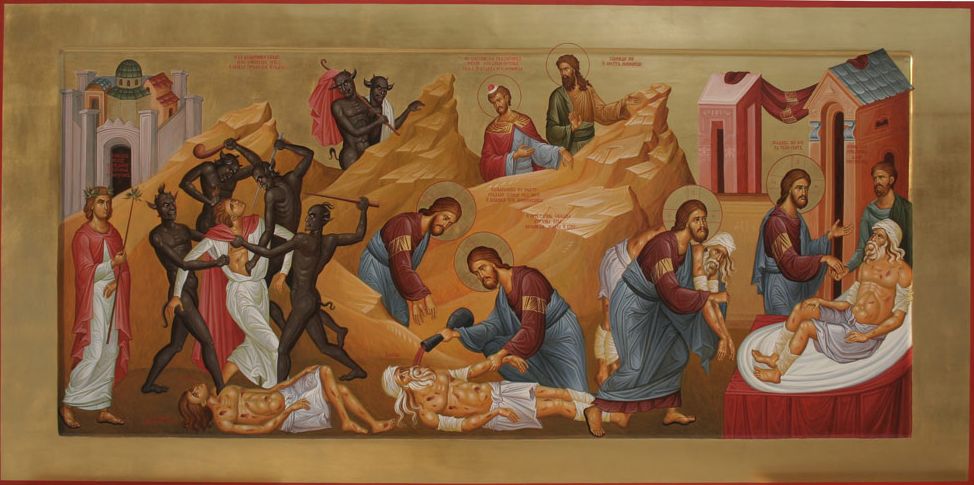
The peace of God, which surpasses all understanding, will guard your hearts and minds in Christ Jesus. Amen.

No Conflict – Sermon on Luke 10:23-37 for the Thirteenth Sunday after Trinity

Listen here.

Today, at Christ the King, we had our first Stewardship Sunday. This sermon is slightly shorter for that reason. The presentation/catechesis on Biblical Stewardship will be available later.

Luke 10:23-37

23 Then turning to the disciples he said privately, “Blessed are the eyes that see what you see! 24 For I tell you that many prophets and kings desired to see what you see, and did not see it, and to hear what you hear, and did not hear it.”

25 And behold, a lawyer stood up to put him to the test, saying, “Teacher, what shall I do to inherit eternal life?” 26 He said to him, “What is written in the Law? How do you read it?” 27 And he answered, “You shall love the Lord your God with all your heart and with all your soul and with all your strength and with all your mind, and your neighbor as yourself.” 28 And he said to him, “You have answered correctly; do this, and you will live.” 29 But he, desiring to justify himself, said to Jesus, “And who is my neighbor?”

30 Jesus replied, “A man was going down from Jerusalem to Jericho, and he fell among robbers, who stripped him and beat him and departed, leaving him half dead. 31 Now by chance a priest was going down that road, and when he saw him he passed by on the other side. 32 So likewise a Levite, when he came to the place and saw him, passed by on the other side. 33 But a Samaritan, as he journeyed, came to where he was, and when he saw him, he had compassion. 34 He went to him and bound up his wounds, pouring on oil and wine. Then he set him on his own animal and brought him to an inn and took care of him. 35 And the next day he took out two denarii and gave them to the innkeeper, saying, ‘Take care of him, and whatever more you spend, I will repay you when I come back.’ 36 Which of these three, do you think, proved to be a neighbor to the man who fell among the robbers?” 37 He said, “The one who showed him mercy.” And Jesus said to him, “You go, and do likewise.”

Jesus Good Samaritan Icon

In the name of Jesus. Amen.

Too often, when we hear the summary of the Law, “Love the Lord with all your heart, soul, mind, and strength. And love your neighbor as yourself,” we see it as setting up an order of operations. First, love God; then second, love neighbor so long as it doesn’t conflict with loving God. That is the attitude the priest and the Levite had in the parable.

According the laws of Moses, they needed to protect themselves from becoming unclean. If they helped the man in the ditch, they might defile themselves by touching a dead person and not be able to do their priestly functions. They are essentially saying to themselves, “I feel bad for this poor guy. I will pray for him. But if I go over there and help him, I won’t be able to do the sacrifices or declare people clean and free from sin. And I have been called by God to be faithful in those works. So, if I go help this guy, I might become unable to do those things, I will be unfaithful to God.”

The priest and Levite were convinced that they couldn’t help their neighbor because they had a higher obligation to love God. Too often, we think the same way.

We avoid people who are addicted to drugs or alcohol because Scripture tells us to avoid the appearance of evil (1 Thess. 5:22), and we don’t want to tarnish our reputation as a good Christian by being around people who have vices. When people are cruel and angry because they have been absolutely broken, we avoid them because they bring out the worst in ourselves. However, we should be going out of our way to love and befriend them and earn their trust. But we don’t do that because we think we have a higher duty to God to keep ourselves righteous so we try to maintain a safe distance from people who might make us to become unrighteous and jaded.

But one of the things Jesus shows us in the parable of the Good Samaritan is this misunderstanding between loving God and loving our neighbor. This parable is a nice explanation of what we are told in 1 John 4:20 which says, “If anyone says, ‘I love God,’ and hates his brother, he is a liar; for he who does not love his brother whom he has seen cannot love God whom he has not seen.” Love of God and love of neighbor are never in conflict with each other. God wants us to show our love for Him by loving our neighbor.

We have called today “Stewardship Sunday,” and we have had a lot of focus on what God’s Word has to say about our tithes and offerings. And this text has something to say about our giving to the church as well. Just as loving our neighbor does not conflict with loving God, loving God does not conflict with loving our neighbor either.

I might be wrong on this, but I would venture to guess that the prevailing attitude about giving to the church is seen as fulfilling the first of the two great commandments – to love God. And very often, we think giving to the church is not seen as fulfilling the second – to love our neighbor. At least, this is a common accusation of the world against the church, and I don’t think we are immune to those accusations.

Maybe, you have seen different threads on social media that pop up from time to time which basically say, “If money is the root of all evil, why do they keep asking for it in church?” Never mind the fact that they aren’t quoting Scripture correctly. The verse (1 Tim. 6:10), says, “The love of money is the root of all kinds of evils…”

But also, the world will say that Christians are hypocrites because giving to the church means they don’t care about the hungry and poor. They’ll say that Christians are so busy loving God by giving money to the church that they are refusing to love their neighbor. But there is no conflict between the two.

Scripture says that all have sinned and fallen short of the glory of God. Every neighbor you come into contact with is a sinner. And what do sinners need most? Even if they are naked and starving, sinners’ greatest need to hear the Gospel. They need to hear the Word preached. They need the Sacraments. They need to be pointed to Jesus Christ, the Lamb of God who takes away the sin of the world. In other words, they need the Church.

So, Christian, see what you are doing when you give to the church. You are doing exactly what the Good Samaritan did in the parable. You are providing for the continual care of those whom Christ has redeemed. Remember, the Good Samaritan gave the innkeeper money to care for the robbed man and promised to return and pay off any expenses that weren’t covered by his initial two denarii.

After the parable concluded, Jesus asked the lawyer, “Who proved to be a neighbor to the man who fell among the robbers?”And the lawyer rightly responded, “The one who showed him mercy.” And Jesus said, “You go, and do likewise.”

Have mercy and compassion on your neighbor by making sure that they have the blessing of seeing what you see and hearing what you hear. Make sure they have a place where they can go to hear of Jesus. Where they can have their wounds bound up by Christ’s absolution. Where they can have the oil and wine of the Sacraments poured on their sinful scars. Where they can recover in the inn of the church.

Christian, you go, and do likewise. Do this, but don’t ever draw strength and assurance by how well you have loved your neighbor. Instead, draw strength to love your neighbor by how God Himself has loved and cared for you.

Good Samaritan Jesus IconBecause, first and foremost, the parable of the Good Samaritan is a picture of what Jesus has done for you. Jesus, and Jesus alone, is the Good Samaritan who has compassion. He left His throne in the glory of heaven to become your neighbor. He risks His own safety while scoundrels and robbers are roaming about. He stops to give you aid. He pours on you oil and wine. He gives up His own comfort and convenience to bring you to the inn of the holy Christian Church. And Jesus sets up an all-expenses-paid stay there promising to return. Jesus is the one who has and continues to show you mercy. Amen.

The peace of God, which surpasses all understanding, will guard your hearts and minds in Christ Jesus. Amen.


Additional thoughts on the text that were removed from the sermon:

You can’t do something to gain an inheritance. All Scripture shows that God’s people do not inherit eternal life by doing something. As our Epistle Text (Gal. 3:15-22) said, the inheritance of eternal life has always and will always come through the promise of God. The lawyer knew this. He knew exactly what he must do to have eternal life. Love God perfectly and love his neighbor perfectly which is exactly how Jesus Himself sums up the Law (Mt. 22:34-40). Jesus tells the lawyer, “Bingo! Do this, and you will live.”But Jesus might just as well have said, “Yup. Go to hell.”

And the lawyer gets it. He sees how he is stuck in his sin. The Law has exposed him for the wretched sinner that he is. The Law has left him scared and confused because he doesn’t know the Gospel. He wants an out and clamors for a loophole. He asks, “Well, who is my neighbor? Whom should I love?”

But every Sunday school student knows the answer. “Who is my neighbor?” Everyone. “Whom should I love?” Everyone and without fail. But Jesus doesn’t tell the parable to answer the question, “Who is my neighbor?” Jesus tells the parable to change the question to get the answer He wants. The point of the parable is not to teach us to love everyone. Scripture teaches that all over the place but here, not in this parable.

Instead, Jesus tells the parable because He wants to show the lawyer and you hope. Jesus wants to show you what God mercifully does for you. He wants your eyes to see and your ears to hear the Gospel.

Ready, Set, Go! – Sermon on 1 Corinthians 9:24-10:5 for Septuagesima.

Listen here.

1 Corinthians 9:24-10:5

24 Do you not know that in a race all the runners run, but only one receives the prize? So run that you may obtain it. 25 Every athlete exercises self-control in all things. They do it to receive a perishable wreath, but we an imperishable. 26 So I do not run aimlessly; I do not box as one beating the air. 27 But I discipline my body and keep it under control, lest after preaching to others I myself should be disqualified.

For I do not want you to be unaware, brothers, that our fathers were all under the cloud, and all passed through the sea, and all were baptized into Moses in the cloud and in the sea, and all ate the same spiritual food, and all drank the same spiritual drink. For they drank from the spiritual Rock that followed them, and the Rock was Christ. Nevertheless, with most of them God was not pleased, for they were overthrown in the wilderness.

In the name of the Father and of the Son and of the Holy Spirit. Amen.

Paul compares the Christian life to a sporting event. They didn’t have the best sport – baseball – in Paul’s day, but they had sporting competitions. The city of Corinth, in particular, hosted a series of games every other year called the Isthmian Games which were the second most famous athletic competition in the world after the Olympics. The events included racing, wrestling, jumping, boxing, javelin, discus, and even poetry. Thousands of athletes would show up to compete in the events, and throngs of people would come to watch. The winners of each competition would end up being famous throughout the Roman Empire and get statues and monuments. isthmean-games-celery-crown.jpg
But the immediate reward, the prize they got right after the competition, wasn’t a gold medal placed around their neck. No, they got a wreath made of dried, withered celery. Yes, celery – that vegetable that is tasteless when you eat it alone but ruins every dish you add it to.

I can just imagine the first guy to win. He ascends the podium while the crowds cheer and receives his celery wreath. He holds it and thinks, “Celery? I get celery? I thought I was competing for a salary.”

To compete in the games, athletes would be required to devote ten months to training. They had to focus their complete attention on their training, give up any bad habits, and even had to give up things that weren’t bad in general but were a hinderance to their training. The competitors had to have the will and self-control to let go of anything that would distract them from winning first place. And when it was time to compete, they had one goal – finishing first.

Paul takes the imagery of those athletes who wholly dedicated themselves to training, running, and winning a perishable wreath of withered celery and says, “You, Christian, should have even more dedication to receive the imperishable prize of forgiveness and eternal life.”

Now, this analogy Paul is using is good and beneficial, but all analogies have their limitations. So, we have to pause for a moment here to make sure everything stays clear.

One limitation comes when Paul says, “all the runners run, but only one receives the prize.” In the Christian race, all believers win the prize. It should go without saying, but I’m going to say it anyway. It isn’t as though only one person will be saved. If that were the case, Jesus wins period and no one else. His perfect life and perfect obedience in thought, word, and deed have never and will never be matched. Not even close.

Another limitation to the analogy is that you aren’t saved because of your work, your training, your dedication, your self-control. This has to be clear – if you don’t get this, you will completely miss the point of this entire text, this sermon, and the whole Bible. Salvation isn’t earned or deserved. You don’t earn eternal life by being better than most people. Getting a “C” in “Morality” doesn’t cut it. You’ve probably heard the joke about two guys (we’ll just say Sven and Ole) who are camping in the forest. Outrun the BearThey see a bear eyeing them and licking its chops. Sven looks over at Ole who is bent over tying his shoelaces. Sven says, “Ole, do you really think you can outrun a bear?” Ole pulls the laces tight, stands up, sniffles and says, “I don’t have to outrun the bear. I only have to outrun you.” Salvation is not like that. You aren’t saved because you are better than most people. You are saved by grace alone through faith alone by Christ alone.

But here is the point Paul ismaking in these verses. You can fall away. Salvation can be lost. And if you don’t take salvation seriously, you are like an athlete who shows up for a race but has no plans of actually competing to win. Paul points to Israel’s ancestors (whom we heard about a little bit in the Old Testament text [Ex. 17:1-7]). Of the six-hundred-thousand men plus women and children who were brought out of Egypt by God’s mighty hand, only two of them – only Joshua and Caleb – got to enter the Promised Land. All of them had been given physical deliverance, physical food, physical drink. But they had also been given spiritual deliverance. They had been given a type of Baptism. They were given spiritual food and spiritual drink directly from Christ who gives water that wells up to eternal life (Jn. 4:13-14; 7:37-38). But with most of them, God was not pleased, and they were overthrown in the wilderness.

Because faith and salvation can be lost and because so many were overthrown in the wilderness, you need to run after the prize of eternal life. Discipline yourself. And that doesn’t mean that you give yourself a spanking or something like that if you sin. No, discipline yourself in a way that keeps you from running headfirst into sin.

If you know that you are prone to falling into sin when you go to that certain place, when you hang out with that crowd, when you drink too much, or when you surf the internet late at night, have the discipline to refrain, to stay away, from those things. In other words, don’t get lazy about your sin. Practice self-control. Do all of this so that you aren’t running aimlessly, so that you don’t box as one beating the air, or so that you don’t get disqualified. This text is exhorting, urging, prompting, and prodding us to good works and to live as Christians.

But with all that said, I need to confess something. The more I am told to do a certain thing, the less I want to do it. It is too easy to look back on how I’ve failed in the past. My failures and sins easily haunt me, and it is tempting to give up. Maybe you have the same problem. That is what Paul is addressing in this text. He wants to focus us on the imperishable prize so that we keep working, keep striving, and keep pressing toward it.

The Bible is constantly pushing us forward toward the prize, but we are too often looking back at our past sins and failures. And those sins and failures get us down and discouraged so that we are tempted to give up even trying. We can’t do that.

So, what’s the answer? What will motivate us to do good works and live as Christians? Don’t look back at your failures and sins. Forget them. Know that God has forgiven your sins through Jesus’ cross, death, burial, and resurrection. In Isaiah 43:25, God says, “I am He who blots out your transgressions for My own sake, and I will not remember your sins.” Or Jeremiah 31:34 where God says, “I will forgive their iniquity, and I will remember their sin no more.”

Because God has forgotten your failures, you don’t need to dwell on them either. Paul uses similar language in Philippians 3:13–14. That passage is in your Scripture insert. Listen to this: “Brothers, I do not consider that I have made it my own. But one thing I do: forgetting what lies behind and straining forward to what lies ahead, I press on toward the goal for the prize of the upward call of God in Christ Jesus.”

Your past failures and sins are just that. They are in the past, and they are forgiven and died for by Christ. You have received the entire forgiveness of all your sins, and you are about to receive the very Body and Blood of Christ, given and shed for the forgiveness of your sins. Believer, every promise of Scripture lies before you. The eternal party, the never-ending feast of God lies before you. It is a feast of rich food, a feast of well-aged wine, of rich food full of marrow, of aged wine well refined. There, God will swallow up death forever; and the Lord God will wipe away tears from all faces (Is. 25:6-8).Augustine on 1 Corinthians 9_25.JPG

Listen to what Christ Himself says is your goal, your prize from Revelation 2-3: To the one who conquers, God will grant to eat of the tree of life, which is in the paradise of God. The one who conquerors will not be hurt by the second death. The one who conquerors will be clothed in white garments, and Jesus will never blot his name out of the book of life but will confess his name before God the Father. The one who conquerors will be made a pillar in the temple of God. And the one who conquerors will sit with Jesus on His throne (Rev. 2:7, 11, 3:5, 12, 21).

Christian, this is your goal, your prize, your imperishable wreath. And it is worth running for. Ready? Set. Go! Amen.

The peace of God, which surpasses all understanding, will guard your hearts and minds in Christ Jesus. Amen.