
Cleansed & Thankful – Sermon on Luke 17:11-19 for the Fourteenth Sunday after Trinity

Luke 17:11-19

11 On the way to Jerusalem he was passing along between Samaria and Galilee. 12 And as he entered a village, he was met by ten lepers, who stood at a distance 13 and lifted up their voices, saying, “Jesus, Master, have mercy on us.” 14When he saw them he said to them, “Go and show yourselves to the priests.” And as they went they were cleansed. 15Then one of them, when he saw that he was healed, turned back, praising God with a loud voice; 16 and he fell on his face at Jesus’ feet, giving him thanks. Now he was a Samaritan. 17 Then Jesus answered, “Were not ten cleansed? Where are the nine? 18 Was no one found to return and give praise to God except this foreigner?” 19 And he said to him, “Rise and go your way; your faith has made you well.”

In the name of Jesus. Amen.

Trouble will often create fellowship. After the terrorist attacks on 9/11 our country had a strong sense of unity – at least for a bit. Those of you who lived here during the ’97 flood still have that fellowship. Maybe you’ve noticed having better fellowship with your family when a loved one has gone through lengthy medical treatments or died. Everyone bands together to get stuff done.

One of the reasons Alcoholics Anonymous or other support groups are so helpful is that struggling people can meet others have gone through similar situations. People gain strength and encouragement from others who have had similar experiences and struggles. All those are good examples of trouble creating fellowship. That kind of fellowship produces unity and focus, a renewed sense of purpose and drive, and hope in the midst of sorrow. Fellowship created by and through trouble can have a powerful positive effect. 

But trouble can also create bad fellowship – really bad fellowship. I’ve heard of support groups that morph into a kind of contest where some will try to show how much more pain they have endured than the rest of the individuals in that group. Or, when a group like that only focuses on their pain and struggle, some might start to think they’ll lose their connections if they begin to heal from the pain. So, everyone gets fixated on either being or, even worse, remaining a victim in an effort to not lose that camaraderie.

It seems like that fixation on victimhood is one of the tactics the devil is using to divide our culture today. There is so much conversation about privileged and the underprivileged. The super-rich and those who aren’t. The oppressors and the oppressed. Even if you aren’t initiating those conversations, the natural, knee-jerk reaction to that kind of talk is to view people who are introducing that kind of vocabulary as the enemy, so you put up walls and barriers. Dear saints, you must fight against that urge.

As a Christian, you know that all of humanity is much more united than we are divided. Whenever you have the urge to shove others away – and it doesn’t matter who the ‘others’ are – remember two things: First, you are united with every person you meet by the trouble of sin. We are all under the curse of sin and the sentence of death because of that sin. Second, you are united with every person you meet by the mercy of God that is only found in Christ. You know from the Word of God that every person you meet is someone from whom Christ died (Jn. 1:291 Tim. 2:6). Those two points of unity are desperately needed in our society and culture today.

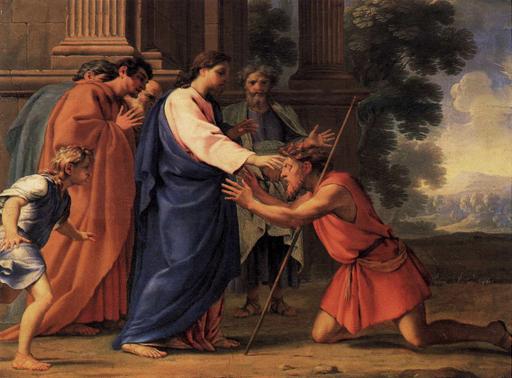
In this text, the ten lepers were united by the trouble of their disease. Leprosy was a chronic skin disease caused sores, numbness, and the eventual loss of limbs. Because it was so contagious, leprosy also caused isolation from family and friends. Lepers had to live apart from others. But these ten found fellowship with each other because of their common trouble. The leprosy created a tight-knit community of ten that is more remarkable than we might realize. Apparently, most of these lepers were Jewish, but at least one was a Samaritan.

This is remarkable because this community of ten wouldn’t have formed unless they shared this disease. It wasn’t even conceivable. The disdain and divide between Jews and Samaritans was even bigger than between Vikings and Packers or Red Sox and Yankees fans. Or any other divide you want to insert here. But here they are in this little community of the suffering. And they are so united they do something very interesting.

When lepers encountered people who weren’t lepers, they would cry out, “Unclean, unclean” (Lev. 13:45). But that isn’t what these ten holler when they see Jesus. Instead, with a united voice (by the way, the Gk. for ‘voice’ there is singular not plural), these ten lepers cry out, “Jesus, Master, have mercy on us!” Jesus tells them to present themselves to the priests, and the only reason a leper would do that is if they had recovered from their leprosy. It’s only as they walk away from Jesus that they are healed from their leprosy. But only one, only the Samaritan, does an about-face and returns to give thanks to Jesus.

Once the leprosy that united them was miraculously healed by Christ, the unity they had was gone, so the group splits up. The Samaritan is now united through faith to Jesus. So, of course, this cleansed Samaritan returns to the One who cleaned him. The saved returns to his Savior. What happened to the nine? Were they just too excited to get back to their families that they forgot to thank the Son of God? Who knows?

We can ask this Samaritan in the Resurrection because, dear saints, you will meet him there. You will meet him because you have also been cleansed from the leprosy of your sin, just as he was. One day, you will join him in giving thanks and worshiping at the feet of your God and Savior, Jesus Christ. Maybe that Samaritan will tell us how he went and witnessed to the other nine and will introduce us to them.

From this Samaritan, we should learn that one of the characteristics of faith is thanksgiving and being a person of thankfulness. It’s interesting when Paul listed the fruit of the Spirit in our Epistle reading (Gal. 5:16-24) that he didn’tinclude thankfulness. But based on this account of the thankful Samaritan, we do see that thankfulness is one of the ways that faith is manifest.

As the Samaritan lies with his face on the ground giving thanks at Jesus’ feet, our Lord says to him, “Rise and go your way; your faith has (lit.) saved you” (not just ‘made you well’). In other words, the Samaritan’s thankfulness is the visible manifestation of faith because giving thanks is how he recognizes and acknowledges the Source of his cleansing.

Dear saints, be people of thanks, not just people of gratitude. There’s a lot of talk about gratitude today, and gratitude is good, but thankfulness is better. The distinction between the two is this (you’ve heard me say this before): Gratitude recognizes the goodness of the thing that has been given. But thankfulness goes a step further. Thankfulness recognizes the goodness of the giver. If a daughter asks her mom for a snack and is given a bowl of ice cream, the girl can be grateful, but if mom gives her a few sticks of celery, the kid won’t be grateful because celery is gross. But that same child can be thankful with either a bowl of ice cream or disgusting celery because it comes from her mom who loves her and knows what her daughter needs.

This distinction between gratitude and thankfulness helps us understand 1 Th. 5:18 which says, “Give thanks in all circumstances.” Not all circumstances are good, so how can you give thanks? Well, because thankfulness is not gratitude. Through faith you can give thanks whether God sends you joy or sorrow, pleasure or pain, goodness or even evil. Remember Job. After all his property and children were taken from him, Job said, “Naked I came from my mother’s womb, and naked shall I return. The Lord gave, and the Lord has taken away; blessed be the name of the Lord” (Job 1:21). Even after Job’s health was taken from him and his wife told him to curse God and die, Job said, “You speak as one of the foolish women would speak. Shall we receive good from God, and shall we not receive evil?” (Job 2:10). In both instances, Scripture says, “In all this Job did not sin with his lips” (Job 1:222:10).

In moments of loss and pain, you might not be able to be grateful, but you can be thankful. If nothing else, you can give thanks to God for what He has given, even if He takes it away. Through faith, you can give thanks – even when God takes His gifts from you because you know the goodness of the God who gave and removed those gifts. Through faith, you know that His goodness doesn’t fade or change. Only through faith can you give thanks in all circumstances (1 Th. 5:18).

Dear saints, in this world you have lots of trouble (Jn. 16:33), but even in and through that trouble, God unites you into the community of His Church. Christ has delivered you from your sin by the forgiveness He won and purchased with His blood on the cross. Because of that, you aren’t just united with others by trouble. You are united by something much, much stronger. You are united by His Blood, which cleanses you from all your sin.

Live now as God’s forgiven people, united in giving Him thanks. Your gracious, cleansing God and Savior, Jesus Christ, now invites you to His table to receive that cleansing through His Body and Blood. Come. Receive. And leave here with His thanks and praise on your lips. Let that thankfulness be on your tongue as you go about your business this week and every week because that thankfulness will point others to your Savior, who has cleansed you. Amen.

The peace of God, which surpasses all understanding, will guard your hearts and minds in Christ Jesus (Php. 4:7). Amen.
Pause – Sermon on Luke 18:31-43 for Quinquagesima Sunday

Luke 18:31–43

31 And taking the twelve, he said to them, “See, we are going up to Jerusalem, and everything that is written about the Son of Man by the prophets will be accomplished. 32 For he will be delivered over to the Gentiles and will be mocked and shamefully treated and spit upon. 33 And after flogging him, they will kill him, and on the third day he will rise.” 34 But they understood none of these things. This saying was hidden from them, and they did not grasp what was said. 

35 As he drew near to Jericho, a blind man was sitting by the roadside begging. 36 And hearing a crowd going by, he inquired what this meant. 37 They told him, “Jesus of Nazareth is passing by.” 38 And he cried out, “Jesus, Son of David, have mercy on me!” 39 And those who were in front rebuked him, telling him to be silent. But he cried out all the more, “Son of David, have mercy on me!” 40 And Jesus stopped and commanded him to be brought to him. And when he came near, he asked him, 41 “What do you want me to do for you?” He said, “Lord, let me recover my sight.” 42 And Jesus said to him, “Recover your sight; your faith has made you well.” 43 And immediately he recovered his sight and followed him, glorifying God. And all the people, when they saw it, gave praise to God.

In the name of Jesus. Amen.

Generally, when we let our imagination go wild, we like to be the heroes. Boys imagine hitting a grand slam in Game 7 bottom of the 9th two outs down by three, or they imagine they are the receiver who dives to catch the hail Mary as time expires to win the Super Bowl. Girls imagine they are Cinderella dancing the night away with Prince Charming, and getting engaged after he returns her glass slipper. Even when it comes to Bible stories, we like to imagine that we are Joshua toppling the walls of Jericho or David slaying Goliath or Elijah defeating the prophets of Baal.

In the two parts of today’s text – the Passion prediction and the healing of the blind man – the only hero is clearly Jesus, and He fully embodies the perfect love that was described in our Epistle reading (1 Co. 13:1-13). This is the third time Jesus explains to the disciples that He is going to Jerusalem to be betrayed, mocked, shamefully treated, spit upon, flogged, crucified, and raised from the dead. But the disciples don’t understand Jesus, the saying is hidden from them, and they could not grasp what Jesus said.

Still, Jesus’ love is on full display. Jesus is patient with and kind toward them. He is not irritated or resentful at their thick skulls. Jesus is going to Jerusalem and will endure all these things because His love does not insist on its own way. Instead, Christ submits to His Father’s will in perfect obedience.

By going to the cross, Jesus will bear all things. All the burdens, all the sins, all the transgressions, all the iniquities, all the wrongdoings, all the evil, all the brokenness of this fallen world – Jesus will bear all of it in His body (1 Pet. 2:24). He does it all for you. Jesus’ journey from His throne in heaven, down into your flesh. His fasting and temptation in the wilderness. His path through the lands of Israel with no place to lay His head (Lk. 9:58). His teaching, healing, casting out demons, forgiving, and restoring. His triumphal entry. His betrayal. His suffering. His death. His burial. His three day rest in the tomb. His resurrection. His ascension. And His continual rule and authority over all things is a journey of love for you.

Jesus’ entire work is directed outward. He didn’t need to do any of that to benefit Himself, and He doesn’t do it for His own, personal gain. He does it because He loves you. And this love of Jesus wasn’t based on your loveliness. It was based on the fact that the God the Father loves you and wanted to rescue you. So, Jesus, God the Son, loved you and did everything necessary to save you.

God hated seeing what sin and death had brought to His creation, so He did something about it by undoing sin and death by the death and resurrection of Jesus. Christ lived the life we were unable to live. He obeyed the whole will and Law of God that we were unable to obey. He took up His cross, endured punishment that you and I deserved, and gave up His dying breath. All of this is done for you.

Jesus does all of this with full knowledge. None of it surprised Him. Christ knew exactly what is going to happen to Him. And still, He goes and does all of this to love you with His perfect, pure love. 

Back in Lk. 9:51, we are told that Jesus had “set His face to go to Jerusalem.” In other words, Jesus is determined to do this loving thing for you. He was focused on redeeming creation, on getting there, and accomplishing it. He goes toward Jerusalem in love.

Day after day, Jesus gets closer to His goal until He arrives in the city of Jericho, which is about fifteen miles from Jerusalem. He’s close – about a day’s journey from the city. But Jesus isn’t in a rush. Sometimes, when you have to do things that you know are going to be unpleasant and painful, you just want to get it over with and put in your rearview mirror. Again, Jesus doesn’t do that. Instead, He paused along His way through Jericho.

Christ hears the blind man’s cry, “Son of David have mercy on me.” Jesus doesn’t say, “I’ve got more important things to do. I’m going to have mercy on you when I get to Jerusalem and go to the cross.” No. Our Lord stops.

The cry for mercy from any corner of His creation gets Jesus’ full attention. He commands that the blind man be brought to Him. Jesus asks him, “What do you want Me to do for you?” “Lord, let me recover my sight.” And in love, Jesus gives the man the mercy he desired. “Recover your sight; your faith has made you well.”

Jesus’ mission to be the Savior of all creation does not stop Him from pausing to give His mercy to the individual He meets along the way. He pauses and heals him.

Dear saints, Lent begins on Wednesday, and Lent is a good time for us to pause and consider all that God has done for us. Today, pause and ponder whom you are most like in this text. Again, we’re not the hero; we’re not Jesus. Instead, sometimes, we’re like the disciples who do not understand or grasp what God is doing for us and saying to us. Sometimes, even though God has plainly and clearly spoken, we are blind and don’t understand what God is doing.

Sometimes, we are broken like the blind man. Even though the blind man could not see with his physical eyes, he understands who Jesus is and what He has come to do. Despite his physical blindness, he has faith that Jesus can and will restore what is broken. So, when Jesus is present, he cries out for mercy. And Jesus gives him the mercy, restoration, and healing that he needed. Maybe, like the blind man, you look foolish to the world how you relentlessly call out to Jesus for His mercy.

Whom are you more like? It probably depends on the day, maybe even the moment.  Whether you don’t have any clue of what God is up to like the disciples or whether all you can do is cry out for mercy, the thing to do is follow Jesus.

Notice that even though the disciples don’t get all the things that God had said through Jesus and through the Scriptures, even though they are blind in their hearts and minds – what do they do? They go with Jesus. They follow Him to Jerusalem and the cross. The blind man, even though he could not see anything until Jesus gave him the sight he desperately wanted, what did he do? He followed too.

Whether you understand what God is up to or not, the conclusion is the same. Follow Jesus. Follow Him to the cross. No matter where you are in your journey through life, no matter how much you understand what God is doing, no matter how much you need from God, no matter how much God has already given you, follow Jesus to the cross.

Stay the course. And as you go with Christ, He will give you ample reasons to glorify God and give Him praise. Amen.

The peace of God, which surpasses all understanding, will guard your hearts and minds in Christ Jesus. Amen.

Help – Sermon on Matthew 9:1-8 for the Nineteenth Sunday after Trinity

Matthew 9:1–8

1 And getting into a boat he crossed over and came to his own city. 2 And behold, some people brought to him a paralytic, lying on a bed. And when Jesus saw their faith, he said to the paralytic, “Take heart, my son; your sins are forgiven.” 3And behold, some of the scribes said to themselves, “This man is blaspheming.” 4 But Jesus, knowing their thoughts, said, “Why do you think evil in your hearts? 5 For which is easier, to say, ‘Your sins are forgiven,’ or to say, ‘Rise and walk’? 6But that you may know that the Son of Man has authority on earth to forgive sins”—he then said to the paralytic—“Rise, pick up your bed and go home.” 7 And he rose and went home. 8 When the crowds saw it, they were afraid, and they glorified God, who had given such authority to men.

In the name of Jesus. Amen.

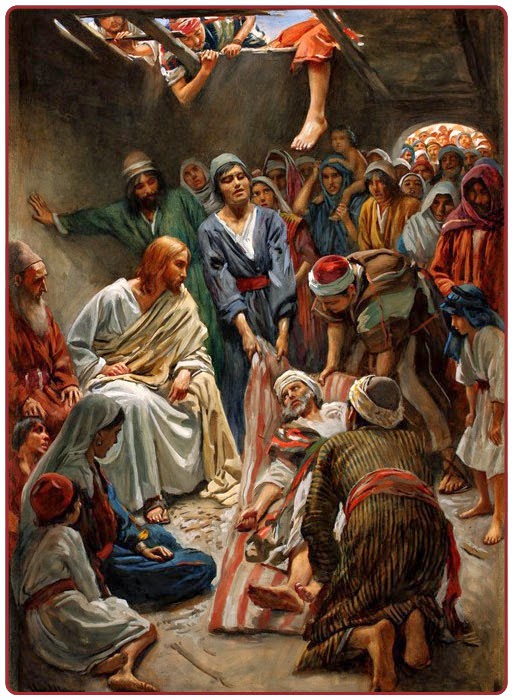
What do you suppose the friends of this paralyzed man thought when they heard Jesus? They had gone to a lot of trouble to bring him to Jesus. They had heard Jesus was at home (Mt. 9:1; Mk. 2:1), and people from all around knew that the power of God was with Jesus to heal (Lk. 5:17). We can imagine these friends going to the paralyzed man’s house and telling him, “Hey, Charles,” (he probably wasn’t named ‘Charles’ but go with me on this), “Hey Charles, Jesus is in town. We’re going to take you to Him and get you healed.”

They lift up Charles’ bed and lug him through the city streets. But when they get to where Jesus was, they find that too many people are there, and they can’t even get to the door (Mk. 2:2; Lk. 5:19). So, they take desperate measures. They lug Charles and his bed to the top of the house, tear open the roof, tie ropes on the corners of Charles’ bed, and lower him so he is before Jesus (Mk. 2:4). Charles’ friends are trying to catch their breath, wiping the sweat off of their foreheads, and giving each other tired fist bumps as they surround that gaping hole, thinking, “We did it. Jesus is going to heal our buddy so he can walk.”

But then, down in the house with dust swirling around them, Jesus looks at Charles, and Charles looks up at Jesus. And Jesus says those words, “Take heart, My son; your sins are forgiven.” I imagine those friends were thinking to themselves, “You’ve gotta be kidding me, Jesus. We brought Charles here so You could fix his body!”

We don’t actually know what the paralytics’ friends thought, but we do know what the scribes and Pharisees thought, “Jesus is a blasphemer. Only God can forgive sins” (Mk. 2:7; Lk. 5:21). They grumble. They scoff. They doubt. But Jesus knows their thoughts and hearts, just as He knew the faith and believing hearts of this man’s friends. And because Jesus knows both the faith of these friends and the grumbling of the scribes, we also know that Jesus knew the paralytic’s thoughts.

Maybe, the paralytic was initially excited at the prospect of being healed and using his limbs. But based on Jesus words to him, there is little doubt that Jesus told him exactly what he needed to hear. The first word Jesus says, “Take heart,” is the same command Jesus will give to the disciples when they are out in a huge storm in the middle of the sea. They are being beaten by the waves and wind. Jesus appears, and they think He’s a ghost. But Jesus calms them, “Take heart; it is I. Do not be afraid” (Mt. 14:27).

This paralytic man hears from Jesus the exact words he needed to hear as he was battered by legs that didn’t work and arms that couldn’t move. “Take heart, My son; your sins are forgiven.” As he was lying there before Jesus, maybe he figured Jesus would tell him how awful he had been and that his paralysis was punishment for his sin. But that’s not what Jesus says. Jesus tells him that in the midst of his suffering and horrible situation that he can be of good courage because his sins are forgiven.

Now, of course, Jesus ends up healing the man too. To silence the grumbling scribes and prove that He actually does have the authority to forgive sins, Christ heals the man.

That’s the main teaching of this text. Jesus proves that He has the authority on earth to forgive sins by healing the paralytic. And the crowds respond with fear and glorified God (notice how the text ends) who had given such authority to men. It’s plural. To men. Not just to the man, Jesus. To men.

That was true here, but it is even more evident on the evening of the Resurrection. Then, Jesus tells the disciples, “If you forgive the sins of any, they are forgiven them” (Jn. 20:23). Jesus, the One who has authority to forgive sins, delegates that authority to His Church, to all Christians. Because you have called me to be your pastor, I get to do that each Sunday morning. God uses my voice to proclaim His forgiveness to you. I get to be ‘the Absolution guy.’ It’s pretty cool. And please, don’t think I’m bragging. Believe me, I wouldn’t have the guts to say that if the Bible didn’t teach it. Forgiveness and absolution is the main point of this text.

But today, I want to draw special attention to this guy’s friends and their tenacity to help him by bringing him to Jesus. They know their friend’s need. They know Jesus is where he can get help. So, they do everything in their power to help him by bringing him to Christ.

Dear saints, you do this too. I know you do. But I’d like to point out three specific, concrete ways you do this because these things are easy to overlook. And when we overlook them, it’s easier to neglect doing them. Here are the three ways you help others by bringing them before Jesus, and they are in no particular order.

First, you help people by inviting them to church. Jesus promises to be here as we gather each and every week when He says, “Where two or three are gathered together in My name, there am I among them”(Mt. 18:20). You are eternally helping others when you bring them here, to God’s house and to the gate of heaven (Gen. 28:17) where Jesus meets them with His Word and forgiveness.

Second, you help people by praying for them. When you have an unbelieving family member or coworker who has some need. Help them by praying for them. As you lift others up in prayer, you are bringing them to and laying them before the feet of Christ. Don’t forget that. When someone is suffering, lift them up to Jesus in your prayers. Maybe Jesus won’t answer your prayers in precisely the way you expect. But He knows best how to help.

James 5:13-16 says that your prayers have great power. You don’t even have to tell the person you are praying for them. (Usually, I think letting them know you are praying for them is a good idea. But there might be times [e.g. if they are really deep in unbelief and hatred of God] you don’t. Use your God-given wisdom.) Even if they don’t share their problems with you, pray for them anyway. They might not share their struggles, but they probably tell you the ways they have been blessed. That same section of James 5 says that when someone is cheerful, you can give a prayer of thanks to God for the blessings He has provided.

Third, you help people by forgiving them. The forgiveness you have received from God frees you to forgive others when they sin against you. Christian, your gracious disposition toward them and toward the world is a way that the light of Christ shines through you (Mt. 5:14-16).

All of that brings me to you, Cooper. Cooper, today you are Baptized. Today, your parents have helped you by bringing you to Jesus who also says to you, “Take heart, My son; your sins are forgiven. I have joined you to My death and resurrection (Ro. 6:3-8). I have clothed you in My righteousness (Gal. 3:27), given you the new birth of water and the Holy Spirit (Jn. 3:3, 5) and made you My child.”

Cooper, and all you saints, you are before Jesus right now. He invites you to His Table where He feeds you with His Body and Blood for the forgiveness of all your sins. As you walk out of here today, remember that you have new life in Christ. Use your freshly given strength to help and serve your neighbor. Amen.

The peace of God, which surpasses all understanding, will guard your hearts and minds in Christ Jesus. Amen.

Friend, Move up Higher – Sermon on Luke 14:1-11 for the Seventeenth Sunday after Trinity

Luke 14:1-11

In the name of Jesus. Amen.

The game is afoot. This prominent Pharisee and his friends had invited Jesus to a Sabbath dinner party. Our Lord is in hostile territory. The Pharisees want to investigate how Jesus will behave on the Sabbath, and their focus is especially on seeing if He will work because that was strictly forbidden by their additional rules. Ironically, this means that they are working by keeping a close watch on Jesus. And Luke draws our attention to this sick man, “Behold, there was a man before [Jesus] who had dropsy.”

Now, Luke doesn’t come flat out and say this, but everything points to the fact that these Pharisees have intentionally set this situation up as a trap. The clues all point to the fact that this sick man was invited so they could test Jesus and see what He would do.

The man was sick with dropsy. The term for his condition today is ‘edema.’ It means that he is retaining water which causes his limbs to swell up in a gross way. In other words, you’d visibly see that this man isn’t well. On top of that, his swelling meant that he was unclean according to Lev. 13:2. This man’s sickness would normally have meant he wouldn’t get an invite to this Sabbath meal. Again, Luke doesn’t come straight out and say it, but there’s little question that this whole situation is set up to trap Jesus. But it doesn’t go too well for the Pharisees.

Throughout the Gospels, we see that Jesus knows what people are thinking (Mt. 9:4; Mk. 2:8; Lk. 5:22; Jn. 2:24-25). So, Jesus turns the tables and traps them. Notice that He initiates the confrontation by asking, “Is it lawful to heal on the Sabbath or not?” Of course, the answer is, “Yes, it’s lawful.” There are zero biblical laws against healing on the Sabbath. The reason there aren’t laws against it is simple. Who alone can heal disease? Only God can. Sure, doctors can treat diseases, but they can’t heal them. Throughout Scripture, God doesn’t give any laws against parting the Red Sea, turning water into wine, feeding 5,000 people with five loaves and two fish, or raising the dead on the Sabbath. The Bible doesn’t have one word against doing those things because God is the only one who can do any of that.

So, the hunters become the hunted, and the trappers, the trappeese [sic.]. The Pharisees are silent. Jesus heals the man and sends him off with a body that is no longer gross and swollen. And Jesus isn’t done interrogating these folks. “Which of you, having a son or [even] an ox that has fallen into a well on the Sabbath, wouldn’t make sure to pull him or it out?” And, again, they don’t answer because they can’t. They would do that lesser thing of rescuing their son or animal from a well on the Sabbath, so of course God – who, again, is the only one who can heal – would deliver someone from a sickness and grant that relief on the Sabbath.

Then, Jesus tells a parable about seating arrangements against them. While they were watching Jesus, He had been watching them. They had all been trying to get themselves into best possible spot at the feast. They were all jockeying for positions to show everyone else how important they were. I’m sure this is not how they imagined this entrapment dinner party would play out. Jesus keeps coming at them but not to condemn them; instead, Jesus is calling them to repentance.

Yes, the Pharisees are always trying to condemn Jesus. Yes, throughout the Gospels, they are the enemies of our Lord. And yes, Jesus warns us to not become like the Pharisees. But we have to remember that Jesus died for them too. Jesus loves the Pharisees and wants them to repent, to believe in Him, and to receive His forgiveness. So, when Jesus exposes the foolishness of the Pharisees, we shouldn’t stand on the sidelines and hope they get injured. 

Remember, all of us have a little Pharisee living inside of us. Our sinful nature desires to be noticed and praised for our own goodness and holiness. The creed of the Pharisee, and all of us little Pharisees, is, “I’m a good person,” and we will do everything in our power to try and prove that to others. But if we are trying to impress others with our morality, the only accolades we will receive will be from other sinners. If we are outside of faith in Christ, the only thing we will hear from God is, “Depart from Me, you cursed workers of lawlessness, into the eternal fire prepared for the devil and his angels” (Mt. 7:23; 25:41). 

We take God’s Law and misuse it to try and make ourselves look better than others. This is completely wrong. God didn’t give the Law for us to measure how we compare to others. God has given the Law for three purposes, and we have covered the three biblical uses of God’s Law recently, but it is always good to review those.

First, God’s Law shows us how creation works. The Commandments reveal how God has ordered things in creation. The theologians will describe this first use of the Law as a ‘curb’ that keeps us from driving off the road and causing damage to us and to others. Second, because God’s Law is a curb, it also shows us how sinful we are. This second use of the Law is a ‘mirror’ that reveals how wicked, wretched, and sinful we are. It brings us to repentance and faith in Christ. Third, God’s Law is a ‘guide’ which shows us how God wants us to live and how to love Him and love our neighbor. These three uses of the Law are clearly taught in Scripture. And 1 Tim. 1:8 says, “the Law is good if one uses it lawfully.”

Our problem is that we are like the Pharisees and use the Law in other ways that are not lawful. They are outside of how God intended the Law to be used. Instead of a curb, guide, and mirror, the little Pharisee in us tries to use the Law as a ladder. We foolishly attempt to use Law as a way to climb up to God. We wrongly imagine that if we do enough good works or climb a little higher than others then God will reward us. We wrongly use the Law as a foam finger cheering ourselves on, “I’m #1.” We misuse the Law as a podium trying to claim a spot that elevates us above others. The Law wasn’t intended to do any of that, but that’s how our sinful nature tries to use the Law over and over and over. Repent.

The Law puts us in our place. Again, it shows us how creation is ordered and works. That, then, shows us how far out of step we are with what God intends us to be and drives us to Him for His mercy and forgiveness. The sooner we learn this, the better. Because the only thing that can elevate us isn’t the Law. No thing can elevate us. Only God Himself can. And when we sinners repent, turn from our wickedness, abandon our own good works, and turn to Him for our righteousness and holiness, then, and only then, we become God’s friend, and He calls us higher. He elevates us.

Here’s the thing. Once God calls you, “Friend,” it almost doesn’t matter what He says after that. He could say, “Friend, unload the dishwasher,” or, “Friend, go rake the leaves.” If God calls you, “Friend,” that’s all you need. He knows all your sin, but He comes to you today and says, “You are My friend.” And He lifts you up. That’s what the absolution is. Jesus lifts you up, out of your sin, and says to you, “Friend, move up higher.” In Holy Communion Jesus calls you higher, to sit with Him at His table. Even your death is Jesus saying to you, “Friend, move up higher because I’ve made a way for you to live forever with Me.” 

You probably know the hymn What a Friend We Have in Jesus, but do you know what Jesus sings? What a Friend I Have in You. Dear saints, Jesus, and Jesus alone, lifts you up by saying, “Friend, move up higher.” Amen.

The peace of God, which surpasses all understanding, will guard your hearts and minds in Christ Jesus. Amen.

Rise & Go – Sermon on Luke 17:11-19 for the Fourteenth Sunday after Trinity

Luke 17:11-19

11 On the way to Jerusalem [Jesus] was passing along between Samaria and Galilee. 12 And as he entered a village, he was met by ten lepers, who stood at a distance 13 and lifted up their voices, saying, “Jesus, Master, have mercy on us.” 14 When he saw them he said to them, “Go and show yourselves to the priests.” And as they went they were cleansed. 15 Then one of them, when he saw that he was healed, turned back, praising God with a loud voice; 16 and he fell on his face at Jesus’ feet, giving him thanks. Now he was a Samaritan. 17 Then Jesus answered, “Were not ten cleansed? Where are the nine? 18 Was no one found to return and give praise to God except this foreigner?” 19 And he said to him, “Rise and go your way; your faith has made you well.”

In the name of Jesus. Amen.

Leprosy wasn’t simply a skin disease. Scripture repeatedly equates leprosy with punishment for sin and a sign of God’s wrath. In Dt. 28(:15, 27) Moses says, “If you will not obey the voice of the Lord your God,… [He] will strike you with the boils of Egypt, with tumors, with scales and [leprosy] of which you cannot be healed.” We see this happen several times in the Scriptures.

When Moses’ sister Miriam spoke against Moses (Num. 12:1-10), she became a leper. David’s general, Joab (and later Joab’s descendants), were struck with leprosy after he unjustly killed Abner (2 Sam. 3:29). After Naaman was healed from his leprosy, Elisha’s servant, Gehazi, took a bribe from Naaman and became leprous (2 Kgs. 5:20-27). King Uzziah of Judah contracted leprosy when he offered incense in the Temple even though he was not a priest (2 Chr. 26:16-21). The rabbis in Jesus’ day taught that leprosy was never contracted by people who lived moral lives. (I don’t think we can or should go that far, though.) There is little doubt that these ten lepers concluded that their condition meant they were being punished by God.

In desperation, they cry out, “Jesus, Master, have mercy upon us.” What were they asking for? Did they know that Jesus had cleansed lepers before, so they were crying out to Him for healing? Did they want food or money? Honestly, we don’t know, and it’s possible that the lepers didn’t know themselves. Notice, they don’t call Jesus ‘Lord’ as many other people do when they call out to Jesus in faith. Instead, they call our Lord, ‘master,’ which opens the door to all sorts of possibilities. Jesus simply responds, “Go and show yourselves to the priests.”

Now, this statement from Jesus was probably not received well by the lepers. They already knew that the priests were supposed to examine people with skin diseases and declare them to be clean or unclean, and, since these ten have leprosy, they are unclean. Going to the priests would be a pointless exorcise for lepers. The best-case scenario for a leper being examined by a priest would be for them to be declared unclean again. Because we know the end of the story, we know that Jesus has a hidden word of promise here. We know that their leprosy would be gone by the time they got to the priests. But some have argued, and I think convincingly, that these lepers heard the opposite. Instead of hearing the hidden promise, they heard a hard, “No, I won’t help you,” from Jesus.

Let me explain. I frequently and regularly get phone calls and people coming in to the church asking for help. I listen to their story and ask questions to discern how we as a congregation can best help them. Nine times out of ten, the individual is simply looking for one more excuse to continue some type of sinful, destructive behavior.

A few years ago, a man came here telling me that he was homeless and wanted money to buy food. I listened to his story, prayed with him, offered him some godly advice, and told him, “We have some food I can give you in the basement.” (And just so you know it was perfectly good food that I ate a couple days after he came.) But he didn’t want what we had, so I told him that he could go to Northlands Rescue Mission or to the Food Shelf because we support those ministries monthly, but he wasn’t interested in that either. He wanted money to get something from the store. I simply told him, “Listen, we are happy and willing to help you. You can have this food here, you can get a meal at Northland, or you can get something from the Food Shelf.” He became very upset, and as he left he yelled at me, “[Bleep] off.”

I’m very glad that we, as a congregation, send monthly support to different ministries in our community that can assist probably 95% of the people who come to our congregation asking for help. Those ministries serve as a clearing house to make sure people aren’t abusing the generosity of Christians and can come along side of people to help teach them to make better decisions. And I want to be clear, we still help many who need assistance through our Deacons’ Fund, but some people refuse to receive the help they actually need.

I think the nine lepers were like that man. He was offered three ways to get food, which is what he said he wanted. But he only heard the refusal to give him money as a refusal to help him. These lepers probably heard Jesus’ statement, “Go and show yourselves to the priests,” in a similar way. It was as if Jesus was saying, “I’ll only help you if you are declared to be clean by the priests.”

The other thing we have to consider is the timing of all this. When were these lepers healed, and when did they discover that they were cleansed? I’ve typically imagined that the ten lepers start marching off to Jerusalem, and after they had walked for a couple hours, discover that they were healed. Nine of them continue journeying to the Temple, but the Samaritan hikes his way back to the village, back through the streets, back to Jesus’ feet where he falls down and gives Him thanks. The thing about this is that the text doesn’t actually supply any of those details. It’s certainly possible that it happened that way, but the grammar that Luke uses actually seems to imply something different.

The way the verbs work seems to suggest that the healing happened more or less immediately, or at least while the ten are still within earshot of Jesus. Imagine if their cleansing happened immediately, basically just as they turned away. The Samaritan, unlike the nine, turns back and praises Jesus with a loud voice. He recognizes both his healing and the source of his healing – which came from the Word of Jesus. In faith, given by the Holy Spirit, the Samaritan believes that Jesus is the good God who has good things for him. He receives the gift of healing, but even better, he believes in the healing Savior, who also gives salvation and eternal life, which is exactly what he gets. Those last words of Jesus in our text are better translated, “Your faith has saved you.”

In the end, the nine ungrateful lepers didn’t expect God to be good to them. And Jesus’ statement, “Were not ten cleansed? Where are the nine?” would be a direct rebuke of them – something along the lines of, “Are you nine going to ignore when I have just done? I’ve given better than the mercy you asked for, and I have even more to give you.” But even if that isn’t the case, when the nine are healed, they refuse to recognize their Healer. The fact that they are cleansed is a wonderful thing, but it is only temporary. Their skin is restored, but their souls were still leprous in sin. They are the embodiment of the un-thankfulness that Jesus talks about in Mt. 5:45 where He says, “[God] makes the sun rise on the evil and on and on the good, and sends rain on the just and on the unjust.” Dear saints, how often does our merciful God gives good things to draw us to Himself, but we fail to recognize it?

But the Samaritan sees God’s goodness and comes back for more. He returned to Christ from whom all blessings flow.

It’s one thing to be grateful, but it is a different thing to be thankful. There is little doubt that the nine lepers were grateful that they were better, but they didn’t recognize how they had been healed. But the one, the Samaritan, the doubly outcast, was thankful. He was not only happy for the gift of healing; he was also thankful for and to the Giver of the gift. That is why he returns to Jesus and gives Him thanks and praise.

I’m going to abruptly change gears here, so bear with me. The church has commonly used Psalm 116:12-13 as a prayer before receiving the cup during Holy Communion. Here’s that prayer: “What shall I render to the Lord for all his benefits to me? I will lift up the cup of salvation and call on the name of the Lord,” which fits perfectly with what this Samaritan leper does. Jesus is good to him by healing him. So, what thanks and service does he offer to God? He goes back and receives more. He receives the salvation of his soul which is even better than being cleansed from leprosy.

So, let’s bring this to us today. Too often, we are like the nine. We see and feel our suffering and think that God has forsaken us. We pray and ask God to remove whatever crosses we bear, but in our impatience, we think that any delay of relief is a hard, “No,” from God which makes us doubt God’s goodness. As that sinful doubt creeps in, we grow less and less thankful, and even when God does remove that suffering, we do not recognize His goodness and mercy. May we repent.

Dear saints, even in our most difficult times, we can wait on the mercy of God. Yes, we suffer in this life, and “Our sufferings are not trivial, but neither are they eternal” (Rev. Petersen). We can wait on and trust in God. We can praise Him even in times of sorrow because He has bought us with His blood and will never leave nor forsake us.

And from this Samaritan, let us learn to always return to Jesus. When Jesus tells him, “Rise and go,” He doesn’t give him any direction. The man can go wherever he wants. But notice where he did go after being healed, he went back to Jesus, back to the goodness of God for more. And the interesting thing about Jesus’ command to ‘go’ is that the Greek word is a little ambiguous. At its root, it means ‘journey’ which means that It doesn’t necessarily mean, ‘go away,’ it could also mean ‘come with me.’ And it doesn’t make much sense if Jesus praises the man’s faith and tells him to go away. Faith always returns to Jesus in thanks to receive more of what Jesus has to offer. That is why Ps. 116 answers the question, “What shall I render to the Lord for all his benefits to me?” with, “I will lift up the cup of salvation and call on the name of the Lord.”

Dear saints, we can expect God to be good wherever we journey. And we always desire to come back to Christ because He has more good things to give to us. Faith wants to be with Jesus and continue to receive His gifts. He is our Temple. He is our Priest. And He is here now to cleanse us and freely give us His forgiveness.

God has given you every good thing. So, what will you do to repay Him? Come and get more. Come now to His table and lift up the cup of salvation. Come, eat and drink the Body and Blood of Christ for the salvation of your soul. Amen.

The peace of God, which surpasses all understanding, will guard your hearts and minds in Christ Jesus. Amen.

Shut, Spit, Open, Shut – Sermon on Mark 7:31-37 for the Twelfth Sunday after Trinity

Listen here.

Mark 7:31-37

31 Then he returned from the region of Tyre and went through Sidon to the Sea of Galilee, in the region of the Decapolis. H-66 Trinity 12 (Mk 7.31-37).jpeg32 And they brought to him a man who was deaf and had a speech impediment, and they begged him to lay his hand on him. 33 And taking him aside from the crowd privately, he put his fingers into his ears, and after spitting touched his tongue. 34 And looking up to heaven, he sighed and said to him, “Ephphatha,”that is, “Be opened.” 35 And his ears were opened, his tongue was released, and he spoke plainly. 36 And Jesus charged them to tell no one. But the more he charged them, the more zealously they proclaimed it. 37 And they were astonished beyond measure, saying, “He has done all things well. He even makes the deaf hear and the mute speak.”

In the name of Jesus. Amen.

If this healing sounds strange, you are reading it right. In fact, this miracle sounds even stranger in Greek. The strangeness starts with the location. Jesus is in the region of the Decapolis; in other words, He is outside of Israel and among Greek-speaking Gentiles. That is important later; keep that in mind.

While Jesus is there, a man is brought to our Lord who is deaf and has a speech impediment. I’ll probably just say ‘mute’ through the rest of the sermon since it fits with the crowd’s reaction (v. 37), and it’s one syllable instead of five. Jesus takes this man with shut ears and a shut mouth off to the side privately. He throws His fingers into the man’s ears. (It’s the same word Thomas uses after the resurrection when Thomas refuses to believe until he throws his fingers and hand into Jesus’ hands and side. It doesn’t just mean to carefully and politely poke around.) Jesus throws his fingers into the man’s ears. Jesus spits. He touches the guy’s tongue. Our text says Jesus sighs (more on that in a minute) and says one word. The man’s ears and mouth are opened. Then, Jesus immediately tells them to not say anything.

I’m not going to spend a lot of time on why Jesus tells them to not say anything. Jesus repeatedly does this in the Gospel of Mark. It isn’t reverse psychology. When people disobeyed Jesus’ commands to not publicize their miraculous healings, Jesus’ ministry is hindered (see Mk. 1:38-45).

The whole thing is strange, odd, and weird. Shut, spit, open, shut. But two other components make this whole thing strange.

First, our text says that Jesus ‘sighs.’ The Greek word that gets translated as ‘sigh’ is stronger. This is the only place where the ESV translates the word as ‘sigh.’ Elsewhere it is translated ‘groan.’ And, yes, it’s an important difference. Sighing is a usually an intentional thing. We sigh when we are weary or frustrated. Groan.jpgGroaning, however, is an involuntary response to being hurt or wounded. Every time the New Testament uses this word ‘groan’ it is from sorrow or suffering because of sin. And, in the New Testament, only four things groan – creation groans, believers groan, the Holy Spirit groans, and Jesus groans twice.

When the deaf man is brought to Jesus, our Lord does this odd ceremony of shoving His fingers into the man’s ears, spitting, touching the man’s tongue, and then He groans in pain.

What this teaches us is that these miraculous healings were not simple tricks for Jesus. They cost Him and caused Him pain. Remember Isaiah (53:4-5) says that Jesus bore our griefs and carried our sorrows. Yes, Jesus’ main work – His main miracle – His death and resurrection cost Him and caused Him pain, but so do these other miracles. When Jesus does any miracle, He is committing Himself to the cross. These miracles are not a raw display of divine power, they are all redemptive. Jesus changes places with the cripple, the lame, the blind, the dead, and here the mute and the deaf.

The second thing that is strange is the one word Jesus says, “Ephphatha.”And there are two strange things about this word. Mark translates it for us into Greek – it means ‘be opened.’ But Jesus says, “Ephphatha,”in Aramaic. Consider that. Not only do these ears not hear, but they also wouldn’t understand Aramaic. If they worked, they would have understood Greek words, not Aramaic.

The second strange thing about this word from Jesus has to do with grammar. Jesus doesn’t speak words of prayer to His Father asking Him to open the man’s ears. Jesus speaks to ears that don’t to ‘ear-y’ [sic.] things. They don’t hear. And (for you other grammar nuts) Jesus speaks a passive imperative.

We can’t hardly do this in English. After our dishwasher has run and cleaned our dishes, I can’t command it, “Be emptied.” No. I have to command my kids, “Empty the dishwasher.” Think about the last time you were stressed and worried about something and someone told you, “Calm down.” It’s a command, and it is helpful. But you need to do something. You need to take a breath, collect your thoughts, and relax. Imagine, instead of someone telling you to calm down, they just said, “Be calmed,” and you were. That’s what’s going on here.

Jesus speaks to deaf ears in a language they wouldn’t understand to be passively opened. And they are. What had been broken because of sin is put back into place by Jesus. Some rough touches, saliva, a groan, and one word is all it takes from Jesus to restore this man’s hearing and speech.

Jesus still does this. He’s doing it now. Just like in the creation, God acts by speaking. God’s words are His actions. Now, Jesus isn’t here among us in His body fixing all our physical problems. No, but we’ve got something better. Jesus is among us loosening our tongues to sing His praises. He is here opening our sin-stuffed, deaf ears to hear His absolution. easte-jesus-brings-us-out-of-deathAnd He no longer groans in pain when He does it. The price has been paid. Your forgiveness has been purchased and won on the cross.

“Be forgiven,” says Jesus to you here. And in His speaking, it is done. So, dear saints, go out in confidence not trusting in your own sufficiency, but in the sufficiency of God’s declaration, God’s proclamation, and Christ’s absolution. Amen.

The peace of God, which surpasses all understanding, will guard your hearts and minds inChrist Jesus. Amen.