Triune Forgiveness – Sermon on Isaiah 6:1-7 for Holy Trinity Sunday

Isaiah 6:1-7

1 In the year that King Uzziah died I saw the Lord sitting upon a throne, high and lifted up; and the train of his robe filled the temple. 2 Above him stood the seraphim. Each had six wings: with two he covered his face, and with two he covered his feet, and with two he flew. 3 And one called to another and said: 

“Holy, holy, holy is the Lord of hosts; 
the whole earth is full of his glory!” 

4 And the foundations of the thresholds shook at the voice of him who called, and the house was filled with smoke. 5 And I said: “Woe is me! For I am lost; for I am a man of unclean lips, and I dwell in the midst of a people of unclean lips; for my eyes have seen the King, the Lord of hosts!” 

6 Then one of the seraphim flew to me, having in his hand a burning coal that he had taken with tongs from the altar. 7 And he touched my mouth and said: “Behold, this has touched your lips; your guilt is taken away, and your sin atoned for.”

In the name of Jesus. Amen.

Today, I have five observations to consider from this text.

1. What Isaiah sees is remarkable but not unique. Isaiah had this vision of God when he was in the Temple. But it’s important to note that Isaiah was not the high priest, so this vision didn’t take place while Isaiah was in the Most Holy Place. Isaiah wasn’t even a priest, so this vision couldn’t have been when Isaiah was in the Holy Place either. Isaiah was a prophet called by God, but he was normal guy. In other words, Isaiah would have been in the courtyard of the Temple with all the other regular worshippers. You can basically think of this vision as what Isaiah sees when he goes to Church. He’s normal guy in a normal place at a normal time, but what he sees is extraordinary. 

Dear saints, there are things going on around us right now that we cannot see or hear. But just because our senses don’t pick them up doesn’t mean they are any less real than the things we can perceive with our senses. The Bible teaches that there are angels all around us all the time protecting us and ministering to us. Jesus Himself teaches us that He is present with us and seated on His throne with all authority in heaven and earth (Mt. 28:18, 20; 18:20). And that is always true whether you are at church or not. 

But when you are in church, the same things Isaiah saw in this vision are here and present with you. Hebrews 12:22-24 says, “You have come to Mount Zion and to the city of the living God, the heavenly Jerusalem, and to innumerable angels in festal gathering, and to the assembly of the firstborn who are enrolled in heaven, and to God, the judge of all, and to the spirits of the righteous made perfect, and to Jesus, the mediator of a new covenant.” In other words, here in this sanctuary you are in God’s domain. The angels and archangels, the seraphim and cherubim are all here. Surrounding you are all God’s people, Christians from every time and age, present here worshipping, glorifying, and praising God with you. You can’t see them, but that doesn’t make their presence any less real.

What Isaiah sees here is always true when God’s people gather together. In other words, it isn’t as though God was normally far, far away, but then, one time, He came close enough for Isaiah to see Him. No Isaiah simply is allowed to see the reality of God’s presence which was and is normally invisible. Dear saints, when you come into this place, see with your ears. The triune God – Father, Son, and Holy Spirit – along with all the angels and all the saints of all time are present right here with us.

2. Notice this reality that Isaiah sees. Isaiah sees the Lord sitting upon a throne. And Scripture leaves us no doubt. Isaiah sees Jesus. The Gospel of John spells it out. Isaiah sees Jesus, the eternal Son of God and the second Person of the Trinity (Jn. 12:36-41). Above Jesus, Isaiah sees the seraphim. These are one of the types of angels that Scripture tells us about. Their name means ‘burning ones.’ These angels have six wings. Two of the wings are used to cover the seraph’s face; two cover the seraph’s feet; and two are used to fly. Now, the interesting thing is that these seraphim are already holy. The don’t have any sin, but even they need to cover their creatureliness before the awesome holiness of God.

That brings us to their song. The seraphs sing, “Holy, holy, holy is the Lord of armies; the whole earth is full of His glory.” Their song is repetitive, three holy’s. It is true that the Hebrew language will use repetition for emphasis. God is holy, holy, holy. But those three holies could also be translated as, “Holy One, Holy One, Holy One.” Three holy Ones – again, Father, Son, and Holy Spirit. The angels are praising one God, but three distinct holy Ones. Now, Isaiah can only see the Son, but he hears the praise of each Person of the Trinity. And we know that all three persons of the Trinity are there because just after our text, the triune God asks, “Whom shall I [sg.] send, and who will go for Us [pl.]?”

3. Look at Isaiah’s response. Standing in the presence of the holy Trinity, Isaiah is terrified. Isaiah says, “Woe is me! For I am lost; for I am a man of unclean lips, and I dwell in the midst of a people of unclean lips.” We need to dissect this a little bit. Notice that Isaiah starts with a conclusion before moving to his confession. Isaiah’s conclusion is, “Woe is me! For I am lost.” That’s his understanding of the situation and what he thinks is going to happen to him. But his conclusion is wrong. It’s wrong not only because that isn’t what happens, but it’s also wrong because it is a denial of who God is.

When Isaiah says, “I am lost,” thinks he is about to be cut off and damned. He figures God has finally come to judge him and condemn him to hell. This is wrong and, frankly, disappointing. Remember Isaiah was in the Temple. The Scriptures clearly teach that the whole purpose of the Temple, the reason it was there, was so God could dwell among His people and forgive their sins (2 Chr. 6:21, 27). God had defined Himself as the God who is merciful and gracious slow to anger and abounding in steadfast love and faithfulness… forgiving iniquity and transgression and sin (Ex. 34:6-7).

Imagine coming to church. You hear the absolution. In the sermon, you are pointed to Jesus as the Lamb of God who takes away your sin. You receive the Body and Blood of Jesus for the forgiveness of your sins. Then, you have a vision like Isaiah’s and your response is, “Well, I’m going to hell.” That’s ludicrous, but that’s Isaiah’s conclusion here! Dear saints, the whole point of everything we do here at church is to remove any doubt and increase your faith that God has forgiven all of your sins – every last one of them – for the sake of Jesus’ death and resurrection. As disappointing as Isaiah’s conclusion is, we would probably do the same. Repent. God isn’t lying to you when He delivers His grace and mercy to you here in this place. You are forgiven, made holy, continually given the perfect righteousness of Christ. Amen?

Now, Isaiah’s confession and recognition is right. He is a sinner. He does have unclean lips, and the people around him have unclean lips. This means he deserves God’s wrath and judgment, but His conclusion is still false.

4. Isaiah’s guilt has a location. Sin isn’t just floating around as some nebulous, philosophical idea. No. Isaiah recognizes his sinful lips. But didn’t Isaiah have sinful feet? What about corrupt eyes? A lustful groin? An idolatrous heart? So, why does Isaiah focus on his lips?

The best guess is that the devil somehow knew God was about to call Isaiah to be a prophet. To be a prophet requires the use of your lips and mouth to speak the Word of God. So, Satan probably made extra effort that day to point Isaiah to how he sinfully used his lips to make Isaiah feel guilt and shame with the very instrument God would use Isaiah to minister.

The devil does this all the time. He will point out the sin and iniquity of the very gifts God wants us to use in fulfilling our callings and vocations in service to Him and our neighbor. This is true for all Christians, but today I want to address you fathers since I won’t be here next week.

Fathers, first of all, happy Fathers’ Day a week early. You fathers, the devil will do this to you. Satan will try to point you to your failures as a husband and father. And it will be easy for him to do this because you do fail. Sometimes, you are too harsh; other times you have been too lax in disciplining your children. You don’t show the kindness and love you should, and you have not been the father God intends you to be. But those sins do not disqualify you from being a father to your children. One of the most important things fathers can teach their children is confessing when you sin and asking for forgiveness. Again, your failures do notdisqualify you from being a father. Fathers, if you are still alive and still have children, God calls you to be a father. And God will equip and enable you to be exactly the father that your children need. Which brings us to the fifth and final observation.

5. The glory of the triune God is His forgiveness and mercy. Because there is one God and three Persons – because God is Father, Son, and Holy Spirit – God is both just and merciful, both just and loving. If God were only one, this couldn’t be the case. But because God is Father, Son, and Holy Spirit, God the Son can satisfy God’s just demands, and He has. Jesus has done for you what you could not do for God. Jesus renders His perfect obedience to the Father, and the Holy Spirit delivers to you the peace of forgiveness in Christ as He works on you through the Scriptures. Just don’t think that the Father is the only member of the Trinity who is just, that the Son is the only member who is loving and merciful, and that the Holy Spirit is the only member who works out your salvation. That isn’t the case either.

Dear saints, what God did for Isaiah, He does for you as well. It wasn’t the coal that removed Isaiah’s sin. It was God’s promise. Yes, God attached that promise to the coal which made it the instrument that delivered that promise to Isaiah. But God’s promise is attached to more things than that one coal that burned up millennia ago. God has attached His promise of mercy and forgiveness to the water of your Baptism. When those waters touched your body, your guilt was taken away, and your sin atoned for. When you heard the absolution earlier, those words entered your ear, and your guilt was taken away, and your sin atoned for. When you eat and drink the Body and Blood of Christ, your guilt is taken away and your sin atoned for.

God the Father, Son, and Holy Spirit is here today to bring you His mercy and grace freely given because of Christ. You are clean, and God sends you from here back out into the world with a free, spotless conscience (Heb. 10:19-25). Amen.

The peace of God, which surpasses all understanding, will guard your hearts and minds in Christ Jesus. Amen.

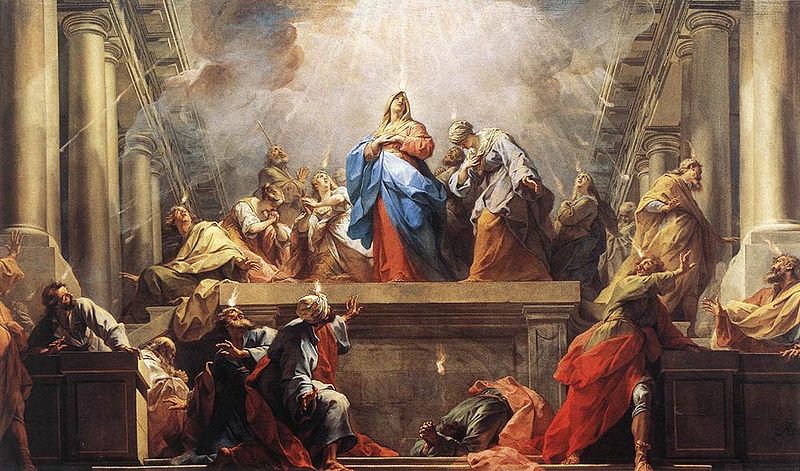
The Holy Spirit’s Work – Sermon on Genesis 11:1-9; Acts 2:1-21; and John 14:23-31 for the Day of Pentecost

Genesis 11:1-9; Acts 2:1-21; & John 14:23-31

23 Jesus answered him, “If anyone loves me, he will keep my word, and my Father will love him, and we will come to him and make our home with him. 24 Whoever does not love me does not keep my words. And the word that you hear is not mine but the Father’s who sent me.

25 “These things I have spoken to you while I am still with you. 26 But the Helper, the Holy Spirit, whom the Father will send in my name, he will teach you all things and bring to your remembrance all that I have said to you.

27 “Peace I leave with you; my peace I give to you. Not as the world gives do I give to you. Let not your hearts be troubled, neither let them be afraid. 28 You heard me say to you, ‘I am going away, and I will come to you.’ If you loved me, you would have rejoiced, because I am going to the Father, for the Father is greater than I. 29 And now I have told you before it takes place, so that when it does take place you may believe. 30 I will no longer talk much with you, for the ruler of this world is coming. He has no claim on me, 31 but I do as the Father has commanded me, so that the world may know that I love the Father. Rise, let us go from here.”

Before I officially begin the sermon, I’d just like to ‘let you in’ a little bit on sermon preparation. There are times when preaching is similar to athletic events. For example, in competitive diving, your final score is dependent on two factors: degree of difficulty and execution. Certain dives that score only 7’s and 8’s on execution but have a high degree of difficulty will get that competitor a higher score than another competitor who scores 9’s and 10’s on a dive with a lower degree of difficulty. What I’m attempting to do in today’s sermon is, in my estimation, a high degree of difficulty. I know my execution of today’s sermon will probably only score 7’s, but I hope and pray the payoff will be worth it. I’ll need your assistance though with an attentive ear, so help a preacher out.

In the name of Jesus. Amen.

To help us get a better handle on Jesus’ remarkable teaching about the Holy Spirit in this Gospel lesson, we need to make some observations from our Old Testament (Gen. 11:1-9) and Epistle lessons (Act. 2:1-21). First, from the Old Testament lesson:

There is a theory about what the people of Babel were doing that dates back to several centuries before Jesus was born. Please know that this isn’t drawn directly from Scripture, but it does help us understand what was going on a little better. Babel wasn’t just a bunch of people who decided to live together in a big tower. Instead, the mighty man, Nimrod (Gen. 10:8-10), has gathered people and said that together they could make a name for themselves and be greater than God who had judged the world with the flood just two generations prior. In other words, they want to be their own little ‘g’ god. They figured they could build a tower so high that the true God could not drown them again. God had already promised that He would never repeat that kind of judgment, but they didn’t trust God’s promise. Instead, they are going to try and make themselves safe from God’s wrath.

Again, the Holy Spirit didn’t inspire this theory, but it is still a very good theory. First, it clearly explains what the people were trying to accomplish. They weren’t trying to build a tower to get closer to God; rather, they were trying to establish an earthly, man-made peace by shielding themselves from God and His anger over their sin. This theory also explains why God saw their plan with such hostility and put a swift end to their work. But notice how God put an end to their work. He didn’t destroy the tower with a tornado or earthquake. Instead, God came down (I love how that phrase is used twice [v. 5, 7]). God had to come down to see this great tower which was going to have its top in the heavens. And God confused their languages so that they dispersed over the face of the earth. Now, God did this as a curse, but He also did it so they wouldn’t continue to live in their sin. Even God’s punishment turns into a blessing.

Now, when we come to the day of Pentecost and giving of the Holy Spirit in the Epistle lesson, God doesn’t quite undo the curse of Babel. He doesn’t reunite all the languages of the earth and make all mankind into one nation again. Instead, God had gathered His people together to celebrate the feast of Pentecost which is also called the Feast of Weeks. God’s people had come to Jerusalem, our text says, from every nation under heaven (Act. 2:5). They would have been daily listening to God’s Word in the Temple, and the Temple had strict rules that the Bible was only read in Hebrew. It didn’t matter if some, or even, most of the people didn’t even understand Hebrew, that’s just how it was.

But then on the day of Pentecost, the Holy Spirit was poured out on the disciples. Back in Act. 1:15, we are told that the number of faithful believers was only about 120. The Holy Spirit arrived with the sound of a mighty, rushing wind, and the people from all over the world who were visiting Jerusalem for the feast were brought even closer together. They heard that sound which made them gather in one place. But the sound of the wind was not the most important thing they heard that day. The most important thing they heard is the disciples speaking the mighty works of God in their own languages (Act. 2:11).

Here’s the interesting part: for these visitors to be able to get around in Jerusalem, they would have had to be able to communicate in at least one of four languages: Hebrew, Greek, Aramaic, or Latin. But here’s the beautiful thing, the Holy Spirit didn’t limit the number of languages that proclaimed those mighty works of God. Those 120 believers were filled by the Holy Spirit in such a way that they were able to speak in every language that existed even though it would only have been necessary for Him to have the Gospel preached in only four languages. In other words, the Holy Spirit sanctifies and makes holy every language on earth to carry the Gospel of Jesus’ death and resurrection to every nation on the day of Pentecost. Now, keep all of that tucked in the back of your mind as we move to this Gospel lesson.

The night Jesus was betrayed and arrested He taught His disciples a lot of things about the Holy Spirit; chapters 14-16 of John’s Gospel is probably the fullest, clearest teaching we have about the Holy Spirit. But, basically, all of this teaching boils down to the fact that the Holy Spirit’s work is to point us sinners to Jesus (Jn. 15:26). Whenever you hear Jesus proclaimed as the Savior of sinners, you can know without a doubt that the Holy Spirit is actively working in your life.

Specifically in this text, Jesus says that the Holy Spirit will teach the disciples all things and bring to their remembrance all that Jesus has said to them (Jn. 14:26). Then, notice the first word Jesus says after that is ‘peace.’ “Peace I leave with you; my peace I give to you.” And please notice that Jesus, the eternal Son of God, gives His own peace. This means your situation, Christian, is that there is nothing to disturb your relation to God. On the cross, Jesus has won and established this peace between you and God by His death and resurrection.

The only way for this peace to be undone, you would have to do two things. First, you would need to create a time machine and travel 2,000 years back in history and go to Mt. Calvary when Jesus hung on the cross. And that would be the easy part. Second, you would have to somehow pry Jesus off of the cross and undo God’s plan of salvation that He had prepared before the foundation of the world (1 Pet. 1:19-20). So, according to Jesus, the Holy Spirit’s job is to continually proclaim to you the message of the peace that Christ has won.

Jesus goes on to say, “Not as the world gives do I give to you.” The question I have there is this: Is Jesus talking about the motivation of giving (the ‘how’ the world gives), or is He talking about the content of what He gives verses the content of what the world gives? In other words, when we sinful people give something, we always have wrong motivations. We often give and have some expectation of getting something in return. Think of the phrase, “I’ll scratch your back and you scratch mine.” The false notions of karma and luck are also related to this. Deep down, that’s always the motivation behind the world’s giving.

Or is Jesus saying that the peace He gives is different than the peace the world gives. So many times, the world will offer all sorts of ideas that they think will bring peace to this fallen, broken world. Politicians, celebrities, beauty pageant contestants, musicians, etc. all do this. But none of their policies or ideas will bring peace because they are not able to bring true peace. The only thing that can bring true peace is the atoning blood of Jesus. Now, the Holy Spirit is the one who reminds and points you to Christ’s peace which surpasses all understanding (Php. 4:7).

Over the last week, we have heard a lot of talk about how to solve the evil of mass shootings in our country. I’m not going to preach on that because mass shootings are not the problem – they are only a symptom of a spiritual and moral problem. Even if you got a giant gun magnet and got rid of every gun in the world, evil people would figure out a way to kill and harm others. A lot of politicians are saying things like, “We need to come together and fix this.” The problem is that when sinners work together, it is generally in service to evil. Babel in our Old Testament lesson is just one example, but Scripture is filled with more. Any attempt to bring about a unity that isn’t centered around the forgiveness of sins in Christ is going to turn evil quickly.

The Holy Spirit brings something better. He unites people from every tribe under heaven in the faith. He brings us together to hear the Gospel, receive forgiveness for all our sins, and places us in the Church. And that same Holy Spirit leads you to this altar, to this table, to receive the true Body and Blood of your Savior Jesus Christ. Through this meal, the Holy Spirit strengthens and empowers you to be His instrument in this dark, evil world.

Again, Jesus says, “Not as the world gives do I give to you.” All the world has to offer you is trouble and tribulation. Jesus says, “I have said these things to you, that in me you may have peace. In the world you will have tribulation. But take heart; I have overcome the world” (Jn. 16:33).

So come; receive what Christ freely gives. Let the Holy Spirit do His work in you so that He may also do His work through you as you go back out into a world full of evil. And you can do that work and navigate all that evil with confidence because the Holy Spirit will continually point you to your true peace which Christ has won for you. Amen.

The peace of God, which surpasses all understanding, will guard your hearts and minds in Christ Jesus. Amen.

Triune Love – Sermon on John 3:1-17 for Holy Trinity Sunday

John 3:1-17

1 Now there was a man of the Pharisees named Nicodemus, a ruler of the Jews. 2 This man came to Jesus by night and said to him, “Rabbi, we know that you are a teacher come from God, for no one can do these signs that you do unless God is with him.” 3 Jesus answered him, “Truly, truly, I say to you, unless one is born again he cannot see the kingdom of God.” 4 Nicodemus said to him, “How can a man be born when he is old? Can he enter a second time into his mother’s womb and be born?” 5 Jesus answered, “Truly, truly, I say to you, unless one is born of water and the Spirit, he cannot enter the kingdom of God. 6 That which is born of the flesh is flesh, and that which is born of the Spirit is spirit. 7 Do not marvel that I said to you, ‘You must be born again.’ 8 The wind blows where it wishes, and you hear its sound, but you do not know where it comes from or where it goes. So it is with everyone who is born of the Spirit.”

9 Nicodemus said to him, “How can these things be?” 10 Jesus answered him, “Are you the teacher of Israel and yet you do not understand these things? 11 Truly, truly, I say to you, we speak of what we know, and bear witness to what we have seen, but you do not receive our testimony. 12 If I have told you earthly things and you do not believe, how can you believe if I tell you heavenly things? 13 No one has ascended into heaven except he who descended from heaven, the Son of Man. 14 And as Moses lifted up the serpent in the wilderness, so must the Son of Man be lifted up, 15 that whoever believes in him may have eternal life.

16 “For God so loved the world, that he gave his only Son, that whoever believes in him should not perish but have eternal life. 17 For God did not send his Son into the world to condemn the world, but in order that the world might be saved through him.”

In the name of Jesus. Amen.

John 3:16 might be the most recognizable verse of all Scripture. It has, rightly, been called “the Gospel in a nutshell.” That being said, there is a common misconception about one little word of the verse – the word “so.” Most of the time, we understand “so” to mean “so much,” so we read into the verse, “God loved the world so much that He gave His only-begotten Son….” However, the Greek word that gets translated as “so” has a different nuance. It actually means, “in this way.” Here’s how it comes across in Greek, “For God loved the world in this way, that He gave His only-begotten Son, that whoever believes in Him should not perish but have eternal life.”

God the Father loved you by sending His only-begotten Son to die and rise again for you. It is one thing for a person to love you by sacrificing his own life for you. But your God goes further by giving His eternally beloved Son so that you might be saved through Him. In other words, if you ever have doubts about God’s love for you, you only need to look to the cross and empty tomb. By the concrete, historical, provable action of God sending Jesus to shed His blood, die, and rise again for you, God has loved you. That love has not, will not, and can not ever change.

In a lot of ways, that’s enough of a sermon right there, but you’re going to get more.

Today is Trinity Sunday. Scripture teaches that there is one God in three Persons and three Persons in one God. So, as Christians, we worship one God who is Father, Son, and Holy Spirit.

It’s easy for us as Christians to think that there is the God we know and love, but then there are a bunch of guys on the fringe of Christianity called “theologians.” These stuffy guys dress weirdly, have no social skills, and like talking about this thing called “the Trinity,” while go about the important things of real life. I hope this sermon is a beginning of seeing how doctrine – and specifically the doctrine of the Trinity – sparks a joy and wonder in our God who is Father, Son, and Holy Spirit.

The doctrine (or teaching) of the Trinity is the first mystery of the Christian faith. The doctrine of the Trinity is not a secret. A secret is something that you keep to yourself, and if you tell it to another person it isn’t a secret anymore. A mystery is something that, even if you say it and confess it, is still a mystery and above our comprehension.

Let’s start with a quick overview of the Trinity.

Even though the word “Trinity” is never used in Scripture, it is a concept that Scripture presents, so we believe, teach, and confess it. And the word “Trinity” is a helpful term that has been used by Christians going way back to the late 100’s AD. “Trinity” smashes two words together – tri meaning “three” and unity meaning “oneness.” This week, I came across how “Trinity” is communicated in sign language, and it is absolutely beautiful. You hold up three using your thumb, index, and middle finger on one hand behind your other hand; then, you move those fingers underneath and to the front of your other hand to hold up your single index finger.

First, let’s talk about the unity of the Trinity. In the Old Testament, God gave His people a creed to confess, and it opens like this, “Hear O Israel the Lord our God, the Lord is one” (Dt. 6:4). We Christians worship one God, yet the testimony of Scripture is that this one God is also three Persons.

The Trinity is taught in the opening chapter of the Bible (especially when we understand creation in light of the rest of the Scriptures). The very first verse of Scripture says, “In the beginning, God created the heavens and the earth.” The Hebrew word for “God” is אֱלֹהִים (Elohim) and is the most common Old Testament name for God. The interesting thing about the Hebrew word Elohim is that the word is plural in form, but throughout the Old Testament the verbs that follow Elohim are singular.

Also, at creation, you have God the Father creating, God the Holy Spirit hovering over the face of the waters, and God the Son being the Word of God that creates as it is spoken. Admittedly we only rightly understand this when we know what is taught in Jn. 1[:1-3, 14], “In the beginning was the Word, and the Word was with God, and the Word was God…. All things were made through Him, and without Him was not any thing made that was made…. And the Word became flesh and dwelt among us…” We also get to hear the Trinity having a conversation before the creation of Adam and Eve. God says (and listen to the pronouns), “Let us make man in our image, after our likeness” (Gen. 1:26). Then Scripture goes on to say (again listen to the numbers in the nouns and pronouns), “So Elohim (pl.) created man (sg.) in His (sg.) own image, in the image of Elohim (pl.) He (sg.) created him (sg.); male and female He created them (pl.)” (Gen 1:27).

This is an aside, but part of the way that mankind bears the image of God is to have more than one person of the same nature and essence. Humanity has a plurality – male and female. This is why so much of the current push to normalize transgenderism is demonic. There is no other way to say it. The transgender movement isn’t a just a rejection of the way God created a person with boy parts or girl parts. It’s also a rejection of the true God who is plurality in unity. On the one hand, I hope this gives us more compassion toward those who have been deceived by the transgender movement. And on the other hand, I hope it helps us recognize the wickedness of the satanic nature of those who promote transgenderism. As the Church, we need to start preparing ourselves now to welcome back those who have undergone hormone treatments and mutilating surgeries because many of them will eventually realize how they have been deceived. In the next five to twenty or so years, we Christians will need to be ready to give the Gospel in loving, kind ways. I know there is a lot to explore there, but we’ll leave that for another time.

Back to the Trinity.

Now, there are some who will say that the three Persons of the Trinity are simply different ways that the Bible will talk about God. In other words, they say that in the Old Testament, God is depicted as the Father, in the Gospels as the Son, and ever since as the Holy Spirit. This error was given a name, “modalism.” Modelists wrongly say that there is just one God and Father, Son, and Spirit are just different titles for that one God. However, that can’t be the case. Already, we have seen all three Persons in creation, but we also see all three Persons distinctly and individually show up at the Baptism of Jesus (Mt. 3:13-17; Mk. 1:9-11; and Lk. 3:21-22). There you have Jesus, the Son, in the Jordan River, the Holy Spirit descending on Jesus in the form of a dove, and God the Father saying, “This is My beloved Son in whom I am well pleased.”

Now, everything said so far is pretty basic, and you have hopefully heard all of that at some point in your life. But I wanted to review that before we take it a step further. Because it is only with a right understanding of the Trinity that Scripture beautifully teaches two essential, joyful, wonderful things. First, that God is love. And second, that God is just and merciful.

Scripture teaches that God is love (1 Jn. 4:8, 16), but that can only be true because of the Trinity. If God were one, He could not be love. Here’s how that works: God is eternal and has always existed. And for God to be love, there has to be an object of His love. If God were one, He could not have love as part of His essence. Love would not be essential to His being. A god who is one and not triune could think highly of himself, but that wouldn’t be love; it would be pride. But with the Trinity it is possible for God to be love. There is an eternal love of the Father for the Son and Spirit. A love of the Son for the Spirit and Father. And a love of the Spirit for the Father and Son. This perfect relationship of love has eternally existed in the one God who is Father, Son, and Holy Spirit.

So, in God Himself, there has always been an object of love. Islam and Judaism cannot say that love is essential to who God is because they do not confess the Trinity. Now after creation, that perfect, eternal love that has always existed between Father, Son, and Holy Spirit, that love flows from God to us, God’s creatures. God shares that love with us. And, again, we see this most clearly in God giving His Son to save and forgive us.

And because God is love, the blessed Trinity can be merciful and just to forgive us and cleanse us from all unrighteousness.

I’m going to pick on Islam to make this point. The false god of Islam is Allah, and the Koran radically teaches that Allah is one. In fact, the Koran intentionally makes fun of Christianity for teaching that the true God is Triune. But again, a god who is one cannot have love as part of his essence. So, for Muslims, Allah has always existed from all eternity, but he existed as a solitary being and cannot have love as part of his essence. A false god like Allah can only be just; he cannot be merciful and loving toward sinners. In short, if god were only one, the story of that one god and his creatures is the story of an all-powerful master with naughty slaves. Maybe that false god could get his slaves back into his service, but he cannot love his slaves and they certainly cannot be his children.

But the true God is Triune. That means that God is perfectly just, but He is also merciful. Because God is Triune, God can provide Himself the sacrifice for sin as Abraham tells Isaac in Gen. 22:8. Salvation can only be by grace if God is Triune. If anyone but God Himself had to provide the sacrifice and satisfaction for sin, first, it wouldn’t be enough – it would not be sufficient. And second, it wouldn’t be by grace.

And if the Holy Spirit were not God, what possible right would He have to bring us into a relationship with God. If the Holy Spirit isn’t God and just a creature, He doesn’t know the mind of God. If the Holy Spirit isn’t God, He is no more use to us than an angel.

But the Father and the Son and the Holy Spirit is God. The Son has done for us and in our place what we could not do for God. Jesus has come and been perfectly obedient to all of God’s commands. Because He is God, Jesus can render that perfect obedience to God on our behalf. And the Holy Spirit works faith in that work to the Father and Son.

Dear saints, all of this is to say that because God is triune, He can perfectly love and save you by grace. Because God is Father, Son, and Holy Spirit, you are not simply His slaves or pets. You are the object of His love. God the Father has created you out of pure love. God the Son has redeemed you out of pure love. And God the Holy Spirit has sanctified you out of pure love. You are saved and redeemed to be God’s children.

Jesus, the eternal Son of God, has come into the world not to condemn you, but in order that you might be saved through Him. Blessed be the holy Trinity. Amen.

The peace of God, which surpasses all understanding, will guard your hearts and minds in Christ Jesus. Amen.

Pentecost Miracles – Sermon on Acts 2:1-11 for Pentecost Sunday

Acts 2:1-11

1 When the day of Pentecost arrived, they were all together in one place. 2 And suddenly there came from heaven a sound like a mighty rushing wind, and it filled the entire house where they were sitting. 3 And divided tongues as of fire appeared to them and rested on each one of them. 4 And they were all filled with the Holy Spirit and began to speak in other tongues as the Spirit gave them utterance.

5 Now there were dwelling in Jerusalem Jews, devout men from every nation under heaven. 6 And at this sound the multitude came together, and they were bewildered, because each one was hearing them speak in his own language. 7 And they were amazed and astonished, saying, “Are not all these who are speaking Galileans? 8 And how is it that we hear, each of us in his own native language? 9 Parthians and Medes and Elamites and residents of Mesopotamia, Judea and Cappadocia, Pontus and Asia, 10 Phrygia and Pamphylia, Egypt and the parts of Libya belonging to Cyrene, and visitors from Rome, 11 both Jews and proselytes, Cretans and Arabians—we hear them telling in our own tongues the mighty works of God.” 12 And all were amazed and perplexed, saying to one another, “What does this mean?” 13 But others mocking said, “They are filled with new wine.”

14 But Peter, standing with the eleven, lifted up his voice and addressed them: “Men of Judea and all who dwell in Jerusalem, let this be known to you, and give ear to my words. 15 For these people are not drunk, as you suppose, since it is only the third hour of the day. 16 But this is what was uttered through the prophet Joel:

17 “‘And in the last days it shall be, God declares,
that I will pour out my Spirit on all flesh,

and your sons and your daughters shall prophesy,
and your young men shall see visions,
and your old men shall dream dreams;

18 even on my male servants and female servants
in those days I will pour out my Spirit, and they shall prophesy.

19 And I will show wonders in the heavens above
and signs on the earth below,
blood, and fire, and vapor of smoke;

20 the sun shall be turned to darkness
and the moon to blood,
before the day of the Lord comes, the great and magnificent day.

21 And it shall come to pass that everyone who calls upon
the name of the Lord shall be saved.’”

In the name of Jesus. Amen.

To understand the significance of this text and what happened here in Acts 2, it is helpful for us to realize two things. First, Pentecost was already an important feast that had been instituted by God. And Second, the Holy Spirit was already at work in the world before this text. But let’s dive into each of those a little more. What was this feast, and what was the feast celebrating?

Pentecost was one of three Old Testament feasts that required a trip to Jerusalem. The other two were Passover and the Feast of Booths. Now, you won’t find the word “Pentecost” in the Old Testament. There, it’s usually called the “Feast of Weeks.” To understand why it eventually gets called “Pentecost,” we have to do a little math. (Yes, math in a sermon.) In Lev. 23:15-16, God tells the people to count seven weeks plus one more day after the Passover. So, you count seven weeks – 7×7=49 – plus one more day equals 50. And “Pentecost” means the 50th day. In the Jewish mind, the 50th day was a week of weeks plus one more day. So, the “Feast of Weeks”/Pentecost is a celebration of the 8th day.

And this is significant because when Genesis tells us about creation (Gen. 1:1-2:3), it counts out the first seven days, but that’s it. So, in the Jewish mind, the 8th day is the day outside of creation and the day of the new creation when we stop counting. The festival of Pentecost was a time of joy and rest because it was the end of the barley harvest (similar to our Thanksgiving holiday), and the focus of Pentecost was looking forward to the eternal rest God promised to His people.

Pentecost was also considered as the anniversary of the giving of the Law on Mt. Sinai. The idea was that Passover and the exodus from Egypt was the birth of the people of Israel, and then fifty days later, God gives the Law on Sinai which was understood as God’s marriage to His people, Israel. To see this, it is helpful to expand our understanding of what Ten Commandments are. (And if anyone is interested, we can have a brief Bible study after the service to cover this more thoroughly.)

In Exodus 20:1-17, God speaks to the whole congregation of Israel and gives the Ten Commandments. When you look through those verses, God says a lot of things, and if you take all the “you shalls” and “shall nots” there are more than ten. In fact, you get at least 13. But in Ex. 34:28 and Dt. 10:4, the Bible tells us that there are ten things there. But there is no place in Scripture where we are told how to number the things God gives there. God simply lets us figure it out, which is why there are different numberings of the Commandments.

The other important thing to know is that the Bible itself doesn’t call what God gives us in Ex. 20 “Commandments.” Scripture simply calls them the “Ten Words.” So, to get to the point quickly (again if you want more of an explanation, stick around after the service), the Jewish people count the first of the Ten Words as, “I am the Lord your God, who brought you out of the land of Egypt, out of the house of slavery.” The way they count the Ten Words, the first Word is a promise from God. God defines who He is – He is their God who delivers them. Then, in the other nine words, God gives the instructions about what His people are to be in this world because He is our God.

So, the Ten Words are understood as the wedding vows. God is the faithful husband, and His people are to be His faithful bride. And, again, Pentecost was a celebration of that. That is why the people have gathered in Jerusalem. They are celebrating because the harvest has ended, and they are looking to the eternal rest with God, their faithful husband.

The second thing that helps us understand what is happening here in Acts 2 is a right understanding that the Holy Spirit was already at work in the world before this first Day of Pentecost. Just a few examples:

In Gen. 1:2, we see that the Holy Spirit was involved in creation.

In Gen. 41:38, Pharaoh recognizes that the Holy Spirit had blessed Joseph with wisdom to interpret his dream and make plans to provide food during the upcoming famine.

In Ex. 31[:3] & 35[:21], God says that a guy named Bezalel is filled with the Holy Spirit to have artistic skill so he could make all the different pieces of the Tabernacle.

In Num 11:26-29, the Holy Spirit rests on two men named Eldad and Medad, and they begin to prophesy. (And I’ll give $100 to anyone who has twin boys, and names them Eldad and Medad. Those names mean, “God has loved,” and, “Love.”)

In Num. 24:2ff, the wicked prophet Balaam has the Holy Spirit come upon him so that he blesses Israel instead of cursing them like he intended. In Num. 27:18, Joshua, Moses’ successor, is said to have the Holy Spirit dwelling in him.

In Ps. 51:11, David’s great Psalm of confession, David prays that God would not take the Holy Spirit from him.

Is. 63:10, talks about how God’s people sinned and grieved the Holy Spirit.

In Lk. 1:35, Gabriel tells Mary that she will conceive Jesus when the Holy Spirit comes upon her. We could go on, but I hope you get the picture. The Holy Spirit was active in many ways before He came upon the disciples here in Act. 2.

To sum up: Pentecost was already a festival celebrating the eternal rest of the new creation and God being a husband to His people. And the Holy Spirit was already at work in many significant ways before this text in Acts 2. So, what is the big deal about Pentecost?

Now, Jesus has come. Christ has been born as a Man. He has suffered, shed His blood, and died. Jesus has risen again and ascended to the right hand of God the Father. Now, the Holy Spirit comes in full measure and is poured out upon His Church as the promised Comforter.

On the day of Pentecost, the Holy Spirit comes in ways that were seen and heard. The Spirit was visible in the fire that rested on the heads of those who were gathered. They had that fire rest upon them, but they were not burned or consumed like the burning bush where God appeared to Moses. And the Holy Spirit is audible first in the mighty rushing wind and then in the languages that the disciples spoke telling the mighty works of God (Act. 2:4, 11).

These miracles are significant. Remember, it was mandatory that all the Jewish males try to get to the Temple for Pentecost, so all sorts of pilgrims were gathered from all over the world to celebrate the harvest and rest God had given. And while those pilgrims are in the Temple, they hear the sound of the mighty rushing wind. V. 6 of our text says that the multitude gathered together because they heard the sound of that wind. This crowd knew it wasn’t just a normal storm, something extraordinary was hapening.

So, they come out of the Temple and hear not simply the wind, but they hear about the mighty works of God in Jesus in their native languages. And this is so spectacular because these people had just been in the Temple hearing God’s Word, but not in their native language. Hebrew was the language of the Temple, and it is likely that some of them didn’t even understand the Hebrew used in the Temple. Even though they were ethnically Jewish, they had been living for generations in other countries and didn’t know Hebrew at all or very well.

But that multitude who came together at the sound of the rushing wind did know more than one language. For them to get to Jerusalem, check into a hotel, and buy food, they had to know at least Greek, Aramaic, or Latin. These people couldn’t have been at the feast of Pentecost without at least a working knowledge of one of those languages. So, the Holy Spirit could have enabled the apostles to speak in only those four languages, and everyone there would have been able to understand. But the Holy Spirit is more gracious than that. Each person there heard in their native language the mighty works of God in Jesus.

So, here at Pentecost, the Holy Spirit reaches out to that entire multitude of pilgrims in a very personal way. The Temple was strict, everything had to be in Hebrew. But now people from every tongue are able to hear the mighty works of God in their mother’s tongue. The Holy Spirit sanctifies all those languages to carry the Gospel of Jesus Christ. This is so beautiful.

We heard in our Old Testament reading (Gen. 11:1-9) how God dispersed the inhabitants of the earth by confusing their language at the tower of Babel. Here at Pentecost, God reverses the curse of Babel, but not in the way we would expect. He doesn’t reunite the languages of the world into one language. Instead, God unites all people through the one message of the Gospel and blesses what once divided us. What used to divide humanity becomes a blessing and a variety of grace. And this multiplied grace continues into eternity. In Rev. 7:9-10, John sees a great multitude that no one could number from every nation, from all tribes and all peoples and all languages standing before the throne of God and before the Lamb. In heaven, the saints are equally perfected, but they aren’t erased of their personalities and histories.

If you want diversity, look to the Church united in faith in Jesus.

But as amazing as all these Pentecost miracles are – the wind, the tongues of fire, the speaking in a multitude of languages – these miracles have their limits. Some in that crowd figure the apostles are drunk, which is absurd. Drunk people have difficulty speaking their own language let alone fluently, coherently, and eloquently in other languages that they don’t even know. But even those who don’t accuse the apostles of being drunk only get to the point of asking the Lutheran question, “What does this mean?”

So, Peter stands up for the apostles and says that Joel 2 is being fulfilled in their presence. In these last days (Act. 2:17), the Holy Spirit is being poured out so that the wonders of heaven and mighty works of God in Christ Jesus are being shown to the multitude so that “everyone who calls upon the name of the Lord may be saved.”

That is the most significant miracle. The greatest miracle of all the spectacles of Pentecost is the salvation that is available to everyone despite their sin.

Peter will go on to preach a short sermon. Listen quickly to the main thrust of that sermon in the three verses that follow our text here. Peter preaches, “Men of Israel, hear these words: Jesus of Nazareth, a man attested to you by God with mighty works and wonders and signs that God did through Him in your midst, as you yourselves know – this Jesus, delivered up according to the definite plan and foreknowledge of God, you crucified and killed by the hands of lawless men. God raised Him up, loosing the pangs of death, because it was not possible for Him to be held by it” (Act. 2:22-24).

After Peter’s sermon is done, the multitude is convicted of their sin and asks, “What shall we do?” And Peter says, “Repent and be baptized every one of you in the name of Jesus Christ for the forgiveness of your sins, and you will receive the gift of the Holy Spirit for the promise is for you and your children and for everyone who is far off, everyone whom the Lord calls for Himself.” And 3,000 believe, are Baptized, and saved.

That is the real miracle of Pentecost. The Holy Spirit calls, gathers, enlightens, and sanctifies those who were responsible for the crucifixion of Jesus. The Holy Spirit used Peter to preach to them the Word of God – Law and Gospel. And the Holy Spirit causes them to repent, believe, and be saved.

And that miracle continues to this day. Whenever you hear the Word of God and are pointed to Jesus, there is Holy-Spirited, Pentecost work going on. Just last week, you heard how Jesus says we can tell when the Holy Spirit is working. In John 15:26 Jesus says, “When the Helper comes, whom I will send to you from the Father, the Spirit of truth, who proceeds from the Father, He will bear witness about Me.” Wherever and whenever Jesus is being proclaimed as the Savior of sinners, the Holy Spirit is at work.

Dear saints, the real miracle of Pentecost is still going on; in fact, it’s happening right now. You think your pastor is preaching to you, but I’m just the speaker producing the sound. When you hear the Gospel that declares that all your sins are forgiven and that you have peace with God because of the suffering and death of Jesus on the cross, it isn’t a mere human telling you this. That is the work of the Holy Spirit.

So, when you come to church with your sins, failures, and doubts, when you come stained and soiled by the godless world in which we live, the Holy Spirit enters into this place and opens the Scriptures to you. He brings to remembrance all that Jesus has said (Jn. 14:26). And by pointing you to Jesus, the Holy Spirit does His work of making you holy. That’s why He’s called the Holy Spirit. Yes, He is holy, but He is called the Holy Spirit because He makes you holy. He clothes you in the robe of Christ’s righteousness and sends you home at peace with God.

Dear saints, Pentecost happened. The Holy Spirit came that day nearly 2,000 years ago in Jerusalem, but Pentecost continues, and for that, God be praised. Amen.

The peace of God, which surpasses all understanding, will guard your hearts and minds in Christ Jesus. Amen.

A Strange Congregation – Sermon on Ezekiel 37:1-14 for the Second Sunday of Easter

Listen here.

Ezekiel 37:1-14

1 The hand of the Lord was upon me, and he brought me out in the Spirit of the Lord and set me down in the middle of the valley; it was full of bones. 2 And he led me around among them, and behold, there were very many on the surface of the valley, and behold, they were very dry. 3 And he said to me, “Son of man, can these bones live?” And I answered, “O Lord God, you know.” 4 Then he said to me, “Prophesy over these bones, and say to them, O dry bones, hear the word of the Lord. 5 Thus says the Lord God to these bones: Behold, I will cause breath to enter you, and you shall live. 6 And I will lay sinews upon you, and will cause flesh to come upon you, and cover you with skin, and put breath in you, and you shall live, and you shall know that I am the Lord.” 

7 So I prophesied as I was commanded. And as I prophesied, there was a sound, and behold, a rattling, and the bones came together, bone to its bone. 8 And I looked, and behold, there were sinews on them, and flesh had come upon them, and skin had covered them. But there was no breath in them. 9 Then he said to me, “Prophesy to the breath; prophesy, son of man, and say to the breath, Thus says the Lord God: Come from the four winds, O breath, and breathe on these slain, that they may live.” 10 So I prophesied as he commanded me, and the breath came into them, and they lived and stood on their feet, an exceedingly great army. 

11 Then he said to me, “Son of man, these bones are the whole house of Israel. Behold, they say, ‘Our bones are dried up, and our hope is lost; we are indeed cut off.’ 12 Therefore prophesy, and say to them, Thus says the Lord God: Behold, I will open your graves and raise you from your graves, O my people. And I will bring you into the land of Israel. 13 And you shall know that I am the Lord, when I open your graves, and raise you from your graves, O my people. 14 And I will put my Spirit within you, and you shall live, and I will place you in your own land. Then you shall know that I am the Lord; I have spoken, and I will do it, declares the Lord.”

Alleluia! Christ is risen!
He is risen indeed! Alleluia!

In the name of Jesus. Amen.

Ezekiel had an odd call to preach to a strange congregation. God brought Ezekiel out by the Spirit into the middle of a valley. It was full of bones, lots of bones. And these bones were dry – very dry. This congregation, maybe we could call it Dry Bones Lutheran, they weren’t loving their neighbor. They weren’t shining the love of Christ to the world. They weren’t improving day by day. They were just lying there, dead and dry.

Then God asks Ezekiel the question: “Son of man, can these bones live?” What kind of question is that? When God asks something like that, what answer can you give? Ezekiel goes the safe route, “O Lord God, You know.” That’s as secure of a reply as you can give.

Well, God gives Ezekiel a call to preach to this strange congregation. “Prophesy over these bones, and say to them, ‘O dry bones, hear the word of the Lord.’” It’s an odd call. How many times did Jesus say after His sermons, “He who has ears, let him hear”? But here, God calls Ezekiel to preach to a congregation of bare bones that don’t even have ears.

“O dry bones, hear the word of the Lord. Thus says the Lord God to these bones: Behold, I will cause breath to enter you, and you shall live. And I will lay sinews upon you, and will cause flesh to come upon you, and cover you with skin, and put breath in you, and you shall live, and you shall know that I am the Lord.”

The sermon is preached. And God’s little sermon appears to be working. There is a rattling. The toe bone connected to foot bone to ankle bone to shin bone to knee bone to leg bone to hip bone to back bone to rib bone to shoulder bone to neck bone to head bone. Now hear the Word of the Lord!

But wait a second. Bones are connected, sinews hold together, muscles have grown, and skin covers. But there is still no breath, no spirit, no life. Wasn’t the sermon supposed to be done? Well, not yet. God has more for Ezekiel to preach. “Prophesy to the breath.”

Now, pause here for just a second. In Hebrew, the word for ‘wind’ and ‘breath’ and ‘spirit’ is all the same word. Ten times in this text, that word comes up. Seven times, it is translated as ‘breath.’ In v. 9, it’s translated as ‘wind.’ But back in v. 1 and again in v. 14, it is translated as ‘Spirit’ referring to the Holy Spirit. But, again, it’s all the same word. And I think, I could be wrong, but I think there is a sense here that God is calling Ezekiel to preach a sermon to the Holy Spirit. “Prophesy, son of man, and say to the Spirit, ‘Come from the four winds and breathe on these slain that they may live.’” In other words, it could be something like, “Holy Spirit, come from the four winds and spirit (as a verb) on these slain, that they may live.”

Ezekiel preaches, and after this second sermon is preached, what do you know? God’s Word works. The Spirit comes into these lifeless bodies that just a couple moments before had been bones, dry bones. Now, they live, and they are an exceedingly great army.

Finally, God tells Ezekiel exactly what was going on. The army is the entirety of God’s people. They were complaining that their bones are dried up and they are cut off. But God promises that He will open their graves and raise them up causing life to come into them. He will bring them into their own land. He will put His Spirit into them, they will live, and they will know that God is the Lord. He promises to do this. He is faithful, and He will do it (1 Thes. 5:24).

Now, this lesson from Ezekiel is fulfilled in our Gospel lesson (Jn. 20:19-31). That first Easter evening, the disciples are all huddled together. They aren’t in a valley, but in the upper room. Sure, they aren’t dry, dead bones, but they are as good as dead because of their fear.

We know they were already afraid of suffering the same fate that Jesus suffered because Jesus said that if they persecuted Him they would be persecuted as well (Jn. 15:20). They know that Pilate had Jesus’ tomb sealed because the religious leaders were worried that the disicples would steal Christ’s body and claim that He had risen (Mt. 27:62-66Jn. 20:19). But even worse, they have heard that Jesus is alive. That might have been their biggest cause of fear because they had all abandoned Jesus when He was betrayed. They weren’t with Him during His trial and crucifixion. They don’t know what a resurrected Jesus means for them. Maybe He’s mad and is coming after them for their failure. You don’t want a Guy who can walk out of the grave as your enemy.

But then, Jesus enters the room even though the doors were locked. And what does He do for this little congregation dead in fear? He shows them His hands and side as He preaches, “Peace be with you.” That little band of dry, dead disciples come together to see Christ’s wounds and become glad. But at this point, they’re still like those bones, muscles, sinews, and skin that come together in Ezekiel. But they still have no life, no spirit.

So, Jesus has more to preach to them. And the second sermon starts the same as the first, “Peace be with you. As the Father has sent Me, even so I am sending you.” Jesus breathes on them. Christ spirits them. He gives them the Holy Spirit, just like in Ezekiel’s second sermon. But we have to pause a moment first. When Jesus says He is sending the disciples just like God the Father had sent Him, what does He mean? What are they to do?

Because God sent Jesus to do a lot of things. God sent Jesus to earth to be both God and Man. God sent Jesus to live a perfect life of obedience. God sent Jesus to preach and teach. God sent Jesus to do miracles. And most importantly, God sent Jesus to be the once-for-all sacrifice for sins. God sent Christ to be the Lamb of God who takes away the sin of the world (Jn. 1:29). God sent Jesus, who knew no sin, to be sin (2 Cor. 5:21). God sent Jesus to die on the cross for our sin and rise again for our justification (Ro. 4:25). God sent Jesus to do all of that, but Jesus isn’t saying that He is sending the disciples to do any of those things. 

That’s why Jesus gets very specific after He tells the disciples that He is sending them just as the Father had sent Him. These disciples are sent, just as Jesus had been sent, to do something very specific. Jesus says, “If you forgive the sins of any, they are forgiven them; if you withhold forgiveness from any it is withheld.”

God had sent Jesus to proclaim God’s mercy and forgiveness, and that is what Jesus is saying that He is sending the disciples to do. Jesus sends them out with the Holy Spirit to forgive sins. And this call is given, in the first place to these apostles (‘apostle’ is the term Jesus uses when He says, “I am sending you,” it’s lit.“I’m ‘apostle-ing’ you.”). And this call is extended to pastors who carry on the apostolic ministry. But this call even extends to all Christians who have been given the Holy Spirit and confess the name of Jesus.

So, what does this all mean? When we consider this Old Testament lesson and its fulfillment in our Gospel reading, what do we learn?

First off, as a pastor, that text from Ezekiel has always been comforting to me. It shows that God’s Word will always accomplish what God sends it to do. No matter how dead a congregation seems to be, God will work through His Word to bring about more than you or I could ever imagine. And just to be clear: I haven’t ever thought you are just a valley of dry bones. You were served well and faithfully by those who came before me. But even if you were nothing more than a bunch of dry bones, God’s Word working through the power of the Holy Spirit is effective to breathe life into you.

But let’s go even beyond that. Know that God has caused you to live. God has come and proclaimed the peace of Christ’s forgiveness to you. When Jesus preaches twice to the disciples, “Peace be with you,” I think the peace that we should think of is the peace of Christ’s forgiveness because that is the peace that Christ gives to all of us dry-bones sinners. Christ has given you the Holy Spirit. And Christ has also called you to be forgivers and proclaimers of that same peace in this world.

So, when people come to you and tell you about their problems, when they complain because they feel the weight of their sin, give them Christ’s peace. Proclaim that same peace to them. It doesn’t matter if they are worried about their kids, their health, their finances, their marriage, the state of the country, whatever it is, you can proclaim, “Peace be with you.” And point them to the cross. Point them to what Jesus has done to forgive them of their sins. You can do this because Jesus has called you to do so.

You see, Jesus Himself is part of the army that God has raised up. Christ became a member of those bones that seemed defeated. He went to the grave defeated. But, of course, He was raised alive, victorious over the death. And Christ has gone before you proclaiming peace to this fallen world full of sin. So, follow after Him proclaiming that same peace and forgiveness in His name.

Then watch as God raises dead, dry bones. Watch as God puts His Spirit within those who were dead in sin and know that He is the Lord. He has spoken and He will do it.

Alleluia! Christ is risen!
He is risen indeed! Alleluia!

Amen.

The peace of God, which surpasses all understanding, will guard your hearts and minds in Christ Jesus. Amen.

When You Want to Know the Unknowable God – Sermon on Romans 11:33-35 for Trinity Sunday

Listen here.

Romans 11:33–36

33 Oh, the depth of the riches and wisdom and knowledge of God! How unsearchable are his judgments and how inscrutable his ways!

34 “For who has known the mind of the Lord,
or who has been his counselor?”

35 “Or who has given a gift to him
that he might be repaid?”

36 For from him and through him and to him are all things. To him be glory forever. Amen.

In the name of the Father and of the Son and of the Holy Spirit. Amen.

If someone asked you to summarize who God is, how would you do that? How long would it take; how many words would you need? Maybe you would answer with one of the three Creeds. Hopefully you have at least one (the Apostles’) or two (the Nicene) of them memorized. The Athanasian Creed, which we just confessed, is probably the best summarization of who God is according the Scriptures, but I don’t know anyone who has that beast memorized. To answer the question, “Who is God?” with one of the three Creeds is probably the most concise way, and still, to be honest, it is only arrogance that says, “I can tell you exactly who God is.”

God’s judgements are unsearchable and His ways are inscrutable, or, as one of my favorite characters from The Princess Bride would say, “Inconceivable.” Thanks, Vizzini. 1 Timothy 6:16 says that God dwells in unapproachable light. So, to say we have a handle on Him is nothing short of arrogance.

We heard in our Old Testament text (Is. 6:1-7) when Isaiah saw God in the Temple the day he was called to be God’s prophet. Later, in Isaiah 40[:22], Isaiah gives us another image of what God is like. In that text, God isn’t high on the throne surrounded by seraphim and glorious in His holiness. No, there Isaiah tells us that God sits on the circle of the earth, and all the inhabitants are like grasshoppers.

As a kid, I remember catching many grasshoppers during recess on the playground at Rickard Elementary in Williston. Back then, my fourth-grade mind wasn’t very philosophical, but I wonder what those grasshoppers knew about me. At best, they knew two things. First, that I was strong and powerful enough to hold them, and second, that I could – if I wanted to – crush and destroy them. No, I didn’t do that. How much more can we, who are like grasshoppers before the triune God, know about the nature of God?

Isaiah continues on about us grasshoppers in ch 40, “Lift up your eyes on high and see who has created [everything; God has] brought out their host by number, calling them all by name; by the greatness of His might and because He is strong in power, not one is missing” (Is. 40:26).

The God who spoke into the void and created the universe bringing light and life is much more vast and powerful and complex than we could possibly imagine. One glance at the night sky shows God’s power; one peer at a blade of grass shows His intricacy. It’s no wonder that Isaiah concluded about God, “The nations are like a drop from a bucket and are accounted as dust in the scales…. All nations are as nothing before Him, they are accounted by Him as less than nothing and emptiness” (Is. 40:15, 17).

If this is true of all the powerful nations, vast kingdoms, and mighty empires of history, how much less significant are we singular individuals who get pushed and pulled along in the crowds and throngs of people throughout history? For most of us, the past three months have been the biggest reminder that our lives are constantly threatened. We have always guarded ourselves against things that would overwhelm us. When the threats of war, a global pandemic, murder hornets, riots, and random, violent acts are part of the daily and hourly news, we are reminded that our times are not in our own hands. Our times are in God’s hands.

Every person knows that there is a higher power (Ro. 1:20-21), and that we will have to give an account to our Creator. Our conscience constantly reminds us that we are answerable to our Maker, and before Him we all stand guilty. We rightly have every reason to be afraid of God because He expects more from us than we can ever give. God calls us to be holy as He is holy (Lev. 19:2). When we hear that, we, like Isaiah, cry out, “Woe is me; for I am lost!” Repent. Repent, but do not despair.

My fellow grasshoppers, God became a grasshopper just like you. Jesus, the eternal Son of God, shows you who God is and how God is. He came claiming to be God. He said things only God can say, did things only God can do, and accepted worship that belongs only to God. The Son of God came and confronted you as a Man. “The Word became flesh, and dwelt among us” (Jn. 1:14). The eternal, all-knowing, all-powerful, everywhere-present God was seen and heard and touched (1 Jn. 1:1-2).

So, fellow grasshoppers, to know Jesus is to know God and to know what God is like – at least as best as we can possibly know Him. God became a man, went to the cross, and took the wrath and punishment that you deserve. Jesus died for the ungodly; He died for you.

In Jesus, we see best what God is like. He loves you. Even though there was nothing lovable in you and me as sinners, He loved you so that He gave His only-begotten Son. That is love. God loves the sinful and unlovable who could do nothing in return is the truest and purest form of love. God died so that your sin, which separated you from Him would be set aside and forgiven so that you could be His own children.

Through Jesus, and through Him alone, God is your Father. He is the Way, the Truth, and the Life, and no one comes to God the Father except through Christ (Jn. 14:6). God is not your Father because He is your Creator. Even though atheists reject Him as Father and Creator, they still have Him as their Creator.

The good news for us grasshoppers is that God only has forgiven children. And through Jesus, the Son of God, we have forgiveness. To reveal this knowledge to us, God the Father and God the Son have given and sent God the Holy Spirit. The Holy Spirit doesn’t point you to Himself. He gets behind you and swings you around to behold Jesus in faith. As 1 Cor. 12:3 says, “No one can say that Jesus is Lord except by the Holy Spirit.” The Holy Spirit does His work through the Scriptures. Through the Word of God, the Holy Spirit is always active, getting hold of you, pointing you to Jesus, and making you the children of the Father.

So, to know God and know what the Holy Trinity is like is to see what God does. If you want to know the unknowable God, look to His actions. That’s the best way to get to know Him. See His actions, and most importantly see His action of redeeming you through Christ.

God is bigger than our understanding and bigger than His revelation of Himself to us. We understand Him even less than grasshoppers understand the fourth grader who holds them. Even though we are often confused and baffled by God, we are not in complete and fearful ignorance. Even though God has not shown us all of Himself – how could He? – He has shown us enough of Himself to show us that there is mercy and forgiveness for us sinners.

God makes Himself known to us through His Word and delivers Himself to us in His Sacrament. There He shows us what He is like and gives to us what we need because He gives us what Christ won and purchased for us.

Even though we cannot fathom all that He is, He has shows us enough of Himself and His nature that we can know that we have been saved through and by Him. God has shown us that in Him is mercy and forgiveness for us sinners. God is only found by His revealing of Himself. We cannot go to Him, but He comes to us – to you. He shows us what He is like and gives us what Christ has achieved. And we receive Him with thankful and faithful hearts. From Him and through Him and to Him are all things. To Him be glory forever. Amen.

The peace of God, which surpasses all understanding, will guard your hearts and minds in Christ Jesus. Amen.

The Church: Gathered & Sanctified – Sermon on the 3rd Article of the Apostles’ Creed for Midweek Lent 5

The Scripture readings used for tonight’s service were Psalm 50; Acts 2:22-47; and John 17:17-26.

Listen here.

I believe in the Holy Spirit; the holy Christian Church, the communion of saints; the forgiveness of sins; the resurrection of the body, and the life everlasting. Amen.

What does this mean?

I believe that I cannot by my own reason or strength believe in Jesus Christ my Lord or come to Him; but the Holy Spirit has called me through the Gospel, enlightened me with His gifts, and sanctified and preserved me in the true faith; in like manner as He calls, gathers, enlightens, and sanctifies the whole Christian Church on earth, and preserves it in union with Jesus Christ in the one true faith; in this Christian Church, He daily forgives abundantly all my sins and the sins of all believers, and at the last day will raise up me and all the dead and will grant everlasting life to me and to all who believe in Christ. This is most certainly true.

In the name of the Father and of the Son and of the Holy Spirit. Amen.

The Holy Spirit works to call, gather, enlighten, and sanctify the whole Christian Church on earth. One of the greatest records of the Holy Spirit doing exactly this is what you just heard from our Epistle lesson Acts 2[:22-47] which occurred on the day of Pentecost.

But to see the whole picture we have to go back to fifty days prior to Pentecost when Jesus was crucified. Remember the first recorded words of Jesus when He was nailed to the cross? “Father forgive them, for they know not what they do” (Lk. 23:34). But after Jesus says this, the silence is deafening. No one is there to proclaim God’s forgiveness. No voice from heaven announces, “Yes, I forgive them.” Instead, Luke just continues to record how the soldiers cast lots to divide Jesus’ clothing and how the crowd mocks, scoffs, and jeers at Jesus. If we only had Luke’s Gospel, we wouldn’t know the answer to Jesus’ prayer, “Father forgive them.” But, thanks be to God, we know how God answered Christ’s prayer because the Gospel of Luke has a sequel – the book of Acts.

In that Epistle lesson, Luke records how Peter preaches to the people on the day of Pentecost. In that sermon, Peter points his finger to those gathered around him and rightly says that they were the very ones who delivered Jesus into the hands of evil men to be crucified. They delivered the Lord of Life unto death. But God raised Jesus from the dead. When they heard this, the Holy Spirit led them to cry out, “What shall we do?” And Peter responds, “Repent and be baptized every one of you in the name of Jesus Christ for the forgiveness of your sins, and you will receive the gift of the Holy Spirit” (Acts 2:38).

That very day, the Holy Spirit worked through the Word of God, and 3,000 people repented, were baptized, and received the gift of the Holy Spirit. They were baptized, and they were forgiven. Just fifty days after Jesus’ death, some of the very people who placed Him on the cross are given salvation. As Peter says, they were saved from that crooked generation (Act. 2:40), but what were they saved to?

This is an extremely important thing to recognize. To be saved means that you are taken fromsomething and transferred to something else. You get saved from a sinking ship, to a floating ship (or to land). You get saved from quicksand to solid ground. You get saved from a burning house to a place that isn’t on fire.

A lot of Christians today think they are saved from this crooked generation of the world to a solitary life with just themselves and Jesus. But Jesus was crucified, dead, buried, and is risen to create His holy Christian Church. The Holy Spirit doesn’t save us so that we can be with Jesus alone.

Some Christians think they are saved from their old, sinful way of life to a less sinful life. A lot of churches cater to this idea and offer different series of self-help sermons: “Five Tips to be a Better Parent,” “Seven Steps to Improve Your Marriage,” “Four Habits of Being a Good Employee,” etc. Of course, there are many passages of Scripture that give us good, godly instruction on each of those things. God cares about how you raise your children, treat your spouse, and work at your job. But those are not the only passages of Scripture, and that is not the main focus of Scripture. The Holy Spirit has much more for you than being a better person.

To be a Christian is to be saved from this crooked generation, but Luke, in that passage from Acts, tells us what those first Christians were saved to. They were saved to be the Church led by the Holy Spirit. And what is it the Holy Spirit leads them to?

The text tells us exactly what they are led to. “And they [the first believers] devoted themselves to the apostles’ teaching and the fellowship, to the breaking of bread and the prayers” (Act. 2:42).

Let’s take each of those in order:

First, the Holy Spirit led them to devote themselves to the apostles’ teaching. The only place these first Christians could get the apostles’ teaching was by going directly to the apostles themselves. They would need to be where Peter, James, John, Matthew, or Thomas etc. was to get that teaching. The first Christians would gather around the apostles to hear them preach and teach Jesus crucified, died, risen, and ascended for the forgiveness of their sins. And as time went on, believers could read and hear the apostles’ teaching in the letters that have been accepted as Holy Spirit-inspired Scripture.

Today, you can go to all sorts of churches that do have God’s Word, but they don’t actually teach what the Scriptures teach. Instead, many churches try to explain away what God’s Word says. Some are blatantly and obviously departing from the Scriptural teaching that a sinful, immoral life is fine with God. Some are less obvious and teach things that are nothing more than what you could get from a life coach or motivational speaker. Christian, the Holy Spirit leads you to devote yourself to the apostles’ teaching. And if any preacher or I ever start to explain away what the Scriptures clearly teach, run away from me as though I were a foaming-at-the-mouth, rabid wolf.

Second, the Holy Spirit led the first believers to be devoted to the fellowship. Christians desire to be together. They desire to share common things. These things included one faith, one Lord, one Baptism, one God and Father, one Spirit (Eph. 4:4-6). But it also included their stuff. They were very generous in showing mercy and giving to the needy. They were a people who, led by the Holy Spirit, bared one another’s burdens. And, dear saints, that is something we desperately need today.

Third, the Holy Spirit led the first believers to devote themselves to the breaking of bread. They celebrated the Lord’s Supper as Jesus instituted it. Jesus gave the gift of Holy Communion for His Church to gather around and receive the blessing of His life-giving Body and His forgiving Blood.

A quick note on this during this time of pandemic and quarantine: From God’s hand, we have been given a chance to repent. Maybe, we have gotten lazy and thought that the holy things of God were normal. Maybe we assumed we would always have access to them. Let’s repent of that and remember how precious and gracious God is in giving them to us. But, please, also remember that even though we cannot receive it together as a congregation, I am happy and delighted to serve you as your pastor with the gift of Christ’s Body and Blood here or at your home. Just let me know. And pray that the day when we can receive the Sacrament together once again may come soon!

Fourth, and finally, the Holy Spirit led the first believers to devote themselves to the prayers. They interceded to God on behalf of others. They prayed with thanksgiving for the gifts that God had given them. They prayed in worship to the God who is merciful and gracious. These prayers characterized their life together.

Dear saints, Jesus forgave the very ones who crucified Him. By the working of the Holy Spirit through the preaching and teaching of the apostles, God called, gathered, enlightened, and sanctified them just as He calls, gathers, enlightens, and sanctifies you. The Holy Spirit calls you out of yourself and your own self-interests to be the Body of Christ. The Holy Spirit has called you out of darkness into His marvelous light (1 Pet. 2:9). By the power of the Holy Spirit working in and through you, let your light sine so that others may see your good works and give glory to your Father in heaven (Mt. 5:16).

To close out this series on the Creed, dear saints, know that you have been created by the Father, redeemed by the Son, and sanctified by the Holy Spirit. The holy, blessed Trinity loves you and has made you His own. Rejoice in His eternal lovingkindness toward you. Amen.

The peace of God, which surpasses all understanding, will guard your hearts and minds in Christ Jesus. Amen.

Sanctified by the Holy Spirit – Sermon on the 3rd Article of the Apostles’ Creed for Midweek Lent 4

Sermon for the Third Article of the Apostles’ Creed for Midweek Lent 4. The Scripture readings used during tonight’s service were Psalm 51; 1 Corinthians 2:1-16; and John 14:15-21. Another important text is John 16:8-11.

Listen here.

I believe in the Holy Spirit; the holy Christian Church, the communion of saints; the forgiveness of sins; the resurrection of the body, and the life everlasting. Amen.

What does this mean?

I believe that I cannot by my own reason or strength believe in Jesus Christ my Lord or come to Him; but the Holy Spirit has called me through the Gospel, enlightened me with His gifts, and sanctified and preserved me in the true faith; in like manner as He calls, gathers, enlightens, and sanctifies the whole Christian Church on earth, and preserves it in union with Jesus Christ in the one true faith; in this Christian Church, He daily forgives abundantly all my sins and the sins of all believers, and at the last day will raise up me and all the dead and will grant everlasting life to me and to all who believe in Christ.  This is most certainly true.

In the name of the Father and of the Son and of the Holy Spirit. Amen.

In this series, we have seen first, how the Father creates and sustains us; second, how the Son redeems us through His humiliation and exaltation; and now tonight, we will begin to consider the Holy Spirit and how He sanctifies us.

Sometimes, Lutherans are accused of not talking about the Holy Spirit enough. People today think the Holy Spirit is at work when they get a particular feeling or emotion because of things going on around them. Scripture is very clear that feelings are not a good gauge to determine whether or not the Holy Spirit is at work.

Now, maybe it is a fair assessment to say Lutherans don’t talk about the Holy Spirit very often. But it should be noted that the Holy Spirit is very content not being talked about. In fact, Jesus says that the work of the Holy Spirit is to point us to Him as our Savior. In John 15:26, Jesus says that when the Holy Spirit comes, “He will bear witness about Me.” In other words, whenever you hear about Jesus’ death and resurrection for the forgiveness of your sins, you can know without a doubt that the Holy Spirit at work in you creating faith.

We learn most about the Holy Spirit in John 14-16, some of that you have already heard. In that section Jesus repeatedly calls the Holy Spirit the ‘Helper.’ The word Jesus uses means ‘advocate, intercessor, or mediator.’ In John 16:8-11, Jesus tells us how the Holy Spirit helps, advocates, intercedes, and mediates for us.

Open scene with video and verses.

Listen to those verses, “When [the Helper, the Holy Spirit] comes, he will convict the world concerning sin and righteousness and judgment: concerning sin, because they do not believe in me; concerning righteousness, because I go to the Father, and you will see me no longer; concerning judgment, because the ruler of this world is judged.” As we begin to consider the work of the Holy Spirit, we should think about each of these.

Flip verses slide

First, Jesus says the Holy Spirit convicts the world concerning sin “because the world does not believe in Me” (Jn. 16:9). Notice that Jesus doesn’t say that the Holy Spirit convicts the world of sin because they are so horrible.

We think that the opposite of sin is good works, and without the Holy Spirit, we wrongly think that our sin is something we can manage on our own. We imagine we can hide the stains of our sin by being kind to those around us. We think we can distract God from our lust, anger, pride, and selfishness with a few good works here and there.

But the opposite of sin is not good works. Romans 14[:23] says, “Whatever does not proceed from faith is sin.” The opposite of sin is faith in Jesus, the Lamb of God who takes away the sin of the world.

So, as the Holy Spirit convicts us concerning sin, He shows us the depths of our sin, but He also points us to Jesus who has taken all our sin and punishment. The Holy Spirit shows us that we are fools if we think our sin can be taken away by anything other than the blood of Jesus shed on the cross. The Holy Spirit convicts us of our sin showing us that we need Jesus to be our Savior. But when the Holy Spirit has convicted us of our sin, He isn’t done. There is still more Spirit convicting to do.

Flip verses slide.

Second, Jesus says the Holy Spirit convicts the world concerning righteousness “because I go to the Father, and you will see me no longer” (Jn. 16:10).

The Holy Spirit uses the Scriptures to convict you concerning righteousness. In other words, because Jesus has died, you are righteous. You are completely freed from those sins which should separate you from God for eternity.

Satan, the accuser, comes along and tries to tell you that God doesn’t love you. He lies saying that Jesus’ death and resurrection isn’t enough. He comes along and tries to tell you that you aren’t really a Christian and have been fooling yourself. Or if you call yourself a Christian you aren’t a ‘true Christian’ or a ‘committed Christian’ or an ‘on-fire Christian.’ But the devil’s whispers to you are all hogwash.

Listen to what the Spirit says to you in the Scriptures: The Holy Spirit says Jesus became sin for you so that, through faith in Christ, you have become the righteousness of God (2 Cor. 5:21). You have been made perfect as your heavenly Father is perfect (1 Pet. 1:16). The Holy Spirit promises that there is no condemnation for you who are in Christ Jesus (Ro. 8:1). The Holy Spirit shows you that the righteousness you need has been totally and completely provided for you by Jesus who went to His Father saying, “It is finished.”

And the Holy Spirit still isn’t done.

Flip verses slide.

Jesus says the Holy Spirit convicts the world concerning judgment, but notice He convicts concerning judgment not because you are judged, rather “because the ruler of this world is judged” (Jn. 16:11).

Christian, when you suffer, when bad things happen to you, you might think that God is judging you. But the Holy Spirit comes and says to you that you are not the target of God’s judgment. Satan is, and he always has been.

When God confronted Adam and Eve in the Garden, the first judgment He gave was to the devil. God promised that He would send Jesus to crush the serpent’s head. Jesus has come and done just that.

The Holy Spirit’s work is to bring all this out into the open. Because of what Christ has done for you, you are not God’s enemy. God demonstrates His love for you that while you were still a sinner, Christ died for you (Ro. 5:8). And even when you were God’s enemy, here’s how He treated you – He reconciled you to Himself by the death of Jesus (Ro. 5:10).

Go to regular video.

All of this is the Holy Spirit’s work. The Holy Spirit convicts you concerning sin, righteousness, and judgment. The Holy Spirit takes all the work of Jesus and declares it to you (Jn. 16:13-15). He is your Helper, your Comforter, your Advocate. Through Spirit’s working, He opens the Scriptures to you creating, sustaining, and strengthening your faith while He guides you into all the truth.

So, dear saints, believe. Believe that your sin is paid in full by Christ’s shed blood. Believe that Christ’s righteousness covers you. And believe that you are judged worthy of eternal life because of Jesus.

The Holy Spirit is at work right now through God’s Word so that you can discern and understand the mind of the Lord. As you listen to the Spirit speaking and guiding you through the Word of God, you know what is on God’s mind – your redemption and sanctification. Through all of this, you are given the mind of Christ (1 Cor. 2:16). You are not left as an orphan. The Holy Spirit is with you and working within you to sanctify you and all Christians as God’s own child (Jn. 14:16-17). Amen.

The peace of God, which surpasses all understanding, will guard your hearts and minds in Christ Jesus. Amen.

No Empty Houses – Sermon on Luke 11:14-28 for the Third Sunday of Lent

Listen here.

Luke 11:14-28

14 Now he was casting out a demon that was mute. When the demon had gone out, the mute man spoke, and the people marveled. 15 But some of them said, “He casts out demons by Beelzebul, the prince of demons,” 16 while others, to test him, kept seeking from him a sign from heaven. 17 But he, knowing their thoughts, said to them, “Every kingdom divided against itself is laid waste, and a divided household falls. 18And if Satan also is divided against himself, how will his kingdom stand? For you say that I cast out demons by Beelzebul. 19 And if I cast out demons by Beelzebul, by whom do your sons cast them out? Therefore they will be your judges. 20 But if it is by the finger of God that I cast out demons, then the kingdom of God has come upon you. 21 When a strong man, fully armed, guards his own palace, his goods are safe; 22 but when one stronger than he attacks him and overcomes him, he takes away his armor in which he trusted and divides his spoil. 23 Whoever is not with me is against me, and whoever does not gather with me scatters.

24 “When the unclean spirit has gone out of a person, it passes through waterless places seeking rest, and finding none it says, ‘I will return to my house from which I came.’ 25 And when it comes, it finds the house swept and put in order. 26 Then it goes and brings seven other spirits more evil than itself, and they enter and dwell there. And the last state of that person is worse than the first.”

27 As he said these things, a woman in the crowd raised her voice and said to him, “Blessed is the womb that bore you, and the breasts at which you nursed!” 28 But he said, “Blessed rather are those who hear the word of God and keep it!”

In the name of Jesus. Amen.

In 2014, it had been about two years of me waking up feeling more tired than when I had gone to bed. At my loving wife’s urging, I went to the doctor to request a referral for a sleep study. I remember the doctor saying, “Well, you’re not old, and you’re not overweight. I don’t think you have apnea, but I’ll refer you for the sleep study.” A couple weeks later, I went down to Altru Specialty Center to spend the night. When I checked in, the nurse who would be monitoring me met me and said, “You’re not old, and you’re not overweight. I doubt you have apnea.” But she dutifully brought me to a room and proceeded to put all the little sensors on my body, head, and beard. A couple hours later, I went to sleep. Less than an hour after that, she woke me up and said, “Put this on.” It was a cushion that covered my nose and blasted air into my nostrils. I hated it. It took me about an hour to figure out how to breathe with it and another hour to fall asleep once again. I only slept for four more hours, but it was the best sleep I had had in years.

The next morning, she unhooked the wires from my head and body. The nurse said I could expect to hear from the doctor in a few days. When I went to that appointment, this new doctor said to me, “Well, you’re not old and you’re not overweight, but you definitely have sleep apnea. We will write things up and get everything to your insurance so you can have a CPAP machine.”

Finally, two weeks after that appointment, I was told I could go to Yorhom and get the machine. The technician who instructed me on its usage said, “You’re not old and you’re not overweight, but this should help you feel better.”

CPAP MaskThe CPAP means that a hose dictates how I can move when I turn at night. It means that, when I lie on my side, I have to adjust how the mask fits on my face and doesn’t get moved off my nose by my pillow. It means that I can’t fall asleep having a conversation with my wife. There are mornings that I wake up and have to unwrap the hose from around my neck. But in the six years since I started using that machine, there have only been just over a handful of nights that I have slept without that mask blasting air into my nostrils. I still don’t always like to use it. I wish there were some sort of medicine or a shot I could take, but such a thing doesn’t exist. Sometimes, I wish I could use the machine one night a month or one night a week and be fine, but it doesn’t work that way. I know that if I don’t use that mask and machine each night, I won’t rest or be able to function like I should.

Sorry for the long story, but there is a point and it is connected to the text. Here’s how:

Imagine how frustrated Jesus gets with us when we think that we can simply get a dose of His grace and mercy and then move on with our lives until we recognize or feel the need to take another dose. Imagine how frustrated Jesus gets with us when we think all we need is an occasional shot of the Holy Spirit when He desires that we have the daily and eternal presence of the Holy Spirit in our heart.

You see, your problem is not that you sin every now and then. Your problem is that the devil has essentially taken up residence in your heart. That’s what Jesus means when He says, “When an unclean spirit has gone out of a person, it seeks but finds no rest it says, ‘I will return to my house from which I came.’” The devil has led you into sin and possesses you. That problem can, obviously, be solved. Jesus, the one who is stronger than the strong man devil, expels Satan. And Jesus doesn’t leave you simply as an empty vessel because the house of your heart won’t stay empty. Instead, the Holy Spirit comes and resides within you, and this means that you need to continually receive the Holy Spirit because He can be pushed out. You can neglect God’s good gifts, and the Holy Spirit can be resisted so that He leaves.

Assailed by DemonsWhen this happens, your last state is worse than your first because as Jesus says, the demons come, it finds the house (you) swept and put in order. Then that evil spirit brings seven other spirits more evil than itself.

Throughout your lives, you find yourself in the position of thinking that it would be enough if God would just drive out the devil. And praise God that He does. However, that isn’t the end of the matter. Don’t forget that your house won’t stay empty. If you turn away from the Word that fills you with the Holy Spirit, the devil is going to come back worse then he was before. Don’t think that because you believe today that you will tomorrow.

Read. Study. Meditate on the Scriptures. Make the Bible more important to you today than it was yesterday. Don’t think that you can bring your kids to Sunday School and Confirmation and think they’ll be ok. Don’t be lulled into thinking that is enough Jesus for them.

The greatest threat to you and your children isn’t from terrorism, war, or a virus. The thousands of kids who grow up thinking that they were raised to be Christian because they were taken to church a few times a year. Those same people then go and read five out-of-context verses from some atheist blog thinking they know everything about what Christians believe. They are the very ones who are going to be the most likely to draw your children away from the faith.

But also be comforted because that is much less likely to happen if you train your children now to be in the Scriptures. To be in the very place that the Holy Spirit continues to work in their hearts and lives. That very Word of God is where God fills the house of your heart and theirs with the Holy Spirit and with treasures that cannot be spoiled.

You need to hear this today. There is a lot of uncertainty in our world and country right now. And while there are no plans to stop holding regular services here, it is possible that option might be taken from us. The devil is working very hard to bring enough uncertainty and fear to our society – and to Christians especially – that they would be tempted to think being at church and within the fellowship of the Body of Christ is not essential.

All Saints gathered around the throneRight now, we Christians need one another. Those who do not have faith in Christ need us as well. They need us to comfort them with the very same that we have in Christ. They need to know there is something more than this life. They need to know that Christ is coming back. They need to know that the One who is returning is the very one who shed His holy and precious blood for them. That very blood of Christ is the medicine they need to be freed from the devil’s tyranny over the house of their heart. They need to know that Jesus is the Lamb of God who takes away their sin.

Dear saints, today know that the house of your heart won’t stay empty. Know that the stronger man is on your side. And know that He desires all to be saved, and this may be the time He uses to call them to repentance and faith. Amen.

The peace of God, which surpasses all understanding, will guard your hearts and minds in Christ Jesus. Amen.

Holy Peace Dwelling with Us – Sermon on Luke 2:1-20 for Christmas Eve 2019

Listen here.

Grace, mercy, and peace be to you from God our Father and from our Lord and Savior, Jesus Christ. Amen.

Dear saints, merry Christmas!Incarnation Icon Tonight, and all the days of your life, you can celebrate the fact that Jesus is born. God has taken on your flesh to save you. He has come in your likeness, born of a woman, in order to deliver you from your sin.

This Gospel text is one of the most familiar passages for Christians. As it was read, you could probably finish most of the phrases from memory, and that is good. But that familiarity can bring with it a loss of the wonder, awe, peace, power, and glory that this text has for us.

Whenever we read the Scriptures, we should be looking for the unexpected. But our familiarity with the text means that almost nothing is unexpected, at least not anymore. We’re so familiar with it that we aren’t surprised even though there are surprises at every turn. It’s surprising that God uses something as normal as a census and taxes to bring Joseph and Mary to Bethlehem to fulfill His promise that the Messiah would be born in the city of David (Mic. 5:2). It is surprising, and saddening, that none of Joseph’s relatives had a place for him and his laboring wife to stay which meant they ended up delivering their Son in a barn. Though those things are familiar to us, they are still shocking, unexpected, and are worthy to have us to pause and consider them more closely. However, tonight we are going to focus on what happens outside of Bethlehem in the fields so that we get a fuller picture of what happened in Bethlehem.

Glory appears to the ShepherdsLuke tells us that those shepherds, who were minding their own business, suddenly found themselves surrounded by the shining, dazzling glory of the Lord. The surprising, unexpected thing is not the existence of God’s glory. God’s glory shining is something that happens throughout the Scriptures.

The glory of God led Israel out of Egypt, but God’s glory was veiled and hidden in a pillar of cloud by day and a pillar of fire by night (Ex. 13:21-22). That same glory, veiled in a cloud, descended on Mt. Sinai when God spoke to the people to give them the Ten Commandments (Ex. 19:9, 16-17). Even though God’s glory was hidden behind the cloud, the people were so afraid of God’s glory that they asked Moses to tell God to not speak directly to them anymore (Dt. 18:15-19). God’s voice along with His glory, even when it was concealed by the cloud, was too much for them to behold.

But God’s glory continued to be with His people. When they built the Tabernacle, that same cloud entered the Tabernacle. And it was this glory of God that led the people through the wilderness during the Exodus. Whenever the cloud would stop, the people would set up their camp and stay there until the cloud was taken up and led them further (Num. 9:17-22).

Every time the people set up their camp, the cloud would enter into the most holy place in the Tabernacle. And God gave strict instructions to Aaron, the high priest, that he wasn’t to enter the holy of holies any time he wanted or else he would die (Lev. 16:2). And even when Aaron, and the high priests after him, were allowed to enter the holy of holies on the Day of Atonement, those high priests were told to burn incense and make a cloud of smoke to serve as an additional barrier between them and the holy presence of God (Lev. 16:12-13).

Glory in Solomon's TempleThis went on for centuries until the King Solomon finished construction of the Temple. When the Ark of the Covenant was brought into the Temple, the cloud descended into the most Holy Place, and the priests had to leave because God’s glory filled the Temple (1 Kgs. 8:10-11; 2 Chron. 5:13-14). God no longer dwelt in the tent of the Tabernacle; now, He dwelled in the house of the Temple which was where heaven and earth intersected. And still, year after year, the high priest would enter the most holy place be the representative of the people and meet with God behind the smoke made by the incense and the cloud that subdued God’s glory (Ex. 25:21-22).

But year after year, God’s people kept serving other pagan gods which defiled them and God’s Temple. And though God repeatedly warned them about their sin, they refused to trust in God alone. So, God sent His people into exile in Babylon. And it was in Babylon that Ezekiel had a vision of the Temple. In that vision, Ezekiel saw the glory of God in that cloud leave the Temple (Ezek. 10:1-19). And shortly after this, Jerusalem was destroyed along with the Temple.

God did bring His people back to their land. They rebuilt Jerusalem and the Temple, but when the second Temple was completed, God’s people had a problem. The cloud of God’s glory didn’t return to dwell there (Ezra 3:10-15; 6:16-18). God did not enter that second, rebuilt Temple. For several hundred years, it went on like this. God’s people had the Temple, but God’s glory wasn’t seen. So, the people didn’t know if God was there for them as He had been with them in the past. Because God’s glory had not entered the Temple, there was confusion and doubt. The people wondered, “Has God forsaken us forever?” And this was a legitimate question.

But now here in Luke 2, outside of the Temple, away from Jerusalem, out in a field, the glory of the Lord reappears. But notice, there is no cloud to veil God’s glory. Why was there no cloud? Well, the cloud was no longer necessary.

The cloud had been there to hide the full glory of God so the people wouldn’t be destroyed by God’s holy presence. Now in the birth of Jesus, the full glory of God is still hidden, but not in a cloud. Now, the glory of God is hidden in the infant Jesus lying in a manger.

Dear saints, tonight we celebrate the fact that God has hidden Himself in your flesh. This is the miracle of Christmas. God hides Himself in your humanity so that He can be with you, dwell with you, and reveal Himself to you. God veils His glory in the body of Jesus so that He can appear as your Savior. God hides Himself so that He can reveal Himself as your Redeemer.

We are sinners. To be found by God in His glory and majesty would be our eternal destruction. But there in Bethlehem is God wrapped in swaddling clothes. Empty Manger With Cross ShadowHe is there so He can grow up and walk among us in the towns and streets of Galilee, Judea, and Jerusalem. He is there so He can be betrayed, arrested, beaten, tried, crucified, loaded up with your sin, die, and rise again.

This is how your God is for you. God does not approach you with His consuming holiness. He hides His holy glory, and He comes in peace so that He can clothe you in His holiness. And clothed in that holiness, you are now the temple of the Holy Spirit who dwells within you (1 Cor. 6:19). God continues to reveal His glory to all creation through you, Christian (Ro. 8:21). Because of what Christ has done for you by making you holy, heaven and earth continue to overlap as God’s glory shines through you (Mt. 5:14-16).

So tonight, we join our voices with the heavenly choir. “Glory to God in the highest, and on earth peace to you.” Behold Christ’s glory which is full of grace and truth. From this Jesus, you receive grace upon grace. For your God is pleased to well with you now and forever. Amen.

The peace of God, which surpasses all understanding, will guard your hearts and minds in Christ Jesus. Amen.