Sneaky Slavery – Sermon on John 8:31-36 for Reformation Sunday

John 8:31-36

31 So Jesus said to the Jews who had believed him, “If you abide in my word, you are truly my disciples,32 and you will know the truth, and the truth will set you free.” 33 They answered him, “We are offspring of Abraham and have never been enslaved to anyone. How is it that you say, ‘You will become free’?” 34 Jesus answered them, “Truly, truly, I say to you, everyone who practices sin is a slave to sin. 35 The slave does not remain in the house forever; the son remains forever. 36 So if the Son sets you free, you will be free indeed.”

In the name of Jesus. Amen.

The crowds answered Jesus, “We are offspring of Abraham and have never been enslaved to anyone.” Right.

They must have completely forgotten their history. They had been slaves in Egypt until God delivered them from their slavery. Even when they arrived in the Promised Land, they were ruled by the Philistines, the Ammonites, the Midianites, and the Moabites. They were taken captive by the Assyrians and Babylonians. They had been under the Greeks and the Persians. And even when Jesus is talking to them here, they are under Roman authority. They had to pay taxes to Caesar and are worried that if people believe in Jesus, the Romans will come and take away their place and nation (Jn. 11:47-48). And remember, the chief priests wanted to kill Jesus, but they had to get permission from the Roman governor Pilate (Jn. 18:11). In fact, when you consider the 1,500-year history of the Jewish people, there is probably only a few hundred years where they were not in some sort of slavery to another nation or power.

But when Jesus says, “If you abide in My Word, you are truly My disciples, and you will know the truth, and the truth will set you free,” they are offended. Even though these are words of comfort and Gospel, there is an implied bit of Law here. Since the truth will (future tense) will set you free, that means that you are in bondage.

We have to recognize Jesus’ audience. He is speaking to the Jews who believed in Him. I know our translation throws in the word ‘had’ in there – “the Jews who had believed in him.” But that implies that they believed at one time but have stopped believing in Him. That isn’t what the Greek is trying to get across. The verb makes it clear.

Jesus is talking to people who do currently believe in Him, but their faith is shallow and in danger. In fact, by the end of this chapter, the faith of these people will be gone. They are offended at Jesus’ Words of Gospel and freedom. They believed in Him, maybe because of the miracles or because He was interesting to listen to. But they don’t abide, they don’t remain, in Jesus’ Word. They are a prime example of the path in Jesus’ parable of the Sower and the Seed. The Word is sown there, but the devil and demons quickly snatched it away (Mt. 13:419) because their hearts were hardened with pride.

“If you abide in My Word, you are truly My disciples, and you will know the truth, and the truth will set you free.” These are gracious words, but there is also a warning here for you and for me. That warning is this: It is possible to fall away. If you do not abide and remain in Jesus’ Word, then you are certainly not Jesus’ disciples; you will not know the truth, and you will not be free. Only those who abide and remain in Jesus’ Word are true disciples and become free.

Dear saints, Jesus might as well be speaking these very same words to you here today. You also need to abide in Jesus’ Word. You also need to know the truth which sets you free. Whether you recognize it or not, you are in bondage worse than any slavery this world can throw at you. Jesus says, “Truly, truly, I say to you, everyone who practices sin is a slave to sin.”

Sin has so infected us that we have a wrong sense of freedom. We think freedom means that we can do whatever we want whenever we want. We think freedom is a life without obligation or responsibility. That kind of existence, well, it doesn’t exist. Instead, we are captive and slaves to our sinful desires.

The Scripture readings you heard today have made this entirely clear. “All have sinned and fall short of the glory of God” (Ro. 3:23). “Everyone who practices sin is a slave to sin” (Jn. 8:34). We sin; therefore, we are slaves to sin. And you can’t just wiggle out of this saying, “Well we don’t really have a choice in the matter.” Our slavery to sin is at a higher level than that. We are slaves in our will. We deliberately chose to sin. It isn’t just weakness or mistakes. We have all ignored our conscience, and knowing exactly what we are doing, we have chosen to sin. We sin on purpose and repeatedly.

And even when we do fight against our sinful desires, which is good, we still are doing so out of slavery. Jesus’ parable of the Prodigal Son (Lk. 15:11-32) shows that there is a slavery when we rebel and try to live apart from our heavenly Father, and there is also a slavery when we try to win the approval of our heavenly Father by life of obedience.

 So, remember the younger son? He deliberately tells his father to drop dead so he can have his inheritance early. That son takes all that he has, quickly wastes it in reckless living, and has to hire himself out feeding pigs. Remember, he was longing to eat the slop he was feeding the pigs. What he thought would bring him freedom made him a slave to pigs. So, he concocts a plan to go and ask to become a servant in his dad’s house in order to get a little food in his hungry tummy. Now of course, you know the story. The father doesn’t even hear the offer of his wayward son. Instead, the father restores this little brat to be a son and throws a party.

But don’t forget about the older son. He didn’t do all the wrong things his younger brother had done. He didn’t tell his father to drop dead. He didn’t demand his inheritance be given to him so he could move away and blow it all. He didn’t end up in the pigpen. No, the older brother hadn’t done anything wrong. But that didn’t make him any less of a slave.

Instead, that older brother insists that he did all the right things. He was dutifully working in his father’s field when his despicable brother returned. And when his father came outside to compel him to come and join the party celebrating his brother’s restoration, he answered his father, “I’ve served,” notice that, “I’ve servedyou my whole life. I’ve never disobeyed your command. I’ve never wasted your money. But when this son of yours comes home, you go and kill the fattened calf for him.” And the parable ends with the father pleading with his oldest son to join the party.

We know that slavery can come from living contrary to God’s Commandments; that is entirely clear and plain as the nose on your face. But there is another slavery – a slavery that is more sneaky – and that is the slavery of the older brother and the people Jesus is speaking to in this text. That is a slavery of us trying to live in such a way that God owes us for all the good we have done. My fellow sinners, repent of that thought as well. God will never be in our debt.

In this text and in parable of the Prodigal Son, we clearly see that God doesn’t want slaves. He wants sons. Slaves don’t remain in the house forever – only sons do. 

That is why Jesus has come. The only begotten Son of God came to do His Father’s will. He came to fulfill God’s Law and to be the perfect sacrifice for your sins and free you from slavery. Yes, you sin, and that reveals your slavery. But at the same time you are also a son – redeemed, purchased, and adopted by the blood of Christ. At the same time, you are a slave and a son, a sinner and a saint.

Dear saints always remember what Jesus says, “If the Son sets you free, you will be free indeed.”Christ has. You are free. Free from the condemnation of the Law. Free from the bondage of sin. Free from the fear of death. Free from the burden of having to earn your salvation. Free from the burden of having to complete your salvation. Free to serve God and neighbor without the nagging worry of whether you’ve done it well enough. 

Jesus Christ, the eternal Son of God, has set you free by His death and resurrection. He has freely given you the gift of new life, and that comes with a happy and joyful future that will last to all eternity. If the Son sets you free – and Christ has by His death and resurrection – you will be free indeed. So, “Fear not, little flock, for it is your Father’s good pleasure to give you the kingdom,” (Lk. 12:32). Amen.

The peace of God, which surpasses all understanding, will guard your hearts and minds in Christ Jesus. Amen.

Fear, Love, & Trust – Sermon on Matthew 22:34-46 for the Eighteenth Sunday after Trinity

Matthew 22:34-46

34 But when the Pharisees heard that he had silenced the Sadducees, they gathered together. 35 And one of them, a lawyer, asked him a question to test him. 36 “Teacher, which is the great commandment in the Law?” 37 And he said to him, “You shall love the Lord your God with all your heart and with all your soul and with all your mind. 38 This is the great and first commandment. 39 And a second is like it: You shall love your neighbor as yourself. 40 On these two commandments depend all the Law and the Prophets.”

41 Now while the Pharisees were gathered together, Jesus asked them a question, 42 saying, “What do you think about the Christ? Whose son is he?” They said to him, “The son of David.” 43 He said to them, “How is it then that David, in the Spirit, calls him Lord, saying,

44 “The Lord said to my Lord, 

       ‘Sit at my right hand, 
until I put your enemies under your feet’?

45 “If then David calls him Lord, how is he his son?” 46 And no one was able to answer him a word, nor from that day did anyone dare to ask him any more questions.

In the name of Jesus. Amen.

Well, here they go again. Those tricksy Pharisees. Trying to catch Jesus, trying to get our Lord to say something that would get Him in trouble. Last week, it was at a banquet watching to see what Jesus would do with a sick man (Lk. 14:1-11). This week, it’s with a test question. “Teacher, which is the great commandment in the Law?”

To be honest, there isn’t really anything wrong with the lawyer’s question as it is. (More on that in a bit.) But the motive behind the question was sinful. The Pharisees wanted to catch Jesus pitting one part of God’s Word against another. It’s impossible to know exactly what they had planned to do with Jesus’ response. Maybe, they figured Jesus would say that the 1st Commandment, “Thou shalt have no other gods before Me,” was the greatest. Then, they could falsely accuse Him of teaching that profaning God’s name, dishonoring parents, murder, stealing, or lying wasn’t a big deal. Whatever their plans and thoughts were, they were trying to make Jesus look like a fool with this question about the Law.

They miscalculated. Badly.

They didn’t realize with Whom they were speaking. Jesus is the Author of the Ten Commandments. He carved them into stone tablets and declared them to Moses and all the people of Israel (Jn. 1:18). Trying to trick Jesus with a question about the Ten Commandments is like trying to trick Herman Melville with a question about Moby Dick, Mark Twain with a question about Huck Finn, C.S. Lewis with a question about Aslan, George Lucas with a question about Luke Skywalker, or Dr. Seuss with a question about the Cat in the Hat. (Hopefully, one of those combinations works for you.)

Jesus, the Author of the Law, will not let one part of His perfect will – which is expressed in the Commandments – be pitted against the rest. The Commandments are not in competition with each other. To love God with the whole heart, whole soul, and whole mind is the first and great commandment. And notice how Jesus continues. He says there is another commandment, a second commandment, that is like the first and great commandment. Love your neighbor as yourself.

Now, it is interesting in Mark’s account of this same encounter with the Pharisees Jesus says there’s no other commandment – singular – greater than these – plural (Mk. 8:31). In other words, perfect love of God and perfect love of your neighbor go together. The two are inseparably tied together and are really one commandment. On these hang all the Law and the Prophets. Love for God is demonstrated by love for the neighbor. 1 John 4:20 says, “If anyone says, ‘I love God,’ and hates his brother, he is a liar; for he who does not love his brother whom he has seen cannot love God whom he has not seen.” In other words, when you love your neighbor, you are loving God who has commanded you to love your neighbor.

Some people today will say that since Jesus distills the Commandments down to, “Love God, and love your neighbor,” that we don’t need the Commandments or any other teaching about God’s Law. Basically, they will say, “We just have to love each other.” Be careful with that. The reality is that we need the Commandments, we need the Law, to teach us what love looks like.

If you want to love God, love your neighbor, and here is what that looks like: Loving God is obeying His command to honor your father and mother by serving, obeying, and respecting them. Loving God is obeying His command to not murder your neighbor or cause him any suffering. Loving God is obeying His command to not commit adultery – which means, husbands, live a chaste life for your wife, and wives, live a chaste life for your husband. Love is not stealing, rather helping your neighbor improve and protect his property. Love is not bearing false witness and putting the most charitable construction on all that your neighbor does.

Honestly, it doesn’t matter if you think what you are doing is motivated by love; if your thoughts, words, or actions fall outside of these Commands, it is not love. In fact, we could go a step farther and say that, whenever your actions fall outside of the Ten Commandments, they are selfish and sinful actions motivated by hatred toward both God and neighbor.

Dear saints, all of this is to say, we all have a lot of reasons to repent. We do not fear, love, and trust in God above all things, and we do not love our neighbor as ourselves. We let our fear of things other than God dictate how we act. We let our love of things that are not God distract us from the God who loves us. We let our trust in things other than God draw us away from God. Again, dear saints, repent. The Law always accuses us and shows how we fail in our obligation to love God and neighbor.

Now, I said earlier that there isn’t anything wrong with the lawyer’s question about what is the greatest Command. But that question, by itself is incomplete because the Law leaves us hanging out to dry under God’s wrath and punishment. At best, the Law can only curb and deter people from sin, but that’s as far as it can go. The Law is good because it tells us what we must do, but the Law is limited because it can only reveal what we have failed to do. The Law is never helpful in saving us unless we also know the One who hung upon the cross for all our sins of failing to love God and neighbor.

That is why Jesus asks His question about the Christ. Just like in last week’s Gospel lesson, Jesus turns the tables and asks the Pharisees a question, “The Messiah, whose son is he?” And the Pharisees were right when they answered, “David’s son.” God had promised that a son of David would sit on David’s throne forever (1 Sam. 7). But David also wrote in Psalm 110:1, which is the verse that Jesus quotes, that this Son of David is also David’s Lord. So, Jesus’ question is, “How can the Messiah, David’s son, also be David’s Lord?”because a father would never call his descendent, “Lord.”

Here, Jesus is teaching the Pharisees and you that the Messiah is both God and man. Here’s why that is so important:

Because the Messiah is God, He has kept the Law perfectly. And because He is man, that keeping of the Law is for you. Jesus perfectly loved God and your neighbor in your place. And through faith, that perfect keeping of the Law is credited to you (2 Cor. 5:21).

The easiest example of this is the 4th Commandment. The Law says, “Honor thy father and mother. Love God by loving your parents as yourself.” And you are left saying, “God, I haven’t done that. I need Your help.” If the Jesus had not come to earth as a Man, God would have to say, “Well, I’m God. I don’t have a father or mother, so I can’t help you. You have to do that yourself.” But God did become a Man. Jesus had a mom and a dad. He did love and honor them perfectly. So, He can and does help you by reckoning His obedience and keeping the Commandment to your account. And this applies to each and every one of the Commandments.

Jesus, the eternal, righteous Son of God, became a Man, perfectly loved God and neighbor, died, and rose again. Through this, He has brought the Law to perfection. This might be too simplistic of an explanation, but it might help shape our thinking.

In His answer to the lawyer’s question, Jesus shows us that the Law has a divine aspect and a physical aspect – love God (divine) and love neighbor (physical). God be praised, that He has given you a Savior who is also divine and physical – God and Man. So, now, when you hear the Law and what it requires of you, you realize that you are lost and deserve God’s wrath and judgment in both body and soul. So, you cry out, “God I’m lost. I deserve punishment and death, could You take that punishment and die for me?” And because the Son of God has taken up your flesh, Jesus says, “Sure. I already have.”

Dear saints, Jesus has perfectly loved God and neighbor for you. All of His perfection and righteousness – His perfect fear, love, and trust in God – is given to you through faith. And to strengthen that faith, your Savior is here now to give you His Body and Blood for the forgiveness of all your sins. For that, God be praised. Amen.

The peace of God, which surpasses all understanding, will guard your hearts and minds in Christ Jesus. Amen.
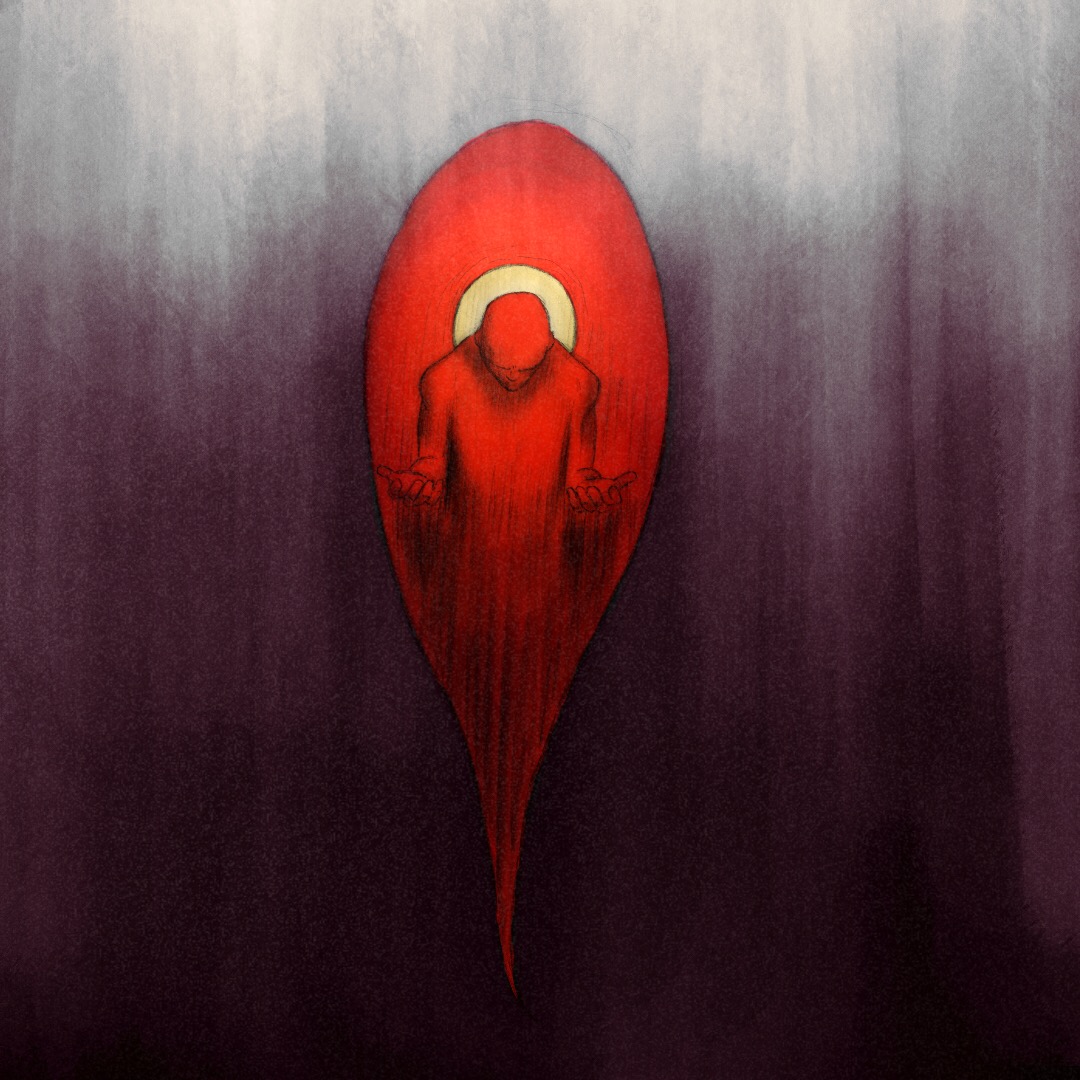
Confidence, Glory, Boldness, & Freedom – Sermon on 2 Corinthians 3:4-18 for the Twelfth Sunday after Trinity

2 Corinthians 3:4-18

4 Such is the confidence that we have through Christ toward God. 5 Not that we are sufficient in ourselves to claim anything as coming from us, but our sufficiency is from God, 6 who has made us sufficient to be ministers of a new covenant, not of the letter but of the Spirit. For the letter kills, but the Spirit gives life. 

7 Now if the ministry of death, carved in letters on stone, came with such glory that the Israelites could not gaze at Moses’ face because of its glory, which was being brought to an end, 8 will not the ministry of the Spirit have even more glory? 9 For if there was glory in the ministry of condemnation, the ministry of righteousness must far exceed it in glory. 10 Indeed, in this case, what once had glory has come to have no glory at all, because of the glory that surpasses it. 11 For if what was being brought to an end came with glory, much more will what is permanent have glory.

12 Since we have such a hope, we are very bold, 13 not like Moses, who would put a veil over his face so that the Israelites might not gaze at the outcome of what was being brought to an end. 14 But their minds were hardened. For to this day, when they read the old covenant, that same veil remains unlifted, because only through Christ is it taken away. 15 Yes, to this day whenever Moses is read a veil lies over their hearts. 16But when one turns to the Lord, the veil is removed. 17 Now the Lord is the Spirit, and where the Spirit of the Lord is, there is freedom. 18 And we all, with unveiled face, beholding the glory of the Lord, are being transformed into the same image from one degree of glory to another. For this comes from the Lord who is the Spirit.

In the name of Jesus. Amen.

This text is all about the two main doctrines (or teachings) of Scripture: the Law and the Gospel. Whenever you read the Scriptures, Law and Gospel is what you should be looking for. Put simply, the Law tells you what you must do or be judged and condemned by God. The Gospel tells you what God has done for you in Christ to forgive you for all your sins against God’s Law. Luther once put it beautifully, “The Law says, ‘Do this,’ and it is never done. [The Gospel] says, ‘Believe this,’ and everything is already done.”

Now, this text doesn’t specifically call these two doctrines ‘Law’ and ‘Gospel.’ No, this text is a lot more colorful using other terms for Law and Gospel to describe what they do and are. So, look through the verses quickly again. In v. 6, Paul calls the Law ‘the letter’ that ‘kills.’ In v. 7, Paul calls the Law ‘the ministry of death, carved in letters on stone.’ In v. 8, the Law is called ‘the ministry of condemnation.’ In v. 14, the Law is called ‘the old covenant.’ All of these terms for the Law give us a picture and understanding of what the Law does to us. In short, the Law is exposes that we are sinners who deserve nothing but death, judgment, and condemnation from God who is our holy and just Creator.

But now, listen to the terms Paul uses to for the Gospel. In v. 6, Paul calls the Gospel ‘the new covenant… of the Spirit who gives life.’ In v. 8, it is called the ‘ministry of the [Holy] Spirit.’ In v. 9, Paul says that the Gospel is ‘the ministry of righteousness.’ So, if you want life, righteousness, and freedom from sin, you don’t look to the Law. You look only to the Gospel.

But the main thing this text is showing us is just how glorious the Gospel is by comparing the glory of the Law with the glory of the Gospel.

With that in mind, let’s consider what happened when God gave the Law on Mt. Sinai (Ex. 20). Back in Exodus 19, we hear how God instructed His people to prepare themselves for the giving of the Ten Commandments. Around three months after the people had left Egypt (v. 1), God had the people consecrate themselves for three days (v. 11). God instructed the people to set up a fence around Mt. Sinai so that no one – neither man nor beast – could touch the mountain (v. 12). The third day came with glory. There was thunder and lightning. A thick cloud descended on Mt. Sinai. There was a loud trumpet blast that caused all the Israelites to tremble (v. 16). God descended on the mountain in fire, and smoke went up like a kiln. The ground was trembling, and the sound of the trumpet kept getting louder and louder (v. 19). Moses went to the top of the mountain, and God spoke all these words:

“I am the Lord your God, who brought you out of the land of Egypt, out of the house of slavery.

“Thou shalt have no other gods before Me….

“Thou shalt not take the Name of the Lord thy God in vain; for the Lord will not hold him guiltless that taketh His Name in vain.

“Remember the Sabbath day, to keep it holy….

“Honor thy father and thy mother, that thy days may be long upon the land which the Lord thy God giveth thee.

“Thou shalt not kill.

“Thou shalt not commit adultery.

“Thou shalt not steal.

“Thou shalt not bear false witness against thy neighbor.

“Thou shalt not covet thy neighbor’s house.

“Thou shalt not covet thy neighbor’s wife, nor his manservant, nor his maidservant, nor his cattle, nor anything that is thy neighbor’s” (Ex. 20:2-17).

In this way, God spoke His perfect will for His people, and the people responded to that glory with fear and terror. They asked that Moses would speak with them instead of God (Ex. 20:18-20Dt. 5:22-33; and 18:15-22). When God gave the Law, His people, who were sinners, were terrified in their conscience. They were confronted with the sins they had committed. And they understood that they were under the curse of death.

When Moses came down with the Ten Commandments written by God’s finger on stone tablets, the people saw that Moses’ face was shining. Exodus 34:29-35 tells us that his face was shining was because he had been talking with God. Whenever Moses would speak with God, he would remove the veil, and after Moses told the people what God had spoken, he would put the veil back over his face again.

So, the Law came with a glory and that glory continued to radiate from Moses’ face, but that Law brought fear and terror. It brought knowledge of God’s wrath. The Law commands and forbids, terrifies and threatens, curses and condemns.

Now, you have called me here, and God has sent me, to be your pastor. Part of that calling is for me to proclaim the Law to you. That means I have to tell you, people whom I love, things that you probably don’t want to hear. I’ve been called here to tell you that the way you handled yourself in that argument with your spouse was wrong. That you are making mistakes raising your children. That skipping church for your kid’s tournament is making an idol out of your kid and making that sport an idol for your kid. God has sent me here to tell you that you are sinfully disrespectful and rude toward your parents. That even though other people laugh, your jokes are inappropriate. That the way you talk about others when they aren’t around is sinful. That you drank too much. That you should have looked away from that show, that movie, that image. That your desires are wrong. And all these sins bring nothing but misery, destruction, and God’s wrath and judgment (Ro. 3:10-18). And I need to hear that as much as you do.

Now, we need to be absolutely clear here. The Law doesn’t condemn and judge us because the Law is bad. No. The Law is good. The Law is the perfect expression of God’s holy will for your life and for my life. The reason the Law brings condemnation and death is your sinful nature – yours and mine. The Law doesn’t causeyour condemnation; instead, it simply reveals it. Yes, the Law came with glory, but it is a glory that consumes and undoes us, like it did to the prophet Isaiah (Is. 6:5).

But there is hope for us sinners because there is something more glorious than the Law. Peter, James, and John saw the glory of the Gospel as it was manifested on the mountain of transfiguration. As those three heard Jesus talk with Moses and Elijah about His exodus the disciples were afraid, but Peter understood and confessed, “Lord, it is good to be here” (Lk. 9:30-33). The Gospel came with glory as Jesus was enthroned upon the cross. The earth trembled as Christ breathed His last and gave up His spirit. The tombs were opened and the dead were restored to life (Mt. 27:50-52). The Gospel came with glory when Christ rose from the grave as the angels proclaimed His victory over death and hell (Mt. 28:1-6). The Gospel came with glory when it spread to all nations on the day of Pentecost. The Holy Spirit was given, and people saw tongues of fire on the disciples and heard the mighty, glorious acts of God – the forgiveness of sins in Jesus’ name, salvation, and eternal life (Act. 2). 

Again, the Law tells you exactly what you must do to have eternal life (Mt. 10:17-1919:16-19), but the Law doesn’t lift a finger to help you do it. That is why, as your pastor, I am here to proclaim the Law and the Gospel. Because while the Law only condemns and accuses, the Gospel runs to you with rescue and help from heaven. The Law leaves you sinking in your sins, but the Gospel takes hold of you and lifts you to firm, solid ground. The Law leaves you naked and cold, but the Gospel clothes you with the glorious robes of Christ.

The Gospel is higher and more glorious than the Law. The Gospel declares that Jesus has finished His work to save you, and His work can’t be undone. He has taken upon Himself all the burden, all the punishment, all the wrath of God that your sins deserve. Yes, you still feel the burden of your sin, but your sin doesn’t belong to you anymore. It belongs to Christ. He is the Lamb of God who takes away the sin of the world (Jn. 1:29) – that includes your sin as well. Now, you belong to Jesus. You are safe in Christ, and you are sufficient as you stand before God. You are not in yourself but in the sufficiency that Christ has won for you. Yes, the Gospel is higher and more glorious than the Law, and we can see that in how each was given.

But what might be the greatest and most glorious distinction between the Law and the Gospel is what Paul says in v. 11 – that the Law passes away while the Gospel remains forever. “For if what was being brought to an end came with glory,” and I can’t for the life of me figure out why our text uses the word ‘was’ there. It is in the present tense. And let me paraphrase v. 11 to make it absolutely clear, “For if [the Law, which] is being brought to an end came with glory, much more will [the Gospel which] is permanent have glory.”

Dear saints, once the Law has done its work to show you what you deserve from God, you can flee from the Law to the light of Jesus who gives you what you do not deserve – mercy, forgiveness, freedom, and eternal life. God gave the Law to chase you to Jesus, who is your refuge and strength. And safe in Christ, the Law cannot touch you. You are free, totally and absolutely free, from the Law’s judgment and condemnation.

Dear saints, because of the Gospel, you are in Christ. You now behold your Savior in His glory with unveiled face. You stand in awe of your God (Is. 29:23). You have freedom. You are being transformed into the image of Christ. Because of Jesus, and Him alone, you can be confident. You share the glory of Christ. Live boldly because of what He has done for you. Live in the freedom you have as a child of God. Amen.

The peace of God, which surpasses all understanding, will guard your hearts and minds in Christ Jesus. Amen.

Justified – Sermon on Luke 18:9-14 for the Eleventh Sunday after Trinity

This sermon was preached at the 2021 East Grand Forks’ Heritage Days community church service.
Because the service was held outdoors, the audio quality is sub-par.

Luke 18:9-14

9 [Jesus] also told this parable to some who trusted in themselves that they were righteous, and treated others with contempt: 10 “Two men went up into the temple to pray, one a Pharisee and the other a tax collector. 11 The Pharisee, standing by himself, prayed thus: ‘God, I thank you that I am not like other men, extortioners, unjust, adulterers, or even like this tax collector. 12 I fast twice a week; I give tithes of all that I get.’ 13 But the tax collector, standing far off, would not even lift up his eyes to heaven, but beat his breast, saying, ‘God, be merciful to me, a sinner!’ 14 I tell you, this man went down to his house justified, rather than the other. For everyone who exalts himself will be humbled, but the one who humbles himself will be exalted.”

In the name of Jesus. Amen.

A Pharisee and a tax collector go up to the Temple to pray. The Pharisee assumes a posture that we would recognize as prayer. He stands off by himself. He is likely looking up in thankfulness to God, but his eyes are busy scanning the other worshipers in the Temple, and his eyes look down in contempt for those who are there.

Now, we need to be careful about our animosity toward the Pharisee because he is simply doing what you and I do all the time. Remember, Jesus repeatedly warns against becoming like the Pharisees (Mt. 16:6-12Mk. 8:15Lk. 12:1), and Jesus wouldn’t give these warnings unless it is actually easy to become like them. But why is it easy? Why are we in danger of becoming like Pharisees?

Well, when we see others sin and when we notice the results of those sins, it confirms that good, upright behavior is beneficial to us and those around us. The stuff God calls us to do in the Ten Commandments is really good stuff, and your life is much better if you live according to God’s Commands. Think about it. When people commit adultery, do their lives get better or worse? Of course, they get worse. When people steal, they are more likely have their things stolen. If you deal drugs, your odds of getting shot, robbed, or thrown in prison are much higher.

The reality is that God didn’t just come up with a set of ten arbitrary rules. Instead, the Ten Commandments are written into the fabric of creation. When you go against the natural laws that God has woven into creation, it isn’t going to go well for you or for those around you.

And just a little side note here: Christians, we need to stand firm on the truths of the Commandments – especially that it is good to live in obedience to them. It is not loving to condone or promote the sins of others. When there is sin, we should speak of it as sin. We need to lovingly show how it hurts the individual committing that sin and how it harms those around that person.

But when you do that, you will face hostility. The world is likely going to throw Jesus’ words in your face about the speck in your neighbor’s eye and log in your own eye (Mt. 7:3-5). But don’t let them take those verses out of context! Remember, Jesus says to first remove the log in your eye so that you can see clearly and remove the speck in your neighbor’s eye. Jesus wants eyes to be free from both logs and specks. And Christ, in His mercy, has purchased forgiveness through His death and resurrection. In other words, when you point out someone’s sin, always do it in a way that points them to the freedom from and forgiveness of sin that comes only through Jesus. Amen?

Back to the Pharisee: He is there in the Temple praising himself and his own good works rather than praising God. This is so ludicrous! The Temple is the very place where God said that He would dwell with His people in order to forgive their sins. When King Solomon prayed at the dedication of the Temple, he said six times that when God’s people prayed toward the Temple that God would hear their pleas and, in His mercy, would forgive (2 Chr. 6:12-42).

But there, in the place of forgiveness, this Pharisee doesn’t want forgiveness because, in his mind, he doesn’t need forgiveness. Instead, he wants recognition, he wants accolades, he wants God’s applause. His prayer is nothing less than, “Hey, God. Look at how great I am.” Not even, “Hey, God. Look at how great You have made me.” God gets none of the credit from this Pharisee. His prayer is one of the most self-centered, self-interested, self-idolizing statements in the Scriptures.

Now, let’s consider the tax collector. The tax collector, when he looks at himself, sees nothing good, nothing worthy, nothing laudable. So, there is nothing for this tax collector to ask God for except mercy. Our translation records his prayer as, “God be merciful to me, a sinner!” But this translation is weak on two points. First, it is not just ‘a sinner’; in the original Greek he says, ‘the sinner.’ The tax collector doesn’t know about any sins except his own. Second, the translation of his prayer, ‘be merciful,’ falls a bit short here.

Throughout the Gospels, many people call to Jesus, “Lord, have mercy” (Mt. 9:2715:22Mk. 10:47Lk. 17:13). That is always an excellent prayer. Praying, “Lord, have mercy,” is asking Jesus to do exactly what He has come to do. But what the tax collector in this parable actually prays is something similar but importantly different. The tax collector prays to God (lit.), “Be propitiated to me, the sinner.”

You get to have a little vocabulary lesson today. The noun ‘propitiation’ and the verb ‘propitiate’ have never been commonly used in English, but it is an extremely important Scriptural word and concept. To ‘propitiate’ means to make an atoning sacrifice. And the tax collector prays that God would be made the atoning sacrifice for him.

Remember again, this tax collector is praying in the Temple courtyard. In the Greek translation of the Old Testament, this word, ‘propitiation,’ was also used for the mercy seat on the Ark of the Covenant – the place where the high priest would sprinkle the blood on the Day of Atonement and where God promised to meet with His people (Ex. 25:22Lev. 16). The tax collector prays that God would do that forgiveness, that mercy, that cleansing to him.

Scripture goes on to teach us that Jesus is the place where God makes the atoning sacrifice. Christ is the real mercy seat. 1 John 2:2 says, “[Jesus] is the propitiation for our sins, and not for ours only but also for the sins of the whole world.” So, when the tax collector prays, “God, be propitiated to me, the sinner,” he is praying that God would be reconciled to him by the blood of Jesus. And that is why the tax collector, who is the far greater sinner, goes home justified rather than the well-behaved Pharisee. He looks to God in faith and asks God to be exactly who God has promised to be – a merciful, forgiving God.

So, what should we learn from this parable? Of course, this parable teaches that the worst of sinners can go to heaven. We know this, but unfortunately, we can grow a little numb to it. But the main reason Jesus tells this parable is to destroy any self-righteousness and contempt we would have against other sinners.

Christ wants us to recognize are not better than other people, but, because of our sinful nature, we are always tempted to be like the Pharisee thinking the worst of others and imposing our conceived motivations behind others’ actions so we can look down on them. Stop it. Repent.

Maybe that waitress who seems to be annoyed with you was in court fighting to keep custody of her children and away from her abusive boyfriend. Maybe that driver who is completely incompetent behind the wheel is on his way home after watching his mother die. Maybe that rude, intrusive, foul-mouthed kid on the playground hasn’t gotten any love or attention from his parents in months. Don’t look down on them and treat them with contempt.

But we should also take this a step further. Remember, Jesus told this parable to those who trusted in themselves and treated others with contempt. We are so sinfully arrogant that we often take pride in being humble like the tax collector. We are mistaken if think, since the Pharisee’s pride condemns him, that it is the tax collector’s humility that sends him home justified. Too easily we switch out the good works that the Pharisee mentions – his upright living, his fasting, his tithing – with the tax collector’s humility.

When we do that, humility becomes just another good work, and we begin boasting about our humility. We quickly swap the Pharisees’ prayer with our own version, “God, I thank You that I am not like other men, self-righteous, pretentious, holier-than-thou types, or even like this Pharisee. I’ve given You my heart, dedicated my life to You, and made You my Lord.” Stop that too! A person’s humility is not what merits or earns justification.

The point Jesus is making in this parable is to not look to yourself at all. Don’t try to find some super spirituality inside of yourself – whether it’s good works or humility. The thing, the only thing, that the tax collector looks to is the mercy of Christ.

Dear saint, you look there too. Look to the cross. Look to the blood of Jesus shed for you on Calvary. Look to His death. Look to His resurrection. Look to His ascension. And know that Jesus promises that all of that is for you. Through Christ – and through Him alone – you are redeemed, forgiven, and sent to your home justified. Amen.

The peace of God, which surpasses all understanding, will guard your hearts and minds in Christ Jesus. Amen.

This sermon is a reworked, revised, and merging from sermons preached in 2019 & 2020.

Instructions for the End of the Ages – Sermon on 1 Corinthians 10:1-13 for the Ninth Sunday after Trinity

1 Corinthians 10:1-13

1 For I do not want you to be unaware, brothers, that our fathers were all under the cloud, and all passed through the sea, 2 and all were baptized into Moses in the cloud and in the sea, 3 and all ate the same spiritual food, 4 and all drank the same spiritual drink. For they drank from the spiritual Rock that followed them, and the Rock was Christ. 5 Nevertheless, with most of them God was not pleased, for they were overthrown in the wilderness.

6 Now these things took place as examples for us, that we might not desire evil as they did. 7 Do not be idolaters as some of them were; as it is written, “The people sat down to eat and drink and rose up to play.” 8 We must not indulge in sexual immorality as some of them did, and twenty-three thousand fell in a single day. 9 We must not put Christ to the test, as some of them did and were destroyed by serpents, 10 nor grumble, as some of them did and were destroyed by the Destroyer. 11 Now these things happened to them as an example, but they were written down for our instruction, on whom the end of the ages has come. 12 Therefore let anyone who thinks that he stands take heed lest he fall. 13 No temptation has overtaken you that is not common to man. God is faithful, and he will not let you be tempted beyond your ability, but with the temptation he will also provide the way of escape, that you may be able to endure it.

In the name of Jesus. Amen.

The first five verses of this text remind us that God is gracious to sinners. Paul invites us to think back to when God delivered His people out of slavery in Egypt. God protected His people from the scorching heat with the cloud. God Baptized His people in the Red Sea as He delivers them out of slavery and destroyed their enemies. And, just as an aside, please, note that. Paul calls the crossing of the Red Sea the Baptism of God’s people, and God didn’t demand that the infants be left out of that Baptism. A whole lot more could be said about v. 2, but we’ll leave that for another time.

God provided mana for His people after He delivered them from slavery. That heavenly bread provided for their physical bodies, but it also provided for them spiritually, teaching them to trust that God would provide for them each day. During the Exodus, God provided physical water for His people to drink, but it was also a spiritual refreshing. God does all these things, but then we come to a shocking statement in v. 5, “Nevertheless, with most of them God was not pleased.”

Do you remember how many of the people who passed through and the Red Sea actually reached the Promised Land? Only Joshua, Caleb, and those who were under twenty years old when they first spied out the land (Num. 14:20-35). The rest died in the wilderness as they were forced to wander for 40 years because they didn’t believe that God would bring them into the land of Canaan. But even before that happened, there were problems. In this text, Paul refers to five different times the people were tempted and rebelled against God.

The first temptation Paul mentions is in v. 6 when the people “desired evil.” It is a reference to what happened right after the people left Mt. Sinai, there were some who were tempted to go back to Egypt so they could eat meat and cucumbers (Num. 11:4-5, 31-34). I mean, seriously, cucumbers? Those foods were not evil in and of themselves. The problem was the people’s desire to go back to Egypt which meant slavery. They preferred going back to slavery over continuing to eat the food God was daily providing for them in freedom.

The second temptation to rebel that Paul refers to is the idolatry of the golden calf. The people made sacrifices to the idol and “sat down to eat and drink rose up to play” (1 Cor. 10:7, quoting Ex. 32:6). God came close to wiping out all the people, but Moses interceded for them. And God heard Moses prayer (Ex. 32:9-14).

The third temptation to rebel that Paul mentions involves sexual immorality. In Num. 25:1-18, God’s people tangled themselves up in the pagan, idolatrous, and adulterous practices with the people of Moab, and God struck down 23,000.

The fourth and fifth rebellions Paul mentions come in v. 9. The people put God to the test at the waters of Massah and Meribah (see Ex. 17:7; Dt. 16:16) when they complained that God had simply delivered them from slavery in order to kill them with thirst. And, finally, when the people complained about food again and God sent fiery serpents among them (Num. 21:4-6).

In each of those five instances, we are to see how God deals with His people who sin when they face temptation. In each of those instances, God responds with both judgment and salvation. Paul says that all five of these temptations and failings of God’s people are included in Scripture “for our instruction” and are an example for us so we are warned against falling into sin when tempted.

Because we live at the end of the ages, we need to take care that we do not become complacent or arrogant like they did. When we face the same temptations that God’s people faced during the Exodus, we need to remember that God does not let sin go unpunished. Dear saints, we can fall from grace, and we do not know when Christ will return. Because the Last Day is immanent and because we can fall from grace, we need to resist and fight against the same temptations that the Israelites faced during the Exodus.

Dear saints, this text doesn’t really have any Gospel. Don’t get me wrong, there is comfort for us here. But this text is mainly instruction for us who live at the end of the ages. So, what instructions and encouragements are here to prepare us to fight against temptation and our fallen flesh?

First, we see in all five examples of temptation, rebellion, and sin, many Israelites fell, but God always kept some from falling. In each instance, God, in His mercy, tried to save all. The only ones who fell were those who despised God’s Word and promises.

Everyone faces the same types of temptations that the Israelites faced in the Exodus. Everyone lusts – maybe not after the exact same woman or man – but everyone in this fallen flesh lusts. Everyone is tempted with anger; everyone is tempted with being untruthful; everyone is tempted with evil desires, covetousness, and idolatry; etc.

“No temptation has overtaken you that is not common to man. God is faithful, and He will not let you be tempted beyond your ability.” Ultimately, every temptation would be unbearable apart from God’s grace. But the ability to resist those temptations and the ways to escape sinning when tempted comes from God when we ask Him for it. That’s why v. 12 precedes v. 13. “Let anyone who thinks that he stands take heed lest he fall.”

Because everyone is tempted, be empathetic to those who are struggling with temptations. They are being tempted by some sin you are also inclined toward, and a little bit of sympathy can go a long way to help them resist falling into sin. Everybody is suffering and struggling with sin and temptation. All Christians are bearing crosses and pain as they struggle along in this life.

The second lesson we have here is that God knows exactly what temptations you face, and He always provides a way of escape from those temptations. There is sort of backwards comfort in the fact that God knows how disgusting and selfish you are, but He loves you anyway. You can be comforted with the knowledge that you aren’t really worse than anyone else. And the best comfort this text offers us is that God always provides ways of escape.

The third lesson in these verses is that you do not have to sin when you are being tempted. You can resist your temptations and overcome them. Temptations are going to come. Jesus says in Lk. 17:1, “Temptations to sin are sure to come.” Luther was once talked about how temptations are inevitable and offered a helpful analogy. He said, “You can’t stop the birds from flying over your head, but you can stop them from making a nest in your hair.”

In light of that, let me give you a bit of advice. Think of it as a friendly suggestion. Don’t make a law of this. If it’s helpful, great; if it isn’t, don’t worry about it. Here’s the advice:

Know what your sins are and do your best to confess them individually. And please, don’t misunderstand me here. You can’t confess every sin; that’s impossible. Ps. 19:12 says, “Who can discern his errors? Declare me innocent from hidden faults.” In other words, you are not able to recognize absolutely every sin you commit, but God hears your pleas for mercy and answers with more grace than you have confession. Please hear that again. God gives more grace (Jam. 4:6) than what you individually confess. But the sins you know and feel in your conscience, confess them individually.

Doing this will help you recognize the moments you face the greatest temptations and fail. When you do let the bird build a nest in your hair. Confessing individual sins can help you recognize if there is a pattern of being in a situation and falling into sin. Whe you see those patterns, avoid those situations. This is good and holy work that God has given you to do.

Those are the instructions and comforts. First, God deals with both judgment and mercy with those who fall into temptation, and we should too. Second, God provides ways of escape from temptations. Third, you do not have to sin; you can fight against it.

Now, it’s time for Gospel. Remember how Jesus has taught you to pray. In the Lord’s Prayer, Jesus teaches you to first pray for forgiveness then immediately pray that your Heavenly Father would not lead you into temptation. Jesus teaches you to pray this because you cannot do it yourself. Remember, Christ has been tempted in every way that you are – except without sin (Heb. 4:15). And because of the cross, God recons Christ’s righteousness and obedience as your righteousness and obedience.

Dear saints, the temptations you face are real. The sins you continually fall into are damning. Yet, God’s grace covers a multitude of sins.

Your heavenly Father does lead you, and He will never lead you into temptation (Jam. 1:13). Today, He has led you here to hear His Word. He has led to you confess your sins. God has led you to trust His forgiveness proclaimed to you for every one of your sins in the Absolution. And Your heavenly Father is leading you now to His table where He provides you Jesus’ Body and Christ’s Blood shed for you for the forgiveness of all your sins.

Dear saints, the end of the ages has come upon us. You and I cannot stand on our own. Let us all approach God’s throne of grace and believe Him when He says that His steadfast love never ceases and His mercies never come to an end. That love and mercy of God is new for you each and every morning (Lam. 3:22-23). And soon Jesus will return and deliver you to live forever with Him. Amen.

The peace of God, which surpasses all understanding, will guard your hearts and minds in Christ Jesus. Amen.

Fear & Forgiveness – Sermon on Genesis 50:15-21 for the Fourth Sunday after Trinity

Genesis 50:15-21

15 When Joseph’s brothers saw that their father was dead, they said, “It may be that Joseph will hate us and pay us back for all the evil that we did to him.” 16 So they sent a message to Joseph, saying, “Your father gave this command before he died: 17 ‘Say to Joseph, “Please forgive the transgression of your brothers and their sin, because they did evil to you.” ’ And now, please forgive the transgression of the servants of the God of your father.” Joseph wept when they spoke to him. 18 His brothers also came and fell down before him and said, “Behold, we are your servants.” 19 But Joseph said to them, “Do not fear, for am I in the place of God? 20 As for you, you meant evil against me, but God meant it for good, to bring it about that many people should be kept alive, as they are today. 21 So do not fear; I will provide for you and your little ones.” Thus he comforted them and spoke kindly to them.

In the name of Jesus. Amen.

This is a phenomenal text and a beautiful conclusion to a long story of Joseph and his brothers. I know you’re familiar with it, but I still want to review it to highlight some details that are often overlooked so we can see just how dramatic this scene is.

Joseph’s father, Jacob, had two wives (which Scripture repeatedly shows is a bad idea), and his wives were sisters, Leah and Rachel, and this family arrangement poisoned the relationship of these two sisters. Because Jacob loved Rachel but not Leah (Gen. 29:31), God made it so Leah is able to have children, but Rachel isn’t. Without getting too much into the seedy details, only after Jacob has ten sons does Rachel conceive and bear Jacob’s two youngest sons, Joseph then Benjamin. So, of his twelve sons, Joseph was Jacob’s hands-down favorite, and Jacob didn’t hide that fact (Gen. 37:3).

When Joseph was seventeen years old (Gen. 37:2), he started telling his brothers about his dreams where they bow down to him and serve him (Gen 37:5-8). What can you say? He’s the spoiled-rotten, favorite child. Sometime shortly after this, Joseph’s brothers concoct a plan to murder Joseph (Gen. 37:19). But Joseph’s oldest brother, Reuben, convinces his brothers to simply throw Joseph in a pit, and Joseph ends up being sold to a caravan of slave traders. Joseph’s brothers lead their father to believe that Joseph has been attacked by a wild animal and is dead (Gen. 37:31-35). The slave traders take Joseph to Egypt where he is sold to a man named Potiphar who is an officer of Pharaoh and his title is the captain of the guard (Gen. 39:1). Joseph works hard and eventually becomes the overseer of everything in Potiphar’s house.

Potiphar’s wife finds Joseph attractive and tries to seduce him, but Joseph refuses to sin against God and his master. So, Potiphar’s wife makes false accusations against Joseph (Gen. 39:1-19). And just quickly – I’ve mentioned this before – I think there is good reason to believe that Potiphar doesn’t believe the accusations of his wife against Joseph because if he had Joseph would have been executed immediately. Instead, Potiphar puts Joseph into the same prison where Pharaoh’s prisoners are kept (Gen. 39:20), and Scripture tells us that the keeper of that prison is Pharaoh’s captain of the guard (Gen. 40:3), which you remember is Potiphar’s title. This helps explain why Joseph quickly gets put in charge of basically running the prison (Gen. 39:22-23).

While Joseph is there, Pharaoh’s chief baker and cupbearer anger Pharaoh and get thrown into the same prison where Joseph is. They each have a dream that troubles them, and Joseph notices they are down in the dumps. The cupbearer tells Joseph his dream, and God gives Joseph insight to interpret the dream. The cupbearer’s dream means that he will be restored to his position in three days, and Joseph asks the cupbearer to remember him when he gets back to serving Pharaoh his wine (or whatever Pharaohs drink). The chief baker hears that the cupbearer’s dream means something good will happen, so the baker wants Joseph to interpret his dream. The baker, however, doesn’t get good news about his dream. Joseph interprets his dream to mean that Pharaoh will have him executed in three days. The baker is probably even more disappointed when the interpretation of both dreams comes true (Gen. 40:1-22). The only problem for Joseph is that the cupbearer forgets all about Joseph for two whole years (Gen. 40:23-41:1).

After those two years, Pharaoh himself has a couple of dreams that none of his magicians can interpret. Only then does the cupbearer remember about Joseph and the interpretation that God had given him about those two dreams (Gen. 40:8, 41:16). So, Joseph is brought before Pharaoh and hears his dreams about fat cows getting eaten by skinny cows and bad crops eating good crops. Joseph says that God is telling Pharaoh (Gen. 41:25, 28, 32) that seven years of plenty are coming, but those good years will be followed by seven years of severe famine. Joseph suggests that Pharaoh tax one-fifth of the produce during the years of plenty so there will be enough food stored up for when the famine comes (Gen. 41:33-38). Pharaoh basically says, “You’re my guy. You’ve got the Spirit of God in you. You’ll be in charge of implementing this plan.” So, Pharaoh puts Joseph in charge of all Egypt, has everyone bow down to Joseph wherever he goes, and even gives Joseph one of his daughters as a wife (Gen. 41:37-45). And at this time, Joseph is thirty years old (Gen. 41:46).

Now, just to sum up: Joseph was 17 when he was sold into slavery (Gen. 37:2). His first 13 years in Egypt are spent partly as a slave in Potiphar’s house and at least two (but probably more) years in prison before he becomes, basically, the prime minister of Egypt at age 30 (Gen. 41:46). For the next seven years, Joseph oversees the storing up of so much food and grain that they stopped keeping track of how much extra they had (Gen. 41:49). So, at this point, Joseph has been in Egypt for 20 years and is 37 when the famine starts. And the famine was so bad people from all over the earth came to Egypt to buy grain (Gen. 41:57).

Joseph’s father and brothers are still living in Canaan, and they have no food. So, Jacob sends Joseph’s brothers to go and buy grain in Egypt. All of Joseph’s brothers except his only full brother, Benjamin, go down to Egypt to buy food. But if you want to buy food in Egypt during this time, the guy you have to see is Joseph. So, when Joseph’s brothers arrive at the checkout counter, Joseph is the one taking the money (Gen. 42:1-6).  And when your life and the lives of everyone in your entire family is in the hands of the prime minister of the only country that has grain and when that prime minister is the clerk, you don’t ask if there are any sales, specials, or coupons. You don’t want to get him upset with you. You show him respect. So, Joseph’s brothers bow down to him fulfilling Joseph’s dream that he had twenty years before (Gen. 37:5-8). But Joseph’s brothers don’t recognize him after twenty years, and they figured he was dead. However, Joseph recognizes his brothers and remembers his dream (Gen. 42:9a).

Now, we need to pick up the pace. Joseph puts his brothers through the ringer for the next 3 chapters of Scripture which span two years. Joseph throws them in jail for three days (Gen. 42:9b-17). He sets them up to think that they didn’t pay for their food (Gen. 42:25, 35). Two years into the famine, Joseph’s brothers return to Egypt a second time to buy more food (Gen. 45:6). And Joseph shows favoritism to his only full brother Benjamin whom Joseph forced to come on this second trip (Gen. 43:34). And Joseph concocts a plan to make it appear that Benjamin has stolen Joseph’s silver cup (Gen. 44:1-2). When his brothers are confronted with this, the brothers all go back to try and save Benjamin from punishment because they know their father will die if they don’t return with Benjamin (Gen. 43:1-14; 44:18-29) whom Jacob thinks is the only living son of Rebekah (Gen. 35:16-20).

Now, before the brothers had left Canaan the second time to buy food, Reuben tried to make a deal with their father Jacob by saying, “We’re not going to get food in Egypt unless Benjamin comes with us, and if he doesn’t come back, you can kill my two sons” (Gen. 42:37-38). But Jacob doesn’t agree to this pagan-like, child sacrifice arrangement. But then Judah says, “Listen, dad, I’ll be responsible for Benjamin. If he doesn’t come back, you can kill me” (Gen. 43:8-10). So, when Judah sees that Joseph is going to punish Benjamin for stealing his cup, Judah gives a beautiful speech, which I’d encourage you to read later today (you can find it in Gen. 44:18-34). In that speech, Judah basically repeats the Gospel promises that Joseph had grown up hearing. Judah says, “I didn’t commit this sin, but treat me as the one who did.” In other words, Judah says, “Let the guilty one go free. Give me the punishment that one deserves, so he can return to the arms of his father.”

And you have to realize how impactful this is. Joseph has been the only Christian in Egypt for 22 years now. He didn’t have any fellowship with fellow believers. He had to be content simply remembering the Gospel promises his father had taught him up until he was sold into slavery at age 17. Now, at age 39 he gets to hear his brother Judah preaching that Gospel to him. Judah is living out the Gospel promise that he failed to live out 22 years before when he had a hand in selling Joseph into slavery.

Joseph is so overcome with emotion that he reveals himself to his brothers. He tells them to get Jacob and the whole family and move to Egypt because there are still five years of famine left (Gen 45:6). The family arrives in Egypt and lives in the best land of Egypt. And Joseph takes care of them for the next seventeen years in Egypt until Jacob dies (Gen. 47:28). Which, finally, brings us to our text.

Even though Joseph had forgiven his brothers (Gen. 45:4-15) and provided for them during those seventeen years, they still fear that Joseph is going to punish them now that their father had died. Joseph’s brothers make up this story, “Hey, bro, right before he died, dad totally told us that you can’t punish us for our sin against you 39 years ago.” You see, through those 39 years, Joseph’s brothers are repeatedly haunted by their guilt of sinning against Joseph (Gen. 42:21-22, 28; 43:18; 44:16). And even after living for 17 years under Joseph’s care and forgiveness, they are still afraid that their sin is going to be punished by Joseph.

But look how beautifully Joseph replies (Gen. 50:19-20), “Do not fear, for am I in the place of God? As for you, you meant evil against me, but God meant it for good, to bring it about that many people should be kept alive, as they are today.” In other words, Joseph is saying, “Listen, I wasn’t just taking care of you because I loved dad, and now I’m going to get back at you because he’s gone. I have truly forgiven you. I love you, and will continue to care for you.” And please notice carefully what Joseph said there, “You meant evil against me, but God meant it for good.”

Think back to our Gospel reading today (Lk. 6:36-42). Those verses contain every non-Christian’s favorite saying of Jesus, “Judge not.” If any atheist knows a lick of Scripture, it’s probably those two words of Jesus. But the way unbelievers (and even some Christians) twist those words is abhorrent. In fact, the words of Jesus in our Gospel reading today are probably the most misunderstood, taken-out-of-context words of all Scripture. Sinners love to say, “Jesus told you not to judge.”

But when our Lord says, “Judge not,” Christ isn’t saying that Christians are never allowed to point out the sin of others and call them to repentance. Instead, Jesus wants us to not be hypocrites. Christ doesn’t want us judging others unless we recognize that we need repentance too. So, Jesus gives the analogy of the logs and specks in eyes. In short, Jesus wants you to repent of and remove your timbers of sin in your eye so that you can see clearly and help remove the specks of sin in your neighbor’s eye. Jesus is clear that He wants everyone’s eyes to be free of logs and specks.

Now, all of that brings us back to Joseph and his brothers. The brothers feared that the only reason Joseph was being nice to them was because of their father Jacob. Now, their dad is gone, and they figure the hammer is about to fall, so they fear. So, see how Joseph, in such a godly way, addresses the seriousness of their sin by rightly acknowledging that they meant evil against him. He doesn’t say that their sin didn’t matter. But then, Joseph immediately comforts them with the Gospel and forgiveness.

Dear Christians, if we identify ourselves as any of the characters in this story, it should be Joseph’s brothers. We follow their pattern. We sin and fear that our punishment is just waiting to fall, but our brother, Jesus, comforts us with His forgiveness and cares for us for all eternity.

Jesus teaches us that we sinners are right to fear God. Jesus says in Mt. 10:28, “Do not fear those who kill the body but cannot kill the soul. Rather fear Him who can destroy both soul and body in hell.” According to Christ, we should fear God. And when we do, God comforts us and kindly speaks His absolution over us. Psalm 130:3-4 says, “If you, O Lord, should mark iniquities, O Lord, who could stand? But with you there is forgiveness, that you may be feared.” Because Jesus, the sinless One, has died in your place, God forgives you and cares for you. Because Jesus went to the cross to shed His blood providing everything you need for eternal life, you are set free to run back to the arms of your Heavenly Father.

When you rightly fear God because of your sin, He smiles back at you and says, “Yes, your sin is terrible, but I have taken care of it. I love and forgive you.” When you fear, love, and trust in God above all else, God says to you, “Fear not, my beloved child.” And when God, the only One who is worthy of your fear does that for you, you are set free from all fears because His perfect love casts out your fear (1 Jn. 4:18) now and forever. Amen.

The peace of God, which surpasses all understanding, will guard your hearts and minds in Christ Jesus. Amen.

The Mirror – Sermon on James 1:22-27 for the Sixth Sunday of Easter

Listen here.

James 1:22–27 

22 But be doers of the word, and not hearers only, deceiving yourselves. 23 For if anyone is a hearer of the word and not a doer, he is like a man who looks intently at his natural face in a mirror. 24 For he looks at himself and goes away and at once forgets what he was like. 25 But the one who looks into the perfect law, the law of liberty, and perseveres, being no hearer who forgets but a doer who acts, he will be blessed in his doing. 

26 If anyone thinks he is religious and does not bridle his tongue but deceives his heart, this person’s religion is worthless. 27 Religion that is pure and undefiled before God the Father is this: to visit orphans and widows in their affliction, and to keep oneself unstained from the world.

Alleluia! Christ is risen!
He is risen indeed! Alleluia!

In the name of Jesus. Amen.

Today, we’re going to start by going back to the basics. On Wednesday, our confirmation students had their last lesson for the year which was a review of the two main teachings of the Bible – Law and Gospel. As your pastor, Law and Gospel is what you have called me to do. I’m constantly evaluating if a passage is teaching Law, Gospel, or both. In my conversations with you, I try to determine where and when to apply Law or Gospel. While I’m writing sermons, I try to find the right balance of Law and Gospel. But it’s been a while since we’ve gone back and specifically defined what Law and Gospel are. So, it’s time to do it again, and I apologize if this seems elementary to you.

Basically, the Law is what God requires of you. The Law tells you that if you do not do what it demands or if you do what it forbids, you deserve nothing but God’s wrath and punishment. The Gospel, on the other hand, tells you what God has done for you. Specifically, the Gospel tells you that God has removed His anger, wrath, and punishment from you because of what Christ has done by His death and resurrection. Properly distinguishing Law and Gospel is what makes a theologian, and as a Christian there is enough for you to consider there for your entire life.

But let’s go a little further. The first Lutherans give a nice summary about how the Law actually has three “uses.” In other words, the Law is a tool that does three things. These “uses” are pictured 1) as a curb, 2) as a mirror, and 3) as a guide.

The Law is used as a curb to keep both Christians and non-Christians from committing sin. Think of when you are driving and take a corner too sharply. Your tire hits the curb which bounces you back onto the road. It’s good that the curb does that, but you don’t want to hit the curb too often because it’s bad for your tires. The Law is like that too. When you do wrong and get punished, it hurts and isn’t pleasant, but it gets you back on the path. This is why Christians support appropriate punishment when laws are broken. A thief can repent of his sins and be forgiven before God, but that doesn’t mean he should escape jail time or not have to restore what has been stolen. Those punishments help preserve order in society. So, that’s the first use of the Law – a curb. And it’s important to remember that this first use of the Law is for both believers and unbelievers.

I’m going to wait for a moment on the second “use” of the Law and skip to the third “use” of the Law is as a guide. This “use” of the Law is only for Christians. Christians are fully forgiven for the sake of Christ. We are free from the accusations of the Law (Ro. 3:196:14). But that doesn’t mean that we throw out the Law. No, Christians still need the Law to guide us as to how we live in love toward God and our neighbor. The Law guides us in our love and shows us how to love.

So, back to the second “use” of the Law. The second “use” of the Law is as a crystal-clear mirror which exposes our sin and drives us to Jesus who takes away the sin of the world (Jn. 1:29). The Law is used as a mirror for sinners which means that it is for both Christians and non-Christians. Those who are not Christians need to have their sin exposed by the perfect reflection of the Law so that they repent and believe in Christ. And Christians need this too. As long as we live in this fallen, broken world, Christians will still be sinners. We are forgiven and righteous before God, but our old, sinful nature still clings to us. So, we need the mirror of the Law to expose that sin and run back to Christ. And the end of Romans 7[:14-25] makes that very clear.

So, with all of that in mind, we can now turn our attention to our text here from James. This text, at first glance, sounds like all Law – all Law and no Gospel. We are, according to this text, to be doers of the Word and not hearers only. If we only hear the Word and do not do it, we deceive ourselves, and our religion is worthless. This should convict us because it is Law. Too often we fall into the trap of wrongly thinking that our sins don’t really matter before God, that His forgiveness means that He gives us a wink and a nod when we sin. This text should blast that idea out of your head. That is not the case. Repent. If that is your attitude toward sin, you are a hearer and not a doer. You are deceiving yourself, and your religion is worthless.

But, at the same time, this text isn’t only Law. Notice how these verses from James start. “Be doers of the Word… if anyone is a hearer of the Word and not a doer.” Notice James’ vocabulary. It would have been one thing if James had said, “Be doers of the Law and not hearers only… if anyone is a hearer of the Law and not a doer….” If that is what the text said, we should abandon the Lutheran understanding of salvation and call Lutheran doctrine heresy. But James doesn’t say that. He doesn’t use the word ‘law’; he uses the word ‘word.’ The Holy Spirit inspired James to call us Christians to be doers of the Word which includes both Law andGospel. Notice how James continues:

“If anyone is a hearer of the Word and not a doer, he is like a man who looks intently at his face in a mirror. He looks at himself and goes away and forgets what he was like.” Notice how James, again inspired by the Holy Spirit, now uses a synonym for the Word to conclude his analogy about the mirror. “But the one who looks into the perfect law, the law of liberty, and perseveres, being no hearer who forgets but a doer who acts, he will be blessed in his doing.” There, James equates “the Word” with the “perfect law, the law of liberty.” The two are synonymous.

And, to top it off, the Greek word that gets translated as ‘perfect’ there is very important. The root is τελος which means ‘end, completion, or goal.’ The root can be used as several different parts of speech. Possibly, the most famous use of this root is just before Christ dies on the cross and cries out, “Τετέλεσται” or “It is finished” (Jn. 19:30). And just so you know: in the ESV’s translation of the New Testament, of the 34 times the word ‘perfect’ shows up, 31 of them have τελος as the root.

So, when James talks here about the perfect law, the τελος law, the law of liberty – which again is the Scriptures, the Word, both Law and Gospel – James is talking not just about the Law and what God demands of you. James is also talking about the Gospel which is what Christ has done for you.

It would be legitimate to translate the phrase there in v. 25 “the perfect law” as “the completed law.” Jesus perfectly kept the Law for you, in your place. Christ said, “Do not think I have come to abolish the Law or the Prophets,” in other words the Scriptures, “I have not come to abolish them but fulfill them” (Mt. 5:17). This τελος law of liberty declares that Christ’s perfect obedience is credited to your account through faith (Ro. 4:2-5). This law of liberty invites you to look into the mirror of the Scriptures and see yourself as God sees you – both as a sinner and also as righteous and blameless before Him through faith in Christ.

In other words, it isn’t just the Law that serves as a mirror exposing your sin. The Gospel is a mirror too. See in that mirror of the Gospel what Christ has made you. He says in that law of liberty that He has removed your sins from you as far as the east is from the west (Ps. 103:12). He has redeemed you. He has justified you. He has made you holy. You are a Christian. You are God’s perfect and blameless child. God declares that you are righteous. Don’t just hear that. Live it!

Christian, your religion, isn’t worthless. It is of infinite, eternal worth. Do the Word, the perfected, completed law of liberty, which is a mirror that reflects the fact that you are a child of God, at peace with God, and righteous before God – all for the sake of Christ. See that reflection of yourself in the mirror of God’s Word.

Today is Mothers’ Day, and we rejoice in the gift that mothers are for us. Everyone here has a mother, and it is good and right in the sight of God to honor your mother. Call her. Thank her for what she has done for you. And, if necessary, forgive her for any of her failures.

And, you Christian moms, see yourself as God sees you. You care for those that God has given to you. You feed, clothe, protect, defend, encourage, and comfort the children God has given you. And whenever you do that, you are being the very hands and feet of God on this earth. Do you always do it perfectly and with a willing and happy heart? Probably not. But you are still serving your children and home. And when you recognize how you fall short, repent, and know that because of Christ’s forgiveness you stand before God pure and undefiled. You are a forgiven, redeemed, righteous Christian woman, you are that excellent wife in Proverbs 31[:10-31] by God’s declaration (Mt. 25:34-40).

Dear saints, continue to live as doers of the Word and not hearers only. Live in repentance. Live in the faith and perfection that God has given you for the sake of Christ. Look into the perfect, completed law, and God will keep you unstained from the world.

Alleluia! Christ is risen!
He is risen indeed! Alleluia!

Amen.

The peace of God, which surpasses all understanding, will guard your hearts and minds in Christ Jesus. Amen.

Made to Lie Down – Sermon on Ezekiel 34:11-16 for the Third Sunday of Easter

Listen here.

Ezekiel 34:11-16

11 For thus says the Lord God: “Behold, I, I myself will search for my sheep and will seek them out. 12As a shepherd seeks out his flock when he is among his sheep that have been scattered, so will I seek out my sheep, and I will rescue them from all places where they have been scattered on a day of clouds and thick darkness. 13 And I will bring them out from the peoples and gather them from the countries, and will bring them into their own land. And I will feed them on the mountains of Israel, by the ravines, and in all the inhabited places of the country. 14 I will feed them with good pasture, and on the mountain heights of Israel shall be their grazing land. There they shall lie down in good grazing land, and on rich pasture they shall feed on the mountains of Israel. 15 I myself will be the shepherd of my sheep, and I myself will make them lie down, declares the Lord God. 16 I will seek the lost, and I will bring back the strayed, and I will bind up the injured, and I will strengthen the weak, and the fat and the strong I will destroy. I will feed them in justice.”

In the name of Jesus. Amen.

Alleluia! Christ is risen!

He is risen indeed! Alleluia!

Today, we could add:

Alleluia! Christ is our Shepherd!

He is our Shepherd indeed! Alleluia!

Repeatedly, Scripture gives us the picture of God being our Shepherd and us being His sheep. It came up in all three readings today – epistle (1 Pet. 2:21-25), Gospel (Jn. 10:11-16), and this Old Testament lesson, but it comes up all over the place. I’ve seen it suggested that this shepherd-sheep metaphor is the most common way Scripture describes our relationship to God. I couldn’t verify that, but it certainly is common throughout both the Old and New Testaments. Now, sheep are probably the most desperate, vulnerable, weak, prone to wander, and defenseless creatures in all of creation. So, this imagery isn’t meant to be flattering, but that’s ok. We’re Christians and don’t need to be flattered. It isn’t meant be a complement, but it is meant to be comforting. 

My fellow sheep, we have all lived down to the reputation of sheep. And, God be praised, Jesus has no expectation of us beyond being His sheep. He has no expectation that you figure out how to provide for yourself, to take care of yourself, or even to defend yourself. Sheep don’t run fast or kick hard. Sheep don’t have sharp teeth to bite back or a stinky musk to spray at their attackers. Nothing. Sheep have one defense, and that is their shepherd. God does not expect us to be anything more than a sheep, and, God be praised, He desires nothing more than to be our Shepherd.

Deep down, we all know that we are helpless and unable to do anything for ourselves, and that is probably why the sheep-shepherd imagery is so often used for comfort in times of trouble. It’s probably why Psalm 23 is so often used at funerals. Sometimes, when families are picking out texts for a funeral, they’ll ask me, “Would Psalm 23 be a good text to use? It seems so common at funerals.” Yes, of course it is a good text. Some things, no matter how often you hear them, don’t get old. Hearing your spouse or children say, “I love you,” doesn’t get old. Neither should the comforting picture of God, and specifically Jesus, being our shepherd because the Good Shepherd lays down His life for the sheep.

We love to hear the many ways that Psalm 23 describes how God provides for us as our Shepherd. He provides so that we have no want, leads us beside still waters, restores our souls, leads us in paths of righteousness for His name’s sake, and defends us from all evil even as we walk through the valley of the shadow of death. And you probably noticed that I skipped over one phrase in there. But you are smart people, and if you noticed the title of the sermon at the bottom of your Scripture insert, you realize that phrase is what I am going to focus on today. Psalm 23:2 says, “He makes me lie down in green pastures.” And, just so you know, that phrase, “makes me lie down,” wasn’t a fluke we heard it again in this text from Ezekiel where God says, “I Myself will be the Shepherd of my sheep, and I Myself will make them lie down.”

Sure, we understand that we are sheep. We need to be protected from dangerous wolves, lions, and bears. But does God really need to make us lie down? Aren’t we capable of doing that? Can’t we just let gravity take over and lie down? Why does God need to make us lie down?

Apparently, to lie down and rest, is even beyond the capability of a sheep of God to do. Sometimes it might be because we are bored being a sheep. Sometimes it is because we are foolishly curious. Sometimes it is because we get afraid and run from the danger, but in running from that danger, we leave the protection of our Shepherd.

In fact, our inability to lie down might be the greatest danger that we face. Peter says in our epistle lesson, “You were straying like sheep, but have now returned to the Shepherd and Overseer of your souls.” Here, Peter depicts our main problem is us going astray and leaving our Shepherd. God making us lie down is the solution. Our biggest danger is walking away from the flock and from the care of our Shepherd. So, Christ, our Good Shepherd, makes us lie down. And this is remarkable when you think about it.

The world tells us to fear all sorts of things. When you watch the news, it’s all about fear. One of the heads of a major news network this past week was caught saying that his network intentionally put the most dire, bleak news in front of their viewers in an effort to get higher ratings. He actually used the phrase, “If it bleeds it leads.” In other words, the more violent, fearful a news story is, it’s more likely to be put in front of you. The guy even talked about how he caught himself hoping that the COVID death toll ticker they kept on the screen for their viewers, he hoped that it would go higher so the station would get better ratings. Thankfully, he admitted feeling bad about it. Pray for him. Hopefully, the Holy Spirit will continue to use his conscience to bring him to repentance and faith in Christ.

But this is what the world does; the world preaches fear. Fear the virus. Fear global warming; oh, wait, it’s ‘climate change’ now, right? Fear terrorists. Fear Iran, China, North Korea, Russia. Fear riots. Fear the other political party. Fear fascists. Fear anti-fascists. Fear gun violence. Fear the government taking away your Second Amendment rights. Fear immigrants. Fear the national debt and deficit spending. Fear. Fear. Fear. They all do it – CNN, Fox, it doesn’t matter. Because the world does not have the protection Jesus, the Good Shepherd, they mock and ridicule Christians if they don’t join them in their fear.

My dear, fellow sheep, yes, we need to be vigilant and aware of what is going on around us. All of those things are predators like wolves, bears, and lions that threaten the flock, but those are not things to be afraid of. Not when we have Jesus as our Good Shepherd. Instead, those are the things we should bring to our God in prayer.

And I do want to be clear; this isn’t at all to say that you should do nothing when it comes to any of those things. Do what you can. Work, write, vote, engage, and be the change that this world needs. But as you do all of that, remember none of those things are worthy of your fear – not if your Good Shepherd is risen from the dead and is watching over you. And He is.

Instead, dear sheep, recognize that leaving the promises of the Gospel is the greatest danger we face. It is when we leave the Gospel promises and the care of our Good Shepherd that we fall into sin and are incredibly vulnerable to becoming lunch to all sorts of things in this broken, fallen world. If a sheep was smart, the thing that sheep would do is stay close to its shepherd. But since we aren’t that bright, our Shepherd makes us lie down. 

And when we have been scattered, when we have wandered into the valleys and caves of the wolves, when the days of clouds and thick darkness leave us cowering in fear, God searches for us sheep and seeks us out. He brings us into His church and feeds us with the good pasture of His Word. Because that is what God does. He seeks the lost. He brings back the strayed. He binds up the injured. He strengthens the weak.

This is exactly what Christ has done. Jesus has sought you out. He Himself bore your sins in His body on the tree, that you might die to sin and live to righteousness. By His wounds you have been healed. Your Good Shepherd laid down His life for you. He laid in the tomb, and now He is risen and lives forever to be your Good Shepherd.

Come now to His altar where He prepares a table for you even as you continue to live in a fallen world. Today, He brings you close to Himself. He makes you lie down so He can feed you, defend you, protect you, heal you, and deliver you. He has won the victory. So, come. Be made to lie down.

Alleluia! Christ is risen!
He is risen indeed! Alleluia!

Amen.

The peace of God, which surpasses all understanding, will guard your hearts and minds in Christ Jesus. Amen.

Looking in the Wrong Place – Sermon on Mark 16:1-8 for the Resurrection of Our Lord

Listen here.

Mark 16:1-8

1 When the Sabbath was past, Mary Magdalene, Mary the mother of James, and Salome bought spices, so that they might go and anoint him. 2 And very early on the first day of the week, when the sun had risen, they went to the tomb. 3 And they were saying to one another, “Who will roll away the stone for us from the entrance of the tomb?” 4 And looking up, they saw that the stone had been rolled back—it was very large. 5And entering the tomb, they saw a young man sitting on the right side, dressed in a white robe, and they were alarmed. 6 And he said to them, “Do not be alarmed. You seek Jesus of Nazareth, who was crucified. He has risen; he is not here. See the place where they laid him. 7 But go, tell his disciples and Peter that he is going before you to Galilee. There you will see him, just as he told you.” 8 And they went out and fled from the tomb, for trembling and astonishment had seized them, and they said nothing to anyone, for they were afraid.

Alleluia! Christ is risen!
He is Risen indeed! Alleluia!

In the name of Jesus. Amen.

Jesus is out. Risen from the grave. The One who was crucified; who was stricken, smitten, and afflicted (Is. 53:4); who had all the sins of the world laid upon Him (Is. 53:6); who suffered God’s wrath for all of those sins; He is risen. The resurrection proves that God has accepted the death of Jesus in your place. The price for your sins has been paid. You do not need to be held accountable for any of your sins when Christ returns on the Last Day. Christ is the Lamb of God who takes away the sin of the world. Guess what? That means your sin, whatever sin it is, your sin is included. He bore your sins to the cross, to death, and to the grave. Now, that grave is empty.

It’s the greatest story ever because it’s true. The Resurrection is no “fake news.” It wasn’t fabricated by men who were out to get rich. The preachers of this Good News were persecuted, exiled, and even killed for preaching it. The resurrection of Jesus is one of the most provable events in history. There are hundreds of books and days’ worth of podcasts that I could point you to. Just ask me after the service. I just want to make sure you know this. The historical evidence for Christ’s resurrection is out there for anyone to learn, and it is undeniable.

Most of you are here today because you do believe that Jesus rose from the dead. But if, for some reason, you are here today and deny Christ’s resurrection from the grave, it is only for one of two reasons. Either you aren’t familiar with the evidence, or you do know the evidence, but you ignore it and continue denying it because you want to continue in some sinful habit or lifestyle. And you know that because Jesus is risen, you will have make a change and begin to take Jesus very seriously. But you don’t want to do that.

If that’s the case, I beg and plead with you. The pleasures of this life will never give you the peace and joy that the forgiveness of Jesus will give you. And, deep down, you already know that those sins don’t satisfy. Christ has died for whatever sins you are holding on to and forgives you for those sins. So, repent. Consider the evidence and believe because if you won’t believe, I have to be honest with you, if you won’t believe, you will have Jesus, the Son of God who defeated death, you will have Him against you. And you are without excuse.

Ok. To the Resurrection. And I’m going to add some details from the other three Gospels. If you want the references, I can print this sermon off for you after the service. Just ask me. Early that first Easter morning the women arrive at the tomb to finish the burial and embalming customs because there wasn’t time to finish it all on Friday. Joseph of Arimathea and Nicodemus had begun the work of embalming Jesus’ body back on Friday (Jn. 19:38-42). Now, these women are back to finish their work for the dead. They didn’t know the One who died had finished off death. And when they arrive at the tomb, the Gospel of Luke tells us that they find two angels (Lk. 24:4).

According to Matthew’s Gospel, the first angel was outside of the tomb and was sitting on the stone that had sealed Jesus’ grave (Mt. 28:2). That first angel tells them, “Do not be afraid, for I know that you seek Jesus who was crucified. He is not here, for he has risen, as He said. Come, see the place where He lay” (Mt. 28:5-6).

So, the women go into the tomb and find the second angel which is what we have recorded here in Mark. The second angel tells them nearly the same thing. “Do not be alarmed. You seek Jesus of Nazareth, who was crucified.” I need to make a quick comment here. The grammar of that statement is so important. The angel doesn’t say that the crucifixion is just some event that happened to Jesus in the past. Instead, the angel says that Jesus is the one who is and remains the Crucified One. But, even though He was crucified, death didn’t stop Him.

So, allow me to give a loosey-goosey translation/interpretation of what the angel says there in v. 6. “You seek Jesus of Nazareth, the Crucified One. But crucifixion can’t keep Him down. He bounced right out of His death. See the place where they laid Him.” And the women look at the place where they had seen the crucified, dead Jesus laid. And what do they see? According to John’s Gospel, they say saw the cloths that had covered Jesus lying there neatly folded (Jn. 20:6b-7). In other words, Jesus made His bed before He left to tomb. Kids, note that. If you want to be like Jesus, make your bed and tidy up after yourself! 

I want to tie all of this back to the first words of Scripture you heard this morning in our call to worship from Lk. 24:5 where the angel asks the women, “Why do you seek the living among the dead?” One more grammar point. The angel asks, “Why do you seek the Living One (singular) among the dead ones (plural)?” In other words, the women were looking in the wrong place.

They were looking for the Crucified One in the place of dead ones. But Jesus, the Crucified One, is God. And when God dies, He doesn’t stay dead! Jesus had told them this would happen. No less than three times (Mk. 8:319:30-3210:32-34), Jesus told His disciples that He would die and rise again. These women had come to the tomb with their spices to finish embalming a dead guy who wasn’t there anymore. They were looking in the wrong place.

I want to bring this idea, this concept to today. If the past year of virus and pandemic has taught us anything, I hope it has taught us this: Don’t look for health, hope, security, or safety in anything in this fallen world. The dangers of sin and death that surround us are more than we realize. And if you are looking for hope and life in anything but the crucified and resurrected Jesus, you’re looking in the wrong place.

Hope and life are only found in Jesus, the Crucified and Risen One. Because of what Christ has done, nothing can harm you. The resurrection is what helps us understand Psalm 91 which says, “He who dwells in the shelter of the Most High will abide in the shadow of the Almighty. He will deliver you from the snare of the fowler and from the deadly pestilence…. You need not fear the terror of the night, nor the arrow the flies by day…. [When you make the] Lord your dwelling place – the Most High your refuge, no evil shall be allowed to befall you, no plague come near your tent. He will command His angels concerning you to guard you in all of your ways…. When you call to [God], [He] will answer [you]. [He] will be with [you] in trouble; and will rescue and honor [you]. With long life [God] will satisfy [you] and show [you] [His] salvation.” 

Dear people loved by God, everything in this life will fail you. Politicians, scientists, experts, and doctors are all good gifts from God, and we do thank God for them. But they cannot give you the life and peace and security that Jesus gives.

So, when you feel the guilt and weight of your sin, don’t go looking for deliverance from your works and efforts. Look to the cross where Jesus died for those sins.

And when you are afraid, unsure, or uncertain about the present or the future, look to the empty tomb and nowhere else. Christ is risen. Death has been swallowed up in victory. Death’s victory and sting is gone forever (1 Cor. 15:54-57).

Christ is risen. Your Redeemer lives. And at the last He will stand upon the earth. You will see Him for yourself. And through faith in Jesus, the Crucified and Risen One, you will live forever with Him.

Alleluia! Christ is risen!
He is Risen indeed! Alleluia!

Amen.

The peace of God, which surpasses all understanding, will guard your hearts and minds in Christ Jesus. Amen.

Passion Miracles – Sermon on Matthew 26:1-27:66 for Palm Sunday

Listen here.

Matthew 26:1-27:66

In the name of Jesus. Amen.

The seven sayings of Jesus on the cross are the most important words spoken in all history. We have considered them in the past, and we will hear them again on Friday. But Jesus isn’t the only member of the Trinity speaking during the crucifixion. God the Father speaks too, but not audibly. Instead, the Father speaks through the miracles that take place while Jesus is on the cross, and we are going to give our attention to those today.

The first miracle is the darkness. In the Gospel of Mark, we are told that Jesus was crucified, nailed to the cross, at the third hour (Mk. 15:25), which would be about 9 AM. Then, the Gospels tell us that there was darkness from sixth hour until the ninth hour. In other words, that darkness lasted from noon until 3 PM when Jesus died.

Now, Matthew says this darkness was over “all the land” (Mt. 27:45). The interesting thing there is that the word ‘land’ can mean portions of a country. But most of the time, the word there means the entire earth. Matthew uses it in both senses throughout his Gospel. It could be that this darkness was localized to the region surrounding Jerusalem where Jesus was crucified, but it could have been much more than just that – even the entire earth.

This darkness was not a solar eclipse. Jesus was crucified at the time of the Passover which means there would have been a full moon, and a solar eclipse can only happen at a new moon. Plus an eclipse only lasts minutes, not hours. We also know that this darkness wasn’t the result a bunch of thick, dark clouds gathering. A Greek historian named Phlegon of Tralles, who was born shortly after Jesus’ death, records what he calls an eclipse. He wrote that it became night at noon so that the stars even appeared in the heavens. Now, Phlegon wasn’t a Christian. He might not have even been aware of the Gospels recording this same event. But the dating of his account matches up precisely with the timing of the crucifixion. Today, secular scholars have tried to come up with an explanation for this darkness Phlegon mentions, but they can’t. No astronomical or meteorological explanation can be made, but the historical accounts aren’t denied either.

This darkness happened because of God. God has the authority to turn off the sun if He wants to. Over and over in Scriptures, darkness is a sign connected with God’s judgment and anger over sin. Remember the ninth plague of darkness over the land of Egypt (Ex. 10:21-22). For three hours during the crucifixion, this darkness covered the land.

So, what was going on here; what was God the Father saying with this darkness? Well, Jesus had taken upon Himself the sins of all humanity, and God’s judgment was laid upon Christ (Is. 53:6). Think of all the sins you just heard about: treachery of Judas, the cowardice of Pilate, the blasphemy of the chief priests, the malice of the crowds. All those heinous sins were all placed upon Jesus.

But it was more than that too. The murder committed by Cain, the hard-heartedness of Pharaoh, the continual unbelief of the Israelites, the pagan practices of the inhabitants of Canaan, the adultery of David, every bit of sin in the world up to that point was all placed on Jesus. All the sins that have happened since: the sins of Nero, Hitler, Stalin, bin Ladin, and every other wicked, evil person were laid upon Jesus. Your sins were there too: your anger, lust, pride, gossip, lies, and covetousness. And all the sins that are still to happen in the future. All of it was there in that moment on Christ as He hung on the cross.

All of those sins angered God. He noticed them and was angry because of them. But know this. God only let the darkness of judgment fall when those sins were laid upon Christ and were no longer yours. So, between noon and three on that Good Friday, Jesus took all of those sins. Christ Himself bore your sins in His body on the cross, and by His wounds you are healed (1 Pet. 2:24). That’s why Jesus says from the cross, “It is finished” (Jn. 19:30). His redemption for every sin of every person who has ever lived and will ever live was paid in full. Jesus suffered the punishment of God for it all.

The second miracle was the tearing of the curtain in the Temple. The curtain was thick and heavy, so it was no coincidence that it tore from top to bottom. For hundreds of years, that curtain stood as a barrier between God and all of humanity. Only the priest could go behind that curtain into God’s presence on the Day of Atonement. Remember that both the Tabernacle and the Temple served as copies of heaven (Heb. 8:59:23; Ex. 25:9). So, for generations, that curtain preached a sermon to God’s people that said, “Heaven is off limits to you.” But when the high priest would go in behind the curtain on the Day of Atonement, that yearly event preached another sermon. A very different sermon. That sermon preached that access to heaven would come, but only through a substitute.

So, when that Temple curtain tore from top to bottom, what was God saying? God was saying that you who were once far off have been brought near by the blood of Christ (Eph. 2:13). God is pleased with you now. He loves you, and heaven is open to you because of Jesus’ death.

The third miracle was the earthquake. The same historian I mentioned earlier, Phlegon, he wrote about this earthquake too. And he wrote about it in Nicaea which is almost 700 miles away from Jerusalem. It’s hard to say for certain what this earthquake means – especially because there is another earthquake Easter morning (Mt. 28:2). But remember how the Pharisees wanted Jesus to rebuke the people who were crying out, “Hosanna,” as He rode into Jerusalem? Jesus answers them, “If these were silent, the very stones would cry out” (Lk. 19:36-40) It could be related to that. It could be a sign that God had redeemed all creation by the death of Jesus (Ro. 8:21-23). We can’t say for sure why the earthquake happened. But creation noticed and responded to both the death and resurrection of Jesus.

Finally, the fourth miracle is that many of the saints were raised. We heard how Matthew mentions that these risen saints walked around after Jesus’ resurrection and appeared to many (Mt. 27:52-53). What this shows us is that death is no longer the enemy it was before the death of Jesus. God can raise the dead in an instant. Jesus has paid the price. Disease, death, violence, virus, plague, and pandemic are no longer your enemy. They are all defeated by Christ. 

Dear saints, these miracles prove that you have nothing to fear. Christ has paid the price for your sins. God is on your side. He is risen, and so will you. Your King has come with righteousness and salvation (Zech. 9:9). He has spoken peace to you (Zech. 9:10). Return, you prisoners of hope; return to God, your stronghold (Zech. 9:12).

Christ has humbled Himself for you to death – even death on a cross (Php. 2:8). At the name of Jesus every knee will bow and every tongue confess that He is Lord.

So, yes, “Hosanna! Hosanna to the Son of David! Hosanna in the highest!” Ride on Jesus. Ride on and save us. Welcome to Holy Week. Amen.

The peace of God, which surpasses all understanding, will guard your hearts and minds in Christ Jesus. Amen.