Hebrews 4:14-16
14 Since then we have a great high priest who has passed through the heavens, Jesus, the Son of God, let us hold fast our confession. 15 For we do not have a high priest who is unable to sympathize with our weaknesses, but one who in every respect has been tempted as we are, yet without sin. 16 Let us then with confidence draw near to the throne of grace, that we may receive mercy and find grace to help in time of need.
In the name of Jesus. Amen.
All three of our Scripture lessons today (Gen. 3:1-21; Mt. 4:1-11; and Heb. 4:14-16) deal with temptation. First, we heard how Adam and Eve were tempted in the Garden and leapt headfirst into sin. Second, we heard how Jesus Himself was tempted in the wilderness by the devil and didn’t jump into sin. And this epistle lesson brings it all together by telling you that your Savior knows your temptations, that He is sympathetic toward your weakness in the face of those temptations, and that He is always ready to welcome you to His throne of grace. Hopefully, v. 15 is a familiar verse to you already, but I want you to hear it again. Listen carefully. “We do not have a high priest who is unable to sympathize with our weaknesses, but one who in every respect has been tempted as we are, yet without sin.”
We might hear that and just fly over it without giving it much thought. I think it is easy to have a blasé attitude toward that verse and think, “Sure, Jesus was tempted in the wilderness, but look how easily He resisted those temptations. He just quoted some Bible verses, and voilà. No big deal. After all, He’s God, and God cannot sin. The temptations I face are much more difficult.” Dear saints, be careful with that kind of thinking. To think that Jesus wasn’t tempted like we are is to essentially deny His humanity.
Jesus was indeed tempted in every way – every way – that we are tempted. And, in fact, I think v. 15here teaches us very clearly that Jesus knows what it is to be tempted even better than you and I do. Try this picture:
Imagine there are two men who are standing over a pit of sin. This pit could be any sin. It could be lust and clicking on certain websites, it could be anger toward others, it could be gluttony, it could be gossip. And I would encourage you to imagine that this pit is whatever sin you recognize most often in your own life. So, these two men are standing over the pit of sin with a cord tied around their waist. At the bottom of that pit is the devil trying to tempt these men into sin.
Neither of the men simply jump into that pit and willingly sin. So, the devil adds some weight. Satan adds five pounds to the first man’s cord. The man notices a little tug, but he knows what is at the bottom of the pit, so he resists. The devil adds another ten pounds to the cord, and the man has to compensate a bit to keep his balance, but he still resists. So, the devil adds another twenty-five pounds. The cord is digging into the man’s waist. It’s painful and difficult. And the man thinks, “Well, this is just going to keep getting harder. The struggle isn’t going to stop.” So, he simply jumps into the pit and sins. And there, please notice that I said that he ‘jumps’ into the pit. He doesn’t simply fall into the pit. Scripture does talk about ‘falling’ into sin but you only fall into sin after you jump. The man willingly and deliberately jumps in because he figures the temptation is just going to continue to get worse. I’ll explain that bit about jumping more in a bit.
Now, the second man doesn’t jump into the pit right away either. The first five and the additional ten pounds are just as noticeable to him as it was to the first man, but he doesn’t jump. The next twenty-five pounds cut into his skin just as it did the other, but he keeps fighting. So, the devil keeps adding weight. Another fifty pounds. Then, another hundred pounds. The second man is pulling with all his might against the 190 lbs. of temptation weight. He’s clutching on to a tree with every ounce of strength to keep himself out of the pit. The devil decides that a little more weight will do the trick and throws it on the end of the cord…
But the cord snaps. And the man is left there on the ground. He’s tired and sore and injured, but he isn’t in the pit. He remains on the firm, solid ground.
Now, which of those two men knows better what it is to be tempted? The second man. The man who resisted the temptation. He fought longer and harder, and by God’s grace, he prevailed.
With that picture in your mind, listen to what Heb. 2:17-18 says about Jesus, “[Christ] had to be made like His brothers,” that’s all of us (not just the men here), “He had to be made like His brothers in every respect in order to atone for the sins of the people.” Now, listen very carefully as the text continues, “Because [Jesus] Himself has suffered when tempted, He is able to help those who are being tempted.”
Dear saints, Jesus suffered when He was tempted. When our text here says that Jesus was “tempted in every respect as we are, yet without sin,” that isn’t just referring to the types of sin that Jesus was tempted with. He knows every weight of temptation that you have experienced. He knows what it is to have that cord pulling and tugging Him. Yet, He endured the weight and allure of sin. Every cord and rope and chain of temptation that the devil used to try and pull Jesus into the pit of sin broke. So, your Savior is able and knows how to help you when you are being tempted.
Now, that brings me back to what I said in the picture where the first man jumps into the pit of sin. This little analogy should shed new light on 1 Cor. 10:13, which says, “No temptation has come upon you that is not common to man. But God is faithful, and He will not let you be tempted beyond your ability.” Stop there for just a second. Jesus knows how much weight of temptation you can handle. The cords and ropes the devil would use to tempt you will all break, they will completely snap, at the exact weight that God determines. Satan can’t use ropes of temptation that are more than you can bear. The devil does not have that ability. Back to the text, “God will not let you be tempted beyond your ability, but with the temptation [God] will also provide the way of escape, that you may be able to endure it.”
Dear saints, that is why we have to say that when we are tempted and sin, we don’t just fall into the pit. No, we jump. You and I too easily jump into the various pits of sin. And it is only after we jump that we fall. When the weight gets heavy and the struggle long, we simply jump and find ourselves in those pits of despair. We need to fight temptations because those cords will break. Scripture promises. Later in Heb. 12[:4], we hear this, “In your struggle against sin,” and the word there in Greek for ‘struggle’ is ἀνταγωνίζομαι (antagonizomai) where we get our word ‘antagonist.’ It’s interesting to know that word ἀνταγωνίζομαι is used outside of Scripture to describe a boxing match and even mortal combat – fighting to the death. So let’s use that idea. “In your mortal combat against sin, you have not yet resisted to the point of shedding your blood.” Fighting temptation isn’t just a mortal combat for your physical life; it is an eternal combat for your soul. Yet, you and I too often do not put up much of a fight. We jump into all sorts of sins. Repent.
Maybe you noticed that I titled this sermon “Confident Repentance,” and here I’ve spent all this time talking about temptations and the need to resist them. We do need to resist temptation. We need to fight against our sinful flesh. Yet, we also recognize that we keep jumping headfirst into sins over and over again. And the thing that this text would teach us is that we do not need to hide that fact before God. So, here is why you can confidently repent: you have a merciful God who can personally sympathize with your weakness when it comes to temptation and sin.
One of the saddest things we saw in our Old Testament lesson is that Adam and Eve fled from the sound of their Creator after they sinned. Then, over and over God is simply trying to get them to repent which is nothing more than telling the truth about your sin. God asks, “Where are you?” God knew where they were, and He knew what they had done. He was just trying to get them to tell the truth about their sin. God asks Adam a second question, “Who told you that you were naked? Have you eaten of the tree I commanded you to not eat?” In other words, God again just wanted Adam to speak the truth about his sin. But Adam passes the buck. Eve gets asked, “What is this that you have done?” and she blames the serpent. Parents wouldn’t accept these excuses from their children because Adam and Eve are both trying to put the blame somewhere else. It isn’t what we might call ‘true repentance.’
But also notice, there are little kernels of truth. Adam does say he ate – even though he blames his wife and, ultimately, God. Eve also admits she ate even though she blames the serpent. But God abundantly merciful and counts it as repentance. Notice the first thing God does. He punishes the devil and promises to send Jesus to crush his head.
God takes these sorry excuses and counts them as repentance, and this is way back in Genesis. So, how much more, now that Jesus has come and has been tempted in every way that you are, now that Scripture promises that because of Christ God is sympathetic to your temptations because He knows your struggles against them, how much more confidence can you have that when you repent and tell the truth about your sin you will also find mercy and forgiveness?
You can, with sure and certain confidence, approach God’s throne of grace and admit those times that the heavy weight of temptation got to you and you jumped into the pit of sin. You can confess the times where there was just a little weight – just measly fifteen or even ten pounds – and you jumped. You can even bring before God the times where there wasn’t any weight and you simply jumped into the pit.
Jesus knows your temptations, your weakness, and your failures. And He still goes to the cross for you. Jesus takes your sin upon Himself. Jesus has gone into every pit of sin into which you have jumped to rescue and redeem you. He suffered all the wrath you have earned by your sins. And now, He has ascended to the right hand of God the Father ready to hear your plea, “Have mercy on me.” And He does.
So, now, confidently repent. And hear His merciful invitation to take your seat at His table. Amen.
The peace of God, which surpasses all understanding, will guard your hearts and minds in Christ Jesus. Amen.
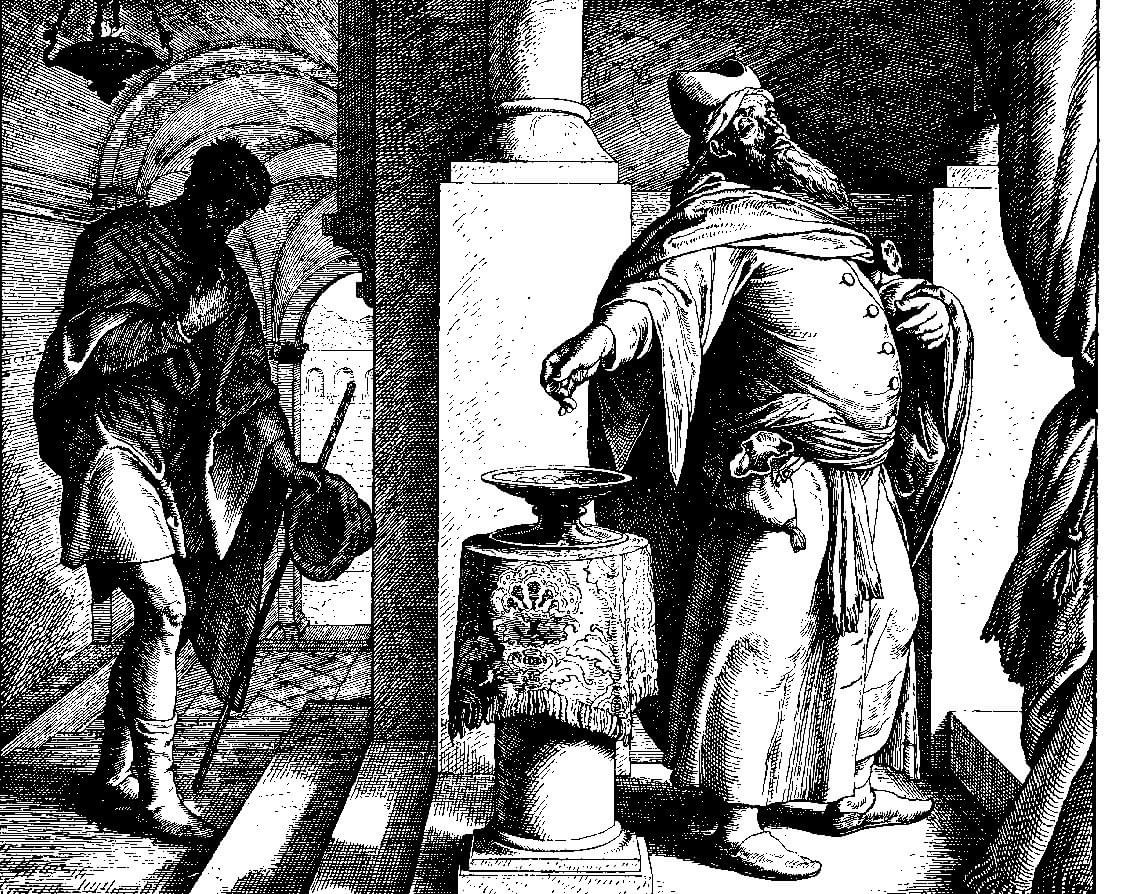 10 “Two men went up into the temple to pray, one a Pharisee and the other a tax collector. 11 The Pharisee, standing by himself, prayed thus: ‘God, I thank you that I am not like other men, extortioners, unjust, adulterers, or even like this tax collector. 12 I fast twice a week; I give tithes of all that I get.’ 13 But the tax collector, standing far off, would not even lift up his eyes to heaven, but beat his breast, saying, ‘God, be merciful to me, a sinner!’ 14 I tell you, this man went down to his house justified, rather than the other. For everyone who exalts himself will be humbled, but the one who humbles himself will be exalted.”
 The tax collector’s eyes of prayer are much different. He doesn’t look to heaven, and he doesn’t look at the sinners around him. He stands far off from the others, likely with his face to the floor, tears flowing down his cheeks, and beating his chest. He looks two places – at himself where there is no hope and to God where the only hope lies.
 When in the hour of deepest need
 Your heart has a wrong desire, and that false desire is conceived and eventually gives birth to sin. Then, when sin grows up, it brings forth death. Knowing this, we know Satan’s game plan. But it is helpful for us to see how the devil’s game plan plays out in real time, and we saw it in our Old Testament text (Gen. 3:1-21).
 When Eve looked at that fruit, she should have recognized, “That fruit is death.” Instead, she wrongly sees that it is to be desired to make one wise. This is the danger for us. There are things that are put in front of us and God says, “That’s bad, and it leads to death.” But instead of regarding those things according to God’s Word, we regard them according to how we see and think. We put ourselves over and above God and judge Him to be wrong. The devil entices us to think that God is the bad guy who is holding out on us, keeping us from having our heart’s desires. Then, we think we know better than God, and we fall for the temptation and into sin.
 Jesus has been fasting forty days and nights. I remember as a kid being hungry forty minutes after dinner. Jesus is famished. He is weakened by this fast. So, this temptation to turn stones into bread is a real temptation. The tempter again tries to exploit the gap between Jesus’ desires and what God has given. Jesus wanted food. Because He is man just like you and me, His stomach and His brain would have been screaming at Him, “Feed us!” But God has not yet given Jesus food. So Satan tries to get Jesus to take for Himself what God has not given.
 “to guard you in all your ways.” God the Father will protect Jesus in all His ways. But God didn’t send Jesus to earth to be some X-Games-temple-pinnacle jumper.
 So, dear saints, be wise. Know the devil’s attacks and tactics. The devil is going to use those tactics against you, but God has given you weapons against the devil, your flesh, and the world (1 Jn. 2:15-16). When the devil comes to tempt you, take up the weapon of prayer. Pray God’s Word and watch the devils flee. When your flesh tempts you, take up the weapon of fasting. If you are tempted to certain desires of your flesh, fast from those things. Tell your body, “Body, you aren’t in control.” And when the world tempts you with its vain riches, give. Be generous to the point that it makes you unable to afford falling into the temptations of this world.
 When Jonah preached to the sinners of Nineveh in our Old Testament lesson (Jon. 3:1-10), they repented from their evil, violent ways. And for them, it was as crazy an idea as closing their eyes to enable invisibility mode. The king says in his proclamation, “Who knows? God may turn aside from His fierce anger, so that we may not perish.” In other words, “Let’s try repenting. It might work.” Dear saints, we do not have to wonder how God will respond to humble, contrite sinners. Our Epistle Lesson (1 Jn. 1:5-10) says, “If we confess our sins, God is faithful and just to forgive our sins and to cleanse us from all unrighteousness.”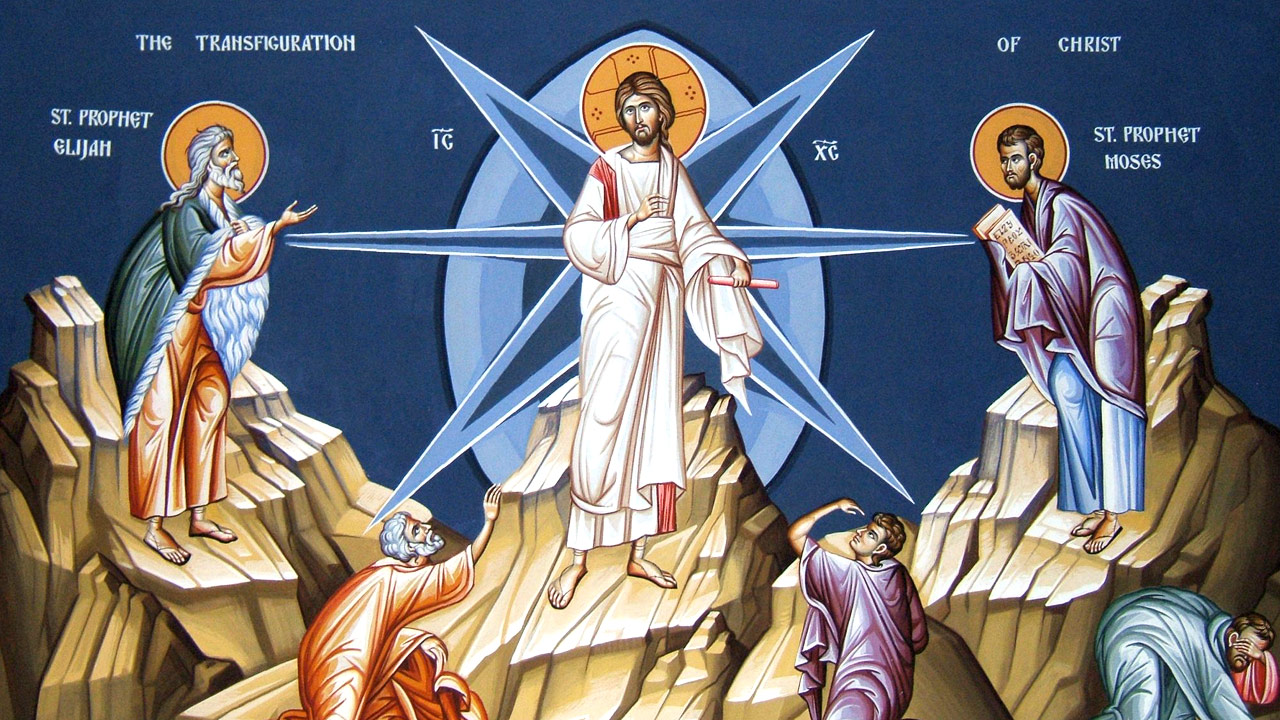
 And from this point, things get a little crazy and awkward. It is almost as though Peter didn’t hear Jesus say that He would rise from the dead because Peter rebukes Jesus – the very one he just confessed is the Son of the living God. Peter says, “Far be it from You, Lord! This shall never happen to You.” It would be easy to sling mud at Peter here for telling God that what He says is going to happen won’t ever happen. But you do it all the time – more on that in a bit.
 But here is where all of this is leading: Jesus comes to Peter, James, and John cowering in their sins and touches them. And notice what He says. He doesn’t continue to rebuke Peter. Jesus doesn’t say, “See I told you so.” Instead, Jesus says, “Rise,” the same word Jesus used when He spoke about His resurrection.“Rise, and have no fear.” Of all the things our Lord could have said, He says, “Rise, and have no fear.” Jesus is resurrecting Peter from his sin.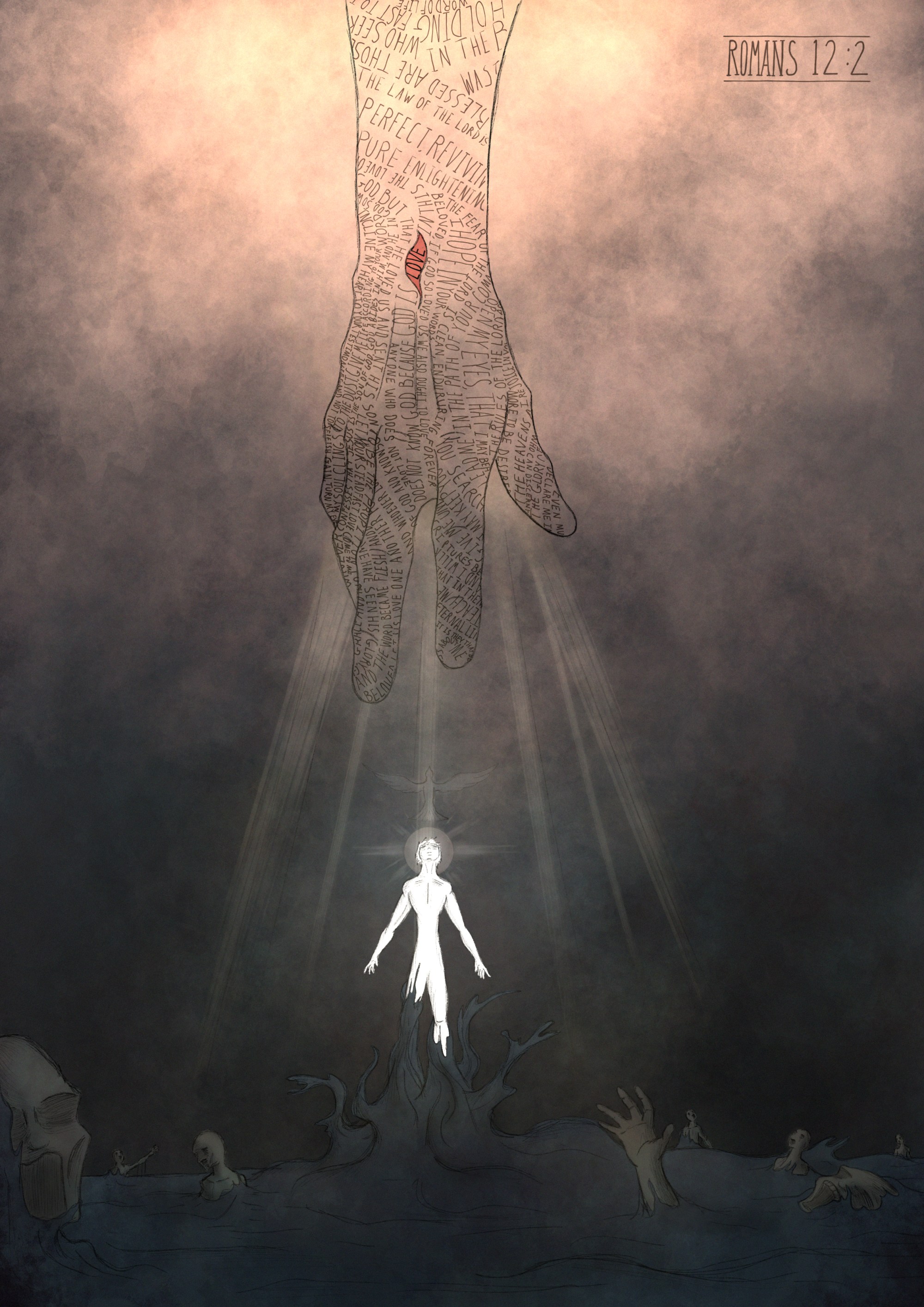
 I just have to run faster than you.” Well, guess what. When the bear of God’s Law is finished eating the guy who is slower to obey than you, it picks up your scent and resumes its pursuit of you because its appetite is never satisfied by eating up sinners.
 There’s a better way to understand these verses, and to get at that understanding, I’m going to connect this text to our theme for the year – “Sacred.” In Lev. 19:2, God speaks to His people, Israel, and says, “You shall be holy, for I the Lord your God am holy.” And Peter repeats those words for us Christians in 1 Pet. 1:16. In English, this sounds like a command because of the word ‘shall.’ But in both Hebrew and Greek it isn’t a command/imperative. A better translation for both is, “You will be holy.”
 likeness of sinful flesh and for sin, he condemned sin in the flesh, in order that the righteous requirement of the law might be fulfilled in us, who walk not according to the flesh but according to the Spirit.”
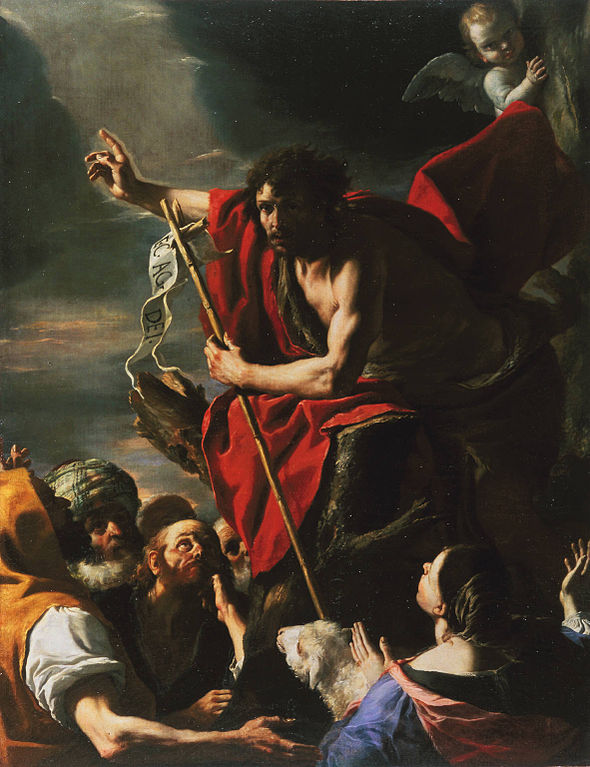 “You brood of vipers! Who warned you to flee from the wrath to come? Bear fruit in keeping with repentance.” The text doesn’t explicitly say it, but it appears as though John refused to baptize at least some of the Pharisees and Sadducees. But why? Why do they get a tongue-lashing and no baptism?
 Now we come to our text. John is baptizing all these people. A thief comes confessing his stealing, an adulterer confesses his adultery, a liar confesses her sin, and John absolves and baptizes them. But then to the front of the line comes Jesus, and John knows Him (Lk. 1:39-45). They’re related to each other. John knows what the angel Gabriel told Mary, that this Jesus would be Son of the Most High, that He would reign over the house of God, and that His kingdom would have no end (Lk. 1:26-38). John knows the angel Gabriel told Joseph that Jesus would be the One to save His people from their sins (Mt. 1:18-25). John knows that Jesus is the sinless God in the flesh. And here He is coming to be baptized unto repentance for the forgiveness of sins? This shouldn’t be!
 But also, the same thing that happens to Jesus in his Baptism happens to you in yours. In your Baptism, you are given the gift of the Holy Spirit and are made God’s beloved child. In your Baptism, God intimately joins you to Jesus, and to His death and resurrection (Ro. 6:3-6).
 In your Baptism, God has given you the new birth of water and the Spirit (Jn. 3:5). In your Baptism, God has promised to wash away your sins (Act. 2:38-39), save you (1 Pet. 3:21), make you His child (Mt. 3:17), connect you to Jesus’ death and resurrection (Ro. 6:3-6), clothe you with Christ (Gal. 3:27), and fill you with the Holy Spirit (Tit. 3:5). So now, whenever wash your hands or take a shower, you can remember that God Himself has washed you clean and made you holy and sacred. Whenever you take a drink, you can remember that, in your Baptism, Jesus has given you to drink of the living water that wells up to eternal life (Jn. 4:10, 14).
 Pastorsamwise
You must be logged in to post a comment.