The Scripture readings for tonight were Jonah 3:1-10; 1 John 1:5-10; and Matthew 6:16-21.
In the name of Jesus. Amen.
I don’t remember exactly how old I was, but I was definitely old enough to know better. It was a cold, wet, Spring day. A friend from church, my sister, and myself were probably driving our parents crazy, so our parents dropped us off at the Williston Recreational Center to burn off some energy. The Rec. Center had two basketball courts, a few racquetball courts, and a hockey arena that still had the boards up but no ice. When we paid the fee and signed our names in, the employee told us that the empty hockey rink was off limits to the public that particular day, so we went to the basketball courts to play horse and lightning. But it didn’t take long before we got bored and decided we needed a little more excitement. So, of course, we went to the forbidden hockey arena.
I don’t remember exactly how we got past the front desk unnoticed, but we did. And we proceeded to have a grand time playing inside the boards. But not for long. I remember seeing the employee approaching the glass windows and door that separated the hockey arena from the lobby, and he didn’t look happy. I warned my friend and sister that we had been caught and were about to get in trouble. But my sister had a plan. She insisted that if we closed our eyes, the employee couldn’t see us. She said that it worked once for her friend. Now, I’m three years older than she is, so, again, I should have known better. But I did it. I closed my eyes as tight as I could and assumed the fetal position against the boards. I can only imagine how foolish we looked to that employee. Even as he hollered at us for being in there, I didn’t open my eyes until he tapped my shoulder.
Dear people of God, “If we say we have no sin,” (Notice that this is present tense. No matter how long you’ve been a Christian, not matter how much you’ve improved, no matter how much good you do, you still have sin.) “if we say we have no sin we deceive only ourselves,” and we look like a foolish child cowering with our eyes closed. We cannot flee from or escape the watchful eye of the God who created us. He knows your actions. He knows the words that come out of your mouth. He knows the thoughts of your mind. And He knows the hypocrisy of your heart. If we say we have no sin, the truth is not in us.
Repent because there is another way. Repent because that is the only way!
Scripture is clear that our God is merciful and gracious, slow to anger and abounding in steadfast love and faithfulness. This is one of if not the most common descriptions of God. In fact, this is how God Himself defines who He is (Ex. 34:6). 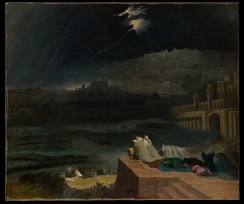 When Jonah preached to the sinners of Nineveh in our Old Testament lesson (Jon. 3:1-10), they repented from their evil, violent ways. And for them, it was as crazy an idea as closing their eyes to enable invisibility mode. The king says in his proclamation, “Who knows? God may turn aside from His fierce anger, so that we may not perish.” In other words, “Let’s try repenting. It might work.” Dear saints, we do not have to wonder how God will respond to humble, contrite sinners. Our Epistle Lesson (1 Jn. 1:5-10) says, “If we confess our sins, God is faithful and just to forgive our sins and to cleanse us from all unrighteousness.”
Make sure you catch all of the words there in v. 9. The text doesn’t just say “If you confess your sins, God will forgive and cleanse.” No. The text says that God is faithful and just to forgive. We would expect to hear different words there – words like merciful, gracious, kind, generous, or even lenient. But that is not what Scripture says. God is faithful and just to forgive you of your sins and cleanse you from all unrighteousness.
Dear saints, God’s forgiveness delivered to you is right and just. That’s saying it in a positive way. And it is true in a negative way (or the opposite way): God would be unjust to withhold forgiveness from you who confess your sins. Your sin, your shame, your unrighteousness, your guilt was all laid upon Jesus on the cross. He has taken all of it and endured the punishment that you deserve. For God to give you any of His anger or displeasure because of your sin would not be right or just. He would be removed from the bench, disbarred, and thrown into prison if He didn’t forgive you.
Dear Christian, be comforted. God faithfully and justly and willingly and delightfully forgives you all your sins because of what Jesus has done for you. Amen.
The peace of God, which surpasses all understanding, will guard your hearts and minds in Christ Jesus. Amen.
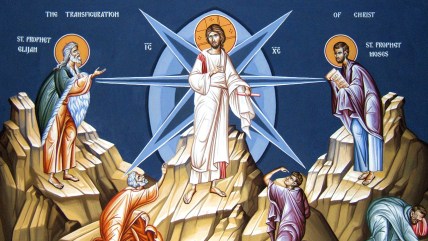
 And from this point, things get a little crazy and awkward. It is almost as though Peter didn’t hear Jesus say that He would rise from the dead because Peter rebukes Jesus – the very one he just confessed is the Son of the living God. Peter says, “Far be it from You, Lord! This shall never happen to You.” It would be easy to sling mud at Peter here for telling God that what He says is going to happen won’t ever happen. But you do it all the time – more on that in a bit.
 But here is where all of this is leading: Jesus comes to Peter, James, and John cowering in their sins and touches them. And notice what He says. He doesn’t continue to rebuke Peter. Jesus doesn’t say, “See I told you so.” Instead, Jesus says, “Rise,” the same word Jesus used when He spoke about His resurrection.“Rise, and have no fear.” Of all the things our Lord could have said, He says, “Rise, and have no fear.” Jesus is resurrecting Peter from his sin.
 I just have to run faster than you.” Well, guess what. When the bear of God’s Law is finished eating the guy who is slower to obey than you, it picks up your scent and resumes its pursuit of you because its appetite is never satisfied by eating up sinners.
 There’s a better way to understand these verses, and to get at that understanding, I’m going to connect this text to our theme for the year – “Sacred.” In Lev. 19:2, God speaks to His people, Israel, and says, “You shall be holy, for I the Lord your God am holy.” And Peter repeats those words for us Christians in 1 Pet. 1:16. In English, this sounds like a command because of the word ‘shall.’ But in both Hebrew and Greek it isn’t a command/imperative. A better translation for both is, “You will be holy.”
 likeness of sinful flesh and for sin, he condemned sin in the flesh, in order that the righteous requirement of the law might be fulfilled in us, who walk not according to the flesh but according to the Spirit.”
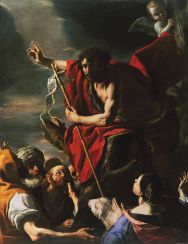 “You brood of vipers! Who warned you to flee from the wrath to come? Bear fruit in keeping with repentance.” The text doesn’t explicitly say it, but it appears as though John refused to baptize at least some of the Pharisees and Sadducees. But why? Why do they get a tongue-lashing and no baptism?
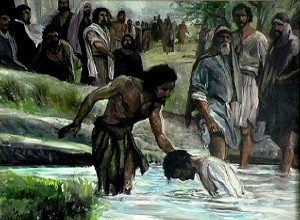 Now we come to our text. John is baptizing all these people. A thief comes confessing his stealing, an adulterer confesses his adultery, a liar confesses her sin, and John absolves and baptizes them. But then to the front of the line comes Jesus, and John knows Him (Lk. 1:39-45). They’re related to each other. John knows what the angel Gabriel told Mary, that this Jesus would be Son of the Most High, that He would reign over the house of God, and that His kingdom would have no end (Lk. 1:26-38). John knows the angel Gabriel told Joseph that Jesus would be the One to save His people from their sins (Mt. 1:18-25). John knows that Jesus is the sinless God in the flesh. And here He is coming to be baptized unto repentance for the forgiveness of sins? This shouldn’t be!
 But also, the same thing that happens to Jesus in his Baptism happens to you in yours. In your Baptism, you are given the gift of the Holy Spirit and are made God’s beloved child. In your Baptism, God intimately joins you to Jesus, and to His death and resurrection (Ro. 6:3-6).
 In your Baptism, God has given you the new birth of water and the Spirit (Jn. 3:5). In your Baptism, God has promised to wash away your sins (Act. 2:38-39), save you (1 Pet. 3:21), make you His child (Mt. 3:17), connect you to Jesus’ death and resurrection (Ro. 6:3-6), clothe you with Christ (Gal. 3:27), and fill you with the Holy Spirit (Tit. 3:5). So now, whenever wash your hands or take a shower, you can remember that God Himself has washed you clean and made you holy and sacred. Whenever you take a drink, you can remember that, in your Baptism, Jesus has given you to drink of the living water that wells up to eternal life (Jn. 4:10, 14).
 28 But when that same servant went out, he found one of his fellow servants who owed him a hundred denarii, and seizing him, he began to choke him, saying, ‘Pay what you owe.’ 29 So his fellow servant fell down and pleaded with him, ‘Have patience with me, and I will pay you.’ 30 He refused and went and put him in prison until he should pay the debt. 31 When his fellow servants saw what had taken place, they were greatly distressed, and they went and reported to their master all that had taken place. 32 Then his master summoned him and said to him, ‘You wicked servant! I forgave you all that debt because you pleaded with me. 33 And should not you have had mercy on your fellow servant, as I had mercy on you?’ 34 And in anger his master delivered him to the jailers, until he should pay all his debt. 35 So also my heavenly Father will do to every one of you, if you do not forgive your brother from your heart.”
 Think about the other night. You were watching that show. Men, that woman wasn’t your wife; she was sitting next to you. But God knew your lusts. Women, that handsome, considerate, compassionate character wasn’t your husband. You know what? That’s lust too.
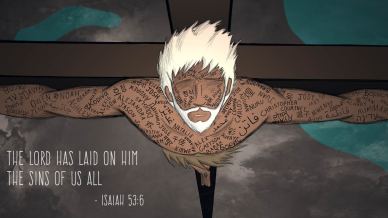 Let your ears be attentive to the voice of my pleas for mercy! [W]ith the Lord there is steadfast love, and with him is plentiful redemption. And he will redeem Israel from all his iniquities.”
 If Menards can have Christmas decorations out already and if the Hallmark Channel can do nonstop Christmas movies in July, then the Church can certainly have Easter in October. In fact, we have to celebrate Easter because this text screams Easter – loud and clear. But always before Easter, there is Good Friday. Before resurrection, there must be death. Good Friday sadness is a prerequisite to Easter joy. We have to see that first.
 Then, Jesus walks past the pallbearers, straight up to the bier, touches it, and says, “Young man, I say to you, arise,” as though He was waking up a sleepy teenager late on a Saturday morning. The boy gets up and begins to speak. I wonder what he said.
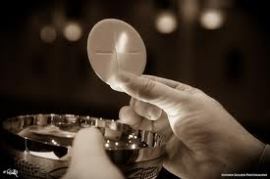 Jesus marches toward your funeral procession, and He does not stop or yield. Jesus does not give way or defer to death. Instead, Jesus defeats death with His death and resurrection, each and every time He meets it. Jesus meets you here today as you plod along in your personal funeral procession and gives you life. Jesus meets you at this altar to give you His living Body and His life-giving Blood.
 them, “Go and show yourselves to the priests.”And as they went they were cleansed. 15 Then one of them, when he saw that he was healed, turned back, praising God with a loud voice; 16 and he fell on his face at Jesus’ feet, giving him thanks. Now he was a Samaritan. 17 Then Jesus answered, “Were not ten cleansed? Where are the nine? 18 Was no one found to return and give praise to God except this foreigner?” 19 And he said to him, “Rise and go your way; your faith has made you well.”
 This Samaritan who returns to the true Temple and true High Priest. He returns to Jesus to give thanks. Did you catch what Jesus said there, “Was no one found to return and give praise to God except this foreigner?” In other words, the nine went onto the Temple and God’s house, but God wasn’t there. He was walking in the flesh between Samaria and Galilee where the Samaritan falls at His human feet giving Him thanks. Some people will read the Gospels and say that Jesus never claimed to be God. Well, sorry, they are wrong. He does right here.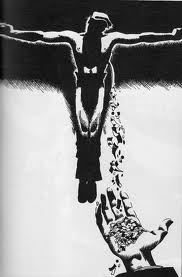

 Our English word ‘desolation’ contains the word ‘solo,’ and that gives a sense of what ‘desolation’ means. Adam and Eve went solo. Rather than trusting God, they went solo and trusted the devil’s lie bringing sin, death, condemnation, and desolation into the world.
 Look at what Jesus, God in the flesh does – notice the verbs. He calls the disciples. Jesus directs the crowd to sit down. He takes the bread. Christ gives thanks for the bread. He breaks the bread. He gives the bread to the disciples to set before the people. Jesus blesses the fish. He gives the fish to the disciples to set before the people. And Jesus watches them all eat until every last one of them is satisfied. Jesus continues to do this for us today.
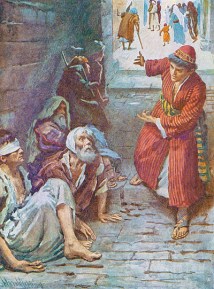 Then the master of the house became angry and said to his servant, ‘Go out quickly to the streets and lanes of the city, and bring in the poor and crippled and blind and lame.’ 22 And the servant said, ‘Sir, what you commanded has been done, and still there is room.’ 23 And the master said to the servant, ‘Go out to the highways and hedges and compel people to come in, that my house may be filled. 24 For I tell you, none of those men who were invited shall taste my banquet.’”
 So, the man has sent out this invitation without saying exactly when the banquet would begin. Then in v. 17, the preparations are finished – the food is cooked, the table is set, the decorations are hung, the wine is poured, everything is ready. The man sends his servant to tell all those who were invited, “Come, for everything is now ready.” But they all make excuses, and their excuses are lame and stupid.
 Christian, God has ushered you into His paradise. You receive the benefit of the sacrifice of Christ’s death. You are promised the resurrection. And, now, in this feast you are about to receive, God nourishes you and declares you to be the object of His love and His perfect bride.
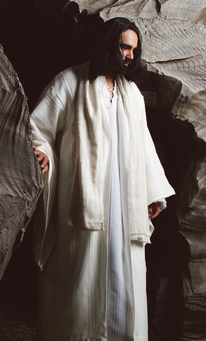 And you can smile in his face, “Yes, death, you used your sting, didn’t you? You should have used your sting on me. The sting would have stuck on me. But you didn’t. Instead, death, you used your sting on my Savior, my God, and my Lord. You used your sting on Jesus, didn’t you? You had Jesus pinned tightly on the cross, and you stuck Him with your stinger and buried it into Him. Death, you were a fool that day. You stung God Himself. You stung Jesus who is the Resurrection and the Life (Jn. 11:25). But when you went to the tomb to find your stinger and get it back, Jesus wasn’t there. And guess what, death, Christ has taken my sin as He hung on the cross. And, death, you will not ever get your sting back. Never. That empty tomb means that your sting is lost forever. Death, I don’t fear you any longer.”

You must be logged in to post a comment.