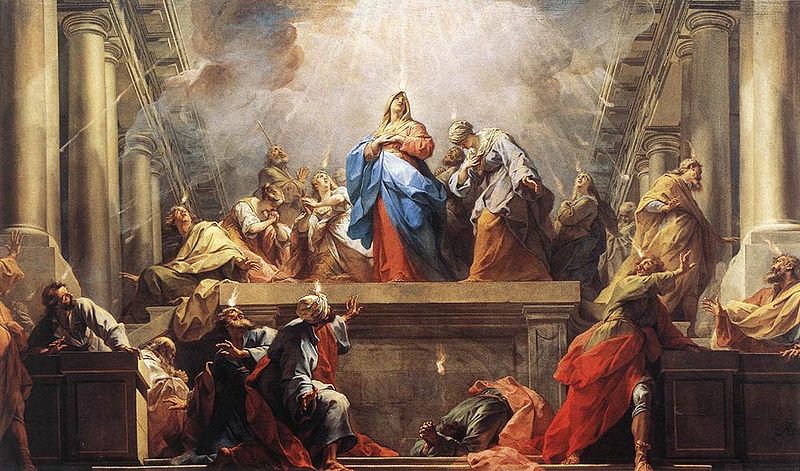
What Gifts or Benefits Does Baptism Bestow? – Sermon for Midweek Lent 2

Listen here.

II. What Gifts or Benefits Does Baptism Bestow?

Baptism works forgiveness of sins, delivers from death and the devil, and gives everlasting salvation to all who believe, as the word and promise of God declare.

What is this word and promise of God?

It is the word of our Lord Jesus Christ, as recorded in the last chapter of Mark: “He who has believed and has been baptized shall be saved; but he who has disbelieved shall be condemned.”

Martin Luther’s Small Catechism

In the name of Jesus. Amen.

Last week we considered how Jesus instructs His disciples to make disciples of all nations/ethnicities by baptizing them and teaching them. Since Jesus has instituted Baptism as the means to make disciples, Baptism cannot be an empty, optional thing. It is vital. We also introduced the idea that God places His Name – Father, Son, and Holy Spirit – upon us when we are Baptized. Wherever God’s name is, there is salvation. Psalm 54:1 says, “O God, save me by Your name.”

Now, as we move to the second question about Baptism and consider what gifts and benefits Baptism bestows, we see according to Scripture that Baptism works forgiveness of sins. After Peter preached on Pentecost, his listeners were convicted by the Law and asked, “What shall we do?” Peter responded, “Repent and be Baptized … for the forgiveness of your sins” (Act. 2:38). Because Baptism works the forgiveness of sins, it delivers from death and the devil (see Col. 1:13). (The idea of forgiveness being deliverance from death and the devil will be part of the sermon this Sunday.) Baptism also gives salvation to all who believe.

According to the plain words of Scripture, Baptism saves. You heard it tonight. Palin as the nose on your face, 1 Peter 3:21 says, “Baptism now saves you.” Before we get into the specifics of that text, I want to acknowledge that there are Christians (and, please, note that I truly call them Christians) who deny that Baptism saves. I’ve heard many Christians ask me, “You do know, the Bible doesn’t teach that Baptism saves, don’t you?” I point them to 1 Peter 3:21, “Baptism now saves you.” And they don’t have an answer. I have a friend who learned Greek at a Baptist college. His class translated this verse, and the professor said, “There is no denying what this verse says, ‘Baptism saves,’ but we know that isn’t what this verse means.”

That is a dangerous approach to theology and leads down a perilous road. If Scripture says, “Baptism saves,” but it doesn’t really mean, “Baptism saves,” then what other passages don’t really mean what they say? The devil loves to take little slivers of doubt like that to destroy the faith of Christians by sowing the seeds of unbelief in all sorts of texts – both Law and Gospel. Satan will whisper, “Does the Bible mean what it says, ‘By grace you have been saved through faith’ (Eph. 2:8)?  Does John 3:16 mean what it says? Did Jesus really mean it when He said, ‘I am the Way, the Truth, and the Life. No one comes to the Father except through Me’ (Jn. 14:6)? Did God really say, ‘Thou shalt not murder,’ ‘Thou shalt not commit adultery,’ or, ‘Thou shalt not bear false witness’? (Ex. 20:13-1416)?”

Now, this is a bit of an aside, but I love you too much to not address this: We could call Baptism an “apex doctrine.” Let me explain what that means. In biology, there are apex predators – the animals at the top of the food chain. For example, sharks are the top of the food chain in the ocean. Nothing hunts the sharks. So, when there is a shortage of plankton in a part of the ocean because there are high levels of mercury, the biologists will test the blood of sharks even though they are interested in learning about the plankton. Here’s why. 

Plankton will absorb the mercury, but the mercury won’t be detectable in the plankton. As you move up the food chain, mercury levels will get higher at each level. The fish that eat plankton have a little higher level of mercury. And the fish that eat the fish that eat the plankton have even higher levels. But the sharks that eat the fish that eat the fish that eat the fish that eat the plankton will have the highest concentrations of mercury. So that’s where the biologists look. They look at the apex predator because they will have levels of mercury that are detectable. Ok.

Baptism is one of the doctrines at the top of the food chain when it comes to being able to detect doctrinal poison. Little levels of poison don’t necessarily kill you right away, but there is no amount of theological poison that is safe. So, to you kids who are in middle school and high school, when you go off to college, move away from home, and look for a church, don’t necessarily pick the church that is the most fun to go to. Look at what that church believes – and look especially to what that church teaches about Baptism and I’ll add the Lord’s Supper. The ‘little’ theological problems that can be hard to see get more detectable when it comes to the church’s teaching about the Sacraments.

Ok. To 1 Peter 3. That text is so rich and dense, I’m not going to cover everything. Instead, I want to give you the context and then focus on what it says concerning Baptism. I’ll start at v. 18:

Jesus suffered once for sins, the righteous One for us unrighteous ones, that He might bring us to God. Jesus was put to death in the flesh but made alive in the spirit. What this text is saying is that Jesus rose from the dead on Easter, but before He physically came out of the tomb, He went in His spirit to hell and preached to those who were in that place of torment that they experience now. We know they have torment before Christ returns because of Jesus’ parable about the rich man and Lazarus in Lk. 16:19-31, but that is not their final destination. When Christ returns, everyone will be raised from the dead. Those who do not believe in Christ will be cast into the lake of fire that was prepared for the devil and his angels (Mt. 25:41). So, Christ went to that place of torment and proclaimed His victory over sin, death, and the devil. And Peter mentions specifically that Jesus preached to the souls who did not listen to Noah’s preaching while he built the ark. And Peter mentions them because of the point he is about to make about Noah, his family, the ark, and Baptism.

Noah and his wife and his sons and their wives, eight people in total, were brought safely through the water of the Flood (Gen. 7-8). In the Flood, God was judging unbelief and saving the faithful at the same time. And in the Flood, God uses the same ingredient or instrument to bring both judgment and salvation. It was the waters of the Flood that killed the sinful, unbelieving people, and it was the same water that raised Noah and his family above God’s judgment that came through the Flood. In the Flood, water was the instrument of both death and life.

The same is true of Baptism, and we’ll consider this more fully in two weeks when we look at Romans 6which teaches that Baptism unites us with Christ’s death and resurrection. But for tonight, see how Baptism delivers us from sin, death, and the devil by defeating them, and how it saves us. According to this verse (1 Pet. 3:21), Baptism saves because it isn’t just washing a little dirt from a person. Instead, Baptism is an appeal to God for a good conscience. And this Baptism saves because it connects us to the resurrection of Jesus Christ.

Now, some will ask the question, “Do you have to be Baptized to be saved? What about the thief on the cross. He wasn’t Baptized and Jesus said that he would be in paradise that very day.” To which we respond, that’s right. But go again to what Jesus says in Mk. 16:16, “Whoever believes and is Baptized will be saved, but whoever does not believe will be condemned.”

Notice that unbelief is the only condition that Jesus mentions with regard to being lost and condemned. Those who trust in Christ’s death and resurrection for the forgiveness of their sins are saved. Those who don’t believe aren’t – even if they are Baptized. If you do not believe in Christ, you are still in your sins. Faith in Christ is to believe that Jesus has removed your sins.

All of this is to say that you can be saved without being Baptized. Deathbed and foxhole converts are just as saved as those who are Baptized as infants and remain believers their entire life.

The main thing about saving faith is that it believes something. To simply say, “I believe,” is an incomplete confession of faith. What is it that you believe? Christians, children of God believe what God has promised them.

Remember when God promised old, childless Abraham (then Abram)? God brought Abraham outside, told Abraham to try to count the stars, and promised that Abraham’s offspring would be as numerous as the stars. God made a direct promise to Abraham there under that night sky, and Gen. 15:6 says, “[Abraham] believed the Lord, and He counted it to him as righteousness.”

God connected His promise to Abraham to something physical, the stars. And I love to imagine what the nights were like for old Abraham after that. I can picture him going out on a clear, cloudless night and seeing all the stars because there was no light pollution. How many nights, do you suppose, Abraham would remember God’s promise and start trying to count the stars? How long would he count before he realized it wasn’t possible? And then he would get tired, smile to himself, go to his bed, and fall asleep thinking, “Well, God made a promise to me. It’s hard to imagine and believe, but God promised.”

Dear saints, God has made promises to you as well. God didn’t bring you outside to look at the stars, but He did bring you to the font. In your Baptism, God promised that He washed away your sins (Act. 2:38). At the font, God promised that you who are Baptized into Christ have put on Christ (Gal. 3:27). God promised that those waters joined you to Jesus’ death and resurrection (Ro. 6:3-4Col. 2:12). There God promised that He delivered you from the domain of darkness and transferred you to the kingdom of His beloved Son (Col. 1:13-14). These are all things God has said in the Scriptures about what He did for you in your Baptism. God is true to His Word, and faith clings to and believes those promises of God.

So, when you wash your hands or face, when you take a shower, when raindrops keep falling on your head, you too can remember God’s promises to you. Everything Christ has won for you by His life, death, and resurrection was delivered to you in your Baptism by God’s decree. And God counts that faith as your righteousness. Amen.

The peace of God, which surpasses all understanding, will guard your hearts and minds in Christ Jesus. Amen.

The Canaanite School of Beggary – Sermon on Matthew 15:21-28 for the Second Sunday in Lent

Listen here.

Matthew 15:21-28

21 And Jesus went away from there and withdrew to the district of Tyre and Sidon. 22 And behold, a Canaanite woman from that region came out and was crying, “Have mercy on me, O Lord, Son of David; my daughter is severely oppressed by a demon.” 23 But he did not answer her a word. And his disciples came and begged him, saying, “Send her away, for she is crying out after us.” 24 He answered, “I was sent only to the lost sheep of the house of Israel.” 25 But she came and knelt before him, saying, “Lord, help me.” 26 And he answered, “It is not right to take the children’s bread and throw it to the dogs.” 27 She said, “Yes, Lord, yet even the dogs eat the crumbs that fall from their masters’ table.” 28 Then Jesus answered her, “O woman, great is your faith! Be it done for you as you desire.” And her daughter was healed instantly.

In the name of Jesus. Amen.

No one likes being insulted. I remember playing kickball in 7th grade and kicking a home run. One of the 8th grade girls on the other team complained to her teammates about not getting me out. I can still hear her saying, “Come on guys, we can’t even get string bean out!” It hurt, but, in her defense, calling me ‘string bean’ was probably accurate. I think I had just reached 6’ 2”, probably weighed all of 120 lbs. when soaking wet, and was as coordinated as a linguini noodle. And if I remember right, it wasn’t a home run because it was some high, majestic kick that cleared a fence. The ball probably made it to the outfield and they tried to throw it at me a couple times, but I was too skinny of a target. Back then, I was basically two dimensional.

Insulting words can hurt from certain people’s lips, but there are times words can feel insulting and we should not be offended because those words are simply true. A prime example of this is when God Himself doles out insults in Scripture. Jesus said that He came to call not the righteous, but sinners (Mt. 9:13). Yes, Jesus came for everyone, so Jesus is calling all of us ‘sinners.’ Jesus says that He came to seek and save the lost (Lk. 19:10), that means you and I are the ‘lost.’ When you read Ro. 3[:10b-18] there is a whole series of insults for all people. Here’s a few for you: no one understands, no one seeks for God, together they have become worthless, no one does good, their throat is an open grave, the venom of asps is under their lips, their mouth is full of curses and bitterness, their feet are swift to shed blood, in their paths are ruin and misery, the way of peace they have not known, there is no fear of God before their eyes.

In our text today, we have this Canaanite woman whose daughter is severely oppressed by a demon; she gets ignored, rejected, and even insulted by Jesus. But then Christ holds her up before us as an example of great faith because she continues to beg and pray to Jesus – the only One who can help her. In fact, she is only one of two people in all the Gospels whose faith is praised by Jesus. The other person whose faith is praised by Jesus is the Gentile centurion who had a sick servant (Mt. 8:5-13). Not even the disciples, who were personally called by Jesus, get praised for their faith. Because she has great faith, she has something to teach us. As Christians and disciples of Jesus, we should always learn from Christ, and here today, Jesus tells us to be learners and disciples of this Canaanite woman.

So, settle down class. Let’s all learn from our guest lecturer visiting us from the Canaanite School of Beggary.

This Canaanite woman comes to Jesus asking for mercy because, again, her daughter was severely oppressed by a demon. She is going to the right place – to Jesus – and asking Him to do exactly what He came to do. 1 John 3:8 says, “The reason the Son of God appeared was to destroy the works of the devil.” But what does Jesus do? “He did not answer her a word.”

According to this woman’s experience Jesus is completely ignoring her. But rather than letting her experience discourage her so that she goes away, she keeps crying out. She cries out so much that the disciples become embarrassed and tell Jesus to send her away. Not only is her experience with Jesus harsh, but this foreign Rabbi’s disciples are actually praying against her. And notice that still Jesus doesn’t address her. He answers the disciples. “I was sent only to the lost sheep of Israel.”

So now, this woman is not only fighting against her experience, she is also fighting against the disciples’ prayers and Jesus’ own words. When Jesus says that He’s only sent for Israel, it is reasonable to think that Jesus is saying that He was not sent for her. But she fights against what reason would say and stubbornly clings to her hope in Jesus. She kneels before Jesus and gives Him a command, “Lord, help me.” Finally, Jesus gives her some attention, but it’s devastating. He replies, “It is not right to take the children’s bread and throw it to the dogs.” And that is as insulting as it sounds.

I think it’s safe to say that if most people heard Jesus say this to them, they’d be looking for another god. But this woman knows there is no other help for her, so look what she does. She takes the insult, holds on to it for dear life and says, “Yes, Lord.” Then our translation, the ESV, does something weird here (so do all English translations); they translate the next word as ‘yet.’ Some other translations will use the word ‘but.’ (I think I understand why all the English translations use ‘yet’ or ‘but’ as their translation.) But the word there means ‘for.’ It’s one of the most common words in the New Testament, and of the 1,009 times it’s used in the New Testament this is the only place the ESV translates it as ‘yet.’ The problem with using ‘yet’ or ‘but’ is that it sounds like she is disagreeing with Jesus. She isn’t disagreeing with Jesus. Instead, she agrees with him. She confesses that she is a dog. “Yes, Lord, for even the dogs eat the crumbs that fall from their masters’ table.”

Basically, she is saying, “Ok, Jesus. You call me a dog? Then a dog is what I am. I don’t need the bread You give to Your children. You’re correct. It isn’t right to give Your children’s bread to a dog like me. Treat me like a dog and I’ll be more than content to get the crumbs that dogs get. The crumbs that the children drop without realizing it are enough for me.”

I think the first lesson we learn in the Canaanite School of Beggars is that we can be bold in our prayers. 

I love what Luther says when he preached on this text. (I included this quote in your bulletin insert.) “When we feel in our conscience that God reproaches us as sinners and judges us unworthy of the kingdom of heaven, then we experience hell and think that we are eternally lost. Whoever has this woman’s ingenuity should catch God in His own judgment and say, ‘Yes. Lord, it is true. I am a sinner and unworthy of Your grace. Nevertheless, You have promised forgiveness to sinners.’”

Dear saints, have the ingenuity of this woman. When God’s Law comes to you and says, “You are lost,” we take God at His Word and cry to Him. “Yes, God. I’m lost. Find me.” When God’s Law says, “You’re a sinner,” we say, “Yes, God. I’m a sinner. Save me” (Mt. 9:13). When God says, “You’re dead,” we cry to Him “Raise me.” And we can be bold when we pray these things. God has promised to do these things for the lost, the sinner, and the dead in sin. So we can take those promises, hold them in front of God’s face, and demand that He be true to His Word.

We actually had a little debate about this in our family this past week. I ran through this idea during our Bible time, and my family had a consensus that we should add a ‘please’ to these prayers. I’m glad my family has manners, but there might be times when we get frustrated with God because He appears to be continually denying our prayers for things He has promised to give us. In this text, it appears that Jesus isn’t going to answer this woman’s prayer.

Now, this whole event with might have lasted an hour or it might have been as short as fifteen minutes. But there is no denying that Jesus puts this woman through the ringer. In our lives, there may be times where it might seem that God is denying our prayers for days or weeks or years. Don’t stop praying. Grab God’s promises and hold them in front of His face like this Canaanite woman did. That’s faith, and Jesus praises that faith.

When the disciples ask Jesus to teach them how to pray, Jesus gives them the Lord’s Prayer. There isn’t one, “Please,” in that prayer. All the petitions of the Lord’s Prayer are imperatives – they’re commands. “Make Your name holy. Bring Your kingdom. Do Your will. Give us our daily bread.” Even the petition, “Forgive us our trespasses,” is a command. “Don’t lead us into temptation. Deliver us from evil.” Every last one of them is a command addressed to your Heavenly Father. Dear saints, be bold when you pray. Hold God to His promises. Like Jacob in our Old Testament lesson (Gen. 32:22-32), don’t let God go until He blesses you. According to Jesus, that is great faith.

Also, you can be consistent and constant in your prayers. After being bold in our prayers, I think that’s the other important lesson we should learn from the Canaanite School of Beggary. God wants you to annoy Him with your prayers. In fact, Jesus teaches two parables to this effect. The first one is in Luke 11[:5-8]. The parable is about a guy who knocks at his neighbor’s door at midnight asking for some bread to give to a guest who has just showed up. And because the guy keeps knocking the neighbor will get out of his bed, get dressed, and find some bread to give to him.

The other parable is Lk. 18[:1-7] where a widow keeps going to a judge to ask for justice. And the judge gets so tired of her asking, he finally gives her what she wants so she doesn’t beat him down with her continual requests.

This text is those two parables played out in real life. She keeps going to Jesus until He gives her what she needs.

Dear saints, like this Canaanite woman, you can take God’s insults because we are all beggars before God. And even when God seems indifferent, when He seems distant, and even when He insults you, you can keep asking boldly. You can do all this because God has sent His Son Jesus to die and rise again for you.

Because Jesus has done this, He has taken us beggars and made us His children. God is your Father, and He won’t let His reputation as your Father be tarnished. He will answer your prayers. It is His good pleasure to give you the kingdom (Lk. 12:32). He will remember His mercy and steadfast love for you. Amen.

The peace of God, which surpasses all understanding, will guard your hearts and minds in Christ Jesus. Amen.

What Is Baptism? – Sermon for Midweek Lent 1

Listen here.

I. What is Baptism?

Baptism is not simply water, but it is the water used according to God’s command and connected with God’s Word.

What is this word of God?

It is the word of our Lord Jesus Christ, as recorded in the last chapter of Matthew: “Go therefore and make disciples of all the nations, baptizing them in the name of the Father and the Son and the Holy Spirit.”

Martin Luther’s Small Catechism.

In the name of Jesus. Amen.

I’m no Julie Andrews, but I’ll attempt a little Maria von Trapp impersonation here, “Let’s start at the very beginning – a very good place to start. When you read, you begin with A-B-C. When you sing, you begin with Do-Re-Mi…” When you consider Baptism, you begin with Mt. 28:19.

Jesus says, “Go therefore and make disciples of all nations, baptizing them in the name of the Father and of the Son and of the Holy Spirit.” Our crucified and resurrected Savior, who has all authority in heaven and on earth, passes His authority to His disciples. But what exactly is Jesus telling His disciples to do here? What is the command? I can still hear and picture a particular missionary repeatedly telling a group I was in, “The command is to go!” Actually, it isn’t. And, in fact, the word ‘go’ is probably the least important word in this verse. That’s a horrible thing to say about anything Jesus tells us, but it’s true. In all honesty, you could remove the word ‘go’ and what Jesus says would have the same meaning. Just quickly, here’s why.

Before ascending into heaven, Jesus meets the disciples on a mountain in Galilee. Jesus wants His disciples to ‘make disciples’ of ‘all nations.’ Since ‘all nations’ are not there on that mountain, the disciples are going to have to leave the mountain in order to do what Jesus wants them to do. But because Jesus does say, “Go,” it is important. I don’t want to overly bore you here with grammar, so I’ll just get to the point. “Go,” is not a verb in Jesus’ sentence here. The idea is more along the lines of, “as you go,” in other words, wherever the disciples go, here is what they are to do. “Disciple all nations.” The command Jesus gives is ‘disciple,’ and ‘disciple’ is not a word that we are used to being an action. Normally, we hear the word ‘disciple’ and think it is a person – one of the twelve or a Christian today. But that’s the command, ‘disciple’ or ‘make disciples.’

And Jesus specifies whom the eleven disciples are to disciple – “all nations.” The word, there, for nations is ἔθνος – where we get our word ‘ethnicities’ or ‘all types of people.’ Jesus wants all ethnicities to be His disciples because – “red and yellow, black and white, they are precious in His sight.” And to fast-forward to when we will consider infant Baptism, that is one of the reasons we baptize infants. No matter their skin color, country, heritage, age, or ethnicity, Jesus wants all people to be saved and come to a knowledge of the truth (1 Tim. 2:4).

How are Jesus’ disciples to disciple all ethnicities? Two things are necessary: First, baptizing in the name of the Father, Son, and Holy Spirit, and second, teaching them all that Jesus has said.

Notice that, according to Jesus, the water of Baptism is tied to the divine, triune name of God – Father, Son, and Holy Spirit. God places His holy name on you in Baptism. But this is more than simply slapping a bumper sticker or luggage tag on you. When you were Baptized into the name of the Father, Son, and Holy Spirit, God brought you into fellowship with Himself. God gave you a new character, new identity, and even new birth.

When you put your name on a loan or marriage certificate, something changes. You are bound to an agreement or a person. When the eternal, unchangeable, holy God puts His name on you, that is significant.

That’s why teaching is also part of making disciples. It will take our entire lifetime to learn what it means to have God’s name placed upon us, the Baptized. That is why you come to church and listen to sermons, why you study and read your Bible. You have been made a disciple through water and the Word. Keep learning what that means, you children of God!

Now, some object to what the Bible says about God working spiritually through something physical like water. To that, we have to ask, “Has God ever used something physical to bring about salvation?” To that we have to say, without hesitation, “Yes!” Jesus became a literal, physical human to die on a cross, shed His blood, and rise again. In Christ, God used something physical to bring about something spiritual.

As humans, we are physical and spiritual – body and soul. So, it makes complete sense for God to save us through both physical and spiritual means – water and Word.

Now, it is vitally important that we recognize that Baptism isn’t simply water, but water used according to God’s command and connected to God’s Word. Without the Word and command of God, there is nothing special about the water used. That same water could be used to boil potatoes, wash your hands, or mop the floor. God’s Word and promise connected to that water is essential.

We might wonder, “Why would God chose to connect His promises to something as common as water?” God could have connected the same promises to honey, milk, or kiwi juice. But He didn’t. Asking why water is used in Baptism is like asking, “Why didn’t God create us with six arms? Why don’t birds say, ‘Moo’? Why doesn’t salt taste sweet?” The only answer is that God didn’t do it that way. Let’s let God be God, and let us be His creatures.

Again, God’s Word is essential to make a Baptism, but so is the water. Consider the importance of water through Scripture. It was over the water that the Holy Spirit hovered at the beginning of creation (Gen. 1:2). It was through water that God brought His people into the Promised Land (Jos. 3). It was through water that God led His people out of slavery (Ex. 14). It was with water that the priests were to wash their hands and feet before they went near the altar to minister to the Lord (Ex. 30:18-21).  And it was into the water that Jesus stepped to fulfill all righteousness (Mt. 3:15). 

Christian, as we will see in the coming weeks, in your Baptism God has done all of this for you. In your Baptism, the Holy Spirit has come to dwell in you. In your Baptism, you have been brought out of your slavery to sin. In your Baptism, you have been brought into the Promised Land of the kingdom of God. In your Baptism, you have been brought into God’s presence and before God’s altar. In your Baptism, God has fulfilled all righteousness and saved you. 

Finally, because Jesus commanded Baptism and as we see what it does in the coming weeks, we know that Baptism isn’t merely a human work. Baptism is God’s work. Just as God has redeemed you through the shedding of blood through Jesus’ hands, He has adopted you through the washing of water in Baptism done by human hands. In your Baptism, God gave you His grace, mercy, forgiveness, and adoption. It didn’t miss. Amen.

The peace of God, which surpasses all understanding, will guard your hearts and minds in Christ Jesus. Amen.

Confident Repentance – Sermon on Hebrews 4:14-16 for the First Sunday in Lent

Listen here.

Hebrews 4:14-16

14 Since then we have a great high priest who has passed through the heavens, Jesus, the Son of God, let us hold fast our confession. 15 For we do not have a high priest who is unable to sympathize with our weaknesses, but one who in every respect has been tempted as we are, yet without sin. 16 Let us then with confidence draw near to the throne of grace, that we may receive mercy and find grace to help in time of need.

In the name of Jesus. Amen.

All three of our Scripture lessons today (Gen. 3:1-21Mt. 4:1-11; and Heb. 4:14-16) deal with temptation. First, we heard how Adam and Eve were tempted in the Garden and leapt headfirst into sin. Second, we heard how Jesus Himself was tempted in the wilderness by the devil and didn’t jump into sin. And this epistle lesson brings it all together by telling you that your Savior knows your temptations, that He is sympathetic toward your weakness in the face of those temptations, and that He is always ready to welcome you to His throne of grace. Hopefully, v. 15 is a familiar verse to you already, but I want you to hear it again. Listen carefully. “We do not have a high priest who is unable to sympathize with our weaknesses, but one who in every respect has been tempted as we are, yet without sin.”

We might hear that and just fly over it without giving it much thought. I think it is easy to have a blasé attitude toward that verse and think, “Sure, Jesus was tempted in the wilderness, but look how easily He resisted those temptations. He just quoted some Bible verses, and voilà. No big deal. After all, He’s God, and God cannot sin. The temptations I face are much more difficult.” Dear saints, be careful with that kind of thinking. To think that Jesus wasn’t tempted like we are is to essentially deny His humanity.

Jesus was indeed tempted in every way – every way – that we are tempted. And, in fact, I think v. 15here teaches us very clearly that Jesus knows what it is to be tempted even better than you and I do. Try this picture:

Imagine there are two men who are standing over a pit of sin. This pit could be any sin. It could be lust and clicking on certain websites, it could be anger toward others, it could be gluttony, it could be gossip. And I would encourage you to imagine that this pit is whatever sin you recognize most often in your own life. So, these two men are standing over the pit of sin with a cord tied around their waist. At the bottom of that pit is the devil trying to tempt these men into sin.

Neither of the men simply jump into that pit and willingly sin. So, the devil adds some weight. Satan adds five pounds to the first man’s cord. The man notices a little tug, but he knows what is at the bottom of the pit, so he resists. The devil adds another ten pounds to the cord, and the man has to compensate a bit to keep his balance, but he still resists. So, the devil adds another twenty-five pounds. The cord is digging into the man’s waist. It’s painful and difficult. And the man thinks, “Well, this is just going to keep getting harder. The struggle isn’t going to stop.” So, he simply jumps into the pit and sins. And there, please notice that I said that he ‘jumps’ into the pit. He doesn’t simply fall into the pit. Scripture does talk about ‘falling’ into sin but you only fall into sin after you jump. The man willingly and deliberately jumps in because he figures the temptation is just going to continue to get worse. I’ll explain that bit about jumping more in a bit.

Now, the second man doesn’t jump into the pit right away either. The first five and the additional ten pounds are just as noticeable to him as it was to the first man, but he doesn’t jump. The next twenty-five pounds cut into his skin just as it did the other, but he keeps fighting. So, the devil keeps adding weight. Another fifty pounds. Then, another hundred pounds. The second man is pulling with all his might against the 190 lbs. of temptation weight. He’s clutching on to a tree with every ounce of strength to keep himself out of the pit. The devil decides that a little more weight will do the trick and throws it on the end of the cord… 

But the cord snaps. And the man is left there on the ground. He’s tired and sore and injured, but he isn’t in the pit. He remains on the firm, solid ground.

Now, which of those two men knows better what it is to be tempted? The second man. The man who resisted the temptation. He fought longer and harder, and by God’s grace, he prevailed.

With that picture in your mind, listen to what Heb. 2:17-18 says about Jesus, “[Christ] had to be made like His brothers,” that’s all of us (not just the men here), “He had to be made like His brothers in every respect in order to atone for the sins of the people.” Now, listen very carefully as the text continues, “Because [Jesus] Himself has suffered when tempted, He is able to help those who are being tempted.”

Dear saints, Jesus suffered when He was tempted. When our text here says that Jesus was “tempted in every respect as we are, yet without sin,” that isn’t just referring to the types of sin that Jesus was tempted with. He knows every weight of temptation that you have experienced. He knows what it is to have that cord pulling and tugging Him. Yet, He endured the weight and allure of sin. Every cord and rope and chain of temptation that the devil used to try and pull Jesus into the pit of sin broke. So, your Savior is able and knows how to help you when you are being tempted.

Now, that brings me back to what I said in the picture where the first man jumps into the pit of sin. This little analogy should shed new light on 1 Cor. 10:13, which says, “No temptation has come upon you that is not common to man. But God is faithful, and He will not let you be tempted beyond your ability.” Stop there for just a second. Jesus knows how much weight of temptation you can handle. The cords and ropes the devil would use to tempt you will all break, they will completely snap, at the exact weight that God determines. Satan can’t use ropes of temptation that are more than you can bear. The devil does not have that ability. Back to the text, “God will not let you be tempted beyond your ability, but with the temptation [God] will also provide the way of escape, that you may be able to endure it.”

Dear saints, that is why we have to say that when we are tempted and sin, we don’t just fall into the pit. No, we jump. You and I too easily jump into the various pits of sin. And it is only after we jump that we fall. When the weight gets heavy and the struggle long, we simply jump and find ourselves in those pits of despair. We need to fight temptations because those cords will break. Scripture promises. Later in Heb. 12[:4], we hear this, “In your struggle against sin,” and the word there in Greek for ‘struggle’ is ἀνταγωνίζομαι (antagonizomai) where we get our word ‘antagonist.’ It’s interesting to know that word ἀνταγωνίζομαι is used outside of Scripture to describe a boxing match and even mortal combat – fighting to the death. So let’s use that idea. “In your mortal combat against sin, you have not yet resisted to the point of shedding your blood.” Fighting temptation isn’t just a mortal combat for your physical life; it is an eternal combat for your soul. Yet, you and I too often do not put up much of a fight. We jump into all sorts of sins. Repent.

Maybe you noticed that I titled this sermon “Confident Repentance,” and here I’ve spent all this time talking about temptations and the need to resist them. We do need to resist temptation. We need to fight against our sinful flesh. Yet, we also recognize that we keep jumping headfirst into sins over and over again. And the thing that this text would teach us is that we do not need to hide that fact before God. So, here is why you can confidently repent: you have a merciful God who can personally sympathize with your weakness when it comes to temptation and sin.

One of the saddest things we saw in our Old Testament lesson is that Adam and Eve fled from the sound of their Creator after they sinned. Then, over and over God is simply trying to get them to repent which is nothing more than telling the truth about your sin. God asks, “Where are you?” God knew where they were, and He knew what they had done. He was just trying to get them to tell the truth about their sin. God asks Adam a second question, “Who told you that you were naked? Have you eaten of the tree I commanded you to not eat?” In other words, God again just wanted Adam to speak the truth about his sin. But Adam passes the buck. Eve gets asked, “What is this that you have done?” and she blames the serpent. Parents wouldn’t accept these excuses from their children because Adam and Eve are both trying to put the blame somewhere else. It isn’t what we might call ‘true repentance.’

But also notice, there are little kernels of truth. Adam does say he ate – even though he blames his wife and, ultimately, God. Eve also admits she ate even though she blames the serpent. But God abundantly merciful and counts it as repentance. Notice the first thing God does. He punishes the devil and promises to send Jesus to crush his head.

God takes these sorry excuses and counts them as repentance, and this is way back in Genesis. So, how much more, now that Jesus has come and has been tempted in every way that you are, now that Scripture promises that because of Christ God is sympathetic to your temptations because He knows your struggles against them, how much more confidence can you have that when you repent and tell the truth about your sin you will also find mercy and forgiveness?

You can, with sure and certain confidence, approach God’s throne of grace and admit those times that the heavy weight of temptation got to you and you jumped into the pit of sin. You can confess the times where there was just a little weight – just measly fifteen or even ten pounds – and you jumped. You can even bring before God the times where there wasn’t any weight and you simply jumped into the pit.

Jesus knows your temptations, your weakness, and your failures. And He still goes to the cross for you. Jesus takes your sin upon Himself. Jesus has gone into every pit of sin into which you have jumped to rescue and redeem you. He suffered all the wrath you have earned by your sins. And now, He has ascended to the right hand of God the Father ready to hear your plea, “Have mercy on me.” And He does.

So, now, confidently repent. And hear His merciful invitation to take your seat at His table. Amen.

The peace of God, which surpasses all understanding, will guard your hearts and minds in Christ Jesus. Amen.

Dust & Doves – Sermon on Jonah 3:1-10 and Matthew 6:16-21 for Ash Wednesday

Listen here.

Jonah 3:1-10; Matthew 6:16-21

In the name of Jesus. Amen.

Tonight, you heard harsh words. They were the same words that were first spoken to your father Adam, “You are dust, and to dust you shall return” (Gen. 3:19). God had said it would be this way, “In the day you eat of it, you will die,” and so it is.

God never intended to speak such harsh words of judgment over the crown of His creation. When Adam was created, God had lovingly and carefully formed him out of the mud. As a potter molds and shapes the clay (Is. 64:8), so God formed and shaped Adam. Then, God blew into Adam’s nostrils the breath of life, and Adam became a living soul. After God created Eve from one of Adam’s ribs, God blew on both of them again and said, “Be fruitful and multiply and fill the earth and have dominion over everything that moves on the earth” (Gen. 1:28). God wanted more and more of these creatures of dust which He had made in His image.

But tonight, we remember what we have destroyed by our sins. We need to remember because we so easily forget what our sin is and what our sin does. Your sins and my sins aren’t just little accidents here and there. They aren’t just making an occasional wrong choice. Every one of our sins is a rebellion against God. Sin corrupts and darkens and infects every part of us – body and soul. Our sin is the cause of our stiffness, soreness, tiredness, and fatigue. But even if we can hide the outward, bodily effects of our sin, we cannot hide anything before God. Eventually, sin will overtake us and we will return to dust.

Tonight, we remember what we have done to bring about our own death. We remember how we have lived as though God did not matter and as though we mattered most. We remember that our sin is every thought, word, and deed that we have done and what we have left undone. We remember that we justly deserve God’s present and eternal punishment. We remember that our heart is always turning everywhere except where true treasure is to be found. And, as we remember all of this, we repent.

As important as it is to remember our sin, our separation from God, and our mortality, there is something more important to remember and that is the fact that God remembers His promises to you.

Tonight, we heard about Jonah’s preaching and the repentance it brought to the people of Nineveh (Jon. 3:1-10). God had called Jonah to preach to that great city once before, but Jonah ran the opposite way. Jonah ran, not because he was afraid, but because he had faith in God’s Words. Jonah knew that God had promised to be merciful and gracious, slow to anger and abounding in steadfast love and faithfulness, forgiving iniquity and transgression and sin (Ex. 34:6-7). Jonah didn’t want that for the people of Nineveh. We heard how he went and preached a reluctant, one-sentence sermon of only Law. But despite Jonah’s reluctance and poor preaching, God’s Word was still effective. (And that, by the way, is a comfort for me.) The people of Nineveh repented and turned to the one true God whose mercy abounds.

The people of Nineveh heard and believed God’s Word (Jon. 3:5). And they took, what was for them, a shot in the dark. They repented thinking that maybe, just maybe, God would turn from His fierce anger. And it paid off. God forgave them.

A lot could be said about Jonah’s sinful attitude toward preaching to the people of Nineveh, but we’re going to leave that for another time. Tonight, know this. The same God who forgave the wicked sinners of Nineveh is also your God.

God sent Jonah, whose name means ‘dove,’ to proclaim peace to Nineveh. And even though that little dove, who now smelled of whale vomit (because that’s what he had become), and even though his sermon stank as much as he did, God’s peace arrived to those dusty sinners of Nineveh.

Tonight, God has done for you what He did for the Ninevites. God has sent the dove of His Holy Spirit. God has gathered you here tonight so He can breathe on you His life-giving words.

Your merciful God remembers that you are dust, and He has done something about it. God Himself took on a dusty, human frame when He was born. He took on your human flesh so He could draw all the poison of your sin into Himself. The same God is the One who forgives and raises the poor out of the dust to live forever in His kingdom.

Through God’s Word tonight, He is creating faith in us who were His enemies. He brings life to the dying. He opens the gates of heaven because this Word creates faith which remembers God’s promise that He will remember your sins no more.

Tonight, God invites you to His altar to hear another one-sentence sermon. “Take, eat and drink; this is the Body and Blood of Christ given and shed for you for the forgiveness of your sins.” He gives you this Sacrament so that we men and women of dust will live eternally. Amen.[1]

The peace of God, which surpasses all understanding, will guard your hearts and minds in Christ Jesus. Amen.


[1] I am thankful for a sermon by Pr. Ralph Tausz as inspiration for this sermon.

Love – Sermon on 1 Corinthians 13:1-13 for Quinquagesima Sunday

Listen here.

1 Corinthians 13:1-13

1 If I speak in the tongues of men and of angels, but have not love, I am a noisy gong or a clanging cymbal. 2 And if I have prophetic powers, and understand all mysteries and all knowledge, and if I have all faith, so as to remove mountains, but have not love, I am nothing. 3 If I give away all I have, and if I deliver up my body to be burned, but have not love, I gain nothing.

4 Love is patient and kind; love does not envy or boast; it is not arrogant 5 or rude. It does not insist on its own way; it is not irritable or resentful; 6 it does not rejoice at wrongdoing, but rejoices with the truth. 7 Love bears all things, believes all things, hopes all things, endures all things.

8 Love never ends. As for prophecies, they will pass away; as for tongues, they will cease; as for knowledge, it will pass away. 9 For we know in part and we prophesy in part, 10 but when the perfect comes, the partial will pass away. 11 When I was a child, I spoke like a child, I thought like a child, I reasoned like a child. When I became a man, I gave up childish ways. 12 For now we see in a mirror dimly, but then face to face. Now I know in part; then I shall know fully, even as I have been fully known. 13 So now faith, hope, and love abide, these three; but the greatest of these is love.

In the name of Jesus. Amen.

Happy Valentine’s Day! Or as Mr. T would say, “Happy Balentine Day!” 

Love is the highest of all virtues. Faith and hope are right near the top, but love is still the greatest. More on that at the end of the sermon. 

The world doesn’t know what love is. And too often, even we Christians have a misguided understanding of love. Sometimes, love hurts as the band Nazareth said back in ’75. Our problem is that we have associated love with certain feelings, and we wrongly think we are loving when we say or do something that makes us feel good about ourselves. When our feelings become the standard of what is and what is not love, we are in a bad place. What’s even worse is that in our culture today tolerance has risen to the top of all virtues. Can you imagine getting a card from your spouse or parent or child that says, “Happy Valentine’s Day! I tolerate you”? It wouldn’t go well.

To be sure, tolerance is a virtue. There are times where we find the views of others to be strange, wrong, or even abhorrent, but we can still live peaceably with that person. That’s true tolerance, and it is good to be tolerant in that sense. But when the word ‘tolerance’ is used today, that’s not what people usually mean. Today, ‘tolerance’ has come to mean that you endorse or affirm opinions or ideas that are totally unbiblical and unnatural, and if you don’t, you are labeled as ‘intolerant.’ We could do a whole study on the hypocrisy of that mindset, but we’re not going to do that today – at least not directly. Instead, we are going to talk about love in the truest sense.

Love is what this world needs because true love is in short supply. Thankfully, the Scriptures repeatedly show us what true love is, what true love does, and what true love does not do. This text from 1 Cor. 13 is one of the best definitions of love. In v. 4-8a, we are given sixteen different aspects of love – seven describe what love is and nine describe what it is not.

Just to run through them quickly, and I will encourage you to take your Scripture insert home and use two different-colored highlighters to mark what love is and what it is not.

Here is what love is. Love is patient and kind. Love rejoices with the truth. Love is bearing all things, believing all things, hoping all things, enduring all things. When you consider the seven things that love is, you and I can quickly see that we are not loving because we are not those things.

Here is what love is not. Love is not envious, not boastful, not arrogant, not rude, and not insistent. Love is not irritable and not resentful (the Gk. there is literally love does not ‘count up wrongdoing.’ I like how other translations do it there, ‘It keeps no record of wrongs.’). Love does not rejoice at wrongdoing. Love does not end. When you consider those nine things that love is not, again, you and I quickly see that we are not loving because we are those things.

So, again, Scripture tells us what love is, and we recognize we are not those things. And Scripture tells us what love is not, and we recognize we are those things. Let us all repent.

There is One who is all the things that love is and who is not all the things that love isn’t – God. God is love (1 Jn. 4:816). We see this most clearly in Jesus. 1 John 4:9-10 says, “In this the love of God was made manifest among us, that God sent His only Son into the world, so that we might live through Him. In this is love, not that we loved God, but that He loved us and sent His Son to be the propitiation (the ‘atoning sacrifice’) for our sins.” If we want to see the love described here in 1 Cor. 13 in action and what it looks like in real life, all we have to do is look at Jesus, God in the flesh – embodied love. So, we’re going to play a game here. Let’s consider how Jesus interacted with people and ask if He was loving. I promise there are no tricks here, but there are wrong answers. The purpose of this little exercise is to help us understand how to live a life of love.

First question. Was Jesus loving when He repeatedly taught the disciples that He must be betrayed, go to the cross, suffer, die, and rise again – even though the disciples didn’t understand it (Lk. 9:229:43b-4518:31-34)? Yes, Jesus was loving. He was being patient, and He was bearing with the disciples’ misunderstanding.

Next question. Was Jesus loving in our Gospel text (Lk. 18:31-43) when He restored the sight of blind Bartimaeus? Yes, He was being kind. Was Jesus loving when He healed Peter’s mother-in-law of her fever (Mt. 8:14), when He forgave and healed the paralytic who was lowered through the hole ripped open in the roof of His house (Mk. 2:1f), when He cleansed lepers, cast out demons, gave hearing to the deaf, fed the hungry, and raised the dead? Yes, Jesus was loving. He was being very, very kind.

Good job! You’re doing well at our little game. Let’s keep playing and see how many imaginary points you can get.

Was Jesus being loving when He went into the wilderness to fast and be tempted (Mt. 4:1-11Lk. 4:1-13)? Was He loving when He believed God’s Word rather than the devil’s lies in that temptation? Was He loving when He hoped in God’s provision of food at the right time? Was He loving when He endured those temptations? Yes! Jesus was loving. Remember, love believes all things, hopes all things, and endures all things.

Let’s go to round two and make the game a little more difficult here.

Was Jesus loving when He preached the Sermon on the Mount (Mt. 5-7)? Jesus taught there that no jot or tittle will pass away from the Commandments. He taught that anger is the same as murder – it’s just murder in your heart. Same with lust. Lust is committing adultery in your heart. Was Jesus loving in that sermon when He teaches you how to love your enemies, how to give, how to pray, and how to fast? Yes, Jesus was loving. Remember, love does not rejoice at wrongdoing but rejoices in the truth.

Taking a quick break from our game here to bring this to your everyday life. There are times where you are going to have to correct others. Parents, this duty regularly falls to you, but it isn’t only for parents. If you love your children, you will have to teach your kids right and wrong. You will have to teach them how to deal with people who hate them, how to be generous, how to pray, and how to give up things that are harmful to them.

Let’s step the difficulty in our game up a notch and make it a little harder. Remember, there’s no tricks in this game. For this round, think back to the list of things that love is not. Love is not envious, boastful, arrogant, rude, insistent, or irritable.

Was Jesus loving when He cleared out the Temple (Mt. 21:12-17Mk. 11:15-18Lk. 19:45-46Jn. 2:13-22)? Yes! Jesus was loving. But you might wonder when He saw the sellers and moneychangers and flipped their tables, when He made a whip to drive them out of the Temple, when He was consumed with zeal for God’s house and said, “Destroy this temple, and in three days I will raise it up,” wasn’t Jesus being envious, rude, and irritable? No, He wasn’t. He was still being loving even though those acts certainly made the sellers and money-changers uncomfortable.

How about when Jesus clearly taught, “I am the way, and the truth, and the life. No one comes to the Father except through Me,” (Jn. 14:6) was Jesus being loving there? Isn’t that being boastful, arrogant, and insistent? No, Jesus wasn’t being any of those things. He was loving. Again, He was rejoicing in and teaching the truth.

We need another break from our game here to apply this to our lives. I hope you all remember Abdi, the leader of the Islamic center just a couple blocks from here. A few years ago, the Islamic center had an event to introduce themselves to the community, who they are and what they do. The people there were extremely kind. They provided a good meal to everyone who came. But one of the presenters that day took a lot of time trying to say that Muslims worship the same God that Christians worship. Which is absolutely false. Sure, they will say that they trace their pagan religion back to Abraham which we do as well. They will point to passages in the Koran that say Jesus is a good teacher who should be listened to. But they deny the fact that Jesus is God in the flesh who died and rose again for the forgiveness of sins. Islam is a false, pagan religion of works not grace.

During that gathering, Abdi invited me to introduce myself, and I wasn’t really prepared to say anything. So, I had to make a split second decision of how to love these people who were being kind and generous but teaching things that are false. I don’t exactly remember what I said, but I simply thanked them for their hospitality and mentioned that I hope to get to know them better and work with them to help the people of our community. I didn’t go on a diatribe of how Muslims will go to hell unless they convert to Christianity. I didn’t rant about the evil, violence, and oppression that Islam promotes. It wasn’t the time to do that. But I was wearing this cross which confesses that God is Father, Son, and Holy Spirit. It confesses Jesus’ death and resurrection. I know some people there noticed the cross. And I hope and pray that how I conducted myself there will open the door for opportunities to talk more with those people for whom Jesus died so they too can believe in Christ who is the Way, the Truth, and the Life.

And I will readily confess, that may have not been most loving thing to do. I admit, there was some cowardice in that moment on my part. God forgive me if anything I did or said was misleading the Muslims there to think I was affirming their pagan beliefs. I don’t think it was misleading in that way. But I hope and pray what I said and did there will open the door to develop good relationships and grant opportunities to point them to Christ. All of this is to say, dear saints, you are, at times, going to be put into positions where you need to be loving and it isn’t crystal clear what the most loving thing to do is. For the time being, we see in a mirror dimly. But know that your words and actions must confess the truth that Jesus is the only way of salvation. That is always loving.

Back to our little game, and this is the final, and in my opinion, most difficult round.

Think back to when Jesus was talking with the woman at the well in Samaria (see Jn. 4:1-42). There are other moments that would work here. But this is my game, so I get to make up the questions. As Jesus talks to her, He offers her the water of eternal life, and the woman is extremely interested to learn more. Then Jesus says, “Go, call your husband, and come here.” But the woman responds, “I have no husband.” And Jesus comes right back saying, “You are right in saying, ‘I have no husband’; for you have had five husbands, and the one you now have is not your husband. What you have said is true.” If love, as defined by Scripture, says that “love is not resentful” (and remember that literally, that means “love does not count up wrongs”), was Jesus being loving there? I mean, Jesus brought up a detailed record of her sins. Was He loving when He did that? Yes, Jesus was being loving. The woman’s adultery was a sin that needed to be addressed and dealt with. She needed repentance and forgiveness, and Jesus gives her both repentance and forgiveness (for God being the source of repentance see Act. 11:185:31).

Dear saints, it is unloving to endorce or celebrate people harming themselves in their life of sin. Parents, it is not loving to allow your children to continually ignore your rules and treat your rules as though they do not matter. It is not loving to repeatedly warn your child of consequences but not follow through on them. For example, if you threaten to punish your kid for standing on the couch but never actually dole out that punishment, they will think that your words aren’t important. And when you warn them that running into the street without looking first is dangerous, they might think you aren’t serious about that either.

Another example, I don’t think any of you are dealing with this specifically – God be praised. But I want to use this example to set up something else. If there is someone in your life who is slowly killing themselves with an addiction to illegal drugs, is it loving to provide a home and access to your money (even if it is by them stealing it)? No, it is not loving. You might need to kick that person out of your house. That person might say that you are being unloving by making them homeless. They might not see your actions as loving, but know that it is not love to help feed that addiction. That sets me up for this:

The same goes for sexual sins. And I’m going to talk about the LGBTQ movement for a moment here. It is not loving to say that it’s ok for two men or two women to pretend to be married. God invented and created marriage to be a man and a woman. And don’t fall for the lie that those relationships don’t harm anyone and aren’t your concern. People who chose to live a homosexual lifestyle are harming themselves and others with diseases and depression. They are harming others by not having children who will become productive members of society. The same goes for men who think they are women and women who think they are men. The hormones they inject into their bodies and the surgeries they may have do irreparable harm. It is not loving to say that those choices aren’t the concern of anyone else and promote them. We do need to correct these things in as kind a way as possible. We do not harangue or yell. We need to let love guide the way in which we correct these things. Build relationships, look for open doors, and speak in kindest and most loving way – always.

Dear saints, I hope this little game we’ve played has been helpful to give your love direction. Know that following and keeping God’s commands and speaking the truth about what God commands is love. When Jesus summarizes the Ten Commandments, He boils it down to this, “Love the Lord your god with all your heart, soul, mind, and strength. And love your neighbor as yourself” (Mk. 12:28-31). And Romans 13:10distills it down even further when it says, “Love is the fulfilling of the Law.” How we love others in a specific situation isn’t always going to be perfectly clear. But the Commandments and our relationship with others gives us a guide as to how to love others. There will be times where you will have to use your God-given wisdom to know if you need to be patient or kind or speak harsh truths that may not be welcomed or received. And know – know beyond a shadow of a doubt – that you will fail in your love for God and your love for others.

But also know that God hasn’t failed in His love for you. Even though the disciples didn’t know what Jesus meant when He plainly told them that He would die and rise again for them, He did it anyway. Jesus says, “Greater love has no one than this, that he lay down his life for his friends.” Well, Jesus went even further. He laid down His life for wicked, unloving sinners. He laid down His life for you.

Love is not one virtue among many. It is the only virtue. The chief virtue. The virtue from which all other virtues flow. When this passage says that love never ends, know what that means for you. Christ’s love never ends, which means that Christ’s love embraces you with a love that will change your mortal body into a resurrected, glorious body. Christ’s unending love for you is why you believe in the forgiveness of sins, the resurrection of the body, and the life everlasting.

In this life, our love will always fall short of the real standards of what love is. But Jesus’ love for you doesn’t. God’s love for you in Christ is perfect, complete, and whole.

And the day will come when you will also love perfectly. Your impatience, your cruelty, anger, pride, envy, and bitterness will disappear from your heart. What you now see in a mirror dimly will become crystal clear. God’s pure love will flow through you forever.

That’s why love is the greatest. Faith will cease because it will be replaced by sight. Hope will no longer be needed because it will be exchanged with experience. That’s why love is the greatest of the three. It will never end. God’s steadfast love for you in Christ never ceases. His mercies never come to an end. They are new each and every morning. Now, and unto eternity. For that, God be praised. Amen.

The peace of God, which surpasses all understanding, will guard your hearts and minds in Christ Jesus. Amen.

The Seed – Sermon on Luke 8:4-15 for Sexagesima Sunday

Listen here.

Luke 8:4-15

1 And when a great crowd was gathering and people from town after town came to him, he said in a parable, 5 “A sower went out to sow his seed. And as he sowed, some fell along the path and was trampled underfoot, and the birds of the air devoured it. 6 And some fell on the rock, and as it grew up, it withered away, because it had no moisture. 7 And some fell among thorns, and the thorns grew up with it and choked it. 8 And some fell into good soil and grew and yielded a hundredfold.” As he said these things, he called out, “He who has ears to hear, let him hear.”

9 And when his disciples asked him what this parable meant, 10 he said, “To you it has been given to know the secrets of the kingdom of God, but for others they are in parables, so that ‘seeing they may not see, and hearing they may not understand.’ 11 Now the parable is this: The seed is the word of God. 12 The ones along the path are those who have heard; then the devil comes and takes away the word from their hearts, so that they may not believe and be saved. 13 And the ones on the rock are those who, when they hear the word, receive it with joy. But these have no root; they believe for a while, and in time of testing fall away. 14 And as for what fell among the thorns, they are those who hear, but as they go on their way they are choked by the cares and riches and pleasures of life, and their fruit does not mature. 15 As for that in the good soil, they are those who, hearing the word, hold it fast in an honest and good heart, and bear fruit with patience.”

In the name of Jesus. Amen.

This is Jesus’ first parable, so a quick note about parables is important here at the outset. We get some insight as to the reason Jesus teaches in parables when the disciples ask Jesus what the parable means. Jesus tells them, “I speak to them in parables, because seeing they do not see, and hearing they do not understand.” In short, parables are not intended to make things clearer. The parables, according to Jesus, are meant to obscure things. And here’s why:

The crowds had begun to reject Jesus’ teaching. Basically, what Jesus says He is doing is teaching these know-it-alls in riddles, so they realize just how dumb they really are (see esp. Mt. 13:10-17). You know how it is when you are around a group of people and there is a joke that you aren’t in on. You get curious and want to be ‘in.’ So you ask questions and dig deeper to be part of the ‘in’ crowd.

God be praised, the disciples fall for the bait and do exactly that. Please notice, that. These guys who have been called by Jesus to be fishers of men, even they have to ask Jesus what the parable means. When the disciples ask Jesus what He means by this parable, they are exercising and growing in their faith. They go to the right place with their misunderstanding; they go straight to Jesus. “Dude, what are you talking about?” Whenever you have doubts or questions or feel like outsiders, you do well to follow the disciples’ example here. Let’s all go to Jesus, the Word made flesh, and get things cleared up.

Honestly, this particular parable really is quite simple. And to make it idiot-proof and so we don’t get it wrong, Jesus gives us the cheat sheet. We can thank the Holy Spirit for inspiring the Gospel writers to help us dense folk today. So, since you have ears, hear what God desires you to hear.

In the parable, the seed is the Word of God. The different places where the seed falls – the path, the rocks, the thorns, and the good soil – are the various conditions of the heart. While we might be tempted to ask, “What kind of soil am I?” it is probably better to recognize that you and I are each of these types of soil at different times. And even though Jesus doesn’t explicitly say this, I think the types of soil that are presented in the parable are in a particular order. Jesus starts with what is easiest for the devil to attack and prevent fruit from being produced and moves to the types of hearts that are more difficult. So, let’s go through each of them.

First, the path, and listen most closely right now. Open your ears here for two minutes. If you don’t listen to any other part of this sermon, listen to this. The path represents those who hear the Word of God, but then, the devil comes and takes away the Word from their hearts. Look again at the end of v. 12. Our translation, the ESV, has Jesus explaining what happens to the seed on the path by saying, “so they may not believe and be saved.” Now, the ESV is a faithful translation (I wouldn’t be using it for our services if I didn’t think so), but I think the translators unintentionally mislead us a little bit here (and to be fair to the ESV, other translations do the same thing). They make it sound like there are two verbs there – ‘not believe’ and ‘not be saved.’ But, actually, there is only one verb. ‘Not believe’ is a participle and ‘not be saved’ is the verb. In other words, more literally, Jesus says, “so that having believed they may not be saved.” In other words, these people hear God’s Word, and they believe it. But before that Word can begin to grow and sprout, the devil simply snatches it away. This is the devil’s easiest attack on the Word of God. And I think we’ve all experienced this.

To my great shame, I will admit that there are times when I hear God’s Word and it goes right in one ear and out the other. For example, after I drop my kids off for school, I will listen as my phone plays one of my daily Bible readings while I drive here to work. And there are days when I get distracted by something – thinking about my day, or another driver who doesn’t come to a complete stop or use their turn signal or whatever. The reading ends, and I honestly couldn’t tell you what I heard. Other times, I’ve listened to sermons – good, solid, biblical sermons – but once the sermon is over, I couldn’t tell you what the sermon was about. Again, this is the easiest way for the devil to attack the powerful, effective Word of God. He simply snatches it away because it falls on the hard, concrete path.

People of God, when you hear God’s Word, when you read the Bible, when you sit in those chairs and hear the preaching, listen up. Do whatever it takes to pay attention. Get enough sleep on Saturday. Have some caffeine before you come. Don’t let your heart be a paved, hardened path where the devil can simply come and snatch God’s Word from you.

Now, that you’ve heard that, I hope I have your attention and you keep listening.

The second place the seed of God’s Word falls is the rock. This ground is a little more difficult for Satan. This is when we hear God’s Word and receive it with joy. But then those promises get scorched by the heat of trials. We believe the Word for a while, but when times of trouble and testing come, we abandon those promises and fall away.

How many times does God promise to be with you always, but then, when hot trials come, we think God is angry with us and has abandoned us? Trials, tribulations, and troubles are not the time to doubt God’s promises! Think about it the terms of this parable. The heat from the sun represents the trials. But it isn’t the hot sun that kills plants. If plants have good, deep roots that reach down to where the moisture is, the heat from the sun is what causes plants to grow and bear fruit.

Think of when Shadrach, Meshach, and Abednego faced death – they faced the hottest trial that anyone can encounter, literally! But they refused to let that trial wither their faith. They had roots that went down to the moisture and their faith prevailed and even flourished when Jesus walked with them in the burning fiery furnace. If you know even a little bit of church history, you know that the church typically grows when it is persecuted. Dear saints, when trials and tribulations come, that is not the time to abandon God’s promises. That is the time to sink your roots deep into them and find the moisture you need. Those trials will in fact cause you to grow and not wither away.

The third place the Word of God falls is among the thorns. The thorns are the cares and riches of this life. Jesus here is warning us that trials and tribulations aren’t the only enemy to our faith. Good gifts that God gives can also be bad for our faith. We are tempted to think that when we are comfortable and not facing trials that we will be left alone, but that isn’t the case. We cannot let our guard down when things are going well. The devil will still attack us, but this is also where he has the hardest time. Satan hasn’t been able to simply snath the promises of God away, and he hasn’t succeeded with his fiery trials. So, the devil has no other choice but to try and choke out God’s Word. But this attack takes the longest and is the hardest for him to accomplish. Here, the devil has to try to slowly introduce weeds to choke out God’s Word. He can’t do it all at once, otherwise we would recognize the attack and be on guard against it. So, he works slowly to choke out God’s Word from your heart.

This is just a reminder. Those weeds – the riches, pleasures, and cares of this life – will always be a threat and nuisance to you. Christian, there will be times where you will need to go out and pick weeds from your life. You can’t simply trim weeds. You have to pull them up by the root. Dear saints, ask yourself, “What has gotten in the way of the Word of God? What things keep me from hearing the blessings God would give me through His Word?” When Jesus talks here about the cares and riches of this life, He doesn’t get specific. Instead, He wants us to constantly assess ourselves and see what is hindering us from rejoicing in God’s Word and being participants in God’s family.

Now, we are ten days away from the beginning of Lent. Today is February 7th and Lent begins February 17th. Scripture doesn’t give specifics for each of us as to what chokes out our faith; instead, God’s Word gives us wisdom to discern what might be slowly strangling us. I am calling on you now to use that wisdom.

Lent is typically a time to remove particular hinderances to our devotion to God’s Word. The Scriptures call it fasting. Fasting is not commanded, but Jesus does assume that His disciples will fast at times (see. Mt. 6:16-18). Fasting is not a way to make God more pleased with you. God couldn’t be more pleased with you who believe that Jesus has forgiven you of all your sins. Instead, fasting is a way to uproot the thorns that the devil would use to choke out your faith. Fasting curbs your sinful, fleshly desires. Fasting, basically, tells your flesh, “You are not in charge of me.”

Lent is a time to pull out those weeds and thorns that would choke out your faith. You have ten days to consider what you might remove from your life for the forty days of Lent. Maybe, there is something that would be beneficial for you to give up in order to discipline your flesh and give extra attention to God’s Word. Again, God doesn’t command this. It’s not something you have to do, but it is a good practice. Don’t think that God will be more pleased with you if you fast. Instead, know that it is a good and beneficial discipline to deny yourself something so that thing, whatever it is, doesn’t become a choking, strangling thorn in your life of faith. Lent is a good time to pick weeds from your spiritual life.

Finally, the Word falls on good soil. Just as you, sinner, are the soil of the path, the rocks, and the thorns, you, Christian, are also the good soil. You are both and all at the same time. God’s Word comes and produces an abundance of fruit that yields a hundred-fold and provides for others.

When we hear this parable, one of the most shocking things is how the recklessly the sower throws around the seed. He throws it around willy-nilly and it lands all over the place. Well, right here at this altar, the sower is about to carefully plant the Seed of His Word deeply into you. You are about to come and receive Christ, the Word made flesh, His very Body and Blood. Let this careful, deliberate planting of God’s Word and the deliverance of God’s forgiveness of all your sins bear, let it bear the fruit of joy and love. Amen.

The peace of God, which surpasses all understanding, will guard your hearts and minds in Christ Jesus. Amen.

The Evil Eye – Sermon on Matthew 20:1-16 for Septuagesima Sunday

Listen here.

Matthew 20:1-16

1 “For the kingdom of heaven is like a master of a house who went out early in the morning to hire laborers for his vineyard. 2 After agreeing with the laborers for a denarius a day, he sent them into his vineyard. 3 And going out about the third hour he saw others standing idle in the marketplace, 4 and to them he said, ‘You go into the vineyard too, and whatever is right I will give you.’ 5 So they went. Going out again about the sixth hour and the ninth hour, he did the same. 6 And about the eleventh hour he went out and found others standing. And he said to them, ‘Why do you stand here idle all day?’ 7 They said to him, ‘Because no one has hired us.’ He said to them, ‘You go into the vineyard too.’ 8 And when evening came, the owner of the vineyard said to his foreman, ‘Call the laborers and pay them their wages, beginning with the last, up to the first.’ 9 And when those hired about the eleventh hour came, each of them received a denarius. 10 Now when those hired first came, they thought they would receive more, but each of them also received a denarius. 11And on receiving it they grumbled at the master of the house, 12 saying, ‘These last worked only one hour, and you have made them equal to us who have borne the burden of the day and the scorching heat.’ 13 But he replied to one of them, ‘Friend, I am doing you no wrong. Did you not agree with me for a denarius? 14 Take what belongs to you and go. I choose to give to this last worker as I give to you. 15 Am I not allowed to do what I choose with what belongs to me? Or do you begrudge my generosity?’ 16 So the last will be first, and the first last.”

In the name of Jesus. Amen.

Follow the eyes of those who worked all twelve hours of the day. These laborers woke up before the sun rose. They crawled out of bed, rubbed their eyes, had breakfast, and made their way to the marketplace hoping to be hired so they could put food on the family table. As the morning light begins to illumine the city, they see the vineyard owner coming toward them. He calls them to work in his vineyard offering an honest day’s pay for an honest day’s work – one denarius. Off they go into the vineyard. When they get there, they see their tasks and get busy. They dig, and they till, and they prune, and they water, and they pull weeds, and they harvest. Whatever needs to be done in the vineyard, they get at it.

Then, as the morning sun continues to rise, these twelve-hour workers see their friends who hadn’t been hired at first, but now they are arriving in the vineyard. They had been hired just before Price is Right comes on. At this point, the guys who got to the vineyard first had been working for three hours, so they know what tasks could use a few extra hands. They all get to working as productively and efficiently as possible. A few more hours go by, and at the sixth hour during their lunch break, they see more of their buddies arriving to work in the vineyard. So, again, they reorganize and reprioritize where each of them will be laboring, and it’s back off to work.

As the day goes on and the temperature rises, they grab some water, and see more of their pals coming to work in the vineyard. It’s the ninth hour – about three o’clock. Those twelve-hour workers see that the vineyard is getting pretty full, but they welcome their friends and get back to the grind.

Then, as the sun is setting and the temperature begins to dip, they see even more workers arriving. The day is basically over, so it’s strange that more workers are arriving. But whatever. The twelve-hour workers know that they’ll soon be getting their wages, their denarius. They look forward to returning to their homes and proudly show the fruits of their labor. They anticipate the hugs from their kids and kisses from their wives. They’re ready to sit down to a nice dinner, get cleaned up, and contentedly lie down in their beds after an honest, fulfilling day’s work. They are pleased with themselves because they have done what was needed to provide for their families.

Finally, the sun begins to set, and the evening light clings to the sky. The workers put all the tools away and line up to receive their wages. But the full-day workers see that they are going to have to wait for their pay. Their buddies who came just in time for cleanup are going to get paid first. But then, they see the oddest thing. The guys who basically arrived just in time to get paid are getting a full denarius. These twelve-hour workers see that shiny denarius, a full day’s wage, landing in the clean hands of the one-hour workers. Their eyes get wide. They are so busy giving each other high fives and imagining what they are going to do with their extra windfall that they don’t even notice that those hired at the ninth hour get a denarius, same with those who came in at the sixth and those at the third.

So, there they are, standing in front of the foreman. They hold out their hand expecting to see lots of shiny coins. But they feel the weight of a single, solitary denarius in their palms. They look at that currency and despise it. What had sounded good, right, and reasonable in the morning is now detestable, despicable, and revolting in their eyes. So, they angrily look toward the vineyard owner, and the same is true of him. In the morning, he had appeared as a fair and honest man who would provide work and pay for them and their families, but now he looks like an unfair, unjust, inequitable scoundrel. And they complain.

The vineyard owner patiently listens to their protests, but they haven’t been shorted. It’s no skin off their backs. They didn’t get any less. So, the vineyard owner looks square into the eyes of those sour-faced workers and asks, “Where’s the foul? Didn’t we agree for a denarius? All those coins belong to me, so why do you think you get to decide what I do with them? Am I not allowed to do what I choose with what belongs to me?” And our translation says, “Do you begrudge my generosity?” But literally, the Greek there says, “Is your eye evil because I am good?”

And there it is. The vineyard owner was good – good and generous. He provided jobs and income for the people of his community. In fact, he was better than good. He was gracious. He freely gave more than the vast majority of his workers deserved. The evil eyes only pop up in those who think they deserve more than they are given. And those eyes are evil because they look more at themselves and their work instead of at the mercy and generosity of the vineyard owner.

None of these workers decided on their own to work for the master. Every one of them was called and sent only by the initiative of the vineyard owner. No one went to knock at his door to ask for a job, and no one volunteered to work for him when he came into the marketplace. Each of them was called, and each of them was called at the precise time the owner called them. He went and retrieved them.

Here’s the point, Christian: You were called by God. Period. He came. He called you into His service. He gave you work to do. You didn’t seek to work for Him. God called you into His kingdom when it pleased Him. If it had pleased God to hire everyone at dawn and have them work an entire day, he would have.

If you think God owes you better than He has given, if you think you have earned what He gives for free, you too have an ugly, evil eye. In fact, you have lifted yourself above God and put yourself on His throne. But it won’t work, you aren’t above God. When Jesus comes again on the Last Day, the first will be last, and Jesus Himself declares what that means. The last are told to take what is theirs and leave the vineyard. If this parable rubs you the wrong way, that’s the sentence you need to look at.

The true gift in the parable is hidden in that sentence. It isn’t just about the denarii that the vineyard owner graciously doles out. A permanent place in the vineyard is at stake. For those who have the evil eye of pride, there is nowhere else to go and they are sent away empty-handed. If we are really honest, we cannot claim anything as our own. Everything we have is gift. By grace we are saved, not as a result of works. No one can boast (Eph. 2:8-9).

But that sentence of judgment – when the vineyard owner says, “Take what belongs to you and go” – is a gracious statement for you, believer. You just have to open your eyes to see the benevolence, generosity, and mercy of God.

To those who don’t invoke their rights or complain about the generosity of God, they remain in the vineyard. You don’t just get a day’s wage for little work. In His mercy, God gives you the whole vineyard! Your generous God doesn’t treat you as workers, but as sons. Dear saints, God doesn’t pay you wages. He gives you an inheritance. The vineyard is yours.

Rejoice. The kingdom of heaven is the opposite of the kingdoms of men. You don’t earn. You don’t pay. The goods are given for free. It would drive any man-made business into the ground, but God doesn’t care. God isn’t out to make a living. He is out to give away His kingdom.

In the kingdom of God, there is no room for pride or arrogance or boasting in what we do because there is no doing on our part. Everything has already been done by Christ. We simply benefit because of His full and complete work. We who were dead in our sins, enemies of God, and children of wrath are raised, pardoned, adopted, and transferred into God’s kingdom. As we heard in our call to worship, God saves a humble people, but the haughty eyes He brings down (Ps. 18:27).

And look! Jesus now invites you to come have a seat at His table and taste of the joys of His finished work for you. Amen.

The peace of God, which surpasses all understanding, will guard your hearts and minds in Christ Jesus. Amen.

Just a Glimpse – Sermon on Matthew 17:1-9 for the Transfiguration of our Lord

Listen here.

Matthew 17:1-9

1 And after six days Jesus took with him Peter and James, and John his brother, and led them up a high mountain by themselves. 2 And he was transfigured before them, and his face shone like the sun, and his clothes became white as light. 3 And behold, there appeared to them Moses and Elijah, talking with him. 4 And Peter said to Jesus, “Lord, it is good that we are here. If you wish, I will make three tents here, one for you and one for Moses and one for Elijah.” 5 He was still speaking when, behold, a bright cloud overshadowed them, and a voice from the cloud said, “This is my beloved Son, with whom I am well pleased; listen to him.” 

6 When the disciples heard this, they fell on their faces and were terrified. 7 But Jesus came and touched them, saying, “Rise, and have no fear.” 8 And when they lifted up their eyes, they saw no one but Jesus only. 9 And as they were coming down the mountain, Jesus commanded them, “Tell no one the vision, until the Son of Man is raised from the dead.”

In the name of Jesus. Amen.

In the Transfiguration of our Lord, we see a glimpse of Jesus’ divinity. His face shines like the sun, and His clothes become white as light. At no other moment during His time on earth, does Jesus become as gloriously dazzling and bright as at the Transfiguration. In the Transfiguration, we absolutely see that Jesus is divine. God the Father declares so from heaven, “This is My beloved Son with whom I am well pleased.” But all that being said, we do need to be a careful with equating Jesus’ brightness with His divinity. Just because Jesus is shiny doesn’t mean that He is God.

Here’s why we need to be careful. Jesus isn’t the only one shining at the Transfiguration. Luke’s gospel tells us that Moses and Elijah were both shiny as they stood with Jesus on the mountain (Lk. 9:30-31). Also, in our Old Testament lesson (Ex. 34:29-35), we heard how Moses’ face would shine after he talked with God. Moses’ shining appearance made the people afraid to come near him. We don’t say that Moses and Elijah are divine because they were shiny too. They are normal, human men. They are Christians, but they aren’t divine. Yet, both of them also radiate a splendid light.

There are other examples of this too. In the book of Acts, we are told about Stephen (Act. 6:8-7:60). He had been chosen to be one of the first deacons. Acts tells us that he was full of faith and the Holy Spirit and would constantly point people to Christ. The Jewish council didn’t like this, so they had some false witnesses accuse Stephen of blasphemy. When Stephen was on trial, we are told that the council saw that Stephen’s face was like the face of an angel (Act. 6:15).

Now, this makes us wonder: how did they know what an angel looked like? Would they regularly see angles? Probably not. It’s likely that they thought Stephen looked like an angel because of how the Scriptures regularly describe angles. In Is. 6:1-8, the angels are called seraphim which means ‘burning ones.’ Or in Ezk. 1:13-14, Ezekiel sees angels and describes them as “burning coals of fire” that had “the appearance of torches.” So, the book of Acts doesn’t say this for sure, but it is likely that Stephen had a bright, shiny appearance as well. Many suggest that the glory that Stephen was about to receive when he was martyred in a few verses began to shine through Stephen’s face a little early.

All of this is to say that it is possible for ordinary humans to have the that bright, shiny countenance that Jesus has in His Transfiguration. Maybe it isn’t the same number of Kelvins, but you get the point. In short, when Jesus undergoes this beautiful, majestic, bright metamorphosis (that’s the Greek word that gets translated as ‘transfigured’ in our text), that’s not just because He is God, but it is also because He is a perfect, sinless, holy Man. Jesus was Man as God intended all mankind to be. In other words, at the Transfiguration, Jesus gives us just a glimpse of how all humanity is supposed to look. Here, Christ bears the unstained, true image of God. And one day, dear Christian, you will have this glory as well.

Try this picture: Imagine that your whole life, you had the flu. Every day of your life you have had body aches, fever, vomiting, diarrhea. Your hair is always disheveled, and you can hardly walk straight because you are so weak and miserable. But, again, this is all you have ever known, all you’ve ever experienced. So, if someone came up to you to you on any given day and said, “You look horrible. You should go get some rest.” You would probably respond, “What do you mean, I look horrible? I feel totally normal.”

Now, expand that out. Let’s say everyone in the entire world is sick every day of their lives. Everyone is in misery, and all everyone experiences is pain and sickness. But no one would complain that much because nobody knows anything different.

But then imagine that one day, you woke up, and your fever and flu were gone. You aren’t running to the toilet every twenty minutes to explode out one end or the other. You have a new appetite and a new strength and vitality that you never knew was possible. You are filled with so much energy, vigor, and liveliness that you don’t know what to do with yourself. You’d feel like Superman, and everyone who saw you would be amazed at how strong and alive you are because they are still sick and miserable.

What Peter saw in the Transfiguration was glorious, but what he saw is what it is to be normal human being. Peter saw in Jesus how God created us to be. The only reason it was so foreign and different was because of how sick we sinners have become and how deeply we have fallen into sin. And this vision was so wonderful that Peter doesn’t want to leave. Just to behold Jesus in that glorious state was enough for Peter, so he wants to make some tents and gaze upon Christ.

I hadn’t thought of the Transfiguration and how it reveals what humanity is supposed to look like before writing this sermon, but it’s important for us to do that because the testimony of Scripture bears all this out. Romans 8[:19-23] talks about how creation waits with eager longing for the revealing of the sons of God. And the creation will be set free from its bondage to corruption (think of the sickness) and obtain the freedom of the glory of the children of God. Don’t miss that. Creation itself is watching and waiting for the full glory of you children of God to be revealed.

But as wonderful as that text from Romans is, there is another one that is even more fitting as we consider the Transfiguration of our Lord. It’s 2 Cor. 3:18, which I included in your Scripture insert. To briefly put it in its context, Paul there is talking about what our Old Testament lesson (Ex. 34:29-35) considered about Moses’ face shining and the veil he had to wear because of the glory that made his face bright. Remember that when Moses went to speak with God, he would remove the veil, and when he would speak to the people, Moses would put a veil over his face. Then, 2 Cor. 3:18 says, “And we all, with unveiled face, beholding the glory of the Lord, are being transfigured (same word used for Jesus’ transfiguration lit. the Greek word is ‘metamorphosized’ though the ESV translates it as ‘transformed’) we are being transfigured into the same image from one degree of glory to another.”

So, did you catch that? Already in this life, Christian, you are being transfigured into the same glory that Jesus had on the mountain. God brings about that transfiguration through His Word, through Him continually working on you through His Sacraments, and through Christian fellowship. Through these things, God is working on you to mold, shape, and metamorphosize you. We aren’t perfect like Jesus, not by a long shot. But we are, by the grace of God which we behold when we gather together in Jesus’ presence (Mt. 18:20), we are slowly being transfigured and metamorphosized into His glory.

Dear Christian, all you know is this life of sin, and so you think what you now are and how you see others is normal. But it isn’t. When we confess our sins, it is right – absolutely right – to call ourselves “a poor, miserable sinner.” And here’s the sad part, because we are so sin-sick, we set our hopes much too low. For, what, ten months now, we’ve been thinking how wonderful it will be to get past this pandemic and be able to spend time with family and friends, shake hands, give each other hugs, go on a trip, or walk into a store without having to wear a stinky mask. Sure, that will be nice, but you will still be in this fallen, broken world. A world full of sin and death, where you are still surrounded selfish, self-centered, narcissistic people just like yourself and myself.

Or we think, life will be so much better when my kids are older and can take care of themselves, when my preferred political party is back in positions of power, or when I retire and get to do what I want. Dear saints, that’s setting your hopes far, far, far too low. That’s like a person with the flu saying, “Won’t it be great when I only have to run to the toilet every 30 minutes instead of every 20 minutes.” No matter how good things get in this life, it’s not normal. Because of your sin, this life is not what God intended you to experience.

But there is a higher hope because God has promised in His eternal, abiding Word that you are being transfigured. And the picture of Jesus on the mountain today is what you are heading toward by the grace of God. That glimpse of Jesus’ glory is a preview of what lies ahead for you, believer. In Mt. 13[:42-43], Jesus says that the righteous – and that’s you, baptized Christian – the righteous will shine like the sun. And even now, Jesus declares you to be the light of the world (Mt. 5:14-16). May that light shine from you and radiate into this dark, fallen world.

This brief glimpse of Jesus’ glory is small taste of what is to come, and it made Peter want to remain there in tents. But Jesus wanted more for Peter, and He wanted more for you. It’s almost though Peter’s enjoyment of and desire to stay in this moment is what drives Jesus to set His face towards Jerusalem so that you with Peter can share in that glory without having to go through the trouble making a tent.

So, Christ went down from that mountain. He descended from that peak of glory. Jesus did it to ascend another mountain, Mt. Calvary, where He laid down His life for Peter, for Moses and Elijah, for me, for you, and for the whole poor, fallen, miserable, sin-sick world. He did this because He loves you and wants you to be fully transfigured to share in this glory. 

Jesus did all of this so that you wouldn’t have just a glimpse, but the fullness of the glory and splendor that God created you for. May He come soon and bring us to that glory. Amen.

The peace of God, which surpasses all understanding, will guard your hearts and minds in Christ Jesus. Amen.

Manifest Glory – Sermon on John 2:1-11 for the Second Sunday after Epiphany

Listen here.

John 2:1-11

1 On the third day there was a wedding at Cana in Galilee, and the mother of Jesus was there. 2 Jesus also was invited to the wedding with his disciples. 3 When the wine ran out, the mother of Jesus said to him, “They have no wine.” 4 And Jesus said to her, “Woman, what does this have to do with me? My hour has not yet come.” 5 His mother said to the servants, “Do whatever he tells you.” 6 Now there were six stone water jars there for the Jewish rites of purification, each holding twenty or thirty gallons. 7 Jesus said to the servants, “Fill the jars with water.” And they filled them up to the brim. 8 And he said to them, “Now draw some out and take it to the master of the feast.” So they took it. 9 When the master of the feast tasted the water now become wine, and did not know where it came from (though the servants who had drawn the water knew), the master of the feast called the bridegroom 10 and said to him, “Everyone serves the good wine first, and when people have become drunk, then the poor wine. But you have kept the good wine until now.” 11 This, the first of his signs, Jesus did at Cana in Galilee, and manifested his glory. And his disciples believed in him.

In the name of Jesus. Amen.

If you ask a woman about a wedding, you are going to hear about the colors of the bridesmaids’ dresses. You’ll hear the flowers described as only a botanist or florist could. She’ll tell you about the style of the bride’s dress – A-line, mermaid, trumpet, column, bell gown. (Yes, I had to look those up.) Then, she’ll go on to describe the more specific details of the gown. She’ll tell you about the décor of the reception and the menu of the meal. You’ll probably even get a lot of details about the wedding cake. Finally, you’ll hear about the dance and the DJ. If you ask a man about a wedding, he’s likely to say, “It was good.” Or, if you ask me, I’ll probably say, “It was successful.” I have yet to attend an unsuccessful wedding.

The Apostle John tells us about a wedding, and he does it as a man would. He mainly tells us about these six stone water jars that are there for the Jewish rites of purification. To our ears, that detail is brief and mundane. But these stone jars tell us more about the wedding and the miracle than we might expect.

Stone jars were especially desirable for the purification rites because they did not become unclean when they came into contact with things that were unclean. When clay jars, which were more common, when clay jars were used for purification, they became unclean and, according to God’s command, had to be broken afterward (Lev. 11:33). But stone jars didn’t become unclean, which meant they were great for the purification rites, but it also meant they were expensive. The fact that this wedding had stone jars indicates that either the couple or their relatives were somewhat wealthy. But even with their wealth, this couple has a problem because they run out of wine during the feast.

Mary lets Jesus know about the lack of wine. And based on Jesus’ response, it doesn’t sound like He’s going to do anything about it. Of course, He does. He provides 120-180 gallons of the finest wine to people who have already had enough wine that they cannot appreciate the goodness of the wine Jesus provides. In fact, the master of the feast figures it’s a mistake. When he tastes it, He assumes someone messed up. You’re supposed to serve the top-shelf stuff first, only later do you break out the boxes of wine. Our English translations soften the master’s words, but he literally says, “Everyone serves the good wine first, and when people have become drunk” (same word that is repeatedly condemned in the New Testament [Ro 13:131 Co. 5:116:10Gal. 5:21Rev. 17:26, etc.]), “when people have become drunk, then the poor wine.” In short, Jesus is giving people what they do not deserve and cannot fully appreciate.

Dear saints, this Is the definition and nature of grace and mercy.

Can you imagine John the disciple, who was there at that wedding, later in life? John, by the way, was the only disciple to die of old age. He became the bishop of Ephesus. Pastor John would have been the guest at many dinners in many houses. But at every meal, he would taste the wine, remember this wedding in Cana, and smile and say, “Not as good.”

The amazing thing is how few people at the feast actually know the Source of this fine vintage. The bride and the groom didn’t know. The master of the feast didn’t know. The guests didn’t know. Only the disciples and the servants know. The humble and the lowly see the work of Jesus.

Yet John tells us that this is how Jesus manifested (lit. “epiphanied”) His glory. That is the main point John wants us to take from this text. He wants us to see Christ’s glory, but we have a problem with that. We don’t see the big deal. Turning water into wine seems like a nice party trick, but nothing compared to walking on water, feeding the hungry, cleansing lepers, making the lame walk, causing the blind to see the deaf to hear, or raising the dead. In our minds, those are the “real” miracles. What’s the big deal about turning water into wine? That is something God does all the time. Every drop of wine across the world in all of history was once water inside a grape. All Jesus does here is speed things up a bit.

Dear saints, this is a call for us to open our eyes to the everyday, manifest glory of your God. Every moment, you are surrounded by the glory of our God. We notice it, at times, when we see a beautiful sunset, a pristine meadow covered in fresh snow, beautiful sun dogs, etc. But don’t miss the more regular manifestations of the glory of God. Don’t let the regularity of glorious things you see every day cause you to think they are mundane. See the glory of God in how a mom feeds her infant, how our food comes up from the ground, and how a child learns to read. If we would just open our eyes we would see the wonders of God all around us, and we would be surprised at every turn.

Especially, don’t let the manifest glory of God pass by you when you are here in church. When you hear the Scriptures read, the Holy Spirit is working on you in a miraculous way. When you hear the absolution, God is actually removing your sins from you. When you come to the altar today, Jesus is actually feeding you with His Body and Blood for the forgiveness of your sins. Every week throughout the entire service, God is visiting you with His mercy and grace to give you what you could not earn or deserve. He is purifying you, cleansing you, and strengthening you to live holy lives because no amount of your own efforts to cleanse yourself will ever work.

Which brings us back to those stone water jars. The sad thing with the stone water jars is that we see how far from the Gospel God’s people had fallen. Their religion had declined to a cold set of laws and rituals. When God had given the purification laws in Leviticus, it was to remind His people of their uncleanness and that true purity and holiness comes only from God. But the rabbis had added to God’s laws all sorts of unnecessary ceremonies and rituals. You remember when the Pharisees accused Jesus’ disciples of eating with unwashed hands (Mk. 7:1-8). They had certain ritual washings that you had to do in order to interact with others socially. You had to pour the water a certain number of times over each hand. And each of pouring had to be in a prescribed direction. These were invented regulations from the Pharisees to be spiritually clean. All of these things were works to make yourself right.

But now what happens once those jars are no longer filled with water and instead are filled with wine? That ritual washing is no longer possible. We are invited to imagine another woman go to the stone jars and find that they aren’t filled with water, so she goes to her Pharisee son and says, “They have no water.”

These jars had been set apart for self-purification, and Jesus uses them to bring the joy of wine (Ps. 104:15) to a wedding feast. Jesus overtakes the works and efforts of man and brings them into submission to Him. Whenever Jesus comes, all human efforts to become righteous and holy are taken away and only joy is left in its place.

When Jesus comes to forgive your sins, He takes away all your works and efforts to make yourself holy or righteous. In their place, Jesus brings His eternal joy. This sign is not just pointing to Jesus’ power, this sign is pointing to what Christ has come to do. He has come to bring the best, to overflow your cup, and to bring you to His eternal kingdom.

Dear saints, our Lord manifests His glory with His first sign at a wedding in Cana because Jesus has come to end the divorce. Jesus came to end the divorce between men and women, between Jews and Gentiles (Gal. 3:28), and most importantly between God and man. Because of what Christ has done, we will be reunited with God just as we were meant to be. And this same God now welcomes you to His altar to have a foretaste of the great wedding feast to come. Amen.

The peace of God, which surpasses all understanding, will guard your hearts and minds in Christ Jesus. Amen.