Matthew 25:1-13
1 “Then the kingdom of heaven will be like ten virgins who took their lamps and went to meet the bridegroom. 2 Five of them were foolish, and five were wise. 3 For when the foolish took their lamps, they took no oil with them, 4 but the wise took flasks of oil with their lamps. 5 As the bridegroom was delayed, they all became drowsy and slept. 6 But at midnight there was a cry, ‘Here is the bridegroom! Come out to meet him.’  7 Then all those virgins rose and trimmed their lamps. 8 And the foolish said to the wise, ‘Give us some of your oil, for our lamps are going out.’ 9 But the wise answered, saying, ‘Since there will not be enough for us and for you, go rather to the dealers and buy for yourselves.’ 10 And while they were going to buy, the bridegroom came, and those who were ready went in with him to the marriage feast, and the door was shut. 11 Afterward the other virgins came also, saying, ‘Lord, lord, open to us.’ 12 But he answered, ‘Truly, I say to you, I do not know you.’ 13 Watch therefore, for you know neither the day nor the hour.”
Grace, mercy, and peace be to you from God our Father and from our Lord and Savior, Jesus Christ. Amen.
If this parable makes you uncomfortable, good. That is exactly what Jesus intended. The parable is a warning. You can lose the faith. You can give up hope. You can have the mountaintop experiences, you can rededicate your life a hundred times, you can feel really close to God now, but still be left outside when Jesus, the Bridegroom, is delayed in His return.
Jesus has told us to watch, but none of us have watched as we should. We have not believed as we should. We have ignored what we know to be right and have fallen into sin. We have had opportunity after opportunity to read, hear, learn, study God’s Word, and come to receive God’s gifts Sunday morning, but figured, “I can do it tomorrow, or next week.”
Jesus tells us that five of the virgins were μωραὶ where we get our English word, ‘morons.’ Now, these are not those who were confirmed but stopped coming to church. These five foolish virgins are those who stick it out. They keep coming to church. They serve on the church council, helped with the pot-lucks, and put their offering in the plate every week. The five fools have every mark of what would be considered a ‘good Christian.’ However, when the Bridegroom arrives, they are unprepared to meet Him. They have no oil. They have no hope or faith.
The other five virgins are ‘wise,’ but it is not the normal New Testament word for wise, σοφία. Jesus uses a different word, φρόνιμοι. This is a particular kind of wisdom that plans for the future. It considers everything that is known, but it also recognizes and plans for the unknown.
So, these wise virgins know the Bridegroom is coming, but they don’t know when He will arrive. And because they know that they didn’t know, they made provision for that too. They were ready. They were ready if He came right away – they had oil in their lamps. But they were also ready if He is delayed – they had extra oil in their flasks.
Of course, we should be ready for Jesus to return today. We should put away our sin. We should be repentant. We should reconcile with those we are fighting with. We should watch and pray and expect that Jesus will be here at any moment. All this is to have oil in our lamps.
But we do not know when Jesus will return. It may not be today or tomorrow or next year or even in our lifetimes. So, we should be making preparations for that as well.
We should go to work and school tomorrow and the days and weeks and months and years after that too. We should be preparing for our future careers. We should get married, have children, and teach those children the faith. We should be sending out missionaries to preach the Gospel in other places so they and their children will be ready for Christ’s return. We should be planting new churches, strengthening existing churches, and writing hymns for us today but also for those of future generations because it may not be tomorrow that Jesus returns.
If you thought that Jesus was going to come in ten days, the Wednesday before Thanksgiving, you wouldn’t bother thawing out your turkey. You wouldn’t go to the store to buy all the groceries you need (or make your travel plans) for Thanksgiving Day. But if you are wrong, and Jesus doesn’t return in ten days, it will make for a very poor Thanksgiving. You won’t have any tryptophan in your system to help you fall asleep while you watch Giants play the Redskins. Yuck.
Be ready for the return of Christ. Be watchful. Stay awake. Don’t be away from the house when Christ arrives frantically trying to find oil for yourself because when He comes, it is too late. But none of this is to say that you are worthy of entering the feast because you are prepared. As important as they are, you aren’t welcomed into the wedding feast because of your good works.
 Notice, all ten virgins – both the wise and the foolish – they all fall asleep. But also notice, that when the Bridegroom comes, He washes away the sins of those five wise virgins who fell asleep. He doesn’t hold their slumber against them. The Bridegroom is the one who died for their sins, so their sins aren’t going to stop Him from welcoming them to the wedding feast (Rev. David H. Pedersen).
Brothers and sisters, Christ is returning, and we do not know either the day or the hour. We do not know the general time or the specific time.
Be ready and remember what you are waiting for. You are waiting for a party. You are waiting for a time of unimaginable celebration and unspeakable joy. Absolutely, you need to be ready, but only because it would be a travesty to miss all the fun. Amen.
The peace of God which surpasses all understanding will guard your hearts and minds in Christ Jesus. Amen.
 but we know that when he appears we shall be like him, because we shall see him as he is. 3 And everyone who thus hopes in him purifies himself as he is pure.
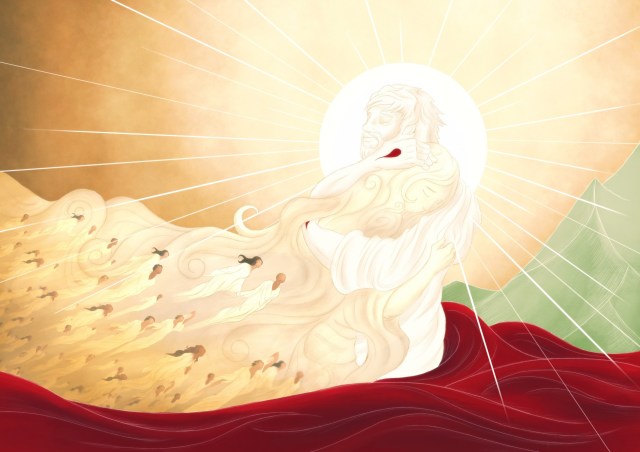
 In all likelihood, John wrote this epistle before he wrote the book of Revelation. In that first reading today (Rev. 7:9-17), John got a glimpse of what we will be. John saw an innumerable multitude, “from every nation, from all tribes and peoples and languages.” That means John saw you who speak a language that didn’t even exist in his day. John saw you “standing before the throne and before the Lamb, clothed in white robes, with palm branches in [your] hands, and crying out with a loud voice, ‘Salvation belongs to our God who sits on the throne, and to the Lamb!’”
 34 Jesus answered them, “Truly, truly, I say to you, everyone who practices sin is a slave to sin. 35 The slave does not remain in the house forever; the son remains forever. 36 So if the Son sets you free, you will be free indeed.”
 Though you are a slave to sin, Jesus has come. He has done what the Law could not do. He has justified you by His grace as a gift. Christ has shed His holy and precious blood as a propitiation. And through God-given faith, you are made alive. You are declared righteous. You are forgiven. You are set free, and if the Son sets you free, you will be free indeed.
 Is it lawful to pay taxes to Caesar, or not?” 18 But Jesus, aware of their malice, said, “Why put me to the test, you hypocrites? 19 Show me the coin for the tax.” And they brought him a denarius. 20 And Jesus said to them, “Whose likeness and inscription is this?” 21 They said, “Caesar’s.” Then he said to them, “Therefore render to Caesar the things that are Caesar’s, and to God the things that are God’s.” 22 When they heard it, they marveled. And they left him and went away.
 Because of the government we have a police force, firefighters, and army to protect us. All of those things that we benefit from in this country are done by government and paid for by taxes. So, pay your taxes (Ro. 13:7).
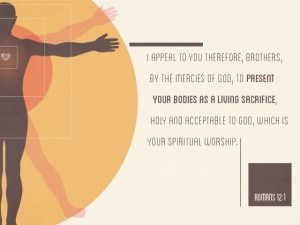 This means that your whole life is given to God. There isn’t one part of your life that is holy and another part that is neutral. Raising children, raking leaves, pumping gas, thanking the soldier for his service, and throwing frozen fish sticks or corn dogs into the oven – it is all service to God. Now, do we do all these things cheerfully? I don’t, and it is a safe bet to say that you don’t either. But we should still do them.
 And your sinful heart? Well, that was Jesus’ job. He came and took all your sin. He suffered God’s wrath and died for it. Jesus rendered to God the things that are God’s. He gave Himself up as a ransom for us all. He has given Himself as a ransom for you. Amen.
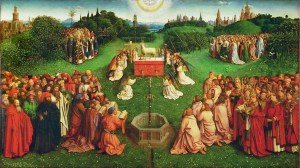 Jesus tells us this parable about the kingdom of heaven. The parable is about how God has arranged for us to be together, but it is a bumpy ride. Ready?
 Back to the parable. The king’s wrath and anger is spent. The city is torched. But rather than singing a duet with Leslie Gore, “It’s my party and I’ll cry if I want to,” the king still wants to feast. This is, after all, his son’s wedding. The king tells his servants, “We are having this party. Those who didn’t want to be here are going to miss out. Go to the highways and invite anyone you find.” So, they do. The banquet hall is filled with all sorts of people – good and bad.
 My fellow failures, don’t treat the God’s grace as cheap. Don’t test His patience. Repent. The feast is open to the unworthy and even the bad but not for the unrepentant.
 “Just who do you think you are? What gives you the right? Who gave you the authority to do these things?” The chief priests and elders want to know because Jesus has been throwing their world into chaos.
 But when you ask the wrong question, you will get the wrong answer. And when you ask Jesus the wrong question, you’re likely to have a question asked of you. And that is exactly what happens. “I’ll tell you by what authority only after you answer Me this, wise guys: John’s baptism, where did it come from? I’ll even make it multiple choice – from God or from man?”
 Repentance is the first part of faith. Believe your sins are what they are. And believe Jesus when He says about your sins that they are forgiven. Believe what Jesus says as He invites you to His table now and says, “This is My Body. This is My Blood shed for you for the forgiveness of your sins.”
 11 And on receiving it they grumbled at the master of the house, 12 saying, ‘These last worked only one hour, and you have made them equal to us who have borne the burden of the day and the scorching heat.’ 13 But he replied to one of them, ‘Friend, I am doing you no wrong. Did you not agree with me for a denarius? 14 Take what belongs to you and go. I choose to give to this last worker as I give to you. 15 Am I not allowed to do what I choose with what belongs to me? Or do you begrudge my generosity?’ 16 So the last will be first, and the first last.”
 Christian, you and I fall into the same trap as those hired at the beginning of the day. We think we have earned or deserved more than what God has given us. When we start to focus on what we do not have, we forget that everything we have is a benevolent gift from God.
 Our parable today depicts grace as undeserved wages. Workers get paid for work that they did not do. And, believer, so do you. You have not done the work of keeping God’s Law. What God has demanded of you, you have not done, but you get treated as though you have. Jesus has borne the heat of the day, and you get His wages. We are those who are hired at the eleventh hour. God be praised, and may we never forget that.
 26 So the servant fell on his knees, imploring him, ‘Have patience with me, and I will pay you everything.’ 27 And out of pity for him, the master of that servant released him and forgave him the debt. 28 But when that same servant went out, he found one of his fellow servants who owed him a hundred denarii, and seizing him, he began to choke him, saying, ‘Pay what you owe.’ 29 So his fellow servant fell down and pleaded with him, ‘Have patience with me, and I will pay you.’ 30 He refused and went and put him in prison until he should pay the debt. 31 When his fellow servants saw what had taken place, they were greatly distressed, and they went and reported to their master all that had taken place. 32 Then his master summoned him and said to him, ‘You wicked servant! I forgave you all that debt because you pleaded with me. 33 Wasn’t it necessary that you should have mercy on your fellow servant, as I had mercy on you?’ 34 And in anger his master delivered him to the jailers, until he should pay all his debt. 35 So also my heavenly Father will do to every one of you, if you do not forgive your brother from your heart.”
 The servant, let’s call him Vinnie, leaves. And, instead of being filled with gratitude and joy, he sees Chuck, his buddy, who owed him 100 denarii. A denarius was a day’s wage, so we’re talking about 3 months’ wages (say between $10 – $15 thousand). With his hands around Chuck’s throat, Vinnie demands that Chuck pay up. Chuck asks for patience, just like Vinnie had. And even though Vinnie had just received mercy for this impossible debt, Vinnie doesn’t give Chuck the very thing he requested from the king. Not even patience.
 In the kingdom of God, you are beggars. You were guilty and could not dig your way out no matter how much time you were given. Even more, you were dead, and how do dead people pay bills? You and I, we need mercy. And in Christ, mercy is exactly what we have. Because of Christ’s payment on the cross, we have been declared innocent, alive, beloved.
 6 “But whoever causes one of these little ones who believe in me to sin, it would be better for him to have a great millstone fastened around his neck and to be drowned in the depth of the sea. 7 Woe to the world for temptations to sin! For it is necessary that temptations come, but woe to the one by whom the temptation comes! 8 And if your hand or your foot causes you to sin, cut it off and throw it away. It is better for you to enter life crippled or lame than with two hands or two feet to be thrown into the eternal fire. 9 And if your eye causes you to sin, tear it out and throw it away. It is better for you to enter life with one eye than with two eyes to be thrown into the hell of fire.
 Again, Jesus says, “Unless you turn and become like children, don’t worry about being great, you won’t even enter the kingdom of heaven.” Little children don’t point to their resume and expect a promotion. Little children don’t hand God a bill, “See all my good works, I believe You owe me.” The things you would point at to prove that you are a good, great Christian are the very things that will condemn you to hell. Repent.
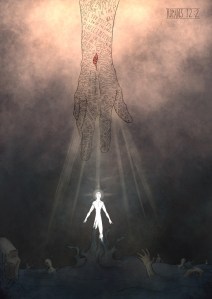 14 Bless those who persecute you; bless and do not curse them. 15 Rejoice with those who rejoice, weep with those who weep. 16 Live in harmony with one another. Do not be haughty, but associate with the lowly. Never be wise in your own sight. 17 Repay no one evil for evil, but give thought to do what is honorable in the sight of all. 18 If possible, so far as it depends on you, live peaceably with all. 19 Beloved, never avenge yourselves, but leave it to the wrath of God, for it is written, “Vengeance is mine, I will repay, says the Lord.” 20 To the contrary, “if your enemy is hungry, feed him; if he is thirsty, give him something to drink; for by so doing you will heap burning coals on his head.” 21 Do not be overcome by evil, but overcome evil with good.


You must be logged in to post a comment.