Luke 14:25-35 – Throw It All Away

Luke 14:25-35—Now great crowds accompanied him, and he turned and said to them, 26 “If anyone comes to me and does not hate his own father and mother and wife and children and brothers and sisters, yes, and even his own life, he cannot be my disciple. 27 Whoever does not bear his own cross and come after me cannot be my disciple.

28 “For which of you, desiring to build a tower, does not first sit down and count the cost, whether he has enough to complete it? 29 Otherwise, when he has laid a foundation and is not able to finish, all who see it begin to mock him, 30 saying, ‘This man began to build and was not able to finish.’ 31 Or what king, going out to encounter another king in war, will not sit down first and deliberate whether he is able with ten thousand to meet him who comes against him with twenty thousand? 32 And if not, while the other is yet a great way off, he sends a delegation and asks for terms of peace. 33 So therefore, any one of you who does not renounce all that he has cannot be my disciple.

34 “Salt is good, but if salt has lost its taste, how shall its saltiness be restored? 35 It is of no use either for the soil or for the manure pile. It is thrown away. He who has ears to hear, let him hear.”

In the name of the Father, Son, and Holy Spirit.  Amen.

How often do you ask yourself the question, “Do I measure up?”  How often do you wonder if you have made the grade?  Do you wring your hands if you haven’t pleased everybody, or if you failed that one important person?  Do you find yourself coming up short again and again no matter what new techniques you try?

Even when you do everything right, do the results reach your intended goals?  Even after you’ve followed all the rules, filled out the right forms, made every call, and pleaded your case brilliantly, do things end up the way they should?

Maybe you went to college and got a good degree, but you cannot find a job.  Maybe you built a business with a good model and great potential, but someone made it all fall apart.  Or maybe you own a business, but a customer fails to pay a bill, or an employee makes an expensive mistake, or regulations weigh you down, and you aren’t is profitable as you need to be.

Maybe you studied hard for that test, but still didn’t get a good grade.  Maybe you have thrown your whole heart into that relationship, but you are unappreciated and abandoned.

You pulled every string, used all of your connections, left no stone unturned, and you still don’t measure up.

You maybe wonder, “If I still can’t achieve my goals no matter how much I sacrifice, then why make any sacrifices it all?”

Now, in today’s text, Jesus makes following Him, makes being His disciple, sound more difficult than anything else you have tried.  Isn’t following Christ supposed to be easy?  Isn’t being a Christian all about life, joy, hope, faith, and love?

Not if you listen to what Jesus says, “If anyone comes to Me and does not hate his own father and mother and wife and children and brothers and sisters, yes, and even his own life, he cannot be My disciple.  Whoever does not bear his own cross and come after Me cannot be My disciple.”  Ouch.

Jesus, the man who said, “Love your enemies.”  Is now saying, “Hate your father, mother, wife, children, brothers, sisters, and even your own life, or you cannot be My disciple.  Bear your own cross, or you cannot be My disciple.”

With the track record of all your previous failures, it sounds as though following Jesus is going to be added to the list of projects begun but abandoned.  It looks like Jesus is setting you up to fail.

You still try.  You work at this.  You live your life thinking that your relationship with God is dependent upon you.  You suspect that God loves you when you are a good little Christian boy or girl and go to church, put money in the offering plate, and talk about God every now and then.  You think that God smiles upon you when you help others who are in need.  Then, when something bad happens, you wonder why God is allowing it to happen.

You have been keeping track of all the things that you bring to your relationship with God; you rely on all of your efforts and works.  But, in the end, you realize your efforts and works simply do not measure up.

Though you rarely think about it, you know eventually you will die, and nothing that you could claim as yours will be of any benefit to you.  Even though you still try to do it, you know that you cannot build yourself a tower to get to heaven.  The foundation will not be strong enough; the materials will not get you high enough.

Even though you still fight against Him, you know that you cannot win a war against God.  He is marching against you with 20,000 special-force soldiers, and your 10,000 little plastic toy soldiers are going to melt away.  God is mustering His troops and surrounding you because of your sins and failures.  Christ is coming again on the warpath to tear down, pluck up, and destroy all sinners and failures.  He is coming to battle against you, and you will lose.

This text today is a call from Jesus to let it all go.  Surrender.  Throw it all away.

Jesus tells you to renounce everything you would offer to become His disciple, His follower.  You may have to distance yourself from your family.  The word translated hate in v. 26 is an accurate translation, but it carries wrong connotations for us today (our use of hate is so connected to emotion), better to understand this word in light of the context of v. 33 where Jesus says to ‘renounce’ everything that you have.  Distance yourself from your parents, spouse, and children.  Especially, put space between yourself and your whole life filled with works because your life full of works do not and will not ever measure up.

While Christ is still a long way off, sue for peace.  Send the delegation that God has given you.  Send the diplomat of your baptism to remind Christ that He has put His name upon you.  Commission the negotiator of the Lord’s Supper to show that Christ Himself is given to and for you.  Jesus Christ will set you behind Him so that you are following Him as He continues to bring His kingdom as He leads the charge against sin.

Even while others mock you for your pathetic tower, remember that Christ built a tower to the heavens built on a block of wood in the shape of a cross.

Abandon your efforts and works.  Carry your cross.  Even though it may be unpleasant, you will actually find that it is no work whatsoever to pick up and carry your cross because it has already been carried to its end in your Savior’s death and resurrection.  Amen.

May the peace of God which surpasses all understanding guard your hearts and minds in Christ Jesus.  Amen.

Possessed, lost, forgotten, & beginning to re-learn.

Communion Cross with JesusWhat the Church of the Lutheran Reformation possessed and what modern Protestantism has lost, what Catholicism before the Reformation had largely forgotten and what modern Catholicism has largely learned to understand again is the simple truth of faith in the real presence of the true body and blood of our Lord Jesus Christ in, with, and under the forms of bread and wine in Holy Communion.

Concerning that truth the congregations of the Lutheran Reformation were “instructed often and with the greatest diligence,” both adults and children. The Sixth Chief Part of the [Small] Catechism was written just for the instruction of children. If one hears again and again nowadays that children cannot understand it or not yet understand it, if modern Protestant catechetical instruction has almost become the art of distilling out of these plain words written for fathers of the house and their children a doctrine that swings somewhere between Zwingli and Calvin and is presented as Lutheranism simply because it is not blatant Zwinglianism, then one certainly is no longer surprised if the instruction that Article XXIV of the Augsburg Confession has in mind scarcely happens anymore. Then it is even less surprising that “instruction against other false teaching concerning the Sacrament” no longer takes place and that it is regarded as nothing but tactlessness or a violation of Christian love.

Sasse, Herman (2013-01-09). Letters to Lutheran Pastors – Volume 1

What Else?

“There we shall be still and see, see and love, love and praise. Behold what will be in the end without end! For what else is our end but to reach the kingdom that has no end?”

-Augustine, City of God, Book XXII.30

Luke 14:1-14 – Table Manners

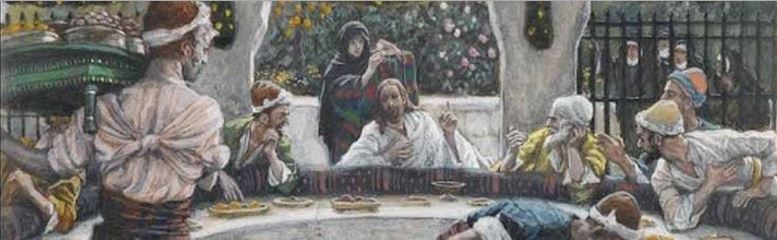
Luke 14:1-14—One Sabbath, when he went to dine at the house of a ruler of the Pharisees, they were watching him carefully. 2 And behold, there was a man before him who had dropsy. 3 And Jesus responded to the lawyers and Pharisees, saying, “Is it lawful to heal on the Sabbath, or not?” 4 But they remained silent. Then he took him and healed him and sent him away. 5 And he said to them, “Which of you, having a son or an ox that has fallen into a well on a Sabbath day, will not immediately pull him out?” 6 And they could not reply to these things.

7 Now he told a parable to those who were invited, when he noticed how they chose the places of honor, saying to them, 8 “When you are invited by someone to a wedding feast, do not sit down in a place of honor, lest someone more distinguished than you be invited by him, 9 and he who invited you both will come and say to you, ‘Give your place to this person,’ and then you will begin with shame to take the lowest place. 10 But when you are invited, go and sit in the lowest place, so that when your host comes he may say to you, ‘Friend, move up higher.’ Then you will be honored in the presence of all who sit at table with you. 11 For everyone who exalts himself will be humbled, and he who humbles himself will be exalted.”

12 He said also to the man who had invited him, “When you give a dinner or a banquet, do not invite your friends or your brothers or your relatives or rich neighbors, lest they also invite you in return and you be repaid. 13 But when you give a feast, invite the poor, the crippled, the lame, the blind, 14 and you will be blessed, because they cannot repay you. For you will be repaid at the resurrection of the just.”

In the name of the Father, Son, and Holy Spirit.  Amen.Jesus Reclining at Table

God does not love you for who you are.  Yes, you heard me right.  God does not love you for who you are.  The sooner you get that through your skull made thick by your own self-righteousness, the better.

Three times in this text, Jesus tries to get that single point across to you and the Pharisees.

Some dinner party this must have been.  Jesus intentionally and repeatedly offends everyone at the table – even, and especially, the man who had invited Him.  Jesus takes the hammer of the Law and strikes again and again, in an effort to crush and pulverize self-righteousness.

Notice how the Pharisees were “watching Jesus carefully” (v. 1).   The Pharisees were like tigers prowling in the tall grass waiting for an opportunity to pounce on Jesus.  They wanted an opportunity to accuse sinless Jesus.  But Jesus is wise to their game.  He simply won’t be hunted.  Rather, He becomes the hunter of false piety and self-righteousness.

Enter this man with dropsy (now, it’s called edema), an accumulation of fluid in one or more parts of the body which causes painful swelling.  One glance at this man and you know something is wrong with him.  Jesus asks, “Is it lawful to heal on the Sabbath, or not?”  He lets the uncomfortable silence hang in the air for a while, but not one of the Pharisees know what to say.  The Pharisees won’t even give Jesus an honest answer.  No one is willing to say, “Sure, Jesus.  It’s alright to heal on the Sabbath.”  But neither does anyone say, “Absolutely not; no healing on the Sabbath.”  But Jesus doesn’t wait for them to answer.  He heals the man and sends him on his merry little way.

Jesus calls them hypocrites.  It is as if Jesus were saying, “I am the Maker and Redeemer of this swollen man.  Here we are on the Sabbath, a day when you are to rejoice in and receive everything God gives you, a day when you remember that God will give you an eternal rest from sin and death, and you won’t let that same Sabbath rest come to this man.  Seriously, look at him!  But if your son or even your animal fell into a pit, you would help him.  You all make me sick.”

The Pharisees are silent.  The Law has hit them square in the face, but they do not and will not repent.  None say, “Yes, you are right Jesus.  I, at least, am not consistent in how I apply the law.  I was just judging You when you healed that guy.  But I excuse myself for doing the exact same thing when it is beneficial to me.”  But none of them have the guts to stand on their self-righteousness either.  “Hey, Jesus.  Who are you to judge us?”

But they cannot challenge Jesus’ authority to judge them because Jesus has plainly revealed that He is God.  They prefer to stand on their works, their self-righteousness, and their efforts.  They chose to deny the plain reality that God is standing before them, eating with them rather than repenting of their own works and deeds.

So Jesus decides, “They think I’ll accept them for who they are.  Ok. I’ll hit ‘em with the Law again.”  He notices how the people around Him like to sit in the places of honor.

He tells this little parable (probably here the word parable would be better understood as proverb) which, basically, repeats Prov. 25:6-7.  Remember now, this is a Sabbath.  This day was given to the people to remember that God is preparing an eternal feast for His people.  Let’s put this parable in today’s setting:

When you go to a wedding reception and you are waiting for the wedding party to come in, don’t go sit at the head table.  You will not be there for long.  The wedding party will come in and you will be told to go and sit somewhere else – somewhere in the back near the bathroom and garbage cans.  But there is always the possibility that if you sit in the back willingly, when the bride and groom come in, they will raise you to sit at a good table.

These guests all thought they were important, just like you think you are more important.  You just reveal it in different ways.  You make yourself the center of conversation.  You gossip and speak about others excusing it as concern.

The host isn’t free from the Law either.  Jesus says, “You are inviting people who agree that God loves you for who you are.  Rather than receiving your commendation from God, you receive it from men.  Then when they invite you, you will pat them on the back too.  Try this instead: invite the people who aren’t impressed with your good works and piety.  Invite the last, lost, least, and little. Stop surrounding yourself with ‘good people.’  Instead, eat with the scoundrels and sinners like I do.”

In each section of this Gospel lesson, Jesus is striking at the heart of the Pharisees’ piety.  But you need to hear all this too.  You think God accepts you for who you are.  He doesn’t.  The next section of Luke v. 15-24 which occur at this same Sabbath party reveal that you and every human being in all history think God is just waiting for a person like you to come along – He isn’t.

In v. 15-24, Jesus tells a parable about God.  Jesus depicts God as a rich man who prepared a great banquet.  He invited many, but when the party was supposed to begin, no one showed up.  So God sent out a servant to tell the invitees, “Come, for everything is now ready.”  But everyone makes an excuse.  “I have to go see a field I just bought.”  And, “I have to look at the oxen I have just bought.”  And, “I have just gotten married, so I can’t come.”

So God tells His servant, “Go out to the streets and bring in the poor, the cripple, the blind, and the lame.”  The servant replies, “I’ve already done that, and there is still room in the party.”  God tells him, “Go to the highways and hedges and compel people to come in so that this party is full.  For not one of those men who were invited shall taste my banquet.”

My beloved fellow sinners. That parable is your call to quit trying to stand before God on your own.  God’s banquet isn’t filled with important people.  God’s banquet is filled with losers.  Losers who are found by the servant, by Jesus, and compelled to go to the party.

Jesus, the Son of God, came and chose the last seat.  He chose to sit upon a cross with outstretched arms with pierced hands and feet.  Jesus then noticed a seat further from the head of the table.  He went and sat down in death’s cold grip.  God saw Him there, and exalted Him.  Jesus has been exalted above every name that is named in heaven or on earth or under the earth.

This Jesus is the one who rescued you from your pit so you could experience the rest of God’s eternal Sabbath.  Jesus is the one who sees you in your sins and says, “Hey come sit up here closer to Me.  Come taste My banquet.  I am inviting all the poor, cripple, lame, blind, and dead.  You’ll fit right in.  The food might not look like much, but it’ll feed you for your journey.  This food fills your soul with the forgives sins.  It quenches your hunger and thirst for righteousness.  It can do that because this food is My own body and blood – given for you and shed for the forgiveness of your sins.  Come to My feast, for all is now ready.”  Amen.

May the peace of God which surpasses all understanding guard your hearts and minds in Christ Jesus, now and forever.  Amen.

Quit hitting the books

It is bookkeeping, therefore – our enslavement to it and God’s rejection of it – that seems to me to be the burden of the closing lines of this parable of the Chief Seats. Jesus warns his host not to consult any records he has kept on people: not the Friend/Foe ledger, not the Rich/ Poor volume – and none of the other books either; not Nice/Nasty, Winners/Losers, or even Good/Bad. And he warns him because, as far as God is concerned, that way of doing business is over. It may be our sacred conviction that the only way to keep God happy, the stars in their courses, our children safe, our psyches adjusted, and our neighbors reasonable is to be ready, at every moment, to have the books we have kept on ourselves and others audited. But that is not God’s conviction because he has taken away the handwriting that was against us (Col. 2:14). In Jesus’ death and resurrection, God has declared that he isn’t the least interested in examining anybody’s books ever again, not even his own: he’s nailed them all to the cross. Accountability, however much it may be a buzzword now, is not one of his eschatological categories.

Robert Farrar Capon on Luke 14:1-14

Luke 4:31-44 – Rebuked

Luke 4:31-44—And he went down to Capernaum, a city of Galilee. And he was teaching them on the Sabbath, 32 and they were astonished at his teaching, for his word possessed authority. 33 And in the synagogue there was a man who had the spirit of an unclean demon, and he cried out with a loud voice, 34 “Ha! What have you to do with us, Jesus of Nazareth? Have you come to destroy us? I know who you are—the Holy One of God.” 35 But Jesus rebuked him, saying, “Be silent and come out of him!” And when the demon had thrown him down in their midst, he came out of him, having done him no harm. 36 And they were all amazed and said to one another, “What is this word? For with authority and power he commands the unclean spirits, and they come out!” 37 And reports about him went out into every place in the surrounding region.

38 And he arose and left the synagogue and entered Simon’s house. Now Simon’s mother-in-law was ill with a high fever, and they appealed to him on her behalf. 39 And he stood over her and rebuked the fever, and it left her, and immediately she rose and began to serve them. 40 Now when the sun was setting, all those who had any who were sick with various diseases brought them to him, and he laid his hands on every one of them and healed them. 41 And demons also came out of many, crying, “You are the Son of God!” But he rebuked them and would not allow them to speak, because they knew that he was the Christ.

42 And when it was day, he departed and went into a desolate place. And the people sought him and came to him, and would have kept him from leaving them, 43 but he said to them, “I must preach the good news of the kingdom of God to the other towns as well; for I was sent for this purpose.” 44 And he was preaching in the synagogues of Judea.

In the name of the Father, Son, and Holy Spirit.  Amen.

This world is broken.

Last week, we began to see how broken this world is.  Jesus proclaimed the Gospel in the synagogue of His hometown and was rejected.  Maybe, it’s not so surprising that He was rejected.  He openly claimed that He was the Lord’s Anointed, and the people of Nazareth weren’t morons.  They were able to do math; they knew Jesus’ birthday was a couple of months before His parents’ anniversary.  They knew Joseph’s Son.

Even though Jesus, the Word made flesh, proclaimed the Gospel, the broken people of Nazareth rejected Him.  They brought Jesus up a hill to the edge of the cliff, prepared to throw Him down and stone Him.  But He walked through the crowds.  He made His way down the hill, and down to the city by the sea – Capernaum.

Capernaum welcomed Jesus, but it was broken too.  Even while the crowds of Capernaum are marveling at the authority and the power of Jesus, they are still suffering the brokenness of this world.

Peter’s mother-in-law lies ill with a high fever.  Hordes of people were broken with illnesses and diseases.  Many individuals are possessed by unclean demons.

Jesus works to fix the brokenness, and when He tires and tries to find a deserted place to pray, the people search for Him and try to make Him stay.  They want Jesus to fix their all their brokenness.

Nazareth and Capernaum were broken.  And our world is still broken.

Now, I’m not just talking about the pain of having to upgrade from the iPhone 4 to the iPhone 4S to the iPhone 5.  I’m not just talking about the difficulty of having too many chips for your dip.

I am not talking about the brokenness caused by a young man who is able to walk into an elementary school and shoot and kill young children who are completely unprotected.

I’m not even talking about the brokenness of our politics and society.

Do you know where the real brokenness is?  It is in you; it is in me.  We don’t have to look any farther than that.

Because of the sin within us we are just as broken as the people who had various diseases in Capernaum.  Because of the sin within us we are just as broken as the demonically possessed.  Because of the sin that surrounds us, we are broken.  Because of the thoughts of our own minds and emotions, we are no less sinful than any mass murderer of children.

It is shocking to think that a man possessed by a demon could walk into a synagogue in Capernaum on the Sabbath day to be in the presence of Jesus Who is preaching with authority.  Or is it?  What bitterness and resentment is festering in you?  What evil have you brought here?  What sin have you carried into God’s house?

When you stop and think about it, how dare you be here?  If you pause for a moment and truly examine your life, the brokenness isn’t just devastating, it’s terrifying.

It looked bad in that synagogue in Capernaum.  The occult belief is that, if you know the name of your opponent, you have power over him.  And the demon recognized Jesus exactly for Who He is – the Holy One of God.

So the people in that synagogue were impressed when Jesus is able rebuke the demon.  The people in Simon Peter’s house are amazed when Jesus is able to rebuke the high fever.  The throngs of people are impressed when Jesus is able to rebuke the demons and cast out the diseases.

Yes, the demon had it right – interestingly, only the demon recognizes Jesus for Who He is and what He has come to do.  Jesus did come to destroy the dominion of Satan and demons and sin and death.  That is the work He does.  Jesus has the authority to rebuke the brokenness of this world caused by evil and sin and Satan.

It is no problem for Jesus to rebuke the brokenness of your life.  He is the one with all the authority.

Jesus doesn’t just fix what is broken and give it a year-long warranty that if it breaks again you can bring it back to Him.  No.  He takes your broken body, He takes your broken life, He takes your broken, sinful heart and buries it all in His tomb.  And He leaves it there.

He takes your brokenness and rebukes it.  And He gives you His body which was broken for you.  He gives you His blood which was shed for you.  Jesus gives you this meal of His body and blood – the feast of victory.  Alleluia.  Amen.

May the peace of God which surpasses all understanding guard your hearts and minds in Christ Jesus.  Amen.

Luke 4:16-30 – The Final Prophet Rejected

Luke 4:16-30—And he came to Nazareth, where he had been brought up. And as was his custom, he went to the synagogue on the Sabbath day, and he stood up to read. 17 And the scroll of the prophet Isaiah was given to him. He unrolled the scroll and found the place where it was written,

18 “The Spirit of the Lord is upon me,
because he has anointed me
to proclaim good news to the poor.

         He has sent me to proclaim liberty to the captives
and recovering of sight to the blind,
to set at liberty those who are oppressed,

19 to proclaim the year of the Lord’s favor.”

20 And he rolled up the scroll and gave it back to the attendant and sat down. And the eyes of all in the synagogue were fixed on him. 21 And he began to say to them, “Today this Scripture has been fulfilled in your hearing.” 22 And all spoke well of him and marveled at the gracious words that were coming from his mouth. And they said, “Is not this Joseph’s son?” 23 And he said to them, “Doubtless you will quote to me this proverb, ‘Physician, heal yourself. What we have heard you did at Capernaum, do here in your hometown as well.’” 24 And he said, “Truly, I say to you, no prophet is acceptable in his hometown. 25 But in truth, I tell you, there were many widows in Israel in the days of Elijah, when the heavens were shut up three years and six months, and a great famine came over all the land, 26 and Elijah was sent to none of them but only to Zarephath, in the land of Sidon, to a woman who was a widow. 27 And there were many lepers in Israel in the time of the prophet Elisha, and none of them was cleansed, but only Naaman the Syrian.” 28 When they heard these things, all in the synagogue were filled with wrath. 29 And they rose up and drove him out of the town and brought him to the brow of the hill on which their town was built, so that they could throw him down the cliff. 30 But passing through their midst, he went away.

In the name of the Father, Son, and Holy Spirit.  Amen.

After being baptized by John in the Jordan, tempted by the devil in the wilderness, and preaching in the power of the Spirit throughout Galilee, Jesus comes back to Nazareth, His hometown.

Nazareth was an all-Jewish settlement town established outside of Jewish territory.  The thought when Nazareth (and other towns like it) was established was that eventually the Jews would have a strong enough presence to take back those regions.  The people were very patriotic and religious, but they lived among the Gentiles.

Now, Luke has skipped over a large portion of what’s both Matthew and Mark cover.  This scene of Jesus in Nazareth doesn’t come until Mt. 13.  Jesus has been busy healing, casting out demons, and preaching.  You get a sense of excitement from the people in Nazareth as Jesus returns home.  Their excitement makes sense, if Jesus has been doing all of that for people who are strangers, what is He going to do for the people He grew up with?

We know there was a daily lectionary or pericope that was used in Jesus’ day.  I tend to think that this was the appointed reading for the day; there’s no way to know for sure though.  Jesus unrolls the scroll to Is. 61[:1-7], but He only reads v. 1 and the first line of v. 2Is. 61:1-7 speaks about what the Messiah, the Christ, will do when He comes.

Residents of Nazareth loved this portion because it said that when God’s Messiah came the Gentiles, who were currently living around them, would do all the work.  Strangers would tend their flocks; foreigners would be there plowmen and wine dressers.  God’s people would be called priests and eat the wealth of the nations.  God’s people would have everlasting joy.

It would almost be like Jesus coming here and reading Ps. 23, “He leads me in paths of righteousness for His name’s sake.  Even though I walk through the valley of the shadow of death….”  Some wonderful things are read, but some of the best parts got skipped.  You would wonder, “What about the fearing no evil?  What about that table that’s prepared before me?  What about my had being anointed with oil, and my cup overflowing?”

Jesus the miracle-worker returns to His hometown, reads one of the people’s favorite passages but leaves out the good parts about God’s vengeance upon the Gentiles and the Gentiles doing the work while the Jews relax and enjoy a double portion.  Then He its down and says, “Today, this Scripture has been fulfilled in your hearing.  The Lord has anointed Me.”  In other words, Jesus is saying, “I am the Messiah Isaiah spoke about.  I am the Christ.”

As if this weren’t enough, Jesus then piles on the insults.  He says, “I know you want me to do the miracles that I did at Capernaum.  I know you don’t find Me acceptable here.  You’ll reject Me; just like Elijah and Elisha were rejected by your ancestors.”

Of course, this did not sit well with the people of Nazareth.  Jesus claims that they are rejecting one of their favorite passages of Scripture, so what do they do?  They reject Jesus.  How could He claim to be the Messiah? Where is all the good, tangible stuff, the miracles they can see and touch?  Who cares about good news for the destitute and liberty for the captives?

They drive Jesus out of the synagogue, out of the town, and up a hill to the edge of a cliff.  Just as they are about to throw Him off and stone Him by casting down boulders, Jesus, ironically, performs His miracle.  He walks through the crowd and continues on his journey.

Jesus does the work of a prophet – He proclaims the Word of God and gets rejected.  He continues to proclaim the Gospel, but it’s more than that.  When Christ, the Word made flesh, speaks His words create.  Jesus’ words cause the brokenness of this world to be restored.  The reign of God is present wherever you find Christ.

Jesus continues to speak the Gospel of His rule and reign today.  Now, I would not say this unless Scripture taught it: In what would appear to be a great folly, God has ordained and sent me to you today to speak His Word.  The message that God gives you is, “I forgive you of your sins through Jesus Christ.”

Jesus continued the pattern of a prophet of God; He is a prophet and more than a prophet. He is the Christ.  Jesus continued to proclaim God’s Gospel and get rejected.

Jesus left the hill outside Nazareth that day to journey to a different hill outside Jerusalem where Jesus was rejected by all humanity – by you and by me.  Though He died on the cross, His death did not negate what His words created.  In fact, just the opposite.

Jesus’ death rejected all of your enemies.  Jesus releases you from your bondage to sin, death, and the devil, and He is your double portion Who restores you to harmony with God.  As you hear this, it is the year of God’s favor – for you.  Amen.

May the peace of God which surpasses all understanding guard your hearts and minds in Christ Jesus, now and forevermore.  Amen.

Mark 13:24-37 – In Those Days; In That Day

Mark 13:24–37 24 “But in those days, after that tribulation, the sun will be darkened, and the moon will not give its light, 25 and the stars will be falling from heaven, and the powers in the heavens will be shaken. 26 And then they will see the Son of Man coming in clouds with great power and glory. 27 And then he will send out the angels and gather his elect from the four winds, from the ends of the earth to the ends of heaven.

28 “From the fig tree learn its lesson: as soon as its branch becomes tender and puts out its leaves, you know that summer is near. 29 So also, when you see these things taking place, you know that he is near, at the very gates. 30 Truly, I say to you, this generation will not pass away until all these things take place. 31 Heaven and earth will pass away, but my words will not pass away.

32 “But concerning that day or that hour, no one knows, not even the angels in heaven, nor the Son, but only the Father. 33 Be on guard, keep awake. For you do not know when the time will come. 34 It is like a man going on a journey, when he leaves home and puts his servants in charge, each with his work, and commands the doorkeeper to stay awake. 35 Therefore stay awake—for you do not know when the master of the house will come, in the evening, or at midnight, or when the rooster crows, or in the morning— 36 lest he come suddenly and find you asleep. 37 And what I say to you I say to all: Stay awake.”

In the name of the Father, Son, and Holy Spirit, Amen.

“Stay awake… lest he come suddenly and find you asleep.  And what I say to you I say to all: Stay awake.”

You have maybe seen commercials for the National Geographic show Doomsday Preppers.  Individuals across the country are stockpiling seeds, food, ammunition, and potable water; they are building shelters, learning self-defense, and preparing their bodies to face what could be the “end of the world as we know it.”

Different individuals are preparing for various contingencies: earthquake, nuclear warhead, chemical attack, asteroid, electromagnetic pulse.  The commercial for Doomsday Preppers ends with an individual asking, “Am I nuts, or are you?”

My answer to that question would be, “Yes.”

“Stay awake.”  The whole chapter of Mk. 13 is Jesus’ answer to two questions.  The first question is when will the Temple will be destroyed and the second is when will the end of the age be.  In the mind of a Jew in Jesus day, the destruction of the Temple and the end of the world were the same event.  One-thousand-nine-hundred-forty-two years later, hopefully, we know better.  Jesus did not come back, the world did not end, when the Temple was destroyed in 70 A.D.  The majority of Jesus’ answer in Mk. 13 deals with when the Temple was destroyed—that is how Jesus can say, “This generation will not pass away until all these things take place” in v. 30.

And Jesus gives us a clue throughout Mk. 13 when He is speaking about the destruction of the Temple in 70 A.D. and when He is speaking about the end of the world.  It’s all about the difference between when Jesus says, “In those days,” all the way up until v. 32 when He says, “But concerning that day.”

Yes, even v. 24-27 are speaking about Jesus’ days before that “generation passed away.”

When Jesus says, “The sun will be darkened, and the moon will not give its light,”  He is speaking about His death.  At the hour of Jesus’ death, there was darkness covering the whole land (Mk. 15:33).  As He died, the curtain in the temple which had sun, moon, and stars upon it was torn in two; “the powers in the heavens [were] shaken.”

V. 26 ”And then they will see the Son of Man coming in clouds with great power and glory,”  is a quote from our OT text (Dan. 7:13,look at it).  You will notice that the Son of Man’s “coming” is not a descent to earth, but an ascent to the Ancient of Days.  Fits in pretty well with what Jesus said before He ascended into heaven.  Mt. 28:18–20 ”All authority in heaven and on earth has been given to Me.19 Go therefore and make disciples of all nations, baptizing them in the name of the Father and of the Son and of the Holy Spirit, 20 teaching them to observe all that I have commanded you. And behold, I am with you always, to the end of the age.”

Since then, Jesus has sent (“apostled”) His angels—lit.  His ‘messengers’—to all the corners of the earth to proclaim the Gospel and to gather His elect.  On the day of Pentecost, there were “men from every nation under heaven” (Act. 2:5), and the message continues to go out today.

Until about 150 years ago, this is how the Church interpreted this passage.  Today, there are so many people trying to pin the tail on the antichrist and predict the precise date when Christ will return that they’ve completely forgotten what Jesus said about His return in v. 32, “But concerning that day or that hour, no one knows, not even the angels in heaven, nor the Son, but only the Father.”

“Stay awake.”  I don’t think Jesus will be very pleased with the Harold Camping’s (the May 21st/October 21st guy) of this world when He returns and finds them trying to figure out the precise day when He will return.  I don’t think they will be too impressed either when Jesus foils their life’s work.

Jesus does speak about the End of the Age; He speaks about His return.  Jesus speaks about judgment and doom.

The End of the World, Judgment Day, is coming, and in a very real sense, it has already come. Jn. 12:31–32 31 “Now is the judgment of this world; now will the ruler of this world be cast out. 32 And I, when I am lifted up from the earth, will draw all people to Myself.”

This world has been judged and condemned; it is just waiting its sentencing.

The cross stands through all of history as the time and place where the world was judged.  As Christians, we look at the cross and see deliverance; we see hope; we see where Christ forgave our sins.  But the cross is a place of judgment and execution.  The cross is an instrument of doom.  Had Jesus come in our time, we would probably be wearing necklaces with an electric chair hanging from them instead of a cross.

For the life of a believer, Judgment Day is every day.  You experienced it once in your baptism when Christ condemned, killed, and buried your sinful nature in His tomb (Ro. 6).  In that same baptism, you were also connected with Christ’s resurrection.  Your life, believer, is a life of daily judgment—drowning to death and sin, but rising to life in the new creation.  Daily you are moved from conviction of sin to faith, from condemnation to forgiveness, from death to life.

For the believer, every day is Judgment Day until that final day, when Christ returns and will be revealed.  Then the party begins. “Stay awake.”

Yes, the party begins when Christ returns.  Too often, Christians, we look at the Return of Christ as Doomsday.  But, when Christ returns, the party begins, and you don’t want to miss it.  “Stay awake.”

Christ isn’t coming like your Great Aunt Maggie who is going to make sure you are wearing the itchy wool sweater she made you and is two sizes too small.

Christ is coming like your favorite Uncle Chuck.  The Uncle Who is going to take you outside to play football, or go sledding or fishing.  He is going to play cards with you, make you the best hot ham and cheese, and tell you stories that make you laugh so hard your guts hurt.

“Stay awake.”  The party is coming, and you don’t want to miss it.  Neither do your friends and family, so tell them about Christ your favorite crazy Uncle Who is so fun they won’t believe it until they meet Him.

“Stay awake.”  Believer wait with patience.  Wait with hope.  Wait with faith.  Amen.

And may the peace of God, which surpasses all understanding, guard your hearts and minds in Christ Jesus until that Great, Awesome Day.  Amen.