Preview – Sermon on Luke 7:11-17 for the Sixteenth Sunday after Trinity

Listen here.

Luke 7:11-17

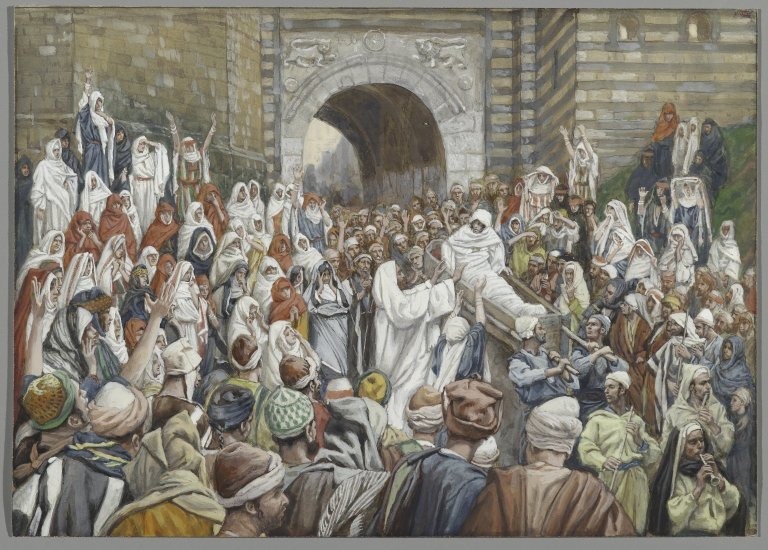
11 Soon afterward [Jesus] went to a town called Nain, and his disciples and a great crowd went with him. 12 As he drew near to the gate of the town, behold, a man who had died was being carried out, the only son of his mother, and she was a widow, and a considerable crowd from the town was with her. 13 And when the Lord saw her, he had compassion on her and said to her, “Do not weep.” 14 Then he came up and touched the bier, and the bearers stood still. And he said, “Young man, I say to you, arise.” 15 And the dead man sat up and began to speak, and Jesus gave him to his mother. 16 Fear seized them all, and they glorified God, saying, “A great prophet has arisen among us!” and “God has visited his people!” 17 And this report about him spread through the whole of Judea and all the surrounding country.
We didn’t get to do it enough (at least in person) this past Easter Season. So, since we live in the Easter Age, and since every Sunday is a celebration of the Resurrection…

Alleluia! Christ is risen!
He is risen indeed! Alleluia!

In the name of Jesus. Amen.

This whole text is a wonderful preview of what will happen later in Luke’s Gospel. Everything recorded for us in this text actually happened and is part of actual history, but this text is a beautiful preview.

Jesus approaches the little town of Nain which is in Galilee. Nain is about six miles south of Nazareth where Jesus grew up. Nain, the name of the town, means ‘pleasantness’ or ‘beautiful.’ Nain is on the slopes of a mountain. For those of you who have lived here in the Red River Valley your whole life, a mountain is like a dyke, but it isn’t there to prevent floods. A mountain is where the ground naturally goes up and up really high. It’s bigger than a dyke but isn’t man-made. Nain is on the lower slopes of Mt. Moreh, the same mountain where Gideon and his 300 men defeated the army of Midian with nothing but trumpets and torches in jars (Judges 7).

As Jesus and His entourage approach the gate of this beautiful town, our Lord encounters an ugly scene. Another large crowd is exiting the gate of the city. They follow a corpse carried by pallbearers on a bier which is an open coffin. Just behind the corpse, a widow is joined by most of the citizens of the town, and the corpse on that bier is the lifeless body of her ‘only begotten’ son (the same word used of Jesus in Jn. 3:16). The crowd is following her because the death of one member in the city is mourned by everyone in the city. And this death is particularly sad.

This poor woman is now absolutely alone with no one to provide for her. Her husband had already died, and in those days, she couldn’t just go out and get a job to provide for herself. After the death of his father, this son would have become the main source of hope and income for himself and his mother. But now, the son is dead, her hope is gone, and this woman is, according to Scripture, truly a widow (1 Tim. 5:3-5).

Proper etiquette would mean that Jesus and everyone following Him would move aside, get out of the way, and let this somber march of death pass by without interruption. But Christ, the Lord of Life, doesn’t yield. He doesn’t step aside for death. And so, these two crowds get mixed up and entangled there at the gate. It must have been quite a scene.

We need to pause here a minute. We talked last week about the Three Estates – the Church, the Family, and the State. If you didn’t hear that sermon, I’d encourage you to go back and listen to it because it is a helpful lens through which we can consider the world, what is going on around us, and how we are to serve God in Church, family, and state. And it is an idea I plan on pointing you back to regularly.

The gate where these two crowds meet was on the outer wall which surrounded the town of Nain. One of the ways we can imagine the Three Estates is as a set of three walls of protection around you. In medieval times, the seats of kingdoms would have three walls to protect the center of the city where the palace, the military base, and the stock of supplies were safe from enemies. So, when an enemy attacked a city, the first two walls could be breached, but the people could still defend themselves and what was most important.

That idea of three protective walls is one of the ways theologians picture the Three Estates of Church, Family, and State, and we can see how God protects our lives by providing order and peace in society through the first wall of the Estate of the State. We can see how God gives physical life and provides a safe environment for families to grow and learn and go about their business through the second wall of the Estate of the Family. And we can see how God gives spiritual life and sustains that life through the teaching of God’s Word through the third wall of the Estate of the Church.

But the devil is always attacking these walls and estates, and Satan is most effective in his attacks when he attacks from inside each of these estates. The best way for the devil to attack the Church is through false teachers within the Church. The best way for the devil to attack the Family is by going after parents and tempting them away from their family. The best way for Satan to attack the State is through politicians and leaders who make unjust laws.

Now, I need to address something before we move on here. Kids, listen up. Going off to college and moving away from your family is a dangerous time and you can expect the devil to attack you and your faith. Normally, the State isn’t going to punish you when you break God’s Commandments, so there is already a breech, or a weakness, in the wall of the State. When you move away from your family and live on your own, that wall of protection isn’t there in the same way as when you are living with your parents. And if you are living in a new town and don’t find a Church to attend every week that correctly teaches all of God’s Word, the devil has access to your conscience and will try to lure you away from the faith. In one fell swoop, the walls of protection can crumble around you. Too many kids end up denouncing Christianity shortly after they move away from home. So kids, when the time comes for you to move away from home, I would be delighted and more than happy to help you find a good church wherever you move. Ok?

Back to this poor woman. She has quickly had the wall of her family completely decimated. Her husband and her only son have died. She is vulnerable. She is weeping – and rightly so. Death is unnatural. God never intended that we should die. When someone you love dies, weeping and crying is a right response. Even Jesus, the Son of God in the flesh, weeps at the death of His friend Lazarus (Jn. 11:35). So, why does Jesus tell her, “Stop weeping”?

Christ interrupts the funeral procession and gives her this command because He is about to act. Jesus could have reversed the order. Christ could have raised her son to life then told her to stop weeping, but He doesn’t. Instead, with this command, Jesus gives her an implied promise that her son will live again. These words from Jesus give a little preview into what He is about to do. Then, only after giving that promise, Jesus touches the bier and commands the young man to get up. The life-giving Word of Christ awakens the dead young man from the slumber of death.

Dear saints, I said at the beginning that this account is completely true. But it is also a preview. Christ, who raises the dead as easily as waking them from a nap, this very same Jesus went to His death. He hung on the cross. And as His holy and precious blood flowed out of His hands, feet, and head, He spoke to His widowed mother. Christ gave His mother into the care of John the disciple to provide a new family for her and rebuild that wall of protection. Then, Jesus died and His lifeless body was carried to a tomb.

But also, just like in this text, the march of death was stopped short. Death had to give way to the Word of Jesus at the gate of Nain, and death had to give way to Jesus on the third day when Christ burst from the grip of death. Death tried to swallow up the Lord of Life, but it bit off more than it could chew. In fact, death choked and died when it tried to consume Jesus. And on Easter morning, Christ rose victorious from the grave.

And yet, dear saints, even that is just a preview of what will happen when your Lord returns. Your sorrow, your loneliness, and your death will all be brought to an end. With a simple word, Christ will call you out of your graves. He will raise you and all believers to live forever with Him in perfection and bliss. In that day, we will confess just as the people of Nain did, “God has visited His people!” 

Dear saints, while we look forward to that day, let us confess the same thing now. God has visited you bringing life and salvation to a dark, dying world. May He visit us again soon. Come, Lord Jesus.

Alleluia! Christ is risen!
He is risen indeed! Alleluia!

Amen.

The peace of God, which surpasses all understanding, will guard your hearts and minds in Christ Jesus. Amen.

Three Circles of Protection – Sermon on Matthew 6:24-34 for the Fifteenth Sunday after Trinity

Listen here.

Matthew 6:24-34

24 “No one can serve two masters, for either he will hate the one and love the other, or he will be devoted to the one and despise the other. You cannot serve God and money.

25 “Therefore I tell you, do not be anxious about your life, what you will eat or what you will drink, nor about your body, what you will put on. Is not life more than food, and the body more than clothing? 26 Look at the birds of the air: they neither sow nor reap nor gather into barns, and yet your heavenly Father feeds them. Are you not of more value than they? 27 And which of you by being anxious can add a single hour to his span of life? 28 And why are you anxious about clothing? Consider the lilies of the field, how they grow: they neither toil nor spin, 29 yet I tell you, even Solomon in all his glory was not arrayed like one of these. 30 But if God so clothes the grass of the field, which today is alive and tomorrow is thrown into the oven, will he not much more clothe you, O you of little faith? 31 Therefore do not be anxious, saying, ‘What shall we eat?’ or ‘What shall we drink?’ or ‘What shall we wear?’ 32 For the Gentiles seek after all these things, and your heavenly Father knows that you need them all. 33 But seek first the kingdom of God and his righteousness, and all these things will be added to you.

34 “Therefore do not be anxious about tomorrow, for tomorrow will be anxious for itself. Sufficient for the day is its own trouble.”

In the name of Jesus. Amen.

Today, Jesus preaches to us against worry by making fun of it. Jesus asks, “Which of you by being anxious can add a single hour to his span of life?” (v. 27). Christ is making a joke. Literally, Jesus says, “Which of you by worrying can add a cubit,” a measurement of length, “to your life?” which is, of course, measured in time. I don’t know a lot of tall, elderly people, but my grandfather, who died in his 80’s, was 6’ 2”. When I saw him never thought, “Wow. Grandpa must have worried a lot.” Jesus even makes fun of us worriers. When our translation quotes Jesus asking, “Will He not much more clothe you, O you of little faith?” He is actually calling us a name – “you little faiths” or “little faithers.”

In His preaching, Jesus invites us wise and noble humans to slow down and hear the preaching of birds and flowers. When birds need food, they don’t go to the little bird grocery store where all the food grown by farmer birds is sold. It’s almost as if Jesus was inviting you to imagine certain types of birds working in each role. (Finches would be at the grocery tills – fight me.) Birds don’t keep their food in cupboards and pantries in their nests. Flowers don’t look for best sales of the season for clothes, but they are splendidly clothed. In His wisdom, God has ordered creation in such a way that He takes care of feeding birds and clothing the grass. The birds and grass trust Him, and Jesus says we should as well.

Kids, whenever you are studying science – botany, biology, anatomy, astronomy, physics, etc. – you get a small peek into all the ways we have observed how God has ordered creation. And the more scientists discover, the more we see about the complexity, intricacy, and beauty of God our Father and Creator. God put thought and wisdom and detail into every part of creation as He spoke it into existence. All of creation was designed by God to both continue and sustain life. He does it for birds and plants and animals and planets and stars and galaxies. And He does it for you.

And it is with that thought, I want to take a step back and consider how God gives order to provide for us and protect us, the pinnacle of His creation. As we see this wonderful and beautiful order, Jesus invites us to not worry when we are tempted to do so.

In His wisdom, God has given order to our lives by creating and instituting, what theologians call, “the Three Estates”: The Three Estates are the Church, the Family, and the State (or government), in that order are the three circles of protection that God has graciously given. Science cannot observe and study this, but from God’s Word we can see how God has woven these Three Estates into the fabric of creation to provide for you and protect you. When we consider what is going on in the world through the lens of the Three Estates, it helps shape and guide our thinking in a biblical way so that we do not worry. And even though things can get bad (and, even, currently are bad) in these estates, these estates cannot be completely overthrown or destroyed.

Each of the Three Estates has a “source” or when it was instituted. A “form” or what it consists of. And an “end” or goal. So, let’s talk about each of these:

First, the estate of the Church. The estate of the Church was instituted and has its source at the Tree of the Knowledge of Good and Evil. And this will take a bit of explaining. We are always and only righteous and holy through faith. Scripture repeatedly says, “the righteous shall live by faith” (Hab. 2:4; Ro. 1:17; Gal. 3:11).

Before they fell into sin, Adam and Eve had everything good from God because of the perfection of creation, so they needed a promise of God to believe. That promise was implied when God gave the command to not eat the fruit of the Tree of the Knowledge of Good and Evil (Gen. 2:16-17). In other words, God’s command included a promise which was, “Evil is bad. Trust Me on this. When you find out what evil is, it won’t go well for you. In fact, you’ll die.” So, with this command and promise, Adam and Eve could have by faith what God never intended them to have. God didn’t want humanity to experience evil or death by sight, only by faith.

The estate of the church takes the form and consists of the Word of God preached and believed. As long as Adam and Eve believed God’s Word, they had the pure Church. God be praised that now, even after the Fall, we still have the Church which continued when God promised that the Seed of the woman, Jesus, would deliver and rescue us from death (Gen. 3:15).

Finally, the end or goal of the Estate of the Church is for us to have eternal life with God. So, we have, first, the Church: instituted by God’s promise before the Fall (and sustained after the Fall), with the goal and end of eternal life.

The second estate instituted by God to protect and provide for humanity is the Estate of the Family. The Estate of the Family has its source and was instituted also before the Fall when God took Adam’s rib and formed Eve. Then, God told Adam and Eve, “Be fruitful and multiply and fill the earth and subdue it” (Gen. 1:28). Even after the Fall, we know that God wants the Estate of the Family to continue because God repeats this command to Noah and his descendants after the Flood (Gen. 9:1).

The Estate of the Family takes the form of and us made up by husband, wife, and children.

And the end or goal of the Estate of the Family is also life, but, unlike the Estate of Church, the Family provides temporal, physical life. So, we have the Family: again, instituted by God before the Fall (and sustained after the Fall), with the goal and end physical life.

The Estate of the State is a little more complex because it was instituted only after the Fall. And there isn’t a direct passage of Scripture where God clearly establishes the Estate of the State. However, Scripture does clearly teach us that the Estate of the State is a good institution of God in both Romans 13:1-7 and 1 Peter 2:13-17 where Scripture teaches that the State is not a terror to good conduct but to bad and that the State carries out God’s wrath on the wrongdoer.

A couple possibilities of when God establishes the Estate of the State could be: When God sent the cherubim to guard the way to the Tree of Life (Gen. 3:22-24). By prohibiting Adam and Eve from eating from the Tree of Life, God was protecting them from living forever in sin. Some suggest that the Estate of the State was instituted after the murder of Abel, and there are some good arguments for that, but for the sake of time I’m not going to get into that now.

The Estate of the State takes the form of and uses the instrument of the sword and punishment. In other words, the State uses either punishment or the threat of punishment to protect and preserve life. Think of it this way, God established the State to bring about ‘little death.’ To the State God has given the tools of rules, punishments, jail, even execution and war to prevent more or bigger death.

Try this as an example: your car can probably go over 100 mph. But the authorities that God has established in the State have brought about a ‘little death’ for your car through speed limits. You have to drive down Columbia at or under 40 mph. because driving 100 mph. would endanger the lives of others. And if you refuse to obey the law, there is the threat of punishment through a speeding ticket, or, if you actually do drive 100 mph. down Columbia, you should be thrown in jail for reckless endangerment.

The goal of the Estate of the State is to preserve life. Because it is impossible for the state to give life, it’s only function is to preserve life through the means of that ‘little death.’ An analogy for this would be when a surgeon cuts open a person to do surgery on their heart or to remove a tumor. This brings about pain and death, but in an effort to preserve life. So, we have the State: instituted by God after the Fall, with the goal and end preserving life through punishment or “little death.”

Now, this ordering of creation has very important ramifications. When we worry about what is going on around us, the Three Estates let us see how God has provided these three circles of protection. The Three Estates also helps shape what we are to do. We are to be faithful citizens of the State by voting and following the laws that the State gives to protect life. We are to be faithful to our Family by being good parents and obedient children. And we are to be faithful members of Christ’s Church by trusting Him and growing in God’s Word and faith.

We are constantly bombarded with news, and it is easy to get caught up with what is going on in Washington D.C. or St. Paul or Bismarck. We tend to get so focused on the coming election and what is happening in the government – both at the federal and state level. With the economy in a bad place, an open seat on the Supreme Court, and pandemic, we start to think that the State has to do something, and the State does have a place to make rules and laws to protect life. But then – when you throw in riots, fires, hurricanes, masks, and social distancing – it is easy for us to look to the State for things that God hasn’t given the State to do. There certainly may be a place for the State to have care and direction when it comes to those things as well. And there is also a place for polite discussion and disagreement on what level and to what degree the State should or shouldn’t make those decisions.

But in all of this, we should recognize that the State exists only to protect life by minimizing death. It also means that the Estate of the State has nothing to do and has no purpose apart from the Estate of the Church and the Estate of the Family. Since life does not exist apart from the Church and the Family, there is nothing for the State to do without the Church or Family. So, the State is the most temporary and the least important of the Three Estates because it only exists to serve and protect the life that comes only through the Church and the Family.

Also, it is important for each of the Three Estates to “stay in their own lane.” Pastors should not shepherd their flock like a president or king. Families should not look to the State or the Church to provide for them. Politicians should not guide on what is right and moral. We could go on and on, but I hope you get the point. (And we can talk about all this later too.)

The end of all this, dear saints, is this: A lot of our worry (at least for me and what I see on social media) comes from what is going on in the State. Repent! It shouldn’t be this way. Yes, the State is important. The State and the authorities God has placed over us matter and are there to protect life. But what is going on in your Family much more important than what happens in the State. Put more of your focus and attention there.

Remember that Jesus promises to provide for your family. Jesus hasn’t given you permission to worry about anything. If Jesus wants to give you permission to worry about something, He’ll be sure to let you know. But until then, go about your work. And worrying is not work – even though it often feels like it. Worrying takes a lot of time and energy, but worrying isn’t productive. Remember, God has promised, and He will provide – even if it means sending ravens or a miraculous provision of flour and oil like He did in our Old Testament text (1 Kgs. 17:8-16). While you remember that what happens in your family is more important than what is going on in the State, even more important than what is going on in your family is what is going on at here at Church.

Here God provides everything you need for eternal life. He has given Christ to go to the cross, shed His blood, die, and rise again for your justification. He continues to pour out His mercy upon you from this very altar with this holy Supper. Sure, things are currently bad in the state. Maybe, things are even not so great in your family. But both could certainly be worse. Remember, God still protects and provides everything you need for eternal life through the Estate of the Church. And no matter what happens in this world, the gates of hell will never overcome Christ’s Church (Mt. 16:18). Don’t be anxious. Don’t worry, little faithers.

I want to close here with what Jesus says when He preaches almost the exact same sermon in Luke 12:29–31. Your Savior says, “Do not seek what you are to eat and what you are to drink, nor be worried. For all the nations of the world seek after these things, and your Father knows that you need them. Instead, seek His kingdom, and these things will be added to you. Fear not, little flock, for it is your Father’s good pleasure to give you the kingdom.” Amen.

The peace of God, which surpasses all understanding, will guard your hearts and minds in Christ Jesus. Amen.
Thanks – Sermon on Luke 17:11-19 for the Fourteenth Sunday after Trinity

Listen here.

Luke 17:11-19

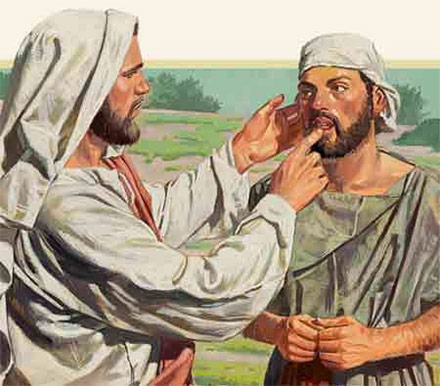
11 On the way to Jerusalem he was passing along between Samaria and Galilee. 12 And as he entered a village, he was met by ten lepers, who stood at a distance 13 and lifted up their voices, saying, “Jesus, Master, have mercy on us.” 14 When he saw them he said to them, “Go and show yourselves to the priests.”And as they went they were cleansed. 15 Then one of them, when he saw that he was healed, turned back, praising God with a loud voice; 16 and he fell on his face at Jesus’ feet, giving him thanks. Now he was a Samaritan. 17 Then Jesus answered, “Were not ten cleansed? Where are the nine? 18 Was no one found to return and give praise to God except this foreigner?” 19 And he said to him, “Rise and go your way; your faith has made you well.”

In the name of Jesus. Amen.

Last week, we heard the parable of the Good Samaritan (Lk. 10:25-37). Jesus is the One who gets down in the dirt and has mercy upon you. Today, we again hear about a good Samaritan who was one of the ten lepers healed by Jesus. Today’s good Samaritan receives mercy from Jesus, the Good Samaritan, and gets down in the dirt to give Christ thanks.

These ten lepers were socially distancing themselves, as the Law of God demanded (Lev. 13:45-46). The lepers are suffering, but they are also dangerous to others, so they were to be separate from the rest of society. Yet, they form a little community. We know that at least some (if not nine) of these lepers were Jewish, but at least one of them was a Samaritan. Normally, Jews have no dealings with Samaritans (Jn. 4:9) because Samaritans were considered unclean. But since all ten of these lepers were already unclean, they are united together in their suffering, similar to what happened in the months after 9/11, when our country was suffering. We bonded together as a nation. May God grant that type of unity again!

Anyway, these suffering lepers have gathered together and this little congregation lifts up its voice, “Jesus, Master, have mercy upon us.” When they cry out for mercy, what were they asking for? Did they want some food or money? Did they know that Jesus had cleansed lepers before and were crying out for healing? We don’t know, and it’s possible that the lepers didn’t even know themselves. Notice, they don’t call Jesus ‘Lord’ as many other people do when they call out to Jesus in faith. Instead, they call our Lord, ‘master.’

What is important is that they were asking the right one – Jesus – for the right thing – mercy. God in His mercy answers imperfect and imprecise prayers in exactly the right way. In fact, “Lord, have mercy,” is a great prayer that distills everything you need down to a single petition. Mercy is always what you need.

Now, we need to consider the attitude toward lepers back then. In Jesus’ day, the rabbis typically taught that leprosy was a manifestation of an inner uncleanness. In other words, the common thought was that leprosy didn’t just happen to people. Instead, leprosy was seen as a Divine judgment against the sins of those who had it, and people had the general attitude that lepers were simply getting what they deserved from God.

Unfortunately, we Christians often have a similar attitude toward those who are suffering: the poor, the homeless, etc. May God forgive us for the times that we are like the priest and Levite in the parable of the Good Samaritan, looking past those who need mercy and passing by on the other side of the road. So, please know, that while the normal attitude toward lepers in Jesus’ day was to think of it as God’s just judgment on those who had it, I’m not defending that attitude. But I think that fact is important to possibly understanding the actions of the nine who don’t return to Jesus.

Jesus hears their plea for mercy and says, “Go and show yourselves to the priests.” Because we know the whole story, we know that when Jesus said that they would be healed, the priests would look them over, and they would be admitted back into regular society. In that moment, the lepers didn’t know that. They already knew about the priests, and they knew that because of their leprosy, there was no place for them in the Temple because they are unclean.

So, some have speculated (and I think it is a likely explanation) that the lepers might have understood Jesus’ words in a negative and offensive way. So often in the Gospels, we read that even the disciples do not understand Jesus, and that may have been what is going on here. Even though Jesus didn’t mean it this way, the lepers might have understood Christ to be saying something like, “Why should I have mercy on you when you are unclean? Get out of here. Show yourselves to the priests. If they declare you to be clean, then I will help you.”

Again, it’s speculation. But if this is accurate, it would mean that they interpreted Jesus as saying, “No.” So they are disappointed and their refusal to rejoice even when they are healed might be reasonable in their minds because Jesus hasn’t done anything for them. However, this Samaritan sees things differently, and because he has faith, he returns to Jesus, praises Him with a loud voice, and gives thanks. According to Jesus, this good Samaritan wasn’t just healed from his leprosy; instead, Jesus says to him, “Rise and go your way; your faith has (lit.) saved you.”

Now, there are a lot of things we can glean from this text. For one, we see the saving power of Jesus’ Word – even from a distance. Or, as we have in the past, we could consider how Jesus is the true, great High Priest who makes atonement for us. We could also focus on how Jesus claims to be God (even though so many people claim that He never did). With this good Samaritan at His own feet, Jesus says, “Was no one found to return and give praise to God except this foreigner?” But today, we are going set all of that aside, and instead focus on the Christian act of giving thanks.

Jesus sees the evidence of this good Samaritan’s faith in the fact he came back to give thanks. Christians give thanks. Christians are thankful people. We heard the fruits of the Spirit in our Epistle text (Gal. 5:16-24), and one of the fruits of faith is thanksgiving. I want to put before you four thoughts about thanksgiving.

The first thought is that thanksgiving comes first. Over and over in Paul’s letters, he begins by giving thanks. All of Paul’s letters except Galatians and Titus begin with thanksgiving. And this is amazing when you realize to whom Paul was writing. Paul wrote two letters to the Thessalonians who thought they had missed Jesus’ return and the Resurrection. They were tempted to think that Paul was a fraud apostle. But Paul begins both of his letters to the Thessalonians with thanksgiving.

The church in Corinth was even worse. There was a man who had gotten married to his mother-in-law and was bragging about it. Families were breaking apart and people were abandoning their spouses because they thought the Resurrection was coming soon. Some members of the church didn’t even believe in the Resurrection. They were not letting poor people come to the Lord’s Supper, and some were getting drunk during Communion. They were fighting about who to follow – Paul, Peter, Apollos, or Christ (1 Cor. 1:11-13). The church in Corinth was, by all accounts, a colossal disaster. We would think Paul would begin his letters to them by saying, “I’m ripping my hair out every time I think of you.” But no! Paul begins his letter, “I give thanks to my God always for you” (1 Cor. 1:4).

There is something to be said about starting with thanksgiving. When you start each day with thanking God for protecting you through the night from all harm and danger, you’re starting your day off right. It’s easy to start your day with worrying, panicking, fretting, and thinking of all the things you have to do, but doing that only wears you down and is offering the false worship of worry instead of the true worship of thanks. Thanksgiving starts us off on the right foot.

This leads to the second thought about thanksgiving. Thanksgiving requires a turning back. The good Samaritan had to turn back and return to Jesus to give thanks. While this is what literally, physically happened, there is also something very profound to contemplate here.

If we’re always focused on what is coming next, if we are always oriented toward what lies ahead, we cannot give thanks. There’s nothing in the future to be thankful for. There are reasons to be hopeful, but nothing to give thanks for. Remember that Jesus says that tomorrow is always full of worry but let tomorrow worry for itself (Mt. 6:34). As long as we think about tomorrow, we can only have worry – or, at best, worry mixed with hope. But we cannot have thanksgiving.

If we are going to give thanks, we must look backwards to what has been or to the present and to what is. So often, Scripture pictures thankfulness as the opposite to worry. Philippians 4:6 says, “Do not be anxious about anything, but in everything by prayer and supplication with thanksgiving let your requests be made known to God.” When we remember how God has forgiven us, provided for us, and protected us, we give thanks for He is good, and His mercy endures forever.

The third thought about thanksgiving is that thankfulness and faith go together because thankfulness looks to God as the Giver of all good things. And here, it might be good to make a distinction between thanksgiving and gratefulness. Gratefulness looks at the goodness of the gift while thanksgiving tends to look at the goodness of the giver or source of the gift. If you brought me a milk chocolate mocha with no whip and an extra shot of espresso, I would be grateful for the coffee in my hand and thankful to you because you gave it to me.

Don’t get me wrong, gratitude is important. We should be grateful and recognize the goodness of the gifts that we have – family, health, food, clothing, house, home, etc. But Christians should go past gratefulness and be thankful. I don’t doubt that the nine lepers were grateful that they were cleansed, but they didn’t return and give thanks to Jesus, their Cleanser.

By faith, we look past the gift and even past the individual who has given the gift and recognize that everything we have comes from God. As James 1:17 says, “Every good and every perfect gift is from above, coming down from the Father of lights.”

The good Samaritan leper saw and was grateful for his healing, but he looked past that and gave praise to God at the feet of the Son of God. And we Christians, when we have a table full of food, we look past the person who earns the paycheck, past the grocers, truck drivers, and farmers (it is right to give them thanks too). But ultimately, we give thanks to God who has provided the good gift of food.

Which leads us to the fourth thought: Christians give thanks even in times of suffering. After, ‘mama’ and ‘papa,’ there are two words that parents work to teach their children – ‘please’ and ‘thank you.’ It isn’t just Christians who teach this. Part of living in this world is to be polite and thankful for good things. But Christians can even give thanks in bad times because God remains good. Even when God hands us over to suffering, He does so out of His goodness. 

Natural, worldly thanks has to do with the goodness of the gift. But Christian thankfulness has to do with the goodness of the Giver – the goodness of God. As Christians we recognize that everything we have comes from God. In Philippians 4:11, Paul says, “I have learned in whatever situation I am to be content.” Or think of Job who had been protected and blessed by God. Even when God removes His protection, Job still rightly thanks God even in his suffering and says, “Though He slay me, I will hope in Him” (Job 13:15).

So, whether we are full or hungry, whether we have friends or are lonely, whether we have peace or are in the midst of chaos, in life and even in death, we give thanks to God because He has already graciously given us Jesus. Remember Romans 8:32, “He who did not spare His own Son but gave Him up for us all, how will He not also with Him graciously give us all things?” In other words, God has already given you Jesus, and there is no good thing He will ever hold back from you.

Everything in this life comes from God the Father. In health and in pandemic, in good times and in bad, in order and in chaos, in joy and in sorrow, still we give thanks and bless God’s name. 

This good Samaritan leper had reason to give thanks for being healed, but there was even more reason to give thanks that Jesus had looked upon him in kindness and forgiven his sin. The same is true for you. God has given you His only begotten Son so that you can receive His eternal love and kindness.

May the Holy Spirit grant that we always be filled with this thankfulness. Amen.

The peace of God, which surpasses all understanding, will guard your hearts and minds in Christ Jesus. Amen.

Bound Up – Sermon on Luke 10:23-37 for the Thirteenth Sunday after Trinity

Listen here.

Luke 10:23-37

23 Then turning to the disciples [Jesus] said privately, “Blessed are the eyes that see what you see! 24For I tell you that many prophets and kings desired to see what you see, and did not see it, and to hear what you hear, and did not hear it.”

25 And behold, a lawyer stood up to put him to the test, saying, “Teacher, what shall I do to inherit eternal life?” 26 He said to him, “What is written in the Law? How do you read it?” 27 And he answered, “You shall love the Lord your God with all your heart and with all your soul and with all your strength and with all your mind, and your neighbor as yourself.” 28 And he said to him, “You have answered correctly; do this, and you will live.” 29 But he, desiring to justify himself, said to Jesus, “And who is my neighbor?” 

30 Jesus replied, “A man was going down from Jerusalem to Jericho, and he fell among robbers, who stripped him and beat him and departed, leaving him half dead. 31 Now by chance a priest was going down that road, and when he saw him he passed by on the other side. 32 So likewise a Levite, when he came to the place and saw him, passed by on the other side. 33 But a Samaritan, as he journeyed, came to where he was, and when he saw him, he had compassion. 34 He went to him and bound up his wounds, pouring on oil and wine. Then he set him on his own animal and brought him to an inn and took care of him. 35 And the next day he took out two denarii and gave them to the innkeeper, saying, ‘Take care of him, and whatever more you spend, I will repay you when I come back.’ 36 Which of these three, do you think, proved to be a neighbor to the man who fell among the robbers?” 37 He said, “The one who showed him mercy.” And Jesus said to him, “You go, and do likewise.”

In the name of Jesus. Amen.

The whole thing started with a question intended to trap Jesus in His words. The lawyer asks, “What shall I do to inherit eternal life?” It’s a stupid question because of those first six words, “What shall I do to inherit…” There’s nothing he can do. The life he desires cannot be earned or bought or deserved. However, the lawyer is right, completely right, with his last three words. Eternal life is inherited, but inheritance is always based on birth. And everyone is entirely passive in that regard. None of you will be the Queen of England. You don’t have the right birth; it’s a title you will never be able to inherit. 

Jesus answers the silly question with a question: “What is written in the Law? How do you read it?” The lawyer gives the orthodox (ὀρθῶς v. 28) answer, “Love God perfectly, and love your neighbor perfectly.” Jesus even says, “Bingo. You’ve got it! Do this and nothing less. And you will live.” The lawyer correctly recognizes that Jesus’ response means that he is damned. The lawyer asked a Law question, got a Law answer, and recognizes the devastating results. The man had come to trap Jesus, but he finds himself trapped in his own sin. He recognizes that, under the Law, he’s toast. He looks for an escape, an out, a limit to whom he must love, so he asks, “Who is my neighbor?”

But Jesus doesn’t offer him an escape from the Law with the parable. In fact, there is no escape from the Law. The Law’s demands must be fulfilled, and, God be praised, there is One who has fulfilled the Law’s demands for you. Instead, as I’ve preached before, the parable points to another way to inherit eternal life – the way of promise (Gal. 3:18 as we heard in our Epistle text). The way to inherit eternal life isn’t by works or effort. It’s by mercy. With the parable, Jesus is pointing this scared lawyer to the inheritance that comes only by promise through the Gospel.

Jesus is the one who finds sinners not just half-dead but fully dead in sin (Eph. 2:1). He binds up the wounds of sin – both the wounds that are self-inflicted and the scars that are caused by others. He pours on the oil and wine of His Sacraments. He books you an all-inclusive room in the inn of His holy Christian Church. Jesus is the one who shows you mercy.

The point of the parable is not that we should try harder and make a better effort to love our neighbor. The parable is not teaching that we shouldn’t be prejudiced or bigoted. Of course, we shouldn’t be prejudiced or bigoted, but that isn’t the point of the parable. The point of the parable isn’t even that we should love everyone. The lawyer already knew and confessed that. So, why would Jesus tell a parable to reinforce what the lawyer already knew?

Instead, Jesus tells the parable because the lawyer has been beaten up by the Law. But the lawyer doesn’t realize – or worse, isn’t willing to admit – that he’s in the ditch dead in his sin and failure to do what the Law demands. Because this lawyer has sinned both by what he has done and by what he has left undone, he needs Jesus, the Good Samaritan who has perfectly fulfilled the Law, the show him mercy. Christ is the only One who rescues dying sinners who could not save themselves. That’s why Jesus tells the parable.

Now, after the parable is concluded Jesus says, “You go, and do likewise.” And this particular part of the text I usually don’t spend a lot of time on, and Dr. Mayor Gander, likes to point that out to me – a lot. In my defense, it is the last five words of the text. But if you are like the honorable mayor and wish I would spend more time on those words, today’s your day!

Dear saints, as we recover in the inn of the Church, we still need the Law’s instruction. We still need to our love rightly directed. And God gives us that instruction and direction in the Commandments. Christian, you do not, I repeat, do not, need the Law to save yourself. But you do need the Law to know how to respond to what Christ, the Good Samaritan, who has bound you up, has done for you.

So, with that in mind, I want to spend the rest of this sermon to talking to you about your vocation.

Whenever we talk about vocation in the Christian sense, we aren’t talking about a career. Christian vocation is all the different ways that God calls you to serve your neighbor, which means that you have many different vocations in this life.

All of your vocations are defined by a few things. First, your vocation is defined by the Ten Commandments. The lawyer was absolutely right to summarize the Law as loving God and loving your neighbor. What is often missed in our day is that we do not get to define what love is. In the Ten Commandments, God has already defined what love is. To give a quick example: men, you are called to love all women, but the love you show your wife is shaped differently than the love you show other women. Your love for all women is given shape by the 6th Commandment about not committing adultery.

Second, your vocation is defined by your relationship to your neighbor. A lot of times, we have an idea that our good works are aimed at a target. On that target are the members of our family: parents, spouses, kids, friends, coworkers, neighbors, and strangers. Typically, we think that the center of that target, the bullseye, is where God is. We think God should always be in the middle and that we should aim our good works toward Him. Then, in the next ring, depending on your age or circumstances, comes your spouse or your parents. Then the next ring is, siblings or children, then friends, then strangers.

Dear saints, I want you to chew on the idea that this picture – where God needs to be in the center, in the bullseye when you aim your good works – is wrong. God doesn’t need to be in the center of your target. He doesn’t need anything you can do or offer Him. He doesn’t need your help. You can take God out of all the circles of your target. Instead, move everyone else in. If you’re married, your spouse is the bullseye, then kids, etc. If you’re a child, your parents are the bullseye, then siblings, friends, classmates, etc.

If you are going to find God on your target, He is under the whole target. God doesn’t need your good works, but your neighbor does. Whenever you serve your neighbor, you are serving God. You can find joy in serving your neighbor because whatever you do, you are serving God by serving that needy neighbor. You see the picture?

Kids, you are called to love God by loving your neighbor by obeying your parents, by listening to your teachers, doing your homework, being respectful to adults, and by being a good friend. Adults, you are called to love God by loving your neighbor being a good husband or wife, by being a good parent, by being a hard-working employee or a good and fair boss, by paying your taxes, respecting the authorities that God has placed over you, and on and on it goes.

Third, your vocation is defined by the needs of your neighbor. Normally, this is pretty straightforward. Your boss needs you to do your tasks efficiently and with excellence. But sometimes, you need to do things that you aren’t trained to do when and if an emergency arises.

This is a weird analogy, but think of it this way. Normally, you wouldn’t walk into a hospital room and offer medical aid or advice – at least you shouldn’t. So, don’t. But pretend that a plane crashed in the church yard during the service. In an emergency like that, it would be sinful for us to continue on with our service if such a thing happened. We’d stop what we are doing and go help. Even though most of us are not doctors or nurses, we would go and do our best to be doctors and nurses and firefighters until the professionals arrived because the needs of our neighbors on that plane demanded it.

The same thing is true if someone breaks into your house and was threatening the lives of you and your family. Because of that emergency, you suddenly have the duty and vocation to be the police, judge, and, possibly, even the executioner. But remember that those are the exceptions rather than the rule. When the needs of your neighbor are immediate like that, you might need to step out of your normal vocation and fill the need because there is an emergency.

Think back to the parable. The Good Samaritan didn’t finance an all-inclusive room for everyone he met on the road that day. He didn’t put everyone on his animal or pour oil and wine on those who were well and healthy. But he did do it when the immediate needs of his neighbor demanded it. The Samaritan didn’t do any of it out of obligation; he did it, according to v. 33, out of compassion. That word, which the New Testament only uses when talking about what God has done for us in Christ, is why we know this parable is about what Jesus does for us who have been beaten up by sin and left dead in the ditch.

Dear saints, compassion is what Jesus has given you. By His incarnation and birth, the Son of God has become your brother – your own flesh and blood. He has rescued you from the ditch. He has bound you up with His grace and mercy. And He is here now to provide His forgiveness delivered to you in this Bread and Wine which is His Body and Blood as you continue to recover in the inn of His Church.

Fed and refreshed with this Sacrament, go from here and do likewise. Love your neighbor recklessly. Bind up the wounds of sin that have harmed your neighbor. Your Savior has bound you up to Himself, and He invites you to join Him in His work of binding up the wounds of your sin-sick neighbor. Amen.

The peace of God, which surpasses all understanding, will guard your hearts and minds in Christ Jesus. Amen.

Opening – Sermon on Mark 7:31-37 for the Twelfth Sunday after Trinity

Listen here.

Mark 7:31-37

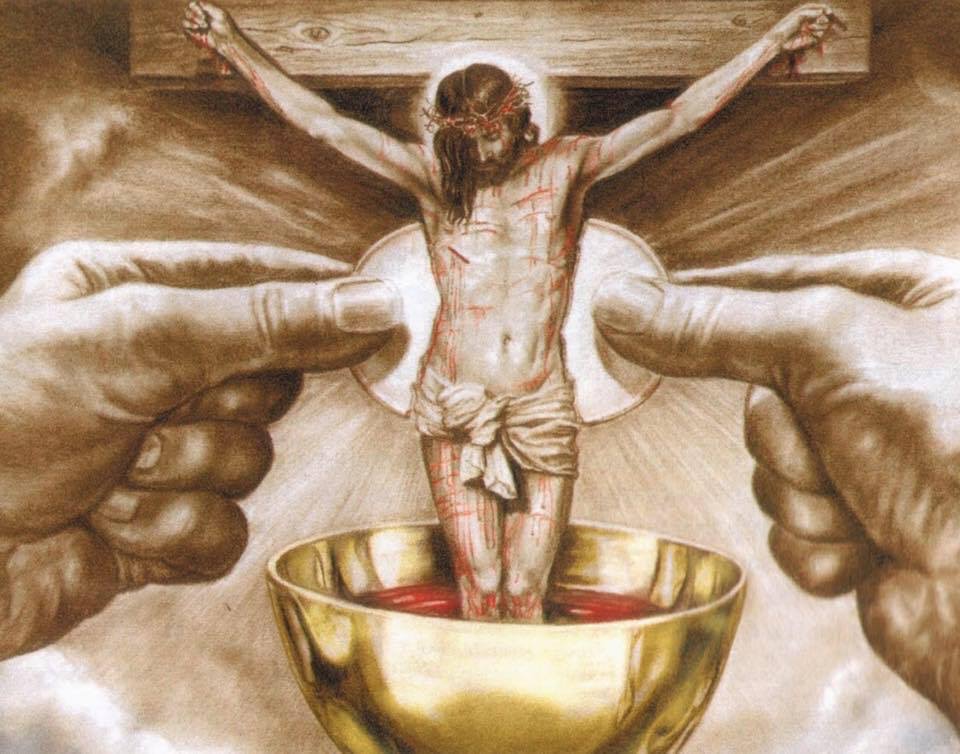
Jesus Heals the Deaf and Mute Man Mark 731 Then he returned from the region of Tyre and went through Sidon to the Sea of Galilee, in the region of the Decapolis. 32 And they brought to him a man who was deaf and had a speech impediment, and they begged him to lay his hand on him. 33 And taking him aside from the crowd privately, he put his fingers into his ears, and after spitting touched his tongue. 34 And looking up to heaven, he sighed and said to him, “Ephphatha,” that is, “Be opened.” 35 And his ears were opened, his tongue was released, and he spoke plainly. 36 And Jesus charged them to tell no one. But the more he charged them, the more zealously they proclaimed it. 37 And they were astonished beyond measure, saying, “He has done all things well. He even makes the deaf hear and the mute speak.”

In the name of Jesus. Amen.

When God created Adam from the dust of the ground, God had a purpose behind everything. God created Adam with eyes so Adam could see not just the beauty of creation but also God’s goodness, mercy, and provision. God created Adam’s limbs to work in the garden that God had given to bless and sustain Adam. God gave Adam feet and legs to walk throughout creation and be in awe and wonder at everything God had given. When God created Adam’s mouth, God gave him a tongue and vocal cords that could declare God’s praise (Ps. 51:15) and mercy (Jer. 3:12; Mk. 5:19). Every part of Adam and Eve’s bodies were created to be in harmony with God, with creation, and with each other.

Contrast God’s ordered, creative work with the work of the devil. Unlike God, the devil hates order and cannot create. Satan is completely powerless when it comes to creating anything. So, when the devil saw the order and beauty of God’s creation, the serpent went to work to bring disorder and chaos.

Satan didn’t mind if Adam and Eve had ears that hear; he just wanted to make sure they were deaf to what God really says. So, the devil’s first words recorded in Scripture are, “Did God actually say?” (Gen. 3:1). That old snake went to work at closing the ears of Adam and Eve to God’s voice. And it worked. After they ate from the tree, Adam and Eve heard the sound of God walking in the garden, and they fled from their Creator.

The devil didn’t mind if Adam and Eve had tongues that spoke. He just wanted to make sure those mouths spoke the same lies and bitterness that he has toward God. And it worked. After they ate from the tree, Adam and Eve spoke false words that blamed each other and even God Himself (Gen. 3:11-13) for the sin that they had committed with their own hands and mouths.

And still today, the devil doesn’t care if you have eyes that see. Satan wants to draw your attention to anything that will divert your eyes to God’s mercy and grace because he wants to blind you to God’s goodness. Satan wants to take your eyes off the cross where you see God’s unquestionable mercy toward you and instead focus your eyes on the wickedness, danger, and evil that surrounds you. The devil wants you to see the evil in this world and be filled with fear and worry.

No, the devil can’t create. But he can and does harm, mar, maim, spoil, disfigure, and paralyze. And the devil is effective and efficient at bringing chaos and disorder to our fallen world.

Consider how Satan has distorted your mouth which was created to speak the wonders and mercies of God, but now speaks lies and spreads gossip about your neighbor. Contemplate the ways in which Satan has closed your heart to helping and defending your neighbor who is a fellow son of Adam and daughter of Eve. Reflect on the ways your hands are tightfisted instead of generous. Think about the ways in which the devil has filled your mind with worry and anxiety instead of the peace of God.

Repent. God wants to open your eyes, ears, hands, feet, hearts, minds, and mouth and bring order once again. Consider this deaf man with a speech impediment.

Imagine what this man’s life must have been like. He had lived in a world of silence. He wasn’t able to communicate with others. Imagine his friends and family who have brought him to Jesus. Think of all the times they tried to tell him, “I love you,” but those words fell upon closed, deaf ears. This man’s family has wanted to sing God’s praise with his voice added to their chorus, but his tongue was wrenched and his mouth mute. So, they bring him to Jesus and beg Christ to lay His hand on him, and Jesus acts.

Now, with this healing, please notice first that Christ hears their prayers on behalf of this man whom they love. Dear saints, know that Jesus hears the prayers you pray on behalf of unbelievers who are deaf to God’s Word. Know that without question. But also notice Jesus doesn’t answer their begging and pleas in the way they ask Him to. Jesus doesn’t simply lay His hand upon the deaf man; instead, Jesus does more.

Jesus takes the man away from the crowd. Christ sticks His fingers into those clogged ears, spits, seizes the man’s tongue, and sighs. Actually, the text says that Jesus does more than sigh. Literally, the text says Jesus ‘groans.’ It’s the same word used in Ro. 8:22 where Scripture says that all creation groans as it waits for the revealing of the sons of God. After these things, Jesus speaks one word, “Ephphatha,” which means, “Be opened.”

Tired Jesus leaning against a treeI’ve seen a picture several times this last week floating around social media. It is Jesus leaning against a tree with His eyes closed. Christ looks exhausted. The caption says, “He must be so tired of the mess we’ve made. Forgive us, Lord, don’t give up on us!” On the one hand, I don’t like the picture combined with the caption because it implies that Jesus didn’t know and is surprised by the mess we’ve made. However, there is something very true with that picture of the weary Jesus.
Jesus is wearied by and suffers because of His interaction with us. You see, Jesus sighs before opening this man’s ears and loosening his tongue because it does take effort from our Lord. This healing is work for Him. We tend to think that performing miracles and healings is just what Jesus does. We tend to think that Jesus can do this without any real effort. Part of the reason we think that way is because most of the time, Christ speaks a word and it is done. We think that is simple, easy-peasy.

However, even the miracles where Jesus simply speaks a word, those miracles and healings are still costly work for him. We see that these miracles cost Jesus effort here when He groans. It isn’t cheap or easy for Christ to do these miracles. It costs Jesus. In every miracle, Jesus is making an exchange. He takes upon Himself the deafness, muteness, sickness, paralysis, blindness, and leprosy. He does this because He is the one who bears our griefs and carries our sorrows (Is. 53:4). And this exchange happens with every miracle.

You see, the miracles that Jesus performs – healing the deaf, blind, and lame, cleansing lepers, and providing miraculous wine and bread – are all costly. He doesn’t just send the devil away. Christ Himself suffers Satan’s abuse and attacks. Just think of His temptation in the wilderness. He gets hungry and thirsty. Jesus comes into our broken world, breathes our poisoned air, suffers our backbiting, ingratitude, and greed. He endures and resists the temptations of Satan and the demons. Christ willingly did all of this knowing full well what it will cost Him. Yet, He does it anyway.

Our Lord does this for those He heals, and He does it for you because He has compassion for you. He looks at you the same way He looked at the deaf man and the same way that we look with pity at people who are suffering. Jesus sees us as having weaknesses and disabilities, as needing help. None of this makes Him angry, but it does hurt and move Him. It causes Him to act on our behalf, to intervene, and to send His holy angels.

Christ always has compassion on those who suffer. Yes, we are certainly sinners, but we are also victims. Jesus sighs in sorrow and frustration over our confusion and self-righteousness. He sighs in grief over our sins and self-inflicted pain. He sighs in anger over that which has been done to us by the devil, by our neighbors, and even by our loved ones.

Jesus knows that getting involved with us means that we will hurt Him, that we will complicate matters, that we will betray Him in a thousand ways – but it doesn’t matter. Christ gets involved anyway. He sticks His finger in our ear. He is dirtied by the interaction. He takes our sorrow, our sin, our blame into Himself in order to heal and save us.

As unconventional as the buildup to this miracle is, the man is healed. His ears are opened, and his tongue is loosened. The crowd responds to this miracle that Jesus, “has done all things well.” But, really, they spook too soon because they hadn’t seen nothin’ [sic.] yet. Jesus has more opening to do.

Those same fingers that became full of the deaf man’s ear wax and seized the man’s tongue are the same fingers that would curl around the nails that pinned Him to the cross. The same mouth of Jesus that spits here will cry out for a drink as Jesus became parched on the tree. The same lungs that exhaled here with a groan are the same lungs that would breathe their last as Jesus gave up His spirit.

And Jesus has done all of this so He can do more than open your deaf ears or loosen your muted tongue. He did this to open to you the way that leads to eternal life with God.

As weird as this miracle is – and it certainly is – Jesus stuck His actual fingers into that man’s ears and mouth. But He comes here now to stick His actual Body and Blood into your mouth. Jesus has been crucified as a ransom for your sins. Cross and CommunionHe has bought you for Himself through His death. And now He is risen and alive for your justification (Ro. 4:25).
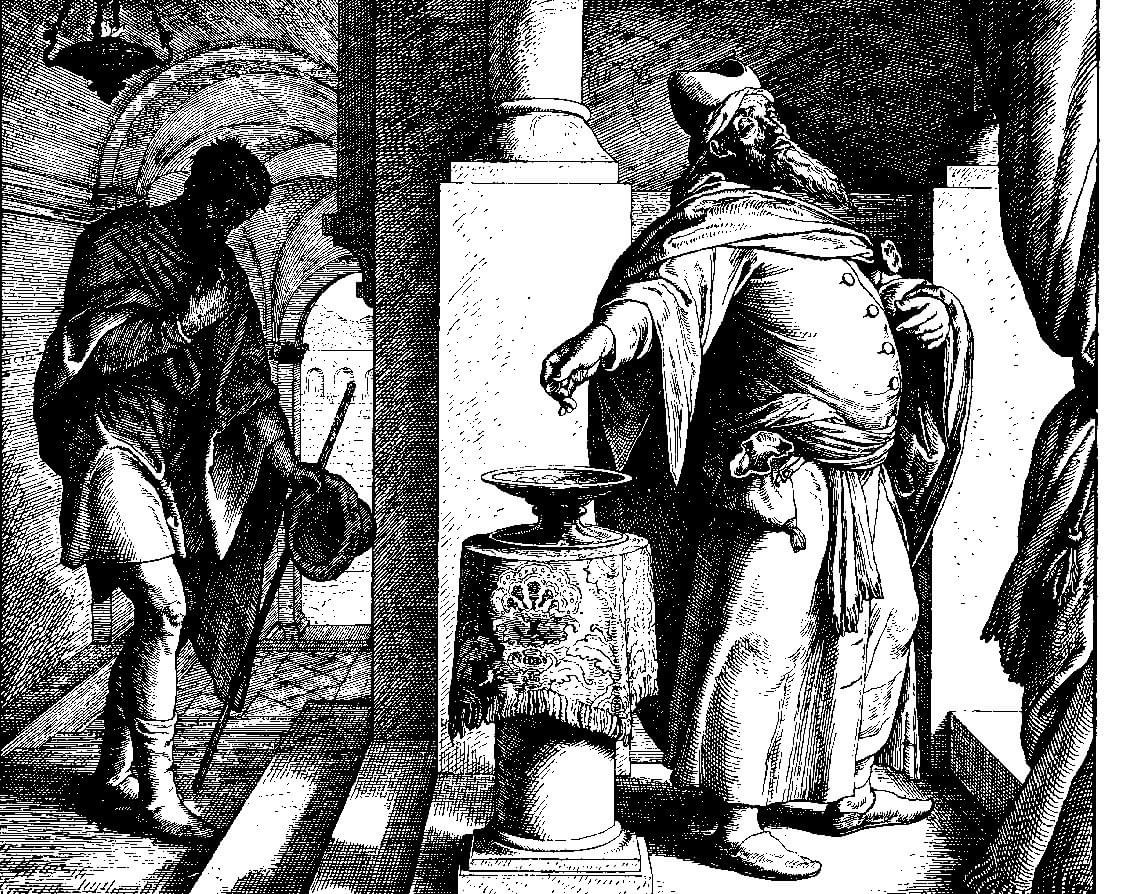
Jesus has opened the way to God and invites you now to His table. Jesus comes to you in this holy Supper to remove your doubt that everything He has done is for you. Jesus comes now to drive away all your evil. He comes to you placing His Body into your body. He binds you to Himself. He opens your ears to hear His Word of forgiveness and loosens your tongue so that you can confess Him clearly and be saved.

Oh, Lord Jesus, pull us out of the crowd. Open our ears to hear Your Word and receive Your love. Loosen our tongues to sing Your praise. Jesus, You have done all things well, even loving, forgiving, and saving us. Amen.

The peace of God, which surpasses all understanding, will guard your hearts and minds in Christ Jesus. Amen.

The Eyes of Prayer – Sermon on Luke 18:9-14 for the Eleventh Sunday after Trinity

Listen here.

Luke 18:9-14

9 He also told this parable to some who trusted in themselves that they were righteous, and treated others with contempt: Luke 18_9-14 - Pharisee and Tax Collector10 “Two men went up into the temple to pray, one a Pharisee and the other a tax collector. 11 The Pharisee, standing by himself, prayed thus: ‘God, I thank you that I am not like other men, extortioners, unjust, adulterers, or even like this tax collector. 12 I fast twice a week; I give tithes of all that I get.’ 13 But the tax collector, standing far off, would not even lift up his eyes to heaven, but beat his breast, saying, ‘God, be merciful to me, a sinner!’ 14 I tell you, this man went down to his house justified, rather than the other. For everyone who exalts himself will be humbled, but the one who humbles himself will be exalted.”

In the name of Jesus. Amen.

When we pray, we are taught to fold our hands, bow our heads, and close our eyes. Even though this isn’t commanded anywhere in Scripture, it is a good idea for a few reasons. One, it helps keep you from being distracted by, looking at, or fiddling with the stuff around you. Two, it focuses your attention on what you are praying. And three, it is a unique posture to place your body in which makes it a special or holy posture. You don’t typically fold your hands unless you are either praying or getting arrested. (I like to watch clips from the show Live PD, and I find it hilarious how often police officers from all over the country will tell the criminal with bags of drugs, an illegal gun, and two felony warrants, “Place your hands behind your back and interlock your fingers like you’re praying at church.”) Anyway…

I titled this sermon “The Eyes of Prayer” not to make the point that you should close your eyes when you pray – even though, again, it is a good practice. Instead, I hope this sermon encourages you to look only two places when you pray – one is your unworthiness and the other is God’s great mercy toward you.

Just like two weeks ago with the parable of the unjust steward and the merciful master, getting some context for this parable is helpful. Luke 18 opens with the parable of the persistent widow. She keeps crying out to the unrighteous judge asking for justice. The unrighteous judge finally gives her justice but only so she won’t beat him down with her constant asking (v. 2-5). The introduction to that parable says that Jesus, “told them a parable to the effect that they ought always to pray and not lose heart” (v. 1). Jesus teaches what the parable means (v. 6-8) by basically saying that if an unrighteous person will grant justice when he is continually asked, how much more will God, who is just, grant justice when His elect, beloved children cry out to Him. In fact, God will answer their cries quickly.

Now, as we turn to this parable which follows that one, we see how quickly and mercifully God answers the prayers of His elect.

A Pharisee and a tax collector go up to the Temple to pray. The Pharisee assumes a posture that we would recognize as prayer. He stands off by himself. He is likely looking up in thankfulness to God, but his eyes are also scanning the other worshipers in the Temple, and those eyes look down on the sinners who are there.

Now, we need to be careful about our animosity toward the Pharisee because he is simply doing what you and I do all the time. Remember, Jesus repeatedly warns against becoming like the Pharisees (Mt. 16:6-12; Mk. 8:15; Lk. 12:1), and Jesus wouldn’t give these warnings unless it is actually easy to become like them. Why is it easy? Why are we in danger of becoming like Pharisees?

When we look at the sins of our neighbor, much of what we see confirms that our good behavior is beneficial to us which too often leads us to pride. The stuff that God calls us to do in the Ten Commandments is really good stuff, and your life is much better if you live according to them. Think about it. When people commit adultery, do their lives get worse or better? Of course, they get worse. When people steal, they are more likely have their things stolen. If you deal drugs, your odds of getting shot, robbed, or thrown in prison are much higher.

The reality is that God didn’t just come up with a set of ten arbitrary rules. Instead, the Ten Commandments are written into the fabric of God’s creation. When you go against the natural laws of God and creation, it isn’t going to go well for you or for those around you.

And just a little side note here: Christians, we need to stand firm on the truths of the Commandments – especially that it is good to live in obedience to them. It is not loving to condone or promote people’s sins. When there is sin, we should speak of it as sin. We need to show how it hurts the individual committing that sin and how it harms those around the person committing that sin. But when you do that, the world is likely going to throw Jesus’ words in your face about the speck in your neighbor’s eye and log in your own eye (Mt. 7:3-5). But don’t let them take those verses out of context. Remember, Jesus wants to remove both the log in your eye and the speck in your neighbor’s eye by His mercy through the Gospel that Jesus has won through His death and resurrection. In other words, when you point out someone’s sin, always do it in a way that points them to the freedom from sin and forgiveness of sin that comes only through Jesus. Amen?

So, back to the Pharisee and his eyes of prayer. He is looking around at his life and the lives of others. The problem is that everywhere the Pharisee looks are places where he can’t find Jesus. The Pharisee won’t find Christ by looking at his good life, and he won’t find Jesus by looking at the sins of his neighbor. All he sees is his goodness which leads him to pride and going home not justified.

pharisee-tax-collectorThe tax collector’s eyes of prayer are much different. He doesn’t look to heaven, and he doesn’t look at the sinners around him. He stands far off from the others, likely with his face to the floor, tears flowing down his cheeks, and beating his chest. He looks two places – at himself where there is no hope and to God where the only hope lies.

The tax collector’s eyes of prayer are eyes of faith. Incredible faith! Our translation records his prayer as, “God be merciful to me, a sinner!” This is weak on two points. First, it is not just ‘a sinner’; he says, ‘thesinner.’ His eyes don’t notice anyone else’s sins – only his own. Second, the translation of his prayer, ‘be merciful,’ falls short here.

Throughout the Gospels, many people call to Jesus, “Lord, have mercy,” or in Greek, “Kyrie eleison,” which is why we sing the Kyrie after the Confession of Sin. The ten lepers call out, “Kyrie eleison” (Lk. 17:13). Two blind men early in Jesus ministry and blind Bartimeaus just before Palm Sunday cry out to Jesus, “Kyrie eleison” (Mt. 9:27; Mk. 10:47). The Canaanite woman cries out to Jesus, “Kyrie eleison,” on behalf of her demon possessed daughter (Mt. 15:22). All of those are excellent prayers. They are asking Jesus to do exactly what He has come to do. But what the tax collector in this parable prays is something similar but importantly different. The tax collector prays to God (lit.), “Be propitiated to me, the sinner.”

The noun ‘propitiation’ and the verb ‘propitiate’ have never been commonly used in English, but it is an extremely important word and concept. To propitiate means to make an atoning sacrifice. And the tax collector prays that God would be made the atoning sacrifice for him. In the Greek translation of the Old Testament, this word was also used for the mercy seat on the ark of the covenant. The place where the high priest would sprinkle the blood on the Day of Atonement and where God promised to meet with His people (Ex. 25:22; Lev. 16) was called by the same word.

Jesus is that place where God makes the atoning sacrifice. 1 John 2:2 says, “[Jesus] is the propitiation for our sins, and not for ours only but also for the sins of the whole world.” Jesus is your Great High Priest who makes the propitiating sacrifice of Himself. Hebrews 2:17 says, “[Christ] had to be made like His brothers in every respect, so that he might become a merciful and faithful high priest in the service of God, to make propitiation for the sins of the people.”

When the tax collector prays, “God, be propitiated to me, the sinner,” he is praying that God would be reconciled to him by the blood of Jesus. And that is why the tax collector, who is the far greater sinner, goes home justified rather than the well-behaved Pharisee. He looks to God in faith and asks God to be exactly who God has promised to be – a merciful, forgiving God.

Hear again what we sang before the sermon:

Trinity 11 Luke 18_9-14 - Pharisee and Tax CollectorWhen in the hour of deepest need
we know not where to look for aid;
when days and nights of anxious thought
no help or counsel yet have brought.

Then is our comfort – this alone –
that we may meet before Your throne.
To you, O faithful God, we cry
for rescue in our misery.

Dear saints, may your eyes of prayer be focused on God’s infinite mercy toward you despite your unworthiness. Know that God is always more ready to hear your prayers than you are to pray. God always gives more and better than you desire or deserve. He pours down His abundant mercy upon you. He forgives you of all the sins – every last one of those sins – that prick your conscience. He does all of this because of what Jesus has done for you. Christ has propitiated and reconciled you to God.

May our eyes of prayer be on our unworthiness and, even better, on God’s faithfulness and mercy to us because of what Christ has done. Amen.

The peace of God, which surpasses all understanding, will guard your hearts and minds in Christ Jesus. Amen.

The Merciful Master – Sermon on Luke 16:1-13 for the Ninth Sunday after Trinity

Listen here.

Luke 16:1-13

1 He also said to the disciples, “There was a rich man who had a manager, and charges were brought to him that this man was wasting his possessions. 2 And he called him and said to him, ‘What is this that I hear about you? Turn in the account of your management, for you can no longer be manager.’ 3 And the manager said to himself, ‘What shall I do, since my master is taking the management away from me? I am not strong enough to dig, and I am ashamed to beg. 4 I have decided what to do, so that when I am removed from management, people may receive me into their houses.’ 5 So, summoning his master’s debtors one by one, he said to the first, ‘How much do you owe my master?’ 6 He said, ‘A hundred measures of oil.’ He said to him, ‘Take your bill, and sit down quickly and write fifty.’ 7 Then he said to another, ‘And how much do you owe?’ He said, ‘A hundred measures of wheat.’ He said to him, ‘Take your bill, and write eighty.’ 8 The master commended the dishonest manager for his shrewdness. For the sons of this world are more shrewd in dealing with their own generation than the sons of light. 9 And I tell you, make friends for yourselves by means of unrighteous wealth, so that when it fails they may receive you into the eternal dwellings.

10 “One who is faithful in a very little is also faithful in much, and one who is dishonest in a very little is also dishonest in much. 11 If then you have not been faithful in the unrighteous wealth, who will entrust to you the true riches? 12 And if you have not been faithful in that which is another’s, who will give you that which is your own? 13 No servant can serve two masters, for either he will hate the one and love the other, or he will be devoted to the one and despise the other. You cannot serve God and money.”

In the name of Jesus. Amen.

Today, we are going to start with three questions to help us wrap our minds around this difficult parable: First, what is the rich master commending his manager for? Second, what is the context of the parable? And, third, where does the parable end?

First question first. What is the rich master praising the wasteful, dishonest manager for? It isn’t for his dishonesty when the manager illegally lowers the bills of the debtors. Instead, the master praises the manager’s shrewdness. And this is actually in line with God’s character.

Think back to Jacob. Jacob was certainly dishonest (in fact, ‘Jacob’ means ‘deceiver’ or ‘cheater’), but Jacob was also an extremely shrewd man who took advantage of all sorts of situations to benefit himself – which is what shrewd means. When Jacob’s exhausted brother Esau came in from the field, Jacob shrewdly took advantage of the situation by selling Esau a bit of soup at the cost of Esau’s birthright. When Jacob’s father Isaac was old and blind, Jacob shrewdly took advantage of the situation by dressing up like Esau and receiving their father’s blessing. When Jacob’s father-in-law Laban was distracted, Jacob shrewdly fled with his wives and children to move back to Canaan.

While we might think that God would want to disassociate Himself with as shrewd a man as Jacob, God doesn’t. God calls Himself the God of Abraham, the God of Isaac, and the God of Jacob. In fact, twenty-three times in Scripture God calls Himself ‘the God of Jacob.’ God isn’t ashamed to be associated with the shrewd. So, again, the rich master doesn’t praise the dishonesty of the manager; he praises his shrewdness.

To the second question: What is the context of the parable? Well the first verse gives us a little bit of the context. Jesus tells this parable to the disciples. Jesus isn’t giving this parable to the masses, but only to those who have left everything to follow Him. Unbelievers might take this parable to mean that Jesus doesn’t mind if you are a scoundrel who only does things for your own benefit. That’s not the point of the parable! This parable is told to believers so that they would shrewdly know to expect, count, and bank on God’s mercy and grace.

Also, the context of this parable is all of Luke 15. In the opening of Luke 15, the Pharisees and scribes are grumbling that Jesus is receiving and eating with sinners. So, Jesus tells them the parable of the Lost Sheep, the Lost Coin, and the Prodigal Son. Notice, please, I said ‘the parable’ not ‘the parables.’ The three are, in my opinion, best understood as one parable and taken together as a single unit.

Also, each of them is terribly named. Instead of the name ‘the Lost Sheep,’ it should be called the ‘the Good Shepherd.’ Instead of the name ‘the Lost Coin,’ it should be called ‘the Persnickety Woman.’ Instead of the calling it ‘the Prodigal Son,’ it should be called ‘the Wasteful Father.’ The sheep, the coin, and the younger son are not the focal point of the parable, and they are damaged when we make them the center. Instead, it’s the goodness of the shepherd, the persistence of the woman, and the mercy of the father that should draw our attention. The same is true of this parable before us, the central point of the parable is not the dishonesty and shrewdness of the manager but the mercy of the master.

Think back for just a moment to the misnamed parable of the Prodigal Son: The father mercifully gives his younger son his share of the inheritance early, and that little brat wastefully squanders it (Lk. 15:13). We need to realize that inheritance included money, but it mainly included land. The merciful father had to sell off at least one-third of his land to give that little imp his inheritance. That means the kid frittered away several generations worth of blood, toil, and sweat while ruining his family’s name and reputation in the community. And when the funds run out, the little churl saunters back home to beg for a job from his father so he doesn’t have to eat pig slop. But the father won’t have it, not because he wants the kid eating swine slop, but because he wants his son back. The father mercifully runs to him, embraces him, dresses him up in the best cloths, and throws a party because he has welcomed his son back into the family.

That’s the context of this parable which is tied to that one. The mercy of the father there and the mercy of the master in this parable are meant to be seen together. In other words, with this parable Jesus is saying to the disciples, “Listen guys, God’s mercy really is something you can bank on. Check this out…”

Finally, and briefly, the third question to help us understand the parable: Where does it end? It’s probably best to see the parable ending with Jesus saying, “The master commended the dishonest manager for his shrewdness.” Which means that the next sentence (the second half of v. 8) is the beginning of the lesson that Jesus wants to teach us. “The sons of this world are more shrewd in dealing with their own generation than the sons of light.”

So now, with all of that in mind, let’s quickly consider the parable:

The rich man finds out that his manager is wasting his possessions, so the rich man fires the manager on the spot, but throws him a bone of mercy. The rich man could have tossed his manager straight into prison. But, instead, the merciful master sends the manager back to his office to collect the books before he turns them in. The fired manager realizes he’s in a bad spot. He’s too weak to dig and too ashamed to beg. So, the manager formulates a plan. The rich man’s debtors have no idea that the manager has been canned, so he has a small window of opportunity. He calls the debtors in “one by one” (v. 5) and lowers each person’s debt. It is interesting to note that he reduces each debt an equal amount of denarii which shows how hastily his plan was formulated. The reduction of fifty measures of oil and reduction of twenty measures of wheat both equal 500 denarii (or days’ wages).

Two other things are important here. Notice, that the manager has each debtor take the pen and write with their own hand and in their own penmanship the reduced amount (more on that in a minute). The other important thing is that the debtors go along with the reduction in their bills which indicates their suspicions aren’t raised. The manager likely told them that he had convinced the master to reduce their debts. The debtors know the master, and he isn’t a hard, unforgiving man. Instead, he has a reputation of being merciful.

So, the manager arranges the books, saunters back to headquarters, and walks straight into the master’s office blowing on the wet ink of the newly reduced debts with a wry smile on his face. The master can see that the books have been changed and realizes that the debtors know about it. He hears the whole town out in the streets singing his praises for the merciful reduction of their debts.

Luke 16 1-9 - Riojas the Shrewd ManagerThe master had every right to reinstate the debts, but he doesn’t want his reputation of being merciful to be tainted. The master would rather eat the loss than have his mercy put into doubt. So, the merciful master praises and commends the dishonest manager for his shrewdness.

By cutting the large bills of the master’s debtors, the shrewd manager went ‘all in’ on the mercy of the master, and it paid off. The manager is forever associated with the master’s mercy and the debtors will always deal kindly with him so he won’t have to dig or beg.

Again, the merciful master praises the manager for his shrewdness. The manager knew which way to fall, and he fell on the mercy of the master.

Here’s the point, dear saints. You too can always fall on the mercy of your Heavenly Father, the truest Merciful Master of all. But too often we are hesitant to do so.

God repeatedly gives you opportunities to reveal His goodness and mercy to others, but you’ve blown it. God puts you in the midst of your family with parents, siblings, cousins, and in-laws who fight, hold grudges, and speak the worst about each other. God puts you there so that you can imitate Him and be merciful and forgiving like He is, but you’ve blown those opportunities.

God puts you among children and grandchildren who aren’t grateful. Instead, they are rude, selfish, and self-absorbed. God gives you all sorts of opportunities to show unconditional love while making God your Father look good. But you’ve blown it.

God places you in a workplace or classroom where you are treated unfairly, taken advantage of, bullied, and receive all sorts of nasty behavior. God wants you to act shrewdly and do what no one else would – turn the other cheek and return all that evil for kindness and love. But you’ve blown it. Dear saints, we have all failed to use what our Merciful Master has given us to serve our neighbor because we don’t trust His mercy. Repent.

Repent, but also rejoice because you have a Savior who is just like the shrewd manager (minus the dishonesty). Jesus is the supreme Shrewd Savior, the Ultimate Trickster who took advantage of every situation to save you from sin and hell.

Satan was hungry, but not for a bowl of soup. The devil wanted to swallow all of humanity in his jaws. But Jesus, the Shrewd Savior inserted Himself into those jaws with all your sin laid upon Him (Is. 53:6). When Jesus died on that cross, all of your sins died with Him. While Satan and his minions celebrated the death and burial of Christ, Jesus strolled out of the tomb on the third day bursting the jaws of death and giving you an eternal victory.

Jesus even dealt shrewdly with God and His wrath against sinners. Christ went to the cross, covering Himself with all your sins. He managed your debt not just by reducing it, He eliminated it.

Dear saints of God, your Shrewd Savior doesn’t ask you how much oil you owe, He anoints your head with the oil of His mercy (Ps. 23:5). He doesn’t check to see how much wheat you owe. Instead, He gives you Himself as the Bread of Life (Jn. 6:51).

Christ does all of this because He is your Merciful Master and Shrewd Savior. Put your trust there, in His mercy. Amen.

The peace of God, which surpasses all understanding, will guard your hearts and minds in Christ Jesus. Amen.

Slave Wages & Gifts – Sermon on Romans 6:19-23 for the Seventh Sunday after Trinity

Listen here.

Romans 6:19-23

19 I am speaking in human terms, because of your natural limitations. For just as you once presented your members as slaves to impurity and to lawlessness leading to more lawlessness, so now present your members as slaves to righteousness leading to sanctification. 20 For when you were slaves of sin, you were free in regard to righteousness. 21 But what fruit were you getting at that time from the things of which you are now ashamed? For the end of those things is death. 22 But now that you have been set free from sin and have become slaves of God, the fruit you get leads to sanctification and its end, eternal life. 23 For the wages of sin is death, but the free gift of God is eternal life in Christ Jesus our Lord.

In the name of Jesus. Amen.

The wages of sin is death. Scripture teaches that sin pays when you work for it, and the wages it pays is death. Probably, many of you have that passage memorized. After John 3:16, this is probably on the second tier of passages that most Christians have stored in their noggins, and most of the time we understand it in a certain way. Normally, the way we interpret this verse is that the payment we earn for committing a sin is death. And that is true. When I go out and do sin-type work, the payment I get for that is death.

But that interpretation can have some serious and even dangerous drawbacks. It can easily lead us to the wrong notion that certain sins are more serious and pay more than other, less significant sins. When people say that they are basically a good person, they make that claim because they figure their sins aren’t as bad as the sins of others. In the end, this kind of interpretation ends up with us making distinctions between this sin and that sin in an effort to self-justify ourselves. “I’m not as bad as that guy over there.”

Here, in this context, Paul is saying something more devastating than that the payment you get for doing the work of sin is death. Instead, Paul is saying that sin is not just the type of work you do, rather sin is your slave master whom you submit yourself to. The picture Paul is giving us is that your employer, your boss, your master is sin. And with Master Sin as your as your master, employer, boss, there is a particular currency that he uses to pay you and that is the currency of death.

So, let’s try this analogy: Let’s say you are looking for your first job, and you are going to be flipping burgers. It’s a respectable first job. You go to Burger King, and they will pay you $8.00/hour. During your interview at Dairy Queen, you learn that they will pay you $8.15/hour. Then you go check at McDonald’s, and they will pay you $8.50/hour. You go to Five Guys, and they will pay you $9.50/hour. (At this point, you can probably tell where I prefer to get burgers if I’m not making them myself.)

But let’s say you go to one more burger establishment, and it’s probably safest for me to make up an imaginary restaurant for this. Let’s say you go apply at Sin Burger. Sin Burger is a nice establishment. They have a clean restaurant and friendly employees. Your responsibilities are going to be the same as at any of the other locations, and the hours are just as flexible. At the end of the interview, the manager says, “If you work here, you will be killed. Your wages will be paid out with death.” The manager notices the shocked look on your face, and says, “Yes, here at Sin Burger, we don’t deal with dollars or pounds or rubles or pesos. Sin Burger only pays with the currency of death. It doesn’t matter the type of work you do – you could be a burger flipper, a fry fryer, the head of accounting, or the CEO – Sin Burger still pays only with death.”

So, would you take the job at Sin Burger? Of course not! And yet, that is what we all do. But why? Why do all humans work for a master who pays out with the currency of death?

It’s because Master Sin is so deceptive, so insidious. When sin is your master, it makes demand after demand after demand. But all of these demands seem so pleasant. Master Sin makes working for him appear to be so appealing, so satisfying. When we are obeying Master Sin, it feels free. It seems nice and natural. It doesn’t feel like work. And it doesn’t seem like the wages we will be paid with really matter all that much.

Nobody sins out of duty. You don’t sin because you feel like you have to. Serving Master Sin means you just do what comes naturally, and what is convenient. You do it because it feels good or because it seems to make your life easier. For those outside of Christ, serving Master Sin feels like freedom.

We hear, “the wages of sin is death,” but, when we think of sin as the type of work we do, we think we can simply make a change in our lives before payday rolls around. But that is not the picture that Scripture is giving here. Sin is not simply the type of work you do. Sin is your employer, your boss, your master, and even your owner.

Every moment, Master Sin is draining your blood, sucking the life from you. But while he does that, Master Sin likes to inject good feelings and energy into you every time he takes more blood. He’s sucking your life away while you are enjoying it. But eventually, Master Sin will leave you dead at his feet, sucked completely dry and eternally lifeless. You see the difference?

Repent.

Christian, we ought to hate Master Sin and his slave wages. But remember, as you heard last week, you have been Baptized. You don’t belong to Master Sin anymore; you are no longer a slave to Master Sin (Ro. 6:1-11). Identify Master Sin for who he is and hate him. You have been bought and freed by the death and resurrection of Christ. So now, every time Master Sin calls to you from across the plantation lines, you ought to hate him and his wages and his chains and his whip even more. Plug your ears to him, and run back to your new Master, your true Master, Christ your Savior.

Look at v. 22, but “now you have been set free from sin and have become slaves of God.” Yes, the slave wages of Master Sin is death, but the free gift of God is eternal life in Christ Jesus our Lord. Consider your new Master and how Christ is toward you. What does He pay?

He doesn’t. God doesn’t pay you. Only those who need you and your work pay you, and God doesn’t need anything you could ever give Him. God Himself says, “Who has first given to Me, that I should repay him? Whatever is under the whole heaven is Mine” (Job 41:11).

So, God can’t pay you wages, but He can and does give you gifts. And the free gift of God is eternal life in Christ Jesus your Lord. Consider Eph. 2:6-7 (it’s in your insert), “[Christ] raised us up with Him and seated us with Him in the heavenly places in Christ Jesus, so that in the coming ages He might show the immeasurable riches of His grace in kindness toward us in Christ Jesus.”

Think about this for a minute. God has endured the death of His Own Son to remove you from your slavery to Master Sin. And He has done that for a reason – to demonstrate and show you something. He wants to show you for all eternity the immeasurable riches of His grace in Christ Jesus. God wants to show you His riches, and these riches are incalculable. They are infinite.

In this life, riches are always measurable. Even if you owned the whole world, you could count the number of mansions you have. Your account would have a certain amount in it. Your net worth would still be finite. It might take several lifetimes to account for it all, but it would still have a limit. But God’s gifts and riches are immeasurable. His mercies are new and fresh every morning.

Think of that! For all eternity God would never have to show you a mercy or a treasure that He freely gives to you a second time. Every one of them is new and one that you haven’t seen before. God is infinite, and his mercies are infinite. it will take an eternity of eternity’s for God to show you His love and mercy toward you.

That’s what ‘infinite’ means. It means you could go on for trillions of trillions of years and yet there is still all of infinity before you and nothing is exhausted. There is as much left as when you started. God’s gifts for you are infinite. That is your life now in Christ Jesus, and that is your future.

So, when Master Sin comes and knocks on your door whispering to you about his slave wages, he wants to take away from you the gifts that Jesus would freely give to you. Send Master Sin away and rejoice and hope in the gifts God has for you.

Your God desires to give you an Infinity of riches and mercies delivered to you on account of the death and resurrection of your Lord and Savior Jesus Christ, and all of it is His free gift for you. Amen.

The peace of God, which surpasses all understanding, will guard your hearts and minds in Christ Jesus. Amen.

Anger, Law, & Righteousness – Sermon on Matthew 5:20-26 for the Sixth Sunday after Trinity

Listen here.

Matthew 5:20-26

20 “For I tell you, unless your righteousness exceeds that of the scribes and Pharisees, you will never enter the kingdom of heaven.

21 “You have heard that it was said to those of old, ‘You shall not murder; and whoever murders will be liable to judgment.’ 22 But I say to you that everyone who is angry with his brother will be liable to judgment; whoever insults his brother will be liable to the council; and whoever says, ‘You fool!’ will be liable to the hell of fire. 23 So if you are offering your gift at the altar and there remember that your brother has something against you, 24 leave your gift there before the altar and go. First be reconciled to your brother, and then come and offer your gift. 25 Come to terms quickly with your accuser while you are going with him to court, lest your accuser hand you over to the judge, and the judge to the guard, and you be put in prison. 26 Truly, I say to you, you will never get out until you have paid the last penny.”

In the name of Jesus. Amen.

Why did You have to pick the scribes and Pharisees, Jesus? Why does our righteousness have to exceed theirs to enter the kingdom of heaven? Why couldn’t You pick the righteousness of the sinners and tax collectors that You were eating with?

The scribes and Pharisees were the good guys. They had dedicated their lives to keeping God’s law. They made up extra commandments – more than six-hundred of them. When you looked at them, you would see good and holy people who would put our lives and good works to shame. Their lives were the supreme example of the outward keeping of God’s Law. But that’s exactly where the problem lies, and that is precisely what Jesus is getting at.

The scribes and Pharisees understood the Commandments to be attainable, keep-able, obey-able. They looked at the Commandments and saw them simply on the external. They would look at a particular Commandment and think, “I’ve done that. I’ve honored God in that way.”

In some ways they had. They hadn’t murdered anyone. They kept their bodies pure from adultery. They hadn’t stolen what was someone else’s. They had an external righteousness and life, but with that external righteousness came the most dangerous thing – pride. They figured they had done well and that God should be pleased with them. But here Jesus sits at the top of the mountain (Mt. 5:1) and preaches that their external works are not enough.

Jesus shows the righteousness that is required – a righteousness that exceeds the external righteousness of the Pharisees. And here, Jesus starts with the 5th Commandment about murder. He will go on to several of the other Commandments in the verses that follow, which you can read later today and this week for your homework. But Jesus probably starts with the 5th Commandment because, of all the Commandments, this one probably seems easiest for us to keep. Most of us can say, “I’ve never killed anybody, so I’m good concerning this Commandment.” But Jesus says, “Easy there partner. Not so fast. You have heard that it was said to those of old, ‘You shall not murder; and whoever murders will be liable to judgment.’ But I say to you that everyone who is angry with his brother will be liable to judgment; whoever insults his brother will be liable to the council; and whoever says, ‘You fool!’ will be liable to the hell of fire.”

Jesus says that there is more to the Law than you realize. It isn’t enough to keep your hands from taking someone’s life. Jesus teaches that the 5th Commandment has instructions for our lips and what we say, for our minds and what we think, even for our hearts, what we feel. If you call your neighbor a ‘fool,’ if you have insulted him or her, if you’ve been angry with anyone, you’ve broken the 5th Commandment and have guilty blood on your soul. And with all the anger in our culture and society, it is a good time for us to consider this topic of anger so that we have a right mindset about it.

The Scriptures do teach us that there is a godly use of anger. Psalm 4:4 and Ephesians 4:26 both say, “Be angry and do not sin,” which means that it is possible to be angry without sinning. And Jesus is our example. He cleansed the temple, taught against the Pharisees’ hypocrisy, and endured the disciples’ repeated unbelief. All of those things did make Him angry, and the Scriptures certainly use that terminology. Jesus was angry at times, but without sin.

To understand this, it is important to make a distinction. Some will try to say, “Hate the sin, but love the sinner.” But you run into problems with that phrase when you come across verses like Psalm 11:5b which says, “[The Lord’s] … soul hates the wicked and the one who loves violence.” So, a better distinction is the difference between the anger of office and the anger of the person. I’ll explain.

Anger of office has to do with your vocation or your station in life and your calling. Think of a judge in a courtroom. To be a judge is to have an office of anger – to sentence someone to jail or give them a fine is an act of anger. But the most common example of the office of anger is what we see in parents. Parents are called to sit in an office of anger at times. When their children break the 4th Commandment to honor their parents, it is the parent’s God-given duty to be angry and discipline their children.

Parents are supposed to punish their kids when they do things that put their kids or other people in danger. If your kid runs into the street without looking for cars, you have to punish them by not letting them be outside by themselves or by restricting where they can go on their bike. That punishment is serving in an office of anger, but all of this is an anger of office not of person. In other words, you aren’t punishing your kids because you don’t like them or are angry with them; you are punishing your kids because you love them, want to protect them, and desire that they grow up to be responsible people.

In fact, disciplining your kids is one of the most loving things you can do. Listen to a few Scriptures here: Proverbs 12:1, says, “Whoever loves discipline loves knowledge, but he who hates reproof is stupid.” Or Hebrews 12:6 which says, “For the Lord disciplines the one he loves, and chastises every son whom he receives.” Good parents will follow the example of their heavenly Father in disciplining their children. And in Revelation 3:19, Jesus says, “Those whom I love, I reprove and discipline.” Even though discipline is unpleasant at the time for the one being disciplined, later “it yields the peaceful fruit of righteousness to those who have been trained by it” (Heb. 12:11).

As our culture continues to wander farther and farther from God and seeks to be free from His authority, we see other God-ordained institutions of authority are being rejected as well. As this takes place, the biblical concept of discipline and love is dangerously fading and absent, and we are seeing the evil fruits of that. Sinful and evil actions are spoken of as good and right, and anyone who calls out that sin and evil is labeled ‘intolerant,’ ‘unenlightened,’ and ‘old-fashioned.’ But we cannot give up or retreat.

We must continue to love our neighbor by calling sin ‘sin’ and evil ‘evil.’ And we must do so in loving ways that show how that sin hurts the person committing that sin and how it harms their neighbor. We need to do this in a way that encourages repentance and faith in Christ who cleanses us from every sin through His death and resurrection.

Back to the example of the office of parent, if your kids keep repeatedly breaking your rules, it can be hard to separate the anger of the office as parent and anger toward the person of your child. But, do you get the idea? I hope you do. And I hope that as you parent your children, you are able to discipline them in a way that is not being angry toward the person of your child and instead having a righteous anger of office as parent.

In this text, Jesus is talking about the anger of a person, not about the anger of office. When someone speaks poorly against us or sins against us, we get angry toward that person and our heart gets hardened toward that neighbor. When we get angry toward another person, we try to wiggle our way out of our obligation to love that person, wrongly thinking that we are exempt from the command to love them as our neighbor because we think they are our enemies. It happens to all of us, and we all need to repent because Jesus goes on, just a few verses after this text, He says, “You have heard that it was said, ‘You shall love your neighbor and hate your enemy.’ But I say to you, love your enemies and pray for those who persecute you so that you may be sons of your Father who is in heaven” (Mt. 5:43-45). Jesus does not authorize you to be angry with the people who sin against you. Instead, He has told and explicitly commanded you to love them, pray for them, do good to them, and serve them.

When Jesus talks about a righteousness that exceeds that of the scribes and Pharisees, He isn’t talking about an external keeping of the Law. Jesus demands that everything you think, say, do, and feel conforms to God’s Commandments. To have a heart completely free of anger, lust, greed, rebellion, bitterness, strife, and idolatry. A heart that is full of love for God and your neighbor. This is the righteousness that exceeds the righteousness of the scribes and Pharisees. And this means that when the Law speaks to you, you do not go to a place of pride. Instead, the Law speaks to you and you fall into despair because you know that without this exceeding righteousness, you will never enter the kingdom of heaven.

We cannot attain to this righteousness. We cannot achieve it. And the more we try – which we should – the more we know we fail and feel in our hearts our own great sinfulness and the wrath of God that we deserve. We cannot achieve this righteousness that Jesus says is required. We have to look for this righteousness outside of ourselves.

This righteousness is not found in good works and obedience to the Law. It is Jesus’ righteousness and His perfect obedience to the Law and His heavenly Father which is given to us as a gift. Christian, Scripture says that you are in Christ who “has become [for you] wisdom from God, righteousness and sanctification and redemption” (1 Cor. 1:30).

Dear saints, there is one person in the entire history of the world who could stand under the judgment of the Law and not be condemned by it – Jesus, your Lord and Savior. Yet, Jesus, who kept the Law perfectly and filled up the Law, He Himself bore the curse and condemnation of the Law, and suffered for sins He did not commit so that He could give you His righteousness and the reward it deserved. For our sake God made Jesus who knew no sin to be sin, so that in Him we might become the righteousness of God (2 Cor. 5:21). Your anger, your insults, your lust, your disobedience, your theft, your lying, your idolatry – Jesus became all of that. He took all of that upon Himself and suffered for your sins so He could give to you His keeping of the Law, His perfect obedience to God.

Through faith in Christ, you have the righteousness that exceeds the righteousness of the scribes and Pharisees. You have the perfection and righteousness that defines God’s only Son. Your sins have been erased, and you are now in Christ. All of God’s commands are fulfilled for you.

Jesus has brought you out of your slavery to the Law. You have been united to Christ’s death and resurrection. Sin no longer has dominion over you. So, consider yourselves dead to sin and alive to God in Christ Jesus (Ro. 6:11). Amen.

The peace of God, which surpasses all understanding, will guard your hearts and minds in Christ Jesus. Amen.

Called to Peace – Sermon on 1 Peter 3:8-15 for the Fifth Sunday after Trinity

Listen here.

1 Peter 3:8-15

8 Finally, all of you, have unity of mind, sympathy, brotherly love, a tender heart, and a humble mind. 9Do not repay evil for evil or reviling for reviling, but on the contrary, bless, for to this you were called, that you may obtain a blessing. 10 For

“Whoever desires to love life
and see good days,
let him keep his tongue from evil
and his lips from speaking deceit;
11 let him turn away from evil and do good;
let him seek peace and pursue it.
12 For the eyes of the Lord are on the righteous,
and his ears are open to their prayer.
But the face of the Lord is against those who do evil.”

13 Now who is there to harm you if you are zealous for what is good? 14 But even if you should suffer for righteousness’ sake, you will be blessed. Have no fear of them, nor be troubled, 15 but in your hearts honor Christ the Lord as holy, always being prepared to make a defense to anyone who asks you for a reason for the hope that is in you; yet do it with gentleness and respect.

In the name of Jesus. Amen.

It should come as no surprise, but the Bible cares about how you treat other people. God has called you to peace. He wants you to be united, compassionate, kind, and tenderhearted to other people. Even when, and especially when, they are not kind or tenderhearted to you.

And this is not just some abstract thing where you have to figure out who deserves your kindness. This is text is specifically about how Christians are to treat one another. Peter is writing to a group of churches, so this text is about how Christians are to interact and deal with one another. Now, yes, of course, Jesus commands us to love our neighbor as ourselves. We need to do that too. But this text, this unity of mind, sympathy, brotherly love, tender heart, humble mind, not repaying evil for evil or reviling for reviling, all of this is what Christians are to do and how they are to act toward other Christians.

And I need to be clear here: Yes, be good to everyone you meet. But the New Testament repeatedly would have us focus our time and attention of being good and kind and generous to our fellow believers. Galatians 6:10 puts it as plainly as possible, “So then, as we have opportunity, let us do good to everyone, and especially to those who are of the household of faith.” How Christians treat each other is one of the ways that those outside the church become curious about what makes us different (see Act. 2:42-47). Christians showing love to other Christians is, in fact, a very important component of evangelism.

Christian, you have a biblical responsibility to be kind to one another. You know how many people baulk at the idea of coming to church. So often, people will say, “I don’t want to go to church because those Christians are so….” and you can fill in the blank ‘hypocritical’ or ‘fake’ or ‘selfish’ or ‘weird’ or ‘self-absorbed.’ And a lot of times, Christians will even say that about their brothers and sisters in Christ. Sadly, those criticisms are too often accurate, but the God does not want it to be this way.

Maybe you have been to a church where they have a sign over the exit doors that says, “You are now entering the mission field.” That can be a good reminder. However, don’t forget that you have a mission field sitting all around you, right here in this sanctuary and some watching online. Yes, share Jesus with the people you meet. That is a mission field, but according to Scripture, you are to prioritize being kind and sympathetic and tender hearted towards your brothers and sisters here.

Whatever frustrating traits your brothers and sisters in Christ have, they’re not hurdles or impediments to Christian love – they are the occasion for you to display and exhibit that love and friendship towards them. No, Christians aren’t perfect. But how are you going to be patient and kind and tenderhearted towards others not returning evil for evil if the people at church were already perfect?

When a fellow Christian is being unkind or not speaking very friendly to you, that isn’t the time to get frustrated and drift away. That is the time for you to realize, “Ah ha! God is giving me an opportunity to show Christian love toward that person like the Bible instructs me. Here’s a chance for me to be kind and forgiving.”

Sometimes we have the temptation to think that this is much more glamorous or difficult then it needs to be or than God intends it to be, but this is very basic stuff. Notice how simple these things are. Have sympathy. Show brotherly love. Be tenderhearted. And have a humble mind. All of these are things that you simply do when you are around other people and having a normal conversation. You listen. You hear how people’s week has gone. You learn what’s going on in their lives. To do all of this, you simply need to be around other Christians.

So, may I suggest that you come a bit early to church or stay a little bit after the service and talk with others. Now, it’s not as though we are trying to hold you hostage here. You don’t need to spend hours and hours here before or after the service every week. But, if you have a tendency to come right as the service is starting or to quickly slip out to your car after the service, make a small change. Plan on spending just a few minutes here talking with your spiritual family. Hear about their vacation, their dog, their garden, what’s going on with them at work. Rejoice with them when things are going well and sympathize with them when they tell you about their troubles and stresses.

One of the worst impediments to showing this love and sharing this peace that you are called to is that we sinners like play a game that I’ll just call, “Betcha I’ve got it worse.” I’ve seen people play it, and I’m guilty of playing it myself. Someone comes to us and tells us how bad things are with their family or their job or their stress level, and we jump in and try to one up them. “You think that’s bad, one time…” Stop it! Just listen.

Or, maybe, you like to play doctor and solve all the world’s problems. You don’t need to do that. Sure, maybe you do have some experience in a similar situation and can give fantastic advice. But if you aren’t absolutely positive they are looking for advice, all you have to do is ask them, “Can I offer you a suggestion?” Otherwise, just do what this text wants you to do and have sympathy. It is as simple as saying, “I’m sorry you are going through this. I’ll be praying for you.” Then, actually pray for them that week and follow up when you see that person again. Tell them how you have been praying and ask how you can continue to pray for them and their situation.

And bless them. Say to them, “In the name of Jesus, God bless you.” Doing those little things – talking with others, listening, sympathizing, blessing – all of those things will make it much easier to be kind to others when they haven’t been kind to you so that you don’t repay evil for evil or reviling for reviling.

I’m going to change gears here for just a minute to highlight how important this is: God doesn’t short us, He isn’t skimpy, when He gives us His grace in Christ. God is superabundant in the ways He delivers His grace. God has sent His only Son to die and rise again for you. God has given you His Word which gives you faith (Ro. 1:16, 10:17). God has poured out His grace in the waters of your Baptism. Christ gives you His body and blood for the forgiveness of your sins in the Lord’s Supper. And God still wasn’t done; He delivers His forgiveness to you each time you hear the Absolution. We know all of those are the ways God delivers His grace to us.

But here’s the point. God also wants to give you His grace through the mutual consolation that comes when you have fellowship with your brothers and sisters in Christ (Ro. 1:12). Remember, Jesus promises (Mt. 18:20), “For where two or three are gathered in My name, there am I among them.” Think of that! The same Jesus who died and rose again is right there with you and your fellow believer to bless you and those around you.

I know that doing this is a little more difficult while we are social distancing and all of that. It might mean making a phone call or shooting off a quick message to let others know that you are there for and care about them. But doing these things for your brothers and sisters here will go a long way for you, for them, and for our community.

People are hurting, and they need to find the comfort and peace that only Christ can give. Christian, you have been given that peace. Share that peace with your brothers and sisters here, so they and you can be refreshed and strengthened each time you come here. And when you are encouraged with that peace, you can go back out into the world and share that peace with others. Amen.

The peace of God, which surpasses all understanding, will guard your hearts and minds in Christ Jesus. Amen.