Ezekiel 37:1-14
1 The hand of the Lord was upon me, and he brought me out in the Spirit of the Lord and set me down in the middle of the valley; it was full of bones. 2 And he led me around among them, and behold, there were very many on the surface of the valley, and behold, they were very dry.  3 And he said to me, “Son of man, can these bones live?” And I answered, “O Lord God, you know.” 4 Then he said to me, “Prophesy over these bones, and say to them, O dry bones, hear the word of the Lord. 5 Thus says the Lord God to these bones: Behold, I will cause breath to enter you, and you shall live. 6 And I will lay sinews upon you, and will cause flesh to come upon you, and cover you with skin, and put breath in you, and you shall live, and you shall know that I am the Lord.”
7 So I prophesied as I was commanded. And as I prophesied, there was a sound, and behold, a rattling, and the bones came together, bone to its bone. 8 And I looked, and behold, there were sinews on them, and flesh had come upon them, and skin had covered them. But there was no breath in them. 9 Then he said to me, “Prophesy to the breath; prophesy, son of man, and say to the breath, Thus says the Lord God: Come from the four winds, O breath, and breathe on these slain, that they may live.” 10 So I prophesied as he commanded me, and the breath came into them, and they lived and stood on their feet, an exceedingly great army.
11 Then he said to me, “Son of man, these bones are the whole house of Israel. Behold, they say, ‘Our bones are dried up, and our hope is lost; we are indeed cut off.’ 12 Therefore prophesy, and say to them, Thus says the Lord God: Behold, I will open your graves and raise you from your graves, O my people. And I will bring you into the land of Israel. 13 And you shall know that I am the Lord, when I open your graves, and raise you from your graves, O my people. 14 And I will put my Spirit within you, and you shall live, and I will place you in your own land. Then you shall know that I am the Lord; I have spoken, and I will do it, declares the Lord.”
In the name of Jesus. Amen.
Femurs, tibias, and fibulas. Humeri, radiuses, and ulnas. Carpals, metacarpals, tarsals, metatarsals, and phalanges. Pelvises, ribs, sternums, and skulls. The valley was full of them – many of them. And they were dry – very dry. Frozen in death, the bones cried out, “Our bones are dried up and our hope is lost. We are indeed cut off.” Dead. Dry. No resources, no motivation, no plan, no hope. Only despair.
Surrounded by the dead, dry, and dusty skeletons, Ezekiel must have asked God, “Why have You brought me to this defiled valley? Where did all these dry bones come from? What happened here and why?” But one question rose above his own. In the presence of all that decay and deadness, the most haunting question comes from God Himself, “Son of man, can these bones live?”
 If you have seen the movie, The Princess Bride, you will remember Miracle Max talking about different categories of deadness. Miracle Max was able to revive “mostly dead” Wesley, but he said there is only one thing you can do when someone is all dead – go through their pockets for loose change.
God asks, “Son of man, can these bones live?” Well, God had raised the widow’s son through the prophet Elijah. But he was “recently dead.” These bones before Ezekiel were really dead, hopelessly dead. “Son of man, can these bones live? Is there still hope for even these bones?”
“O, Yahweh God, You know.”
“Preach over the bones. Tell those bones to hear the word of Yahweh.”
Preach to bones? This would not be a sermon to a sleeping congregation. This worse than Isaiah’s call to preach to people who had ears but could not hear. This goes beyond any of that. Preach to a bunch of empty, hollow skulls. What if they don’t listen? This congregation is hopeless.
“Preach over the bones. Tell them, ‘Thus says the Lord God to these bones: I will join your bones with sinews and ligaments. I will put muscle over your bones. I will fill your torso with organs. I will cause blood to flow through your veins. I will cover you with flesh and skin. I will cause breath to enter you, and you shall live. And you shall know that I am the Lord.”
Ezekiel preaches. As that sermon echoed through that dead, dry valley, the Word of God came to those dry bones. The bones were changed through that Word. A loud sound, a rattling fills the valley. Before Ezekiel is a bunch of perfectly formed yet lifeless bodies. “Well God, it kinda worked.”
Yahweh says, “I’m not done, keep preaching. Prophesy to the breath (A quick side note, ‘spirit,’ ‘wind’ and ‘breath’ are all the same Hebrew word in this text); prophesy, son of man, and say to the breath, Thus says the Lord God: Come from the four winds, O breath, and breathe on these slain, that they may live.” Ezekiel preaches as God tells him, and the breath, the spirit, came into them. They lived and stood on their feet, an exceedingly great army.
Life comes to the valley of bones. Out of despair and hopelessness comes a fighting force. Strange event. Strange sermon. Strange congregation. But as odd and peculiar as this passage from Ezekiel is, it is not unique. In fact, you essentially heard the same story twice today.
In our text from Acts [2:1-21], the day of Pentecost arrived. People from every tribe, language, and nation were visiting Jerusalem. They came together when they heard the sound of the coming of the Holy Spirit. 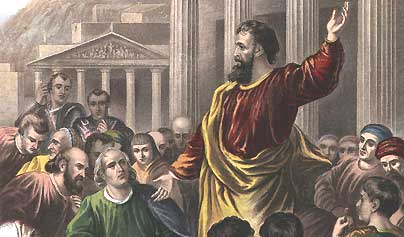 They all stood there as people who were alive with bones, sinews, organs, muscles, skin, and flesh. But there was no Spirit within them. But as the apostles spoke in other languages, the living dead heard the mighty acts of God in their native tongues. And the Holy Spirit gave Peter a sermon to preach. He preached to those people who lived but were dead. Each of them heard in their own language of the death and resurrection of Christ. The end result that day was that more than 3,000 souls were added to the number of God’s army.
But God still isn’t done. There are still more dead to raise. There are more soldiers to be added to God’s army. God still has more sermons to preach to the dead so they can be raised to life.
You and I are dead in our trespasses and sins. We have dead hands that have clicked on images and videos that fill our skulls with death. Those dead hands have neglected to help our neighbors when possible. We have dead jawbones that have been used to speak gossip and lies about others. We have dead feet that have brought us to places we should not have gone. We have dead hearts that coldly withhold love and forgiveness.
Yet, here is God once again. He has sent a preacher with nothing but a sermon. Let me tell you something, this preacher often wonders if a sermon is able to bring life out of death. A preacher who, when asked if these bones can live, has no answer but, “O Lord God, You know.”
Yet, as the Word of God is proclaimed here in this valley of death, the Spirit of God is at work to create. The Word of God is always creative. The Word carries with it the power to call into existence that which does not exist.
 So hear again, you bones, the Word of God. Your Savior has atoned for your sin. Christ Jesus has passed from death to life. Through God’s Word, He breathes on you today. His breath is His life-giving Spirit. By your own reason and strength, you cannot believe in Jesus Christ, your Lord. But the Holy Spirit is here now calling you through the Gospel, enlightening you with His gifts, and sanctifying and preserving you in the one true faith. He daily forgives abundantly all your sins. And at the last day, He will raise up you and all the dead and will grant everlasting life to you and to all who believe in Christ. This is most certainly true. Amen.
The peace of God, which surpasses all understanding, will guard your hearts and minds in Christ Jesus. Amen.
 11 “And I am no longer in the world, but they are in the world, and I am coming to you. Holy Father, keep them in your name, which you have given me, that they may be one, even as we are one. 12 While I was with them, I kept them in your name, which you have given me. I have guarded them, and not one of them has been lost except the son of destruction, that the Scripture might be fulfilled. 13 But now I am coming to you, and these things I speak in the world, that they may have my joy fulfilled in themselves. 14 I have given them your word, and the world has hated them because they are not of the world, just as I am not of the world. 15 I do not ask that you take them out of the world, but that you keep them from the evil one. 16 They are not of the world, just as I am not of the world. 17 Sanctify them in the truth; your word is truth. 18 As you sent me into the world, so I have sent them into the world. 19 And for their sake I consecrate myself, that they also may be sanctified in truth.”
 You probably start with Christmas Good Friday, and Easter, of course. Maundy Thursday might come next. Throw Pentecost in there too. But then what? Tap your pencil on your notepad a few of times, and scratch your head. Think through the Apostle’s Creed. You confess that Jesus was “born of the Virgin Mary, suffered under Pontius Pilate, was crucified, dead, and buried. On the third day, He rose again from the dead.” Well, you’ve hit all those, and Pentecost comes up when you get to the Third Article, “I believe in the Holy Spirit.” But notice that your list has skipped over the Ascension. “[Jesus] ascended into heaven and sits at the right hand of God the Father Almighty.”
 Risen Jesus is now at the right hand of God the Father. God’s right hand is not a particular place that we can think of. Instead, it is representative of the whole power of the omnipotent God. Jesus is where all God’s power and authority is, and He promises that He is with you. He is with you always. And He is with you even to the end of the age. Because He is going to the Father, Jesus prays this prayer, He speaks these things, for you so that you may have His joy fulfilled in you – even while you live as an alien in this sin-filled, hostile world.
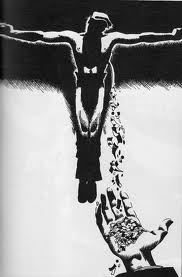 Brothers and sisters, Jesus says we are in the world, but we are not of the world – an important distinction. Jesus does not call you to change the world. The only thing that can change this world is Christ’s death and resurrection which has already redeemed us and all of creation. But that doesn’t mean that we can just sit back and relax either. We must speak out against sin. But even more importantly, we must announce the forgiveness that Jesus’ death and resurrection has won. We are kept in this world to be evidence of God’s forgiveness. Our lives are witness to the grace and mercy we have received in Christ. The Word which makes us holy is the Word of forgiveness that we are left in this world to proclaim.
 The disciples didn’t either. Remember, Jesus is speaking these words to the disciples just moments before He is betrayed and delivered to be crucified. The disciples did a poor job of loving Jesus that night. They did not stay awake and watch with Jesus even one hour as He prayed. The disciples all fled, abandoning Jesus when He was arrested. When a little servant girl asked Peter if he was one of Jesus’ disciples, he denied it three times.
 God’s love for us is not contingent upon our actions. Jesus has already laid down His life for you. Because He was crucified for you, you know that He loves you. He loved you while you were still His enemy. While you were a sinner, Christ died for you (Ro. 5:8). Jesus commands you to do nothing more than believe that His death is for you. Jesus commands you to do nothing more than abide in His love.
 Vines, vines, vines all over the place. Scripture is literally crawling with vines. Jesus is making a big statement in these verses – calling Himself the “true vine.” So we’re going to take a little time to see how God speaks about His vine in the Old Testament.
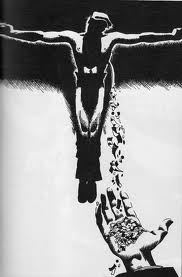 Soak up the Word of God. Read it daily. Come here and drink God’s Word as it comes through the songs, hymns, liturgy, readings, and sermons. Let the rain of your baptism, which is water connected with the Word, precipitate through your whole life. Open your lips to receive the nourishing sap of Christ’s body and blood given in bread and wine.
 The good shepherd lays down his life for the sheep. 12 He who is a hired hand and not a shepherd, who does not own the sheep, sees the wolf coming and leaves the sheep and flees, and the wolf snatches them and scatters them. 13 He flees because he is a hired hand and cares nothing for the sheep. 14 I am the good shepherd. I know my own and my own know me, 15 just as the Father knows me and I know the Father; and I lay down my life for the sheep. 16 And I have other sheep that are not of this fold. I must bring them also, and they will listen to my voice. So there will be one flock, one shepherd. 17 For this reason the Father loves me, because I lay down my life that I may take it up again. 18 No one takes it from me, but I lay it down of my own accord. I have authority to lay it down, and I have authority to take it up again. This charge I have received from my Father.”
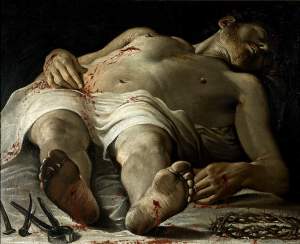 Jesus does say, “I am the good shepherd. The good shepherd lays down his life for the sheep.” What makes Jesus the Good Shepherd is that He dies – nothing less. He dies for His sheep. The Good Shepherd has blood, His own blood, on Him. The Good Shepherd has holes in His hands and feet, wounds that He suffered on the cross for you. Jesus, the good, fitting, competent Shepherd suffered, bled, and died so that He could be your Shepherd. The kind of shepherd you needed. You needed a shepherd to be really, truly abandoned and condemned by God because of your sin. Jesus, your Shepherd, died a real death and was buried in a real tomb. Your sin was that serious of a problem.
 Our problem is that we poor, wretched sinners dash ourselves to pieces against the holy, righteous God. We cannot avoid Him. And the only solution for our true problem – our sin – is the death and resurrection of Jesus, the Good Shepherd. The good news is that the good, fitting Shepherd does lay down His life for the sheep.
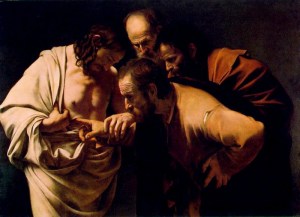 26 Eight days later, his disciples were inside again, and Thomas was with them. Although the doors were locked, Jesus came and stood among them and said, “Peace be with you.” 27 Then he said to Thomas, “Put your finger here, and see my hands; and put out your hand, and place it in my side. Do not disbelieve, but believe.” 28 Thomas answered him, “My Lord and my God!” 29 Jesus said to him, “Have you believed because you have seen me? Blessed are those who have not seen and yet have believed.”
 But the door doesn’t come crashing down; it isn’t unlocked; it doesn’t even open. Jesus simply appears there in the room with them to say, “Peace to you.” Jesus shows the disciples His hands and side, and the disciples were filled with joy. And Jesus repeats Himself, “Peace to you. As the Father has sent Me, even so I am sending you.” Then, Jesus breathes on them and says, “Receive the Holy Spirit. If you forgive the sins of any, they are forgiven them; if you withhold forgiveness from any it is withheld.” (More on that a little later.)
 Another pastor (Rev. Bryan Wolfmueller) uses this analogy: Imagine you are found guilty of a crime and locked in prison. As you sit there in prison, a judge looks over your case and rules that you are innocent. He sends an order to the guard of your prison to set you free. The guard comes with the keys, unlocks your cell, and releases you back into society. Now, who set you free, the judge or the guard? Honestly, the answer is both.
 In the name of Jesus. Amen.
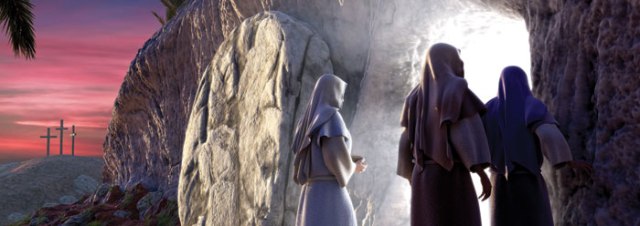
 But death has died. The grave cannot hold you. Jesus lives. He has risen out of death and back to us. He came out as a king to meet His people. He is a victorious general returned from war. Jesus burst down the prison walls of death from the inside. Death could not hold Him, and it cannot hold you.
 The Gospel tells us that, contrary to everything that is right and “fair,” Jesus is judged guilty for your sin. Jesus bore your sin in His body on the tree that you might die to sin (1 Pet. 2:24). God made Jesus who knew no sin to be sin that you might become the righteousness of God (2 Cor. 5:21). As John the Baptizer said, Jesus is the Lamb of God who takes away the sin of the world (Jn. 1:29). In other words, Jesus has stolen your sins from you. He took possession of them, they are His.
 Three men are tried and condemned as criminals. They are sentenced to be hung until they die. Two of them, the two on the outside, are getting what they deserve. But not the man in the center. He is innocent. But all three share the same execution together. They are brothers in death.
 So your death, your parting company with sin, will seem a loss to you, but it is not so. For when you die, you are cast on God. The God who brings life out of death – only out of Jesus’ death. He died the big death for the sin that separates you from God. With your sin He suffered, with your sin He was rejected and abandoned by God. Sin cannot condemn you again. For the death Jesus died he died to sin, once for all, but the life he lives he lives to God. So you also must consider yourselves dead to sin and alive to God in Christ Jesus (Ro. 6:10-11). Amen.

You must be logged in to post a comment.