John 2:1-11
1 On the third day there was a wedding at Cana in Galilee, and the mother of Jesus was there. 2 Jesus also was invited to the wedding with his disciples. 3 When the wine ran out, the mother of Jesus said to him, “They have no wine.” 4 And Jesus said to her, “Woman, what does this have to do with me? My hour has not yet come.” 5 His mother said to the servants, “Do whatever he tells you.” 6 Now there were six stone water jars there for the Jewish rites of purification, each holding twenty or thirty gallons. 7 Jesus said to the servants, “Fill the jars with water.” And they filled them up to the brim. 8 And he said to them, “Now draw some out and take it to the master of the feast.” So they took it. 9 When the master of the feast tasted the water now become wine, and did not know where it came from (though the servants who had drawn the water knew), the master of the feast called the bridegroom 10 and said to him, “Everyone serves the good wine first, and when people have become drunk, then the poor wine. But you have kept the good wine until now.” 11 This, the first of his signs, Jesus did at Cana in Galilee, and manifested his glory. And his disciples believed in him.
In the name of Jesus. Amen.
If you ask a woman about a wedding, you are going to hear about the colors of the bridesmaids’ dresses. You’ll hear the flowers described as only a botanist or florist could. She’ll tell you about the style of the bride’s dress – A-line, mermaid, trumpet, column, bell gown. (Yes, I had to look those up.) Then, she’ll go on to describe the more specific details of the gown. She’ll tell you about the décor of the reception and the menu of the meal. You’ll probably even get a lot of details about the wedding cake. Finally, you’ll hear about the dance and the DJ. If you ask a man about a wedding, he’s likely to say, “It was good.” Or, if you ask me, I’ll probably say, “It was successful.” I have yet to attend an unsuccessful wedding.
The Apostle John tells us about a wedding, and he does it as a man would. He mainly tells us about these six stone water jars that are there for the Jewish rites of purification. To our ears, that detail is brief and mundane. But these stone jars tell us more about the wedding and the miracle than we might expect.
Stone jars were especially desirable for the purification rites because they did not become unclean when they came into contact with things that were unclean. When clay jars, which were more common, when clay jars were used for purification, they became unclean and, according to God’s command, had to be broken afterward (Lev. 11:33). But stone jars didn’t become unclean, which meant they were great for the purification rites, but it also meant they were expensive. The fact that this wedding had stone jars indicates that either the couple or their relatives were somewhat wealthy. But even with their wealth, this couple has a problem because they run out of wine during the feast.
Mary lets Jesus know about the lack of wine. And based on Jesus’ response, it doesn’t sound like He’s going to do anything about it. Of course, He does. He provides 120-180 gallons of the finest wine to people who have already had enough wine that they cannot appreciate the goodness of the wine Jesus provides. In fact, the master of the feast figures it’s a mistake. When he tastes it, He assumes someone messed up. You’re supposed to serve the top-shelf stuff first, only later do you break out the boxes of wine. Our English translations soften the master’s words, but he literally says, “Everyone serves the good wine first, and when people have become drunk” (same word that is repeatedly condemned in the New Testament [Ro 13:13; 1 Co. 5:11, 6:10; Gal. 5:21; Rev. 17:2, 6, etc.]), “when people have become drunk, then the poor wine.” In short, Jesus is giving people what they do not deserve and cannot fully appreciate.
Dear saints, this Is the definition and nature of grace and mercy.
Can you imagine John the disciple, who was there at that wedding, later in life? John, by the way, was the only disciple to die of old age. He became the bishop of Ephesus. Pastor John would have been the guest at many dinners in many houses. But at every meal, he would taste the wine, remember this wedding in Cana, and smile and say, “Not as good.”
The amazing thing is how few people at the feast actually know the Source of this fine vintage. The bride and the groom didn’t know. The master of the feast didn’t know. The guests didn’t know. Only the disciples and the servants know. The humble and the lowly see the work of Jesus.
Yet John tells us that this is how Jesus manifested (lit. “epiphanied”) His glory. That is the main point John wants us to take from this text. He wants us to see Christ’s glory, but we have a problem with that. We don’t see the big deal. Turning water into wine seems like a nice party trick, but nothing compared to walking on water, feeding the hungry, cleansing lepers, making the lame walk, causing the blind to see the deaf to hear, or raising the dead. In our minds, those are the “real” miracles. What’s the big deal about turning water into wine? That is something God does all the time. Every drop of wine across the world in all of history was once water inside a grape. All Jesus does here is speed things up a bit.
Dear saints, this is a call for us to open our eyes to the everyday, manifest glory of your God. Every moment, you are surrounded by the glory of our God. We notice it, at times, when we see a beautiful sunset, a pristine meadow covered in fresh snow, beautiful sun dogs, etc. But don’t miss the more regular manifestations of the glory of God. Don’t let the regularity of glorious things you see every day cause you to think they are mundane. See the glory of God in how a mom feeds her infant, how our food comes up from the ground, and how a child learns to read. If we would just open our eyes we would see the wonders of God all around us, and we would be surprised at every turn.
Especially, don’t let the manifest glory of God pass by you when you are here in church. When you hear the Scriptures read, the Holy Spirit is working on you in a miraculous way. When you hear the absolution, God is actually removing your sins from you. When you come to the altar today, Jesus is actually feeding you with His Body and Blood for the forgiveness of your sins. Every week throughout the entire service, God is visiting you with His mercy and grace to give you what you could not earn or deserve. He is purifying you, cleansing you, and strengthening you to live holy lives because no amount of your own efforts to cleanse yourself will ever work.
Which brings us back to those stone water jars. The sad thing with the stone water jars is that we see how far from the Gospel God’s people had fallen. Their religion had declined to a cold set of laws and rituals. When God had given the purification laws in Leviticus, it was to remind His people of their uncleanness and that true purity and holiness comes only from God. But the rabbis had added to God’s laws all sorts of unnecessary ceremonies and rituals. You remember when the Pharisees accused Jesus’ disciples of eating with unwashed hands (Mk. 7:1-8). They had certain ritual washings that you had to do in order to interact with others socially. You had to pour the water a certain number of times over each hand. And each of pouring had to be in a prescribed direction. These were invented regulations from the Pharisees to be spiritually clean. All of these things were works to make yourself right.
But now what happens once those jars are no longer filled with water and instead are filled with wine? That ritual washing is no longer possible. We are invited to imagine another woman go to the stone jars and find that they aren’t filled with water, so she goes to her Pharisee son and says, “They have no water.”
These jars had been set apart for self-purification, and Jesus uses them to bring the joy of wine (Ps. 104:15) to a wedding feast. Jesus overtakes the works and efforts of man and brings them into submission to Him. Whenever Jesus comes, all human efforts to become righteous and holy are taken away and only joy is left in its place.
When Jesus comes to forgive your sins, He takes away all your works and efforts to make yourself holy or righteous. In their place, Jesus brings His eternal joy. This sign is not just pointing to Jesus’ power, this sign is pointing to what Christ has come to do. He has come to bring the best, to overflow your cup, and to bring you to His eternal kingdom.
Dear saints, our Lord manifests His glory with His first sign at a wedding in Cana because Jesus has come to end the divorce. Jesus came to end the divorce between men and women, between Jews and Gentiles (Gal. 3:28), and most importantly between God and man. Because of what Christ has done, we will be reunited with God just as we were meant to be. And this same God now welcomes you to His altar to have a foretaste of the great wedding feast to come. Amen.
The peace of God, which surpasses all understanding, will guard your hearts and minds in Christ Jesus. Amen.
 Our texts today seem to have conflicting messages. This text from Romans 15 has a lot to say about endurance, encouragement, hope, harmony, joy, and peace. It’s nice. But in our Gospel lesson, when Jesus talks about the day of His return, He speaks of signs in the sun and moon and stars. He mentions the distress of nations in perplexity, the roaring of the sea and waves, and people fainting with fear and foreboding because of what is coming on the world. Our Lord declares that the powers of the heavens will be shaken.
 The castle doors and the walls are shaking. Boulders are hurled against the fortress. Windows are shattering and dust is falling from the ceiling. The floor you are standing on is rocked by the sounds of battle all around you.
 What was defiled was made holy. What was dead was raised. Where there were sinners, Christ brought forgiveness. And all of that was just the beginning. All of this was written to give us encouragement to endure in the hope that the healing Christ brought to the broken of this world would be ushered into the entire creation – into the new creation.
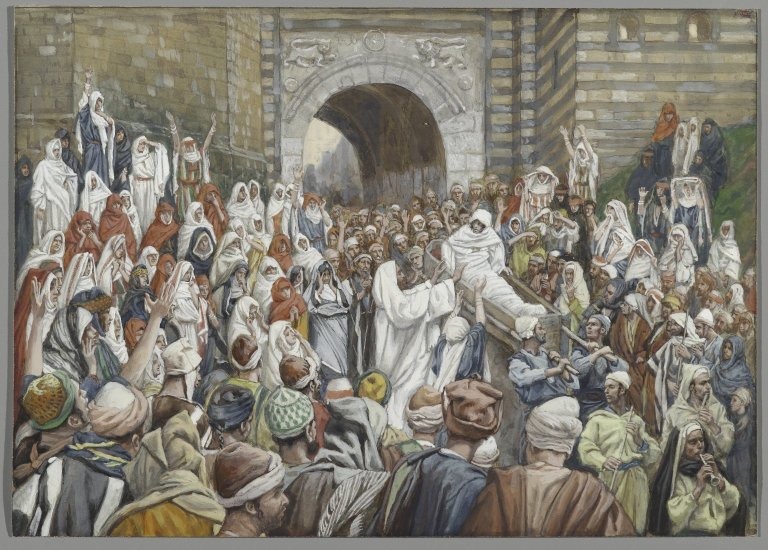 If Menards can have Christmas decorations out already and if the Hallmark Channel can do nonstop Christmas movies in July, then the Church can certainly have Easter in October. In fact, we have to celebrate Easter because this text screams Easter – loud and clear. But always before Easter, there is Good Friday. Before resurrection, there must be death. Good Friday sadness is a prerequisite to Easter joy. We have to see that first.
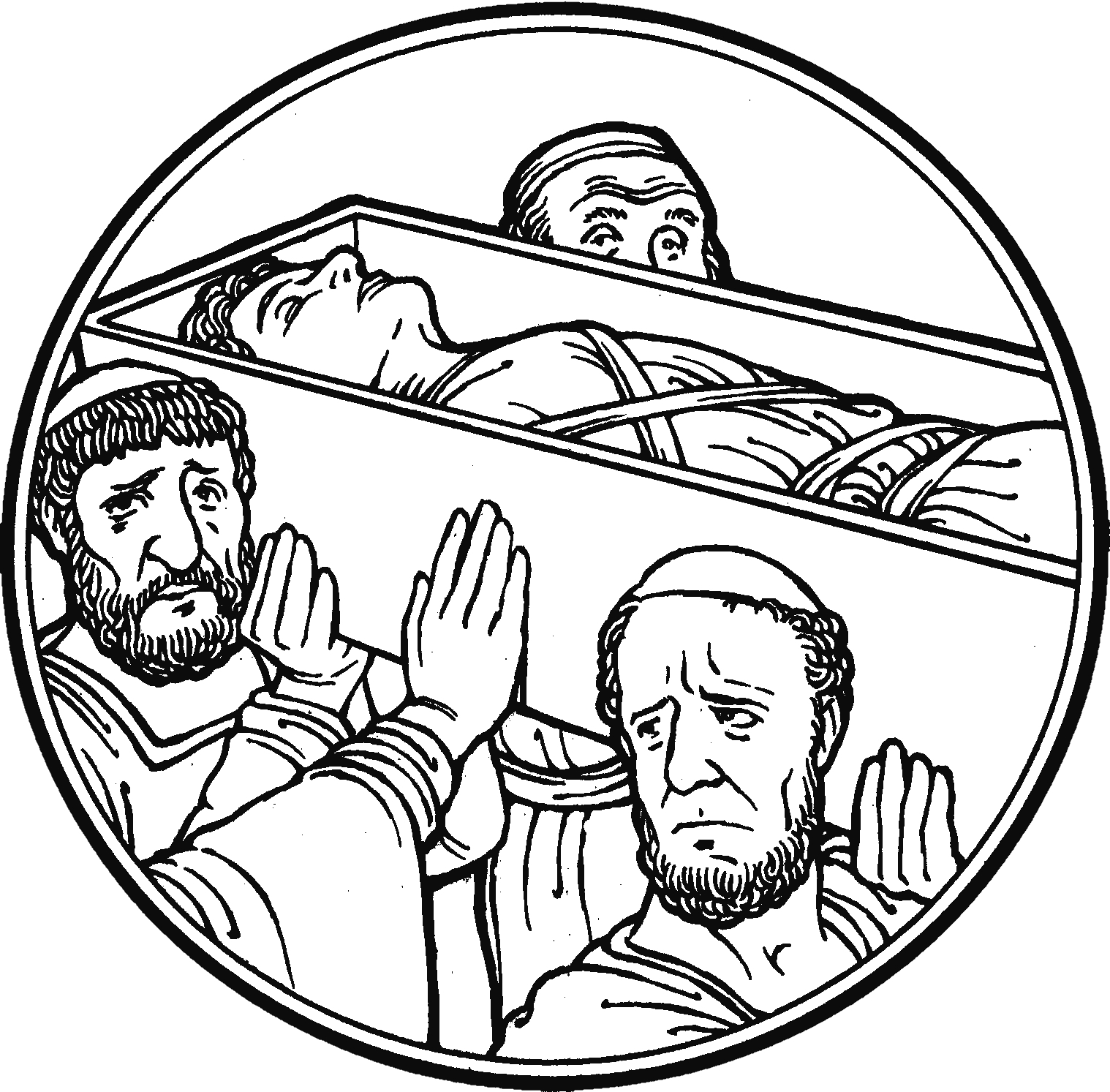 Then, Jesus walks past the pallbearers, straight up to the bier, touches it, and says, “Young man, I say to you, arise,” as though He was waking up a sleepy teenager late on a Saturday morning. The boy gets up and begins to speak. I wonder what he said.
 Jesus marches toward your funeral procession, and He does not stop or yield. Jesus does not give way or defer to death. Instead, Jesus defeats death with His death and resurrection, each and every time He meets it. Jesus meets you here today as you plod along in your personal funeral procession and gives you life. Jesus meets you at this altar to give you His living Body and His life-giving Blood.
 In each of these parables, what is lost – the sheep, the coin, and even the son – is not valuable. That is the point of the parables. This is most apparent in the parable of the lost coin. The party the woman throws costs more than the coin that she recovered. That one sheep was worth less than the cost of the party that the shepherd threw. Even that one son was not worth the cost of the party. And don’t pish-posh that statement.
 Because of our sin, we are broken. No one wants to admit it, but we are happy when our neighbor suffers and we are sad when he rejoices. The Germans created a word for this by combining their words for ‘harm’ and ‘joy’ into one word, Schadenfreude. The worst part is we justify our Schadenfreude. We enjoy others’ pain because we figure they deserved it. We want others to get what we think is justice. But this is the opposite of compassion and is from the devil.
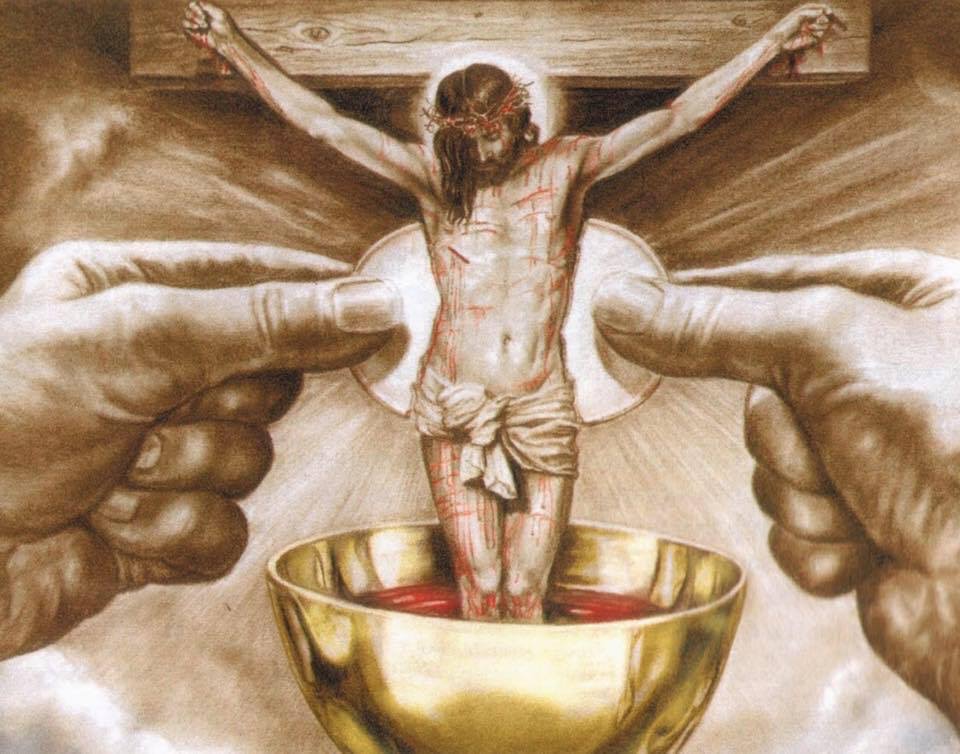 he restored and received his son back into the family. Sinner, your heavenly Father has fattened up Jesus, His faithful Son, to serve as food for you who are unworthy.
 This ‘little while’ has lasted nearly two thousand years and counting. Yet, two thousand years is nothing when you compare it to everything that lies ahead for you in eternity. And it is even more miniscule when you realize that it will only be a few short years before you meet Jesus face-to-face – even if you live to be one-hundred-twenty. But we still have a problem. During our pain and anguish, our difficulties and seasons of tribulation, time seems to stand still while we suffer. But we can take heart and be encouraged. Jesus says it will only be ‘a little while.’
 Now, there is no denying that your suffering is real. Some of you are currently enduring that suffering in severe ways right now. We pray that your relief will be soon and swift. But know this: God is working through those sorrows. He is using your trials to keep you close to Himself, to work virtue in you, to teach you to trust in Him. This does not mean that you should rejoice because of trials and tribulations. Instead, it is a reminder that you can rejoice in spite of and in the midst of that suffering. Like buds on a tree indicate that full blossom is coming, those troubles, trials, sorrows, and crosses are harbingers of the joy that is to come.

You must be logged in to post a comment.