Proverbs 9:1–10
1 Wisdom has built her house;
she has hewn her seven pillars.
2 She has slaughtered her beasts; she has mixed her wine;
she has also set her table.
3 She has sent out her young women to call
from the highest places in the town,
4 “Whoever is simple, let him turn in here!”
To him who lacks sense she says,
5 “Come, eat of my bread
and drink of the wine I have mixed.
6 Leave your simple ways, and live,
and walk in the way of insight.”
7 Whoever corrects a scoffer gets himself abuse,
and he who reproves a wicked man incurs injury.
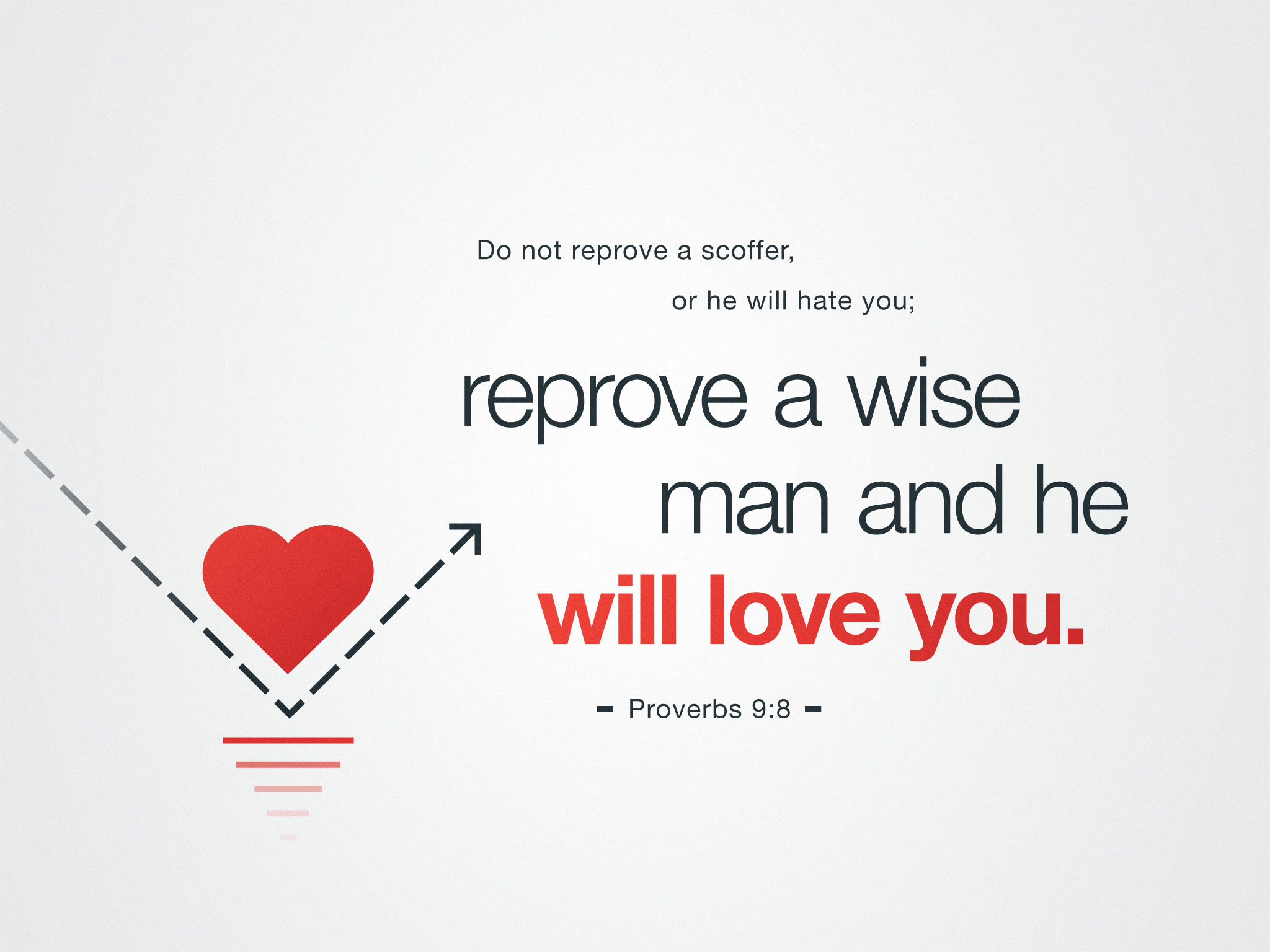
8 Do not reprove a scoffer, or he will hate you;
reprove a wise man, and he will love you.
9 Give instruction to a wise man, and he will be still wiser;
teach a righteous man, and he will increase in learning.
10 The fear of the Lord is the beginning of wisdom,
and the knowledge of the Holy One is insight.
In the name of Jesus. Amen.
What comes to mind when you think of a wise person? Maybe you picture an individual. Some of you see a gray-haired man with a long beard and weathered robe sitting on top of a mountain. Maybe, you think of your grandpa, dad, or a former pastor – not your current one! Maybe, when you think of a wise person, you think of characteristics and qualities. Someone who doesn’t immediately react. Someone who ponders and mulls over possibilities before responding to different questions and situations that arise.
We might think a wise person is someone very put together and successful. Someone who is well off financially and made the right career choices and investments. We build up this wise person into someone who never makes mistakes. Here’s where we need our first correction because a person who never makes mistakes is not a wise person – that’s a perfect person. Wisdom does not mean a person is always right – not even close. Instead, a wise person is someone who is good at being wrong. And what I mean by that is that a wise person is someone who listens to correction. A wise person is someone who knows they don’t know everything and is willing to be learn from their mistakes and from the experience of others.
Our text says, “Whoever corrects a scoffer gets himself abuse, and he who reproves a wicked man incurs injury. Do not reprove a scoffer, or he will hate you” (Pro. 9:7-8a). When we hear those lines, we might think that is advice to keep us from wasting our time and correcting someone who won’t take correction. In other words, we interpret that as a way to disdain others. “I pointed out his mistakes and how he was wrong, but he didn’t like it and lashed out at me. He must be a wicked scoffer because he didn’t listen to the wisdom I tried to give him.”
There is truth to that interpretation, but I don’t think that is how we should understand those verses. Instead, the Holy Spirit would correct us and have us understand those verses a diagnostic tool on ourselves when we are corrected. In other words, when someone corrects or reproves you, how do you respond? Do you lash out at that person? Do you offer up all sorts of excuses to defend your actions? Do you hate it when people correct you? If you do, you are the wicked scoffer.
Here’s why we should take it that way. Look again at what comes right after those verses, “Reprove,” same word used above, “Reprove a wise man, and he will love you. Give instruction to a wise man and he will be still wiser; teach a righteous man, and he will increase in learning” (Pro. 9:8b-9) A person who is truly wise welcomes correction when he is wrong. A wise person knows he doesn’t know everything and is willing to keep learning more and more. A wise person is even willing to be rebuked, “You messed up here.”
Now, receiving that kind of reproof and rebuke isn’t fun. No one likes being corrected. We all resist admitting that we made a mistake, sinned, or failed. But after the sting of being corrected wears off, we should step back, reflect, repent, and learn from those mistakes and sins so we can do better in the future. When we do that, we can be actually grateful for the person who rebuked us because that person has had a hand in making us better, smarter, and wiser.
That is the path of wisdom: Humbly receiving correction and rebuke. Pondering advice and reproof. And implementing changes to improve and progress toward being a better, more complete person.
Now, all of this is surface level stuff and is true for everything. It’s true for how to be a boss and manage employees; how to treat a patient; how to keep track of your finances; how to dribble a basketball; and how to sweep a floor, wash the dishes, and mow a lawn. Even the most experienced person can be corrected and improve at those tasks. Recognizing that other people have good advice and insight to make us better at those things is to be wise. The thing about that is that you could hear a lecture about this kind of thing from a TED talk, a self-improvement lecture, or a motivational speech. But this is a sermon, so let’s take this further.
First and most obviously, we need to take correction, instruction, and reproof from the Scriptures. What the Bible calls a sin is sin. When you do what God has forbidden or failed to do what God demands, recognize that as the sin that it is. When you are reading the Scriptures and realize that you need to repent, well, repent.
Remember how Adam, after he had eaten the forbidden fruit, had his eyes opened to realize his nakedness and shame. Then, Adam heard the sound of God walking in the Garden and tried to hide from God (Gen. 3:8). But God wasn’t coming to destroy Adam; He was coming to give Adam chance after chance to repent. I’ve taught this so often that you might be tired of hearing it, but we all need to hear this repeatedly.
When God calls out to Adam, “Where are you?” He is giving Adam an opportunity to repent. When God asks, “Who told you were naked? Did you eat from the tree I commanded you not to eat?” God is giving Adam a second and third opportunity to repent. Adam does finally admit his sin, but when he does, he blames God, “The woman whom You gave me, she gave me the fruit and I ate” (Gen. 3:9-12). Even though Adam barely admits his sin and even accuses God for his transgression, God still responds in mercy promising to send the Seed of the Woman who would crush the serpent’s head (Gen. 3:15).
Let me be clear, this doesn’t mean you should be like Adam. Instead, learn from his example and do better than he did. When the God says, “You are a sinner,” say, “Yes. I’m a sinner. I need Your forgiveness.” And know that God is a better forgiver than you are a sinner.
Secondly, learn from the example of the people in Scripture when they sin and are reproved. In 1 Cor. 10:1-12, Paul talks about all the things God had done for His people when He delivered them from slavery in Egypt, baptizing them as they passed through the Red Sea, and nourishing their bodies with food and water. But they still sinned. They made the golden calf, they repeatedly grumbled, and rebelled. They were judged, bitten by poisonous serpents, and destroyed by their enemies. Paul’s conclusion to all of that is, “These things happened to them as an example, but they were written for our instruction” (1 Cor. 10:11; Ro. 15:4).
Wisdom includes learning from their experiences. So, know your Bible. Learn from Abraham’s folly in trying to make God’s promises come early (Gen. 16). Be instructed by sinners like David and Peter who repented of their great sin and failures and were restored. One of the reasons Scripture records the failures of the heroes of the faith is so we would not fail, fall, and sin in the ways they did. Another reason is so we can see how God extends His abounding mercy to them, even in the midst of their failures.
Where do we get this wisdom? Our text tells us, “The fear of the Lord is the beginning of wisdom, and the knowledge of the Holy One is insight.” Here is where we need another correction. Fear comes up a lot in Scripture, but is fear a good thing or a bad thing? In many places in Scripture, fear is the thing from which Christ came to rescue us. “Fear not,” is the most common command in the Bible. You heard it in last week’s Epistle reading, “There is no fear in love, but perfect love casts out fear. For fear has to do with punishment, and whoever fears has not been perfected in love” (1 Jn. 4:18). Yet at the same time, Scripture says about God, “With You there is forgiveness that you may be feared” (Ps. 130:4). The Bible calls us to fear, and strangely we are to fear God. This can leave us confused. On one hand, we are told Jesus frees us from fear. And on the other hand, we are told to fear God. Why would God want us to fear Him?
There are two types of fear in Scripture. One is a sinful fear that runs away from God like Adam did. James talks about that kind of fear when he says that the demons believe in God and shudder (Jam. 2:19). But the right fear of God is completely different. This right fear of God is not being afraid of God. The right fear of God is spoken of in Isaiah 8:12-14 which says, “Do not call conspiracy what this people calls conspiracy, and do not fear what they fear, nor be in dread. But the Lord of hosts, Him you shall honor as holy. Let Him be your fear, and let Him be your dread. And He will become a sanctuary.”
A right understanding of the fear and love of God that Scripture talks about recognizes the two are not opposites. It’s not like the fear of the Lord is cold water that extinguishes your love for Him. No. When you fear the One who gives you His mercy, grace, and forgiveness, you are corrected and realize that there is nothing left to be afraid of. He is in control of all the other things that might cause you fear. When you rightly fear the Lord of hosts, then you will not fear what others fear because He can and will deliver you from whatever other dreadful things might come your way. Again, with your God there is forgiveness, that He may be feared (Ps. 130:4).
Finally, dear saints, God, who is Wisdom itself, calls you to come to His feast. We might think such a banquet is only for the wise and that we have to attain wisdom on our own before attending this feast. But if that is what you think, you need one more correction. God, who is Wisdom itself, calls and invites you who are simple and lack sense. God calls all of us simpletons, “Come, eat of My bread and drink the wine I have mixed. Leave your simple ways and live, and walk in the way of insight.” Amen.
The peace of God, which surpasses all understanding, will guard your hearts and minds in Christ Jesus. Amen.


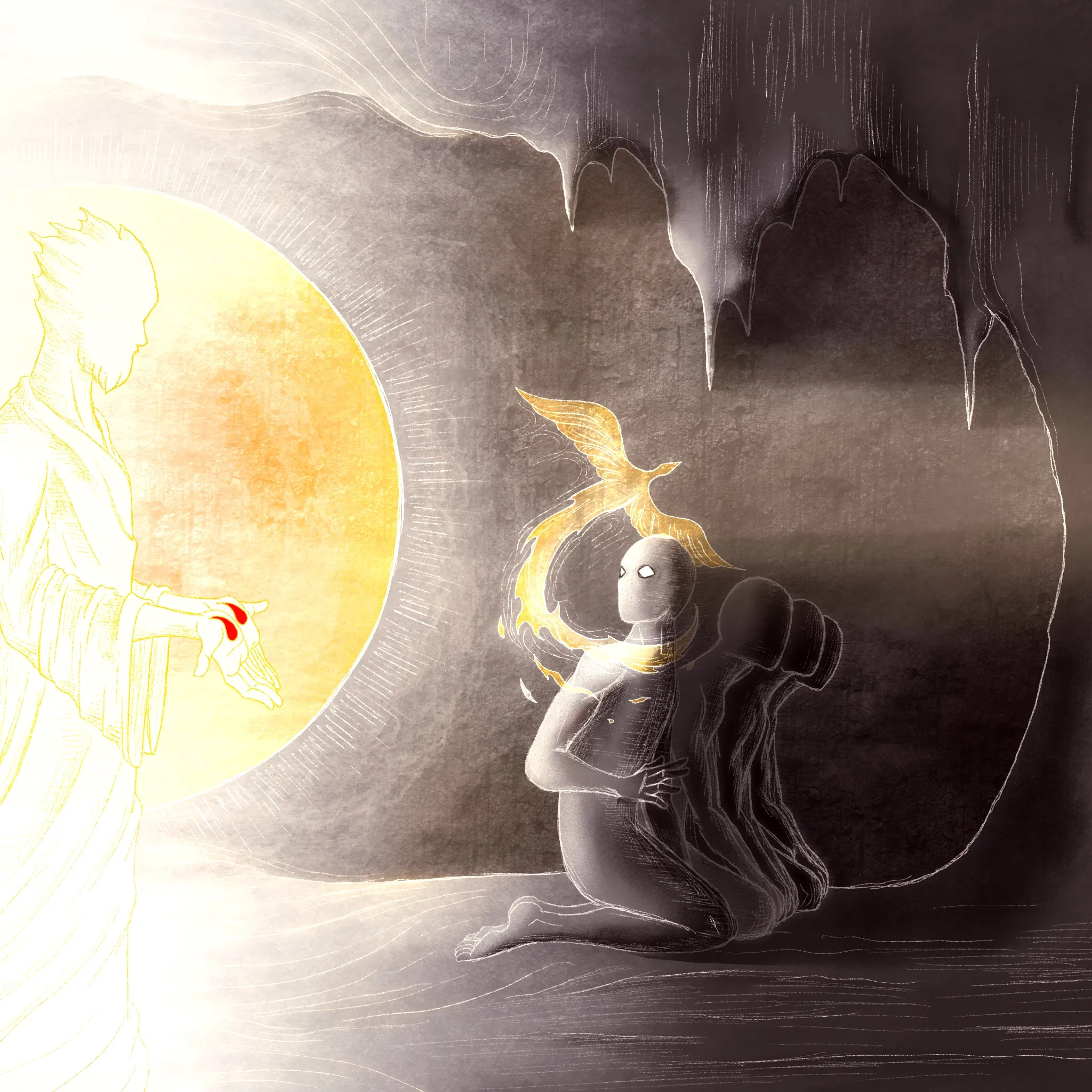
 Your heart has a wrong desire, and that false desire is conceived and eventually gives birth to sin. Then, when sin grows up, it brings forth death. Knowing this, we know Satan’s game plan. But it is helpful for us to see how the devil’s game plan plays out in real time, and we saw it in our Old Testament text (Gen. 3:1-21).
 When Eve looked at that fruit, she should have recognized, “That fruit is death.” Instead, she wrongly sees that it is to be desired to make one wise. This is the danger for us. There are things that are put in front of us and God says, “That’s bad, and it leads to death.” But instead of regarding those things according to God’s Word, we regard them according to how we see and think. We put ourselves over and above God and judge Him to be wrong. The devil entices us to think that God is the bad guy who is holding out on us, keeping us from having our heart’s desires. Then, we think we know better than God, and we fall for the temptation and into sin.
 Jesus has been fasting forty days and nights. I remember as a kid being hungry forty minutes after dinner. Jesus is famished. He is weakened by this fast. So, this temptation to turn stones into bread is a real temptation. The tempter again tries to exploit the gap between Jesus’ desires and what God has given. Jesus wanted food. Because He is man just like you and me, His stomach and His brain would have been screaming at Him, “Feed us!” But God has not yet given Jesus food. So Satan tries to get Jesus to take for Himself what God has not given.
 “to guard you in all your ways.” God the Father will protect Jesus in all His ways. But God didn’t send Jesus to earth to be some X-Games-temple-pinnacle jumper.
 So, dear saints, be wise. Know the devil’s attacks and tactics. The devil is going to use those tactics against you, but God has given you weapons against the devil, your flesh, and the world (1 Jn. 2:15-16). When the devil comes to tempt you, take up the weapon of prayer. Pray God’s Word and watch the devils flee. When your flesh tempts you, take up the weapon of fasting. If you are tempted to certain desires of your flesh, fast from those things. Tell your body, “Body, you aren’t in control.” And when the world tempts you with its vain riches, give. Be generous to the point that it makes you unable to afford falling into the temptations of this world.
 6 But at midnight there was a cry, ‘Here is the bridegroom! Come out to meet him.’ 7Then all those virgins rose and trimmed their lamps. 8 And the foolish said to the wise, ‘Give us some of your oil, for our lamps are going out.’ 9 But the wise answered, saying, ‘Since there will not be enough for us and for you, go rather to the dealers and buy for yourselves.’ 10 And while they were going to buy, the bridegroom came, and those who were ready went in with him to the marriage feast, and the door was shut. 11 Afterward the other virgins came also, saying, ‘Lord, lord, open to us.’ 12 But he answered, ‘Truly, I say to you, I do not know you.’ 13 Watch therefore, for you know neither the day nor the hour.”
 But thanksgiving, yes it recognizes the goodness of the thing, but it looks past that and sees the goodness of the giver of the thing. This is why Christians can give thanks in all circumstances (1 Th. 5:18). Even in the tough stuff, even in difficult times, in sorrow, and in afflictions that come to us in this broken world, you can know that everything comes to you from the very same hands that were nailed to the cross for you.
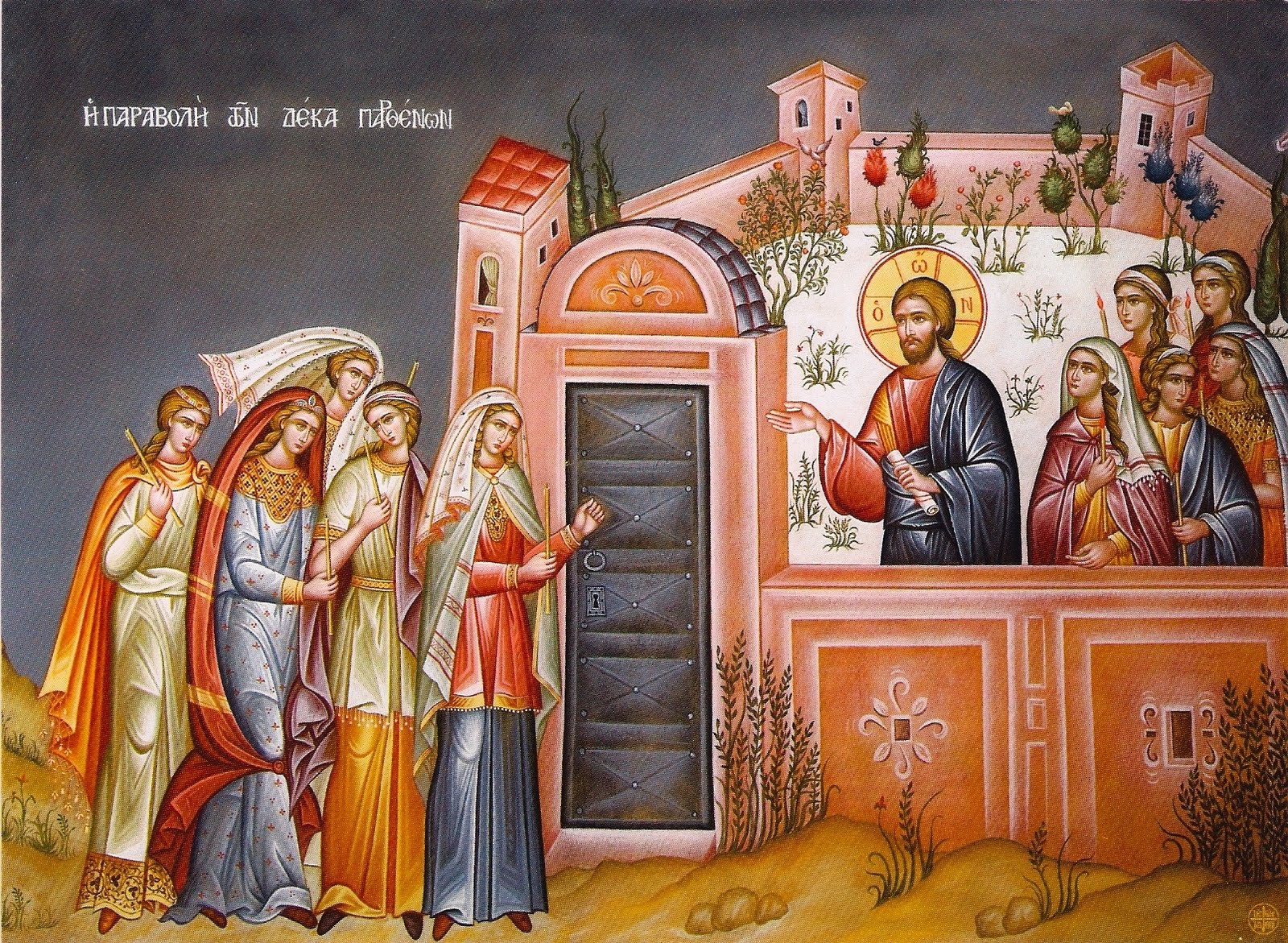 Now, to the parable. Honestly, it is very difficult, and the difficulty mainly lies in the fact that we don’t know enough about Jewish wedding customs in Jesus’ day to know why it was so important that these virgins have lit lamps when the groom arrived.

You must be logged in to post a comment.