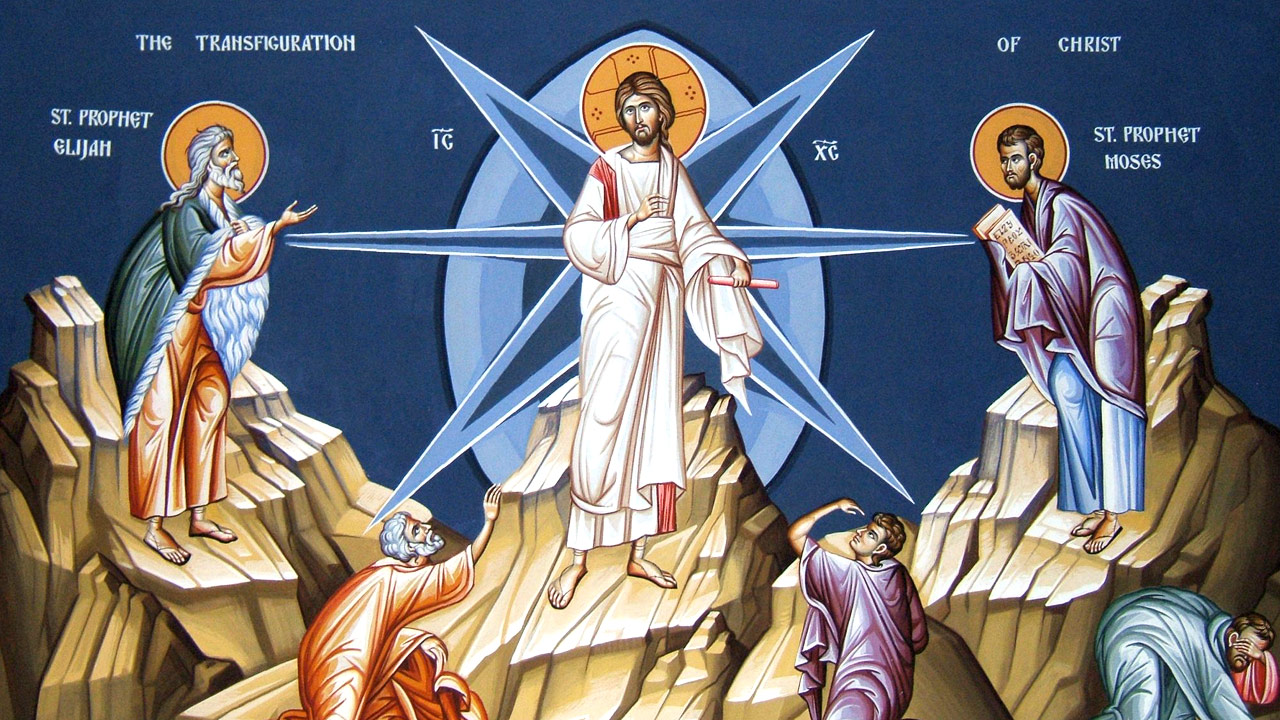
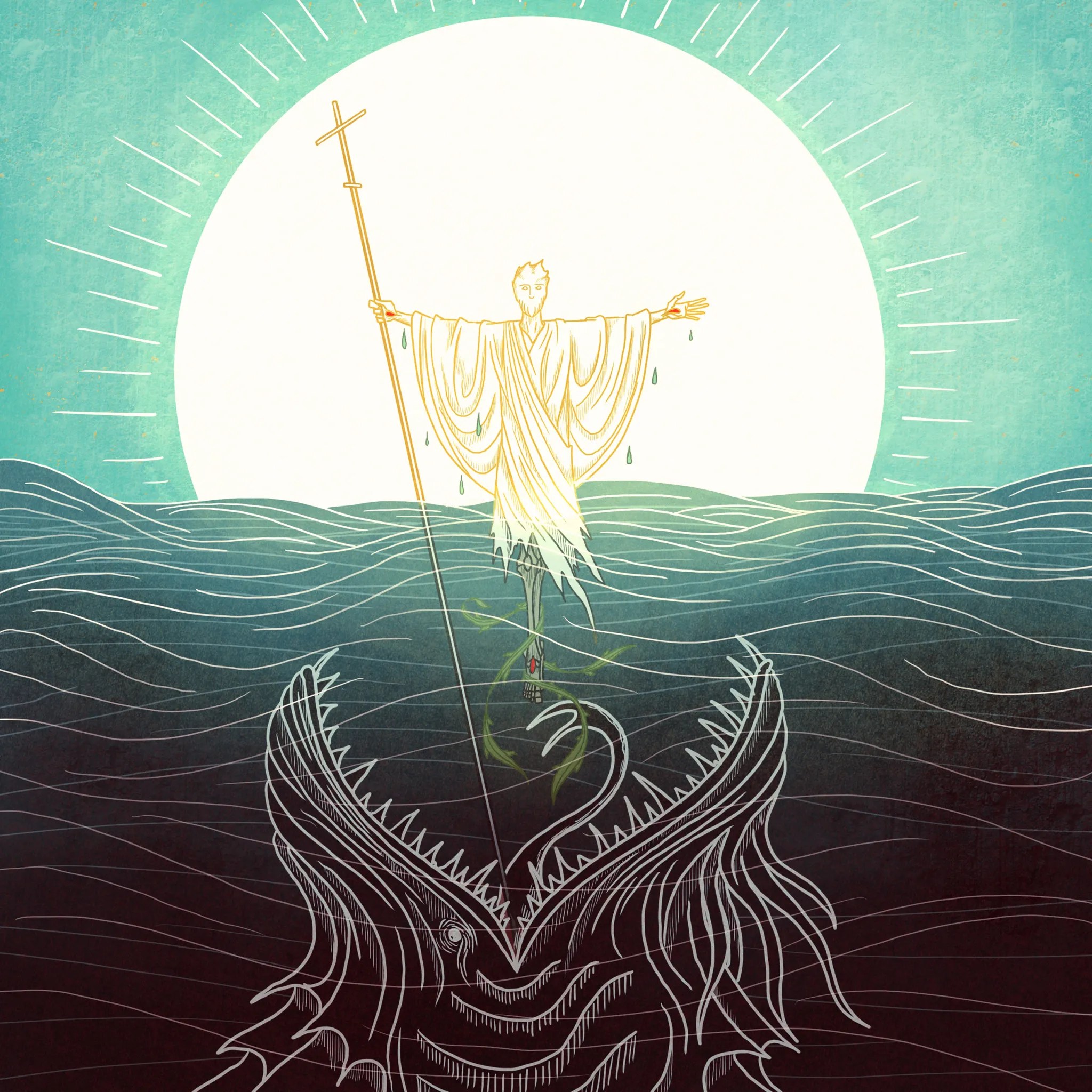
The Most Blessed Story Is True – Sermon on Matthew 5:1-12 observing All Saints’ Day

Matthew 5:1-12

1 Seeing the crowds, he went up on the mountain, and when he sat down, his disciples came to him. 2And he opened his mouth and taught them, saying: 

3 “Blessed are the poor in spirit, for theirs is the kingdom of heaven.

4 “Blessed are those who mourn, for they shall be comforted.

5 “Blessed are the meek, for they shall inherit the earth.

6 “Blessed are those who hunger and thirst for righteousness, for they shall be satisfied.

7 “Blessed are the merciful, for they shall receive mercy.

8 “Blessed are the pure in heart, for they shall see God.

9 “Blessed are the peacemakers, for they shall be called sons of God.

10 “Blessed are those who are persecuted for righteousness’ sake, for theirs is the kingdom of heaven.

11 “Blessed are you when others revile you and persecute you and utter all kinds of evil against you falsely on my account. 12 Rejoice and be glad, for your reward is great in heaven, for so they persecuted the prophets who were before you.”

In the name of Jesus. Amen.

“Blessed.” Nine times, Jesus proclaims a blessing in this text. Each of these blessings that Jesus speaks is the kind of story that we like – a rags to riches story. The poor, the down and out, the little, and the weak rise from their pitiful condition and get something good.

Other than the Bible, the book my nose has spent the most time in is Tolkien’s Lord of the Rings. And, I have to say the obvious, don’t just watch the movies, read the books – they’re infinitely better. The little hobbits “rise from their quiet fields to shake the towers and counsels of the Great,” and topple the dark lord, Sauron. We love that kind of story. We love how Cinderella ascends from mopping the floors of her wicked stepmother and waiting on her cruel stepsisters to live in the palace married to Prince Charming.

The stories where the small, weak, despised, and ostracized overcome all the obstacles and live happily ever after capture our attention. They are often a nice escape from reality because we know that not everything works out so perfectly. And even though we like to hear, “and they all lived happily ever after,” we know that real stories don’t end up that way. Cinderella grows old, wrinkly, and dies. The Ugly Duckling turns into a swan, but eventually gets entangled in a windmill. And Bambi either gets chronic wasting disease or shot during hunting season.

So, back to Lord of the Rings for just a moment: Old Bilbo was the one who found the ring of power which gave him an unnaturally long life. He has passed the ring on to his nephew, Frodo, and retired from adventuring at the elven house of Rivendell so he could settle down and write a book about his adventures. But when Bilbo finds out the ring must be taken on a perilous journey to Mount Doom to be destroyed, he figures it’s his job. He mourns for a bit saying, “I was just writing an ending for [my book]…. I had thought of putting: and he lived happily ever afterwards to the end of his days.” That last phrase, “to the end of his days,” is more realistic. Happily ever after can only last so long in this fallen world. Psalm 90:9 says, “we bring our years to an end like a sigh.” Deep down, we know that happily ever after doesn’t come in this world. Rags-to-riches stories rarely happen, and even when they do, those riches don’t last.

So, when Jesus sits down on the top of the mountain and teaches us the Beatitudes, we know our Lord doesn’t lie. We want our own happily ever after, so think we need to try to be what Jesus describes in order to be eternally blessed. But, when we hear who Jesus says is blessed, we take a step back. Who wants to be poor in spirit, mournful, meek, hungry, thirsty, and persecuted? We spend so much time and energy trying to avoid being those things. We want to be spiritually strong, not poor in spirit. We want to be happy and joyful, not mourning. We want to be powerful, not meek. And we typically avoid persecution at all costs.

Today, as we observe All Saints’ Day, it is important to remember that the Beatitudes are not attitudes that Jesus commands us to have. They are not Jesus’ advice on how we must arrange our lives to attain our own rags-to-riches, happily ever after ending. That approach turns the blessings Jesus gives here into be-curse-itudes. Instead, the Beatitudes are a description first of Jesus and then of who you are, dear saints, because you are in Jesus.

And we can say that because of what Christ has done. Christ’s story is a better but different kind of story than rags-to-riches. In fact, Christ’s is the only story that even makes rages-to-riches possible. It is the story, the true story, of Jesus who went from riches to rags to save us ragged sinners.

The eternal Son of God left His dwelling in heaven. He humbled Himself to be born in a manger and entered this sin-sick world. Christ endured every temptation, disappointment, and sorrow you have ever and will ever face. He was poor in spirit (Mk. 14:34). He mourned death (Jn. 11:35). He was meek (same Gk. word in Mt. 11:29 and Mt. 21:5). He became hungry (Mt. 4:2) and thirsty (Jn. 19:28). He was merciful, pure in heart, and a peacemaker. And persecuted? Yes, He was persecuted. Abandoned by even His closest friends, betrayed into the hands of evil men, beaten, mocked, scorned. Crucified, forsaken by God the Father, died, and buried. It doesn’t get any lower than that.

Jesus didn’t have to do or experience any of this, but out of His great love for you – He did. “He left His Father’s throne above, so free so infinite His grace. Emptied Himself of all but love and bled for Adam’s helpless race.” Jesus left the riches of heaven to descend to you and me in the filthy rags (Is. 64:6) of our sin. He came to you to raise you from your rages to His riches. He did that to make you His saints, His holy ones, His beloved, His blessed.

Dear saints, you don’t ever have to wonder if the blessings Jesus proclaims in the Beatitudes are for you. If v. 3-10 were all we had, then, sure, maybe there would be doubt. But Jesus closes the Beatitudes by saying, “Blessed are you.” You are blessed now even when you are reviled, persecuted, and slandered for your faith in Jesus. Rejoice and be glad, your reward is great in heaven.

“Beloved, [you] are God’s children now, and what [you] will be has not yet appeared; but know that when He appears [you] shall be like him, because [you] shall see Him as He is” (1 Jn. 3:2). Blessed Jesus, may that day come soon. Amen.

The peace of God, which surpasses all understanding, will guard your hearts and minds in Christ Jesus. Amen.

Sneaky Slavery – Sermon on John 8:31-36 for Reformation Sunday

John 8:31-36

31 So Jesus said to the Jews who had believed him, “If you abide in my word, you are truly my disciples,32 and you will know the truth, and the truth will set you free.” 33 They answered him, “We are offspring of Abraham and have never been enslaved to anyone. How is it that you say, ‘You will become free’?” 34 Jesus answered them, “Truly, truly, I say to you, everyone who practices sin is a slave to sin. 35 The slave does not remain in the house forever; the son remains forever. 36 So if the Son sets you free, you will be free indeed.”

In the name of Jesus. Amen.

The crowds answered Jesus, “We are offspring of Abraham and have never been enslaved to anyone.” Right.

They must have completely forgotten their history. They had been slaves in Egypt until God delivered them from their slavery. Even when they arrived in the Promised Land, they were ruled by the Philistines, the Ammonites, the Midianites, and the Moabites. They were taken captive by the Assyrians and Babylonians. They had been under the Greeks and the Persians. And even when Jesus is talking to them here, they are under Roman authority. They had to pay taxes to Caesar and are worried that if people believe in Jesus, the Romans will come and take away their place and nation (Jn. 11:47-48). And remember, the chief priests wanted to kill Jesus, but they had to get permission from the Roman governor Pilate (Jn. 18:11). In fact, when you consider the 1,500-year history of the Jewish people, there is probably only a few hundred years where they were not in some sort of slavery to another nation or power.

But when Jesus says, “If you abide in My Word, you are truly My disciples, and you will know the truth, and the truth will set you free,” they are offended. Even though these are words of comfort and Gospel, there is an implied bit of Law here. Since the truth will (future tense) will set you free, that means that you are in bondage.

We have to recognize Jesus’ audience. He is speaking to the Jews who believed in Him. I know our translation throws in the word ‘had’ in there – “the Jews who had believed in him.” But that implies that they believed at one time but have stopped believing in Him. That isn’t what the Greek is trying to get across. The verb makes it clear.

Jesus is talking to people who do currently believe in Him, but their faith is shallow and in danger. In fact, by the end of this chapter, the faith of these people will be gone. They are offended at Jesus’ Words of Gospel and freedom. They believed in Him, maybe because of the miracles or because He was interesting to listen to. But they don’t abide, they don’t remain, in Jesus’ Word. They are a prime example of the path in Jesus’ parable of the Sower and the Seed. The Word is sown there, but the devil and demons quickly snatched it away (Mt. 13:419) because their hearts were hardened with pride.

“If you abide in My Word, you are truly My disciples, and you will know the truth, and the truth will set you free.” These are gracious words, but there is also a warning here for you and for me. That warning is this: It is possible to fall away. If you do not abide and remain in Jesus’ Word, then you are certainly not Jesus’ disciples; you will not know the truth, and you will not be free. Only those who abide and remain in Jesus’ Word are true disciples and become free.

Dear saints, Jesus might as well be speaking these very same words to you here today. You also need to abide in Jesus’ Word. You also need to know the truth which sets you free. Whether you recognize it or not, you are in bondage worse than any slavery this world can throw at you. Jesus says, “Truly, truly, I say to you, everyone who practices sin is a slave to sin.”

Sin has so infected us that we have a wrong sense of freedom. We think freedom means that we can do whatever we want whenever we want. We think freedom is a life without obligation or responsibility. That kind of existence, well, it doesn’t exist. Instead, we are captive and slaves to our sinful desires.

The Scripture readings you heard today have made this entirely clear. “All have sinned and fall short of the glory of God” (Ro. 3:23). “Everyone who practices sin is a slave to sin” (Jn. 8:34). We sin; therefore, we are slaves to sin. And you can’t just wiggle out of this saying, “Well we don’t really have a choice in the matter.” Our slavery to sin is at a higher level than that. We are slaves in our will. We deliberately chose to sin. It isn’t just weakness or mistakes. We have all ignored our conscience, and knowing exactly what we are doing, we have chosen to sin. We sin on purpose and repeatedly.

And even when we do fight against our sinful desires, which is good, we still are doing so out of slavery. Jesus’ parable of the Prodigal Son (Lk. 15:11-32) shows that there is a slavery when we rebel and try to live apart from our heavenly Father, and there is also a slavery when we try to win the approval of our heavenly Father by life of obedience.

 So, remember the younger son? He deliberately tells his father to drop dead so he can have his inheritance early. That son takes all that he has, quickly wastes it in reckless living, and has to hire himself out feeding pigs. Remember, he was longing to eat the slop he was feeding the pigs. What he thought would bring him freedom made him a slave to pigs. So, he concocts a plan to go and ask to become a servant in his dad’s house in order to get a little food in his hungry tummy. Now of course, you know the story. The father doesn’t even hear the offer of his wayward son. Instead, the father restores this little brat to be a son and throws a party.

But don’t forget about the older son. He didn’t do all the wrong things his younger brother had done. He didn’t tell his father to drop dead. He didn’t demand his inheritance be given to him so he could move away and blow it all. He didn’t end up in the pigpen. No, the older brother hadn’t done anything wrong. But that didn’t make him any less of a slave.

Instead, that older brother insists that he did all the right things. He was dutifully working in his father’s field when his despicable brother returned. And when his father came outside to compel him to come and join the party celebrating his brother’s restoration, he answered his father, “I’ve served,” notice that, “I’ve servedyou my whole life. I’ve never disobeyed your command. I’ve never wasted your money. But when this son of yours comes home, you go and kill the fattened calf for him.” And the parable ends with the father pleading with his oldest son to join the party.

We know that slavery can come from living contrary to God’s Commandments; that is entirely clear and plain as the nose on your face. But there is another slavery – a slavery that is more sneaky – and that is the slavery of the older brother and the people Jesus is speaking to in this text. That is a slavery of us trying to live in such a way that God owes us for all the good we have done. My fellow sinners, repent of that thought as well. God will never be in our debt.

In this text and in parable of the Prodigal Son, we clearly see that God doesn’t want slaves. He wants sons. Slaves don’t remain in the house forever – only sons do. 

That is why Jesus has come. The only begotten Son of God came to do His Father’s will. He came to fulfill God’s Law and to be the perfect sacrifice for your sins and free you from slavery. Yes, you sin, and that reveals your slavery. But at the same time you are also a son – redeemed, purchased, and adopted by the blood of Christ. At the same time, you are a slave and a son, a sinner and a saint.

Dear saints always remember what Jesus says, “If the Son sets you free, you will be free indeed.”Christ has. You are free. Free from the condemnation of the Law. Free from the bondage of sin. Free from the fear of death. Free from the burden of having to earn your salvation. Free from the burden of having to complete your salvation. Free to serve God and neighbor without the nagging worry of whether you’ve done it well enough. 

Jesus Christ, the eternal Son of God, has set you free by His death and resurrection. He has freely given you the gift of new life, and that comes with a happy and joyful future that will last to all eternity. If the Son sets you free – and Christ has by His death and resurrection – you will be free indeed. So, “Fear not, little flock, for it is your Father’s good pleasure to give you the kingdom,” (Lk. 12:32). Amen.

The peace of God, which surpasses all understanding, will guard your hearts and minds in Christ Jesus. Amen.

Very Good – Sermon on Genesis 1:1-2:3 for the Twenty-first Sunday after Trinity

Genesis 1:1-2:3

1 In the beginning, God created the heavens and the earth. 2 The earth was without form and void, and darkness was over the face of the deep. And the Spirit of God was hovering over the face of the waters. 

3 And God said, “Let there be light,” and there was light. 4 And God saw that the light was good. And God separated the light from the darkness. 5 God called the light Day, and the darkness he called Night. And there was evening and there was morning, the first day. 

6 And God said, “Let there be an expanse in the midst of the waters, and let it separate the waters from the waters.” 7 And God made the expanse and separated the waters that were under the expanse from the waters that were above the expanse. And it was so. 8 And God called the expanse Heaven. And there was evening and there was morning, the second day. 

9 And God said, “Let the waters under the heavens be gathered together into one place, and let the dry land appear.” And it was so. 10 God called the dry land Earth, and the waters that were gathered together he called Seas. And God saw that it was good.

11 And God said, “Let the earth sprout vegetation, plants yielding seed, and fruit trees bearing fruit in which is their seed, each according to its kind, on the earth.” And it was so. 12 The earth brought forth vegetation, plants yielding seed according to their own kinds, and trees bearing fruit in which is their seed, each according to its kind. And God saw that it was good. 13 And there was evening and there was morning, the third day. 

14 And God said, “Let there be lights in the expanse of the heavens to separate the day from the night. And let them be for signs and for seasons, and for days and years, 15 and let them be lights in the expanse of the heavens to give light upon the earth.” And it was so. 16 And God made the two great lights—the greater light to rule the day and the lesser light to rule the night—and the stars. 17 And God set them in the expanse of the heavens to give light on the earth, 18 to rule over the day and over the night, and to separate the light from the darkness. And God saw that it was good. 19 And there was evening and there was morning, the fourth day. 

20 And God said, “Let the waters swarm with swarms of living creatures, and let birds fly above the earth across the expanse of the heavens.” 21 So God created the great sea creatures and every living creature that moves, with which the waters swarm, according to their kinds, and every winged bird according to its kind. And God saw that it was good. 22 And God blessed them, saying, “Be fruitful and multiply and fill the waters in the seas, and let birds multiply on the earth.” 23 And there was evening and there was morning, the fifth day. 

24 And God said, “Let the earth bring forth living creatures according to their kinds—livestock and creeping things and beasts of the earth according to their kinds.” And it was so. 25 And God made the beasts of the earth according to their kinds and the livestock according to their kinds, and everything that creeps on the ground according to its kind. And God saw that it was good. 

26 Then God said, “Let us make man in our image, after our likeness. And let them have dominion over the fish of the sea and over the birds of the heavens and over the livestock and over all the earth and over every creeping thing that creeps on the earth.” 

27 So God created man in his own image, 
in the image of God he created him; 
male and female he created them. 

28 And God blessed them. And God said to them, “Be fruitful and multiply and fill the earth and subdue it, and have dominion over the fish of the sea and over the birds of the heavens and over every living thing that moves on the earth.” 29 And God said, “Behold, I have given you every plant yielding seed that is on the face of all the earth, and every tree with seed in its fruit. You shall have them for food. 30 And to every beast of the earth and to every bird of the heavens and to everything that creeps on the earth, everything that has the breath of life, I have given every green plant for food.” And it was so. 31 And God saw everything that he had made, and behold, it was very good. And there was evening and there was morning, the sixth day. 

1 Thus the heavens and the earth were finished, and all the host of them. 2 And on the seventh day God finished his work that he had done, and he rested on the seventh day from all his work that he had done. 3 So God blessed the seventh day and made it holy, because on it God rested from all his work that he had done in creation.

In the name of Jesus. Amen.

An overture is a medley that opens an opera, suite, or play, and it introduces the different songs you will hear through the whole work. Movies used to do this often. Most of you are probably familiar with The Sound of Music. The movie begins with scenes of the mountains and fields surrounding Salzburg, Austria, and after Julie Andrews frolics through the grass singing “The Hills Are Alive,” the overture begins. The overture continues several more measures of “The Hills Are Alive,” but then transitions into “Do-Re-Mi,” followed by, “A Few of My Favorite Things,” which morphs into “Something Good,” and closes with a brief hint to “Climb Every Mountain.” There aren’t any lyrics in the overture, so you don’t know that part of the song, but you get to hear the melody so it sticks in your mind and you are able to recognize it when the actual song enters the movie. Not every song gets into the overture, but it gives you an idea of the significant events that are coming up in the film.

Well, the text we just heard is the overture of all of Scripture. So much of what the Bible teaches is introduced in these verses, but too often we miss them because we’re so familiar with the account of creation. So, we’re going to do our best to open our ears to hear the themes that are introduced in this text. We will catch some of the melodies presented to us, so that when the rest of Scripture gives us the lyrics, we can recognize the music behind the song. Just so you know, because there is so much packed into these verses, we aren’t going to be able to hit everything. Sorry.

Right off the bat, we are introduced to one of the great, mysterious theological truths of Scripture – we serve a triune God. In Hebrew, the third and fourth words are ‘God’ and ‘created.’ The interesting thing is that the word for ‘God’ is Elohim, which is a plural word, but the verb for ‘created’ is singular. This would sound really weird to a Hebrew-speaker reading it. Imagine if you read, “The painters (pl.) cleans (sg.) their brushes.” It’s a little jarring.

On top of that, in v. 2-3, you are introduced to each of the three Persons of the Trinity (especially if you know the rest of your Bible). You see the Spirit of God hovering over the waters. (The Holy Spirit’s connection to water is a whole theme of Scripture by itself, but we’re not going to dive into that today.) The Holy Spirit is over the water. God the Father speaks. And the Word that is spoken is Jesus who was in the beginning with God through whom all things were made (Jn. 1:3).

We see a return to this theme of the Trinity in v. 26 where God says, “Let us make man in our (pl.) image (sg.) after our (pl.) likeness (sg.).” Then, v. 27 says with poetic beauty, “So God (pl.) created (sg.) man (sg.) in His (sg.) own image, in the image of God (pl.) He created (sg.) him (sg.); male and female He created (sg.) them (pl.).” Just briefly, as a sidenote, part of us being created in the image of God is that we share with God a plurality. Our one God has a plurality of three, one mankind has a plurality of two. This is why I would encourage you to not use someone’s “preferred pronouns” – especially if those pronouns are the plural, they/them. That is a demonic attempt to twist and mangle God’s creation and to make an individual more than he or she actually is. Moving on.

The second part of the overture I’ll point out today is that God is a God of order (1 Cor. 14:33). And we see this in the details of what is created each day. In v. 2, we are told that the earth is without form and void. In days 1-3, God creates defined spaces that give form and order, and in days 4-6, God fills those spaces. You can think of it as God creating a shelf on days 1-3 and God filling those shelves days 4-6. Day one, God creates light and time; then on day four, God fills it with sun, moon, and stars. Day two, God creates the atmosphere and waters; then on day five, God fills those spaces with birds and fish. Day three, God creates land and plants; then on day six, God fills the space with animals and mankind. 

This is so beautiful. God doesn’t just build the house of creation. He also fills and decorates it. Because God creates with this order, we can say that wherever and whenever we see disorder, there are evil forces working against God. Satan brought that disordering when he tempted Adam to fall into sin, and we see that continued work of the devil and demons wherever there are attempts to bring anarchy, chaos, and confusion. After the Fall in Gen. 3, the rest of the Bible is about God bringing order back into a sin-sick, chaotic creation.

The third movement of this overture we will highlight is the movement from darkness to light. Verse 2tells us that before God spoke over the formlessness and void, there was darkness over the face of the deep. Before God creates, there is darkness, but then God speaks, “Let there be light,” and there was light. And notice how each of the first six days end with the refrain, “and there was evening and there was morning the ___ day.” So, each day of the creation account begins with darkness and moves toward light.

In our culture today, we mark the beginning of a day at midnight, and this is totally fine. We’re just using the way the Roman empire counted time. The Hebrew culture considers the start of the next day to be right around sunset, which would be about 6 PM because they are closer to the equator than we are. So, they have kept that theme of a day moving from darkness to light. And in the Church, we do this as well. Christmas begins in the “eve.” When it is dark, we celebrate the birth of Christ, and the day moves toward the light.

The interesting thing is that when we get to the seventh day, the pattern “there was evening and morning” that we have heard six times, is broken. There is only mention of the fact that there is a seventh day. So, this entire account moves from chaos and darkness to order and eternal, never-ending light. The book of Revelation shows the conclusion and culmination of this beautiful movement from darkness to light. Rev. 21:23-25 tells us that the eternal city of God will have no sun or moon for the glory of God gives it light and there will be no night there.

Since we’re talking about this seventh day with no darkness, we’ll move to the next beautiful piece of this overture – the eternal day of rest. The seventh day is totally unique in three ways. First, God doesn’t speak a single word on the seventh day. God is silent because the heavens and the earth were finished, completed. God has said all that needed to be said, and His creative Word continues to work to this day as it echoes through His creation. All of creation continues to run and exist because of the Word of God.

The second way the seventh day is unique is that it is blessed. On day five, God blessed the sea creatures and birds to be fruitful and multiply, filling the waters and the air. On day six, God blesses mankind to be fruitful and multiply filling, subduing, and having dominion over the earth. it. (Many people today are calling for population control. They say there are too many people on the planet. Dear saints, this is a demonic thought. God created the world to be filled with people, and He blesses us for the purpose of filling the world.) But then, God finishes creation by blessing a day. It is God’s intention to use the blessed seventh day to bless His people – both physically with rest from work, and spiritually with His holiness being conveyed from God to people.

The third way the seventh day is unique is that it doesn’t have an end in the text. The text makes the seventh day eternal and open. Even though we have fallen into sin, God has given us access to the seventh day of eternal rest until Jesus comes again in glory on the Last Day. Hebrews 3-4 encourages us to listen to God’s Word and enter God’s rest. Hebrews 4:9–10 says, “So then, there remains a Sabbath rest for the people of God, for whoever has entered God’s rest has also rested from his works as God did from His.”

Dear saints, there are so many wonderful themes here in the account of creation, but the one that tops them all is the power of the Word of God. Through His Word, God created all things in six days, and since sin entered the world, God has used His Word to bring the sin-induced chaotic creation back into order and rest. So, God sent His Son, Jesus, the Word made flesh, into the world. Colossians 1:19-20 says, “In [Christ Jesus] all the fullness of God was pleased to dwell, and through Him to reconcile to Himself all things, whether on earth or in heaven, making peace by the blood of His cross.”

The God who says, “Let there be ____,” and that which does not exist obeys, He now says to you, “Your sins are removed from you as far as the east is from the west” (Ps. 103:12), and they are. He says to you, “I am the resurrection and the life. Whoever lives and believes in Me shall never die” (Jn. 11:25-26), and it is true. He says to you, “Come to Me, all you who labor and are heavy laden, and I will rest you” (Mt. 11:28), and you find peace.

Dear saints, this is very good indeed. God has created, redeemed, and sanctified you. Trust in what Christ has done, and you will find your eternal rest with God and will all His saints. Amen.

The peace of God, which surpasses all understanding, will guard your hearts and minds in Christ Jesus. Amen.

Just as He Transforms You – Sermon on Matthew 22:1-14 for the Twentieth Sunday after Trinity

Matthew 22:1-14

1 And again Jesus spoke to them in parables, saying, 2 “The kingdom of heaven may be compared to a king who gave a wedding feast for his son, 3 and sent his servants to call those who were invited to the wedding feast, but they would not come. 4 Again he sent other servants, saying, ‘Tell those who are invited, “See, I have prepared my dinner, my oxen and my fat calves have been slaughtered, and everything is ready. Come to the wedding feast.”’ 5 But they paid no attention and went off, one to his farm, another to his business, 6 while the rest seized his servants, treated them shamefully, and killed them. 7 The king was angry, and he sent his troops and destroyed those murderers and burned their city. 8 Then he said to his servants, ‘The wedding feast is ready, but those invited were not worthy. 9 Go therefore to the main roads and invite to the wedding feast as many as you find.’ 10 And those servants went out into the roads and gathered all whom they found, both bad and good. So the wedding hall was filled with guests. 11 But when the king came in to look at the guests, he saw there a man who had no wedding garment. 12 And he said to him, ‘Friend, how did you get in here without a wedding garment?’ And he was speechless. 13 Then the king said to the attendants, ‘Bind him hand and foot and cast him into the outer darkness. In that place there will be weeping and gnashing of teeth.’ 14 For many are called, but few are chosen.”

In the name of Jesus. Amen.

If this text was your only indication of God‘s character, what would be your opinion of Him? Because this parable is about the kingdom of heaven, we know that God is the king, but we see that this king gets very angry. He sends out his troops and destroys the murderers. He burns their city and then mocks the very same people he invited to his feast calling them ‘unworthy.’ But what might be the craziest thing about this king is his super strict dress code. He doesn’t just kick the underdressed man out. He has him bound hand and foot and cast into the outer darkness where there is weeping and gnashing of teeth.

Now, maybe you get a little uncomfortable with a text like this. You might find yourself wishing that Jesus would stick to good parables – happy, nice parables like the Prodigal Son or the ones about seeds and birds. Or, maybe, you wish that God always talked like He did in our Old Testament lesson (Is. 55:1-9) where He lovingly invites, “Come, everyone who thirsts, come to the waters; and he who has no money come buy and eat! Come buy wine and milk without money and without price.” We like that kind of God. But the God Jesus presents here – maybe not as much. I mean, seriously, who wants a God who gets all bent out of shape over a guy who doesn’t have the right clothes? Why does God have to be such a hardnose?

Well, dear saints, what if the God that Jesus presents in this parable is just as lavish, just as loving and inviting, as we heard in that Old Testament lesson? In fact, I would argue that even the ugly things that happen in this parable show God’s protection and provision, His mercy, grace, and love.

The king just wants people at his feast. So, he sends out “save the date” cards. When the time to feast comes, he sends his servants to invite those who received those notifications. Still, nobody comes. If we’re being honest, this king is a little too eager to have people at his banquet. Wouldn’t it be better if he was a bit more aloof? “Oh, you don’t want to come? That’s cool!” But the king isn’t that way. He desperately wants these people there at his feast. He wants them to celebrate with him.

So, he sends out his servants again saying, “See, everything is ready. The food is hot, the wine is poured. The music is playing. Come to the feast!” But now the people act wickedly towards the king’s servants. Yes, some only ignore the invitation, but some treat the servants shamefully even kill them. Not a good idea! To attack the king’s servants is the same as attacking the king himself. This cannot stand. The king is done sending his beloved servants to these wicked ingrates. Now, he sends his army to destroy those murderers and burn their city. All the king wanted of them was their presence so he could provide the feast of feasts for them. But they didn’t want anything to do with him.

We should be surprised that the parable isn’t over yet. The story continues. The king still wants a party. He wants guests. He wants people with him to celebrate the marriage of his son. So, he sends more servants out into the streets to invite anyone they can find – good or bad, it doesn’t matter. Just fill the banquet hall with people so we can celebrate. The servants go, and here we see how the servants love their king. The servants know what had happened to the last batch of servants the king sent out. But out of love for their king, they go despite the danger. And surprisingly, they have success! The hall is filled. People arrive at the palace. And every guest finds a place prepared specifically for them at the table even though they have come directly off the street. These guests have come just as they are, and everything is ready.

Now, a lot could be said about the king’s servants. A whole sermon could be preached from this parable about how the king cares for his servants and avenges them when they are wronged. We could consider how God protects you as you go about your work, witnessing for Him as you invite others to the feast. But you are smart people and have been paying good attention. So, I’m going to let you fill in those blanks because this parable is mainly about being worthy to be at the king’s banquet. And there’s one more glitch, one more snafu, in this parable that reveals God’s grace and mercy.

The king enters the banquet hall and spots one of the guests who is there without a wedding garment. So, the king walks over to him and says, “Friend,” or to put it in today’s vernacular, “Dude, how did you get in here without wedding clothes?” No response. Nothing but utter silence. The awkward pause turns into a tragic and even terrifying moment when the king summons his servants and renders swift judgment saying, “Bind him hand and foot and cast him into the outer darkness. In that place there will be weeping and gnashing of teeth.” It’s shocking. This underdressed man gets punished even more severely than the people who murdered the king’s servants. They were only killed and had their city burned to the ground, but this underdressed, speechless man with no excuse, he gets hell.

Why? Why does the king get so bent out of shape when a guy, who has been brought in from the street, looks like a guy who has been brought in from the street? Well, here’s the thing. The wedding garment that this man was expected to be wearing but wasn’t, that garment would have been provided for him at the door. The king would have provided all the guests with wedding garments along with all the food and wine and entertainment. The king didn’t expect his guests to provide anything to be at the feast, not even the clothes on their backs. So, this underdressed man had despised the king’s gift which meant he despised the feast, despised the other guests at the party, despised the king’s son, and even despised the king himself.

So, dear saints, what does this parable teach us about God‘s grace? Well, there is no question God calls you just as you are. God certainly doesn’t need you at His feast, but He desperately wants you there. He wants you for Himself for all eternity. That is why God sent Jesus to shed His blood and die for the sins of all people (1 Tim. 4:10). In Christ’s death, everyone has been reconciled to the Father (2 Cor. 5:19). But the sad reality is that not everyone wants the forgiveness and restoration Christ has won and purchased. The eternal wedding banquet of God is only for beggars who have absolutely nothing and need everything provided for them – even the very clothes that they wear.

For the self-righteous and self-satisfied, the Gospel is insulting. Imagine going to a wedding reception and being told by the host, “You can’t come in here like that. You look and smell disgusting. Strip off all your clothes. Leave your filthy, smelly, smutty rags in the dumpster. Get hosed off and put these fine, fancy, designer clothes on instead. They’re yours to keep. By the way, we’re so glad you are here. Welcome! Enjoy the feast!” Now, if you are infected with lice, homeless, dirty, and hungry you will appreciate that cleansing and gift and have the most marvelous time at the feast. But if you like yourself just as you are, if you are comfortable with yourself in your sin and shame, hearing that is a total, complete insult.

Dear saints, God has invited you just as you are, but your God has no intention of you remaining just as you are. God loves you more than that. He transforms and elevates you. God has given you new clothes, splendent and radiant clothes. In your baptism, God closed you with the righteousness of Christ (2 Cor. 5:21Gal. 3:27). In that robe, you are without spot or wrinkle or any such thing; instead, you are holy and without blemish (Eph 5:27). Sure, you can despise that gift and treat it as though it is nothing. But you do so at your own peril.

God wants you at his feast, and at His feast there is only one rule: You don’t pay for anything. Everything is provided for you because of what Christ has done. And here’s the best part: Your God invites you now to this banquet where everything is ready. Come. You are invited just as you are. And God accepts you just as He has transformed and clothed you in Christ. Amen.

The peace of God, which surpasses all understanding, will guard your hearts and minds in Christ Jesus. Amen.

The Fear of a Fraud – Sermon on Genesis 28:10-17 for the Nineteenth Sunday after Trinity

Genesis 28:10-17

10 Jacob left Beersheba and went toward Haran. 11 And he came to a certain place and stayed there that night, because the sun had set. Taking one of the stones of the place, he put it under his head and lay down in that place to sleep. 12 And he dreamed, and behold, there was a ladder set up on the earth, and the top of it reached to heaven. And behold, the angels of God were ascending and descending on it! 13 And behold, the Lord stood above it and said, “I am the Lord, the God of Abraham your father and the God of Isaac. The land on which you lie I will give to you and to your offspring. 14 Your offspring shall be like the dust of the earth, and you shall spread abroad to the west and to the east and to the north and to the south, and in you and your offspring shall all the families of the earth be blessed. 15 Behold, I am with you and will keep you wherever you go, and will bring you back to this land. For I will not leave you until I have done what I have promised you.” 16 Then Jacob awoke from his sleep and said, “Surely the Lord is in this place, and I did not know it.” 17 And he was afraid and said, “How awesome is this place! This is none other than the house of God, and this is the gate of heaven.”

In the name of Jesus. Amen.

With a stone under his head, imagine what was going through Jacob’s mind as he lay down to sleep. We have to track what has happened in Jacob’s life up to this point. The name ‘Jacob’ name means ‘deceiver,’ and he had certainly lived up (or down) to his name (Gen. 27:36). Jacob was the younger twin of Isaac and Rebekah. Esau was the older brother by a foot (Gen. 25:25-26) because Jacob was born clinging to Esau’s heel. As the younger sibling, Jacob wasn’t in line to receive either the birthright or the blessing that God had first given to Abraham who passed it on to Isaac. Now, Esau was supposed to get them.

These two brothers grew up, and, one day, Jacob was cooking a pot of stew when Esau came home exhausted from working in the field. Esau asked Jacob for some of the soup, but Jacob didn’t act in a brotherly way. Instead, Jacob pulled off the biggest case of price-gouging in history and sold a single cup of that stew for Esau’s birthright (Gen. 25:29-34). Of course, Esau was a fool to agree to this sale (Heb. 12:16-17), but that doesn’t let Jacob off the hook for being a total jerk.

Later, when their father was old, blind, and thought he was near death, Isaac asked Esau to prepare a meal for him so he could pass God’s blessing on to Esau. Jacob’s mother, Rebekah, heard about this and told Jacob to pull a fast one over on his dad so he would get the blessing. Initially, Jacob was hesitant, but ultimately, he went along with his mom’s plan. Jacob dressed up in Esau’s clothes so he would smell like Esau. He even put animal skins on his arms so he would feel hairy like Esau in case his blind father touched him. The plan worked pretty well. At first, Isaac was skeptical because he recognized Jacob’s voice. But after Jacob lied several times, insisting he really was Esau, Isaac gave Jacob the blessing that the Messiah would come from Jacob’s descendants (Gen. 27:1-29).

After this, Esau decided he’d had enough and planned to kill Jacob after their father died. Rebekah heard about Esau’s murder plot, so she sends Jacob from their home in Beersheba to Haran (which is about 450 miles away as the crow flies) to find a wife. Our text here picks up about 50 miles into the trip, maybe two days into the journey.

So, again, imagine all the fear Jacob must have faced as he lay down. He had reason to fear because, for the first time in his life, he is away from his parents. He had reason to fear because his brother has plans to kill him. He had reason to fear because he is going to an unfamiliar land where his mother wants him to get a wife. His past is full of fraud, and his future fat with fear. And now, as the sun goes down, he has nothing to lay his head on but that rock.

Yes, the rock would have been an uncomfortable pillow, but what really made Jacob uncomfortable is his rightly guilty conscience telling him how big of a fraud he had been. Sure, in the eyes of men Jacob had gotten both the birthright and the blessing, but what about in the eyes of God? Would God honor the blessing that had been passed down to him?

Well, God came to Jacob that night and gave him the comfort he wasn’t expecting. In a dream, Jacob saw a ladder set up between heaven and earth. That ladder was the connection between the two as the angels of God ascended and descended on it. And God said to Jacob, “I am Yahweh, the God of Abraham and the God of Isaac. The land on which you lie I will give to you and to your offspring. Your offspring will spread abroad to the west, east, north, and south. And in your offspring all the families of the earth will be blessed. Jacob, I am with you and will keep you wherever you go and will bring you back to this land. For I will not leave you until I have done what I have promised you.”

In other words, God is saying, “Jacob do not be afraid. You may be a fraud, but I am not. I’m going to keep My promises. Yes, you took advantage of your brother to get the birthright, but I’m still going to give you the offspring and land I promised to give to Abraham and Isaac. Yes, you fooled your father into giving you the blessing, but he still spoke the words that I put into his mouth. So, I’m going to give you what was promised even though you received that promise deceptively and impurely. The Messiah that I swore to give to Abraham and to your father is going to come from your own body. And when the Messiah dwells in this land that I promised to give to you, heaven is going to touch earth. The Messiah, who will be your descendant, is going to unite heaven and earth, unite God and mankind, and bring my forgiveness and blessing to all the families of the earth. With His forgiveness, all mankind will have the right to ascend to the throne of God. Jacob, don’t think for one second that your fraud and deceit will make My promises void and go away. My promises are My promises. Your sin, deceit, and trickery cannot change what I have promised.”

Do you ever find yourself having similar fears as Jacob had? Do you ever worry that God’s promises aren’t really for you because you are unworthy? Do you think His blessings aren’t for you because you have too much sin and baggage? Do you see all your unfaithfulness think His mercy cannot be yours? You have confessed to have faith in Jesus in the past, but do you question if you’ve really meant it? You recognize that the sins you speak against publicly are the same sins that you privately love. You are surrounded by all sorts of evidence that you are a fake Christian and a complete fraud. You know that God can see through your façade, so you figure His promises aren’t for you.

Dear saints, do not fear. Even though you are a fraud, God is not. When you are filled with that doubt and fear, close your eyes and look for Jacob’s ladder, and you find that ladder in Christ. Jesus is the One who unites heaven and earth (Jn. 1:51). The eternal Son of God took on your flesh and blood and shed His blood which cleanses you from all your sin. This Jesus is the one who has given you the right to become children of God (Jn. 1:12). A right that you have not earned or deserved, but God Himself has stamped His seal of approval on your adoption papers with the very blood of Jesus.

It is absolutely true that those who do not believe in Jesus will be eternally condemned. But know this, the sincerity of your faith does not and cannot change the fact that Jesus died on the cross and rose again for you (1 Jn. 2:2). Your faith is not what causes your salvation. Faith is what receives that salvation. God doesn’t save you because you believed His promises purely. God saves you because He sent Jesus to be Jacob’s ladder connecting heaven and earth and reuniting God to the sinners of this world. Look to the cross. Look to the perfect work of Jesus alone.

Notice Jacob’s reaction after this vision. Notice how, in the last verse, we are told that Jacob was afraid and said, “How awesome is this place! This is none other than the house of God, and this is the gate of heaven.” All of Jacob’s fears of leaving his family, the threats of his brother, even the fear of himself because of his doubt is all removed. The only fear Jacob has left is God alone. The multitude of God’s grace promised to him brings Jacob a holy and right fear of God.

I’m going to change gears a bit here because we might find it surprising that Jacob would fear after hearing all these wonderful promises. The thing is: fear and service go together. Hebrews 2:15 teaches us that our fear of death actually causes us to become slaves of the devil. We don’t like to think about it this way, but the truth is that we end up serving what we fear. For example, if you are afraid of public shame and humiliation, you might be hesitant to share about your faith in Christ and end up serving your reputation instead of God. But there is a right fear – the fear of God. Luther’s explanation to the 1st Commandment, “Thou shalt have no other gods before Me,” is, “We should fear, love, and trust in God above all things.” And Scripture repeatedly says, “The fear of the Lord is the beginning of wisdom,” (Pr. 1:7Pr. 9:1015:33; and Mic. 6:9).

Even though we live in the safest time in all of history, there is a lot of fear today. The best explanation for why that is is that we fear things that are not worthy of our fear (Lk. 12:4-7) and we end up serving them instead of fearing and serving God alone. But when we fear God alone, He casts out all other fears (1 Jn. 4:18).

I’ll close here with a few verses that are so interesting. (I printed them on the back of the Scripture insert for you.) It’s Jer. 33:7-9 where God gives all these wonderful promises. He promises there that He will bring Judah and Israel home from their captivity. He promises to cleanse them from their sin and rebellion. He promises that their city will be a name of joy, a praise and a glory before all the nations of the earth who hear about all the good God will do for them. And here is God’s conclusion to all those promises: “they shall fear and tremble because of all the good and prosperity I will provide for them.”

Dear saints, like He did for Jacob in our text, God has a multitude of promises to love you, forgive you, care for you, deliver you, and rescue you out of every trouble. Let Him alone be your fear, and He will cast out every other fear with His love and mercy. Amen.

The peace of God, which surpasses all understanding, will guard your hearts and minds in Christ Jesus. Amen.

Fear, Love, & Trust – Sermon on Matthew 22:34-46 for the Eighteenth Sunday after Trinity

Matthew 22:34-46

34 But when the Pharisees heard that he had silenced the Sadducees, they gathered together. 35 And one of them, a lawyer, asked him a question to test him. 36 “Teacher, which is the great commandment in the Law?” 37 And he said to him, “You shall love the Lord your God with all your heart and with all your soul and with all your mind. 38 This is the great and first commandment. 39 And a second is like it: You shall love your neighbor as yourself. 40 On these two commandments depend all the Law and the Prophets.”

41 Now while the Pharisees were gathered together, Jesus asked them a question, 42 saying, “What do you think about the Christ? Whose son is he?” They said to him, “The son of David.” 43 He said to them, “How is it then that David, in the Spirit, calls him Lord, saying,

44 “The Lord said to my Lord, 

       ‘Sit at my right hand, 
until I put your enemies under your feet’?

45 “If then David calls him Lord, how is he his son?” 46 And no one was able to answer him a word, nor from that day did anyone dare to ask him any more questions.

In the name of Jesus. Amen.

Well, here they go again. Those tricksy Pharisees. Trying to catch Jesus, trying to get our Lord to say something that would get Him in trouble. Last week, it was at a banquet watching to see what Jesus would do with a sick man (Lk. 14:1-11). This week, it’s with a test question. “Teacher, which is the great commandment in the Law?”

To be honest, there isn’t really anything wrong with the lawyer’s question as it is. (More on that in a bit.) But the motive behind the question was sinful. The Pharisees wanted to catch Jesus pitting one part of God’s Word against another. It’s impossible to know exactly what they had planned to do with Jesus’ response. Maybe, they figured Jesus would say that the 1st Commandment, “Thou shalt have no other gods before Me,” was the greatest. Then, they could falsely accuse Him of teaching that profaning God’s name, dishonoring parents, murder, stealing, or lying wasn’t a big deal. Whatever their plans and thoughts were, they were trying to make Jesus look like a fool with this question about the Law.

They miscalculated. Badly.

They didn’t realize with Whom they were speaking. Jesus is the Author of the Ten Commandments. He carved them into stone tablets and declared them to Moses and all the people of Israel (Jn. 1:18). Trying to trick Jesus with a question about the Ten Commandments is like trying to trick Herman Melville with a question about Moby Dick, Mark Twain with a question about Huck Finn, C.S. Lewis with a question about Aslan, George Lucas with a question about Luke Skywalker, or Dr. Seuss with a question about the Cat in the Hat. (Hopefully, one of those combinations works for you.)

Jesus, the Author of the Law, will not let one part of His perfect will – which is expressed in the Commandments – be pitted against the rest. The Commandments are not in competition with each other. To love God with the whole heart, whole soul, and whole mind is the first and great commandment. And notice how Jesus continues. He says there is another commandment, a second commandment, that is like the first and great commandment. Love your neighbor as yourself.

Now, it is interesting in Mark’s account of this same encounter with the Pharisees Jesus says there’s no other commandment – singular – greater than these – plural (Mk. 8:31). In other words, perfect love of God and perfect love of your neighbor go together. The two are inseparably tied together and are really one commandment. On these hang all the Law and the Prophets. Love for God is demonstrated by love for the neighbor. 1 John 4:20 says, “If anyone says, ‘I love God,’ and hates his brother, he is a liar; for he who does not love his brother whom he has seen cannot love God whom he has not seen.” In other words, when you love your neighbor, you are loving God who has commanded you to love your neighbor.

Some people today will say that since Jesus distills the Commandments down to, “Love God, and love your neighbor,” that we don’t need the Commandments or any other teaching about God’s Law. Basically, they will say, “We just have to love each other.” Be careful with that. The reality is that we need the Commandments, we need the Law, to teach us what love looks like.

If you want to love God, love your neighbor, and here is what that looks like: Loving God is obeying His command to honor your father and mother by serving, obeying, and respecting them. Loving God is obeying His command to not murder your neighbor or cause him any suffering. Loving God is obeying His command to not commit adultery – which means, husbands, live a chaste life for your wife, and wives, live a chaste life for your husband. Love is not stealing, rather helping your neighbor improve and protect his property. Love is not bearing false witness and putting the most charitable construction on all that your neighbor does.

Honestly, it doesn’t matter if you think what you are doing is motivated by love; if your thoughts, words, or actions fall outside of these Commands, it is not love. In fact, we could go a step farther and say that, whenever your actions fall outside of the Ten Commandments, they are selfish and sinful actions motivated by hatred toward both God and neighbor.

Dear saints, all of this is to say, we all have a lot of reasons to repent. We do not fear, love, and trust in God above all things, and we do not love our neighbor as ourselves. We let our fear of things other than God dictate how we act. We let our love of things that are not God distract us from the God who loves us. We let our trust in things other than God draw us away from God. Again, dear saints, repent. The Law always accuses us and shows how we fail in our obligation to love God and neighbor.

Now, I said earlier that there isn’t anything wrong with the lawyer’s question about what is the greatest Command. But that question, by itself is incomplete because the Law leaves us hanging out to dry under God’s wrath and punishment. At best, the Law can only curb and deter people from sin, but that’s as far as it can go. The Law is good because it tells us what we must do, but the Law is limited because it can only reveal what we have failed to do. The Law is never helpful in saving us unless we also know the One who hung upon the cross for all our sins of failing to love God and neighbor.

That is why Jesus asks His question about the Christ. Just like in last week’s Gospel lesson, Jesus turns the tables and asks the Pharisees a question, “The Messiah, whose son is he?” And the Pharisees were right when they answered, “David’s son.” God had promised that a son of David would sit on David’s throne forever (1 Sam. 7). But David also wrote in Psalm 110:1, which is the verse that Jesus quotes, that this Son of David is also David’s Lord. So, Jesus’ question is, “How can the Messiah, David’s son, also be David’s Lord?”because a father would never call his descendent, “Lord.”

Here, Jesus is teaching the Pharisees and you that the Messiah is both God and man. Here’s why that is so important:

Because the Messiah is God, He has kept the Law perfectly. And because He is man, that keeping of the Law is for you. Jesus perfectly loved God and your neighbor in your place. And through faith, that perfect keeping of the Law is credited to you (2 Cor. 5:21).

The easiest example of this is the 4th Commandment. The Law says, “Honor thy father and mother. Love God by loving your parents as yourself.” And you are left saying, “God, I haven’t done that. I need Your help.” If the Jesus had not come to earth as a Man, God would have to say, “Well, I’m God. I don’t have a father or mother, so I can’t help you. You have to do that yourself.” But God did become a Man. Jesus had a mom and a dad. He did love and honor them perfectly. So, He can and does help you by reckoning His obedience and keeping the Commandment to your account. And this applies to each and every one of the Commandments.

Jesus, the eternal, righteous Son of God, became a Man, perfectly loved God and neighbor, died, and rose again. Through this, He has brought the Law to perfection. This might be too simplistic of an explanation, but it might help shape our thinking.

In His answer to the lawyer’s question, Jesus shows us that the Law has a divine aspect and a physical aspect – love God (divine) and love neighbor (physical). God be praised, that He has given you a Savior who is also divine and physical – God and Man. So, now, when you hear the Law and what it requires of you, you realize that you are lost and deserve God’s wrath and judgment in both body and soul. So, you cry out, “God I’m lost. I deserve punishment and death, could You take that punishment and die for me?” And because the Son of God has taken up your flesh, Jesus says, “Sure. I already have.”

Dear saints, Jesus has perfectly loved God and neighbor for you. All of His perfection and righteousness – His perfect fear, love, and trust in God – is given to you through faith. And to strengthen that faith, your Savior is here now to give you His Body and Blood for the forgiveness of all your sins. For that, God be praised. Amen.

The peace of God, which surpasses all understanding, will guard your hearts and minds in Christ Jesus. Amen.

Humbled – Sermon on Luke 14:1-11 for the Seventeenth Sunday after Trinity

Luke 14:1-11

1 One Sabbath, when [Jesus] went to dine at the house of a ruler of the Pharisees, they were watching him carefully. 

2 And behold, there was a man before him who had dropsy. 3 And Jesus responded to the lawyers and Pharisees, saying, “Is it lawful to heal on the Sabbath, or not?” 4 But they remained silent. Then he took him and healed him and sent him away. 5 And he said to them, “Which of you, having a son or an ox that has fallen into a well on a Sabbath day, will not immediately pull him out?” 6 And they could not reply to these things. 

7 Now he told a parable to those who were invited, when he noticed how they chose the places of honor, saying to them, 8 “When you are invited by someone to a wedding feast, do not sit down in a place of honor, lest someone more distinguished than you be invited by him, 9 and he who invited you both will come and say to you, ‘Give your place to this person,’ and then you will begin with shame to take the lowest place. 10 But when you are invited, go and sit in the lowest place, so that when your host comes he may say to you, ‘Friend, move up higher.’ Then you will be honored in the presence of all who sit at table with you. 11 For everyone who exalts himself will be humbled, and he who humbles himself will be exalted.”

In the name of Jesus. Amen.

Jesus eats with all sorts of people. He eats at His friends’ house with Mary, Martha, and Lazarus (Lk. 10:38-42). He eats at His disciples’ houses. He eats in Peter’s house and Peter’s mother-in-law serves Him (Lk. 4:38-39). Jesus calls Matthew the tax collector to be His disciple and eats with him and other sinners. And you remember that the reason Jesus tells the parable of the Lost Sheep, Lost Coin, and Prodigal Son is the Pharisees accusing Jesus of welcoming and eating with sinners (Lk. 15:1-2).

We aren’t surprised that Jesus would eat with His friends and disciples. We do that too. And as Christians, we are comfortable with the fact that Jesus eats with sinners. But we might find it surprising that Jesus would even eat with Pharisees. The Pharisees were our Lord’s enemies. From the beginning of His ministry, the Pharisees were butting heads with Jesus (Lk. 5:21Jn. 5:18).

Think of the person in your class or at work that you most regularly butt heads with – no matter what you just can’t seem to get along. He takes everything you say and turns it into an accusation against you, so you’re always on your toes, always analyzing everything word out of your mouth. Being around a guy like that is exhausting. Now, if that person invited you over for dinner, you’re going to decline. (Unless they tell you that they are going to be serving dry-aged Wagyu steaks. Then, you probably go, you just don’t stay for dessert.) But as difficult as the person you are imagining is, he probably isn’t trying to find some way to get you the death sentence. That’s exactly what the Pharisees wanted for Jesus, but our Lord still repeatedly ate with the Pharisees.

Once, Jesus went to Simon the Pharisee’s house where He was anointed by the sinful woman who washed Jesus’ feet with her tears (Lk. 7:36-50). Another time, Jesus was invited to eat at a Pharisee’s house and didn’t wash His hands the way the Sabbath traditions requires (Lk. 11:37-54). When Luke finishes recording that meal, he notes that the scribes and Pharisees were lying in wait for Him, to catch Him in something He might say.

Now here, in our text, an important Pharisee has invited Jesus to his house for a Sabbath dinner. And, what d’ya know? Jesus goes. 

Now, we have to imagine this scene of everyone arriving for the fancy dinner. Luke here gives us enough details to sketch this out, but they are interspersed in the account. So, let’s bring them together into one picture. Jesus arrives at this ruling Pharisee’s swanky house. As the guests arrive, they might give a nod or a handshake to their friends, but each of them is more interested in positioning themselves to get the best seats. They are cutting in front of each other to get as close as possible to the head of the table. I don’t know how a Pharisee would save a seat – maybe he’d drink half of whatever was in the cup or lick the silverware. Who knows? But they are all claiming their spots and making sure their position is secure and no one else takes it from them. Then, their gaze turns towards Jesus.

When Jesus arrived, He wasn’t concerned with sitting in the high, prominent spots. So, we can assume that there was only one spot left at the table – the lowest. Jesus finds His place, and the eyes of all the Pharisees are on Him. If you were there and watching Jesus approach His seat, you wouldn’t notice the fine dining couch or the fancy china. The only thing that would catch your attention was this man.

Luke, the doctor, tells us that the man before Jesus has ‘dropsy.’ The term does appears in medical literature about 300 years before Jesus by a guy named Hippocrates (from whom, we get the Hippocratic oath). The word is actually two words mushed together – “water” and “appearance.” In other words, the guy was swollen, grossly bloated. It is not stretching the text at all to assume the Pharisees brought this man in so they could accuse Jesus of breaking the 3rd Commandment, “Remember the Sabbath day to keep it holy.”

Now, the Pharisees had lengthy discussions on what was and what wasn’t permitted on the Sabbath. They wrote all sorts of rules that defined what you could and couldn’t do on the day of rest. It went so far as to define where you could spit. Every other day of the week, you could spit wherever you wanted, but on the day of rest, you could only spit on rocks because spitting on soil might be watering a plant and considered work. Also in their discussions, they considered how much help you could give to a person who was sick or injured. For example, if someone had a cut you could apply a bandage to keep the wound from getting worse, but you couldn’t apply the bandage in a way that would help the person get better because that would be considered work.

These Pharisees are all closely watching as Jesus sees this man, ballooned up with disease. But Jesus turns the tables. Notice, they don’t ask Jesus a question, but He responds to the situation asking, “Is it lawful to heal on the Sabbath or not?” The Pharisees don’t say a word. Jesus heals the man. His swelling is gone. His features return to normal, and Jesus sends him away. Then, Jesus exposes the Pharisees’ hypocrisy. “Which of you, having a son or an ox that has fallen into a well on a Sabbath day, will not immediately pull him out?”After this question, the Pharisees aren’t just silent. They aren’t able to answer. With two pointed questions, Jesus humbles the Pharisees into deafening silence.

Then, our Lord throws the knock-out punch. They had been watching Jesus carefully as He approached the table, but He had been watching them too. They had been scrambling, shoving, jolting, and jockeying for the best places. It’s interesting: for all the discussion and debate the Pharisees had on what was and wasn’t considered work on the Sabbath, they didn’t debate about contending for prominent positions in their regulations. And Jesus echoes what we had in the first two verses of our Old Testament lesson (Pro. 25:6-14). Basically, if you put yourself forward as being important, you’re likely going to be humbled, and it’s going to be a public spectacle. Instead, be humble, and wait for your host to exalt you.

Now, of course, this is some solid, practical advice. Any motivational speaker could take what Jesus says here and teach a helpful lesson: Don’t strut around blowing smoke about how important you are. Instead, go about your business quietly, and your recognition will come in due time. But this isn’t a self-help seminar, and I’m not a motivational speaker.

Instead, notice what happened at this meal. Jesus, who was by far the most important person there, ended up in the lowest seat. And even though no one changed positions, Christ elevated His place back the peanut gallery to be the prominent place, and those who were at the head of the table end up in the bleachers.

Dear saints, as our Epistle lesson (Eph 4:1-6) said, “Walk in a manner worthy of your calling.” Humble. Gentle. Patient. Bearing with one another in love. Paul will say a similar thing in Php. 2:5-11, “Have this mind among yourselves, which is yours in Christ Jesus, who, though he was in the form of God, did not count equality with God a thing to be grasped, but emptied himself, by taking the form of a servant, being born in the likeness of men. And being found in human form, he humbled himself by becoming obedient to the point of death, even death on a cross.” But Jesus didn’t remain humbled and lowly in death. The text goes on, “Therefore God has highly exalted him and bestowed on him the name that is above every name, so that at the name of Jesus every knee should bow, in heaven and on earth and under the earth, and every tongue confess that Jesus Christ is Lord, to the glory of God the Father.”

Dear saints, this humbled mind is yours. You, Christian, are saved by God’s grace. Live that out. You were sinful and low, but Christ has invited you, by the cleansing of His blood, to sit at His table. He has given you the seat of honor next to Him. Through His death and resurrection, you have been raised with Him. Your life is even now hidden with Christ in God. And the day is coming when Christ who is your life appears, you also will appear with Him in glory (Col. 3:1-4). Christ will call to you, “Friend, move up higher.” And you, and all believers, will be honored in the presence of all creation. Amen.

The peace of God, which surpasses all understanding, will guard your hearts and minds in Christ Jesus. Amen.

Doxology – Sermon on Ephesians 3:13-21 for the Sixteenth Sunday after Trinity

Ephesians 3:13-21

13 So I ask you not to lose heart over what I am suffering for you, which is your glory. 

14 For this reason I bow my knees before the Father, 15 from whom every family in heaven and on earth is named, 16 that according to the riches of his glory he may grant you to be strengthened with power through his Spirit in your inner being, 17 so that Christ may dwell in your hearts through faith—that you, being rooted and grounded in love, 18 may have strength to comprehend with all the saints what is the breadth and length and height and depth, 19 and to know the love of Christ that surpasses knowledge, that you may be filled with all the fullness of God. 

20 Now to him who is able to do far more abundantly than all that we ask or think, according to the power at work within us, 21 to him be glory in the church and in Christ Jesus throughout all generations, forever and ever. Amen.

In the name of Jesus. Amen.

This text is a prayer that you would be strengthened, rooted, and grounded in faith so that you would know the love of Christ. Whether you know it or not, that is why you are here today. You are here so that you would know the love of Jesus. Now, beware. The prayer in this text is very humbling for us. But if you are willing to be humbled, you will receive a gift greater than you can imagine. So, let’s walk through the text.

In v. 14-15, Paul is basically getting to his knees to pray. Then, in v. 16, the prayer begins. Paul asks that God would strengthen our inner being so we would know the love of Christ that surpasses knowledge. Now, Paul wouldn’t pray that we be strengthened if our inner being were already strong enough to hold on to and grasp Christ’s love. And we can’t make ourselves strong enough by working harder than others or being smarter than others. Of course, it’s good to be smart and work hard, but this text isn’t about that. This strength comes from outside of us.

As we come to v. 17, we need to remember that Paul is writing this text to and praying this prayer for Christians. If you go back to the opening verses of this letter, you see that Paul is writing to the saints who are faithful and have already been blessed in Christ and have been given every spiritual blessing in the heavenly places (Eph. 1:1-3). So, it is good and right to imagine that Paul is praying this for you. But his prayer asks for something you would expect to have already happened. He prays that you, Christian, would be strengthened with power through the Holy Spirit so that Christ would dwell in your hearts through faith. Isn’t that interesting? Doesn’t Christ already dwell in the hearts of Christians? Yes. And don’t you already know this? Yes!

But this prayer shows that even you, God’s people, His saints, you who are chosen by God, you need to be rooted and grounded so that you have strength to comprehend the love of Christ. Let’s consider this idea of being rooted and grounded because it helps us understand why Paul can pray that we would have something we already have and know something we already know.

A lot of our learning moves from one thing to another. In school, you are taught numbers then, when you master that, you move on to addition. When you master addition, you move to subtraction then multiplication then division, etc. Sometimes, we are tempted to think we don’t need to learn something anymore because it’s simplistic. If you showed up for calculus your senior year and the lesson was learning how to count, you’d drop the class! But the Christian life is about learning, and learning again, and again, and again the love of Jesus.

How young were you when you learned the lesson, “Jesus loves me this I know”? Isn’t that teaching for baby Christians? Yes, it is. But Christian, you don’t move beyond those lessons. The teaching of Christ’s love is as elementary as learning that 2 comes after 1, and 3 after 2. But that teaching is also more advanced than differential equations.

Christian, be humbled to learn that simple lesson again. You need to be strengthened to be rooted and grounded in Christ’s love. Rooted and grounded means that you don’t move. You don’t go anywhere. You stay put. You roots go down deeper and deeper where you already are. In other words, there are incredible things to know, but it is the same. Same soil. Same location.

Here’s where those roots dig down – look at v. 18-19. Those roots dig down into the breadth and length and height and depth of the love of Christ that surpasses knowledge. You already know this love, but Paul is praying that you would know more fully the love of Christ.

Now, we know that the place we learn of Christ’s love is always through the Scriptures. But for that message to take deeper root, there needs to be some breaking up of hardened soil. In other words, for your inner being to become stronger, God will come to you through His Word to break you up a bit first. You will hear the Law and learn about your needs, your weaknesses, your limitations, and your sin. And God uses that Law to break you up and expose your failure and sin. Then, the soil is prepared for your roots to go deeper as you hear God say, “You knew before that I loved you, but you didn’t know that I would love you here and in this situation.”

Just briefly consider our Old Testament lesson (1 Kgs. 17:17-24) which is a continuation of the story from last week. The widow of Zarephath learned that God loved her and cared for her during a drought that left her with only enough flour and oil for she and her son to have one more bite before they died. But in the midst of her plight, God loved her and provided so that her little bit of ingredients wouldn’t run out. In today’s text, she learns that God still loved her even when her son died.

Remember what she said. This widow figured that her son’s death was God simply reminding her that she was a sinner (1 Kgs. 17:18). She thinks that God’s love was only enough to provide for her next meal. But God had more blessings and love to pour out on her. Her son was raised. God loved her and did far more abundantly than she could ask or think. God had more love to give that widow even in midst of the death of her son. Her son was raised, and, God be praised, her roots went deeper into the love of God.

Now, that’s her story, how she was broken, strengthened, and more deeply rooted in Christ’s love. I can’t say how this will specifically happen for you. But you will face a time of suffering or weakness. You will encounter something that simply knocks you down so all you can see and feel is how weak and powerless you are. Then, God’s love will come to you in that weakness and place of inability. That love isn’t new, but His love will come into that place, and you will know again and more fully than before the love of Jesus which you already know.

Dear Beau, that brings me to you. Beau, today you are Baptized. Today, God has made you a Christian and saved you (1 Pet. 3:21). God has made you His disciple by placing His name – Father, Son, and Holy Spirit – upon you (Mt. 28:). He has claimed you as His own. God has joined you to the death and resurrection of Christ (Ro. 6:3-10). God has clothed you with Christ (Gal. 3:27). But, Beau, today is just the beginning of God’s love for you in Christ. There’s more. More gifts. More blessings. More love that God will continue to pour out on you. Beau, may God give you the strength to let your roots sink deeper and stronger in the love of Christ as you grow and mature in the faith. May each day of your life be filled with lessons of Christ’s infinite love for you.

And all you saints, may this be the same for you. May God give all of you the strength to sink your roots further and deeper into the knowledge of God’s love so you may know His love which surpasses knowledge. And may you unite your voice with the entire church in a doxology, in praise to God.

Dear saints, your God is able to do far more abundantly than all you ask or think. And His power is at work within you. To Him be glory in the church and in Christ Jesus throughout all generations, forever and ever. Amen.[1]

The peace of God, which surpasses all understanding, will guard your hearts and minds in Christ Jesus. Amen.


[1] Portions of this sermon were adapted from a sermon by Rev. Dr. Jeff Gibbs on this text.

Today – Sermon on Matthew 6:24-34 for the Fifteenth Sunday after Trinity

Matthew 6:24-34

[Jesus says,] 24 “No one can serve two masters, for either he will hate the one and love the other, or he will be devoted to the one and despise the other. You cannot serve God and money.

25 “Therefore I tell you, do not be anxious about your life, what you will eat or what you will drink, nor about your body, what you will put on. Is not life more than food, and the body more than clothing? 26 Look at the birds of the air: they neither sow nor reap nor gather into barns, and yet your heavenly Father feeds them. Are you not of more value than they? 27 And which of you by being anxious can add a single hour to his span of life? 28 And why are you anxious about clothing? Consider the lilies of the field, how they grow: they neither toil nor spin, 29 yet I tell you, even Solomon in all his glory was not arrayed like one of these. 30 But if God so clothes the grass of the field, which today is alive and tomorrow is thrown into the oven, will he not much more clothe you, O you of little faith? 31 Therefore do not be anxious, saying, ‘What shall we eat?’ or ‘What shall we drink?’ or ‘What shall we wear?’ 32 For the Gentiles seek after all these things, and your heavenly Father knows that you need them all. 33 But seek first the kingdom of God and his righteousness, and all these things will be added to you.

34 “Therefore do not be anxious about tomorrow, for tomorrow will be anxious for itself. Sufficient for the day is its own trouble.”

In the name of Jesus. Amen.

Of all the things we humans do, there is nothing more pointless and draining than worrying and being anxious. A reasonable argument could be made that worry is a bigger waste of time than watching television, playing endless video games, or scrolling on your phone all day. Anxiety not only fills our mind and distracts us from doing productive things, it can, depending on how anxious we are, also zap us of physical energy. But now, kids, listen to me carefully: Don’t use that statement to argue with your parents when they tell you to stop wasting time watching TV or whatever. You don’t have my permission to say, “But pastor says it’s better than being worried.”

How many times have you been really worried and incredibly anxious about something, but then everything fell into place and life simply moved on? We all remember times when we have been incredibly worried, but it can be easy to forget what we were worrying about because everything worked out just fine. God gave you what you needed, and you made it through. There are other times you weren’t worried about anything, and God still gave you what you needed. So, whether you are anxious and worried or not, God provides.

Three times in this text, Jesus commands you, “Do not worry.” One other time He asks almost sarcastically, “Why do you worry?” Jesus cares a lot about us not worrying because He has an interest in your confidence and trust. He doesn’t want you to be anxious. In this text, Jesus makes two things clear: First, God wants to and does give you everything you need for life. And second, God wants you to have confidence that He will give you everything you need.

We sit in strong, solid, well-built homes that have cupboards, pantries, and refrigerators full of food. In fact, we often end up throwing perfectly good food away. We have dressers, closets, and storage bins filled with more clothes than we could ever use, but we wonder if God cares about us. Birds and grass have a lot to teach us about trusting our Creator.

God cares for the birds by feeding them. Each day, every bit of food eaten by every bird on the planet was put there by God. God knows you need food just like a bird does. He’ll make sure you have it. God cares for the flowers by clothing them more splendidly than Solomon was ever clothed. If God clothes the grass like that, He will make sure you have what you need.

We live in a world surrounded by unbelievers who are always worried about the future. The sad fact is that they think their worry actually accomplishes something. Christ doesn’t want you to live like that. Jesus says you are free to seek first the kingdom of God and His righteousness, and all these things – food, clothing, house, home, money, goods, etc. – will be given to you as well.

Listen, God promises that if your regular source of food and clothing is depleted or cut off, He will provide another one. Our Old Testament lesson (1 Kgs. 17:8-16) is a great example. God sent a drought to punish Israel during the days of Elijah, so God told Elijah to live by a brook named Cherith promising, “I have commanded the ravens to feed you there” (1 Kgs. 17:4). Scripture doesn’t say how long Elijah lived there with the crows waiting on him, but as the drought went on, the brook dried out, and that is where our text picks up. God tells Elijah to go the city of Zarephath because, “I have commanded a widow there to feed you” (1 Kgs. 17:9). That line really struck me this week. 

For however long he lived at Cherith, Elijah had become accustomed to the ravens flying to him and providing his food because God had commanded them to feed him. Now, he gets to Zarephath, but this widow doesn’t come up to him and say, “There you are. Diner is at my place. God commanded me to feed you.” Not even close! Elijah watches this widow picking up a couple of sticks and asks her for a drink of water, and the woman heads off to get it. Only then does Elijah decide to add a bite of bread to his order, and the woman doesn’t say, “No way! I can’t give you anything.” Instead, her response is, basically, “I’ve only got enough ingredients for my son and I to have a bite. I’m grabbing these sticks so we can bake it, eat, and die.” I wonder if this is how Elijah recognizes that she is the one God had commanded to feed him. Then, there is the promise that the flour and oil will not run out until God would send rain and provide relief from the drought (1 Kgs. 17:1416). Again, once Elijah’s supply of food from the ravens was gone, God provided Elijah another supply of food.

Dear saints, God will provide all you need for this life until He calls you to heaven. And in the New Creation, God will provide you with a feast of rich food for all eternity (Is. 25:6). He has promised!

Now, all of that brings us to v. 34 which is where I really want to focus our attention, and if your mind has been wandering, come back. After telling us to not be anxious about what we will eat, drink, or wear, Jesus says, “Do not be anxious about tomorrow.” Again, Jesus has given us ample reasons to not worry about food and clothing, but I honestly don’t know many, if any, people who are anxious about those things. (God has certainly blessed us!) But I do know a lot of you here are worried about what will happen tomorrow, a month from now, a year from now, and in the coming decades.

Some are worried about the virus and the variants. Some are worried about what long-term side effects the vaccines might have. Some are worried about the government becoming too authoritative. Some are worried the government isn’t doing enough to stop the virus or terrorists, and with the 20th anniversary of 9/11, some are worried about another terrorist attack on our soil. Some are worried about the world becoming more and more hostile toward Christians. All of this can pile up and make us worried about the world our kids, grandkids, and great grandkids will live in. But Jesus straight up tells us, “Do not worry about tomorrow.”

Now, I’ve been trying to figure out a way to say this succinctly since Tuesday, and I still haven’t found it. So, bear with me. When Christ commands us, “Do not worry about tomorrow,” Jesus almost gives us permission to worry about today, but it’s like we are to draw a line at the end of the day and not have any worry whatsoever about anything past that line. To be sure, Jesus tells us to not worry about our life – food, clothing, etc., but the evil and ugly things we face today are enough for us. And we are to do everything God gives us to do to confront and combat those evils each day God gives us.

Here’s what I mean, with all of Jesus’ talk about not worrying, we can fall off the other side of the horse and become sinfully passive and idle. We might be tempted to think we don’t ever have to work or do anything to combat the evils we face and think God will just take care of everything. Well, that isn’t right either. For example, it is a sin to pray for a hole when God has given you a shovel.

And since each day has enough evil of its own, don’t let tomorrow’s evil distract you with worry from the evil you face today. Jesus promises that He will give you everything you need to meet the evil, ugly challenges of today. And, if He gives you another day tomorrow, He will do it again.

For example: Some of you have watched the pain family endures while their child is being treated for cancer. Some of you have actually gone through this. But for those of you who haven’t, you might think, “I could never handle that. I don’t have the strength.” You were right. God hasn’t called you to do that – at least not yet. But Jesus doesn’t want you to worry about that diagnosis coming tomorrow because it distracts you from meeting the challenges and evil God has called you to face today. If the day comes when God calls you to meet that evil (or any evil like that), Jesus promises to give you the strength to meet that evil each and every day it is yours to endure.

You see, when you get to the end of the day and are completely worn out, remember, God designed your tank to be empty at the end of the day. So, go to sleep in peace (Ps. 4:8). And when you wake up again, be ready to face the trouble that comes your way that day.

Above all, remember what Christ has done by taking on our flesh. Jesus Himself got hungry and thirsty and tired and hot and cold, so He knows the struggles you face. He endured it all without a shred of worry because He trusted that God the Father would provide the strength He needed to endure it. Even as He went to the cross, carrying all your sin of doubt and anxiety, He entrusted Himself to God (1 Pet. 2:23), and there on the cross Jesus provided what you needed most – His forgiving blood shed for you. On the cross, Christ overcame and defeated all the evils of every day that you face and opened the kingdom of heaven to you.

So, when you face the evil of each of your todays, remember that God has promised to take care of it.Ps. 37:32-33 says, “The wicked watches for the righteous and seeks to put him to death. The Lord will not abandon [the righteous] to [the wicked’s] power or let him be condemned when he is brought to trial.” That means that none of the devil’s charges against you can stand in God’s court, and nothing that the world can throw at you will ever change that.

Dear saints, be comforted and be at peace. Your God knows what you need to face today and all your future todays. And He will provide the strength you need. He has promised. He is faithful. He will surely do it (1 Thes. 5:24). Amen.

The peace of God, which surpasses all understanding, will guard your hearts and minds in Christ Jesus. Amen.

Rise & Go – Sermon on Luke 17:11-19 for the Fourteenth Sunday after Trinity

Luke 17:11-19

11 On the way to Jerusalem [Jesus] was passing along between Samaria and Galilee. 12 And as he entered a village, he was met by ten lepers, who stood at a distance 13 and lifted up their voices, saying, “Jesus, Master, have mercy on us.” 14 When he saw them he said to them, “Go and show yourselves to the priests.” And as they went they were cleansed. 15 Then one of them, when he saw that he was healed, turned back, praising God with a loud voice; 16 and he fell on his face at Jesus’ feet, giving him thanks. Now he was a Samaritan. 17 Then Jesus answered, “Were not ten cleansed? Where are the nine? 18 Was no one found to return and give praise to God except this foreigner?” 19 And he said to him, “Rise and go your way; your faith has made you well.”

In the name of Jesus. Amen.

Leprosy wasn’t simply a skin disease. Scripture repeatedly equates leprosy with punishment for sin and a sign of God’s wrath. In Dt. 28(:15, 27) Moses says, “If you will not obey the voice of the Lord your God,… [He] will strike you with the boils of Egypt, with tumors, with scales and [leprosy] of which you cannot be healed.” We see this happen several times in the Scriptures.

When Moses’ sister Miriam spoke against Moses (Num. 12:1-10), she became a leper. David’s general, Joab (and later Joab’s descendants), were struck with leprosy after he unjustly killed Abner (2 Sam. 3:29). After Naaman was healed from his leprosy, Elisha’s servant, Gehazi, took a bribe from Naaman and became leprous (2 Kgs. 5:20-27). King Uzziah of Judah contracted leprosy when he offered incense in the Temple even though he was not a priest (2 Chr. 26:16-21). The rabbis in Jesus’ day taught that leprosy was never contracted by people who lived moral lives. (I don’t think we can or should go that far, though.) There is little doubt that these ten lepers concluded that their condition meant they were being punished by God.

In desperation, they cry out, “Jesus, Master, have mercy upon us.” What were they asking for? Did they know that Jesus had cleansed lepers before, so they were crying out to Him for healing? Did they want food or money? Honestly, we don’t know, and it’s possible that the lepers didn’t know themselves. Notice, they don’t call Jesus ‘Lord’ as many other people do when they call out to Jesus in faith. Instead, they call our Lord, ‘master,’ which opens the door to all sorts of possibilities. Jesus simply responds, “Go and show yourselves to the priests.”

Now, this statement from Jesus was probably not received well by the lepers. They already knew that the priests were supposed to examine people with skin diseases and declare them to be clean or unclean, and, since these ten have leprosy, they are unclean. Going to the priests would be a pointless exorcise for lepers. The best-case scenario for a leper being examined by a priest would be for them to be declared unclean again. Because we know the end of the story, we know that Jesus has a hidden word of promise here. We know that their leprosy would be gone by the time they got to the priests. But some have argued, and I think convincingly, that these lepers heard the opposite. Instead of hearing the hidden promise, they heard a hard, “No, I won’t help you,” from Jesus.

Let me explain. I frequently and regularly get phone calls and people coming in to the church asking for help. I listen to their story and ask questions to discern how we as a congregation can best help them. Nine times out of ten, the individual is simply looking for one more excuse to continue some type of sinful, destructive behavior.

A few years ago, a man came here telling me that he was homeless and wanted money to buy food. I listened to his story, prayed with him, offered him some godly advice, and told him, “We have some food I can give you in the basement.” (And just so you know it was perfectly good food that I ate a couple days after he came.) But he didn’t want what we had, so I told him that he could go to Northlands Rescue Mission or to the Food Shelf because we support those ministries monthly, but he wasn’t interested in that either. He wanted money to get something from the store. I simply told him, “Listen, we are happy and willing to help you. You can have this food here, you can get a meal at Northland, or you can get something from the Food Shelf.” He became very upset, and as he left he yelled at me, “[Bleep] off.”

I’m very glad that we, as a congregation, send monthly support to different ministries in our community that can assist probably 95% of the people who come to our congregation asking for help. Those ministries serve as a clearing house to make sure people aren’t abusing the generosity of Christians and can come along side of people to help teach them to make better decisions. And I want to be clear, we still help many who need assistance through our Deacons’ Fund, but some people refuse to receive the help they actually need.

I think the nine lepers were like that man. He was offered three ways to get food, which is what he said he wanted. But he only heard the refusal to give him money as a refusal to help him. These lepers probably heard Jesus’ statement, “Go and show yourselves to the priests,” in a similar way. It was as if Jesus was saying, “I’ll only help you if you are declared to be clean by the priests.”

The other thing we have to consider is the timing of all this. When were these lepers healed, and when did they discover that they were cleansed? I’ve typically imagined that the ten lepers start marching off to Jerusalem, and after they had walked for a couple hours, discover that they were healed. Nine of them continue journeying to the Temple, but the Samaritan hikes his way back to the village, back through the streets, back to Jesus’ feet where he falls down and gives Him thanks. The thing about this is that the text doesn’t actually supply any of those details. It’s certainly possible that it happened that way, but the grammar that Luke uses actually seems to imply something different.

The way the verbs work seems to suggest that the healing happened more or less immediately, or at least while the ten are still within earshot of Jesus. Imagine if their cleansing happened immediately, basically just as they turned away. The Samaritan, unlike the nine, turns back and praises Jesus with a loud voice. He recognizes both his healing and the source of his healing – which came from the Word of Jesus. In faith, given by the Holy Spirit, the Samaritan believes that Jesus is the good God who has good things for him. He receives the gift of healing, but even better, he believes in the healing Savior, who also gives salvation and eternal life, which is exactly what he gets. Those last words of Jesus in our text are better translated, “Your faith has saved you.”

In the end, the nine ungrateful lepers didn’t expect God to be good to them. And Jesus’ statement, “Were not ten cleansed? Where are the nine?” would be a direct rebuke of them – something along the lines of, “Are you nine going to ignore when I have just done? I’ve given better than the mercy you asked for, and I have even more to give you.” But even if that isn’t the case, when the nine are healed, they refuse to recognize their Healer. The fact that they are cleansed is a wonderful thing, but it is only temporary. Their skin is restored, but their souls were still leprous in sin. They are the embodiment of the un-thankfulness that Jesus talks about in Mt. 5:45 where He says, “[God] makes the sun rise on the evil and on and on the good, and sends rain on the just and on the unjust.” Dear saints, how often does our merciful God gives good things to draw us to Himself, but we fail to recognize it?

But the Samaritan sees God’s goodness and comes back for more. He returned to Christ from whom all blessings flow.

It’s one thing to be grateful, but it is a different thing to be thankful. There is little doubt that the nine lepers were grateful that they were better, but they didn’t recognize how they had been healed. But the one, the Samaritan, the doubly outcast, was thankful. He was not only happy for the gift of healing; he was also thankful for and to the Giver of the gift. That is why he returns to Jesus and gives Him thanks and praise.

I’m going to abruptly change gears here, so bear with me. The church has commonly used Psalm 116:12-13 as a prayer before receiving the cup during Holy Communion. Here’s that prayer: “What shall I render to the Lord for all his benefits to me? I will lift up the cup of salvation and call on the name of the Lord,” which fits perfectly with what this Samaritan leper does. Jesus is good to him by healing him. So, what thanks and service does he offer to God? He goes back and receives more. He receives the salvation of his soul which is even better than being cleansed from leprosy.

So, let’s bring this to us today. Too often, we are like the nine. We see and feel our suffering and think that God has forsaken us. We pray and ask God to remove whatever crosses we bear, but in our impatience, we think that any delay of relief is a hard, “No,” from God which makes us doubt God’s goodness. As that sinful doubt creeps in, we grow less and less thankful, and even when God does remove that suffering, we do not recognize His goodness and mercy. May we repent.

Dear saints, even in our most difficult times, we can wait on the mercy of God. Yes, we suffer in this life, and “Our sufferings are not trivial, but neither are they eternal” (Rev. Petersen). We can wait on and trust in God. We can praise Him even in times of sorrow because He has bought us with His blood and will never leave nor forsake us.

And from this Samaritan, let us learn to always return to Jesus. When Jesus tells him, “Rise and go,” He doesn’t give him any direction. The man can go wherever he wants. But notice where he did go after being healed, he went back to Jesus, back to the goodness of God for more. And the interesting thing about Jesus’ command to ‘go’ is that the Greek word is a little ambiguous. At its root, it means ‘journey’ which means that It doesn’t necessarily mean, ‘go away,’ it could also mean ‘come with me.’ And it doesn’t make much sense if Jesus praises the man’s faith and tells him to go away. Faith always returns to Jesus in thanks to receive more of what Jesus has to offer. That is why Ps. 116 answers the question, “What shall I render to the Lord for all his benefits to me?” with, “I will lift up the cup of salvation and call on the name of the Lord.”

Dear saints, we can expect God to be good wherever we journey. And we always desire to come back to Christ because He has more good things to give to us. Faith wants to be with Jesus and continue to receive His gifts. He is our Temple. He is our Priest. And He is here now to cleanse us and freely give us His forgiveness.

God has given you every good thing. So, what will you do to repay Him? Come and get more. Come now to His table and lift up the cup of salvation. Come, eat and drink the Body and Blood of Christ for the salvation of your soul. Amen.

The peace of God, which surpasses all understanding, will guard your hearts and minds in Christ Jesus. Amen.