No manuscript for this week’s sermon.
Category Archives: Historic One Year Lectionary
Miracle Sandwich – Sermon on Matthew 9:18-26 for the Twenty-Fourth Sunday after Trinity
Matthew 9:18-26
18 While he was saying these things to them, behold, a ruler came in and knelt before him, saying, “My daughter has just died, but come and lay your hand on her, and she will live.” 19 And Jesus rose and followed him, with his disciples.
 20 And behold, a woman who had suffered from a discharge of blood for twelve years came up behind him and touched the fringe of his garment, 21 for she said to herself, “If I only touch his garment, I will be made well.” 22 Jesus turned, and seeing her he said, “Take heart, daughter; your faith has made you well.” And instantly the woman was made well.
23 And when Jesus came to the ruler’s house and saw the flute players and the crowd making a commotion, 24 he said, “Go away, for the girl is not dead but sleeping.” And they laughed at him. 25 But when the crowd had been put outside, he went in and took her by the hand, and the girl arose. 26 And the report of this went through all that district.
In the name of the Father and of the Son and of the Holy Spirit. Amen.
One text; two miracles. One story begins, but before it finishes, another story takes place. Why would Matthew (along with Mark [5:22-43] and Luke [8:41-56], who also tell us about this event) lump these two miracles of Jesus together? Why make this miracle sandwich? Why take these two slices of bread – the healing of the woman who had a discharge of blood and the raising of a girl – and mash them together? The most obvious answer is that this is how it actually happened. But there are also important lessons for us to learn in this ‘holy hoagie.’ Those lessons are what makes this ‘supernatural sub-sandwich’ so delicious. So, let’s take a bite!
For the top slice of bread, we see Jesus is approached by a ruler. We learn from Mark and Luke that he is a ruler of the synagogue and named Jairus, and he is there to get Jesus to come and heal his daughter who is at the point of death. Matthew, inspired by the Holy Spirit, tells the story as quickly as possible. So, Matthew introduces Jairus as a father asking Jesus to raise and restore life to his dead daughter. But Mark and Luke let us know that Jairus had left his dying daughter to come to Jesus.
Notice Jairus’ faith. Jairus doesn’t offer any compelling reasons that Jesus should come to his house. He doesn’t mention his life of service in the synagogue. He doesn’t say how well-behaved his daughter is. He doesn’t make promises of how he will change his behavior if Jesus does this for him. Jairus simply believes that Jesus’ touch has life, so he says, “Come and lay Your hand on her, and she will live.” And Jesus confirms Jairus’ faith by going with him.
But as Jairus leads Jesus through the streets to his house, there is a problem. The crowd is getting in the way. People are all coming to get a glimpse of Jesus and pressing in on Him (Mk. 5:24). Jairus keeps his eyes forward, darts through the people, and pushes his way through the throngs merging to get close. Every moment is precious. Every second matters. But suddenly, Jairus notices that Jesus is no longer with him.
Jesus has stopped. Jairus makes his way back to find Jesus, and there He is chit-chatting with a woman which is the bottom slice of bread in our sandwich.
This woman had been suffering with a discharge of blood for twelve years. She had gone to every doctor and specialist she could find, but her every effort failed. Every bill she paid didn’t bring the relief she needed. Her last penny had been spent (Lk. 8:43), and yet her life was still slowly draining away. But this woman had an idea.
She thought to herself, “If I only touch the fringe of Jesus’ cloak, I will be,” (not, “healed,” or, “made well,” as our translation puts it), “I will be saved.”
Now, to any rational person, this is silly and even boarders on superstition. But notice her faith. Yes, it is uneducated; her doctrine is severely lacking. She doesn’t believe all the right things. Apparently, she doesn’t believe Jesus is God because she’s going to sneak up on Him, and you can’t sneak up on God; He knows everything. Also, all the other times Jesus healed people, He spoke to them or, at least, knew about them and their need. And this woman thinks, what? That she can steal what she needs from Jesus. Yes, her faith is silly and even infantile. There wasn’t anything special about Jesus’ clothing. Jesus wore the same types of clothing that everybody else wore. The type of stuff you would get at Eddie Bauer or Kohl’s today. But this woman has it in her mind that Jesus is so mighty, so powerful, and so gracious that just a brush of His cloak will save her.
So, she gets close enough, reaches through the crowd, touches Jesus’ garment, and is instantly healed (Mk. 5:29). And Jesus stops to confirm her faith. Jesus looks her in the eye and tells her, “Take heart, daughter; your faith has saved,”(again not, “made well,” as our translation says), “your faith has saved you.”
Now, back to Jairus. Don’t forget about him. While Jesus is speaking to the woman, someone from Jairus’ house arrives to tell him, “Your daughter is dead; don’t trouble Jesus any more” (Lk. 8:49). Imagine what the devil must have been doing in that moment to Jairus’ faith. But Jesus hears this and confirms and strengthens Jairus’ faith by saying, “Do not fear; only believe” (Lk. 8:50).
Arriving at the house, Jesus sees all the people gathered there to weep and mourn. And Jesus talks to them, and what He says is something that, to our ears, sounds as silly as the belief that Jesus’ clothes can heal.  He says to the mourners, “Go away, for the girl is not dead but sleeping.” And the mourners laugh, mocking Jesus and His words.
But Jesus isn’t concerned with their mockery. He marches straight into the house, takes the girl by the hand, and lifts her out of death just as easily as you would help your kid up after you have tied her shoe.
One text; two miracles. The healing of the woman and the raising of Jairus’ daughter from the dead. Two slices of good wholesome bread. But what makes this miracle sandwich so tasty; what is the Miracle Whip? Pun intended. What can we learn from this text?
Several things:
Go ahead and pray for things that seem silly or even impossible. Your prayers – whether they are big, small, or impossible – are not a bother to our Lord. Don’t be shy with your prayers. If you hold back on your prayers, you are showing that you don’t trust God. If you want your team to win the game, if you want a good parking spot, if you want your spouse to rise from the dead, ask God. He won’t laugh at your prayers any more than a mother would laugh at her four-year-old for saying he wants to be a dragon. Trust God with your desires – all your desires. He loves you. Don’t be afraid to ask. He already knows your desires anyway.
Also, don’t look at how things are going on in your life when you should be listening to Jesus. When your money is tight and you don’t know how you are going to make it. When you are arguing with your spouse and begin to wonder if they really love you or if your relationship will ever be the same. When your children fall into sin and make you doubt every parenting decision you ever made. When your health is so deep in the toilet and the pain is more than you can handle. In all those times, don’t let sin creep in and make you doubt God’s goodness, power, or love for you. Let Jesus’ words remind you that even if He doesn’t heal you like He healed the woman with the issue of blood,  He will raise you from the dead when He returns in glory. Even if you don’t get the things you want now, Christ will give you everything on the Last Day.
Finally, realize that, “True Christian worship is faith fighting against despair.”[1] When life seems hopeless or impossible, when the winds of despair blow, recognize that these are the temptations and assaults of the devil. In all those moments, Christ says to you what He said to Jairus, “Do not fear; only believe.”The greatest worship you can offer is to trust Christ’s words over everything you see, feel, and experience.
Listen to the words of Jesus. He is there to comfort you. He has delivered you from the domain of darkness and transferred you to His kingdom. He has redeemed you. He has forgiven you. And nothing in this life can ever take that away from you. Amen.
The peace of God, which surpasses all understanding, will guard your hearts and minds in Christ Jesus. Amen.
[1]Treatise on the Power and Primacy of the Pope, 44 (Kolb-Wengert, 338).
The Race – Sermon on Hebrews 11:39-12:2 for Observation of All Saints’ Day
Hebrews 11:39-12:2
39 And all these, though commended through their faith, did not receive what was promised, 40 since God had provided something better for us, that apart from us they should not be made perfect.
1 Therefore, since we are surrounded by so great a cloud of witnesses, let us also lay aside every weight, and sin which clings so closely, and let us run with endurance the race that is set before us, 2 looking to Jesus, the founder and perfecter of our faith, who for the joy that was set before him endured the cross, despising the shame, and is seated at the right hand of the throne of God.
In the name of the Father and of the Son and of the Holy Spirit. Amen.
Let these words of Scripture paint a picture in your mind. The picture is of a huge stadium, and it has to be massive. We’re not talking thousands or tens of thousands of seats. Imagine millions, billions, even trillions of seats. And every single seat is filled – a capacity crowd. You, believer, are there in that stadium, but you are not in the stands. You are running a race on the track.
All the people in the stadium are Christians. They are the believers who have come before us. Hopefully, the rest of Hebrews 11, which you didn’t hear, is familiar to you. It is sometimes called “the hall of faith” and is a list Old Testament believers who finished the same race. The chapter gives sixteen names including Abel, Noah, Abraham, Sarah, Moses, Rahab, David, etc., but it also includes multitudes more who aren’t named. All of them had faith in Jesus (v. 13, 39) even though they faced persecution, difficulty, trials, and temptations. They were all sinners who clung to faith in Jesus. But these saints have finished their race, are now in heaven, and are part of that great cloud of witnesses that surround us.
 So, the picture is this: These Christians have crossed the finish line. But instead of going to the locker room and getting into an ice bath, they go into the stands to cheer us on as we run our race. And again, this is multitudes of people – more than you could count – people from every nation, tribe, people, and language (Rev. 7:9). Imagine the cheers, chants, clapping, and whooping encouraging you as you run.
Here you are on the track. Running your race of faith. The race has been long. It has been hard and difficult. Parts of the course of your race have been filled with sorrow, with disappointment, with discouragement. Parts of your course have brought you through the valley of the shadow of death. And you have gotten tired. Your lungs are burning. You can hardly feel your legs, and with each stride your feet hit the ground harder and harder. You are weary and might be tempted to stop pushing, to take it easy and walk, or even stop the race altogether.
But everyone in the stands is cheering you on, “Don’t stop! Run! Keep going! Dig deep! Keep pressing on! Go!”
I remember when I was in cross-country (I was never a great runner, but I still did cross-country to get ready for swimming, and I was good at swimming). But when I was in cross-country, everyone running the race would start in a huge pack. Scores of runners would all get on the starting line, and all the parents and classmates would be there to cheer everybody on at the start. As the runners would make their way through the course, fans would find different spots to cheer people on, and when their runner went by, they would move to another spot to cheer. Anyway, people would all try to be at the finish line to encourage runners to finish strong. But as the leaders and the main pack of runners finished, the crowd at the finish line would thin out. Usually, by the time I would finish, there would hardly be anyone left to watch. I think even once, the official timer wasn’t paying attention when I crossed the finish line which was discouraging to say the least.
But that is not the picture Scripture gives us about the race we are running. This great cloud of witnesses is there encouraging us at every last bit of the race.
These Christians who have gone before us and are cheering us on are called ‘witnesses.’ They aren’t called an ‘audience’; they are ‘witnesses.’ That means, as we run our race, they are cheering us on with their witness, their testimony, encouraging us to press on.
 So, maybe you are tired and struggling with quarrels in your family, and you want to quit running. But there is Abel cheering you on, “Keep going. I know it’s hard. My brother hated me for my faith in Jesus and killed me. But Christ was faithful to me and brought me to the end of my race. Keep going.”
Maybe, you are tired of all the evil in the world and it’s pressing down on you. But there is Noah, “Don’t stop. The evil in the world is nothing new. I was one of only eight people in the whole world who believed in Jesus. But Jesus protected us. He delivered us from the evil. He brought us to the finish line. He’ll get you there too.”
Maybe, you discouraged because you want to have kids but can’t. There is Sarah, “I know your pain and heartache. Keep running. God is faithful. Jesus will see you through.”
You are afraid of your enemies, there are the people who crossed the Red Sea on dry land and the people who walked around Jericho and shouted telling you to look to Jesus.
You are filled with regret and guilt or how you gave your body away to people who were not your spouse, and there is Rahab telling you to look to Jesus.
You committed one little sin which tossed you headlong into more sin, shame, guilt, and regret. There is David telling you that Jesus is faithful to you.
This is one reason – not the main reason, but one reason – that it is important to know your Bible. No matter what you are struggling with, no matter what problems and guilt and shame you have, you can see how Jesus was faithful to your brothers and sisters in Christ who went through the same things you are going through.
All those saints are bearing witness. They are telling you, “Those sins and burdens you have, let them go. Get rid of them. You don’t need them. Lay them aside. Let them go, and don’t look back.  Look to Jesus. Fix your eyes on Him. Look to Christ, the author, the founder, and the perfecter of your faith. For the joy what was set before Him, He endured the cross, despising the shame, and is seated at the right hand of the throne of God.”
Yes, dear saints, the race is long and hard. But here is Jesus. He is here to lift your drooping head. He is here to draw your wandering eyes back to Himself. He is here to nourish and sustain you for the race. He is here to give you His Body and Blood in His holy Sacrament. Amen.
The peace of God, which surpasses all understanding, will guard your hearts and minds in Christ Jesus. Amen.
Liberated – Sermon on John 8:31-36 Remembering the Reformation
John 8:31-36
31 So Jesus said to the Jews who had believed him, “If you abide in my word, you are truly my disciples, 32 and you will know the truth, and the truth will set you free.” 33 They answered him, “We are offspring of Abraham and have never been enslaved to anyone. How is it that you say, ‘You will become free’?” 34 Jesus answered them, “Truly, truly, I say to you, everyone who practices sin is a slave to sin. 35 The slave does not remain in the house forever; the son remains forever. 36 So if the Son sets you free, you will be free indeed.”
In the name of the Father and of the Son and of the Holy Spirit. Amen.
The parable of the prodigal son was just that – a parable. It was a story Jesus told to teach the people that He had come to save, restore, and free sinners from their slavery to sin, death, and the devil. It was a parable. But that parable tells a story about two – not just one, but two – who are lost. The younger one was obviously lost. But the older brother had wandered farther away from his father even though he never left home.
Remember the older brother in the parable of the prodigal son (Lk. 15:11-32)? He didn’t do all the wrong things his younger brother did.He didn’t tell his father to drop dead. He didn’t demand his inheritance be given to him so he could move away and blow it all. He didn’t end up in the pig-pen. He didn’t have to come crawling home begging for daddy to make him a servant. No, the older brother hadn’t done anything wrong.
Instead, that older brother insists that he did all the right things. He was dutifully working in his father’s field when his despicable brother returned. And when his father came outside to compel him to come in to the party celebrating his brother’s restoration, he answered his father, “I’ve served,” notice that, “I’ve servedyou my whole life. I’ve never disobeyed your command. I’ve never wasted your money. But when this son of yours comes home, you go and kill the fattened calf for him.”
And the parable ends with the father pleading for his older son to come inside the house and join his party.
Now, bring this picture of the older brother stubbornly standing outside the party with his father pleading him to come in. Bring that picture to the text before us now. Jesus says, “The slave does not remain in the house forever; the son remains forever.”
Jesus is speaking to people who believed in Him. Please note that, these people believed in Him. But when Jesus tells them that the truth will set them free, they aren’t interested in the freedom that Jesus offers because they figured they haven’t ever been slaves to anyone (which is ironic because they are basically slaves to Rome and Caesar). But they honestly thought they were already free.
Their belief in their freedom was a lie. And they had a more demanding master than Caesar. They were enslaved to their sin. They figured they had done all the right things, and they denied ever doing anything wrong.
So, when Jesus tells them, “The truth will set you free,”they balk at the idea. They honestly don’t think they needed the freedom that Jesus offers.
As the Gospel of John will continue to play out, the people following Jesus will dwindle. In just a handful of chapters, Jesus’ followers will be few enough that they will fit around a table in the upper room. And the people Jesus is speaking to here in our text, again people who had believed in Him, will be found crying, “Crucify Him.”
Jesus says, “If you abide in My word, you are truly My disciples, and you will know the truth, and the truth will set you free.”
Freedom, liberation comes from the truth. The truth must be learned. You must be discipled. And the only place that learning, that discipling, happens is in the Word. And not just any ‘word,’ but the Word of Jesus. If you want to be free, if you want to be liberated, you must learn the truth of Jesus’ Word.
Listen to what the Scriptures teach. Listen to what Jesus teaches in His Word. Jesus teaches in His Word that you cannot set yourself free from sin. Sin is stronger than you are. You cannot simply choose the good and avoid the evil. You do not have free will. It sounds nice, but it’s not true. Your flesh is totally and completely corrupted by sin.
How do you know this? Because that’s what God’s Word teaches, and God cannot lie. We heard in our epistle lesson (Ro. 3:19-28) that God’s Law finds all of us guilty so that every mouth is stopped, and we are all held accountable to God.
You are a sinner. “All have sinned and fallen short of the glory of God.” ‘All’ means ‘all.’ ‘All’ includes you. You have sinned. You have fallen short of the glory of God. You practice sin. You are a slave.
Learn this. God demands that you obey His commands. But you demand your own way. God says, “Do this,” and you don’t. God says, “Don’t do that,” and there you are doing what was forbidden.
But here also is the truth of God’s Word. Here is the truth that sets you free, sinner.
God has sent His Son, Jesus. Jesus has redeemed you. His obedience, His righteousness, His perfection, His life, His shed blood, His death, His resurrection was and is all for you. Romans 8:1 says, “There is therefore now no condemnation for those who are in Christ Jesus.”
Yes, “all have sinned.” But for you who abide by faith in Christ Jesus, “there is no condemnation.” None. Zip. Zero. Zilch. Nada. Nothin’. No condemnation.
It doesn’t matter what the world thinks. It doesn’t matter what other people think. It doesn’t even matter what you think. There is no condemnation for you who are in Christ Jesus.
Christian, you don’t ever get beyond this truth of God’s Word in this life. Learn it. Abide in it. Because in it is freedom. In the truth of Jesus’ Word that you are a sinner liberated by Jesus, there is freedom. In that truth, Jesus sets you free, and you are free indeed.
We celebrate it as a congregation today, but Wednesday will mark the 501stAnniversary of Martin Luther walking from his dwelling to the Castle Church door in Wittenberg Germany to nail his 95 Theses. The events that followed changed history.
But we would be wrong to look only at Luther as the one who caused the things that followed. Luther even said so. He described himself as a rotting bag of flesh who did nothing but preach and teach the Word of God. The Word of God did everything.
May we cling faithfully to that Word of God, and may it change us from slaves and captives to sin to liberated sons and daughters of our heavenly Father so that we may dwell with Jesus in God’s house forever. Amen.
The peace of God, which surpasses all understanding, will guard your hearts and minds in Christ Jesus. Amen.
The War – Sermon on Ephesians 6:10-20 for the Twenty-First Sunday after Trinity
Ephesians 6:10-20
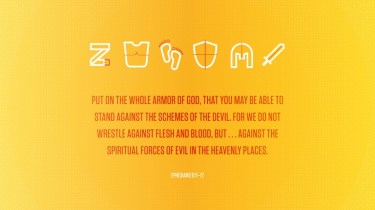
10 Finally, be strong in the Lord and in the strength of his might. 11 Put on the whole 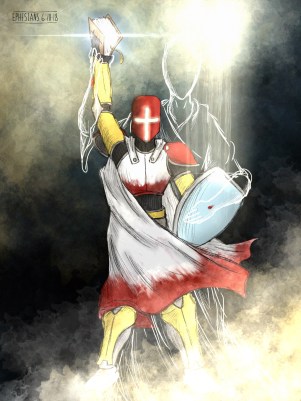 armor of God, that you may be able to stand against the schemes of the devil. 12 For we do not wrestle against flesh and blood, but against the rulers, against the authorities, against the cosmic powers over this present darkness, against the spiritual forces of evil in the heavenly places. 13 Therefore take up the whole armor of God, that you may be able to withstand in the evil day, and having done all, to stand firm. 14 Stand therefore, having fastened on the belt of truth, and having put on the breastplate of righteousness, 15 and, as shoes for your feet, having put on the readiness given by the gospel of peace. 16 In all circumstances take up the shield of faith, with which you can extinguish all the flaming darts of the evil one; 17 and take the helmet of salvation, and the sword of the Spirit, which is the word of God, 18 praying at all times in the Spirit, with all prayer and supplication. To that end, keep alert with all perseverance, making supplication for all the saints 19 and also for me, that words may be given to me in opening my mouth boldly to proclaim the mystery of the gospel, 20 for which I am an ambassador in chains, that I may declare it boldly, as I ought to speak.
In the name of the Father and of the Son and of the Holy Spirit. Amen.
Christian, the Bible does not call you a ballerina. You aren’t called to dance and twirl gracefully. The Bible does not say that you are a construction worker using tools and machines to build a temple. And the Bible does not identify you as a nobleman and ruling in a castle.
Instead, Scripture says that you, Christian, are a soldier. But you are not fighting against people. Politicians, mobs, or anyone who disagrees with you is not your enemy. You are fighting the spiritual forces of evil in the heavenly places. The war is a spiritual war. The battle is an unseen battle, and we wouldn’t know about it unless the Scriptures told us. Thankfully, God has told us that the attacks on us, our families, our church come from our enemy, the devil. And even better, God has told us how we, as His soldiers, are to engage in the fight.
So, Paul is going to answer several questions in this text. If we are soldiers, where is the battle? What is our role? What is our protection? And what weapons are we given for battle, and how do we use them?
 Where is the battle? It’s not in the Middle East. It’s not in Washington D.C. It’s not in the media. It’s not even in the schools and universities. The devil brings the battle to the church. The devil attacks here, this congregation, and he attacks you.
Jesus has come. By His death and resurrection, Christ has delivered you from sin, death, and the devil. He has delivered you from the domain of darkness and transferred you to His kingdom (Col. 1:13). And Jesus places you in His church so that you are continually reminded of His work, deliverance, grace, mercy, and forgiveness. And the devil hates this. So, Satan comes and attacks our congregation. He attacks me as your pastor. The devil loves to whisper in my ear, “Everything you are doing is all in vain. Things aren’t going well at Christ the King. There are fewer people here now than there were last year. You don’t have the resources you used to have. The people don’t seem to care about the Scriptures.”
And the devil loves to attack you. But he doesn’t come straight on. Instead, he comes like a thief in the night. He attacks you by trying to weaken your love for the Scriptures. He tries to get you to focus on yourself which takes your focus off of Christ. The devil tries to lull you to sleep so you forget that because of Jesus you can stand before God with a clean conscience now and on the day of judgment. The devil brings the battle to you. This means that you are not called to be a soldier marching off to war. No, the battle comes to you.
What is our role? Stand. Did you hear how often this text told you to stand? Four times in three verses you are told to stand. Verse 11, “Put on the whole armor of God that you may be able to stand against the schemes of the devil.” Verse 13, “Take up the whole armor of God, that you may be able to withstand in the evil day, and having done all, to stand firm.” Verse 14, “Stand therefore.”
You are not told to attack (neither are you told to retreat). Stand. This is your duty. This means that you are a particular type of soldier. You are a sentry. You are a soldier who is commanded to keep guard, and you guard holy ground.
When Paul was writing this letter, one of the most important jobs a solder could have in the Roman Empire was sentry duty. All around the border of the empire were placed sentries who would be on guard through the night listening for an attacking army. This duty was so important that a sentry could be immediately executed for one of two failures in his duty.
The first offense he could be executed for was leaving the post either by retreating or attacking. If a sentry saw the enemy approaching and left his post to attack by himself, he would be killed (though, he’d probably die in the attack). The sentry wasn’t there to fight; he was there to call in reinforcements, battalions who were stationed behind the border at various intervals. The sentry would call in these troops so they could defeat the invading army.
And the second offense he could be executed for is if he fell asleep. If the sentry fell asleep while on duty, he’d lose his head. The sentry had to always be ready to call in the troops to defend the border.
 So you, Christian, are to be praying at all times (v. 18), and keep alert with all perseverance, making supplication for all the saints. Now, that doesn’t mean that you shouldn’t ever sleep at night. And it doesn’t mean that you will be executed if you fall asleep during the sermon. Instead, you are to be spiritually aware and ready. Be watchful in your prayers.
So, here is the picture. You, believer, are a soldier who has been stationed at the border guarding the holy kingdom of Christ’s Church. You have a particular post. God has placed you in particular places where no one else has been placed and no one else has charge over. When you see the devil attacking, you don’t leave your post and fight. Instead, you pray and call in the reinforcements. When the devil attacks your spouse or kids, pray and call in the reinforcements. When you see the devil attacking your pastor and this congregation, pray. When you hear the enemy advancing on your friends and coworkers, pray. Those are the places God has called you to watch over, and He hasn’t called anyone else to that post. Do your duty. Stand. Watch. Pray. So that the devil may not find a way in. Your job is to stand, guard, watch, and pray. This is dangerous work, so…
What is our protection? God’s armor. You are not protected by your own might. You aren’t safe with your own ninja skills. Instead, you are clothed with the armor of Christ. God’s truth and Christ’s righteousness are your protection. The Gospel guards and makes your feet swift. The shield of faith in Christ protects you. And the helmet of salvation protects your head and mind. It doesn’t matter which direction the devil shoots his arrows at you, you are covered in God’s armor. The devil takes aim at you with a barrage his flaming darts trying to condemn you and attack your faith, “You said this. You did that. You fell into temptation here. You sinned against your neighbor.” But the armor of God stops every one of them leaving you unharmed.
The armor of God protects you. But there is one more thing you are given, the sword of the spirit, which brings us to the last question.
What weapons are you given for battle? Verse 17, take up the sword of the Spirit which is the Word of God. How are you to use this sword? Verse 18, pray. Praying at all times in the Spirit with all prayer and supplication. Use God’s Word to pray.
 The promises given to you in God’s Word are the very things you are to pray. When the fighting comes near you and you have to fight toe to toe with the devil, use God’s Word. It is what Jesus used when He was tempted by the devil. And when you pray, you are calling in the reinforcements, you are calling in Christ Himself. The Champion who defeated the devil. It looked like the devil won when Jesus was in the grave. But Jesus stood up. He vanquished Satan and crushed the serpent’s head. And you, dear Christian, you stand with Him. Amen.
The peace of God, which surpasses all understanding, will guard your hearts and minds in Christ Jesus. Amen.
Good & Bad – Sermon on Matthew 22:1-14 for the Twentieth Sunday after Trinity
Matthew 22:1-14
1 And again Jesus spoke to them in parables, saying, 2 “The kingdom of heaven may be compared to a king who gave a wedding feast for his son, 3 and sent his servants to call those who were invited to the wedding feast, but they would not come. 4 Again he sent other servants, saying, ‘Tell those who are invited, “See, I have prepared my dinner, my oxen and my fat calves have been slaughtered, and everything is ready. Come to the wedding feast.”’ 5 But they paid no attention and went off, one to his farm, another to his business, 6 while the rest seized his servants, treated them shamefully, and killed them. 7 The king was angry, and he sent his troops and destroyed those murderers and burned their city. 8 Then he said to his servants, ‘The wedding feast is ready, but those invited were not worthy.  9 Go therefore to the main roads and invite to the wedding feast as many as you find.’ 10 And those servants went out into the roads and gathered all whom they found, both bad and good. So the wedding hall was filled with guests. 11 But when the king came in to look at the guests, he saw there a man who had no wedding garment. 12 And he said to him, ‘Friend, how did you get in here without a wedding garment?’ And he was speechless. 13 Then the king said to the attendants, ‘Bind him hand and foot and cast him into the outer darkness. In that place there will be weeping and gnashing of teeth.’ 14 For many are called, but few are chosen.”
In the name of the Father and of the Son and of the Holy Spirit. Amen.
When Jesus tells a parable, you want to watch for something unexpected, something weird because that is usually the important clue to understanding the whole parable. But this parable is almost entirely unexpected.
The parable starts out great. A king is throwing a wedding feast for his son. So far, so good. A nice king, a nice event, good food. Let’s get this party started. The king sends out his servants to call the invited guests to come. So, notice this is the second invitation. The first one came in the mail, and now the king’s servants are out to let everyone know that it’s time to party. But nobody comes. Normally, people would fight and clamor to be at such an event, but not in this parable. The people don’t come. The parable is already getting weird.
The king issues a third invitation. He again sends out his servants to tell the guests, “Come to the wedding feast. The food is ready. The meat is laid out. The table is set. Come to the wedding feast.” But some pay no attention to the servants. One heads off to his farm, another walks off to his business. But it’s about to get more shocking.
The rest of the people seize the king’s servants, treat them shamefully, and kill them. Some way to treat the king. Ignore his letters, brush off his messengers, and then grab his servants, beat them up, treat them shamefully, and murder them. Usually, a murderer has some motive. Rarely, there are random murders – just being in the wrong place at the wrong time. But this goes beyond that – it makes no sense.

Word of the murderous mob gets back to the king, and he is angry. (Ya think?) Yes, he’s angry – righteously so. The king is done sending his servants. Now, he sends in the troops. Justice falls swiftly. His army invades the city, destroys the murderers, and burns everything to the ground.
A day that began with the anticipation of the king for his party has turned into a day of blood, ruin, smoke, and ashes. You would think the king would be sitting in a tower of his castle looking over the smoldering ruins and just give up on his party. But the surprises keep coming because this king’s ways are not our ways, and His thoughts are not our thoughts (Is. 55:8-9).
The king turns around, almost as though nothing has happened, and says to his servants, “The wedding feast is ready, but those invited were not worthy.” (Notice that. Those who were invited were not worthy.) “Go to the main roads and invite to the feast as many as you can find.”
This is the fourth invitation from the king and the third time the king sends out his servants to bring people into the wedding feast. And I bet those servants go out a little timidly, but they don’t dare refuse to go. They find people here and there. And you can almost imagine the first time the servants start to tell random people about the feast they are hesitant. “Excuse me. Yeah, um, hi. The king is throwing a wedding feast. What’s that? Yeah, ignore the smoke. The king would like you to come to his banquet. Um, there’s like a lot of good food. And, um, yeah. You should come.”
And they do. People start to come. In fact, now everyone these servants meet is eager to go to the feast. Good people, respectable people, and average Joes come. And bad people, ugly and smelly people, loosers, and even shady characters come. Everyone this third group of servants meet is invited to the banquet hall, and every seat is taken.
Finally, the king has what he wanted – a party, a hall full of guests celebrating the wedding of his son.
Now, the parable isn’t done, but we have to pause briefly here. The guests who were invited first, the guests who didn’t come and now lie on the ground dead, the king has called ‘unworthy.’ And the guests who finally fill the king’s hall are ‘both good and bad.’ This is an important detail, so don’t miss it.
This parable is about being worthy to be at the feast. But that worthiness has nothing to do with being good or bad. Nothing whatsoever.
The rest of the parable drives this home. The king’s hall is filled. The music is playing. The food is being distributed. The guests are having a good time. And, now, the king comes into the banquet room. He looks over the crowd smiling at the guests who have come to his feast. 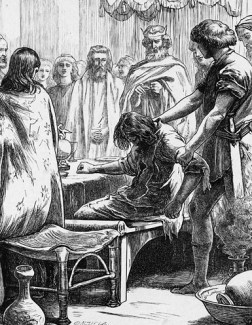 But there over at table 72 is a man who has no wedding garment. He is there in his smelly, sweat-stained cloths with dusty, dirty feet.
The king makes his way through the crowd, dodges waiters with trays, and bumps the backs of a few chairs. He stands before the man with no wedding garment and says, “Hey pal, how did you get in here without a wedding garment?”
Remember, all these guests had been pulled off the street, so none of them would have had the proper attire to be at such a fancy feast. The wedding garments the king expected everyone to have would have been paid for by the king and given out by his servants at the door.
So, when the king addresses this rascal, “Hey buster, how did you get in here without a wedding garment?” the man is speechless. The man had no excuse because he knows that he has been caught refusing and rejecting the king’s gift.
So, the king says to his servants, “Bind him hand and foot and cast him into the outer darkness. In that place there will be weeping and gnashing of teeth.”
Fellow sinners, the Jesus who tells this parable is not soft. He isn’t a Precious Moments Jesus. Jesus tells this parable today to shake us up and remind us who He is – He is the Lord, the King of all Creation, the Holy Ruler of all things. And Jesus tells this parable to remind you who you are – unworthy beggars brought in from the street. Yet, He has graciously, lovingly, carefully made you worthy to be at His feast by His grace and His provision.
 Your God is into feasts and parties and merry-making. His feast goes on, and He wants you there. He wants you to celebrate with Him, so He has provided you with everything you need to be at the feast. Don’t reject His invitation. Don’t reject His robe of righteousness.
On the cross, Jesus provided everything for you. He gave everything so you could have it all. His poured out His own blood for you. He gives His perfect righteousness to you. In Christ, you are washed. In Christ, you are clothed. In Christ, you have no spot or wrinkle. In Christ, you are holy and without blemish (Eph. 5:26-27).
So repent. Be dressed in the holiness and perfection of Jesus. Come to the wedding feast. Hear His invitation that your soul may live. And don’t be afraid to invite others to this feast no matter who they are.Amen.
The peace of God, which surpasses all understanding, will guard your hearts and minds in Christ Jesus. Amen.
What’s Wrong with You? – Sermon on Matthew 9:1-8 for the Nineteenth Sunday after Trinity
Matthew 9:1-8
1 And getting into a boat he crossed over and came to his own city.
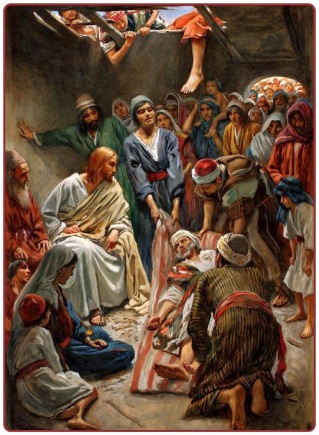 2 And behold, some people brought to him a paralytic, lying on a bed. And when Jesus saw their faith, he said to the paralytic, “Take heart, my son; your sins are forgiven.” 3 And behold, some of the scribes said to themselves, “This man is blaspheming.” 4 But Jesus, knowing their thoughts, said, “Why do you think evil in your hearts? 5 For which is easier, to say, ‘Your sins are forgiven,’ or to say, ‘Rise and walk’? 6 But that you may know that the Son of Man has authority on earth to forgive sins”– he then said to the paralytic – a “Rise, pick up your bed and go home.” 7 And he rose and went home. 8 When the crowds saw it, they were afraid, and they glorified God, who had given such authority to men.
In the name of the Father and of the Son and of the Holy Spirit. Amen.
What’s wrong with you? Self-diagnosis is one thing. But if someone were to follow you for a week, see everywhere you went, hear everything you say, and know your every thought, what would they say is your biggest problem?
Maybe, they would say you spent too much time on your phone and not enough time paying attention to your kids. Maybe, they would say that you spread rumors about people when you don’t really know the facts. Maybe, they would sayyou get angry too easily and quickly.Maybe, they would say that you are lazy and waste time at your job. Or maybe, they would say that your schedule is too full and you are neglecting more important things.
Getting an outside, impartial observer can be helpful in diagnosing your problem. But even people who have total access to your life might not correctly diagnose your biggest, most central flaw.
Now, imagine the scene in this house. Jesus is in His hometown. Mark tells us (Mk. 2:1-12) that Jesus is in His own house preaching the Word of God to the people gathered there. So many people come to hear Him that there isn’t any more room inside the house. But imagine that you are one of the people who are blessed to be inside.
As Jesus preaches, you notice sounds of footsteps coming from the roof. Then you start to hear faint sounds of scraping and pounding making the walls shake slightly. Some sprinkles of dust fall from the ceiling. A few blows later, and a thin beam of light hits the floor. You look up toward that hole and you can just barely make out the shape of fingers reaching through the hole. Suddenly,the hole expands as a bunch of rubble falls to the floor. Dust and straw fill the room. You turn your head away for a moment so that the dust doesn’t fall into your eyes. And then, when it sounds as though the debris has settled, you look up once again and notice a huge bundle being slowly lowered by four ropes.
The bundle finally reaches the floor, and the sheets fall flat revealing a man. He lies there. One arm is bent over his chest and the other lies motionless stretched out at his side. His legs are crossed, but in the most unnatural way. You wait to see him maneuver himself into a more comfortable position, but he doesn’t. In fact, the only sign of life is his eyes darting back and forth and his chest rising as he breathes a little frantically. You diagnose the problem: this man is paralyzed. And you think to yourself, “Well, whoever brought him here did the right thing. If anyone can help this man, it’s Jesus.”
Jesus looks up at the hole in the roof. He sees the faces of the people who have safely lowered their friend down. Then, Christ looks at the man and says, “Take heart, my son; your sins are forgiven.”
Think about this for a moment. This man’s biggest problem seems to be apparent to everyone but Jesus. The friends are probably up on the roof thinking to themselves, “Wait, what? We didn’t lug him up here, rip off the roof knowing that we’ll have to fix it ourselves, and lower him down to get forgiveness. What gives?”
But Jesus knows what this man’s biggest problem is. Christ knows what this man needs most. But don’t run too quickly with this either. Yes, the forgiveness of sins is what we need for our eternal welfare. Forgiveness is more important than food, clothes, shelter, and the ability to walk. But Jesus doesn’t always forgive people before He heals them.
In fact, in all the previous healings in Matthew, Jesus doesn’t follow this order. Chapter 8 contains Jesus’ first healing in Matthew. Jesus heals a leper and doesn’t absolve him. Then, He heals the centurion’s servant, but Jesus doesn’t announce forgiveness there. He heals Peter’s mother-in-law and large crowds with no mention of forgiveness. He casts out demons from two men, no absolution. And as chapter 9 continues, Jesus keeps healing, but He’ll tell people that they are healed because of their faith in Him. And we can’t (at least we shouldn’t) conclude that in those instances Jesus cared more about their physical well-being than forgiveness.
Put that on the back-burner for a moment because Jesus isn’t done diagnosing people’s problems.
 After telling the paralytic, “Take heart, your sins are forgiven,”Jesus diagnoses the scribes’ problem. They were grumbling in their minds thinking, “Just who does this guy think he is? Forgiving sins is God’s job.” But Jesus, knowing their thoughts, said, “Why do you think evil in your hearts?”
Notice that. Jesus says that doubting that He, a man, has the authority to forgive sins is evil. He doesn’t beat around the bush. Jesus calls out their evil. And He proves that He has the authority to forgive sins. He tells the paralytic, “Rise, pick up your bed and go home,”and the paralytic does, which proves that Jesus does indeed have the authority to forgive sins.
What’s your problem? I hope you see that it doesn’t matter so much what your problem is when you see that Jesus knows what it is (He does), and Jesus fixes the problem (whatever it is).
See Jesus’ pastoral heart. Jesus calls Himself the Good Shepherd, and ‘shepherd’ is what ‘pastor’ means. Jesus, the Good Shepherd, knows the needs of His flock, His sheep. Answering the question, “What’s your problem?” isn’t so important because Jesus knows what your problem is. He correctly diagnoses it and fixes it.
While everyone in that house – the listeners, the scribes, and the friends who lowered that man down from the roof – might have been scratching their heads when Jesus tells this paralytic that his sins are forgiven, the paralytic lying there heard the exact words he needed to hear. He needed to hear that his sins had been removed from him as far as the east is from the west, so that is precisely what Jesus gave him.
The scribes needed to hear Jesus call out their evil. And the crowds needed to see that God had given men (plural [foreshadowing Jesus giving the authority to forgive sins to all Christians]) the authority to forgive sins on earth (Mk. 2:10). Jesus gives each person exactly what they needed.
So, you here today, what’s your problem? Well, Jesus, the Good Shepherd, is here today. Surely, the Lord is in this place even if you, like Jacob in our Old Testament text, didn’t know it. This is the gate of heaven (Gen. 28:10-17), right here in this sanctuary. Jesus is here to give you exactly what you need. Jesus is here to give you His Word, Law and Gospel. Jesus has called you to put off your old sinful self, to put away your sin, and to be renewed in your minds (Eph. 4:22-28).
 Jesus is here, here to give you exactly what you need. He comes to give you His Body which was hung on a cross to endure the wrath of God for your sins. He comes to give you His Blood which He shed for the forgiveness of your sins. Whatever your problem is – even if you are unclear what it is – Jesus is here to deliver you from it. Amen.
The peace of God, which surpasses all understanding, will guard your hearts and minds in Christ Jesus. Amen.
From Commandment to Creed – Sermon on Matthew 22:34-46 for the Eighteenth Sunday after Trinity
Matthew 22:34-46
34 But when the Pharisees heard that he had silenced the Sadducees, they gathered together. 35 And one of them, a lawyer, asked him a question to test him. 36 “Teacher, which is the great commandment in the Law?” 37 And he said to him, “You shall love the Lord your God with all your heart and with all your soul and with all your mind. 38 This is the great and first commandment. 39 And a second is like it: You shall love your neighbor as yourself. 40 On these two commandments depend all the Law and the Prophets.”
41 Now while the Pharisees were gathered together, Jesus asked them a question, 42 saying,“What do you think about the Christ? Whose son is he?”They said to him, “The son of David.” 43 He said to them, “How is it then that David, in the Spirit, calls him Lord, saying,
 44 “The Lord said to my Lord,
‘Sit at my right hand,
until I put your enemies under your feet’?
45 “If then David calls him Lord, how is he his son?” 46 And no one was able to answer him a word, nor from that day did anyone dare to ask him any more questions.
In the name Jesus. Amen.
This Gospel text drops us right into the middle of a conversation that Jesus had in the Temple on the Tuesday of Holy Week with the very people who want to destroy Him. The Pharisees and Sadducees are all trying to trap Jesus and entangle Him in His words. Their purpose is to make either the crowds or the authorities (they don’t care which) turn against Him so they can kill Him and be rid of Him and His preaching.
The first two questions they put to Jesus are about paying taxes and about the resurrection. Both of these questions are designed to take one part of God’s Word and make it contradict another part. And both questions appear to have no good answer. The leaders think that no matter how Jesus answers their question, they will have Him. But they are wrong. Jesus answers both questions leaving them dumbfounded.
Our text begins with the third question. One of the Pharisees, a lawyer, asked Jesus a question, again to test and to trap Jesus in His words.“Teacher, which is the great commandment in the Law?” The purpose of this question is to figure out which Commandment Jesus thinks is most important so that they can find a commandment set against it.
But again, this is absolutely foolish because Jesus knows there is no contradiction in the Law. He is the one who wrote the Law.
Jesus answers, “You shall love the Lord your God with all your heart and with all your soul and with all your mind. This is the great and first commandment.And the second is like it: you shall love your neighbor as yourself. On these two commandments depend all the Law and prophets.”
Now, it is interesting in Mark’s account of this same event, the same questioning, that Jesus says there’s no other commandment (singular) greater than these (plural). Perfect love of God and perfect love of your neighbor go together. It is one commandment. The two are inseparably tied together. Love for God is demonstrated by love for the neighbor.

1 John 4:20 says, “If anyone says, ‘I love God,’ and hates his brother, he is a liar; for he who does not love his brother whom he has seen cannot love God whom he has not seen.”And Jesus says in Matthew 25(:40) that the acts of love that you do toward your neighbor you do toward God. “As you did to the least of these, you did also to Me.”In other words, when you love your neighbor, you are loving God.
So, think about that for a moment. When you are helping, supporting, encouraging your spouse, you are serving both God and your spouse. You are loving both God and neighbor. When you feed your kids, when you obey your parents, when you do your homework, you are serving your neighbor and thereby serving God. Telling the truth, living a caste life, returning a lost wallet or purse instead of stealing, being content with what you have instead of coveting – all of these actions are service to God and your neighbor. Whoever is your neighbor, whoever God puts in your life at any given moment, that is the one whom God wants you to love. And when you love that neighbor, whoever it may be, you are loving God.
While that is so very beautiful, if we stop to think about it, this command to love God and neighbor demands everything of us. And we realize how fallen and sinful we are. This command shows us our desperate need for God to come and rescue us.
With His answer, with His preaching of the Law to love both God and neighbor, Jesus cuts down these people who are trying to trap Him, and He cuts you and I down as well because our sin is exposed. We do not love enough. We never have, and we never will.
But notice Jesus doesn’t take the conversation in that direction. He doesn’t ask them, “How are you doing with loving God and your neighbor?” Jesus doesn’t continue to have a conversation about the Law.
Instead, Jesus moves away from questions about the Law to the Creed. The Law is good and important. It shows us the nature and will of God, but the Law always shows us our sin. The Law tells us what we must do, but it always tells us what we have failed to do.
But the Creed shows us how God is toward us. The Creed isn’t about what we must do, it is the Gospel. It is what God has done for us. In the Creed, we confess that God is the Father who created us sent His Son who redeemed us and gives us the Holy Spirit who sanctifies us and makes us holy.
So, Jesus moves away from the Law to the Creed. He asks them, “The Messiah, whose son is he?”And they were right when they say, “David’s son.”God had promised to send David a son who would sit on David’s throne forever (1 Sam. 7). But David also wrote in Psalm 110:1, which is the verse that Jesus quotes, that this Son is also David’s Lord. So, Jesus’ question is, “How can the Messiah, David’s son, also be David’s Lord?”because a father would never call his descendent, “Lord.”
Now stay with me here: The reason Jesus asks this is that He is teaching the Pharisees, the crowds, and you that the Messiah is both God and man.
Because the Messiah is both God and man, He has kept the Law for you. Jesus perfectly loved God and your neighbor for you. And through faith, Jesus declares that what He has done perfectly, you have done as well (2 Cor. 5:21).
The Law says, “Honor thy father and mother. Love them as yourself.” And you are left saying, “God, I haven’t done that. I need Your help.” If it weren’t for the Creed, if the Messiah weren’t man, God would have to say, “Well, I’m God. I don’t have a father or mother, so I can’t help you. You have to do that yourself.” But God did become a man. Jesus had a mom and a dad. He did love and honor them perfectly. So, He can and does help you. And you can apply this to each and every one of the Commandments.
But most importantly, when you hear the law and know that you have sinned, you know that you deserve death. You deserve the eternal wrath and judgment of God. So, you pray, “God I’m lost. I deserve only death, could You die for me?” Because God has taken up your nature, God says, “Sure. I already have.”
 Stop playing games with the Law, there is no contradiction in it. Instead, believe. Believe that Christ has come for you. He has given His life for you. God has purchased you with His own blood (Act. 20:28). He has removed the curse of the Law from you because He has perfectly kept the Law for you. And He gives you His perfection, His righteousness, His holiness.
And, now, He invites you to have your faith strengthened. He invites you to receive His perfect Body and His holy Blood in Bread and Wine. He invites you to come and taste that He is good. Amen.
The peace of God, which surpasses all understanding, will guard your hearts and minds in Christ Jesus. Amen.
Death & Beauty – Sermon on Luke 7:11-17 for the Sixteenth Sunday after Trinity
Luke 7:11-17
11 Soon afterward he went to a town called Nain, and his disciples and a great crowd went with him. 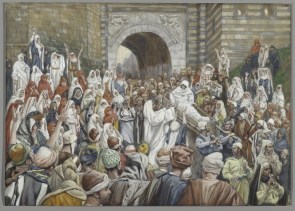 12 As he drew near to the gate of the town, behold, a man who had died was being carried out, the only son of his mother, and she was a widow, and a considerable crowd from the town was with her. 13 And when the Lord saw her, he had compassion on her and said to her, “Do not weep.” 14 Then he came up and touched the bier, and the bearers stood still. And he said, “Young man, I say to you, arise.” 15 And the dead man sat up and began to speak, and Jesus gave him to his mother. 16 Fear seized them all, and they glorified God, saying, “A great prophet has arisen among us!” and “God has visited his people!” 17 And this report about him spread through the whole of Judea and all the surrounding country.
In the name of the Father, Son, and Holy Spirit. Amen.
Funeral processions – you see them from time to time. A hearse drives down the road followed by a line of cars driving from a church or funeral home on their way to a cemetery. Car after car follows the dead body of the husband or wife, brother or sister, father or mother, child or friend. You see death, and out of respect you pause for the mourners. You yield the right-of-way and let death pass.
Contrast a funeral procession with a parade.
Parades are also long lines of people and vehicles. Parades are also given the right-of-way. Out of respect for the people in the parade you smile and wave no matter how silly the costume no matter how poorly the band is marching and playing, no matter how vehemently you disagree with the political candidate. It is a parade. Parades are happy.
Well, what happens when a parade – a line of celebration, happiness, and glee – meets a funeral procession – a line of despair, mourning, and death? That is precisely what happens in our text today, and Luke gives beautiful details.
Jesus is at the height of His popularity; a great crowd follows Him – people who have been healed or were witnesses of Jesus giving sight to the blind, hearing to the deaf, cleansing to the diseased, and good news to all. Jesus is bringing the reign of God to earth, and a parade follows Him.
But as this parade following Jesus reaches the gate of Nain (which means ‘Beautiful’), they meet something ugly – the funeral procession for a young man. Luke tells us that this young man was the only begotten son of his mother. Death has reared its ugly head to the town called ‘Beautiful.’
This mother is familiar with funeral processions. She had walked out of that same gate following the same path to the same cemetery to bury her husband. Even though the road was familiar, the procession has lost none of its bite or pain. In fact, this procession is more bitter, more final because, now, this widow is truly alone (1 Tim. 5:3-5).
You would think that, out of compassion for this widow, Jesus would respectfully turn His parade aside in quiet respect for the dead. You would think that happiness and joy would pause and defer to mourning and death. But you would be wrong. Jesus and His parade simply will not yield. And what Jesus does is so foreign to our thinking.
If you saw a hearse leading a line of cars to a cemetery, you would not swerve in front of the hearse blocking the road. You would not demand that the driver get out of the vehicle and throw the keys into the ditch. You would not go to the back of the hearse and pull out the casket. And you certainly wouldn’t open the casket revealing the body and start speaking to it. But that is what Jesus does.
There’s no question that Jesus has compassion on this woman, but it doesn’t pass for what we would call compassion. Jesus speaks only two words to this woman, “Weep not.”Imagine telling a parent who is mourning the death of a child, “Quit crying.” But as shocking as that is, Jesus goes even further – He stops the procession, touches the bier, and speaks to that dead flesh, “Young man, I say to you, arise.”
The dead boy sits up and is given back to his mother. He is put back where he belonged.
Jesus does not yield to death. Instead, death yielded to Jesus. This account reminds us of another time when Jesus and death marched toward each other.
Then, the funeral procession began long before death stuck its blow. 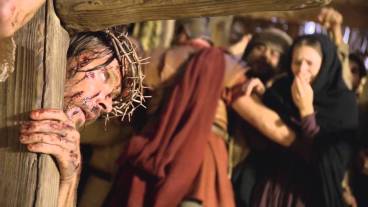 The funeral procession began at the sentencing as crowds shouted out, “Crucify, crucify Him.” In that funeral procession, Jesus carried His own bier, His own cross, until He could carry it no more. A great crowd of people followed Jesus mourning and lamenting for Him. But even in the midst of that funeral procession, Jesus’ words are the same, “Weep not”(Lk. 23:26-28).
At that confrontation between Jesus and death, Jesus’ own widowed mother mourned the loss of her Son. In that epic meeting between Jesus and death, by all appearances, death had won. The Man who had raised the dead was now dead. His corpse buried, and for three days it rested in the ground from which it was taken.
But, once again, death gave way to Jesus.
Funeral processions can get ugly. The weeping and mourning and wailing can make us uncomfortable. Even though death is in your future, you deny or ignore it. Be honest, you see everything around you rotting, decaying, and dying. You have grown so accustomed to sin and being around death that you don’t notice it very often.
This morning, you were part of a funeral procession. You are guilty of sin, so the stink of death hangs around you. You are part of your own, constant funeral procession. Young and old – man, woman, and child – you all dragged some dead thing here with you today.
Is it your relationship with your spouse that is slowly dying, and yet you stand idly by?
Is it the cadaver of disobedience to parents or others in authority over you? You only do what you need to get by, even though you know you could do more.
What dead thing have you brought with you?
Is it the dying remains of your finances that cause you to worry and doubt, or simply discontentment with what God has given you?
Is it the carcass of lust that flames within you?
Is it the rottenness of pride that is so focused inward that you do not see the needs of others? A pride that boasts in your own accomplishments and belittles others?
What dead thing have you brought here with you?
Maybe, it is not even your fault. Maybe, it is just the fear of what will happen in the future. Maybe, it Is the worry and concern you have for others. Maybe it is anger for how your neighbor has wronged you. Maybe, your dead thing is your own sick, crumbling body. What dead thing have you brought here with you?
You are in your own funeral procession. Yes, maybe it will be months, years, or decades before you are finally lowered into the ground, but from the time you were born you have been marching toward your grave. Just admit it.
Jesus approaches your funeral procession, and He does not stop; Jesus does not yield. Jesus does not give way or defer to death; He doesn’t have time for it.
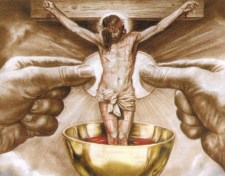 Instead, Jesus defeats death, each and every time He meets it.
Jesus is here today. Jesus meets you as you plod along in your personal funeral procession and gives you life. Jesus meets you at this altar, this beautiful gate, to give you His living Body and His life-giving Blood. Amen.
The peace of God, which surpasses all understanding, will guard your hearts and minds in Christ Jesus. Amen.
This sermon was reworked from 2014.
Anxious – Sermon on Matthew 6:24-34 for the Fifteenth Sunday after Trinity
Matthew 6:24–34
24 “No one can serve two masters, for either he will hate the one and love the other, or he will be devoted to the one and despise the other. You cannot serve God and money.
25 “Therefore I tell you, do not be anxious about your life, what you will eat or what you will drink, nor about your body, what you will put on. Is not life more than food, and the body more than clothing? 26 Look at the birds of the air: they neither sow nor reap nor gather into barns, and yet your heavenly Father feeds them. Are you not of more value than they? 27 And which of you by being anxious can add a single hour to his span of life? 28 And why are you anxious about clothing? Consider the lilies of the field, how they grow: they neither toil nor spin, 29 yet I tell you, even Solomon in all his glory was not arrayed like one of these. 30 But if God so clothes the grass of the field, which today is alive and tomorrow is thrown into the oven, will he not much more clothe you, O you of little faith? 31 Therefore do not be anxious, saying, ‘What shall we eat?’ or ‘What shall we drink?’ or ‘What shall we wear?’ 32 For the Gentiles seek after all these things, and your heavenly Father knows that you need them all. 33 But seek first the kingdom of God and his righteousness, and all these things will be added to you.
34 “Therefore do not be anxious about tomorrow, for tomorrow will be anxious for itself. Sufficient for the day is its own trouble.”
In the name of the Father and of the Son and of the Holy Spirit. Amen.
In 1988, Bobby McFerrin offered us “a little song [he] wrote.” He thought we “might want to sing it note for note. Don’t worry; be happy. In every life we have some trouble.  But when you worry, you make it double. Don’t worry; be happy. Woo, ooh.”
As chipper as Mr. McFerrin’s song was, apparently the ditty didn’t work because in 1994 the lovable characters, Timon and Pumbaa, came along to teach us a “wonderful phrase.” Hakuna Matata. In case you didn’t know, “it means no worries for the rest of your days. It’s [their] problem-free philosophy. Hakuna Matata.”
As catchy as those jingles are, their philosophy and approach to anxiety is terribly simplistic, and we still find ourselves getting worried.
Mothers worry when their children wander off and get lost. Fathers worry when an unexpected expense comes up and the bills pile up. Children get anxious about the first day of school with new teachers and higher expectations. The evening news and papers get your attention by reporting on the worst stories first. Television shows will end with foreboding cliffhangers to make you anxious about what will happen next week. And to get your vote, politicians have become masters at creating worry and anxiety then telling us that they are the ones who can save us. “If we don’t ban straws, the turtles are going to die.” “If we don’t reduce carbon emissions, the planet is going to die.” And both political parties are guilty of this. Years ago, it was, “If Obamacare gets passed, people will die.” Today, it’s, “If Brett Kavanaugh gets a seat on the Supreme Court, people are going to die.” Or, “If we don’t do something about the border, people are going to die. If we don’t do something about ISIS, people are going to die. If we don’t do something about taxes and the economy, people are going to die. Our country is divided, people are going to die.”
“Don’t Worry Be Happy” and “Hakuna Matata”? These seem to be nothing more than trite, naïve dismissals of the anxious world in which we live. But here, Jesus seems to be just as dismissive. He tells us, “Don’t be anxious about your life. Don’t be anxious about what you will eat, drink, or wear. Don’t be anxious about tomorrow.”Maybe Jesus lives in the same fantasy land as Bobby, Timon, and Pumbaa.
Well, there is a significant difference between Jesus’, “Don’t be anxious,”and Bobby, Timon, and Pumbaa. Jesus recognizes how serious of a sin worry and anxiety are. You see that in how this whole text is related.
First, Jesus points out that your anxiety is evidence of idolatry. He says, “No one can serve two masters, for either he will hate the one and love the other, or he will be devoted to the one and despise the other. You cannot serve God and money.”
When you have two masters, you are always going to be torn between the two because they will never fully agree on the service they require of you.  And Jesus addresses the most common master that you and I serve – possessions and stuff.
The word translated as ‘money’ here is the word ‘mammon’ which means more than ‘money.’ But since you get your stuff with money, ‘money’ is a fine translation. Jesus here is addressing your most common idol. You worship your stuff. Idolatry isn’t simply bowing down to statues. Idolatry is fearing, loving, or trusting in anything that isn’t God.
The God who created you, gives you everything you need to live, and sustains it all isn’t seen. But you can see how much money in your wallet or purse. You can look at your balance in your bank account and investments. You spend lots of time at your job. You probably know your boss and the person who signs your checks. And so, you are tempted to you trust those things rather than God who is hidden behind them all. And anxiety is the liturgy and worship that your possessions demand.
We think if we have enough we are secure, so we worry when we think we are running short. Or we think that if we have a little more money, then we’ll be happy. So, we get anxious to accrue a little more. But this is sinful idolatry, and these words from Jesus expose our lack of faith. Scripture says, “Whatever does not proceed from faith is sin.”
Repent.
Repent and then laugh at yourself. I think that is what Jesus wants us to do with our sin.
Don’t laugh because your sin doesn’t matter or isn’t serious. Your sin is deadly serious. Serious enough that Jesus will go to the cross, suffer, and die for that sin. But He also wants us to see how foolish and downright silly it is when He tells us to look at the birds and the lilies. He asks, “Do you trust God as much as a crow trusts God? Do you trust God as much as a lily trusts God?”
 When was the last time you saw a bird driving a tractor or operating a combine? A bird cannot plant and harvest like we can. But God didn’t design them to do that. He designed us to do that. Birds simply do what God designed them to do: have chicks and raise them and sing.
A bird wakes up, finds a branch, and sings the song God put into its beak. While that little bird sings, it isn’t worried about food even though it has more reason to be worried about food than we have because it doesn’t know where its food is going to come from. It can’t go into the store and buy food. The bird just sits there and sings for a while. Then, when it is hungry, it flies off and finds the food God has set out for it. Jesus says, “Those birds don’t sow or reap or gather into barns, and yet your heavenly Father feeds them.”
Did you notice that? Jesus doesn’t say, “Their heavenly Father feeds them.” He says, “Your heavenly Father feeds them.”Your Father cares enough about the birds to feed them. Jesus wasn’t born to save birds. Jesus wasn’t crucified to save birds. He did all of that for you. You are the peculiar object of God’s saving love. If He feeds birds, He is going to feed you.
Same with the lilies of the field. God hasn’t given them anything more to do than to grow and look and smell nice. God provides everything they need even though they are alive today and tomorrow are shriveled up and burned. If God clothes the grass like that, how much more will He clothe you?
Worry is useless. It doesn’t help at all. In fact, it makes things worse. Jesus hasn’t given you permission to worry. Worry is the worship that money demands. So, what should you do when you have worry and anxiety?
Philippians 4[:6]says, “Do not be anxious about anything, but in everything with prayer and supplication with thanksgiving let your requests be made known to God.”
Take your worry and turn it around don’t let it be the slavish worship you offer to your idol, money. Instead, when you are worried about anything, make it your prayer. Pray, “God You have told me not to be anxious. You have told me not to worry. Well, I’m worried about ______. You take care of that. Help me. Protect me. Etc.” Then your worry becomes a true service to God.
God loves you. He has provided you with everything you need for eternity. In His mercy, He sent His only-begotten Son to shed His blood on the cross to make you His own so that you will live forever in His kingdom. So, there is no reason to doubt that He will take care of the things you need today or tomorrow.
And then, be free. Free to seek first the kingdom of God and His righteousness – the righteousness He delivers to you in His Word and Sacraments. Jesus has promised that all these things will be added to you. Amen.
The peace of God, which surpasses all understanding, will guard your hearts and minds in Christ Jesus. Amen.


You must be logged in to post a comment.