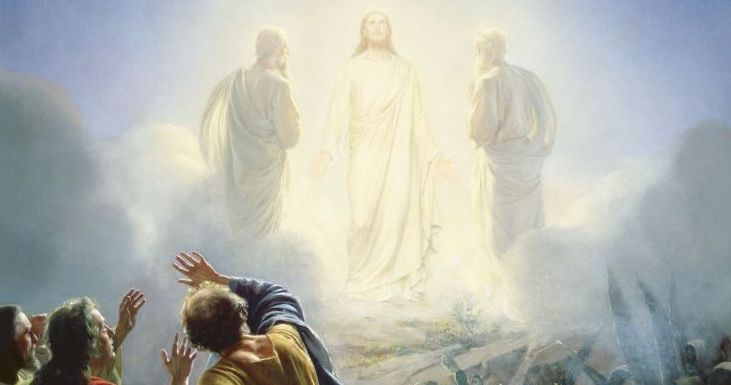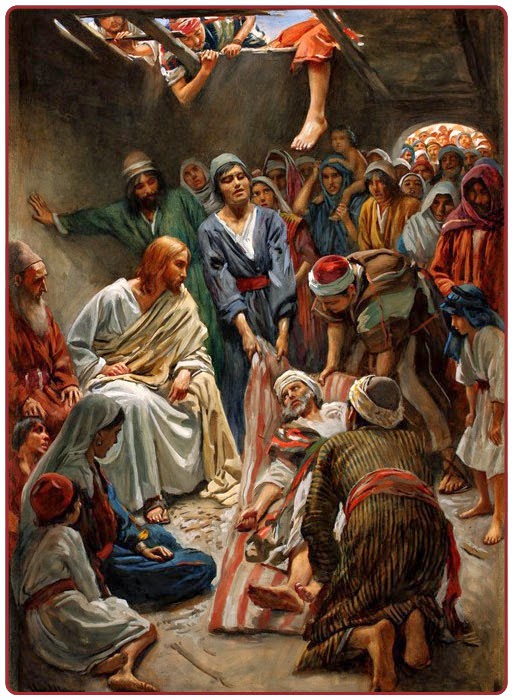
Enoughness – Sermon on 2 Corinthians 3:4-11 for the Twelfth Sunday after Trinity

2 Corinthians 3:4-11

4 Such is the confidence that we have through Christ toward God. 5 Not that we are sufficient in ourselves to claim anything as coming from us, but our sufficiency is from God, 6 who has made us sufficient to be ministers of a new covenant, not of the letter but of the Spirit. For the letter kills, but the Spirit gives life. 

7 Now if the ministry of death, carved in letters on stone, came with such glory that the Israelites could not gaze at Moses’ face because of its glory, which was being brought to an end, 8 will not the ministry of the Spirit have even more glory? 9 For if there was glory in the ministry of condemnation, the ministry of righteousness must far exceed it in glory. 10 Indeed, in this case, what once had glory has come to have no glory at all, because of the glory that surpasses it. 11 For if what was being brought to an end came with glory, much more will what is permanent have glory.

In the name of Jesus. Amen.

Imagine that you received an invitation to a banquet. You get yourself ready and put on your best suit or dress. You drive to the location and enter the building to find that this banquet is a lot fancier and way more formal than you realized. The crystal chandeliers and candles cast a golden light over an exquisitely decorated room. The tables are set with fine china and crystal flutes. You look at all the other guests and discover that they are wearing either designer tuxedos with cufflinks and cummerbunds or sparkling gowns and jewelry. There you are sticking out like a pigeon in a peacock parade.

You try to mingle with the glittering guests, but they mostly ignore you. The only acknowledgement you get are cold smiles and people saying, “Oh, I love your outfit,” as they turn away laughing and asking each other, “Who’s that guy?” You pull out the invitation, and, sure enough, it’s got your name and address. But you’ve had it. It must have been a mistake. So, you start looking for an exit, one that will allow you to avoid as many people as possible.

As you’re leaving, the host of the gala approaches and calls you out by name saying, “I’m so glad you’re here. I’ve got all sorts of people I want to introduce you to.” You try to explain that you should probably leave because you don’t fit in. You point out that you aren’t as polished as everyone else there and mention how the crowd has already rejected and made fun of you. But the host simply says, “You aren’t here to be fancy. You’re here because I invited you. My choice is enough to make you belong. Just stick with me.” The rest of the evening, he takes you around the room showing you off, bragging about you, and highlighting how important you are to him. He seats you next to himself at the head table. The rest of the evening, your confidence grows. Now, you are treated with respect and honor by everyone else – not because you’ve won them over. Your importance is rooted in the host’s attitude toward you, and his opinion carries a weight that no one can challenge. It is enough.

Dear saints, such is the confidence you have through Christ toward God.

In this text, Paul is defending his office of being an apostle. There were some false teachers in the congregation at Corinth who were saying that Paul didn’t have the authority to say anything in the church. They questioned the sufficiency of Paul’s preaching. They were saying that Paul’s preaching of God’s grace through Christ was not enough. That’s why he says that God had made him sufficient to be a minister of the ‘new covenant’ of the Gospel that points people to Jesus as the Messiah (2 Cor. 3:6). And that’s why Paul goes on in v. 7-11 of this text to compare his ministry of the Gospel to Moses’ ministry under the old covenant.

Now, this would be a really good text to preach at an ordination service as a man is called by God to be a pastor. All pastors, myself included, need to recognize that when they preach, they aren’t doing it by their own authority but by the authority that God has given (1 Pet. 4:11). When God puts a pastor into a congregation, he is there to deliver God’s gifts to God’s purchased and redeemed people.

Pastors are called to speak two different words to their congregations. First, pastors are to preach ‘the letter that kills’ also called here ‘the ministry of condemnation.’ In other words, pastors are to preach the Law. And second, pastors are to preach ‘the ministry of righteousness,’ the Gospel. God sends pastors to declare that people are sinners so they can be pointed to repentance and faith in Christ. That’s the main point of this passage. But what Paul says here can be applied to other callings and vocations as well.

Dear saints, you have been called out of the darkness of your sin into God’s kingdom. You are called to be God’s hands and feet to the people around you so you can render service to them. And you can have confidence as you serve and carry out those vocations. You are not sufficient on your own. God Himself has made you sufficient. In this text, the word translated ‘sufficient’ means enough.

There are all sorts of places we might look to build confidence and find our enoughness, but there is only one legitimate source of confidence. Any other source will lead to bad outcomes. The most common place we look is inside ourselves – our abilities, our eloquence, our strengths or skills. There are certainly productive, able people who are successful at many things. The problem is that when those moments of success come and we think it’s because we’re sufficient in ourselves, pride sneaks in. We start comparing ourselves to others and look down on them. We get puffed up, and when that happens, we’re setting ourselves up for a big fall. Even when you are successful and humble, the devil will attempt to draw your attention back to yourself and your humility, and again, pride sprouts up.

If you to think that you are strong and capable on our own, you will start to think that you can handle the challenges in life by yourself. When that happens, you’ll quickly find that your own strengths and abilities fade and fail. And when you fail, it’s easy to fall into despair.  The devil wants you to be constantly looking at yourself because there you’ll see that your strength and ability isn’t enough to do all that God has called you to do. Any setback or misstep can be used by the demons to paralyze you.

But when God is the source of your confidence, and He is, then, you lack in nothing. Look at the sheer holiness and privilege of your callings – spouses, parents, children, teachers, friends. When you first recognize the massive, holy responsibilities that God has given you, you realize that these things are beyond you. And you aren’t adequate to carry those vocations out. You can’t claim anything – any ability, any strength, any eloquence, any skill – as coming from you. But God Himself has given you everything. He has won and purchased you by giving His Son, Jesus to die on the cross as your Savior. Everything you are, everything you have, every calling and responsibility has been given to you as a gift. And what God has given you is enough.

As citizens of God’s kingdom, recognize that God has given you more than enough, more you can imagine. He has given His gifts in full measure, pressed those gifts down into you to make room for more and His gifts are always running over (Lk. 6:38).

The same Holy Spirit who blew through the upper room at Pentecost now fills you with everything you need to carry out the tasks entrusted to you. The Holy Spirit who abides in and with you is like that host at the gala. He accompanies you and makes you worthy to be in His kingdom. Anyone who questions that worthiness insults Him directly and isn’t worth listening to. God Himself has made you sufficient and enough. 

By His calling, His redeeming, His grace, His sanctifying, He has made you enough. And that is enough. Dear saints, your enoughness is from God, and from God alone. So, go; boldly carry out the tasks that He has given you. Amen.

The peace of God, which surpasses all understanding, will guard your hearts and minds in Christ Jesus (Php. 4:7). Amen.

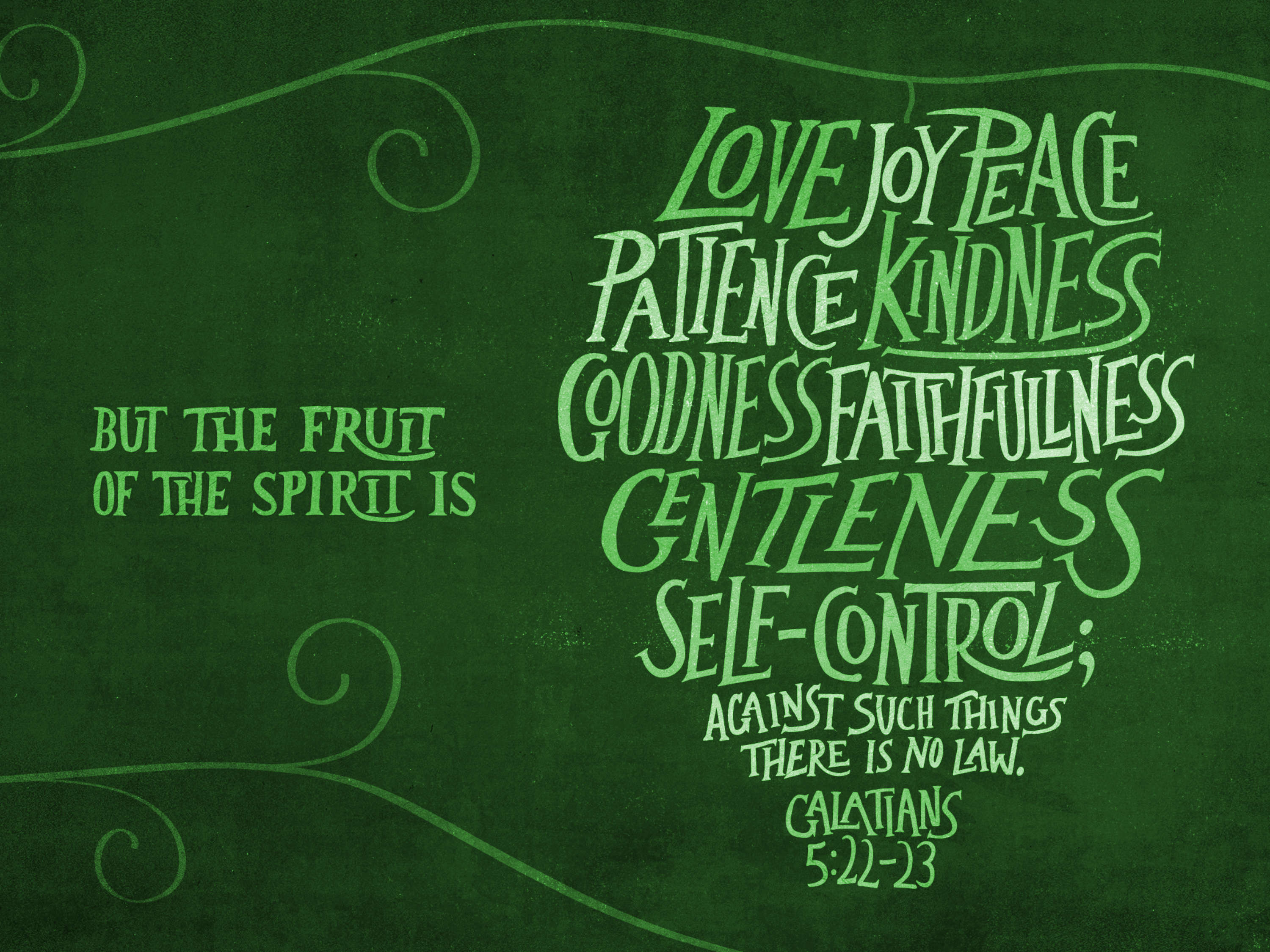
Fruit – Sermon on Galatians 5:16-24 for the Fourteenth Sunday after Trinity

Galatians 5:16–24

16 But I say, walk by the Spirit, and you will not gratify the desires of the flesh. 17 For the desires of the flesh are against the Spirit, and the desires of the Spirit are against the flesh, for these are opposed to each other, to keep you from doing the things you want to do. 18 But if you are led by the Spirit, you are not under the law. 19 Now the works of the flesh are evident: sexual immorality, impurity, sensuality, 20 idolatry, sorcery, enmity, strife, jealousy, fits of anger, rivalries, dissensions, divisions, 21 envy, drunkenness, orgies, and things like these. I warn you, as I warned you before, that those who do such things will not inherit the kingdom of God. 22 But the fruit of the Spirit is love, joy, peace, patience, kindness, goodness, faithfulness, 23 gentleness, self-control; against such things there is no law. 24 And those who belong to Christ Jesus have crucified the flesh with its passions and desires.

In the name of Jesus. Amen.

Scripture uses many different metaphors when it comes to salvation and being a Christian. There are the optical metaphors of darkness vs. light (Is. 9:2; Jn. 1:5, 3:19; 1 Pet. 2:9) and blindness vs. seeing (Is. 35:5, 42:7; Act. 26:18). There are the medical metaphors of death vs. life (Eph. 2:5; Col. 2:13) and heart of stone vs. a heart of flesh (Ezk. 11:19, 36:26). Scripture uses familial metaphors of adoption (Ro. 8:15; Gal. 4:5; Eph. 1:5), being a son (Mt. 6:8-9; Lk. 15:11f) and child (1 Jn. 3:1-2). There is the metaphor of sheep and shepherd (Ps. 23; Ezk. 34-35; Jn. 10:1-18). There are many, many more, but today, we get the botanical metaphor of fruit.

The thing about fruit is that plants don’t produce fruit for themselves. The main function of a plant’s fruit is so it can reproduce. The fruit provides water and protection for the seeds of the plant. God also designed fruit to be tasty so it would be eaten, and the seed(s) in the plant is spread to produce other plants.

When this text contrasts the flesh and the Spirit, it talks about the ‘works’ of the flesh and the ‘fruit’ of the Spirit. Notice how the works of the flesh are all directed inwardly. These works are self-interested and self-serving. Paul lists 15 “works of the flesh.” The first 3 – sexual immorality, impurity, and sensuality – all have to do with carnal, bodily appetites or a desire for the flesh to assert itself over others. The next 2 – idolatry and sorcery – are sins against God, trying to put the self in place of God. The next 8 – enmity, strife, jealousy, fits of anger, rivalries, dissensions, division, and envy – are all things that separate individuals by prioritizing the self over another. And the final 2 – drunkenness and orgies – are sins of excess. Then, when Paul adds, “and things like these,” he admits that this list isn’t all the works of the flesh. He could have added more.

And Paul says all these works of the flesh are “evident.” You can see them. They are apparent, clear, plain, and obvious. It is certainly easy to see all these things in our world and in our culture. But do you suppose that Paul gives us this list so we can point out other people’s faults? No. If they’re evident, they don’t need to be pointed out. They’re out there for everyone to see. Instead, Paul wants us to see how these things are present in each of us. They are in and of our flesh. And by ‘flesh’ he doesn’t mean our skin, muscles, tissue, tendons, and bones. By ‘flesh’ here, Paul is saying that these things come from the poisonous root of our heart.

If we sinners were an apple tree, every apple we produced would be infected with disease, blight, and worms; it would be rotting, and withering. If you saw a tree like that, you wouldn’t think the problem was the individual apples. You’d know something was wrong with the tree. It has a disease that infects every branch and goes deep down to the roots. That tree needs to be torn down. In other words, we all need to repent.

There is a penalty for these works of the flesh. You don’t need to wonder if you deserve eternity in hell. You can know that you do. Scripture is crystal clear, “Those who (lit.) are doing such things will not inherit the kingdom of God” (Gal. 5:21b).

God be praised, there is a solution, a fix. Christ Jesus has come to deliver you from these works of the flesh. “Those who belong to Christ Jesus have crucified the flesh with its passions and desires” (Gal. 5:24). Christian, God has removed your heart of stone and given you a heart of flesh (Ezk. 11:19, 36:26). He has put a new spirit within you. He has given you the Holy Spirit. And the Holy Spirit produces fruit.

These nine different qualities are called ‘fruit.’ Notice that the word ‘fruit’ is singular. It’s not many fruits like the 15 works of the flesh. But these 9 fruit (sic.) of the Spirit belong together; love, joy, peace, patience, kindness, goodness, faithfulness, gentleness, and self-control. This fruit all grows on the same tree – out of you. And remember that fruit needs time to grow. It isn’t like you can manufacture this fruit artificially or mechanically. No. It needs to be planted, pruned, watered, and nourished (1 Co. 3:6-7).

Remember that the works of the flesh are evident, plain, visible. The same thing isn’t said about the fruit of the Holy Spirit. If you don’t see this fruit, continue to pray that the Holy Spirit will nourish all these things in you. The Holy Spirit will cause that fruit to grow, bloom, ripen, and spread. So, let’s just go through each of these 9 fruit individually. 

Love: This is the chief characteristic of how God is disposed toward you, believer. Scripture explicitly says that nothing can separate you from God’s love for you (Ro. 8:35, 38-39). The Spirit takes God’s love and pours it into your heart (Ro. 5:5). This love of God isn’t just warm, nice feelings; it is action evidenced by Jesus’ sacrificial love for you as He gave His life on the cross. That love of God is given to you so you can give it to others.

Joy: God’s love provides you a sure confidence about the future (Ro. 5:11). Whatever circumstances come your way, you know that you will be in eternal bliss. So, the darkness and pain of this world will cease. That brings joy as well as…

Peace: Your relationship with God is no longer filled with strife. Christ has ended your hostility toward God. You have God’s peace that surpasses understanding (Php. 4:7), and then, you can be at peace with others as well.

Patience: Because you have God’s love which gives joy and peace, you can be patient. Even though the world throws all sorts of chaotic things at you, you can patiently endure it (Ro. 8:25). And beyond that you have…

Kindness: Kindness is the active, merciful goodness that mirrors God’s kindness. You grow to forgive others as God has forgiven you (Eph. 4:32).

Goodness: The word here can also mean ‘generosity.’ Because God has infinite resources, you know that you will receive all good things from Him (Ro. 8:32). This frees you to be God’s conduit to generously give your good things to others.

Faithfulness: Again, God proves His faithfulness to you as He died for you on the cross. He is faithful to keep you from tests and temptations that are beyond your strength (1 Cor. 10:13). This creates a faithfulness in you toward others.

Gentleness: This is an interesting one. Gentleness means that you don’t get excessively angry when things are out of step with how God created the world. There are times when you will need to say hard things to others, things that cause them grief. But you say those hard things in a gentle way which produces repentance. Paul talks about this quite a bit in 2 Cor. 7:8-13. To be gentle requires the final aspect of the Spirit’s fruit…

Self-control: The Holy Spirit leads you to resist your own passions through self-control.

These nine fruit (sic.) of the Holy Spirit are under no compulsion or requirement. Unlike the works of the flesh that exclude sinners from the kingdom of God, these fruits aren’t how you earn entrance to God’s kingdom. Instead, as the Spirit has begun to create these things in you, He will bring all of it to completion (Php. 1:6).

How will the Holy Spirit cultivate this fruit? Jesus has the answer. In John 15:1-5, Jesus says, “I am the true Vine, and My Father is the Vinedresser. Every branch in Me that does not bear fruit He takes away, and every branch that does bear fruit He prunes, that it may bear more fruit. Already you are pruned,” (the ESV says ‘clean’ but it’s the same word Jesus just used). “Already you are pruned because of the Word that I have spoken to you. Abide in Me, and I in you. As the branch cannot bear fruit by itself, unless it abides in the vine, neither can you, unless you abide in Me. I am the vine; you are the branches. Whoever abides in Me and I in him, he it is that bears much fruit, for apart from Me you can do nothing.”

Dear saints, the Spirit will use Christ’s Word and create this fruit in you. Abide, remain steadfast in that Word, and this fruit will be produced. Again, if you don’t see things in your life, know that God continues to work on you, and that fruit will be there for the benefit of others. Amen.

The peace of God, which surpasses all understanding, will guard your hearts and minds in Christ Jesus. Amen.

Completed – Sermon on Matthew 5:17-26 for the Sixth Sunday after Trinity

Matthew 5:17–26

17 “Do not think that I have come to abolish the Law or the Prophets; I have not come to abolish them but to fulfill them. 18 For truly, I say to you, until heaven and earth pass away, not an iota, not a dot, will pass from the Law until all is accomplished. 19 Therefore whoever relaxes one of the least of these commandments and teaches others to do the same will be called least in the kingdom of heaven, but whoever does them and teaches them will be called great in the kingdom of heaven. 20 For I tell you, unless your righteousness exceeds that of the scribes and Pharisees, you will never enter the kingdom of heaven.

21 “You have heard that it was said to those of old, ‘You shall not murder; and whoever murders will be liable to judgment.’ 22 But I say to you that everyone who is angry with his brother will be liable to judgment; whoever insults his brother will be liable to the council; and whoever says, ‘You fool!’ will be liable to the hell of fire. 23 So if you are offering your gift at the altar and there remember that your brother has something against you, 24 leave your gift there before the altar and go. First be reconciled to your brother, and then come and offer your gift. 25 Come to terms quickly with your accuser while you are going with him to court, lest your accuser hand you over to the judge, and the judge to the guard, and you be put in prison. 26 Truly, I say to you, you will never get out until you have paid the last penny.

In the name of Jesus. Amen.

This Gospel reading today is all Law. These verses begin a long section of the Sermon on the Mount where Jesus is, basically, giving a long commentary on the Ten Commandments which runs all the way to the end of chapter 5 – thirty-two verses worth of our Lord’s teaching on the Ten Commandments. Now, God’s Law, which is succinctly given to us in the Ten Commandments (Ex. 20:1-17), does a couple different things.[1] Let me just briefly tell you what they are before we focus in on one.

First and foremost, God’s Law shows us how creation works. It reveals what is good in this life. In other words, the Commandments teach you how to be happy and how to live in perfect harmony with God, harmony with your neighbor, and harmony with the rest of creation. Because God’s Law does this, you can think of it as a ‘curb,’ and keep that term in your mind because we’re going to come back to it in just a bit.

Second, because the Commandments teach us how creation works, they also show us where we are living in a way that is contrary to how creation works. The Law shows us how we have violated God’s will, how we have offended Him, and have earned His wrath because of our sin. In other words, the Law accuses us. It stands there like a perfect, clear mirror showing us what we really look like, and it isn’t a pretty picture.

As far as your salvation is concerned, this is the most important thing the Law does. It accuses you and exposes the fact that you are not what you are created to be. So, when you see yourself in the mirror of God’s Law, run to Him in repentance seeking His mercy which He freely gives to you for the sake of Jesus’ death and resurrection.

Again, as far as your salvation is concerned, this is the most important thing God’s Law does. But! Make sure you notice that the Law is only a mirror because of that first function, the ‘curb,’ which again simply shows us how God has ordered creation.

So, back to the ‘curb.’ Unless you have really poor spatial awareness, you probably don’t think about curbs very often. Maybe, you hit the curb when you’re driving your spouse’s vehicle that has a longer or wider wheelbase than you are used to, but that curb just bumps you back onto the street keeping you off the sidewalk and lawns. Typically, if you hit a curb when you’re driving, it’s no big deal. It just means you’ll need to get your tires realigned a bit sooner.

But know that there are different kinds of curbs. If you’re driving on I-29 or Hwy. 2, there aren’t what we normally call curbs, but there are those rumble strips that shake the car and make a loud noise to keep you from straying off the road. You might hit those rumble strips periodically on a curve or when the wind is blowing exceptionally hard. But there are still other curbs. If you’re driving on the freeways in the Cities, the curb might be a thick, four-foot concrete wall to keep the traffic traveling in opposite directions from colliding. Those, you avoid, and, hopefully, you’ve never hit or scraped one of them because it’ll do extensive damage to your car. Rumble strips, normal neighborhood curbs, and concrete barriers are all types of “curbs” that keep vehicles where they should be – on the road and away from danger.

Now, take that idea of those different types of curbs to God’s Law and the Ten Commandments. We might hear the 5th Commandment, “Thou shalt not kill,” and think of the curb of the 5th Command as the thick, four-foot concrete barrier. It’s big, but it’s also quite easy to avoid running into it. You can always see it and know that hitting it would cause significant damage. Because the 5th Command is so big and impending, you easily avoid it. But just because you’ve never physically murdered someone, don’t think that you’re righteous according to the 5th Command.

Here, in this Gospel text, Jesus says that the 5th Command is also a regular curb. Christ says, “Don’t relax on this command because everyone who is angry with his brother is also guilty of murder” (Mt. 5:22a). Jesus shows that the 5th Command isn’t just a concrete barrier to keep us from physically murdering someone, it’s also a curb that keeps us from being angry toward our neighbor. Again, when you’re driving your vehicle, you might bump a curb a couple times a week or once a month. But just because you don’t think much about your anger toward others doesn’t mean that God doesn’t notice. Even nudging the curb of anger toward your neighbor makes you liable to judgment and earns you an eternity in hell.

Think back to Genesis 4. Before Cain murdered Abel, God asked Cain, “Why are you angry?” (Gen. 4:6). Even though God hadn’t yet given the command, “Thou shalt not kill,” God was warning Cain there with the 5th Command because Cain was angry. But Cain blew right over the curb of anger that God had constructed and smashed into the concrete barrier of murder.

Jesus goes even further and tells us about the 5th Command rumble strips. Calling someone a fool is the same as murder (Mt. 5:22b). And Jesus still isn’t done. Christ teaches us that the 5th Command demands that if we remember that someone has something against us that we must go to them and try to reconcile, or we are violating the 5th Command (Mt. 5:23-24).

When it comes to keeping the 5th Command, it’s not enough for you to not physically murder someone or never be angry. It’s not even enough for you to never call someone a fool. You also need to seek reconciliation with others who are angry against you. Otherwise, you have 5th Commandment blood on your hands. Jesus is teaching here that you’ve run into all kinds of 5th Commandment curbs. You do it every day. And because of that, you are guilty before God and liable to His eternal judgment.

Jesus, who was the One who spoke the Ten Commandments, clearly spells out what they mean. You could say that He is giving us the “fine print” of the Commands explaining the full, complete picture of what they demand. But don’t misunderstand that either. It isn’t as though the Ten Commandments weren’t enough. They are enough. Imagine you told your teenage kid to clean the kitchen, and all he does is wipe down the exposed counters and leaves a pile of dishes by the sink. (To be clear, this is not an example from my household. My kids know better.) You come into the kitchen and see all the greasy, grimy pots and pans. You’d rightly get after him and say, “I told you to clean the kitchen. Get back in there.”

Here, when Jesus teaches us the “fine print” of the Ten Commandments, we are left with no excuse for hitting any of the curbs of any of the Commandments. Christ says, “Whoever relaxes one of the least of these commandments and teaches others to do the same will be called least in the kingdom of heaven. You need a righteousness that exceeds the goodest [sic.], most moral person you know of, or you will never enter the kingdom of heaven” (Mt. 5:19-20). And when Jesus talks about the “least command,” He is not saying that the Ten Commandments have a ranking where some are more important and some less. No! Christ is saying that the tiniest infraction of any of the Commandments, even refusing to reconcile with someone who is angry with you, makes you unrighteous and means that you are outside the kingdom of heaven. In other words, we’re all in deep, deep trouble. Repent.

Repent and know that Jesus completes and fulfills the Commands in another way than just explaining them more fully. Jesus also keeps all the Commands, all of God’s Law, perfectly and completely – for you. Every aspect of every command was perfectly obeyed by Jesus. And His obedience is yours through faith in Him.

Think of it this way: God is going to grade you on one test, and that is the test of keeping His Law, and you need to get a perfect score, 100%, never hitting any curb – ever, or you will spend eternity in hell. Even with an open book, the best, most righteous person is going to bomb that test. Maybe get a score in the teens or something. But also know God has told you that you can use a partner to take the test. Through faith, Jesus is your Partner for this final exam, and He answers every demand of the Law perfectly. Through faith in Him, His full, complete righteousness is yours. 

And now, He invites you to receive that righteousness as He gives you His righteous Body to eat, and His holy, cleansing, forgiving Blood to drink. So, come to His table and receive His perfect righteousness. Amen.

The peace of God, which surpasses all understanding, will guard your hearts and minds in Christ Jesus. Amen.


[1] The Formula and Epitome of Concord Art. VI. both talk about the three uses of the Law – 1) curb, 2) mirror, and 3) guide. This sermon is written with the understanding that the 2nd and 3rd uses of the Law are both subsets of the 1st. So, I’m not denying the 3rduse of the Law in any way. Instead, it is a clear extension of the 1st use as is the 2nd.

Christ’s Obedience – Sermon on Romans 5:19 for Midweek Lent 1

The Scripture readings for tonight’s service are Psalm 16; Isaiah 50:5-10; and John 6:35-40.

In the name of Jesus. Amen.

Tonight, as we begin this series contemplating Christ’s suffering, we need to have a couple of things straight in our minds.

First, to contemplate Jesus’ suffering isn’t just about knowing facts, events, and details about Jesus’ Passion. For example, there are books and articles you can read about the horrors of what crucifixion does to a person. Doctors can tell you about what happens to the body and the pain that those who are crucified experience. There can be a benefit to those sorts of things because it can add shed light on certain Biblical texts like Psalm 22 which talks about being “poured out like water, all my bones are out of joint, … my tongue sticks to my jaws, … I can count all my bones,” etc. So, to be clear, the point of this series is not just to see how great Jesus’ suffering was or how much He suffered as He gave His life on the cross. Instead, the point of this series is to see that Christ’s suffering is for you and for your salvation.

The second thing we need to have straight is this: Tonight’s sermon is titled “Christ’s Obedience.” Obeying God does not cause Jesus to suffer. Not in the least! 1 Jn. 5:3 makes it clear that God’s Commandments, along with keeping and obeying them, are not burdensome. Yes, because we are sinners, we think God’s Commands restrict us. We don’t always want to do what the Commandments require of us and think they cause us suffering, but that’s not the fault of the Commandments.

The Commandments are simply how creation works. People who have never heard the Commandments know that murder, stealing, and lying is wrong (Ro. 2:14). All of the Ten Commandments are written into the fabric of creation just like the laws of physics. Think back to right after Christmas when we had a couple inches of ice on everything. You knew that you needed to be careful moving around because there wasn’t the normal amount of friction between your foot or tire and where you were stepping or driving. And if you didn’t compensate for how slippery everything was, the laws of physics meant that things could go wrong very quickly. The same is true for the Commandments. Whether a person recognizes them as God’s Commands or not, life goes so much better if the Commands are kept and observed because they keep us in line with how creation works.

Jesus perfectly kept God’s Commands and was completely obedient to them, and it was His delight to do so (Ps. 1:2, 119:113). Don’t get the sense that Jesus was groaning and complaining because He had to obey. Now, His obedience did bring Him to suffering because He was the Savior of us disobedient sinners. But Scripture is clear that Jesus wanted to be on the cross to save and rescue you.

Luther draws on this in his great hymn “Dear Christians, One and All, Rejoice,” in two of the verses. “God said to His beloved Son: ‘It’s time to have compassion. Then go, bright jewel of My crown, and bring to all salvation. From sin and sorrow set them free; slay bitter death for them that they may live with You forever.’ The Son obeyed His Father’s will, was born of virgin mother; and God’s good pleasure to fulfill, He came to be my Brother. His royal pow’r disguised He bore; a servant’s form, like mine, He wore to lead the devil captive.”

In other words, it was Jesus’ obedience to God’s will and His desire to He deliver you from sin, sorrow, and death that led Him to suffering. But obeying God’s will wasn’t what caused Jesus to suffer. I know that is a little nuanced, but I hope you get the picture.

So, tonight what I want to highlight is that Jesus’ obedience to God’s will is what makes His suffering even more profound and precious because, again, He willingly does it for you. Php. 2:5-8 gives us some insight into this: Even though Jesus is the eternal Son of God, He, “did not count equality with God a thing to be grasped, but emptied himself, by taking the form of a servant, being born in the likeness of men. And being found in human form, he humbled himself by becoming obedient to the point of death, even death on a cross.”

Our Gospel reading (Jn. 6:35-40) sheds light on this. Jesus came and was born to do God’s will. Christ obeyed His Father’s will which was to be your Savior. Your heavenly Father’s will was that Jesus would win you for His own and raise you up on the last day. God’s will is that everyone who beholds Jesus and believes in Him would have eternal life. Doing all of this was Jesus being obedient to His Father’s will, and it was His delight. It was for the joy that was set before Jesus that He endured the cross despising its shame (Heb. 12:2).

So, when you think of Jesus’ obedience, remember that includes everything He suffered. And recognize that it was all for you. So, what did Jesus suffer, and how is it a benefit to you?

Jesus was born in a stable (Lk. 2:7) so you could be reborn as a child of the King of creation (Jn. 1:12-13).

Jesus was raised in the home of a poor carpenter (Lk. 2:40, 52) so you could have eternal riches (Eph. 1:18).

Jesus got tired (Jn. 4:6) so your soul could be refreshed and restored (Ps. 23:3, 5).

Jesus had no place to lay His head (Mt. 8:20) so you could live in a mansion that He has prepared for you (Jn. 14:2-3).

Jesus was arrested (Jn 18:12) so that you would not be eternally captive to the devil (2 Th. 2:26).

Jesus was bound (Jn. 18:12) to release you from the chains of sin (Mt. 18:18).

Jesus was forsaken by all His closest friends (Mt. 26:56) so you could be reconciled with God (2 Co. 5:18).

Jesus was falsely accused (Mt. 28:59-60) so that the Law could not accuse you before God (Ro. 8:1, 33).

Jesus was sentenced to death (Mt. 27:15-26) to release you from eternal death (Jn. 5:24).

Jesus carried His cross (Jn. 19:17) so you would not have to bear the burden of your sins for all eternity (Heb. 12:1).

Jesus was nailed to the cross (Jn. 19:18) so your sins could be cancelled (Col. 2:14).

Jesus was stripped (Jn. 19:23) so He could clothe you in His righteousness (Gal. 3:27).

And Jesus was forsaken by God (Mk. 15:34) so you would not be rejected by God (Ro. 5:10).

Dear saints, Romans 5:19 says, “As by [Adam’s] disobedience the many were made sinners, so by [Jesus’] obedience the many will be made righteous.” That is what Christ has done for you. His obedience, even through suffering, has made you righteous now and forever. Amen.

The peace of God, which surpasses all understanding, will guard your hearts and minds in Christ Jesus. Amen.

Depend – Sermon on Matthew 22:34-46 for the Eighteenth Sunday after Trinity

Matthew 22:34–46

34 But when the Pharisees heard that he had silenced the Sadducees, they gathered together. 35 And one of them, a lawyer, asked him a question to test him. 36 “Teacher, which is the great commandment in the Law?” 37 And he said to him, “You shall love the Lord your God with all your heart and with all your soul and with all your mind. 38 This is the great and first commandment. 39 And a second is like it: You shall love your neighbor as yourself. 40 On these two commandments depend all the Law and the Prophets.”

41 Now while the Pharisees were gathered together, Jesus asked them a question, 42 saying, “What do you think about the Christ? Whose son is he?” They said to him, “The son of David.” 43 He said to them, “How is it then that David, in the Spirit, calls him Lord, saying,

44 “‘The Lord said to my Lord, 
“Sit at my right hand, 
until I put your enemies under your feet” ’?

45 If then David calls him Lord, how is he his son?” 46 And no one was able to answer him a word, nor from that day did anyone dare to ask him any more questions.

In the name of Jesus. Amen.

This Gospel reading takes place on Holy Tuesday. In other words, it is just a few days before Jesus will be crucified, and what we heard is Jesus’ last public teaching until He preaches the seven last words from the cross. The Pharisees and Sadducees are asking our Lord three questions to try to entangle Him in His words (Mt. 22:15). They want Jesus to say something they can use against Him and kill Him. The first two questions they asked were about paying taxes and the resurrection. But Jesus answers both questions so skillfully that they can’t find a way to accuse Him.

Our text begins with their third and final trick question that comes from a sleezy lawyer. “Teacher, what is the great commandment in the Law?” It seems as though the intent of this question is to get Jesus to put one of the Commandments above the others, and when He does that, they will say that He teaches that the other nine aren’t as important. But they end up looking like fools. It was Jesus’ finger that carved those words into the stone tablets and His voice that spoke them on Mt. Sinai. Jesus is the Author of the Commandments, and they are all important.

So, Jesus answers the question, “The great Commandment is this: love God with everything you’ve got and love your neighbor as yourself. On these two commandments depend all the Law and the Prophets.” In other words, Jesus is saying, “All the Commandments matter. All of them are the greatest. They all demand that you love God and love your neighbor. All the Commandments depend on these two.” Jesus is clear here, and Scripture is clear elsewhere that what the Commandments require of us is to love. Love is the fulfilling of the Law (Ro. 13:10b). In every situation, you are to love God and love your neighbor. And it is important to spend some time on this because there is a lot of unnecessary confusion about what love looks like. A pastor friend of mine (Pr. Bryan Wolfmueller) put together a list that helps to define and shape what love looks like. And this list is biblical and, I think, very helpful.

First, love is shaped by the Ten Commandments. Love does not mean that there are no other Commandments. No, the Commandments define what love is. Love depends on the Commandments. If you are fornicating and committing adultery, you cannot presume to say that it’s ok because, “We love each other.” Adultery is always unloving.

Second, love is shaped by our vocation or our station in life. Everyone has several vocations, so I’ll use myself as an example here. Some of my vocations are husband, father, pastor, a child of my parents, a friend, etc. In each of those vocations, I am called to love. But what that love looks like depends on those different vocations. For example, part of my love as a father includes providing for my family. So, I earn a living so my wife can go and buy socks for our kids. As a pastor, my love looks different. It looks like faithfully preaching and teaching God’s Word to you, the flock that God has entrusted into my care. My vocation as a pastor does not require me to buy socks for all of you. Pastors are not called to provide socks for their congregations. But that, then, leads us to the third thing that shapes our love.

Our love is also shaped by the needs of our neighbor. If one of you, who aren’t part of my family, needs socks and can’t get them for yourself, my love for you would be to give you socks. Even if the only reason I know you and your need socks is that I’m your pastor, I’m not giving you socks because I’m your pastor. I’m giving you socks because I am your brother in Christ. And if I needed socks, I would want one of you to give me socks if you have the means and resources to provide them. In that instance, I’m loving you as I would love myself. (I think this is the most I’ve ever used the word ‘socks’ in a sermon, but I’m done now.)

That leads us to the fourth thing that shapes our love which is the gifts God has given us. God gives us stuff, skills, and talents so we can use them to love and serve our neighbor. If God has made you successful and given you a lot of money, use those resources to love your neighbor. If God has given you the talent of being good at cooking, you love your neighbor by cooking. If God has given you good mind for math, you can love your neighbor as an engineer or an accountant. The beautiful thing about this one is that the gifts God gives you can help you love your neighbor across different vocations. A person who is good at math can be a good accountant. He can earn a good living and provide for his family and, at the same time, love and serve his clients who need someone to keep their books.

Just briefly here, our neighbor’s need might mean that we have to love our neighbor in a way that we aren’t gifted. Imagine a meteor hit the church during this service. We don’t have an ER doctor here, but we do have an optometrist, a medical student, nurses, and EMTs who are gifted in knowing how the body works and how to heal. They should be the ones who go to the people who are most injured and help them. And if more people are injured, those of us who aren’t gifted in that way are called to do the best we can even though that kind of love is usually reserved for doctors and nurses. Our neighbor’s need trumps how we are gifted. Especially in an emergency, we love and serve others based on their needs rather than our love depending on our gifts. And when the ambulances get here, we who don’t know as much about first aid should step aside and let the professionals use their gifts to serve the people in need.

So, the first four things that shape our love are: 1) the Ten Commandments; 2) our vocation; 3) our neighbor’s need; and 4) our gifts. All of that is fairly obvious and reasonable. But there is another thing that shapes our love, and this last one is one that our culture fights against (for several reasons). But this one is also important to consider. The fifth thing that shapes our love is our neighbor’s sin, and this is where things can get tricky and difficult. But this is also where Jesus’ summary of the Ten Commandments – love God with everything and love your neighbor as yourself – is helpful. And God gives you wisdom to help navigate this.

Imagine you know someone who is addicted to fentanyl, your calling is still crystal clear: you are called to love that person. But now what is that love going to look like? Is it loving to just step aside and let them keep killing themselves by using that fentanyl? No, it isn’t. Their sin against themselves might even mean that you need to break one of the Commandments in order to love them. You might need to steal their fentanyl even though stealing is sin and a violation against the 7th Commandment.

Now, please recognize that the Ten Commandments are still the primary thing that shapes and defines our love. But because of your neighbor’s sin, you break the 7th Commandment about stealing in order for you to keep the 5th Commandment which calls you to do your neighbor no bodily harm, but help and defend him in every need. This is why knowing the Commandments is so important. And, again, your vocation still plays into this too. You aren’t called to travel to San Francisco, Seattle, or Portland and steal fentanyl from all the addicts in those places.

Our neighbor’s sin can hinder the ways we love them. Parents, when your children are breaking the 4thCommandment and not obeying you, your love for them looks like disciplining them; it isn’t what you want to do, but you are called to do it (Pro. 22:15; 23:13; Heb. 12:11). If you have abusive parents, you are still called to keep the 4th Commandment and honor them, but their sin could mean you have to disobey them if they demand you do something contrary to God’s Word. If your cousin, Stacy, is getting married, your love normally looks like going to her wedding and celebrating with her. But if she is breaking the 6th Commandment by trying to be married to another woman, your love for her means not going to the wedding because that would embolden her in her sin against the 6th Commandment. Yes, this is hard and difficult. Yes, this is uncomfortable. Yes, it is even confusing. You are always called to love, but sin can put constraints on love.

And that brings us to the second part of our text which is the question Jesus asks the people who are trying to trip Him up. Jesus turns the discussion to the identity of the Messiah. The Savior is David’s Ancestor and also David’s Lord. The way this is possible is that Jesus is the fully Divine, eternal Son of God and fully human. Christ is God and Man.

Your Savior’s love for you was fully shaped by the Ten Commandments, which Jesus kept perfectly. His vocation was to be the Messiah and shed His blood and bear the punishment for the sins of all humanity because that was our need. He was gifted with everything necessary to be the Savior. And He navigated our sin in such a way that He perfectly loved God by loving us and bearing our sin to the cross. Now, He is risen and lives and reigns on the throne of all creation for eternity. 

Your eternal life totally depends upon what Jesus, the Son of God and Son of David, has done. God be praised that He has done all things well (Mk. 7:37). Amen.

The peace of God, which surpasses all understanding, will guard your hearts and minds in Christ Jesus. Amen.

Unveiled – Sermon on Exodus 34:29-35; Matthew 17:1-9; and 2 Peter 1:16-21 for the Transfiguration of Our Lord

Exodus 34:29-35; Matthew 17:1-9; & 2 Peter 1:16-21

In the name of Jesus. Amen.

This is a glorious text, but even more glorious is that the beloved Son of God would give His life for you on the cross. Because Jesus has died for you, you, dear saints, will also shine like the sun (Mt. 13:43). To make that point, we’re going to consider all three of our Scripture readings and two other passages, 2 Cor. 3:4-18 and Mt. 13:43. A figure skater or a competitive diver will do a routine with a high degree of difficulty to get a higher score. Hopefully, my execution of the sermon will be good enough that the payoff will be worth it in the end.

A person’s face can tell you a lot. Just to be clear, I’m not talking about the mouth part of a person’s face – of course, the mouth can tell you a lot too. I’m talking about a person’s facial demeanor. Someone could be talking to you in a normal tone, but if you watch their face, you can tell if they are sad or happy, discouraged or excited, heartbroken or twitterpated. Sometimes you just enter a room, and a family member will ask, “What’s wrong?” or, “Why are you so happy?” Your word hole doesn’t have to be operating for your face to say a lot.

Between our Old Testament and Gospel readings today (Ex. 34:29-35 & Mt. 17:1-9), we heard about two different shining faces – Moses’ and Jesus’. And those two shining faces produced two very different responses.

Right before our OT text, Scripture says that Moses had been on Mt. Sinai for forty days and forty nights, and during that time he neither ate bread nor drank water (Ex. 34:28). How Moses survived that, I don’t know. Somehow, God miraculously kept Moses going. After being on a mountain for forty days and nights with nothing to eat or drink, you would expect Moses’ face to be weathered, worn, and weary. But when he arrives back in the camp, Moses’ face was shining because he had been talking with God. This made the people so afraid that they wouldn’t even approach Moses. Now, Moses admits here (because he wrote Exodus) that he had no idea that his face was shining. And this gives us a glimpse into what Moses must have seen and heard during those forty days and nights. Being in God’s presence and talking directly to God was so grand and glorious that the glory Moses saw continued to radiate from his face. And Moses was so used to being in that glory that he didn’t realize his face was shining.

In 2 Cor. 3:4-18, Paul contemplates on this. I would encourage you to read that passage later today, and you might want to turn there because we’re going to come back to it. In 2 Cor. 3:4-18, Paul says that the Law came with such splendor and glory that people were afraid to come near because of Moses’ shining face. Paul goes on to say how much more glorious is the ministry of the Gospel, and we see that glory on the Mount of Transfiguration.

Jesus goes up a high mountain with Peter, James, and John and is transfigured. His clothes become white as light. Moses and Elijah appear and are talking with Jesus. And Jesus’ face shone like the sun. Now, Scripture doesn’t give us the total lumens of Moses’ face compared to Jesus’ face. It is interesting to note that the Greek translation of our Old Testament text uses a word that means ‘glow’ to refer Moses’ face while Matthew here uses the word λάμπω (lampō) which means ‘shine’ to refer to Jesus’ face. So, Moses’ face glowed with a radiant, reflected glory, but Jesus’ face shines like the sun with its own glory.

We do know that Moses’ face was bright enough that people could see it and were afraid, but a thin veil was enough to calm their fears. But here Jesus’ face shines like the sun, and I’m pretty sure a little veil wasn’t going to do much to dim that shining. Despite the brightness and glory, notice that Peter, James, and John don’t ask Jesus to veil His face. Instead, the reaction is completely different. Peter says, “Lord, it is good that we are here. In fact, let’s stay here. I’ll make three tents – one for You, one for Moses, and one for Elijah.” But while Peter is still speaking, the bright cloud of God’s glory overshadowed them, and God the Father said, “This is My beloved Son, with whom I am well pleased; listen to Him.” This terrifies the three disciples, but Jesus came and touched them saying, “Rise, and have no fear.”

In our Epistle text (2 Pet. 1:16-21), Peter reflects on the Transfiguration about thirty years later. There, Peter says that the Transfiguration does show Jesus’ glory, but even more so, it unveils the glory of the Bible. Peter says that it is better for you to have the Scriptures than for you to have witnessed the Transfiguration because every verse of the Scriptures unveils God’s great love for you. The shining face of Jesus points us to the bright lamp of the Scriptures that shines in a dark place. But what is this dark place?

Your initial thought is probably that the lamp of the Scriptures shines in the darkness of this world. The Bible certainly does talk about the world being full of darkness and sin. Psalm 119:105 says, “Your Word is a lamp to my feet and a light to my path.” God’s Word does enlighten this dark world so that we don’t stumble or go the wrong way. But here Peter is talking about a different dark place. He says to pay careful attention to the Scriptures as “a lamp shining in a dark place until the day dawns and the morning star rises” – and catch this – “the morning star rises in your hearts.”

You see, it’s not just the world and things outside of you that are a dark place. Your heart also has a darkness that needs the light of God’s Word. Peter doesn’t use the normal word for ‘dark’ here. The word Peter uses means, “foul and repulsive from a lack of care; neglected and filthy.” Here is the picture: Our sinful hearts are a filthy, murky, dark place. And we do well to pay attention to the Word of God shining in the dirty, neglected, dark place of our heart. When we pay attention to them, the lamp of the Scriptures shines in the darkness of our heart and pierces through the filth inside us. And the Gospel also changes us.

Even though you weren’t a witness to Jesus’ Transfiguration (lit. His ‘metamorphosis’), you have something better. Back to 2 Cor. 3:18, “And we all, with unveiled face, beholding the glory of the Lord, are being transfigured (same word used for Jesus’ transfiguration though the ESV translates it as ‘transformed’) we are being transfigured into the same image from one degree of glory to another.” Even now, already in this life, Christian, you are being transfigured into the same glory that Jesus had on the mountain. God brings about that transfiguration through His Word. By God’s gracious working through His Word, you are slowly being transfigured and metamorphosized into Jesus’ glory.

God has promised that you are being transfigured. And the picture of Jesus on the mountain today is what you are heading toward by the grace of God. In Mt. 13:43, Jesus says that you who are righteous through faith in Him will shine like the sun, just like Jesus did.

So that you could shine like the sun and be like Him, Jesus went down from the mount of Transfiguration. He descended from that glorious peak, so He could ascend another mountain, Mt. Calvary, where He laid down His life for Peter, for Moses and Elijah, and for you. He did this because He loves you and wants you to be transfigured and share in His unveiled glory. Lord Jesus, come soon and bring us to that glory. Amen.

The peace of God, which surpasses all understanding, will guard your hearts and minds in Christ Jesus. Amen.

The Door – Sermon on Matthew 25:1-13 for the Last Sunday of the Church Year

Matthew 25:1-13

1 [Jesus says,] “Then the kingdom of heaven will be like ten virgins who took their lamps and went to meet the bridegroom. 2 Five of them were foolish, and five were wise. 3 For when the foolish took their lamps, they took no oil with them, 4 but the wise took flasks of oil with their lamps. 5 As the bridegroom was delayed, they all became drowsy and slept. 6 But at midnight there was a cry, ‘Here is the bridegroom! Come out to meet him.’ 7 Then all those virgins rose and trimmed their lamps. 8 And the foolish said to the wise, ‘Give us some of your oil, for our lamps are going out.’ 9 But the wise answered, saying, ‘Since there will not be enough for us and for you, go rather to the dealers and buy for yourselves.’ 10 And while they were going to buy, the bridegroom came, and those who were ready went in with him to the marriage feast, and the door was shut. 11Afterward the other virgins came also, saying, ‘Lord, lord, open to us.’ 12 But he answered, ‘Truly, I say to you, I do not know you.’ 13 Watch therefore, for you know neither the day nor the hour.”

In the name of Jesus. Amen.

One year ago, I preached on this text. After that service, we decorated the sanctuary for the Advent and Christmas season just like we will today. The following Sunday, Lindsay, Siobhan, and Stephanie came up to do our Advent candle lighting. After they did the readings and prayer, Lindsay went to light the first candle. The wick held the flame for a fraction of a second then went out because… there was no oil in that candle. And the wick would not hold a flame.

I bring that up for two reasons: First, whoever brings out the Advent candles today, please check the oil levels so we don’t repeat that this year. The second reason I bring that up is that this parable can seem so trivial. Last year, we were perfectly capable of having our worship service without that candle being lit. We didn’t need its light or the heat created by it. We just moved on. Not having oil seems like such a minor thing. In the parable, five girls are unable to light lamps because they didn’t have oil. Did all ten virgins need to have lit lamps? Was it really that important?

Apparently, yes. In the parable, not having oil to keep a lamp lit makes the difference between being in the feast and being left out. In fact, according to Jesus, having oil makes a person wise, while not having oil makes a person a moron. That’s literally the word Jesus uses; the word translated ‘foolish’ in our text is the Greek word μωρός where we get our word ‘moron.’

Now, we don’t know enough about wedding customs in Jesus’ day to know why it was so important for all the ten virgins to have enough oil to keep a lamp lit. The groom didn’t need those lamps to be able to see his way into the marriage feast. He had already made his way through the town to get to the location. All we know is that once the groom arrives, the lamp must be lit.

Jesus teaches that there will be a final cut off point. There is a moment when your status of being in or out will not and can not change. While the five morons are off trying to buy oil from the sellers – and remember this is at midnight, so those sellers would have closed up their shops and had probably gone to bed hours earlier – while the five morons are off on their futile errand, the groom arrives. The feast starts. The door is shut. And that door will not open again. Those who aren’t ready will be left outside forever.

The coming of the groom made a division. Those who were prepared poured oil in their lamps and went into the wedding feast with him. But the morons start scrambling around trying to find oil, and when they return, they find they are out in the darkness where there is only weeping and gnashing of teeth. And the last words they hear from their Savior, the groom, are, “I don’t know you.”

Let’s consider a few things about that door that gives entrance to the wise and excludes the morons.

First, notice that when the groom arrives, those who were ready go through that door immediately (v. 10). When Jesus returns, you won’t have to do any convincing or proving of yourself. You won’t have to go somewhere to be purified. Your worthiness to enter is established. There is nothing left for you to do. Christian, your entrance is immediate. If you die today, you will be escorted by the angels directly into Jesus’ presence where your soul will await the resurrection. And if Jesus comes before you die, you will go straight into the banquet of the eternal wedding feast.

That brings me to the second thought about the door. Remember what is behind that door. It’s a wedding feast. Wedding feasts are fun. At your wedding feast, you had family, friends, classmates, and coworkers – a bunch of people who are special and important to you – they all were in the same room mingling, eating, laughing, dancing, and celebrating with you. Your wedding reception was filled with people who will probably never be in the same room again – at least not in this life. Your cousin from Nebraska, your college roommate from California, and your boss will never be in the same room again, but at your wedding feast, they all enjoyed each other’s company. Now imagine that laughter, joy, and merriment times infinity.

The third thought about this door is that it gets shut. Normally, we think about this as a horrifying thing, and for the unbeliever it is. Absolutely, it is. For those outside there will be no entering once the door is shut. But you, Christian, are not left outside. You are inside. How do you suppose Noah and his family felt about God shutting the door and closing them in the ark as the rains came down and the floods went up? They would have felt safe and secure. It’s the same for you. When God shuts that door, He will close out any bit of danger or evil so that it will never touch you.

Finally, the door being shut means that you, Christian, will be forever with Jesus. In the parable, how many entered into the wedding feast? It wasn’t just the five wise virgins. There are six. The bridegroom is inside with them, with the five wise virgins. The groom doesn’t say, “Go on in.” No, they go in with him. It’s so obvious, but don’t miss that.

Dear saints, now is the time to fill your flasks with oil! You do not know how much you will need. The five morons knew they needed oil all along. As soon as the cry went out, that was their only focus, but it was too late. Everyone knows they need oil. Get it now. Why, why would you ever think you have enough oil? 

The oil isn’t expensive – in fact it’s free! But you don’t have eternity to get the oil. There is a deadline, and you do not know when that deadline will come. Don’t procrastinate. Receive the gift of faith through the ways God has promised to give it. Go ahead and hoard it. Why would you become complacent and think you don’t need more of God’s Word, God’s mercy, God’s grace, and God’s Sacraments? 

Jesus is coming. The Bridegroom said He would return to take you to where He is. But you do not know when. Today feels like a lot like yesterday, and yesterday felt like the day before. And because Jesus didn’t come yesterday or the day before, it can be easy to think that Christ is not coming today. Don’t become a moron, repent! It is easy to fall asleep. It is easy to get distracted with many things and think the time to get oil will last forever. But it won’t.

Yes, this parable is a warning. Yes, it is a call to endure and persevere because being left outside would be horrific. But. But at the same time let’s all take a deep breath and laugh because we are waiting for a party where there is gladness, peace, and joy.

When Jesus warns about His coming, He doesn’t tell a parable about ten soldiers – five wise who always kept their swords within reach and five morons who couldn’t remember where they set their weapons down. Then, the enemy attacked, and the five morons were utterly defeated. No. It’s the parable of the ten virgins waiting for a party.

Jesus is coming, and we wait for that day with expectation, hope, and joy. And, now, Jesus your Savior comes to you to meet you at this altar to have a feast of forgiveness and mercy. Communion is the closest we will get to the party before Jesus returns. It’s a foretaste of the feast to come.

So, dear saints, come. Your bridegroom is here with you now. Trim your lamps because you have the oil of salvation. Amen.

The peace of God, which surpasses all understanding, will guard your hearts and minds in Christ Jesus. Amen.

Salvation unto Us Has Come – Sermon for Reformation Sunday (Observed) 2022

The Scripture readings for our service today were Revelation 14:6-7; Romans 3:19-28; and John 8:31-36.

A sheet with Scripture verses that were used to compose the hymn “Salvation unto Us Has Come” can be found here.

In the name of Jesus. Amen.

We are all slaves – every one of us. Romans 3:23 says, “all have sinned and fallen short of the glory of God.” And here in v. 34, Jesus says, “Everyone who practices sin is a slave to sin.” And don’t misunderstand the word ‘practice’ there. It is a fine translation, but we might get the wrong idea if we think the word ‘practice’ means someone who does something over and over to get better at it. I don’t think anyone here is actively trying to get better at lying, stealing, cheating, etc. The word Jesus uses here that gets translated as ‘practice’ is simply the word ‘do’ or ‘does.’ We will say that a doctor ‘practices’ medicine because medicine is simply what the doctor does. Literally, Jesus’ statement here could read, “All who do sin are slaves to sin.” And because “all have sinned,” (Ro. 3:23), we all are slaves to sin.

Slaves do not remain in the house. Only sons do. That is why you need Jesus – the eternal Son of God – to set you free. Christ sets you free through His Word because His Word delivers to you everything that He has done and accomplished on the cross. Through Jesus’ death and resurrection, you are delivered from your slavery, you are freed, you become God’s child, and, as God’s children, you remain in the house forever with Jesus.

Now, that’s a full sermon right there, but we’ve still got some time. So, I want to bring in a guest preacher to teach us the same thing. The name of the preacher is Pastor Paul Speratus. Pastor Speratus wrote the hymn that you have in your Scripture insert. This hymn, “Salvation unto Us Has Come,” ends up being a complete summary of the theology of the Reformation, and since today is Reformation Sunday, we’re going to sing it and let it preach to us. I know some of you will find this boring, but please give me just a minute to set the stage for how this hymn came to be written.

Speratus was a Catholic priest in Salzburg, Austria. You probably know Salzburg because of the movie The Sound of Music. Well, Speratus had read Luther’s writings that came after the 95 Thesis, and Speratus recognized how far the church had wandered from the teaching of the Scriptures. So, Speratus starts preaching Law and Gospel in Salzburg. Luther got condemned for his writings in 1521, but Luther was protected from that sentence of death – basically, by being kidnapped and hidden in a castle where he spends 300 days translating the Bible into German. Well, Speratus also ends up being sentenced to death for heresy in 1523 and was sentenced to be burned at the stake. Like Luther, Speratus gets rescued from execution. But during his time in prison, Speratus writes this hymn.

You might think that sitting in prison and waiting for execution, Speratus would write a hymn about God’s protection and provision. But no. Speratus writes a hymn about the theology of salvation. Speratus wrote this hymn because Luther had just started conducting services in German and called on German-speakers to write hymns that taught the truths of Scripture in the German language so the people would have good songs to use in worship. This hymn is one of those. Apparently, when Luther first heard it, he offered the singer all the money he had in his pocket for the lyrics. And the hymn ended up being included in the first German hymnal which only had eight songs in it. The history lesson on the hymn is now over.

Personally, I love how clearly this hymn teaches what the Bible teaches, and according to Scripture, that is what Christian songs should do (Col. 3:16). The nice thing about this hymn is that Speratus included the Scripture passages he had in mind when he wrote the hymn. Those passages are included on the insert in your bulletin. This hymn would be a good addition to your devotional time. If you don’t have a regular devotional, my suggestion would be to read the passages for the first verse then sing it. The next day sing the first verse, then read the passages for the second verse and sing it. The third day, sing the first two verses, then read the Scriptures for the third and sing it. Do that for ten days adding a new verse each day.

By the time you finish, you will be a great theologian because this hymn so clearly teaches Law, Gospel, and holy living. It clearly teaches how our good works don’t help or save us, which is what the church of Rome was falsely teaching. Instead, faith produces the fruit of good works which are good because they serve our neighbor.

So, we’re going to let the hymn preach to us. Because it’s a long hymn, we won’t sing all ten verses at once. I’ll give your voices a break and make brief comments here and there. Feel free to sing it from the insert, but if you would like to have the music, it is #410 in your hymnal. Let’s start with the first verse.

1. Salvation unto us has come
by God’s free grace and favor;
Good works cannot avert our doom,
they help and save us never.
Faith looks to Jesus Christ alone,
Who did for all the world atone;
He is our one Redeemer.

This verse summarizes everything that will come after it. God, by His free grace and favor given through Jesus, has set you free. Through faith in Jesus, you are a child of God. The last two lines of that verse tell us what Jesus has done. He made the payment for you. He is the one and only Redeemer.

Now, because the hymn was written in German then translated into English, some of the wording is slightly changed from the original to make the poetry work in English. But those last two lines in German say that Jesus, “has done enough for us all. He has become our Mediator.” Jesus has done everything you needed to be saved, and now He sits at God’s right hand interceding for you and governing all things for your good.

Now, the hymn goes on to elaborate what Jesus needed to do. Let’s sing verses 2-3.

2. What God did in His Law demand
and none to Him could render
Caused wrath and woe on ev’ry hand
for man, the vile offender,
Our flesh has not those pure desires
The spirit of the Law requires,
and lost is our condition.

3. It was a false, misleading dream
that God His Law had given
That sinners could themselves redeem
and by their works gain heaven.
The Law is but a mirror bright
To bring the inbred sin to light
that lurks within our nature.

Because of our sinful nature, we don’t even begin to do what God requires of us through the Law. And even though we falsely think that we’re better than others, the Law is a bright mirror that shows our desperately lost and sinful condition. Let’s sing verse 4.

4. From sin our flesh could not abstain,
sin held its sway unceasing;
The task was useless and in vain,
our guilt was e’er increasing.
None can remove sin’s poisoned dart
Or purify our guileful heart—
so deep is our corruption.

Apart from Jesus, we have no hope of salvation. The poison of sin continues to slowly kill and destroy us. The Law leaves us dead in sin. But that does not mean that we are without hope. We’ll sing verse 5.

5. Yet as the Law must be fulfilled
or we must die despairing,
Christ came and hath God’s anger stilled,
our human nature sharing.
He hath for us the Law obeyed
And thus, the Father’s vengeance stayed
which over us impended.

Jesus has fulfilled the Law for you. He is your substitute. The eternal Son of God took on your flesh to do all this for you. He perfectly obeyed the Law for you. He suffered the punishment your sins deserved. And because of that, God sees Jesus’ perfection when He looks at you, believer. God has no anger left for your sins because Jesus has taken it all. Verse 6.

6. Since Christ hath full atonement made
and brought to us salvation,
Each Christian therefore may be glad
and build on this foundation.
Thy grace alone, dear Lord, I plead,
Thy death is now my life indeed,
for Thou hast paid my ransom.

There is nothing left for you to do to be saved. Everything is done; it is finished (Jn. 19:30). The hymn takes a turn in that verse and addresses God directly. We ask God to apply everything Jesus has done to us. His death is your life. He has fully paid the ransom for your soul. Verses 7-8.

7. Let me not doubt, but trust in Thee,
Thy Word cannot be broken;
Thy call rings out, “Come unto Me!”
no falsehood hast Thou spoken.
Baptized into Thy precious name,
My faith cannot be put to shame,
and I shall never perish.

8. The Law reveals the guilt of sin
and makes men conscience-stricken;
The Gospel then doth enter in
the sinful soul to quicken.
Come to the cross, trust Christ, and live;
The Law no peace can ever give,
no comfort and no blessing.

Jesus calls to you, “Come to Me, all who labor and are heavy laden, and I will give you rest.” Trusting in that call, you will never ever be put to shame. Jesus has come so that you have eternal, abundant life. Verse 9.

9. Faith clings to Jesus’ cross alone
and rests in Him unceasing;
And by its fruits true faith is known.
with love and hope increasing.
Yet faith alone doth justify,
Works serve thy neighbor and supply
the proof that faith is living.

Faith in Jesus is the only thing that saves you, but faith is never alone. Christian, you do good works, but those works never save you. Those works are simply the fruit of the Spirit that serves your neighbor and shows that your faith is alive and well.

Now, the hymn closes with a doxology. We get swept up into the liturgy of heaven and join all the saints who have gone before us by praising God for what He has done for us in Christ. Let’s sing the final verse.

10. All blessing, honor, thanks, and praise
to Father, Son, and Spirit,
The God that saved us by His grace—
all glory to His merit!
O Triune God in heaven above,
Who hast revealed Thy saving love,
Thy blessed name be hallowed.

Amen.The peace of God, which surpasses all understanding, will guard your hearts and minds in Christ Jesus. Amen.

Diagnosed – Sermon on Matthew 9:1-8 for the Nineteenth Sunday after Trinity

Matthew 9:1-8

1 And getting into a boat he crossed over and came to his own city. 2 And behold, some people brought to him a paralytic, lying on a bed. And when Jesus saw their faith, he said to the paralytic, “Take heart, my son; your sins are forgiven.” 3 And behold, some of the scribes said to themselves, “This man is blaspheming.” 4But Jesus, knowing their thoughts, said, “Why do you think evil in your hearts? 5 For which is easier, to say, ‘Your sins are forgiven,’ or to say, ‘Rise and walk’? 6 But that you may know that the Son of Man has authority on earth to forgive sins” – he then said to the paralytic – “Rise, pick up your bed and go home.” 7 And he rose and went home. 8 When the crowds saw it, they were afraid, and they glorified God, who had given such authority to men.

In the name of Jesus. Amen.

When you go to the doctor, you have certain expectations of what is going to happen. You know that you will fill out forms and provide information about your health history and habits. You expect to have your weight, heart, lungs, blood pressure, and reflexes checked. Depending on the reason for your visit, you also anticipate other tests – bloodwork or other lab work; an x-ray, ultrasound, or MRI; maybe a stress test or sleep study. Depending on the results of all of that, you expect more tests might get ordered. Only after all those results are studied and considered will the doctor call you in to present a diagnosis and offer a treatment plan.

Well, in our Gospel text today, this paralytic is brought to Jesus, and by all appearances, Jesus skips right over the testing and diagnosis process and goes straight to the treatment saying, “Take heart, My son; your sins are forgiven.”

For a moment, use your sanctified imagination to consider this from the perspective of the paralytic’s friends. Matthew has condensed the story in his Gospel. Here in v. 2, he tells us that ‘some people’ brought this paralytic to Jesus. But Mark and Luke give a fuller picture of this event, filling in some of the details (Mk. 2:1-12; Lk. 5:17-26). They let us know that it was four men (Mk. 2:3) who carried this paralytic to Jesus, and they had a difficult time getting their friend there. People from the whole region had heard that Jesus was in town, and so many people had gathered to hear Him preach (Lk. 5:17) that there was no room to even get in the door (Mk. 2:2). So, these four friends lug their paralyzed buddy on top of the house, punch a hole in the roof, and lower him down to get him in front of Jesus (Mk. 2:4).

Now, this is just an aside. As a preacher, I have, what I hope is, a godly and pious curiosity about this. At what point does Jesus stop preaching? Is it when He hears the scuffle of eight feet on the roof above Him? I think that would distract me enough that I’d stop preaching, but, please, don’t test that hypothesis. Is it when the pounding starts or until bits of dirt and debris start falling from the ceiling? Maybe, Jesus preached straight through all of that until the paralytic was being lowered through the new skylight above Him. I guess I’ll just have to go rent the video at heaven’s Blockbuster. Maybe all of heaven’s Blockbusters have closed and everything is available through streaming services. Anyway…

These four friends go through all that work and effort knowing that they would have more work later to fix the hole they made. They had brought their paralyzed friend to Jesus to be healed (Lk. 5:17-18). But, to their perspective, Jesus skips right over the diagnosis and says, “Take heart, My son; your sins are forgiven.”The worst thing is that it looks like the wrong treatment! Imagine you had a friend with a badly sprained ankle, so you bring him to a new doctor in town. The doctor watches your friend limp in, but before your friend even says why he is there, and before asking any questions or doing any tests, the doctor says to your friend, “Here is a prescription for Lipitor for your high cholesterol.” You’d probably report the doctor to have his license revoked. Well, that is essentially what Jesus does.

We might think that the healing of this paralytic is a lesson that the most important thing we need is the forgiveness of sins. Above money, security, food, house, or health we need forgiveness. Once Jesus forgives this paralytic of his sins, he has everything he needs. If the text had stopped there and Jesus hadn’t miraculously given this man the ability to walk, it wouldn’t be too bad. He could have lived the rest of his life paralyzed because he had everything he needed for eternal life. In fact, the physical healing seems to take the back seat in this text. Jesus only heals him after the grumbling of the scribes. You could even conclude that Jesus never intended to heal the guy and only does so as an afterthought.

Now, to be sure, the most important thing that everyone needs is the forgiveness of sins. But if the main thing you take away from this text is that physical healing isn’t important, you’re wrong. This isn’t Jesus’ first miracle. There were many others that He healed before and after this. Just before this, Jesus healed a leper (Mt. 8:1-4), but Jesus didn’t forgive him before He healed him. Right after that, a centurion asks Jesus to heal his paralyzed servant (Mt. 8:5-13), but no absolution. Then, Matthew records that Jesus heals Peter’s mother-in-law who had a fever, Christ heals a whole slew of other people and casts out demons (Mt. 8:14-17), but no mention of Jesus proclaiming forgiveness there either. All over the Gospels, Jesus will heal people, but there is no mention of absolution. In fact, most of the time when Jesus mentions forgiveness and salvation, it’s only after He heals. We don’t take those instances to mean that Jesus cares more about physical healing more than forgiveness.

Now, where am I going with all of this? Jesus is a Pastor – in fact Jesus is the Pastor. The word ‘pastor’ simply means ‘shepherd.’ Jesus is the Good Shepherd (Jn. 10:11), the Good Pastor. Christ knows when His sheep need to be fed by green pastures or led beside still waters, and He knows when His sheep need to have their soul restored with forgiveness and mercy (Ps. 23:1-3). Jesus doesn’t need to run a bunch of diagnostic tests to figure out what His sheep need. He always knows and gives the right treatment, and He always perfectly gives what His sheep need. Jesus, the Good Pastor, so intimately knows you and all your actions, thoughts, and ways that you are always diagnosed and receive the care you need.

The reason Jesus forgives this paralytic before healing his paralysis is that is what the man needed. The man’s friends – maybe even the man himself – figured what he needed most was to be able to use his limbs again. But Jesus, the Good Shepherd and Pastor, knows best. So, Christ forgives the man. “Take heart, My son; your sins are forgiven.” And those words deliver to the paralytic exactly what he needed.

I’m going to change gears here for just a minute. It’s October, and I’m aware that October, among other things, is Pastor Appreciation month. First of all, I want to thank you all for how good you’ve been to me, your pastor, for the past twelve years and ten plus months. I can’t imagine being called by God to shepherd a better flock. Last week, I preached about stewardship and tithing and mentioned how I don’t particularly like to preach about that. Well, preaching about the duties of a pastor is low on my preference list as well. But Scripture teaches about the duties of pastors, so preaching the full council of God requires me to preach about what I’m supposed to do as a pastor. So, here we go.

Every pastor is an under-shepherd of Jesus, the Good Shepherd. And I confess to you that I am a very flawed shepherd. Jesus shepherded this paralytic man exactly as he needed. But I know that there are times where I have not shepherded rightly. I don’t always know what is needed in any given situation.

God has given pastors one tool to use and apply to the flocks entrusted to their care – His Word of Law and Gospel. There have been times where I have given Law when you needed comfort and forgiveness, which results in you being further discouraged and dismayed. And there are times when I gave the Gospel of comfort and forgiveness when the Law should have been proclaimed, and that can lead to a boldness to continue in sin. This is a long way around for me to say, “I’m not as good of a pastor as Jesus is.”

First of all, please forgive me for my shortcomings as your pastor. And second, please pray for me that God would give me the wisdom and words that are needed in each interaction I have as your pastor. But I take great comfort in God’s promise that whenever His Word goes forth it always accomplishes the purpose for which God sends it (Is. 55:10-11). I am also comforted by the fact that God can always shut my mouth if I am doing more harm than good. But again, please pray for me.

I want to close by pointing you back to Jesus, my Boss, and your perfect Shepherd. Notice how Christ is always perfectly in tune with His sheep. Jesus sees the faith of the people who brought the paralytic to Him, so He immediately applies the Gospel of forgiveness. He knows the grumbling of the scribes after He absolves the paralytic and applies the Law to them. And notice how Jesus’ perfect diagnosing and shepherding results in the crowds glorifying God.

Those crowds glorify God because God had given authority to forgive sins to men (Mt. 9:8). That line struck me this week. Notice, it’s plural – to men, not to ‘a man,’ not just to Jesus, but to men. Dear saints, as those who have been redeemed, restored, and forgiven by Jesus’ death and resurrection, Jesus has given you the authority to forgive the sins of others. Jesus says in John 20:23, “If you forgive the sins of any, they are forgiven.”

My fellow Christians, Jesus invites you to join with Him in proclaiming to a broken creation the forgiveness and eternal life He has won by His death and resurrection. May we carry that treatment and soul-saving medicine to a hurting world. Amen.

The peace of God, which surpasses all understanding, will guard your hearts and minds in Christ Jesus. Amen.

God-Shaped Love – Sermon on Luke 10:23-37 for the Thirteenth Sunday after Trinity

Luke 10:23-37

23 Then turning to the disciples he said privately, “Blessed are the eyes that see what you see! 24 For I tell you that many prophets and kings desired to see what you see, and did not see it, and to hear what you hear, and did not hear it.”

25 And behold, a lawyer stood up to put him to the test, saying, “Teacher, what shall I do to inherit eternal life?” 26 He said to him, “What is written in the Law? How do you read it?” 27 And he answered, “You shall love the Lord your God with all your heart and with all your soul and with all your strength and with all your mind, and your neighbor as yourself.” 28 And he said to him, “You have answered correctly; do this, and you will live.”

29 But he, desiring to justify himself, said to Jesus, “And who is my neighbor?” 30 Jesus replied, “A man was going down from Jerusalem to Jericho, and he fell among robbers, who stripped him and beat him and departed, leaving him half dead. 31 Now by chance a priest was going down that road, and when he saw him he passed by on the other side. 32 So likewise a Levite, when he came to the place and saw him, passed by on the other side. 33 But a Samaritan, as he journeyed, came to where he was, and when he saw him, he had compassion. 34 He went to him and bound up his wounds, pouring on oil and wine. Then he set him on his own animal and brought him to an inn and took care of him. 35 And the next day he took out two denarii and gave them to the innkeeper, saying, ‘Take care of him, and whatever more you spend, I will repay you when I come back.’ 36 Which of these three, do you think, proved to be a neighbor to the man who fell among the robbers?” 37 He said, “The one who showed him mercy.” And Jesus said to him, “You go, and do likewise.”

In the name of Jesus. Amen.

Jesus uses the parable of the Good Samaritan to teach the lawyer that he will never be saved by the Law and that he needs a Savior to have compassion on him and give him eternal life. The lawyer is the one who has been robbed, stripped, beaten, and left dead in the ditch. The Law, represented by the priest and Levite, passes by and can not and does not help him. With the parable Jesus is teaching that to be one who inherits eternal life, we must be rescued by an outsider whom we despised (Is. 53:3-4) and who owes us nothing. We sinners need a love and compassion that we could never repay from One who doesn’t even want to be repaid. This is the only way for this lawyer to be saved and the only way for any of us to inherit eternal life.

So, the parable of the Good Samaritan is about Jesus and what He does for sinners. Christ is the Good Samaritan who finds us dead in sin. He has compassion on us, comes to us, binds up our wounds, pours on oil and wine, lays us on His animal to bring us to the inn, and sets us up in an all-expenses paid room. That is the point of the parable. The parable is not telling sinners that they need to do good to everyone. The lawyer already knew that he needed to love everyone (Lk. 10:27). He knew the Law requires that he love God and neighbor perfectly. So, if you ever hear someone preaching or teaching that the purpose of this parable is to tell us to love everyone, know that you are hearing only a half-truth, and, often, half-truths are more dangerous than full lies.

Jesus is not calling us to be the Samaritan in order to be saved. Jesus is the Good Samaritan who saves us. Then, it is true that Jesus calls us to go and do likewise (Lk. 10:37). We are to be like Jesus. Christians are to be little Christs who have compassion on their neighbor because Jesus has had mercy upon us. Because we have been rescued by Christ, we have become inheritors of eternal life and children of God. This means Jesus’ call to, “Go and do likewise,” is an invitation for us to imitate Him because children are like their father.

So now, please know, I’m not going to be preaching on the main point of the parable for a bit here, but I am going to use the parable to show how we Christians, who have been saved and rescued from the ditch, are to love God by loving our neighbor.

Dear saints, we need God to shape our love, and He shapes our love by two things: First, by the Ten Commandments, and second, by our relationship to the neighbor that God puts in our life in at any given moment. Let’s flesh this out with an example:

God has called me here to be your pastor, so I have a love for you, my neighbors and members of my flock, that is shaped by the 3rd Commandment. I am here to faithfully preach and teach God’s Word to you, and you have a love for me, your neighbor, that is shaped by the 3rd Commandment to faithfully hear God’s Word as it is preached and taught. As a parent, I have a different love for my children that is shaped by 4thCommandment, so I buy them socks. Well, how it actually works in our house is I work to earn the funds so my wife can purchase our kids’ socks because she’s a lot better at finding good deals on the socks my kids like. I have no idea which socks they like. Sometimes, my 4th Commandment shaped love is to take those socks from the clothes drier and help my kids fold and organize them in their dresser. So, I have different vocations, different callings, and different kinds of love that are  shaped by the Commandments and my relationship to my neighbor. And these vocations are what any reasonable person would expect. My love as a pastor is to preach and teach the Word of God to His flock, and as a parent, I provide and care for my kids.

Now, stick with me here while I get a little absurd. It would be wrong for me, as your pastor, to come here on a Sunday morning, stand in this pulpit, and say, “No sermon today, but here are some new socks. I’ll come to your house later and help you organize your dresser.” That would be weird, right? At least, I hope you think it would be weird because it is. You still are my neighbor, and I am still commanded to love you as I love myself. But my 4th Commandment love for you is shaped differently than my 4th Commandment love for my own kids. My 4th Commandment love for you is shaped by my relationship to you. So, I am to encourage you to honor, serve, love, obey, and respect your parents and the authorities that God has placed over you. Now, this doesn’t mean that will never buy socks for you. God might change your needs so it would be good and right for me to buy you socks. But, hopefully, God won’t put you in a position like that. But if He does, let me know, and I’d be happy to buy you socks.

So, God shapes your love by the Ten Commandments, and God shapes your love based on the needs of your neighbor whom He places along your path. The English word ‘neighbor’ comes from the old word ‘nigh’ or modernized, ‘near.’ And it’s the same for Greek word used here. A neighbor one who is near to you. So, when God puts someone near to you, that is your neighbor. The priest and Levite in the parable come across the guy in the ditch and they both un-neighbor him by crossing by on the other side of the road. They refuse and reject the neighbor God has put in their life and refuse to care for his needs. They probably thought, “Everybody is my neighbor, so I’m going to go serve them.” That’s sinful. Your neighbor is the person that God puts in your life – whether you like it or not.

In our text the lawyer asks Jesus, “Who is my neighbor?” and Luke tells us that the lawyer was asking this because he desired to justify himself. So, in the context, this was a bad question with wrong motives. But that question, “Who is my neighbor?” is typically a good question for us Christians to ask. It helps us identify our neighbor and see our neighbor’s needs so our love can be shaped by the Commandments. So, think back to the parable. The Samaritan would have passed by many different people on the road that day. He probably even met the Levite and the priest at some point in his journey, but the Samaritan didn’t put them up in an all-inclusive room because their needs didn’t dictate that he needed to.

In the parable, the Samaritan had his plans for the day. He was going somewhere with some purpose, but God put this robbed, stripped, beaten, half dead dude in his path and upended whatever those plans were. And the Samaritan stepped up in compassion and mercy to meet those needs realizing, “This is the guy that God has put in my path, so I am going to help and love him.”

So, please recognize that God shapes your love and gives you callings based on nearness. This is why God calls you to have more love for your family than for friends or for strangers. The closer people are to you, the more responsibility you have to them, the more opportunity you have to do good to them, the more opportunity you have to serve them. But we often turn aside and try to find excuses to not serve the one God has put near us. Instead, we prefer to choose our neighbor. In our technological society, the devil has ample tools to keep us from showing love to the neighbor that God puts in front of us to love and serve.

Dear saints, whomever God puts near you is the one that God has put in your life for you to serve. So, serve the one God has drawn nigh to you. Let God’s Commands and God’s placing of people in your life shape your love. As a spouse, parent, child, boss, employee, teacher, student, or friend, remember that God is the one who has given you those relationships and has brought that person near you. Love that one, and let that love be shaped by the Commandments and your relationship to that neighbor.

And quickly, this is an aside, but it’s something I thought about months ago and marked this text to preach on this: Many of you have experienced the loss of spouses, siblings, parents, and friends recently. When those who are near to you have died, you still have a God-shaped love for them. Even though they have passed from this world, they are still near to you. So, when they die, your God-shaped love takes a different form or shape, and that shape is grief. Jesus Himself wept when His friend, Lazarus, died (Jn. 11:35). Grief is the shape love takes when those God has brought close to you are gone. So, grieve, but grieve as those who have hope in the resurrection (1 Th. 4:13).

Now, all of that was secondary to the parable. I want to close by returning to the main point of the parable. Again, Jesus is the Good Samaritan who proved to be a neighbor to you. And, hopefully, this idea of loving the one who is near to you gives you a deeper understanding and appreciation of Christ’s compassion for you.

Jesus is God. And because He is God, you weren’t His neighbor, but He chose to become your neighbor. The eternal, infinite Son of God took on your flesh in order to be ‘nigh’ to you. Out of pure compassion, He saw you in the ditch, dead in sin (Eph. 2:1). He chose to become your neighbor and raise you from your deadness in sin.

His love for you took the shape of Him going to the cross. He was stripped, beaten, standing under the wrath of God that you deserved because of your sin, and dead. Dead and buried in a grave. Now, He is risen. And because He has done all of that, you are His child. And He will bring you to your inheritance which is eternal life with Him. He has promised. Amen.

The peace of God, which surpasses all understanding, will guard your hearts and minds in Christ Jesus. Amen.